Loft Conversion: Cost and Design Considerations
By Housey · Last reviewed 7th of May 2026
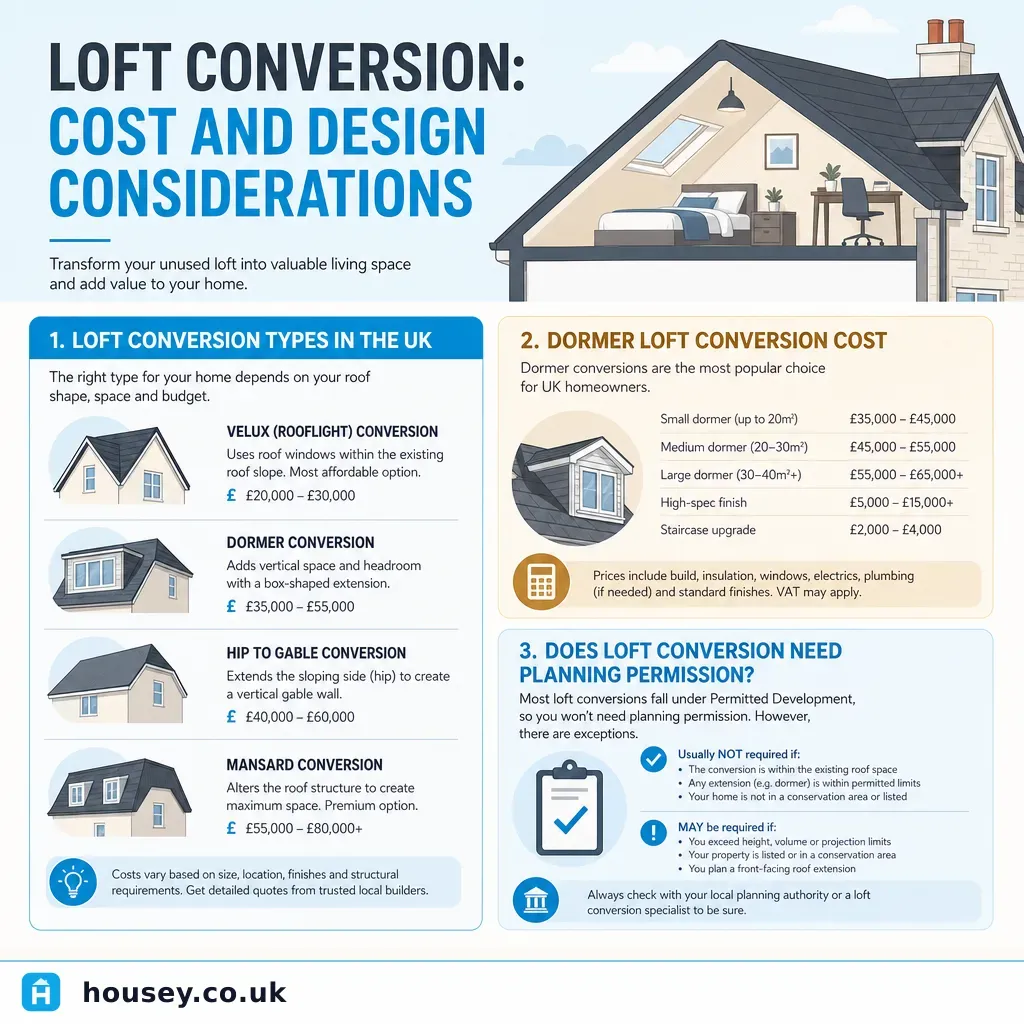
Loft Conversion: Cost and Design Considerations
A loft conversion is one of the most popular ways to add usable floor space to a UK home without extending the footprint — particularly relevant where garden space is limited or local planning policy restricts outbuildings. Whether the project is a simple rooflight installation or a full mansard conversion, costs and design decisions vary significantly by property type, roof structure, intended use, and location. Understanding these variables early helps homeowners set a realistic budget and choose the right approach before engaging professionals.
Key points
- Rooflight (Velux-style) loft conversions typically cost £15,000–£25,000; dormer conversions £30,000–£60,000; mansard conversions £45,000–£70,000+ (Indicative UK costs, last reviewed 2026-05-07).
- Most loft conversions on houses fall under permitted development rights — 40 m³ of additional roof space for terraced houses, 50 m³ for detached and semi-detached — but these rights are removed for listed buildings, conservation areas, and Article 4 Direction areas.
- All loft conversions require Building Regulations approval regardless of planning status; structural engineer's calculations are a mandatory part of that process.
- The Party Wall etc. Act 1996 may require you to serve notice on adjoining owners before work begins if the conversion affects a shared wall.
- Minimum habitable headroom under Building Regulations is 2.2 m over at least half the floor area; this must be verified before assuming a loft space is suitable for conversion.
Loft conversion types and design choices
The right conversion type depends on your roof structure, available headroom, budget, and planning context. The four main types each suit different property profiles.
Rooflight (Velux) conversion
The simplest and least expensive option. The existing roof structure is retained; Velux or similar rooflights are inserted to provide light and ventilation. No change to the external roofline means this typically falls within permitted development. Headroom is constrained by the existing pitch.
Suits: Properties with a steep pitch (ideally 35° or more) and adequate existing headroom. Good for studies, home offices, or children's rooms.
Dormer conversion
A dormer is a vertical extension built outwards from the existing roof slope, creating additional headroom and usable floor area. Full-width box dormers maximise space; L-shaped dormers are common on Victorian terraces. Most rear dormers qualify under permitted development if they meet size limits.
Suits: Most UK house types with a rear-facing slope. The most common conversion type nationally.
Hip-to-gable conversion
On hipped-roof properties — common on 1930s to 1960s semi-detached and detached houses — one sloping hip end is extended vertically to create a gable wall, significantly increasing internal floor area. Often combined with a rear dormer.
Suits: Detached and semi-detached homes with hipped roofs. May require planning permission for the gable element in some areas.
Mansard conversion
The most extensive option: the entire rear slope is rebuilt at a near-vertical angle (typically 72°), maximising floor area. Usually requires planning permission. Common in London and other dense urban areas where headroom in the original roof is limited.
Suits: Properties where maximum space is the priority and planning permission is obtainable. Higher design and build cost.
Comparison of loft conversion types
Type | Indicative cost | Planning permission needed? | Structural complexity | Best for |
|---|---|---|---|---|
Rooflight (Velux) | £15,000–£25,000 | Usually permitted development | Low | Steep-pitch roofs; minimal external change |
Rear dormer | £30,000–£50,000 | Usually permitted development | Medium | Most house types; most popular choice |
Hip-to-gable | £35,000–£55,000 | Varies by area | Medium to high | 1930s–60s semis with hipped roofs |
Mansard | £45,000–£70,000+ | Usually required | High | Maximum floor area; urban terraces |
Indicative UK costs, last reviewed 2026-05-07. Actual quotes vary by location, specification, and structural conditions.
What drives loft conversion costs?
Beyond conversion type, several factors affect the final price:
- Roof structure: Cut-rafter roofs (common in pre-1960s properties) are more straightforward to convert than modern trussed roofs, which require significant structural alterations and additional steelwork.
- Steelwork: Most conversions need at least one structural steel beam to carry the new floor. The quantity and section size of steelwork is one of the largest cost variables.
- Intended use: A bedroom with an en-suite costs significantly more than a study or playroom, due to plumbing runs, partition walls, and bathroom specification.
- Staircase: A new staircase must meet Approved Document K of the Building Regulations — a maximum pitch of 42° for loft stairs, with adequate headroom at each step. The position of the new stair affects layout options and cost.
- Insulation and energy performance: Part L requires insulation to meet current U-value standards — 0.16 W/m²K for the roof element where reasonably practicable.
- Fire safety compliance: Part B of the Building Regulations requires protected escape routes, interlinked mains-wired smoke alarms, and fire doors to all habitable rooms off the escape route. These are costs that are often underestimated at the quoting stage.
- Location: Labour and material costs are higher in London and the South East than in other UK regions.
Planning and building regulations
Permitted development rights
Most loft conversions on houses (not flats) can proceed under permitted development (PD) without a formal planning application, subject to strict conditions:
- Terraced houses: up to 40 m³ of additional roof space.
- Detached and semi-detached: up to 50 m³.
- No extension higher than the existing ridge line.
- No verandas, balconies, or raised platforms.
- Materials to be similar in appearance to the existing house.
- PD rights are removed in conservation areas, for listed buildings, in Article 4 Direction areas, and where previous conversions have already used the permitted volume allowance.
Always apply for a Lawful Development Certificate from your local planning authority to confirm PD status — mortgage lenders and future buyers will want written confirmation that no planning breach occurred.
Building Regulations
Every loft conversion requires Building Regulations approval. This covers structural stability, fire safety, insulation, staircases, means of escape, and ventilation. You can use either a local authority building control body or a Registered Building Control Approver (introduced under the Building Safety Act 2022).
Party Wall Act 1996
If your property is semi-detached or terraced, the Party Wall etc. Act 1996 may require you to serve notice on adjoining owners before starting work — particularly if steel beams are to be built into or bear on a shared wall. Failure to serve the required notice does not automatically stop a project, but it can create legal complications if a dispute arises with neighbours.
Which professionals do you need?
Professional | Role | When required |
|---|---|---|
Loft conversion company or builder | Design-and-build or build-only delivery | Always |
Structural engineer | Beam calculations, joist design, Building Regulations structural submission | Always |
Architect or architectural technologist | Planning drawings, building regulations drawings, design coordination | For planning applications; recommended for complex layouts |
Project manager | Programme management, contractor coordination, contract administration | Useful for larger or phased projects |
Party wall surveyor | Serving statutory notices and agreeing party wall awards | When shared walls are affected by the works |
Important limitations
This article provides general information about loft conversion costs and design in England and Wales. Planning rules, building regulations requirements, structural specifications, and fire safety standards vary by property type, roof construction, local authority, and individual circumstances. Cost ranges are indicative and based on information available as of 2026-05-07 — actual quotes will differ. This article is not a substitute for advice from a qualified architect, structural engineer, or building control body. Rules in Scotland and Northern Ireland differ and are not covered here.
What to ask a qualified professional
Before committing to a loft conversion, ask your structural engineer or conversion specialist:
- Is my roof structure cut-rafter or trussed, and what are the structural implications for the conversion?
- Does my loft meet the minimum headroom requirement of 2.2 m over at least half the intended floor area?
- How many steel beams will be needed, what size, and where will they be positioned in relation to the existing layout?
- What Building Regulations submissions will be made, by whom, and to which building control body?
- Does this project fall within permitted development, and will you obtain a Lawful Development Certificate?
- Does the Party Wall Act apply to my property, and who will manage the notice process?
- What fire safety measures are required, and how will they affect the staircase layout and existing bedroom doors?
- What is the likely programme, and what are the main risks that could extend it?
When to get professional help
A loft conversion is a significant structural and regulatory undertaking. Commission a structural engineer before any work begins — not as an afterthought — to assess the roof, specify steelwork, and prepare calculations for building control. If there are any signs of existing roof movement, damaged timbers, or previous amateur alterations, a RICS Level 3 Building Survey before purchasing the property (or before committing to the conversion) is strongly advisable.
Seek immediate professional advice if:
- The existing roof structure shows visible signs of movement, cracking, or timber decay.
- A neighbour has raised objections in response to a Party Wall notice.
- The property is listed or within a conservation area and planning consent is uncertain.
- The local planning authority has indicated that an application may be contentious.
- The building control inspection has raised concerns about structural members or fire escape routes.
How Housey can help
Housey connects homeowners with experienced loft conversion companies, structural engineering services, and project managers who can assess your property and provide detailed, comparable quotes. Use Housey to request proposals and ask the right questions before committing to a project of this scale.
Frequently asked questions
Does a loft conversion add value to my home?
Property research suggests a loft conversion can add between 15% and 25% to a property's value, depending on location, finish quality, and whether it adds a usable bedroom. In high-demand areas — much of London, the South East, and other cities — the uplift from adding an extra bedroom can be significant relative to the project cost.
How long does a loft conversion take?
A rooflight conversion typically takes 4–6 weeks. A dormer or hip-to-gable conversion usually takes 8–12 weeks. A mansard conversion can take 12–20 weeks or more, including any planning application period. These timescales assume no significant structural complications or unforeseen delays with building control submissions.
Do I need to move out during a loft conversion?
Most loft conversions can be carried out with the property occupied, as the bulk of the work happens above the existing ceiling. The most disruptive period is when the new staircase opening is cut through the existing floor. Temporary boarding and dust sheets are usually sufficient to keep the rest of the home liveable during the project.
Can any loft be converted?
Not all lofts are suitable. Common barriers include insufficient headroom (less than 2.2 m at the ridge), inadequate roof pitch, or a trussed roof structure requiring disproportionate steelwork. A pre-conversion assessment by a loft conversion specialist or structural engineer is the best way to confirm viability before committing to design fees.
Is a loft conversion cheaper than a house extension?
For equivalent floor area added, a loft conversion is usually cheaper than a ground-floor rear extension, primarily because no foundations are required. However, complex roof structures requiring significant steelwork, or mansard conversions involving near-full roof rebuilds, can reduce this cost advantage considerably.
Sources and further reading
- Loft conversion: planning permission and building regulations — Planning Portal
- Fire safety: Approved Document B — GOV.UK
- Party Wall etc. Act 1996: guidance for homeowners — GOV.UK
- Registered Building Control Approvers — GOV.UK
- Roof and loft insulation — Energy Saving Trust
Useful next reads
 Improvement & Build
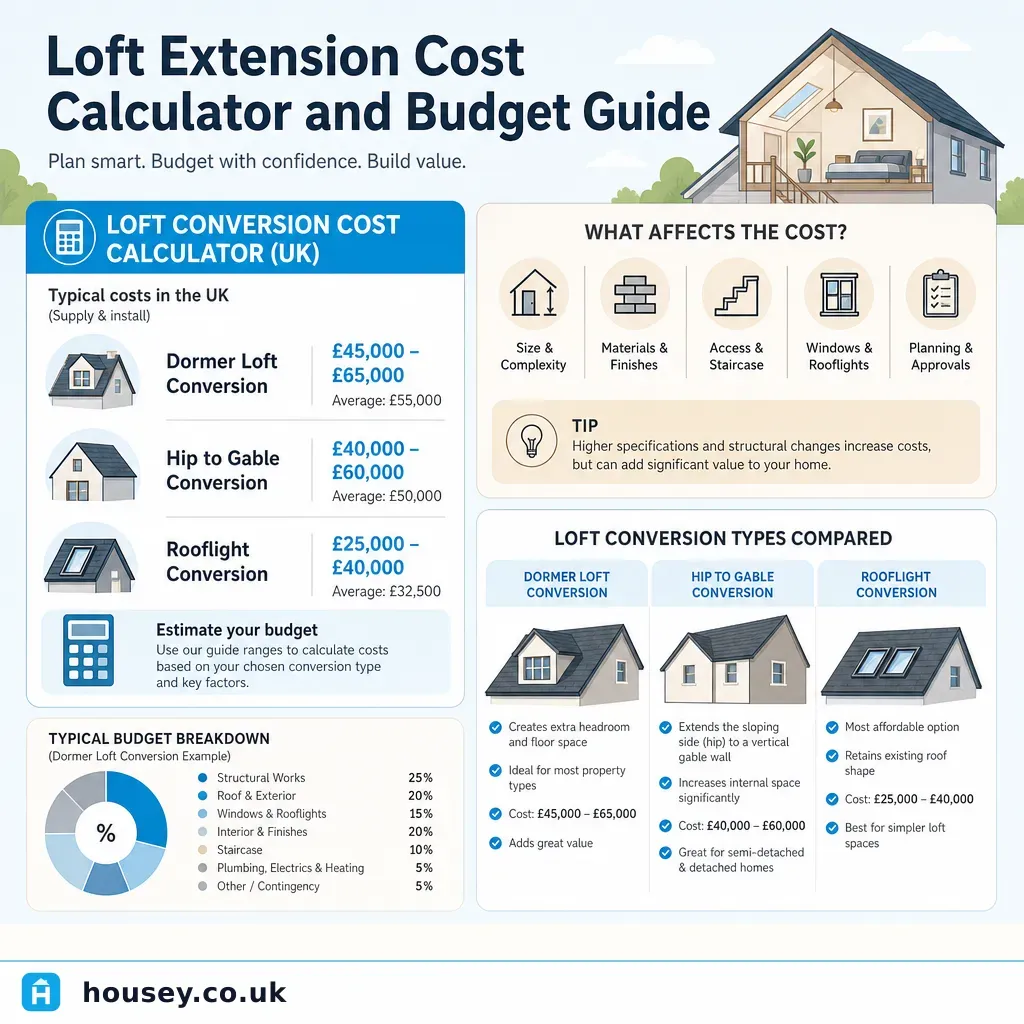
Loft Extension Cost Calculator and Budget Guide
Loft extension costs in the UK typically range from £15,000 for a basic Velux conversion to £75,000 or more for a mansard or L-shaped dormer.
 Improvement & Build
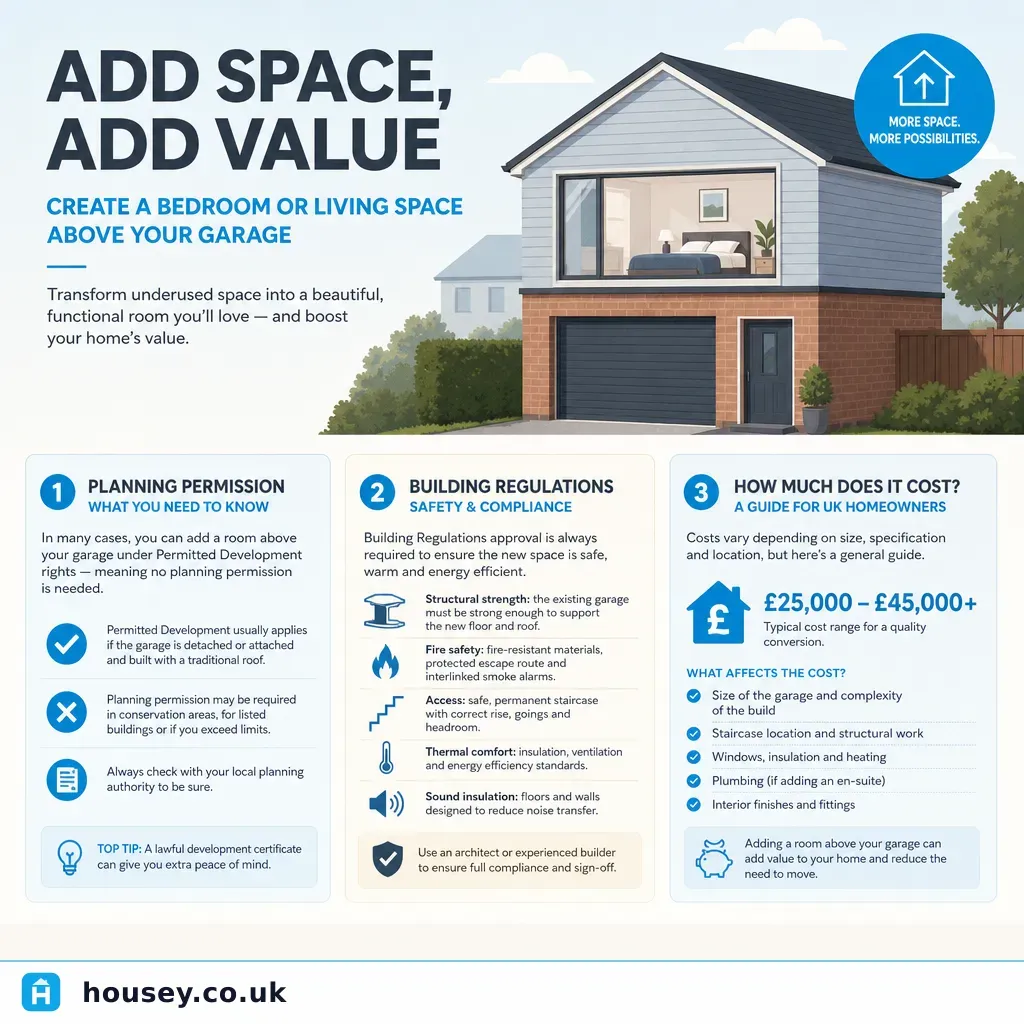
Adding a bedroom or living space above an existing garage
Adding habitable space above an existing garage almost always requires planning permission and Building Regulations approval in the UK.
 Improvement & Build
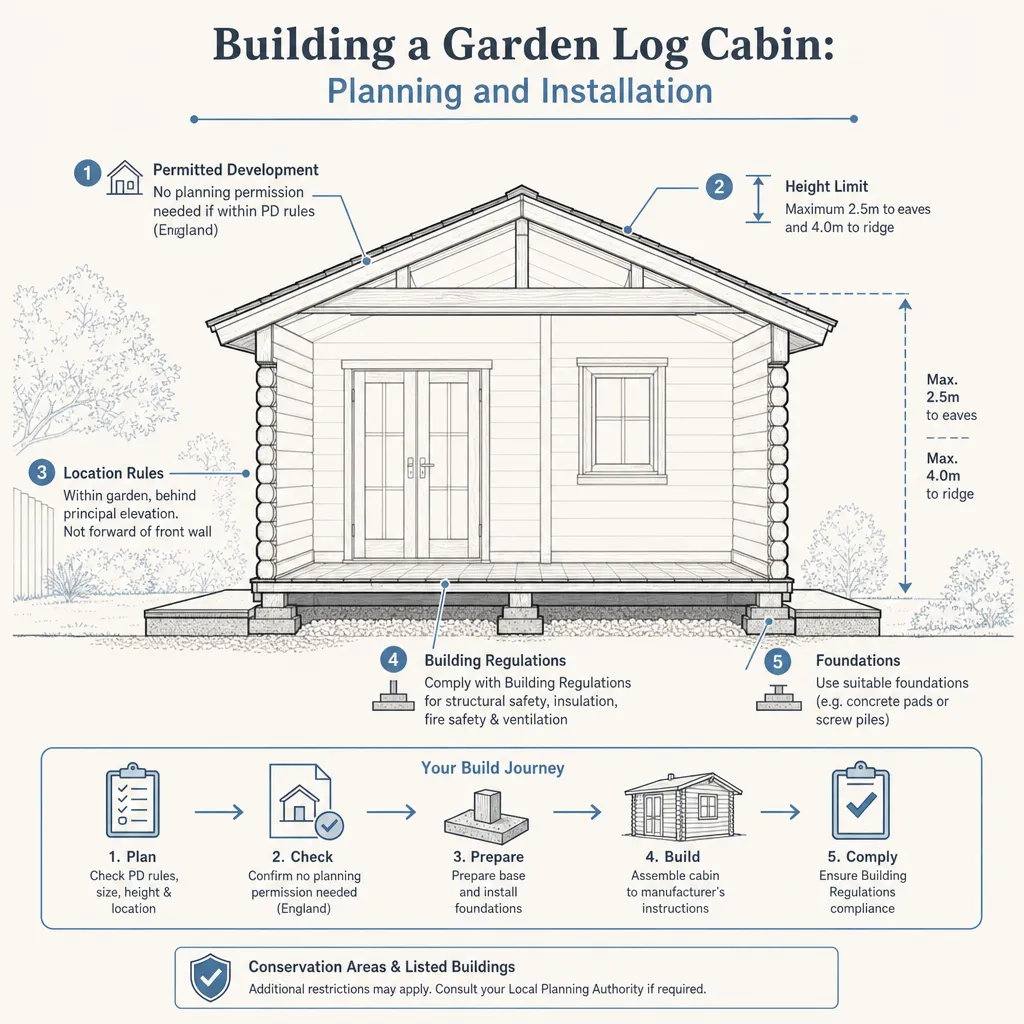
Building a Garden Log Cabin: Planning and Installation
Most garden log cabins in England fall under permitted development rights and do not need planning permission, provided they meet height, siting, and garden coverage rules set out in Schedule 2, Part 1, Class E of the Town and Country Planning (General Permitted Development) (England) Order 2015.
 Improvement & Build
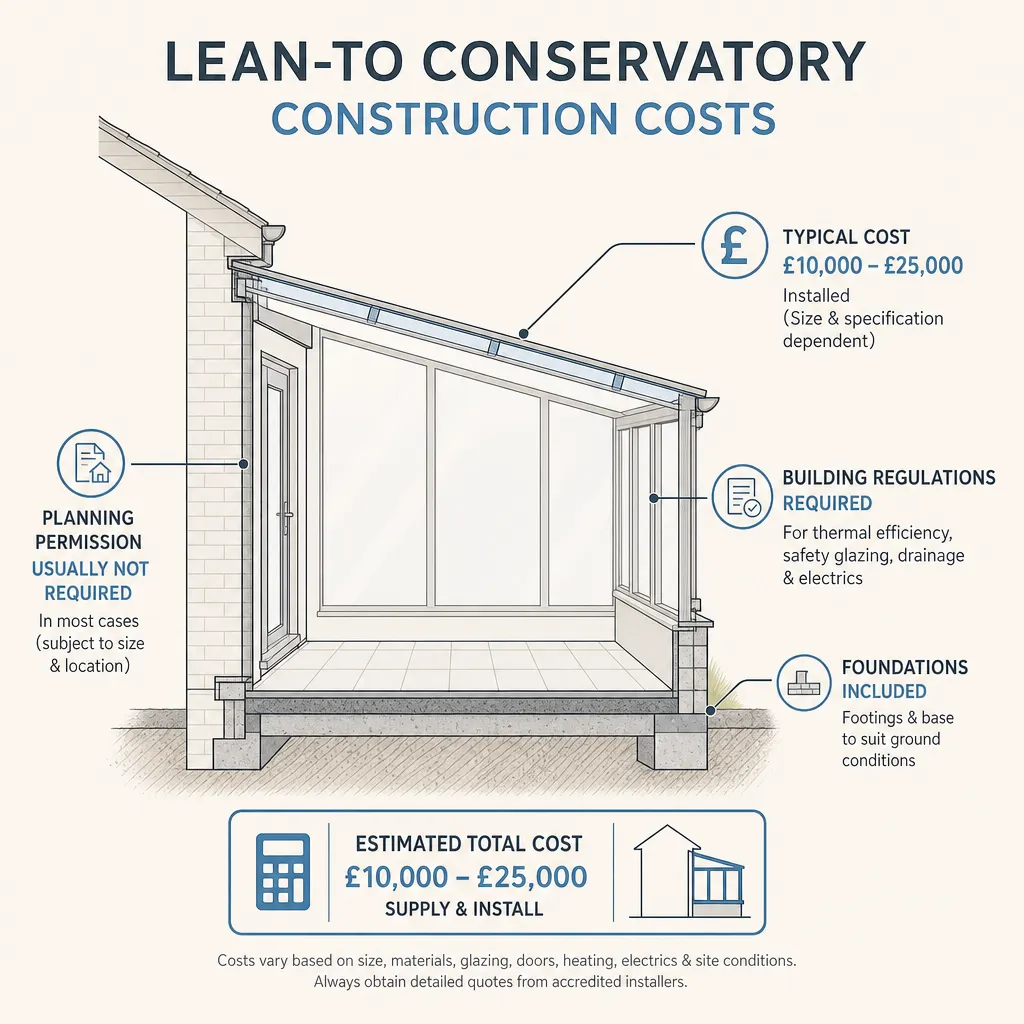
Lean-to Conservatory Construction Costs
A lean-to conservatory typically costs £8,000–£25,000 in the UK, depending on size, glazing specification, base type, and roof material.
 Improvement & Build
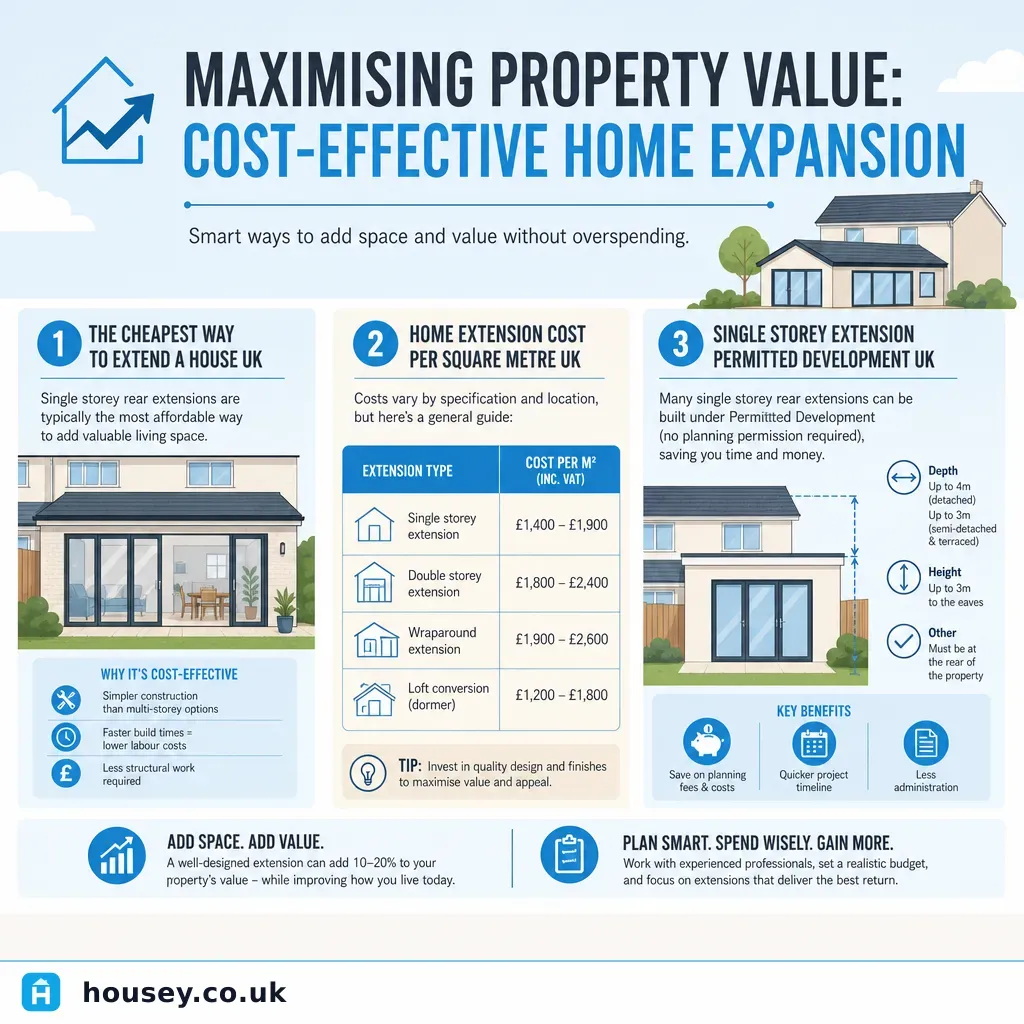
Maximising Property Value: Cost-Effective Home Expansion
A cost-effective home extension in the UK typically starts with a single-storey rear extension under permitted development, using an extension builder or design-and-build firm to control costs.