Understanding Lease Extension: Processes and Valuation Requirements
By Housey · Last reviewed 30th of May 2026
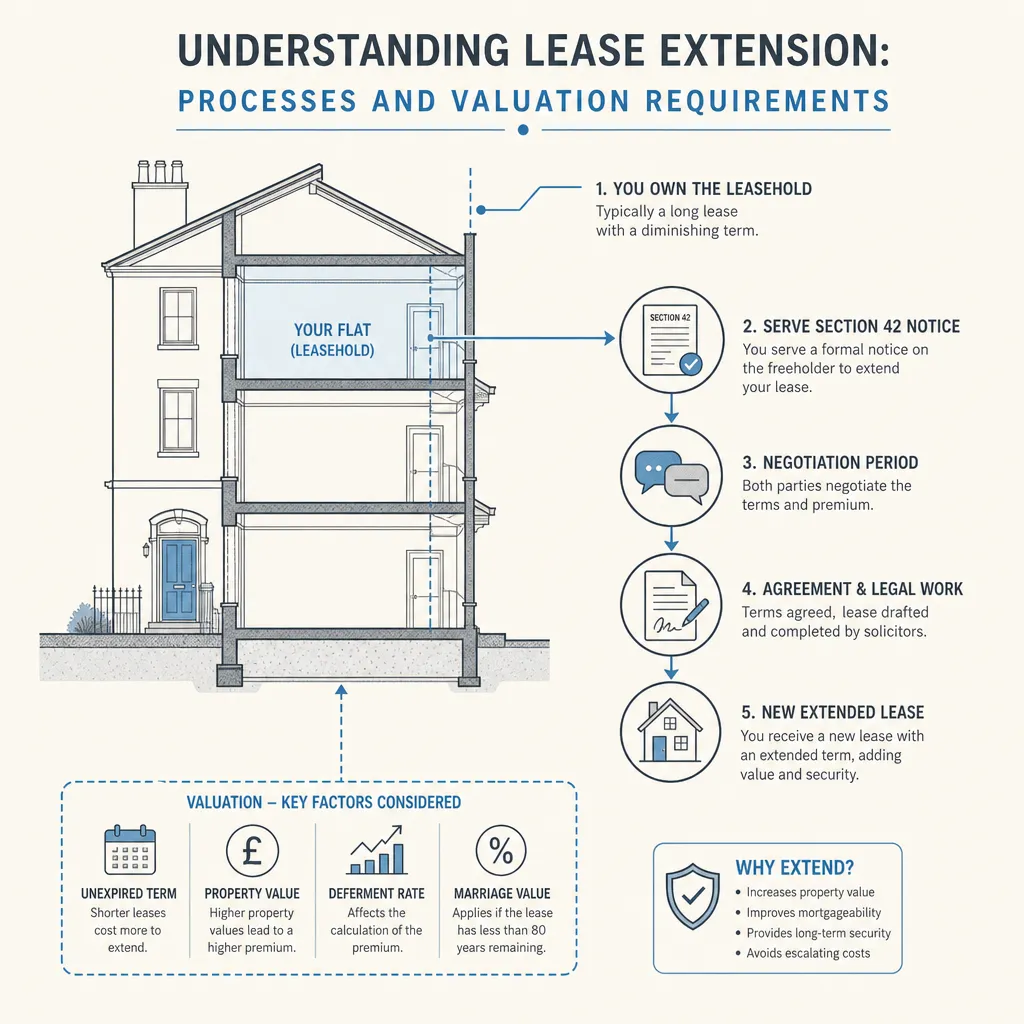
Understanding Lease Extension: Processes and Valuation Requirements
Leasehold flats in England and Wales can decline in value as the remaining lease term shortens — once the lease falls below 80 years, the cost of extending rises sharply, and lenders become reluctant to offer mortgages. Most flat owners first confront this question when preparing to sell, remortgage, or when a buyer's solicitor raises it during conveyancing.
Key points
- Qualifying leaseholders who have owned their flat for at least two years have a statutory right to a 90-year extension under the Leasehold Reform, Housing and Urban Development Act 1993.
- Leases with fewer than 80 years remaining attract marriage value — an additional valuation element that can substantially increase the premium payable to the freeholder.
- A Section 42 notice, served by your solicitor on the freeholder, fixes the valuation date and gives the freeholder two months to respond with a counter-notice.
- The Leasehold Reform (Ground Rent) Act 2022 abolished ground rents on new residential leases granted after 30 June 2022; extensions under the 1993 Act reduce ground rent to a peppercorn (zero) regardless of the original lease terms.
- Leaseholders may also pursue an informal extension directly with the freeholder, but statutory protections apply only to the formal route.
Statutory or informal: which route applies to you?
| Statutory route | Informal route |
|---|---|---|
Eligibility | Must own the flat for at least two years; excludes some shared ownership and business tenancies | Any leaseholder can negotiate; no ownership period requirement |
Outcome guaranteed? | Yes — freeholder must grant extension if you qualify | No — freeholder may refuse or set unfavourable terms |
Term added | 90 years added to the remaining term | Negotiable — often 90 years by convention, sometimes 125 or 999 |
Ground rent | Reduced to peppercorn (zero) | Subject to negotiation; freeholder may retain or increase it |
Timeline | 6–12 months typically | 4–8 weeks if freeholder cooperates |
Best for | Uncooperative freeholders; leases below 80 years; certainty of outcome | Cooperative freeholders; tight sale timelines |
Which route should you choose?
- Choose the statutory route if your freeholder is unresponsive, you have time in your sale process, or the lease is below 80 years and you want the peppercorn ground rent guaranteed.
- Choose the informal route if your freeholder is cooperative, the lease is above 80 years, and speed matters more than certainty of terms.
- Ask a leasehold solicitor and RICS-accredited surveyor before proceeding if your lease is close to or below 80 years — the valuation implications are material.
- Check the Land Registry title register (available via GOV.UK) to confirm your freeholder's identity before serving any notice.
How the lease extension premium is calculated
The premium is a negotiated or tribunal-determined sum based on a statutory formula. A RICS-accredited surveyor prepares a formal valuation covering three components:
- Capitalised ground rent — the present value of the ground rent income the freeholder loses.
- Reversion value — the present value of the freeholder regaining the flat at the end of the original lease term, discounted to today.
- Marriage value — only applicable when the lease has fewer than 80 years remaining. This is 50% of the uplift in the combined freehold and leasehold value created by the extension, shared with the freeholder.
The leaseholder's surveyor and the freeholder's surveyor each prepare separate valuations. If they cannot agree, either party can apply to the First-tier Tribunal (Property Chamber) for a binding determination.
Indicative UK costs, last reviewed 2026-05-30: extension premiums for a typical London flat with 75 years remaining can range from around £8,000 to £30,000 or more, depending on property value, ground rent, and location. Solicitor fees for the leaseholder commonly run £1,500–£3,000, with RICS surveyor fees of £500–£1,500. You are also required to pay the freeholder's reasonable legal and surveyor costs. Figures vary considerably — always obtain written quotes. Source: Leasehold Advisory Service (LEASE).
The Section 42 notice process: step by step
- Instruct a leasehold solicitor — they verify your eligibility and prepare the formal notice.
- Commission a RICS valuation — fixes the premium figure in the notice and the valuation date.
- Serve the Section 42 notice — formally served on the freeholder (and any intermediate landlord if applicable).
- Freeholder's counter-notice — must be served within two months; it either admits the right or disputes eligibility and proposes a different premium.
- Negotiation period — both surveyors attempt to agree the premium; you have up to six months from the counter-notice date to apply to the Tribunal if no agreement is reached.
- Engrossment and completion — solicitors draft and exchange the lease extension deed, registered at HM Land Registry.
Missing the Tribunal application deadline can result in losing the benefit of the Section 42 notice and needing to start again — an expensive outcome your solicitor should help you avoid.
Important limitations
This article is general information only. Lease extension law in England and Wales is complex and fact-specific: eligibility depends on your exact lease terms, freehold structure, any intermediate landlords, and property history. Premium calculations require professional valuation and should not be estimated from online calculators alone. Rules in Scotland and Northern Ireland differ materially. Always instruct a specialist leasehold solicitor and a RICS-accredited surveyor before serving any notice or making financial decisions.
When to get professional help
Any leaseholder considering an extension should instruct professionals before taking any formal steps. Seek specialist advice without delay if:
- Your lease has fewer than 85 years remaining — delays increase cost rapidly once the lease falls below 80 years.
- Your freeholder is an offshore company or their contact details are unclear.
- There is an intermediate landlord (head lease) between you and the ultimate freeholder.
- Your property is in a managed estate with complex service charge arrangements.
- You are planning to sell within 12–24 months and a short lease is being flagged during conveyancing.
What to ask a qualified professional
Before instructing a leasehold solicitor or RICS surveyor, ask:
- Are you a member of the Association of Leasehold Enfranchisement Practitioners (ALEP) or RICS-accredited in leasehold work?
- Have you handled extensions in this borough or under this freeholder before?
- What is your estimate of the premium, and what are the key valuation assumptions?
- What are your fees, and what experience do you have of the freeholder's reasonable costs in similar transactions?
- What is the realistic timeline from instruction to registration at HM Land Registry?
- If we cannot agree on the premium, what does applying to the First-tier Tribunal add in cost and time?
How Housey can help
Housey connects you with RICS-accredited professionals who specialise in lease extension valuations and with solicitors experienced in leasehold conveyancing. Submit one request and receive quotes from specialists who can confirm your eligibility and guide you through the statutory or informal process.
Frequently asked questions
How long does a lease extension take in England?
The statutory process typically takes 6–12 months from serving the Section 42 notice to completion at HM Land Registry. The informal route can be faster — sometimes 6–10 weeks if the freeholder is cooperative — but timelines depend on both parties' responsiveness and whether premium negotiations are straightforward.
Can I extend my lease before buying a flat?
No — the statutory right belongs to the qualifying leaseholder and requires two years of ownership. Some buyers negotiate an informal extension as a condition of sale, or the vendor may have already served a Section 42 notice, which can be assigned as part of the transaction in some circumstances. Ask your conveyancer to check before exchange.
What happens if I miss the six-month Tribunal deadline?
If no agreement is reached within six months of the counter-notice date and no Tribunal application is made, your Section 42 notice lapses. You would need to serve a fresh notice, and property values and therefore premiums may have changed. Your solicitor should actively monitor and manage these deadlines.
Does the Leasehold and Freehold Reform Act 2024 change the extension process?
The Act received Royal Assent in May 2024 and includes provisions to make enfranchisement and extensions easier and cheaper, including removing the two-year ownership requirement in due course. However, many provisions require secondary legislation before taking effect. Check GOV.UK for the latest commencement orders before making decisions based on anticipated changes.
Sources and further reading
- Leasehold Advisory Service (LEASE) — extending a lease — Leasehold Advisory Service
- Leasehold Reform, Housing and Urban Development Act 1993 — legislation.gov.uk
- Leasehold Reform (Ground Rent) Act 2022 — legislation.gov.uk
- Leasehold and Freehold Reform Act 2024 — GOV.UK overview — GOV.UK
- RICS guidance on leasehold enfranchisement valuations — Royal Institution of Chartered Surveyors
Useful next reads
 Buying & Moving
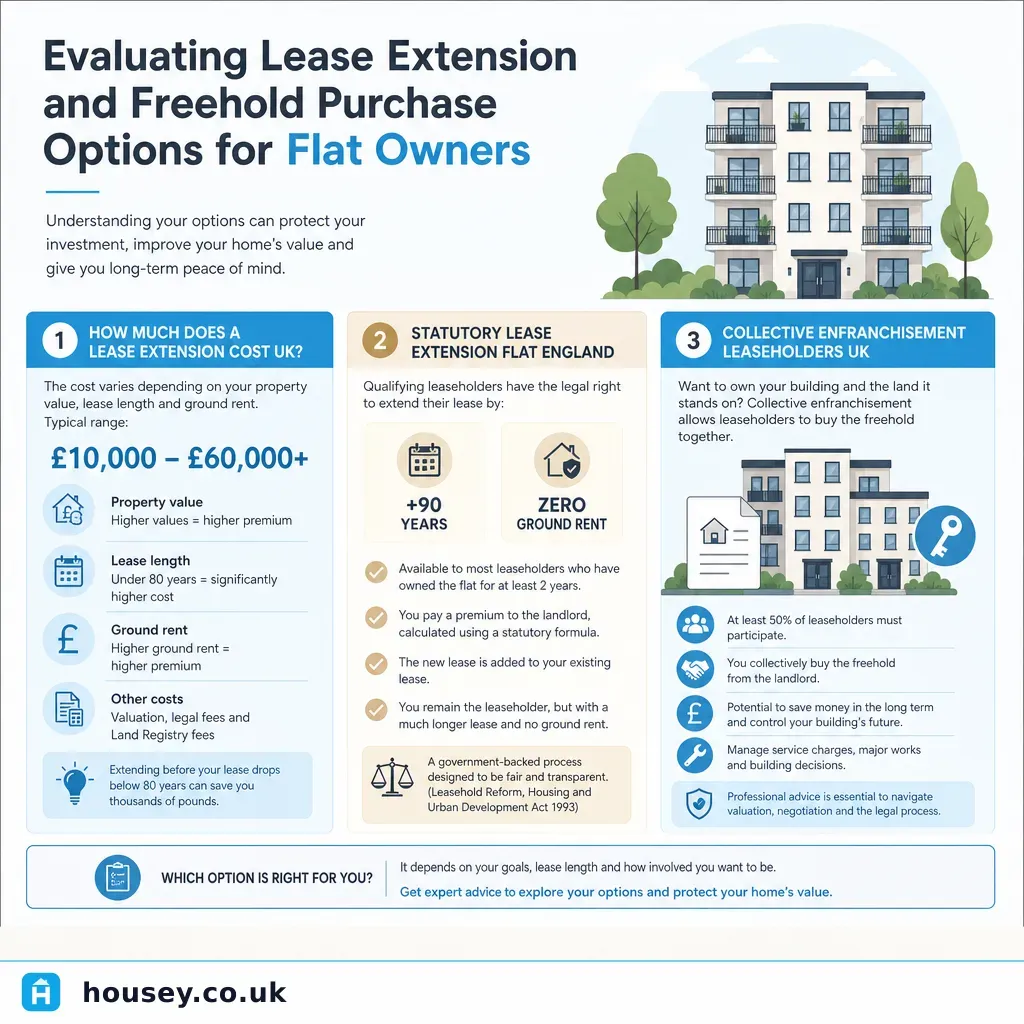
Evaluating Lease Extension and Freehold Purchase Options for Flat Owners
Flat owners in England and Wales can extend their lease by 90 years — increasing to 990 years under pending 2024 reforms — or collectively purchase the freehold.
 Buying & Moving
Common Legal Questions From Property Purchasers and Legal Advisors
Conveyancing in England and Wales typically takes 8–16 weeks.
 Buying & Moving
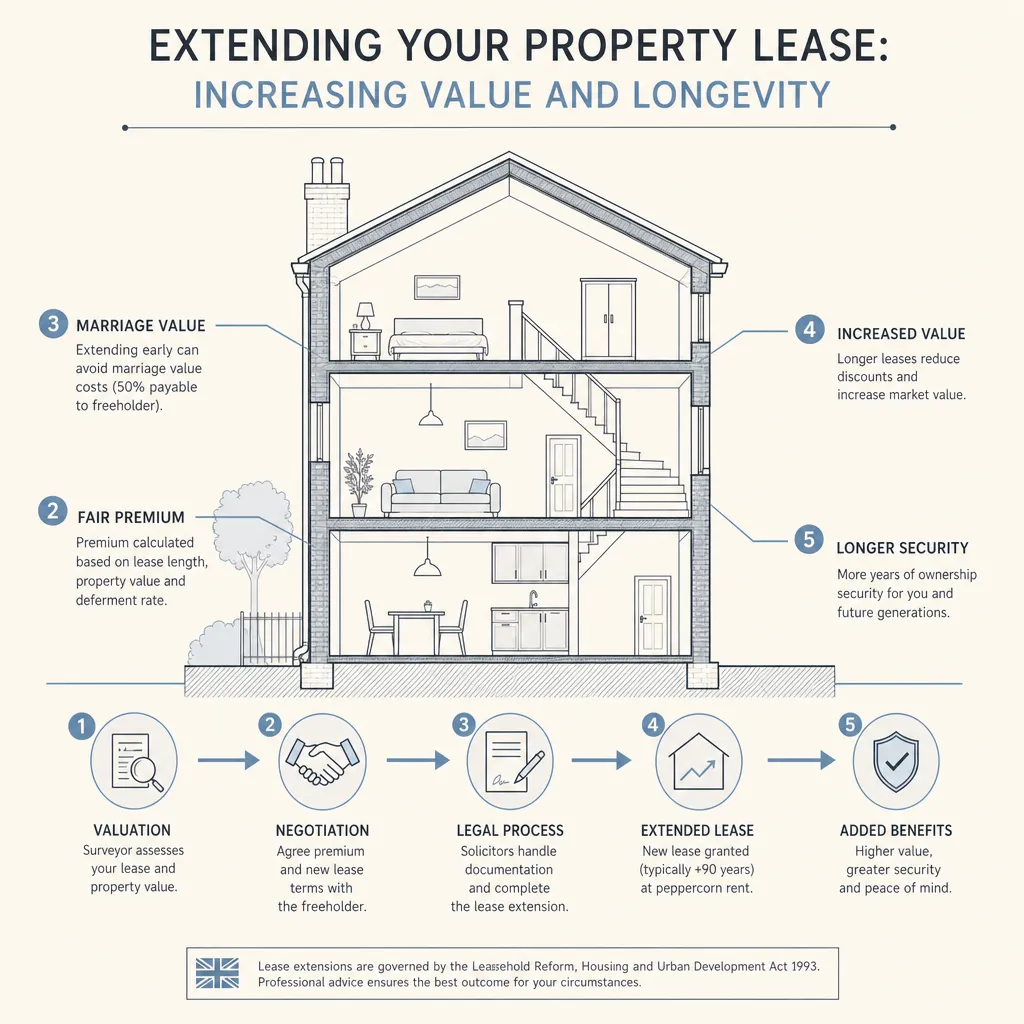
Extending Your Property Lease: Increasing Value and Longevity
Qualifying leaseholders in England and Wales can extend their lease by 90 years at a peppercorn ground rent under the Leasehold Reform, Housing and Urban Development Act 1993.
 Buying & Moving
Complete Homebuying Checklist and Essential Services for First-Time Buyers
First-time buyers in the UK should commission an independent RICS Home Survey before exchange — a mortgage lender's valuation does not protect you.
 Buying & Moving
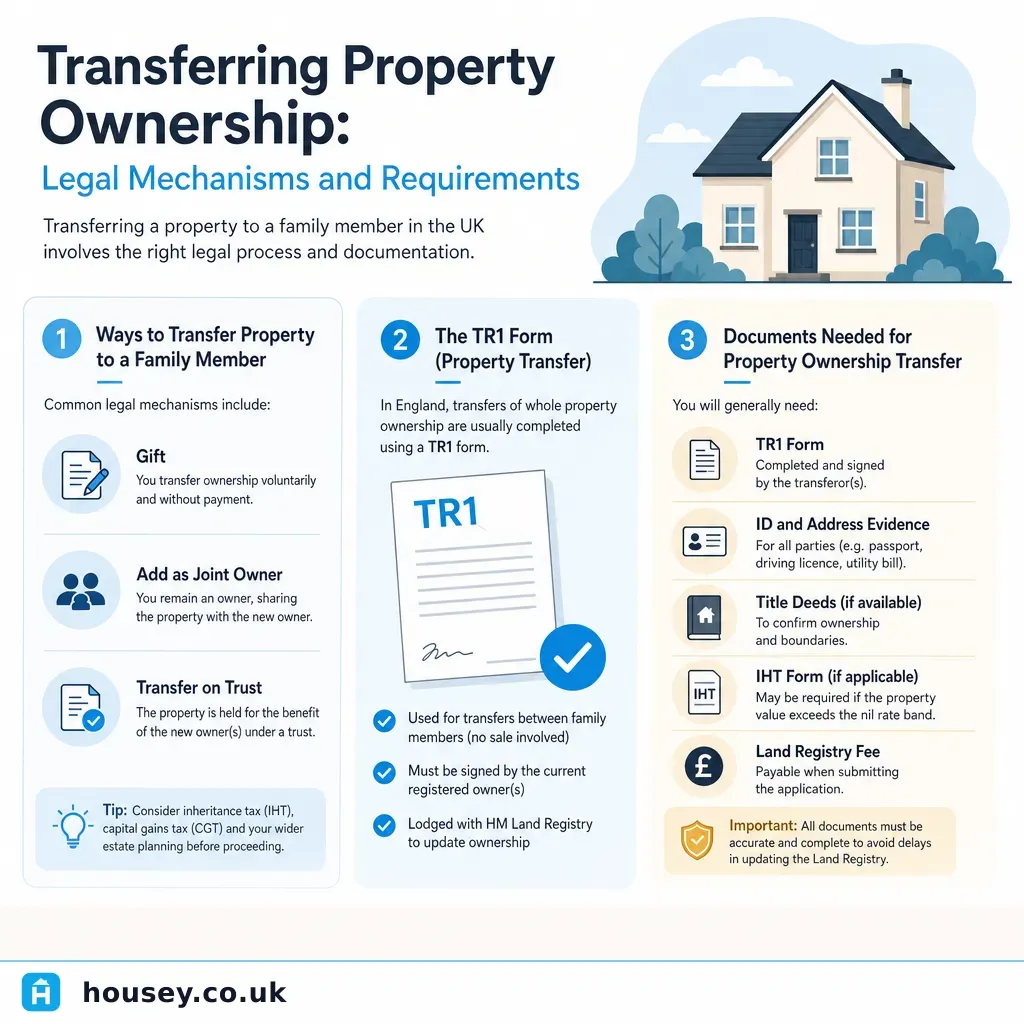
Transferring Property Ownership: Legal Mechanisms and Requirements
In England and Wales, property ownership transfers when HM Land Registry records a change of proprietor, triggered by a completed TR1 deed for full transfers or a TP1 for partial ones.