Lease Extension Valuation and Legal Costs
By Housey · Last reviewed 7th of May 2026
Lease Extension Valuation and Legal Costs
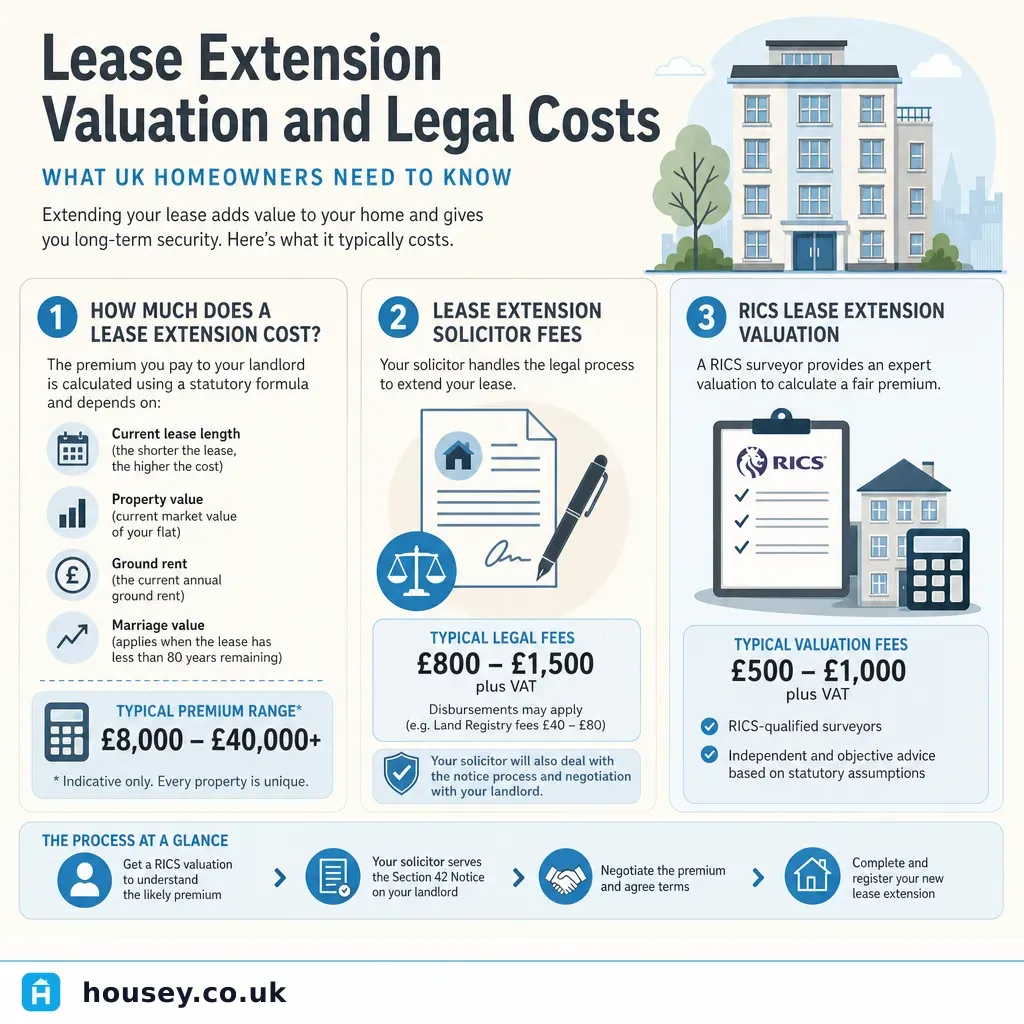
Most leaseholders only confront the true cost of extending a lease when a sale falls through or a remortgage is refused. Under the Leasehold Reform, Housing and Urban Development Act 1993, qualifying flat owners have a statutory right to extend their lease by 90 years at a peppercorn ground rent — but exercising that right involves a premium paid to the freeholder plus professional fees on both sides. Understanding how those figures are calculated, and why they vary so widely, helps you budget realistically and avoid being underprepared at a critical stage of your property's value lifecycle.
Key points
- The lease extension premium under the 1993 Act uses a prescribed statutory formula; it must be determined by RICS-registered valuers, and disputes are resolved by the First-tier Property Tribunal (Property Chamber).
- Once a lease falls below 80 years, "marriage value" is added to the premium — often doubling or trebling it — making early action financially important.
- You must have owned the flat for at least two years before serving a Section 42 notice to trigger the statutory process.
- Leaseholders must pay the freeholder's reasonable valuation and legal costs in addition to their own — total professional fees on both sides typically range from £3,000 to £7,000 or more.
- The Leasehold and Freehold Reform Act 2024 introduced changes to the premium calculation including proposals to abolish marriage value; implementation regulations were still being phased in as of May 2026 — check current GOV.UK guidance before proceeding.
What does a lease extension cost?
The total outlay has four components: the premium paid to the freeholder; your own valuation fee; your legal fees; and the freeholder's professional costs, which the leaseholder is normally required to meet if they are reasonable.
Cost component | Typical range |
|---|---|
Leaseholder's RICS valuation fee | £500 – £1,500 |
Leaseholder's legal fees | £1,500 – £3,000+ |
Freeholder's valuation fee (paid by leaseholder) | £500 – £1,500 |
Freeholder's legal fees (paid by leaseholder) | £1,000 – £2,500+ |
Land Registry fee | £20 – £500 |
Premium to freeholder | £5,000 – £50,000+ |
Indicative UK costs, last reviewed 2026-05-07. The premium is highly property-specific; always obtain itemised professional quotes.
The premium is the largest variable. It depends on the unexpired lease term, the property's open market value, the current ground rent, and marriage value where the lease is below 80 years. A premium on a £400,000 flat with 75 years remaining in London may be £15,000–£30,000; for the same flat at 60 years the figure would likely be substantially higher.
Formal (statutory) vs informal extension routes
Route | Key benefit | Key risk | Typical use case |
|---|---|---|---|
Statutory (Section 42 notice) | Legal right; fixes valuation date; freeholder must proceed | Higher upfront costs; typically 6–12+ months | Most cases; essential if freeholder is uncooperative |
Informal negotiation | Potentially faster and cheaper if both parties agree | No statutory protection; premium may be inflated | Friendly freeholder; time-sensitive sale |
Collective enfranchisement | Leaseholders buy freehold together; often cheaper per head | Requires 50%+ participation; complex to organise | Larger blocks where a majority can coordinate |
For most leaseholders, the statutory route provides the safest outcome because it fixes a valuation date and creates enforceable deadlines.
Worked scenario: 72-year lease on a South London flat
Consider a leaseholder with a £350,000 flat in Lewisham, 72 years remaining and £200 annual ground rent.
- Premium estimate: £12,000–£18,000 (above 80 years, so no marriage value under the current formula)
- Leaseholder's surveyor: £850
- Leaseholder's solicitor: £2,200
- Freeholder's surveyor (paid by leaseholder): £900
- Freeholder's solicitor (paid by leaseholder): £1,400
- Land Registry fee: approximately £135
Approximate total outlay: £17,485–£23,485, before VAT on professional fees.
This example illustrates why acting before the lease drops below 80 years is usually recommended — marriage value can add many thousands to the premium once that threshold is crossed.
What affects the premium most?
- Unexpired lease term: the shorter the lease, the higher the premium. The increase at the 80-year threshold is particularly significant.
- Property value: higher-value properties attract larger premiums because the freeholder receives a proportionate share.
- Ground rent: higher ground rents increase the capitalisation element of the premium.
- Location: London and other high-value markets typically produce larger premiums than equivalent properties elsewhere in the UK.
Red flags that could increase your costs
- Absentee or unresponsive freeholder: tracing proceedings can add months and significant legal costs.
- Defective or missing reversionary title: if the freeholder's title has gaps, additional investigation is needed before completion.
- Intermediate or head leases: confirm your immediate landlord has the power to grant the extension before serving any notice.
- Section 42 notice errors: an incorrectly served notice can invalidate the process — always use a specialist leasehold solicitor from the outset.
- Disputed premium: if the freeholder's counter-notice proposes a substantially different figure, a First-tier Property Tribunal application may be needed, adding time and cost.
Important limitations
This article provides general information only. Lease extension premiums and costs depend on the specific property, tenure, lease terms, and the current state of legislation — particularly as the Leasehold and Freehold Reform Act 2024 is progressively implemented. Nothing in this article constitutes legal or valuation advice. Always instruct a RICS-registered valuer and a solicitor experienced in leasehold law before serving any notices or agreeing any premium.
What to ask a qualified professional
- Are you a RICS-registered valuer with specific experience in lease extension premiums and the 1993 Act process?
- What is your estimate of the premium range, and what assumptions underpin it?
- Which provisions of the Leasehold and Freehold Reform Act 2024 currently apply to my case?
- Will you represent me at the First-tier Property Tribunal if the premium is disputed?
- Are your fees fixed or hourly, and do they include disbursements and VAT?
- What is your estimate of the freeholder's reasonable professional costs that I will need to meet?
- How long should the full process take, and what are the key statutory deadlines?
When to get professional help
Instruct a RICS-registered valuer and a leasehold solicitor before taking any action if your lease is approaching or below 80 years, if you plan to sell or remortgage within two to three years with a lease below 85 years, if your freeholder is a company or large estate, if a counter-notice has been served, or if title issues have been identified. Do not serve a Section 42 notice without specialist legal advice — an error can invalidate the process entirely.
How Housey can help
Housey can help you request and compare quotes from RICS-registered valuers experienced in leasehold work. Start by requesting a lease extension valuation through the Housey platform to receive quotes from vetted local professionals.
Frequently asked questions
How long does a statutory lease extension take?
The statutory process typically takes 6–12 months from serving the Section 42 notice to completion of the new lease, though disputes referred to the First-tier Property Tribunal can extend this further. Informal negotiations with a cooperative freeholder can sometimes be completed in 3–6 months, but there are no statutory deadlines on the freeholder in that route.
Do I pay VAT on lease extension professional fees?
Yes — professional fees charged by surveyors and solicitors attract VAT at 20%. The premium paid to the freeholder is not normally subject to VAT for a residential lease extension, but confirm this with your solicitor. Budget for VAT when comparing quotes, as it adds a material amount to the total professional fee outlay.
Can I extend my lease informally before I have owned the flat for two years?
Yes. The two-year ownership requirement applies only to the statutory route under the 1993 Act. You may approach the freeholder informally at any point, including before the qualification period. However, an informal extension carries no statutory protection — the freeholder can decline or propose any premium, with no obligation to follow the statutory formula.
What happens if I ignore a short lease?
A lease below 70–80 years can make a property difficult or impossible to sell or remortgage, as many lenders set minimum unexpired term requirements. Each year the lease shortens — particularly below 80 years — the extension premium increases. Delaying action typically raises the total cost significantly and may affect saleability and mortgage options.
Sources and further reading
- Leasehold Reform, Housing and Urban Development Act 1993 — legislation.gov.uk
- Leasehold and Freehold Reform Act 2024 — legislation.gov.uk
- Extending a lease — GOV.UK
- Lease extension: the cost — Leasehold Advisory Service (LEASE)
- RICS guidance on leasehold reform — RICS
Useful next reads
 Surveys & Inspections
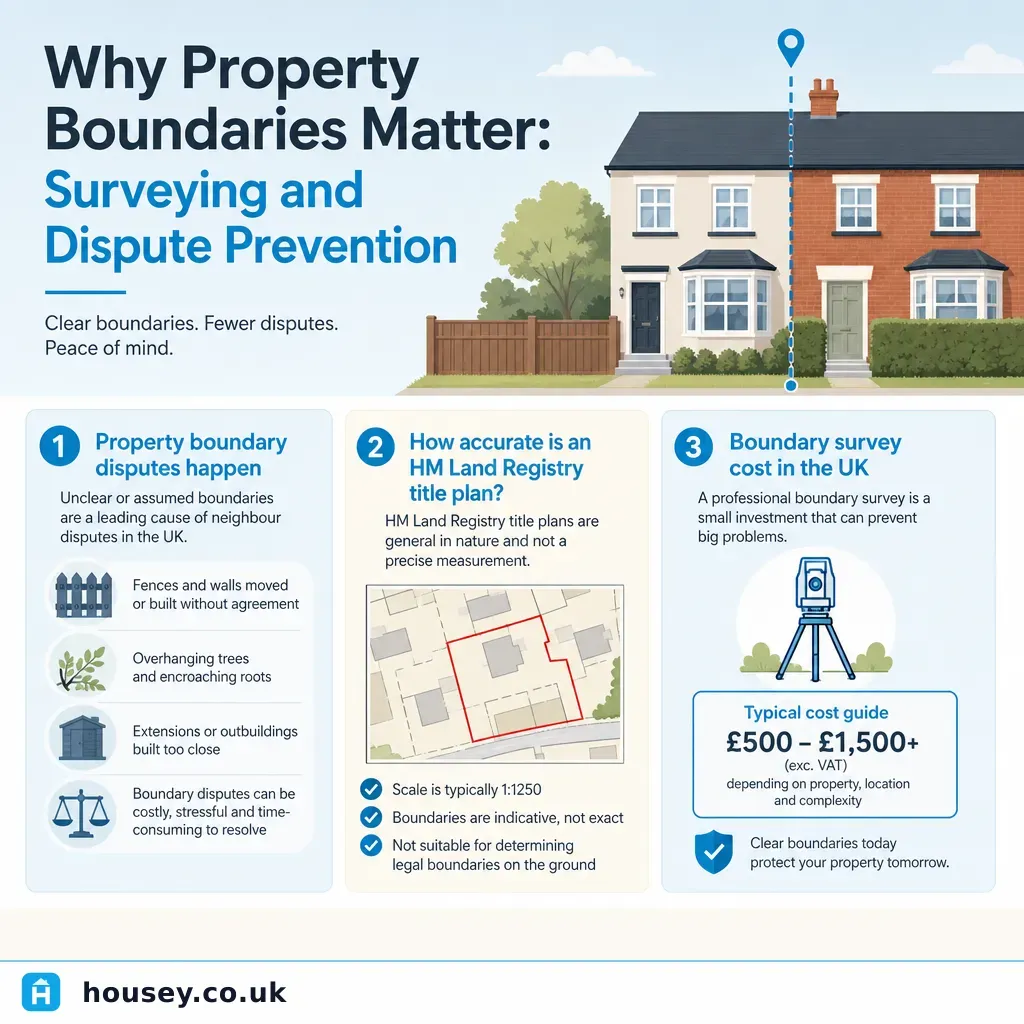
Why Property Boundaries Matter: Surveying and Dispute Prevention
Property boundaries in England and Wales are recorded as general boundaries by HM Land Registry — not precise measurements.
 Surveys & Inspections
Safe Property Viewing Practices: Protecting Yourself During Inspections
When viewing a property in the UK, always tell someone where you are going and share the full address before you leave.
 Surveys & Inspections
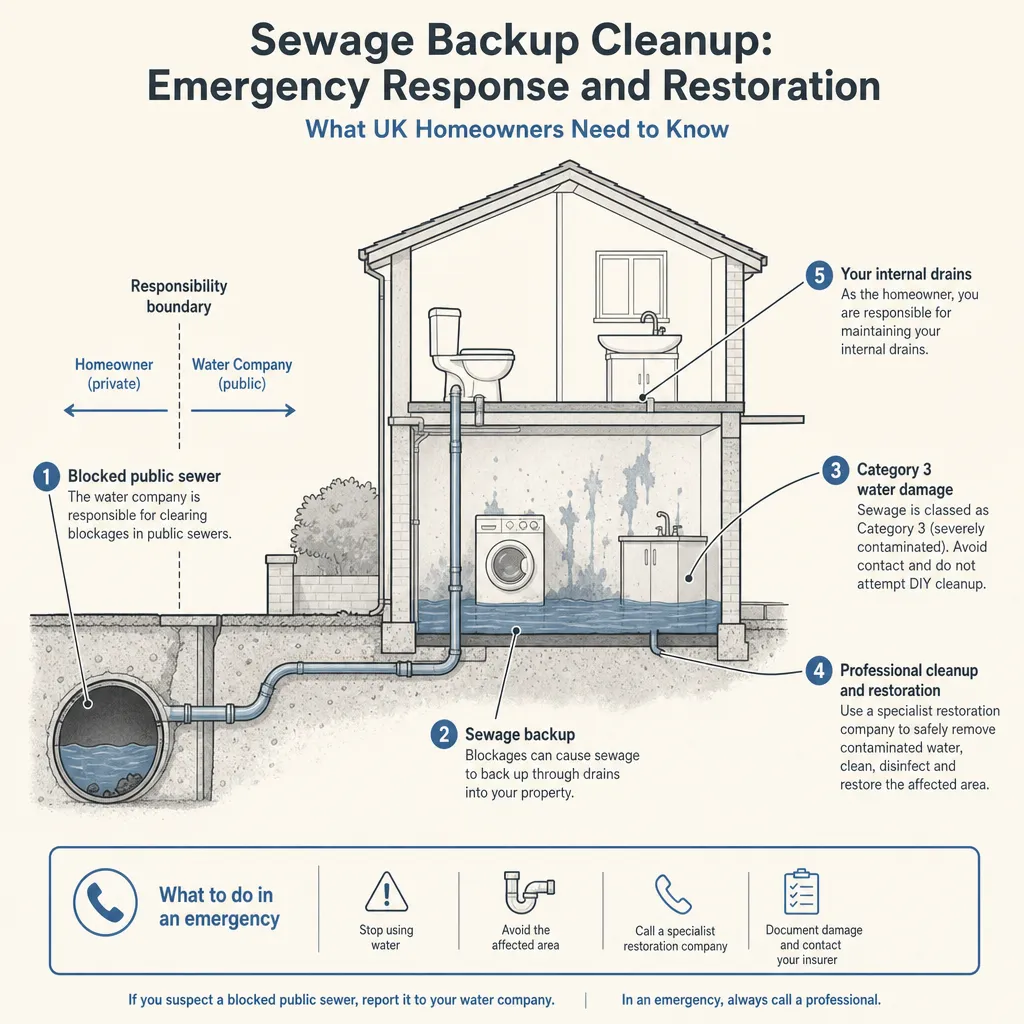
Sewage Backup Cleanup: Emergency Response and Restoration
A sewage backup should be treated as a Category 3 contamination event.
 Surveys & Inspections
Identifying Asbestos Insulation: What You Need to Know for Your Property
Asbestos insulation was widely used in UK properties built before 2000, commonly found in pipe lagging, ceiling tiles, loose-fill loft insulation, and around boilers.
 Surveys & Inspections
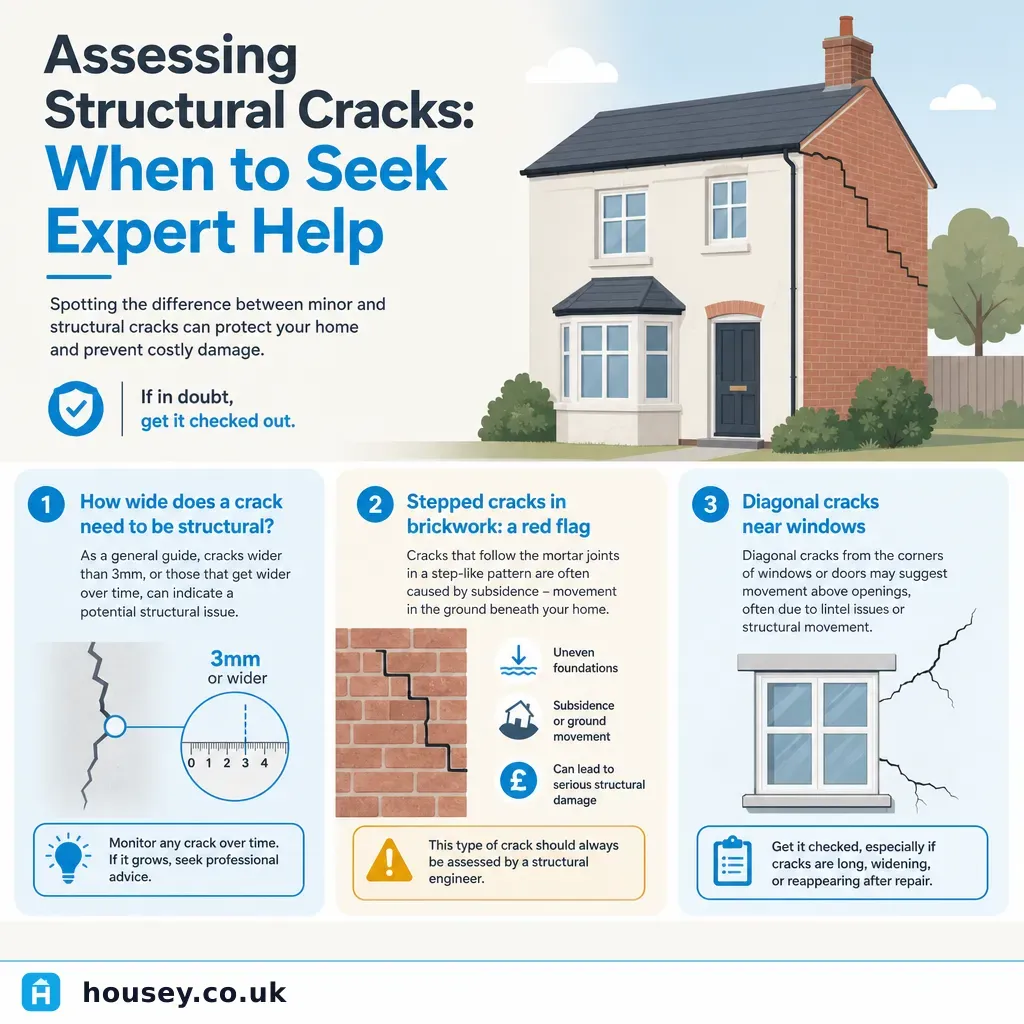
Assessing Structural Cracks: When to Seek Expert Help
Structural cracks range from harmless shrinkage hairlines to signs of subsidence or foundation movement.