Legionella Risk Assessment and Compliance Costs
By Housey · Last reviewed 7th of May 2026
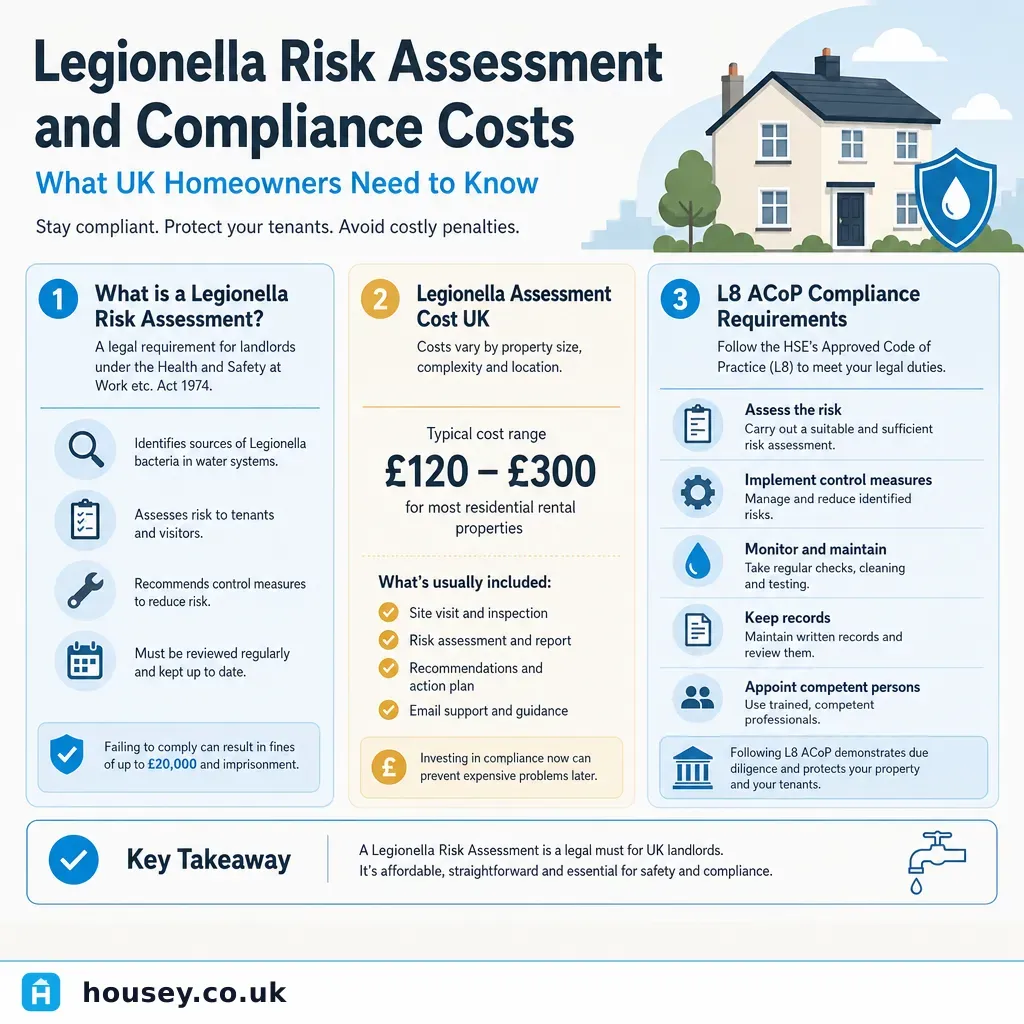
Legionella Risk Assessment and Compliance Costs
Legionella bacteria can proliferate in poorly managed water systems, and UK employers and landlords carry a clear legal duty to assess and control the risk. The obligation is rooted in the Health and Safety at Work etc. Act 1974, elaborated through the Control of Substances Hazardous to Health Regulations 2002 (COSHH), and given practical shape by HSE's Approved Code of Practice L8 — a document that carries significant legal weight in enforcement proceedings. Whether you manage a commercial building, a private rental, or a complex system such as a cooling tower, understanding what a risk assessment involves and what it costs helps you meet your duty without unnecessary delay.
Key points
- HSE's Approved Code of Practice L8 (fourth edition) and Technical Guidance HSG274 set the standards for Legionella risk management in the UK; failure to comply can result in prosecution under the Health and Safety at Work etc. Act 1974.
- Private residential landlords must carry out or commission a Legionella risk assessment — HSE guidance confirms this obligation extends to all work premises, including domestic tenancies.
- Legionella bacteria thrive between 20°C and 45°C; water systems storing or circulating water in this range require documented risk assessment and a written scheme of control.
- L8 requires the assessment to be reviewed whenever there is reason to suspect it is no longer valid — in practice typically every one to two years or after significant system changes.
- Costs range from approximately £150–£350 for a basic residential assessment to £1,000–£5,000+ for complex commercial systems.
Who needs a Legionella risk assessment?
Under COSHH and HSE L8, the duty holder — the person in control of the premises — must assess whether Legionella bacteria represent a realistic risk and, where they do, implement documented controls. The duty applies to:
- Employers with any water system serving a workplace, including hot and cold supplies, cooling towers, and evaporative condensers.
- Residential landlords — including private landlords with a single let — where the property has stored hot or cold water.
- Facilities managers of commercial buildings, hotels, care homes, leisure centres, and hospitals.
Properties with only a combi boiler — where no water is stored — present very low risk. Properties with cold water storage tanks, hot water cylinders, or dead-legs in pipework present higher risk and require documented assessment.
What does a Legionella risk assessment involve?
A competent assessor inspects the water system, identifies risk factors, and produces a written report. Key elements include:
- System schematic review — identifying all water sources, storage vessels, calorifiers, and distribution routes.
- Temperature checks — verifying hot water reaches at least 60°C at the cylinder and 50°C at outlets within one minute; cold water at or below 20°C.
- Risk factor identification — dead legs, infrequently used outlets, scale, biofilm, corrosion, and poor insulation.
- Control measures review — checking thermostatic mixing valves (TMVs), chlorination records, and flushing regimes.
- Written risk assessment report — documenting findings, risk rating, and recommended actions.
- Written scheme of control — a management plan covering ongoing monitoring, record keeping, and review triggers.
Residential vs commercial requirements
Setting | Typical system | Risk level | Assessment cost range | Review frequency |
|---|---|---|---|---|
Residential let (combi boiler only) | No stored water | Very low | £150 – £250 | Every 2 years or on change |
Residential let (cylinder or cold tank) | Stored hot or cold water | Low–medium | £200 – £400 | Every 1–2 years |
Small commercial (office or retail) | Simple calorifier and taps | Medium | £400 – £900 | Annually |
Hotel or care home | Complex distribution, multiple showers | High | £1,000 – £3,000+ | Annually plus monitoring |
Cooling tower or evaporative condenser | Industrial or large commercial | High | £2,000 – £5,000+ | Quarterly checks and annual review |
Indicative UK costs, last reviewed 2026-05-07. Costs vary by system complexity, number of outlets, and assessor. Obtain itemised quotes.
Who can carry out a Legionella risk assessment?
L8 requires a competent person — someone with sufficient training, experience, and knowledge. There is no single mandatory accreditation scheme, but recognised routes include membership of the Legionella Control Association (LCA), CIBSE-affiliated building services engineers, and specialist water treatment contractors. For a straightforward single residential let with low risk, HSE guidance permits the duty holder to carry out the assessment themselves if they are genuinely competent to do so. For commercial premises or complex systems, a specialist third-party assessor is strongly recommended.
What to include in a quote comparison
Before accepting a quote for a Legionella risk assessment:
- Does the assessor have demonstrable Legionella training and LCA membership or equivalent?
- Does the fee include both a written risk assessment report and a written scheme of control, or only an inspection visit?
- How many outlets, storage vessels, and water sources are within scope?
- Will temperature readings be recorded and included in the report?
- Is a corrective action plan included, or does remedial advice cost extra?
- Is VAT included in the quoted price?
- In what format will the report be produced, and will it satisfy your insurer or local environmental health officer if challenged?
Red flags and when to act
The following circumstances indicate a risk assessment is overdue or likely inadequate:
- The property has a cold water storage tank that has not been cleaned or inspected in over two years.
- Hot water at taps or showers is regularly below 50°C, indicating a temperature control failure.
- The system has been dormant or the property unoccupied for four weeks or more without flushing.
- A cooling tower, spa pool, or decorative water feature is present and records are absent or out of date.
- An environmental health officer or HSE inspector has raised a concern or issued an improvement notice.
If a person connected with your building develops Legionnaires' disease, the case must be reported to your local authority environmental health team under the Health Protection (Notification) Regulations 2010.
Important limitations
This article provides general information based on HSE guidance current as of May 2026. Legionella risk management depends on the specific water system, building type, occupancy, and use. Regulations are enforced by HSE and local environmental health officers; prosecution under the Health and Safety at Work etc. Act 1974 can result in significant fines and, in cases involving fatalities, criminal proceedings. Nothing in this article constitutes health and safety advice. Always instruct a competent Legionella assessor and maintain comprehensive written records.
What to ask a qualified professional
- What training and experience do you have specifically in Legionella risk assessment and L8 compliance?
- Are you a member of the Legionella Control Association or another recognised body?
- What does the assessment cover and what is excluded from scope?
- Will I receive both a written risk assessment report and a written scheme of control?
- Will temperature readings and photographs be included in the report?
- How long will the assessment take and when will I receive the completed report?
- If remedial actions are identified, do you offer corrective works or should I instruct a separate contractor?
When to get professional help
Commission a Legionella risk assessment from a competent professional if your rental property has any stored hot or cold water, if you manage a commercial building with employees or members of the public, if your building has been vacant for more than four weeks, if a water system has been substantially altered, if you have not had a documented assessment in the past two years, or if an environmental health officer has raised a concern. Do not rely on verbal reassurance from a maintenance contractor as a substitute for a documented assessment.
How Housey can help
Legionella assessments are one of several compliance surveys that landlords and property managers need to maintain. If you also need to meet fire safety obligations, Housey can help you request and compare quotes for fire risk assessments from qualified professionals across the UK.
Frequently asked questions
Are private landlords legally required to carry out a Legionella risk assessment?
Yes. HSE guidance confirms that the duty under the Health and Safety at Work etc. Act 1974 and COSHH Regulations 2002 extends to landlords of residential premises, including single lets. Where practical risk is low — such as a property with only a combi boiler and no stored water — the duty to assess still exists, and documentation is important if challenged by an environmental health officer.
How often should a Legionella risk assessment be reviewed?
HSE's L8 ACoP requires review when there is reason to suspect the assessment is no longer valid or following a significant change to the water system or its use. In practice, most competent assessors recommend annual review for commercial premises and every two years for simple residential lets, with immediate review after prolonged vacancy, system alterations, or a suspected case of Legionnaires' disease.
Can I carry out my own Legionella risk assessment as a landlord?
For a straightforward residential let — particularly one with only a combi boiler and no stored water — HSE guidance permits the duty holder to carry out the assessment themselves, provided they are competent to do so. For most landlords without specific Legionella training, commissioning a specialist is more defensible. For commercial premises or complex systems, a competent third-party assessor is strongly recommended.
What is the difference between a Legionella risk assessment and a water hygiene inspection?
A Legionella risk assessment is a documented evaluation of the risk from Legionella bacteria in a water system, as required under L8. A water hygiene inspection is typically broader, encompassing microbiological sampling, biofilm and scale checks, and chemical dosing review. For most residential lets, a risk assessment is the primary compliance requirement; water hygiene inspections are more common for complex commercial or healthcare systems.
Sources and further reading
- Legionnaires' disease: The control of legionella bacteria in water systems (L8) — HSE
- Legionella and Legionnaires' disease: guidance for landlords — HSE
- Health and Safety at Work etc. Act 1974 — legislation.gov.uk
- Control of Substances Hazardous to Health Regulations 2002 — legislation.gov.uk
- Legionella Control Association — Legionella Control Association
Useful next reads
 Surveys & Inspections
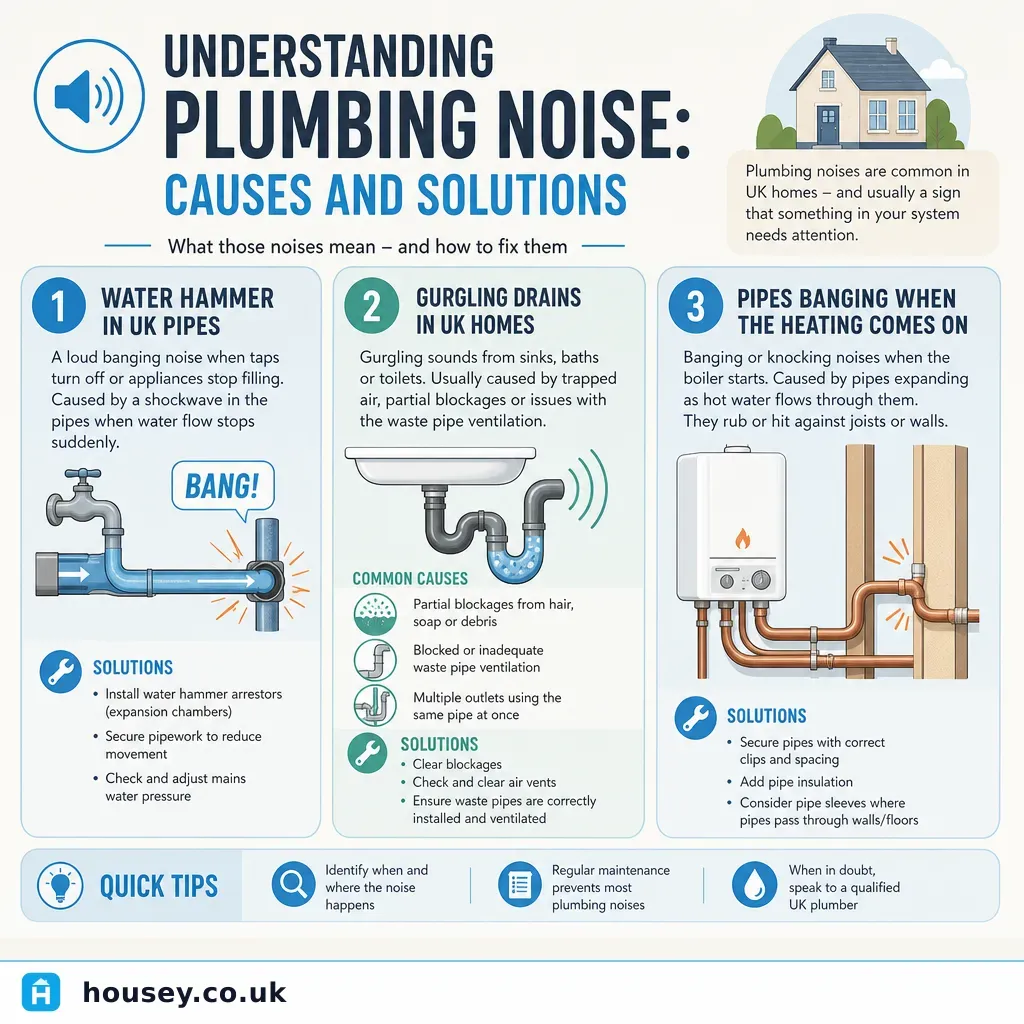
Understanding Plumbing Noise: Causes and Solutions
Most plumbing noises have a specific cause: banging usually means water hammer from high pressure or unsupported pipes; gurgling from drains points to a blockage or dry trap; ticking during heating is typically thermal expansion.
 Surveys & Inspections
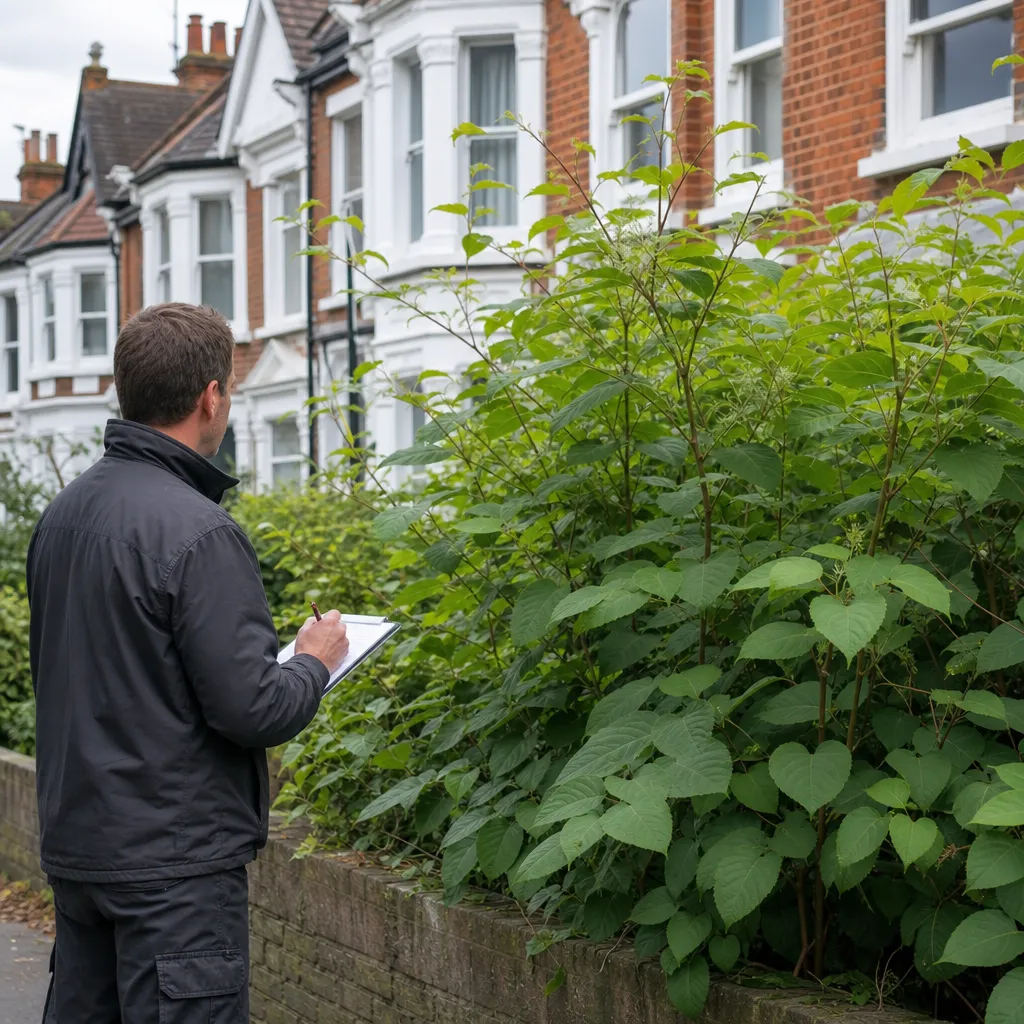
Japanese Knotweed and Property Purchase: Impact on Mortgages and Valuations
Japanese knotweed can prevent mortgage approval and reduce a property's value, especially if it is within 7 metres of a habitable structure.
 Surveys & Inspections
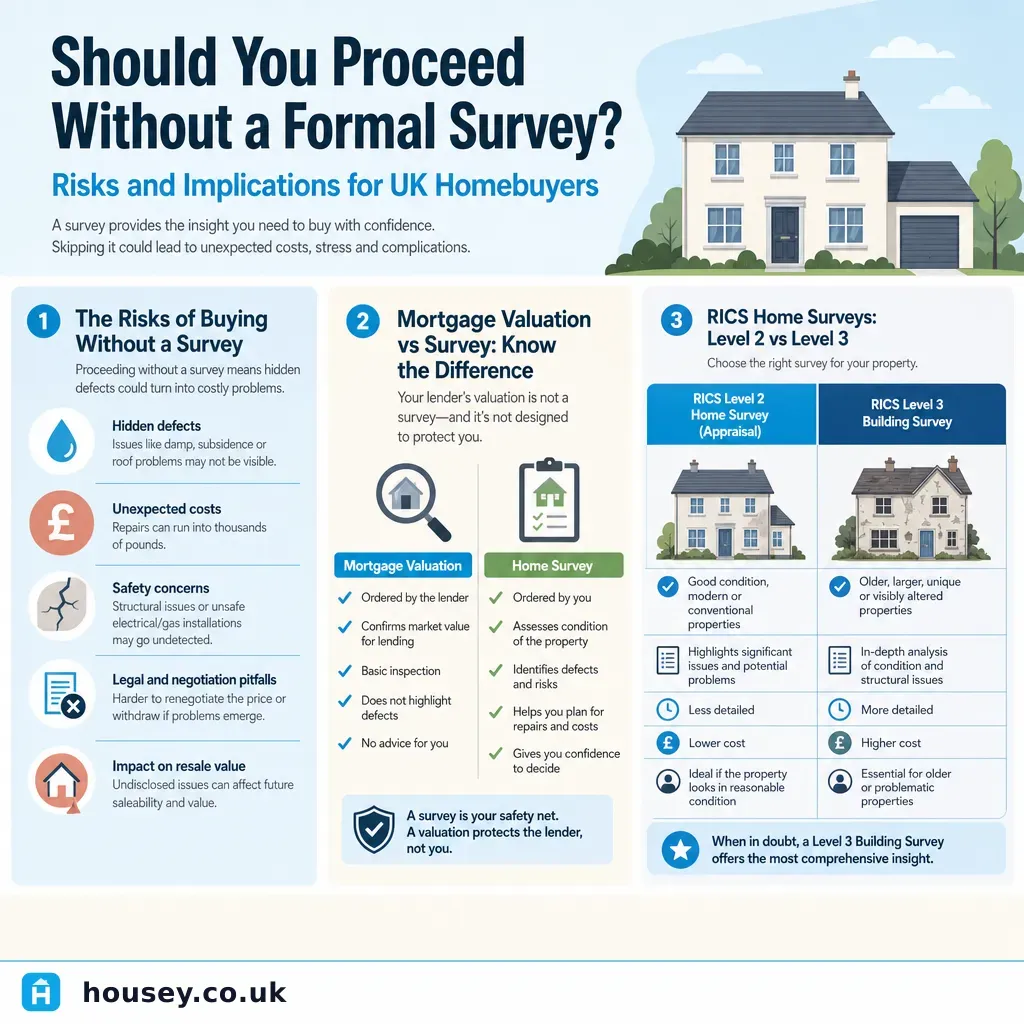
Should You Proceed Without a Formal Survey? Risks and Implications
In England and Wales there is no legal requirement to obtain a survey before exchange, but caveat emptor means any undisclosed defects become your problem the moment contracts are exchanged.
 Surveys & Inspections
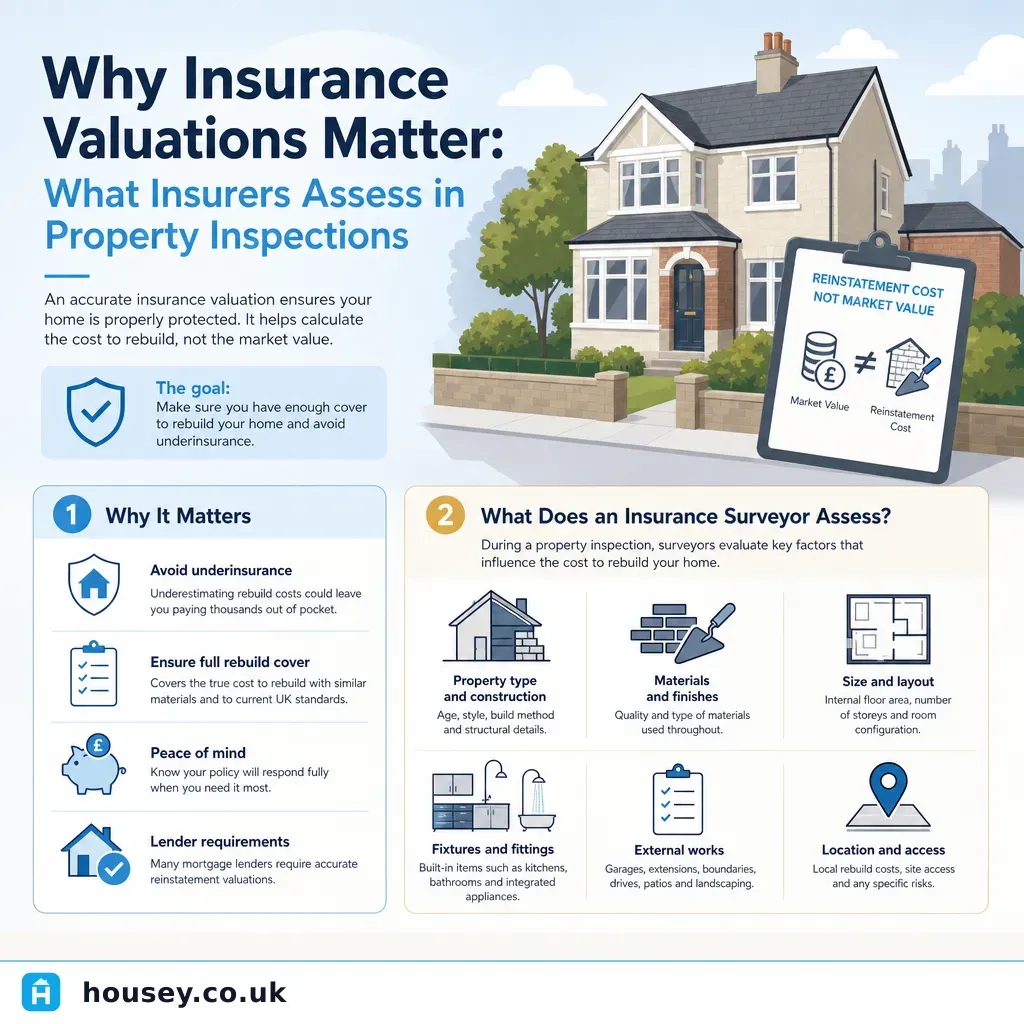
Why Insurance Valuations Matter: What Insurers Assess in Property Inspections
An insurance valuation establishes the reinstatement cost of your property — what it would cost to demolish and rebuild it — not its market value.
 Surveys & Inspections
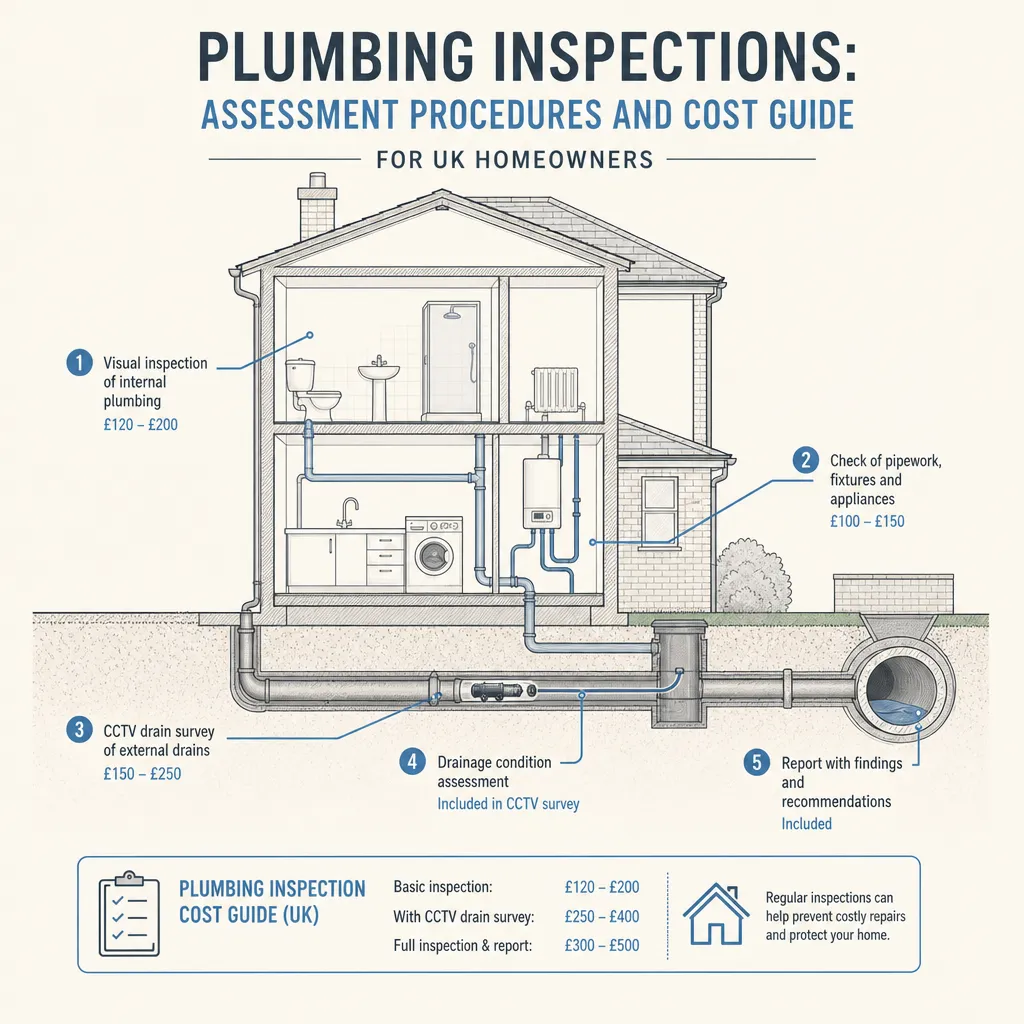
Plumbing Inspections: Assessment Procedures and Cost Guide
A professional plumbing inspection in the UK typically covers water pressure, pipe condition, boiler and hot water systems, and visible drainage.