Understanding Plumbing Noise: Causes and Solutions
By Housey · Last reviewed 19th of May 2026
Understanding Plumbing Noise: Causes and Solutions
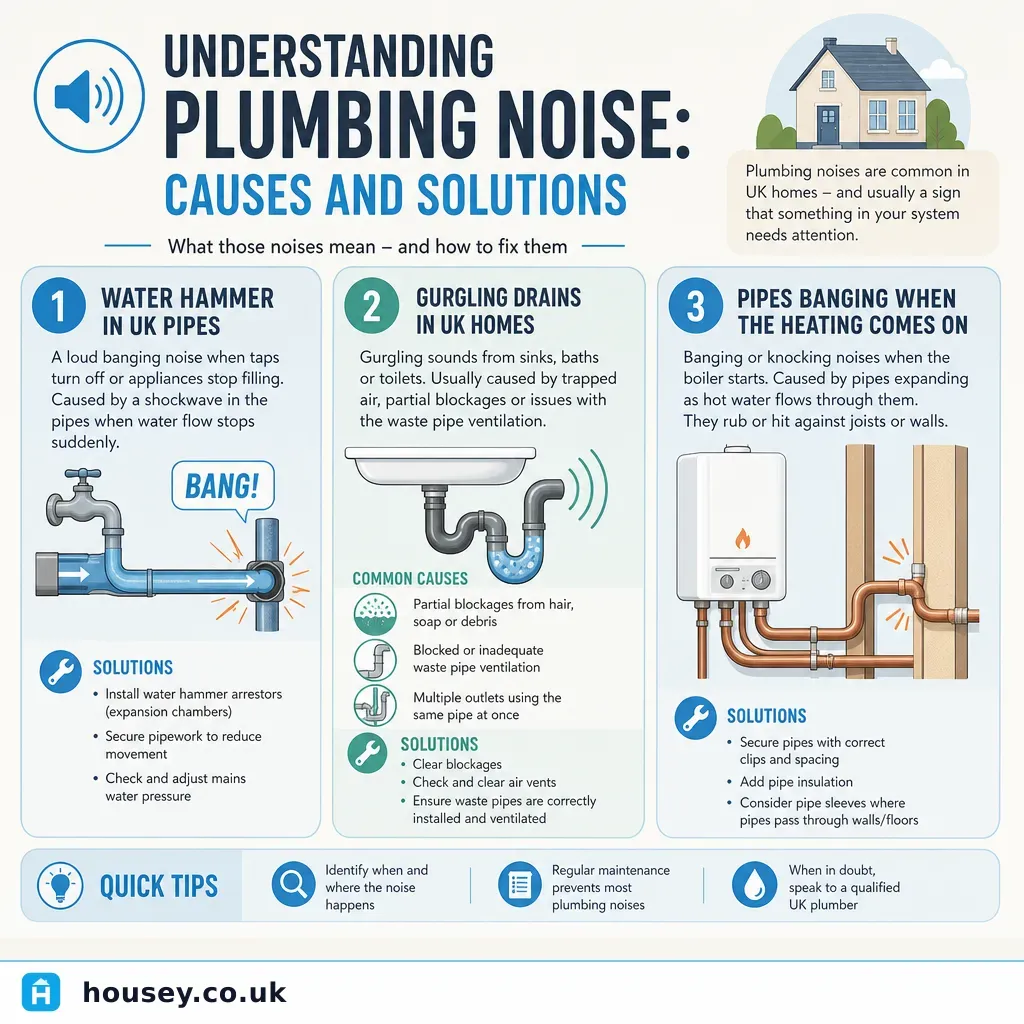
Unusual sounds from pipes and water systems are among the most common — and sometimes most unsettling — concerns for UK homeowners. A hammer-like bang when a tap closes, persistent gurgling from a sink, or a hissing toilet cistern can each signal something quite different: a simple pressure issue, a blocked trap, a failing valve, or occasionally a more significant fault in the drain itself. Identifying the type of noise is the most important first step toward resolving it.
Key points
- Water hammer — a banging or knocking noise when a tap or valve closes — is typically caused by high mains water pressure (above the recommended 1–3.5 bar) or inadequately clipped pipework.
- Gurgling from drains indicates a partial blockage, a dry or siphoned trap, or a ventilation fault in the drain stack — and affects multiple fixtures simultaneously when the cause is in the shared drain.
- Ticking and creaking during or after the heating cycle is almost always thermal expansion of copper pipework moving against joists or clip brackets, and is rarely a sign of a serious fault.
- A hissing toilet cistern or water trickling from an overflow pipe usually points to a faulty fill valve (ballcock); a running toilet can waste 200–400 litres per day.
- Under Building Regulations Part H and the Water Supply (Water Fittings) Regulations 1999, drainage and water systems in UK homes must be maintained to prevent waste, nuisance, and contamination.
What different plumbing noises typically mean
Banging or knocking — water hammer
A loud bang or knock heard when a tap is quickly turned off, or when a washing machine or dishwasher valve closes, is usually water hammer. This happens when fast-moving water is abruptly stopped, sending a pressure shockwave back through the pipework.
Common causes include:
- Mains water pressure above the recommended domestic range of 1–3.5 bar (a pressure gauge fitted to an outside tap can confirm this).
- Pipes inadequately clipped — 15 mm copper pipe should be supported every 1–1.2 m, and 22 mm every 1.5–1.8 m.
- Worn check valves in combination boilers or appliance fill hoses.
Gurgling from drains
Gurgling from a sink, bath, shower, or toilet usually indicates one of:
- A partial blockage slowing flow and allowing air to pull through the trap.
- A dry trap — the water seal has evaporated, particularly in infrequently used sinks or holiday properties, allowing sewer gases and gurgling to enter the room.
- Inadequate or blocked ventilation of the drain stack — in older UK properties, the soil pipe may not be correctly vented, causing trap siphoning.
Ticking and creaking during heating
Ticking or creaking from floors or walls during or after the heating cycle is almost always thermal expansion — copper pipework expanding as it heats and contracting as it cools, moving slightly against timber joists, floorboards, or clip brackets. It is very common in properties with wet central heating systems and is rarely a sign of a plumbing or structural fault. Repeated movement can, however, work pipe clips loose over time.
Hissing cisterns and dripping overflows
A continuous hiss from a toilet cistern, or water visibly running from an overflow pipe on the external wall, usually indicates:
- A faulty or worn fill valve (ballcock or float valve) not shutting off fully.
- A float set too high, allowing water to reach and flow through the overflow.
- Debris obstructing the valve seat, preventing a complete seal.
A running toilet wasting water at this rate is a plumbing noise problem and a significant water efficiency issue.
Whistling from taps or pipes
A whistling or whining noise when water is running commonly points to a worn tap washer or ceramic cartridge creating turbulence, high water pressure through fittings, or a partially closed isolation valve upstream of the tap.
Comparison table: noise, likely cause, and next steps
Noise type | Most likely cause | DIY action possible? | When to call a plumber |
|---|---|---|---|
Banging (water hammer) | High pressure or unsupported pipes | Add pipe clips; check pressure with a gauge | If PRV fitting or adjustment needed; if banging persists |
Gurgling (single drain) | Partial blockage or dry trap | Clear trap; refill dried traps with water | If blockage is deeper in the drain or keeps recurring |
Gurgling (multiple fixtures) | Main drain blockage or stack ventilation fault | None — investigate professionally | Always — likely needs a CCTV drain survey |
Ticking or creaking | Thermal expansion of pipes | Add foam lagging or cushioned pipe clips | If joints are visibly stressed or leaking |
Hissing cistern or overflow | Faulty fill valve | Replace ballcock or fill valve | If valve replacement does not resolve the noise |
Whistling from taps | Worn washer or high pressure | Replace tap washer or cartridge | If noise persists after washer replacement |
Rumbling or kettling from boiler | Limescale or sludge build-up | None — contact a Gas Safe engineer | Always — boiler work requires a Gas Safe registered engineer |
Bubbling from radiators | Trapped air or low system pressure | Bleed radiators; check system pressure | If pressure drops repeatedly or noise continues |
Decision tree: what should you do first?
- Banging when taps shut off → fit a pressure gauge to an outside tap; if mains pressure exceeds 3.5 bar, instruct a plumber to fit or adjust a pressure-reducing valve. Also check that pipes are well clipped at the recommended intervals.
- Gurgling from one sink or basin → clear and inspect the trap beneath the fixture; refill dried traps with water. If the noise returns, investigate for a partial blockage further along the branch drain.
- Gurgling from multiple fixtures at the same time → this suggests a shared fault in the main drain or soil stack — arrange a CCTV drain survey before attempting any remedial work.
- Ticking and creaking during heating → usually harmless. Consider foam pipe lagging or cushioned pipe clips at movement points if the noise is intrusive.
- Hissing from the toilet → check the fill valve and float height; replacing the fill valve (widely available from plumbers' merchants and DIY retailers) resolves most cases.
- Rumbling or kettling from the boiler → this is boiler kettling caused by limescale or system sludge; contact a Gas Safe registered engineer. Do not attempt DIY boiler investigation or repair.
- Widespread noise with no obvious single cause → book a plumber's inspection and consider whether a CCTV drain survey or pressure test would help identify the root cause.
When gurgling suggests a drainage problem
Persistent or widespread gurgling — particularly when accompanied by slow drainage, odours, or any sign of backflow — may indicate a more significant defect in the drain itself. In UK properties, common causes include:
- Root ingress into clay or concrete drain pipes, particularly in properties with mature trees nearby. Roots enter through joints and can cause partial or complete blockage.
- Collapsed or cracked drain sections — more common in older clay or concrete drains, particularly in areas with ground movement or heavy vehicle traffic above the drain run.
- Misaligned joints — offset pipe joints that allow debris to accumulate over time.
- Inadequate fall — older horizontal drain runs sometimes lack sufficient gradient, allowing solid material to settle and build up.
A CCTV drain survey passes a camera through the drain to identify the precise location and nature of any defect, avoiding unnecessary excavation and allowing targeted repair work rather than guesswork.
What not to assume about plumbing noises
"It's been like this for years — it must be fine." Some problems develop slowly. A minor pressure issue or partial blockage can deteriorate, potentially causing water damage or drain failure over time.
"Drain chemicals will fix the blockage." Chemical drain cleaners can dissolve minor grease blockages but will not clear solid debris, root ingress, or structural drain faults. Overuse can also damage older pipework and drainage fittings.
"It's just the boiler settling." Rumbling, banging, or persistent noise from a boiler should always be assessed by a Gas Safe registered engineer — not left or attributed to normal operation.
"Gurgling only happens in old houses." Gurgling can occur in any property when ventilation is inadequate, traps dry out, or a partial blockage develops anywhere in the drain run.
When to get professional help
Consult a plumber or drainage specialist promptly if:
- Banging persists after checking pipe clips and mains pressure.
- Gurgling affects multiple fixtures at the same time.
- Drains are slow, backing up, producing odours, or showing any sign of surcharging.
- You have identified or suspect a structural drain defect.
- The boiler is making any unusual noise — always contact a Gas Safe registered engineer.
- There is any moisture, damp patching, or water staining near pipework or on adjacent walls and ceilings.
How Housey can help
If persistent gurgling or slow drainage suggests a deeper problem in your drain run, Housey can connect you with specialists offering CCTV drain surveys and drainage surveys to locate faults accurately without unnecessary excavation.
Frequently asked questions
Why do my pipes make a banging noise only in winter?
Cold weather can cause pipes to contract more rapidly, increasing movement and banging. It may also temporarily raise mains pressure. If noise is worse in winter, check that pipes are well supported at recommended intervals and that your sealed central heating system pressure is within the normal cold range of 1–1.5 bar.
Is it normal for radiators to gurgle when the heating comes on?
Some noise when the system first fires up is common, particularly if there is air in the radiators. Persistent gurgling from individual radiators is usually resolved by bleeding with a radiator key. If the problem returns frequently, it may indicate a persistent air entry point or a need to add inhibitor to the system.
Can I fix water hammer myself?
In many cases, yes. Ensuring pipes are clipped at recommended intervals and checking that isolation valves are fully open rather than partially closed are straightforward DIY steps. If mains pressure is too high, fitting a pressure-reducing valve involves the mains supply pipework and should be done by a qualified plumber.
When does gurgling from a drain mean I need a CCTV survey?
If gurgling affects multiple fixtures simultaneously, returns quickly after clearing the trap, is accompanied by odours or slow drainage, or the property has mature trees near the drain run, a CCTV drain survey is the most reliable way to confirm or rule out a structural drain fault without unnecessary excavation.
Sources and further reading
- Approved Document H: Drainage and Waste Disposal — GOV.UK
- Water Supply (Water Fittings) Regulations 1999 — legislation.gov.uk
- Gas Safe Register — Gas Safe Register
- Waterwise: household water efficiency guidance — Waterwise
Useful next reads
 Surveys & Inspections
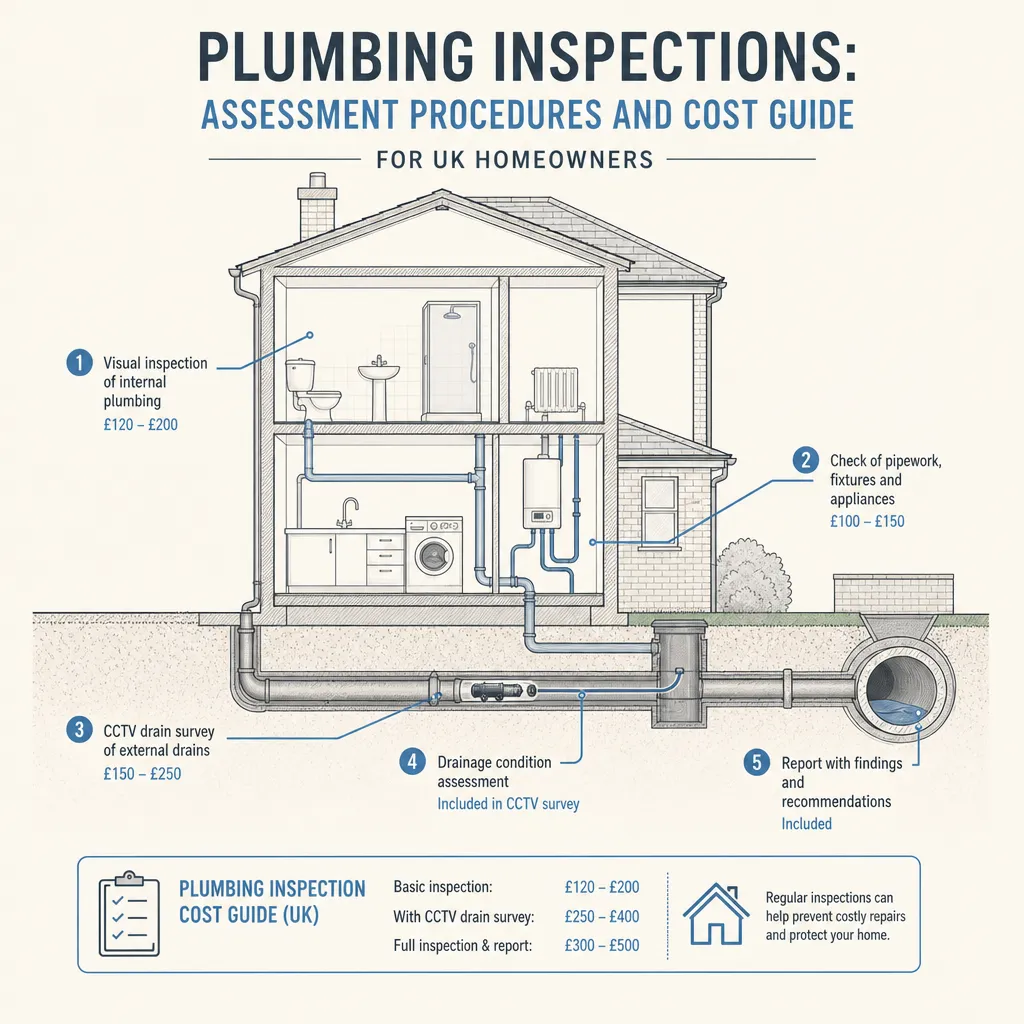
Plumbing Inspections: Assessment Procedures and Cost Guide
A professional plumbing inspection in the UK typically covers water pressure, pipe condition, boiler and hot water systems, and visible drainage.
 Surveys & Inspections
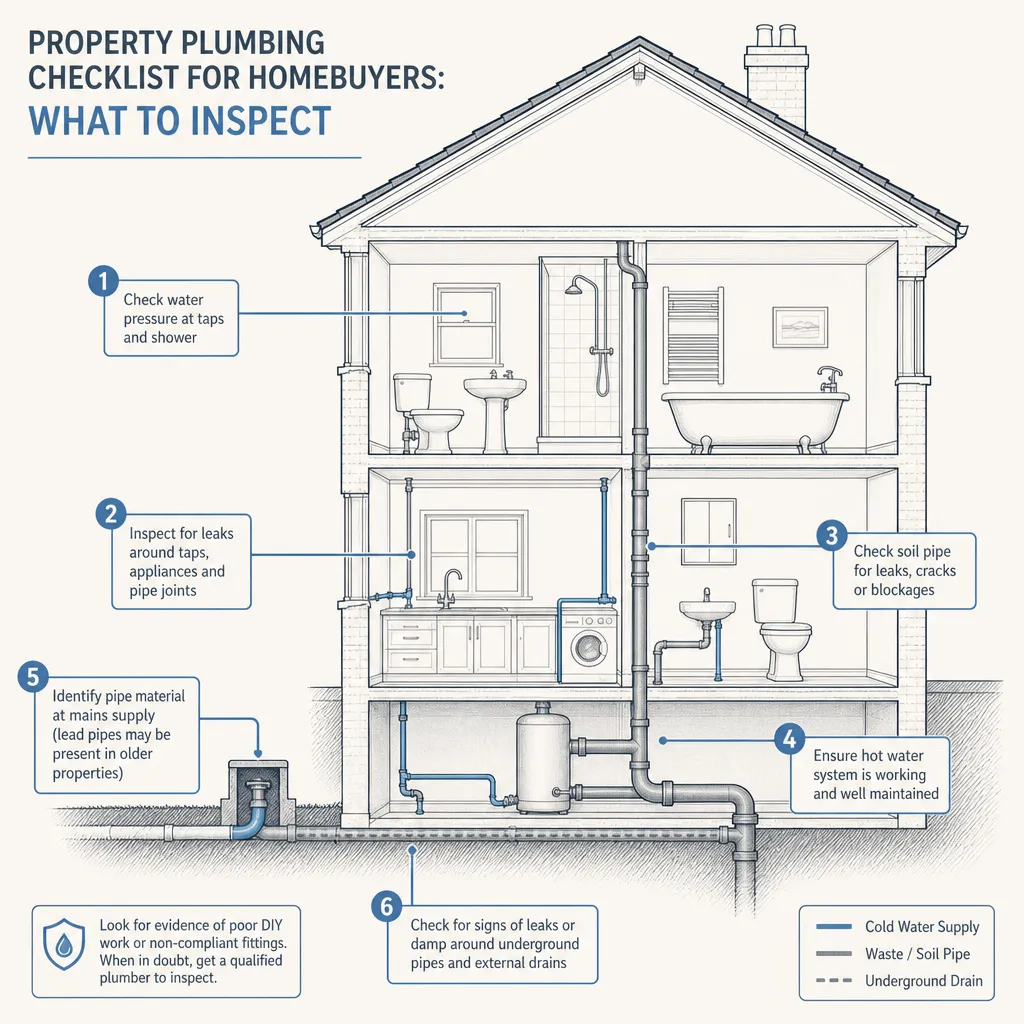
Property Plumbing Checklist for Homebuyers: What to Inspect
Before exchanging on a UK property, check water pressure at multiple outlets, look for signs of damp or staining around pipes, confirm whether any lead pipework remains, inspect the boiler age and service history, and ask your surveyor about drainage.
 Surveys & Inspections
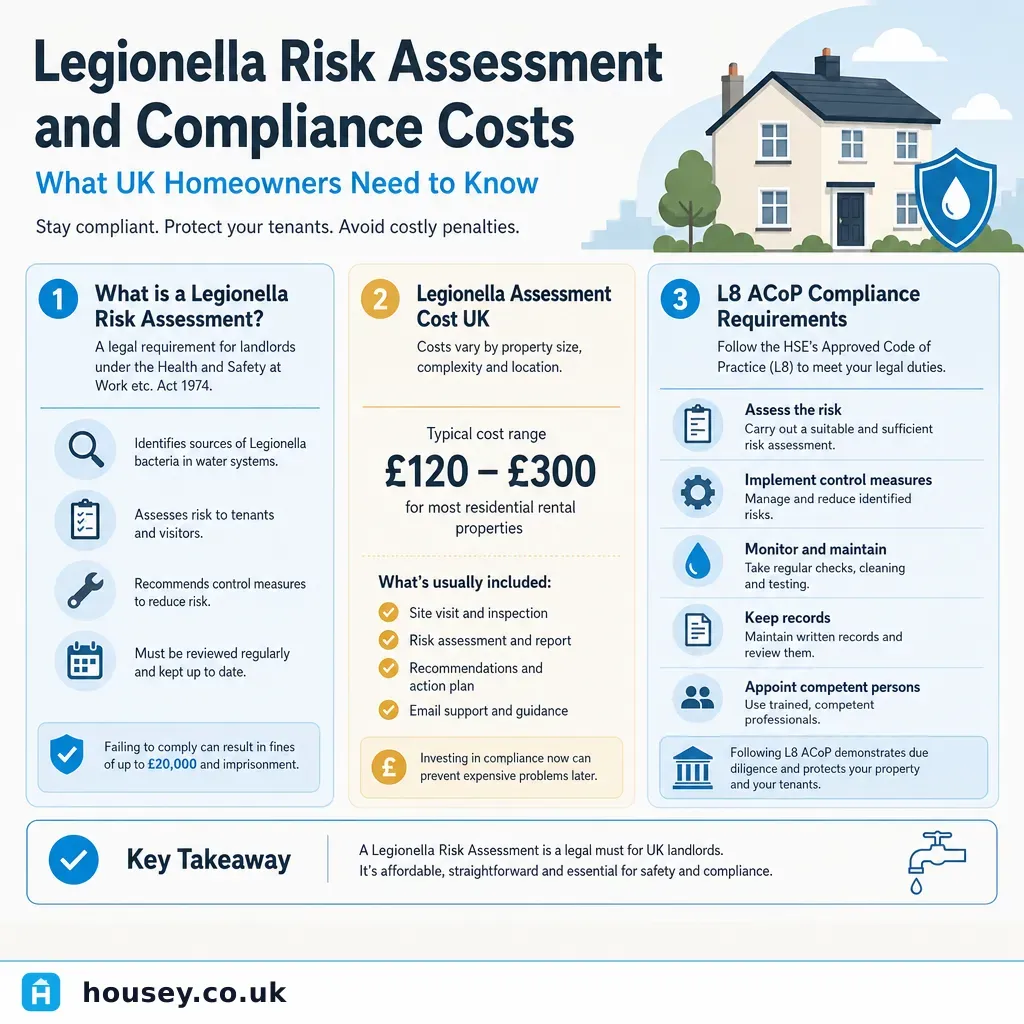
Legionella Risk Assessment and Compliance Costs
A Legionella risk assessment costs roughly £150–£350 for a straightforward residential let and £400–£5,000+ for commercial premises, depending on system complexity.
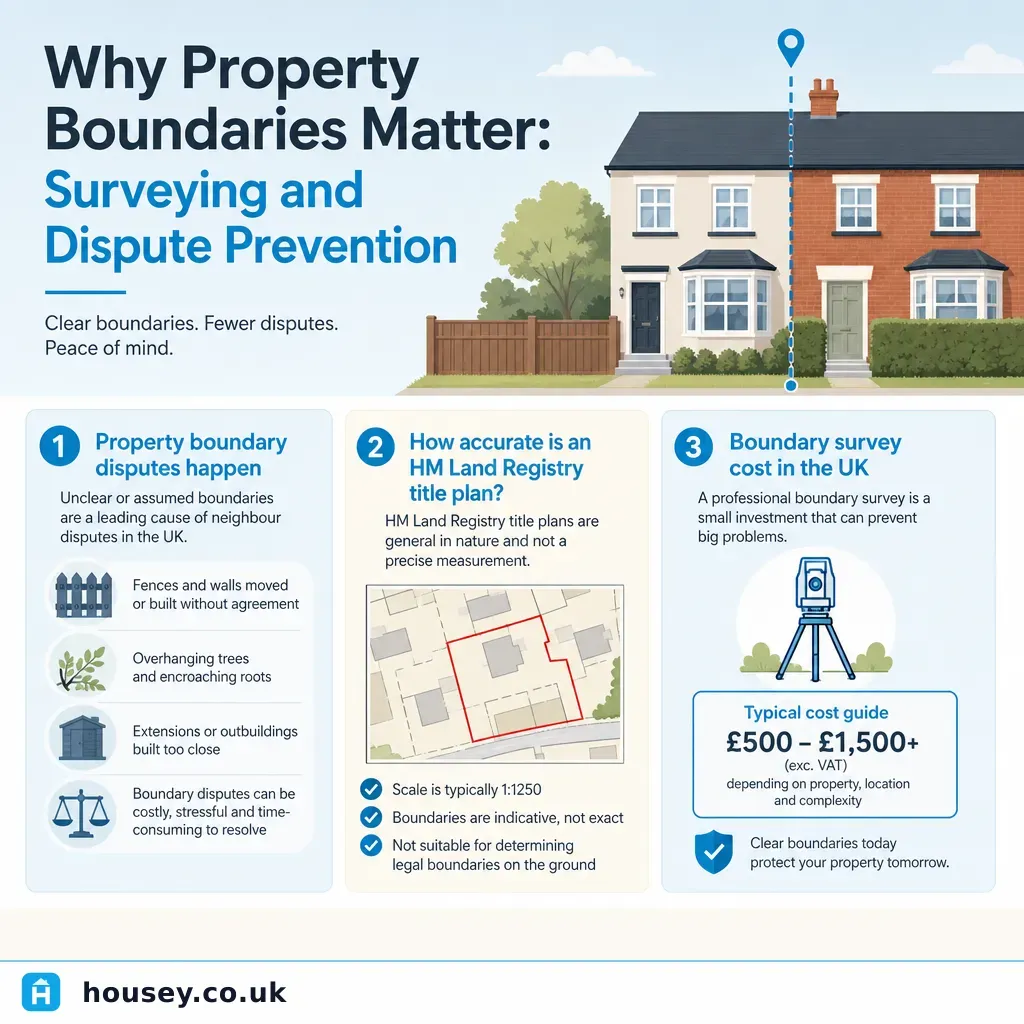 Surveys & Inspections
Why Property Boundaries Matter: Surveying and Dispute Prevention
Property boundaries in England and Wales are recorded as general boundaries by HM Land Registry — not precise measurements.
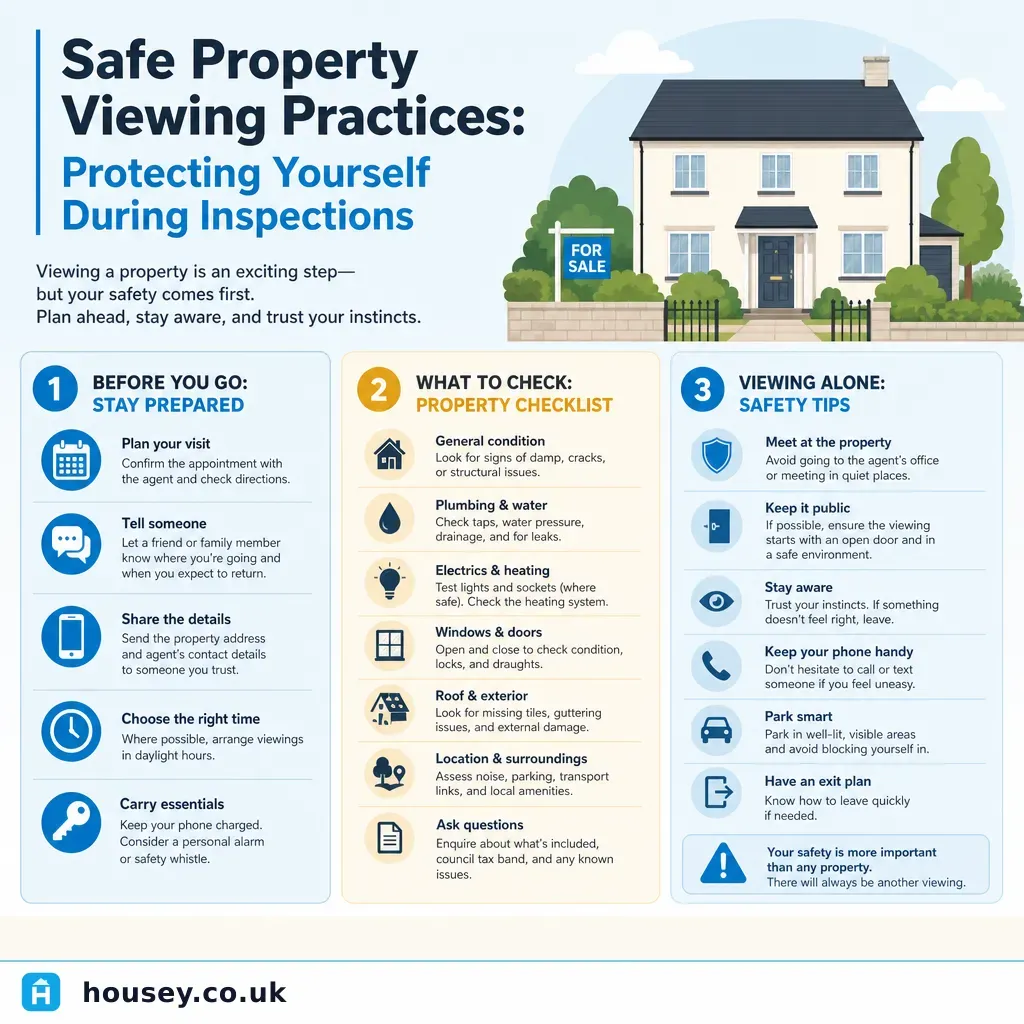 Surveys & Inspections
Safe Property Viewing Practices: Protecting Yourself During Inspections
When viewing a property in the UK, always tell someone where you are going and share the full address before you leave.