Legal and Practical Considerations When Letting Property to Family
By Housey · Last reviewed 24th of May 2026

Legal and Practical Considerations When Letting Property to Family
Many UK homeowners find themselves thinking about letting a property to a family member — a grown-up child who needs somewhere affordable to live, an elderly parent who can no longer manage their own home, or a sibling going through a difficult period. The arrangement can feel straightforward because trust already exists, but without careful preparation it often creates legal obligations, tax complications, and relationship risks that only become apparent when something goes wrong.
Key points
- If rent is paid — even a nominal sum — the arrangement is likely to be classified as an assured shorthold tenancy (AST) under the Housing Act 1988, giving the family member the same statutory rights as any other tenant.
- Landlords must provide an annual Gas Safe Register certificate, an Electrical Installation Condition Report (EICR) every 5 years, a minimum E-rated Energy Performance Certificate, and the government's current How to Rent guide — these duties apply equally to family lettings.
- Charging significantly below market rent may affect your ability to deduct allowable expenses from rental income for tax purposes and could complicate capital gains tax calculations on a future sale.
- Most residential mortgages prohibit letting without the lender's prior written consent; breaching this condition can put your mortgage at risk.
- Right to Rent checks under the Immigration Act 2014 are legally required regardless of whether the occupant is a family member — civil penalties of up to £3,000 per occupant apply for non-compliance.
Should you use a formal tenancy agreement?
Even between close relatives, a written tenancy agreement is strongly advisable whenever rent is paid. Under the Housing Act 1988, a regular payment of rent — however small — is typically enough to create a statutory tenancy. This means your family member gains security of tenure, and you would need to follow a Section 21 or Section 8 process to recover possession, the same as for any private tenant.
A written agreement sets out the rent amount, payment dates, notice periods, maintenance responsibilities, and any house rules, reducing the risk of misunderstanding. It also provides essential evidence if a dispute reaches court. If the arrangement is intended to be short-term, a break clause can help protect your position.
Where no rent at all is paid and no agreement exists, the family member is likely to occupy under a licence to occupy rather than a tenancy. A licence generally carries fewer statutory protections and may be easier to end, but the distinction between a licence and a tenancy is determined by the facts of the arrangement — not what you choose to call it. Take legal advice before relying on licence status to recover possession.
Formal vs informal arrangements
Arrangement | Rent paid? | Legal status | Ending the arrangement | Main risk |
|---|---|---|---|---|
AST with written agreement | Yes | Full statutory tenant | Section 21 or Section 8 notice | Standard landlord duties and deposit rules apply |
Verbal AST (rent paid, no paperwork) | Yes | Full statutory tenant | Section 21 or Section 8 notice | Harder to enforce terms; deposit compliance risk |
Licence to occupy | No | Licensee, fewer protections | Reasonable notice required | Status disputed if any payment is ever made |
Gratuitous licence (free, no agreement) | No | Implied licence | Potentially contentious | No documented terms; relationship risk |
Legal duties that apply to all lettings, including to family
Letting law in England does not create exemptions for family. Before and during any tenancy, you are responsible for:
- Gas safety: Annual inspection by a Gas Safe registered engineer; the certificate must be issued to the tenant before they move in and within 28 days of each subsequent check.
- Electrical Installation Condition Report (EICR): Required every 5 years, or at the start of a new tenancy if the existing report is older. Remedial work must be completed within 28 days of receiving the report.
- Smoke and carbon monoxide alarms: Under the Smoke and Carbon Monoxide Alarm (Amendment) Regulations 2022, at least one smoke alarm must be installed on every storey and a carbon monoxide alarm in every room with a solid-fuel appliance (and gas appliances in new or replacement installations in England from 1 October 2022).
- Energy Performance Certificate (EPC): The property must have a minimum E rating to be let legally under the Minimum Energy Efficiency Standards. Monitor GOV.UK for updates to the planned minimum threshold.
- Deposit protection: Any deposit taken must be registered with an approved scheme — the Deposit Protection Service, MyDeposits, or Tenancy Deposit Scheme — within 30 days, with prescribed information issued to the tenant.
- How to Rent guide: Provide the current version at the start of each tenancy.
Failing to comply can prevent you from serving a valid Section 21 notice, expose you to financial penalties, and in some cases create criminal liability.
Tax and mortgage considerations
Income tax: Rental income is taxable whether the tenant is a family member or not. If you charge below market rent, HMRC may question whether your expenses are fully deductible, since relief is generally only available on a commercial letting. Consult a qualified tax adviser or review HMRC's Property Income guidance.
Capital gains tax: If a family member occupies your property long-term at a significantly reduced rate, this can affect private residence relief calculations when you sell. Specialist advice is recommended before committing to any long-term arrangement.
Mortgage consent: Most residential mortgage lenders prohibit letting without prior written consent. You may need to switch to a buy-to-let mortgage or obtain a formal consent-to-let letter. Check your mortgage terms and contact your lender before the tenancy begins.
Beneficial interest risk: If a family member contributes to mortgage payments or property improvements over an extended period, they may eventually claim a beneficial interest under trust law principles. A solicitor can advise on how to document the arrangement to protect both parties from the outset.
Red flags that suggest you need professional advice
Seek qualified legal or tax advice if any of the following apply:
- The family member has already moved in informally and you now want to formalise or end the arrangement.
- You have not informed your mortgage lender.
- The property is leasehold and the lease may restrict subletting or require the freeholder's consent.
- The arrangement is intended to last more than 12 months.
- Rent is charged significantly below market rate and you are uncertain of the tax implications.
- The family member has made, or may in future make, financial contributions to the property.
- You are considering transferring ownership to the family member at a future date.
Important limitations
This article provides general information for England only. The law differs materially in Scotland (Private Housing (Tenancies) (Scotland) Act 2016), Wales (Renting Homes (Wales) Act 2016), and Northern Ireland. Tenancy law, landlord duties, and tax rules change. Nothing here constitutes legal, tax, or financial advice. Always consult a qualified solicitor and a tax adviser before entering into any letting arrangement, however informal.
What to ask a qualified professional
Before letting to a family member, consider asking a solicitor and a letting specialist:
- Does the proposed arrangement create an AST, and what is the correct process to end it if required?
- Which certificates and documents must I provide before the tenancy begins?
- Does my mortgage permit this letting, and do I need written consent from my lender?
- What are the income tax and capital gains tax implications of charging below market rent?
- Is there a risk of the family member acquiring a beneficial interest in the property?
- How should I document the arrangement to protect both parties?
When to get professional help
Seek advice before the arrangement begins — not after a dispute arises. A regulated letting agent can handle compliance documentation, including obtaining certificates, registering a deposit, and issuing the How to Rent guide. A solicitor is particularly important where the property is leasehold, the family member may contest possession, beneficial interest is a risk, or the arrangement forms part of wider inheritance planning.
How Housey can help
Housey provides guidance and connections to vetted property professionals across the UK. Whether you are planning a family letting for the first time or trying to regularise an existing informal arrangement, Housey's resources can help you identify the right specialist — from regulated letting agents to solicitors with residential property expertise — before complications arise.
Frequently asked questions
Does a family letting still require Right to Rent checks?
Yes. The Right to Rent obligation under the Immigration Act 2014 applies to all private residential tenancies in England regardless of the relationship between landlord and occupant. You must verify that the family member has the legal right to reside in the UK before the tenancy begins. Civil penalties of up to £3,000 per occupant apply for non-compliance.
What happens if I do not register the deposit?
If you take a deposit and fail to register it with an approved scheme within 30 days, you may be ordered to pay the tenant up to three times the deposit amount as a penalty. You also cannot serve a valid Section 21 notice until the deposit is either returned or correctly protected. This applies equally to family lettings.
Can I charge my family member less than market rent?
You can, but charging below market rent may affect your ability to deduct all letting expenses from taxable rental income, since HMRC generally expects a commercial basis for full expense relief. It may also complicate capital gains tax calculations on a future sale. Seek advice from a qualified tax adviser before setting a below-market rent.
What tenancy law applies if I let to a family member in Wales or Scotland?
Different legislation applies outside England. In Wales, the Renting Homes (Wales) Act 2016 replaced most previous frameworks from December 2022, introducing occupation contracts in place of tenancies. In Scotland, the Private Housing (Tenancies) (Scotland) Act 2016 governs private lettings. Notice requirements, tenant rights, and landlord obligations differ significantly. Consult a solicitor qualified in the relevant jurisdiction.
Sources and further reading
- Renting out your property: landlord responsibilities — GOV.UK
- How to Rent guide — GOV.UK
- Smoke and Carbon Monoxide Alarm (Amendment) Regulations 2022 — legislation.gov.uk
- Property income: HS223 Self Assessment helpsheet — HMRC / GOV.UK
- Right to Rent: landlord checks on potential tenants — GOV.UK
- Tenancy deposit protection — GOV.UK
Useful next reads
 General property advice
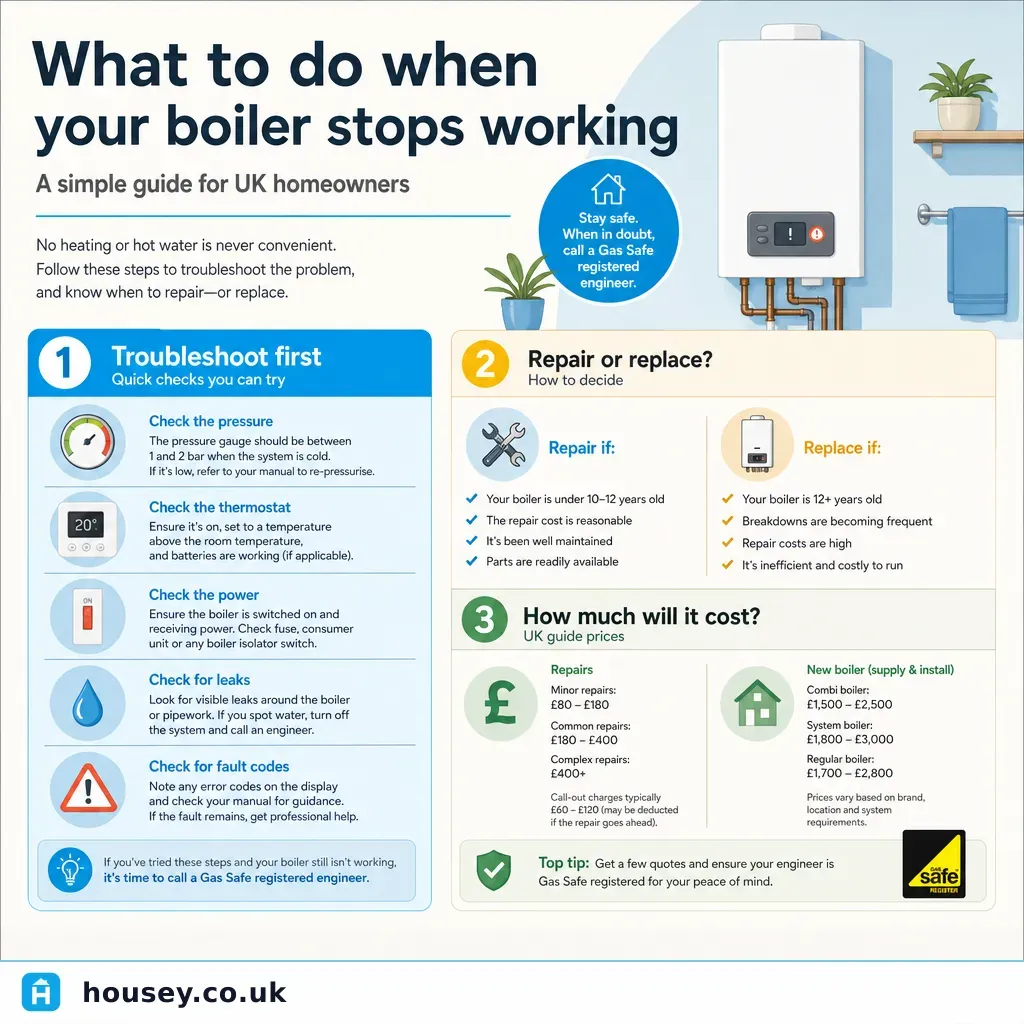
What to do when your boiler stops working
When your boiler stops working, check the pressure gauge (should read 1–1.
 General property advice
Property Market Trends: Activity Growth and Price Movements
UK property market activity is measured through completed sale registrations (HM Land Registry), lender mortgage data, and transaction volumes from HMRC.
 General property advice
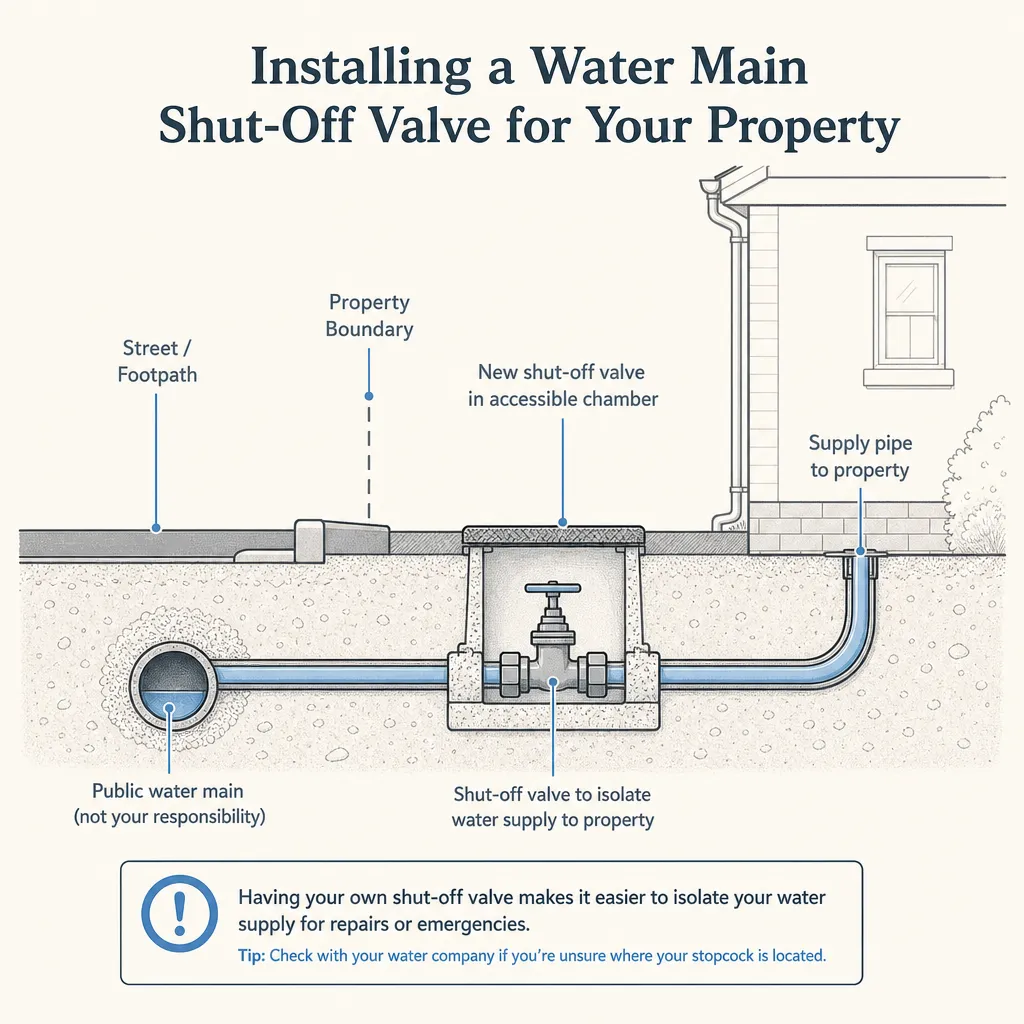
Installing a water main shut-off valve for your property
A water main shut-off valve — commonly called a stopcock — controls all water entering your home from the mains.
 General property advice
Monthly House Price Index: August Market Report and Analysis
The UK House Price Index is published monthly using completed Land Registry transaction data, meaning August figures typically reflect sales agreed months earlier.
 General property advice
Scottish Property Market: Activity and Regional Trends
Scotland's property market operates under distinct legal rules: sellers must provide a Home Report before marketing, transactions become legally binding at conclusion of missives rather than exchange of contracts, and Land and Buildings Transaction Tax replaces Stamp Duty.