Lighting Design Service Costs and Consultation
By Housey · Last reviewed 7th of May 2026
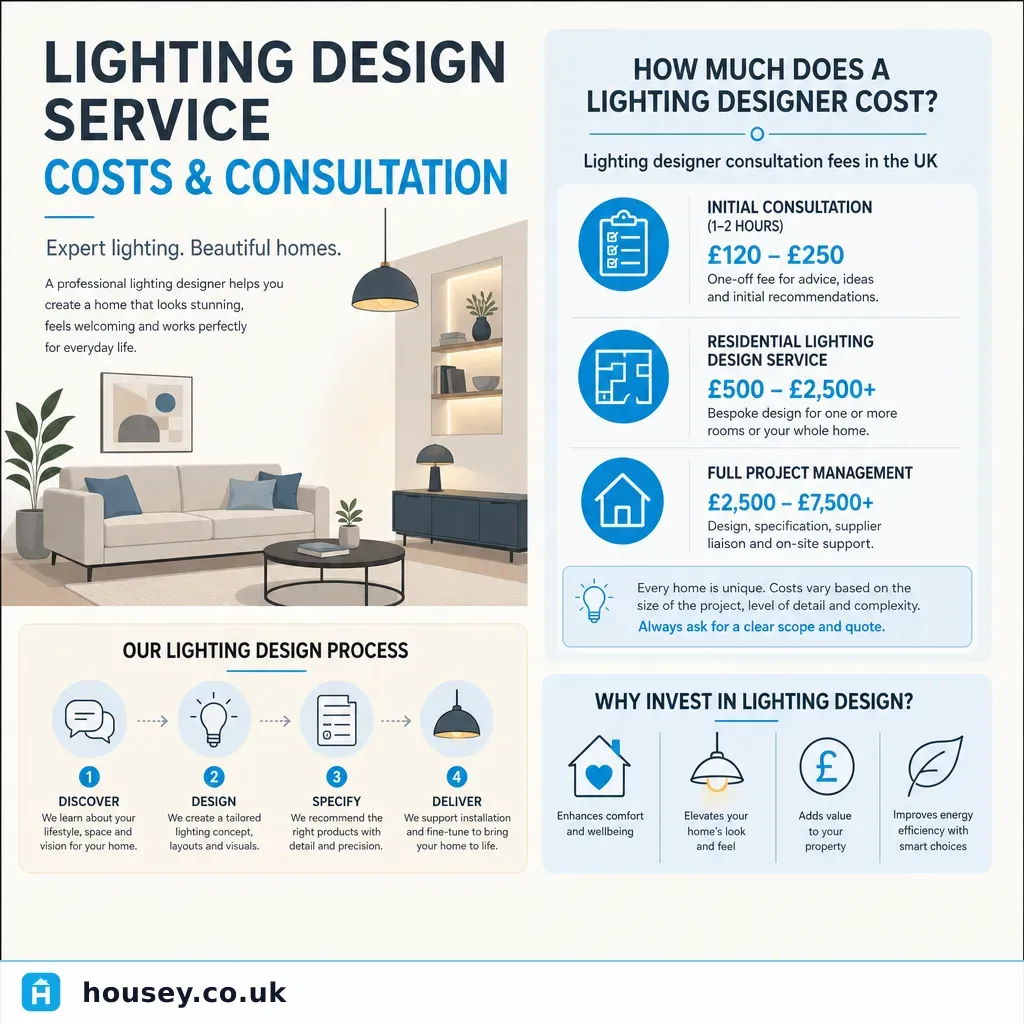
Lighting Design Service Costs and Consultation
Lighting design comes up most often at two moments in a project: during a new build or extension where electrical first-fix is still open, and during a renovation where the homeowner wants to move beyond standard pendant-and-switch layouts. Getting the scope and fee structure right at the start saves money and avoids retrofitting recessed fittings or running additional cable routes after plaster has been applied.
Key points
- Residential lighting designers in the UK typically charge £60–£120 per hour; indicative UK costs, last reviewed 2026-05-07.
- Most lighting design practices structure fees across distinct stages — brief, concept, scheme design, specification, and site visits — and understanding which stages you are commissioning helps you compare quotes fairly.
- The British Institute of Interior Design (BIID) and the Society of Light and Lighting (SLL), a division of CIBSE, are the main professional bodies for practising lighting designers in the UK.
- Commissioning a lighting designer before electrical first fix avoids the need to reroute cable, add conduit, or cut back finished plasterwork — the most common source of cost overrun on lighting projects.
- A lighting specification identifies circuit groups, switching zones, dimmer compatibility, lumen outputs, and fitting types, which feeds directly into the electrician's first-fix schedule.
What does a lighting design service include?
A residential lighting design service can cover as little as a single room layout or as much as a full whole-house scheme with bespoke joinery integration, outdoor zones, and smart-control programming. Most practices offer a staged approach:
Stage | What is covered | Typical deliverable |
|---|---|---|
Initial consultation (1–2 hrs) | Brief, property walkthrough, mood and function discussion | Notes or sketch; often charged at hourly rate or fixed fee |
Concept design | Lighting zones, mood boards, broad fitting direction | Concept document or PDF presentation |
Scheme design | Reflected ceiling plans, circuit schedules, dimming zones | CAD drawings or PDF plans per room |
Specification | Fitting schedule with model numbers, suppliers, and wattages | Specification spreadsheet |
Site visits | First-fix check, commissioning, snag review | Visit report or sign-off |
Not all projects require all stages. A homeowner renovating a single living room may need only a consultation and scheme drawing; a new-build with a home-automation system may require all five.
How much does a lighting designer cost in the UK?
The fee structure varies by practice. Common models include:
- Hourly rate: £60–£120 per hour for residential work, higher for specialist commercial experience.
- Fixed fee per room: some designers quote £200–£600 per room for a scheme design and specification.
- Percentage of fitting budget: less common for residential, but occasionally used for larger projects where the designer specifies high-value fittings.
- Day rate: typically £400–£900 for site supervision or commissioning days.
Indicative UK costs, last reviewed 2026-05-07. Costs vary by practice, region, and project complexity.
Cost drivers include: the number of rooms, whether smart or DALI control systems are involved, the complexity of architectural joinery (coving, coves, niches), outdoor zones, and whether the designer manages procurement of fittings.
Worked example: Victorian terrace renovation in South London
A homeowner renovating a four-bedroom Victorian terrace in South London commissions a lighting designer for the ground floor only — an open-plan kitchen-dining room, a living room, and the hall. The designer charges a £150 fixed consultation fee, then a scheme design and specification for three zones at £450 per zone. Total design fee: £1,500. The specification identifies 12 circuit groups and a four-channel dimmer system, which the electrician uses to price the installation without a return visit to clarify routing.
What does a lighting consultation involve?
The initial consultation is usually 60–90 minutes, either on-site or via video call. The designer typically discusses:
- How the space is used throughout the day and evening.
- Existing natural light levels and orientation.
- Preferred mood and aesthetic direction.
- Joinery and ceiling constraints (solid concrete, existing recesses, conservation area restrictions on external lighting).
- Budget for fittings and installation.
- Smart control preferences.
Some practices include the consultation fee in the overall project fee if the homeowner proceeds; others charge it regardless. Clarify this upfront.
Lighting design and building regulations
Interior lighting design itself does not require planning permission or building regulations approval as a standalone service. However, the work it specifies feeds into areas that are regulated:
- Part L (Conservation of Fuel and Power): new dwellings and extensions must meet minimum lighting efficacy requirements. Under Approved Document L, fixed internal fittings typically need to achieve at least 75 lm/W.
- Part P (Electrical Safety): new circuits must be notified to a building control body or installed by a competent-person scheme-registered electrician (NICEIC, NAPIT, or equivalent).
- Conservation areas and listed buildings: external or decorative lighting may require planning consent if it constitutes a material change to the appearance of the building.
Your lighting designer should be aware of Part L requirements when specifying fittings. If you are in a listed building or conservation area, check with your local planning authority before specifying LED replacement fittings in heritage fixtures.
What to ask a lighting designer before hiring
- What professional body are you a member of (BIID, SLL/CIBSE, or equivalent)?
- Which stages are included in your fee, and what are the deliverables for each?
- Do you produce CAD or PDF reflected ceiling plans that my electrician can work from directly?
- Are fitting specifications brand-specific or performance-based (lumen output, colour temperature, CRI)?
- Do you have experience with smart-control systems (Lutron, KNX, Control4)?
- Is VAT included in your quote?
- What happens if the scope changes after the scheme design is agreed?
- Will you liaise with the architect or architectural technologist on the project?
When to get professional help
A lighting designer adds the most value when:
- The project involves more than three rooms or complex zones (kitchen, bedroom, bathroom, and outdoor areas).
- A home-automation or multi-room audio system is planned.
- The property is listed or in a conservation area where fixture choices affect compliance.
- The homeowner has a defined aesthetic vision that standard electrician layouts are unlikely to achieve.
- A large fitting budget is at stake and incorrect specification would result in significant waste.
How Housey can help
If you are planning a renovation or new build and want to integrate lighting planning into wider technical drawings, Housey can connect you with architectural technologists who can coordinate lighting-zone planning alongside building-regulations drawings, avoiding coordination gaps between trades.
Frequently asked questions
Do I need a lighting designer, or can my electrician do it?
Electricians are qualified to install circuits, but lighting design — circuit zoning, lumen calculations, dimming compatibility, and aesthetic planning — falls outside standard electrical scope. For a single room a competent electrician with residential experience may suffice; for multi-room or smart-control projects, a dedicated lighting designer typically produces better outcomes and reduces costly rework.
How long does a residential lighting design project take?
A single-room scheme can take two to three weeks from brief to specification. A whole-house scheme typically takes four to eight weeks, depending on the complexity of joinery integration, the number of design revisions, and whether smart-control programming or bespoke fittings with long lead times are specified.
Can a lighting designer work remotely?
Yes. Many designers work from architectural drawings and video walkthroughs for scheme design, then visit site at first fix and commissioning. Remote working can reduce fees for clients outside major cities, though a site visit at first fix is usually recommended to verify ceiling heights, joist positions, and fitting locations before cable is fixed.
Is lighting design VAT-rated in the UK?
Yes. Lighting design services are subject to VAT at the standard rate of 20%. Always check whether quotes are stated inclusive or exclusive of VAT, as the difference is material on larger whole-house projects. Ask for a VAT-inclusive total in writing before committing.
Sources and further reading
- British Institute of Interior Design (BIID) — professional membership body for interior designers including lighting specialists
- Society of Light and Lighting (SLL) — CIBSE division setting guidance and standards for lighting practice in the UK
- Approved Document L: Conservation of Fuel and Power — GOV.UK, building regulations guidance on lighting efficacy requirements
- Approved Document P: Electrical Safety in Dwellings — GOV.UK, building regulations on notifiable electrical work in homes
Useful next reads
 Planning & Pre-Build
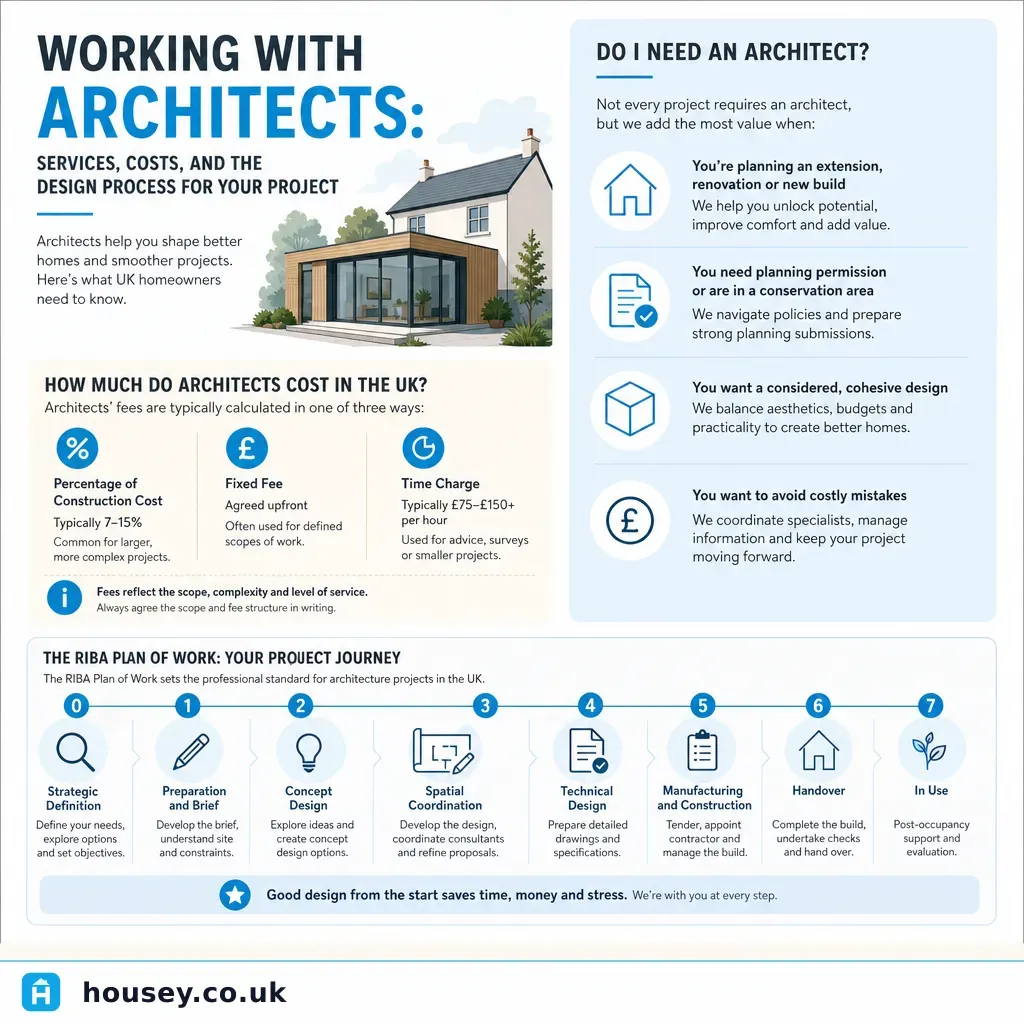
Working with Architects: Services, Costs, and the Design Process for Your Project
In the UK, the title 'architect' is legally protected under the Architects Act 1997.
 Planning & Pre-Build
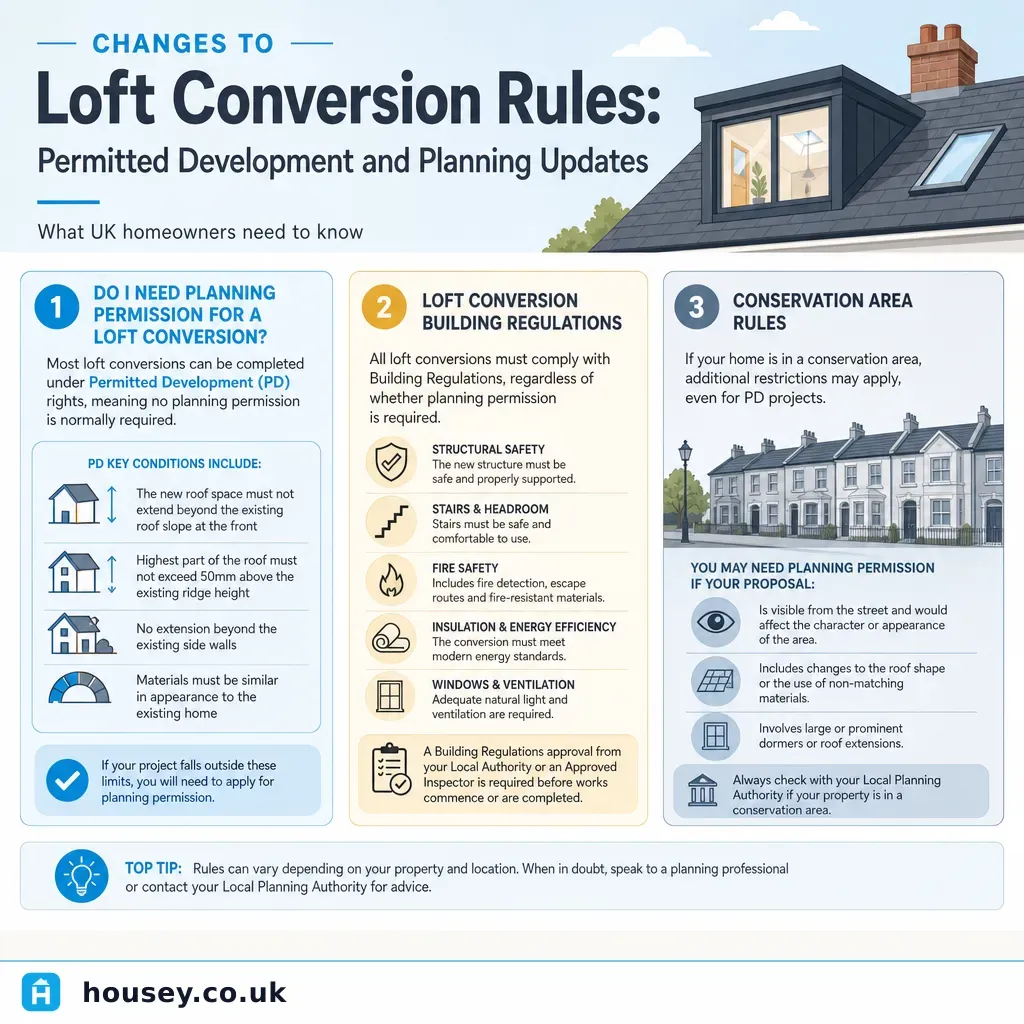
Changes to Loft Conversion Rules: Permitted Development and Planning Updates
In England, most loft conversions on standard houses qualify as Permitted Development under Class B of the GPDO 2015, allowing up to 40 cubic metres (terraced) or 50 cubic metres (detached or semi-detached) without a planning application — if conditions are met.
 Planning & Pre-Build
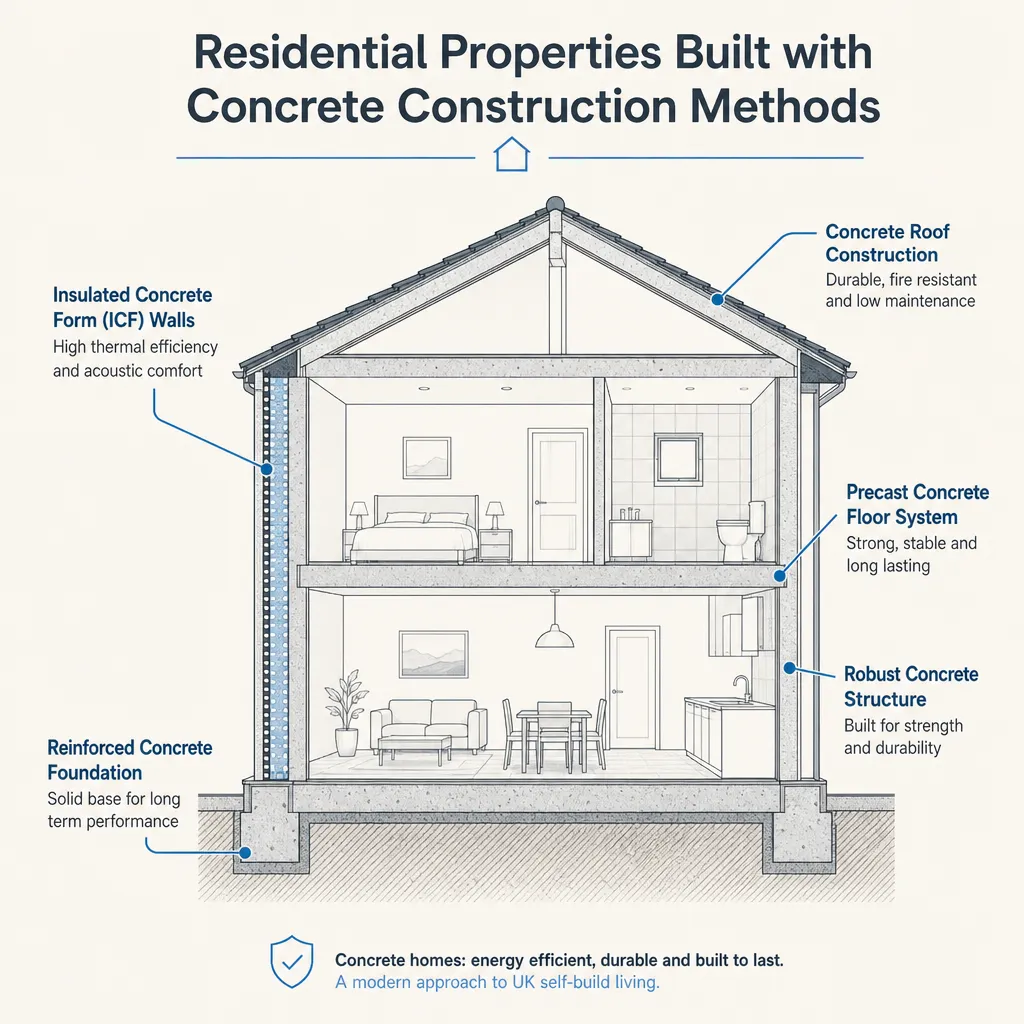
Residential Properties Built with Concrete Construction Methods
UK homes are built using several concrete methods: in-situ cast concrete, precast panel systems, insulating concrete formwork (ICF), and older non-traditional types such as Wimpey No-Fines and Laing Easiform.
 Planning & Pre-Build
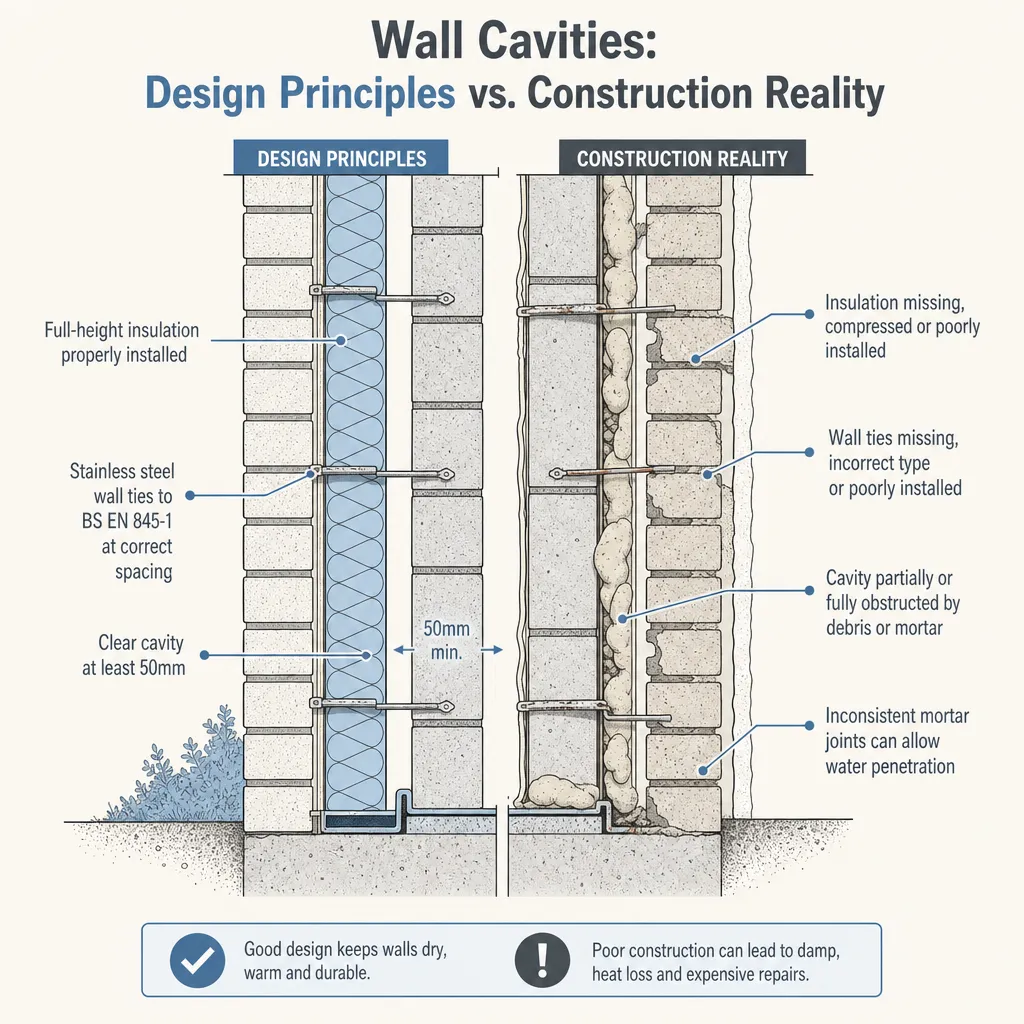
Wall Cavities: Design Principles vs. Construction Reality
A UK cavity wall is designed to resist weather, control heat loss, and structurally link two masonry leaves.
 Planning & Pre-Build
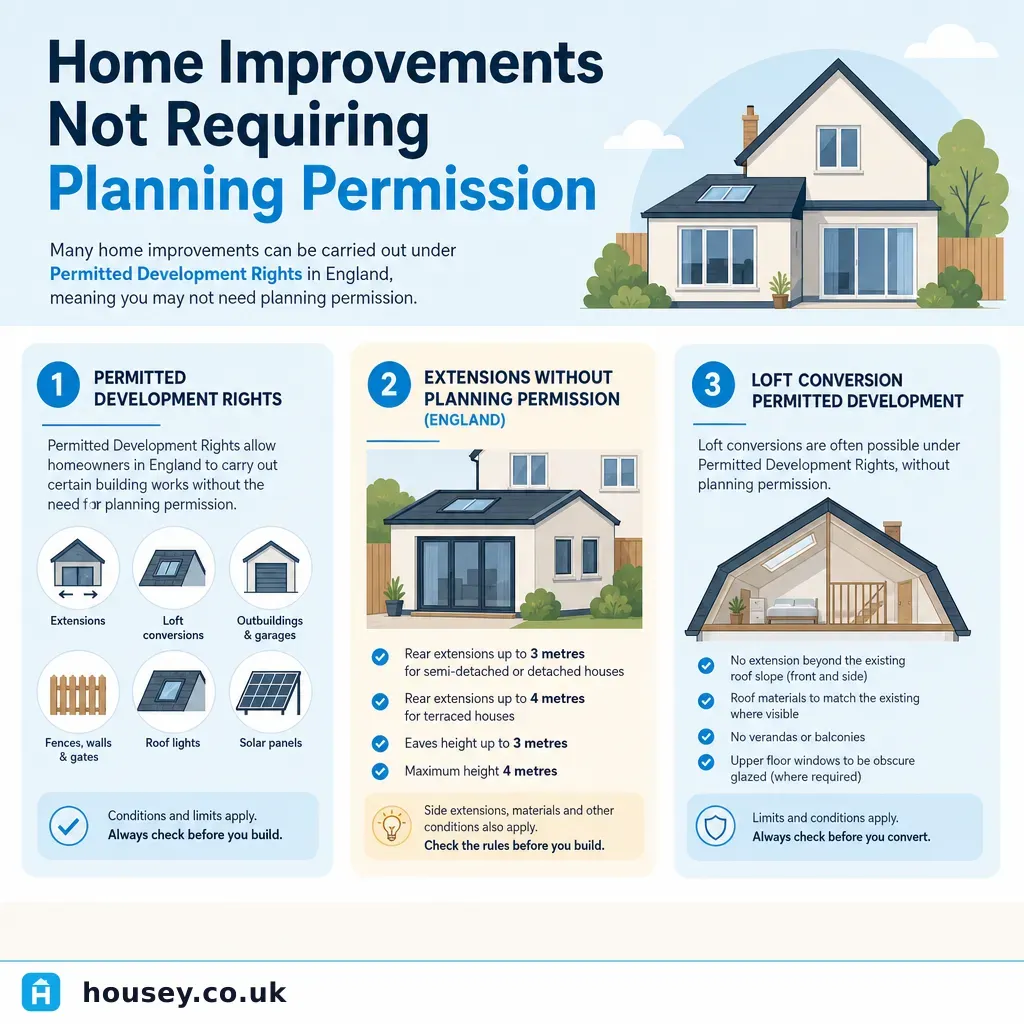
Home Improvements Not Requiring Planning Permission
Many common home improvements in England fall under Permitted Development Rights and do not require a planning application.