Lightweight Concrete as a Building Insulation Material
By Housey · Last reviewed 25th of May 2026
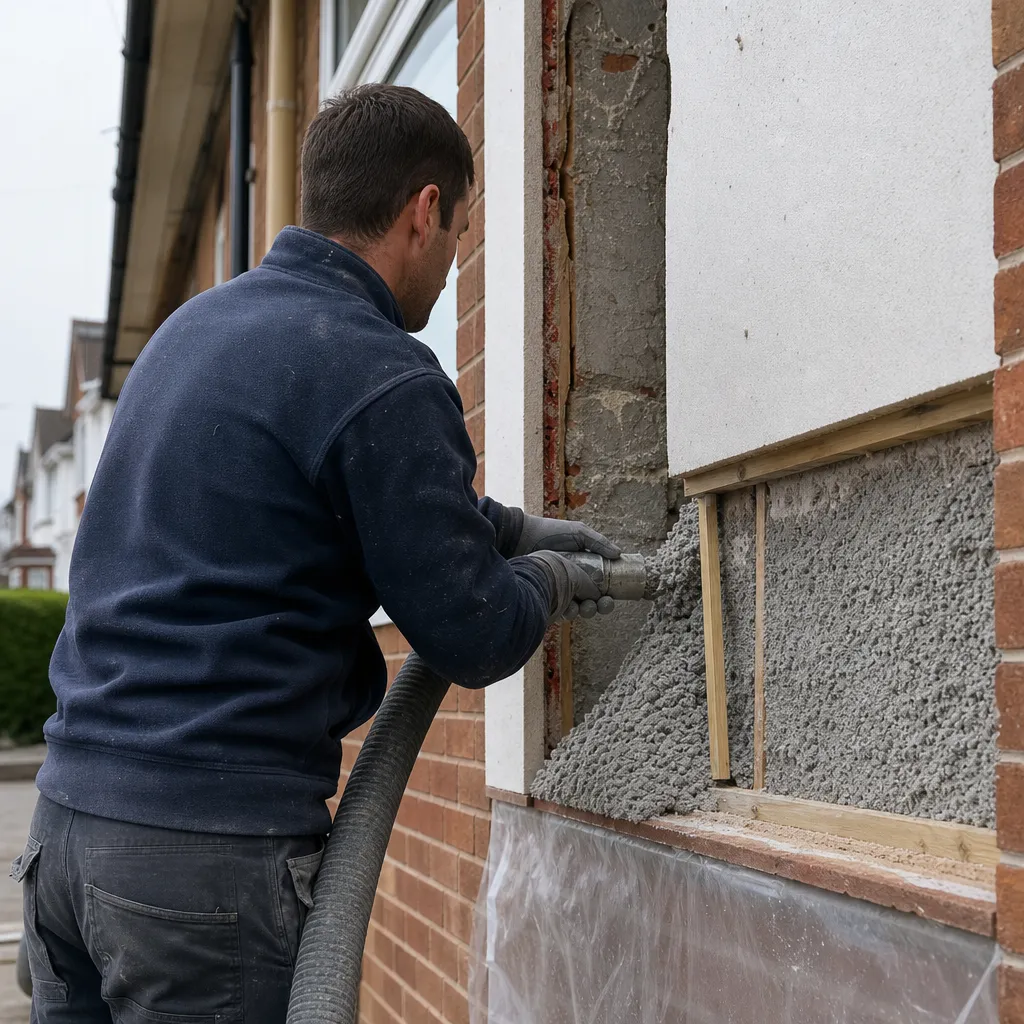
Lightweight Concrete as a Building Insulation Material
Choosing building materials that can provide both structure and thermal resistance is an ongoing goal in UK construction, particularly under the tightening energy requirements of Building Regulations Part L. Lightweight concrete types such as autoclaved aerated concrete (AAC), foamed concrete, and lightweight aggregate concrete appear in this conversation regularly, partly because they are already familiar to builders and partly because their thermal conductivity is genuinely better than that of standard dense concrete. Understanding precisely where lightweight concrete helps, and where it falls short, is essential before making specification decisions for a new build, extension, or retrofit.
Key points
- Autoclaved Aerated Concrete (AAC) blocks — sold under brands such as Thermalite and Celcon — have a thermal conductivity (λ) of approximately 0.11–0.16 W/m·K, around ten times lower than dense concrete at ~1.7 W/m·K.
- Building Regulations Approved Document L (2021 edition, England) sets a target U-value of 0.18 W/m²·K for external walls in new dwellings; a 215 mm single-leaf AAC wall typically achieves only around 0.45–0.55 W/m²·K without additional insulation.
- Foamed (cellular) concrete used as a screed or void-fill achieves λ values of 0.10–0.40 W/m·K depending on density — useful in constrained floor build-ups but not equivalent to dedicated insulation boards.
- Dedicated rigid insulation products such as PIR, EPS, and mineral wool achieve λ values of 0.022–0.044 W/m·K — four to fifteen times better than even the best-performing lightweight concrete.
- Moisture significantly degrades lightweight concrete's thermal performance; in damp or below-ground applications this must be factored into U-value calculations and SAP energy models.
How lightweight concrete compares with other building materials
Thermal conductivity (λ) measures how readily heat passes through a material — lower values mean better insulation. The table below compares lightweight concrete types against standard building and insulation materials in common UK use.
Material | Typical λ (W/m·K) | Typical dry density (kg/m³) | Common UK use |
|---|---|---|---|
Dense concrete | ~1.70 | ~2,400 | Structure, foundations |
Lightweight aggregate concrete | 0.25–0.70 | 1,000–1,800 | Structural elements, roof screeds |
Foamed (cellular) concrete | 0.10–0.40 | 300–1,200 | Void fill, floor screeds |
AAC (Aircrete) blocks | 0.11–0.16 | 400–800 | Inner leaf blockwork |
EPS insulation board | 0.030–0.040 | 15–30 | Cavity fill, floor insulation |
PIR insulation board | 0.022–0.025 | 30–40 | Walls, roofs, floors |
Mineral wool slab or batt | 0.032–0.044 | 10–100 | Cavity fill, loft, walls |
Timber frame | 0.12–0.14 | 450–700 | Structural walls |
AAC blockwork is competitive with timber on thermal conductivity but is significantly outperformed by any dedicated insulation product. Its value lies in its structural role, fire resistance, and contribution to reducing thermal bridging — not in replacing insulation layers.
Where lightweight concrete genuinely contributes to thermal performance
Reducing cold bridges in cavity wall construction
AAC lintels and padstones replace dense concrete or steel elements at openings and bearing points, substantially reducing localised thermal bridging that Approved Document L and SAP calculations penalise. BRE guidance and LABC technical notes identify lintels, reveals, and slab edges as significant contributors to heat loss through thermal bridges in masonry construction.
Insulating screeds in constrained floor build-ups
Foamed concrete at a density of around 500–700 kg/m³ (λ ≈ 0.15–0.20 W/m·K) is commonly used above insulation boards in ground-floor and intermediate-floor refurbishments where overall floor depth is limited. It is self-levelling, load-distributing, and adds incremental thermal resistance. It does not replace insulation boards but can marginally reduce the required board thickness.
Thermal mass in well-insulated buildings
AAC inner leaves contribute useful thermal mass, absorbing and slowly releasing heat to moderate internal temperature swings. This is most beneficial in homes with intermittent heating patterns or in low-energy designs where thermal mass is part of the comfort and energy strategy, provided the building is well insulated overall.
What not to assume about lightweight concrete and insulation
These are common misunderstandings that can lead to under-performing buildings or failed Building Regulations submissions.
- Do not assume AAC blockwork alone satisfies Part L. A 215 mm AAC inner leaf contributes to the overall wall U-value, but a well-insulated cavity fill and correctly detailed junctions are still required to reach 0.18 W/m²·K.
- Do not assume all lightweight concretes perform the same. Lightweight aggregate concrete used for structural slabs may have λ of 0.50 W/m·K or above — far worse than AAC.
- Do not assume foamed concrete equals rigid insulation board. Foamed concrete at 600 kg/m³ has λ ≈ 0.15–0.20 W/m·K; PIR board achieves 0.022–0.025 W/m·K — roughly an eightfold difference.
- Do not assume a dry-state λ figure applies in practice. BS EN 1745 provides declared λ values at specific moisture conditions; actual in-use performance in persistently damp conditions may be noticeably lower.
- Do not assume a SAP energy calculation is unnecessary. Any new or significantly altered dwelling in England requires an energy model to demonstrate Part L compliance — assumed U-values can result in a failed building control submission.
Which approach is right for your project?
- Choose AAC blockwork inner leaf if you are designing a cavity wall and want to reduce cold bridging at junctions and lintels while maintaining a structural inner leaf.
- Choose foamed concrete screed if you need a self-levelling layer above floor insulation boards in a constrained refurbishment or floor build-up.
- Choose lightweight aggregate concrete if structural performance and moderate thermal improvement in the same element are both required — for example, in a lightweight structural roof slab.
- Choose dedicated insulation products (PIR, EPS, mineral wool) as the primary thermal layer in walls, floors, and roofs; these achieve the U-values Part L requires at practical thicknesses.
- Consult an energy-efficiency consultant or SAP assessor if you are unsure how your proposed construction performs against Approved Document L targets, or if you need a Part L compliance calculation for building control.
When to get professional help
Specification decisions that mix lightweight concrete with insulation systems affect SAP scores, building control submissions, and as-built EPC ratings. Errors at design stage can require expensive remedial work after practical completion. Seek professional advice if:
- You are uncertain which λ value to use for a specific product in a SAP or SBEM energy calculation.
- Your proposed construction relies on lightweight concrete as the primary thermal element in a wall, floor, or roof.
- You are retrofitting an existing building using foamed concrete or lightweight aggregate systems and need to confirm the effect on whole-element U-values.
- Your project falls under PAS 2035 and involves non-standard materials in the building envelope.
How Housey can help
Housey connects you with vetted insulation installers who can advise on combining lightweight concrete systems with dedicated insulation layers, and energy-efficiency consultants who can model your construction against Approved Document L U-value targets. If you are undertaking a retrofit of an existing concrete or masonry building, a retrofit assessment will identify the most cost-effective route to improved thermal performance and flag where lightweight concrete elements may be underperforming.
Frequently asked questions
What is the U-value of a wall built with AAC blocks?
A 215 mm single-leaf AAC wall (λ ≈ 0.11 W/m·K) with standard plaster and render finishes achieves a U-value of approximately 0.45–0.55 W/m²·K. This is well above the 0.18 W/m²·K target for new external walls under Approved Document L (2021, England). AAC blockwork is designed for use as part of a multi-layer cavity wall system with insulation fill — not as a standalone thermal element.
Can lightweight concrete blocks replace cavity insulation?
No. AAC blocks in the inner leaf reduce overall wall thermal transmittance and minimise cold bridging at junctions and lintels, but they cannot replace insulation fill in the cavity. A full-fill mineral wool batt or PIR board is still required alongside AAC inner leaf blockwork to achieve a compliant U-value under current Part L requirements.
Is AAC (Aircrete) the same as lightweight concrete?
AAC is one specific type of lightweight concrete, characterised by a uniform cellular structure created by introducing hydrogen gas into the cementitious mix before autoclaving. It is the most thermally efficient lightweight concrete type and is widely used as an inner leaf block in UK masonry construction. Other lightweight types — foamed concrete and lightweight aggregate concrete — have different manufacturing processes and noticeably different thermal properties.
Does moisture affect the thermal performance of lightweight concrete?
Yes, significantly. The thermal conductivity of AAC and foamed concrete increases as moisture content rises. Declared λ values in product data are given at a reference moisture condition; persistent damp — particularly in below-ground or inadequately detailed applications — can meaningfully degrade actual in-use performance. BS EN 1745 provides guidance on moisture correction factors for masonry products.
Sources and further reading
- Approved Document L: Conservation of fuel and power (2021) — GOV.UK
- Thermal insulation: avoiding risks (BR 262) — Building Research Establishment
- Insulation guidance — Energy Saving Trust
- BS EN 1745: Masonry and masonry products — Methods for determining thermal properties — BSI Group
Useful next reads
 Energy & Retrofit
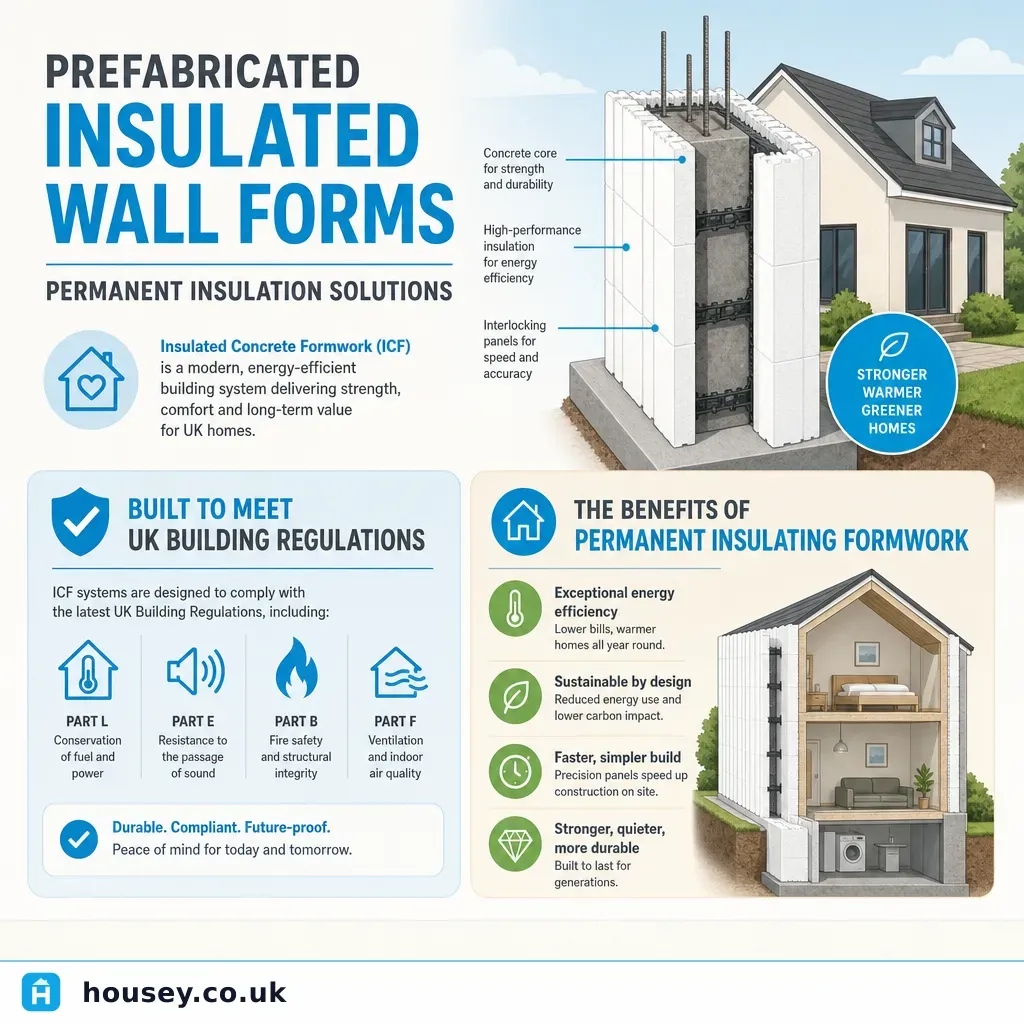
Prefabricated Insulated Wall Forms: Permanent Insulation Solutions
Prefabricated insulated wall forms — including ICF and SIPs systems — deliver high thermal performance by combining permanent insulation with structural concrete or timber in a single wall assembly.
 Energy & Retrofit
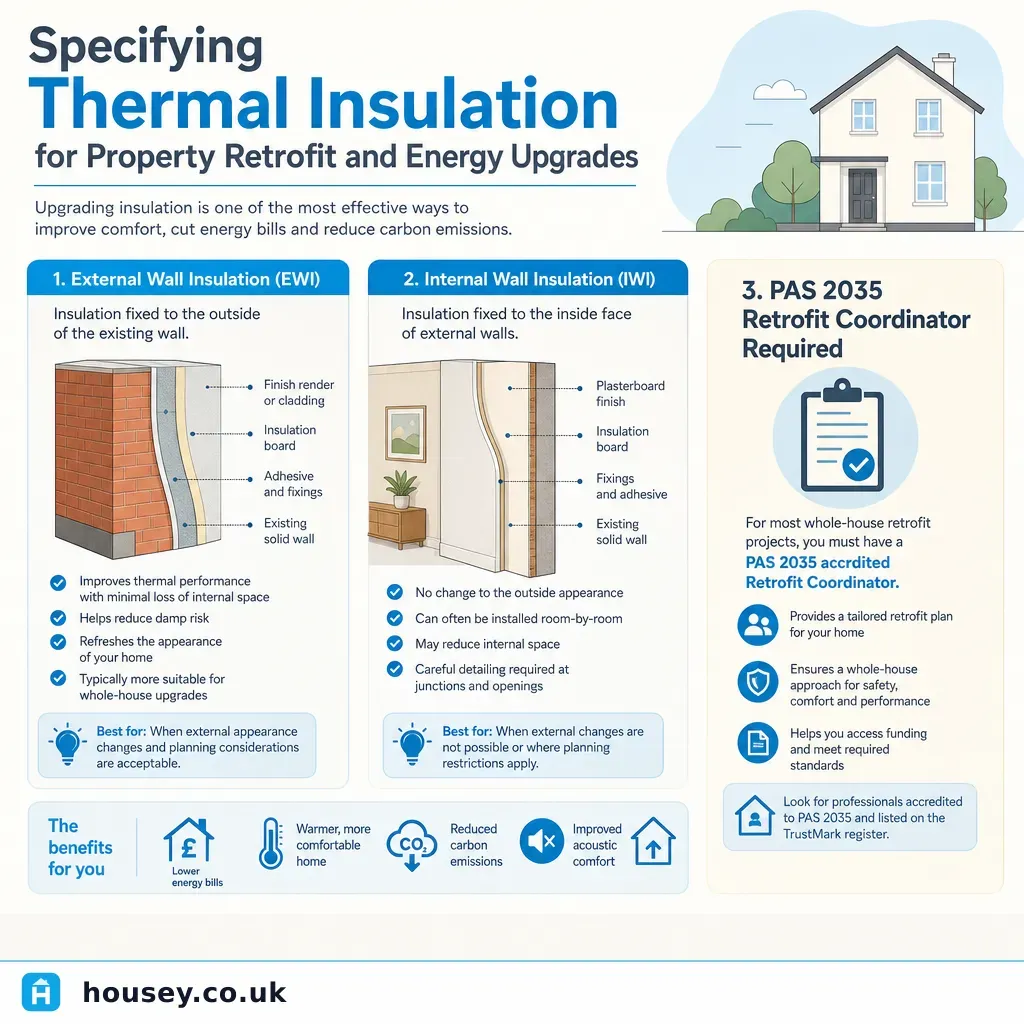
Specifying Thermal Insulation for Property Retrofit and Energy Upgrades
Specifying thermal insulation for UK retrofit requires matching the product to your property's construction, moisture conditions, and heating system.
 Energy & Retrofit
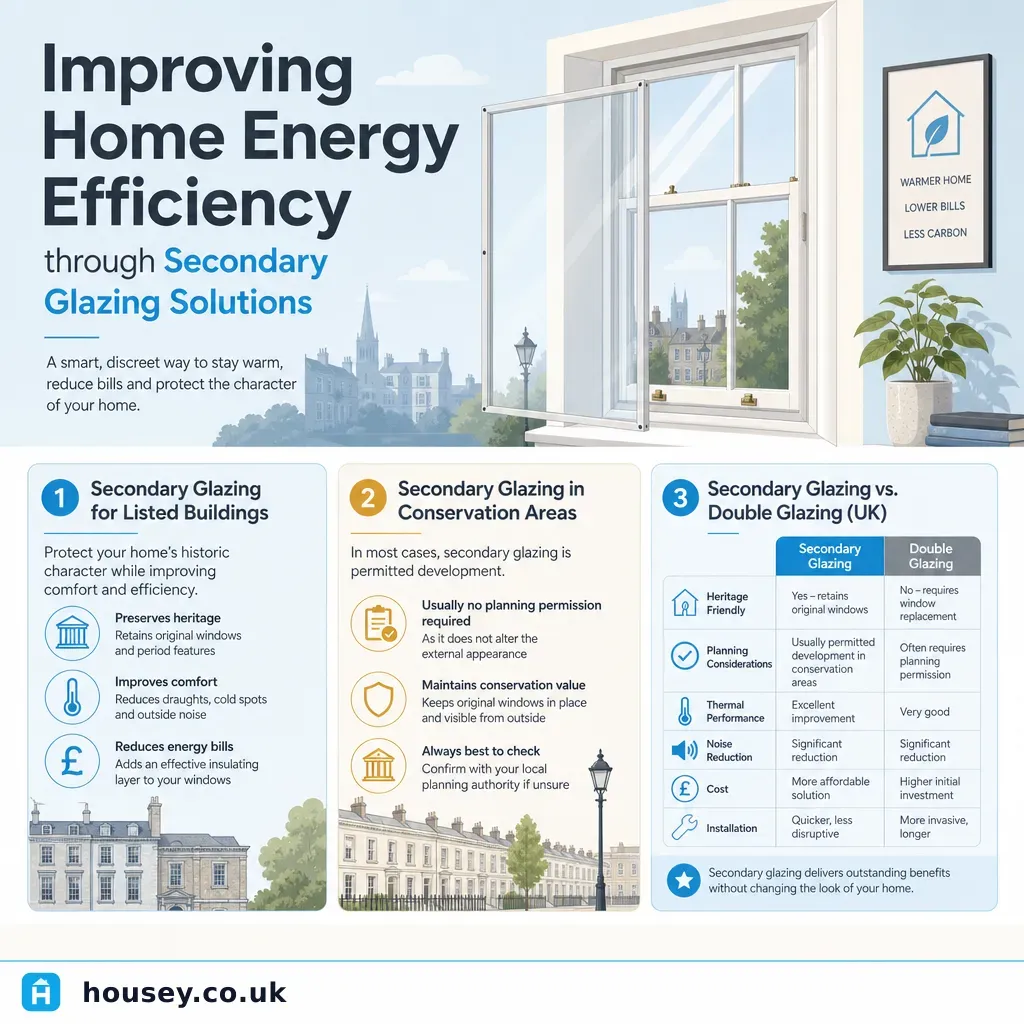
Improving Home Energy Efficiency through Secondary Glazing Solutions
Secondary glazing fits an additional pane inside your existing window reveal, reducing heat loss and noise without replacing the original frame.
 Energy & Retrofit
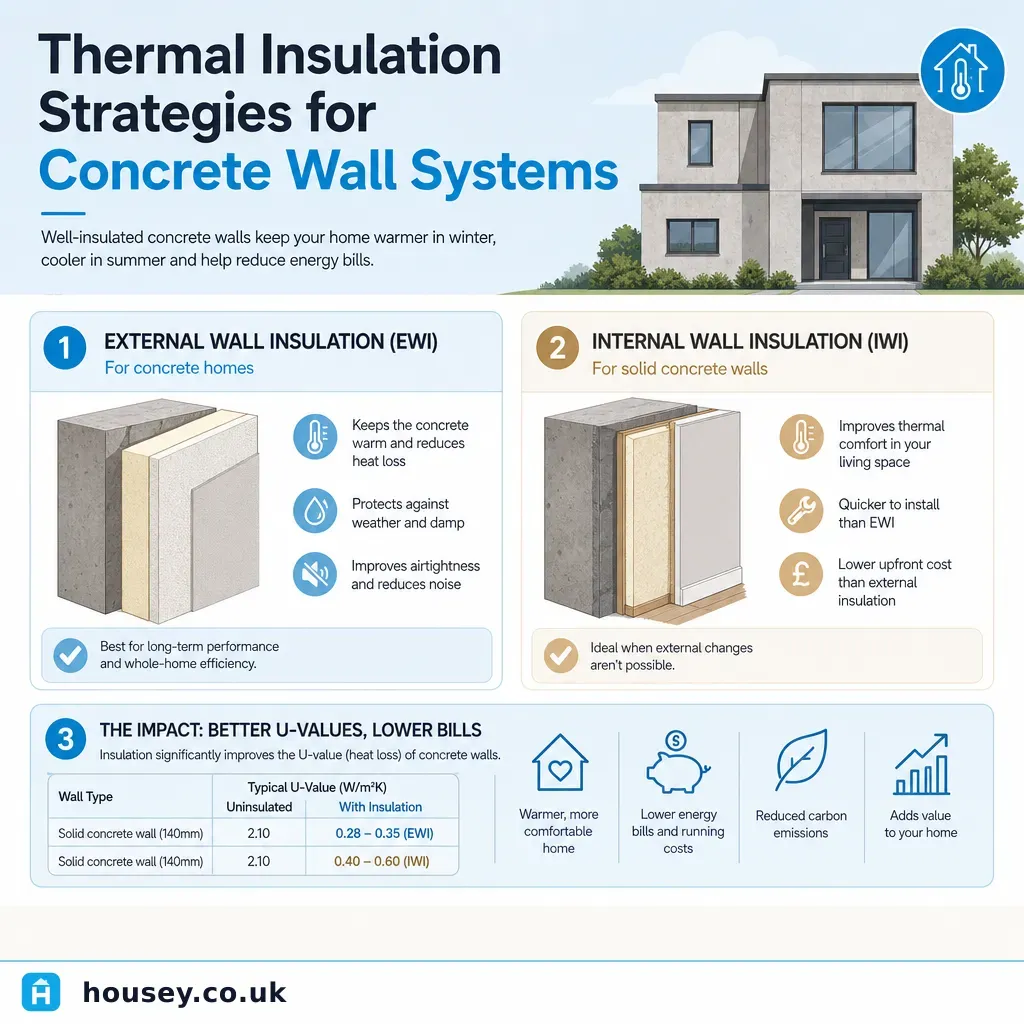
Thermal Insulation Strategies for Concrete Wall Systems
Concrete walls can be insulated using three main approaches: external wall insulation (EWI), internal wall insulation (IWI), or — where a cavity exists — cavity fill.
 Energy & Retrofit
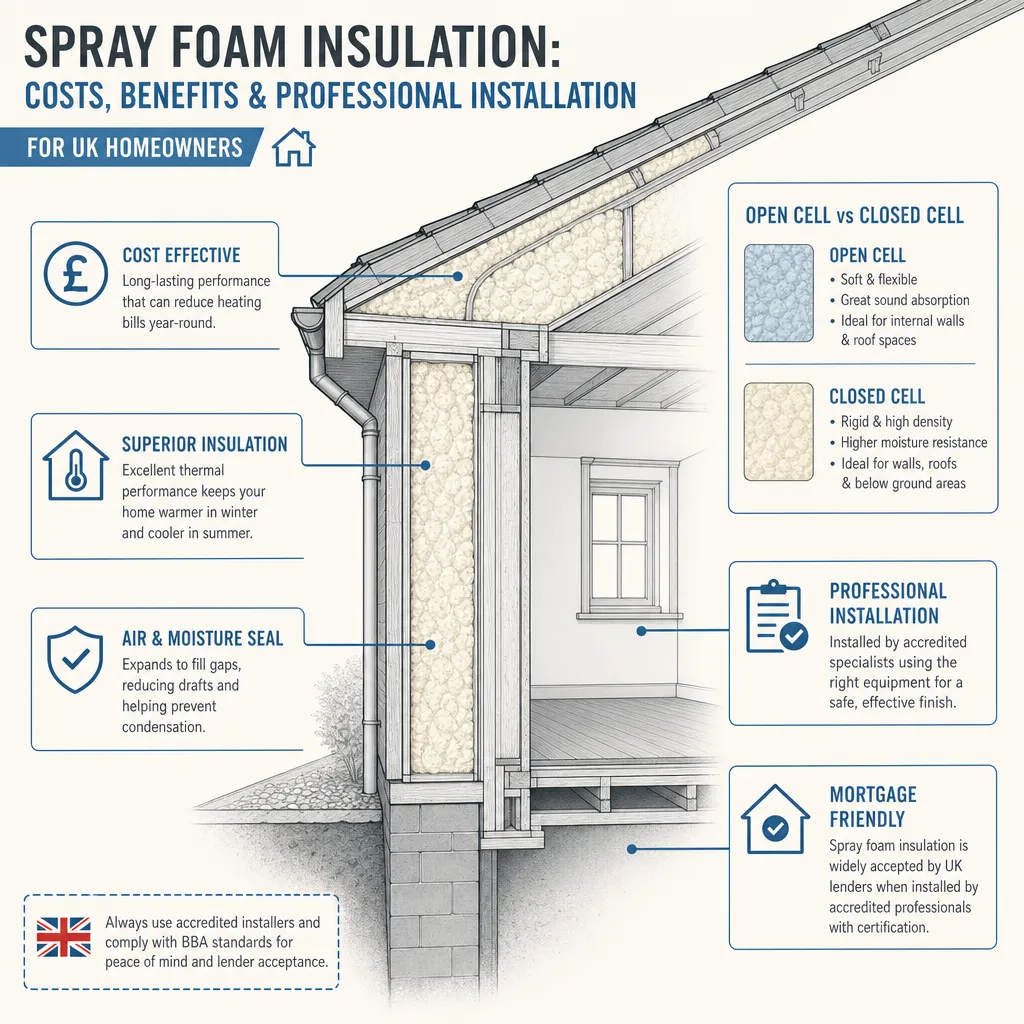
Spray foam insulation: costs, benefits and professional installation
Spray foam insulation costs between £15 and £60 per square metre installed in the UK, depending on whether open-cell or closed-cell foam is used.