Liquid Rubber Roof Coating Installation Costs
By Housey · Last reviewed 7th of May 2026
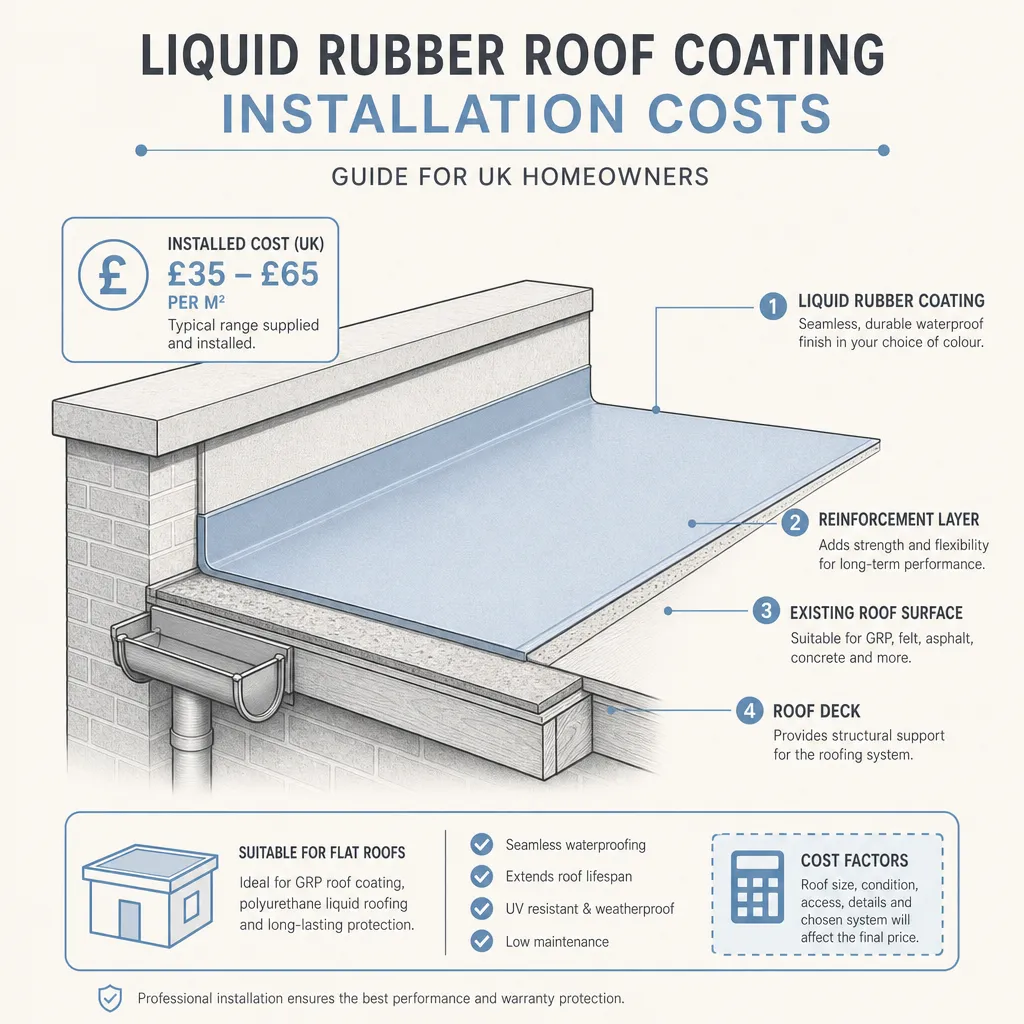
Liquid Rubber Roof Coating Installation Costs
Flat roofs and low-pitch extensions are a common feature of UK homes — from 1960s rear additions to modern garden rooms — and when the waterproofing starts to fail, liquid rubber coating systems have become one of the most widely used remedies. Understanding what you'll pay, and what affects the price, helps you assess quotes with confidence before committing to a contractor.
Key points
- Indicative UK costs for professional liquid rubber roof coating typically range from £50 to £120 per m² installed, depending on system type and roof condition (Indicative UK costs, last reviewed 2026-05-07).
- Liquid roofing covers several distinct product types — GRP (glass-reinforced polyester), EPDM liquid, polyurethane, and modified bitumen — each with different longevity, cost, and application requirements.
- A GRP (fibreglass) system applied by a trained installer typically carries a manufacturer-backed guarantee of 20–25 years; polyurethane systems are often warranted for 10–20 years depending on the product.
- If you are replacing more than 25% of a roof covering, Building Regulations may apply under Approved Document C (moisture resistance) and Part L (thermal performance) in England and Wales.
- The National Federation of Roofing Contractors (NFRC) lists vetted contractors; using an NFRC member or manufacturer-approved installer is often a condition of product warranties.
What is liquid rubber roof coating?
"Liquid rubber" is a broad term for liquid coatings applied to a flat or low-pitch roof that cure to form a seamless, waterproof membrane. The main systems used in UK residential roofing are:
System | How it works | Typical lifespan | Best for |
|---|---|---|---|
GRP (fibreglass) | Polyester resin over fibreglass matting, finished with topcoat | 25–30+ years | New-quality finish on flat/low-pitch roofs |
Polyurethane (PU) liquid | Applied in coats, cures to a flexible membrane | 10–25 years | Overlaying existing felt; complex shapes |
EPDM liquid | Solvent or water-based rubber coating | 10–20 years | Minor remedial work, extensions, gutters |
Modified bitumen | Hot-applied layers | 15–20 years | Traditional flat roof refresh |
GRP is generally considered the most durable domestic option but requires trained installers. Polyurethane is more forgiving for overlay applications on sound substrates.
What does liquid rubber roof coating cost?
Key cost drivers include roof size, existing condition, system type, access requirements, and location — with South-east England and London typically 15–30% higher than other regions.
Indicative UK cost ranges (last reviewed 2026-05-07)
Roof area | GRP estimated range | PU liquid estimated range |
|---|---|---|
Small (~20 m²) | £1,200–£2,400 | £900–£1,800 |
Medium (~50 m²) | £2,800–£6,000 | £2,200–£4,500 |
Large (~100 m²) | £5,000–£11,000 | £4,000–£8,500 |
Indicative UK costs, last reviewed 2026-05-07. Compiled from NFRC member and industry guidance. Always obtain at least three quotes.
If the deck needs replacing (typically 18 mm OSB or plywood), allow approximately £15–£30 per m² extra for materials and labour. A roof with rotten joists or structural defects must be repaired before any coating is applied.
What should a complete quote cover?
Before accepting any price, confirm the quote includes:
- Strip or overlay of existing covering, with a written reason for the chosen approach
- Agreed deck repairs or full re-deck if required
- Upstands and detailing around all pipes, rooflights, edges, and parapet walls
- Primer coat, base coat, and finish/topcoat (or GRP matting and resin layers)
- Anti-slip aggregate on accessible flat roofs where applicable
- Manufacturer warranty documentation
- Waste disposal and site clean-up
Penetrations — soil pipes, skylights, and any roof furniture — are a frequent source of extras. A roof with multiple penetrations costs more per m² to detail correctly, so ensure these are explicitly priced in the quote.
What to ask before accepting a quote
- Which specific system and product is being specified — brand and product name?
- Is this an overlay or full strip-and-relay, and why has that approach been chosen?
- What qualifications or manufacturer approvals does the installer hold?
- What is the warranty period, and is it backed by the manufacturer or contractor only?
- Are all upstands, trims, and penetration details included, or priced as extras?
- Will you receive a written specification before work starts?
- Is scaffolding or access equipment included?
- Is VAT included in the quoted price?
- What are the payment terms, and what happens if additional defects are found once work begins?
Building regulations and planning
Like-for-like overlay of a sound existing felt roof often does not require building regulations approval. However, if the deck is being replaced or insulation altered, approval under Approved Document C or Part L may apply — check with your local building control authority. Planning permission is not normally required for re-roofing, but verify this if the property is listed or in a conservation area.
Choosing a qualified roofer
Liquid roofing — particularly GRP — requires specific training. Look for:
- NFRC membership — the principal roofing trade body; members agree to a code of professional practice.
- Manufacturer-approved installer status — brands such as Sika, IKO, and Alumasc run approved-installer programmes; approval typically unlocks a 20–25-year product warranty.
- TrustMark registration — government-endorsed quality scheme for domestic tradespeople.
- Public liability insurance — ask for a copy before work begins.
When to get professional help
Get a professional inspection promptly if you notice:
- Standing water (ponding) that has not drained within 48 hours of rain — can indicate structural deflection
- Visible cracking, blistering, or delamination of the existing membrane
- Damp patches or staining on ceilings directly below the roof
- Soft or springy areas underfoot on an accessible flat roof
- Any suspected structural movement beneath the covering
A compromised deck cannot simply be coated over — it must be repaired or replaced first.
How Housey can help
Housey connects you with vetted local roofing contractors who can assess your flat roof, specify the right system, and provide itemised quotes. Compare up to four local roofers in one place before committing.
Frequently asked questions
How long does liquid rubber roof coating last?
This depends on the system. GRP (fibreglass) systems installed by a trained applicator typically last 25–30 years or more. Polyurethane liquid systems generally offer 10–25 years depending on the product grade and maintenance. EPDM liquid coatings may last 10–15 years. Manufacturer warranties vary, so always check what is covered and for how long before accepting a quote.
Can liquid rubber be applied over old felt?
In many cases yes, if the existing felt is sound, firmly adhered, and the deck beneath is dry and structurally solid. Most systems require a clean, prepared surface and compatible primer. A roofer should inspect the felt before specifying an overlay; if it is blistered, delaminated, or saturated, a full strip is usually the correct approach.
Does liquid rubber roof coating need planning permission?
Replacing a flat roof covering with a liquid rubber system is normally permitted development on a standard residential property. However, if your property is in a conservation area, is listed, or the roof is a principal elevation facing a highway, planning permission may be needed. Always check with your local planning authority before starting.
Is liquid rubber roof coating suitable for pitched roofs?
Most liquid roofing systems are designed for flat or low-pitch roofs, typically below 10–15 degrees. Some manufacturers produce systems suitable for pitched roofs, but these are specialist applications. A roofer should confirm suitability before quoting, as standard flat-roof products may not adhere or cure correctly on steeper surfaces.
What is the difference between GRP and polyurethane liquid roofing?
GRP (glass-reinforced polyester) uses fibreglass matting saturated in resin to create a rigid, durable shell requiring trained applicators. Polyurethane liquid roofing is applied in coats that cure to a flexible membrane, making it more suitable for overlaying existing substrates or complex roof shapes. GRP typically costs more and lasts longer; polyurethane is more forgiving in application.
Sources and further reading
- NFRC Find a Contractor — National Federation of Roofing Contractors
- Approved Document C: Site preparation and resistance to contaminants and moisture — GOV.UK
- Approved Document L: Conservation of fuel and power — GOV.UK
- TrustMark — Find a Registered Business — TrustMark
Useful next reads
 Improvement & Build
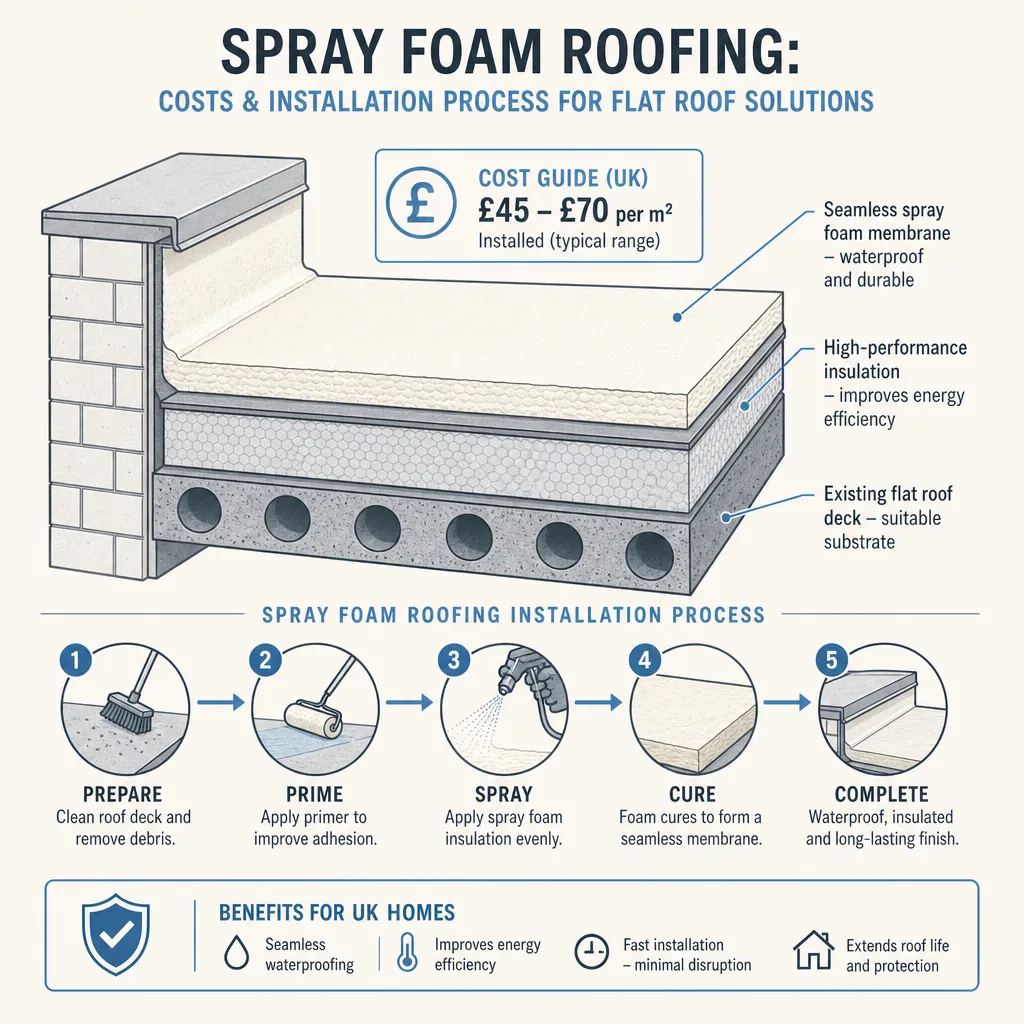
Spray foam roofing: costs and installation process for flat roof solutions
Spray foam roofing for a domestic flat roof in the UK typically costs between £70 and £120 per square metre including preparation, foam application, and UV-protective topcoat, though prices vary with roof size, access, existing substrate condition, and region.
 Improvement & Build
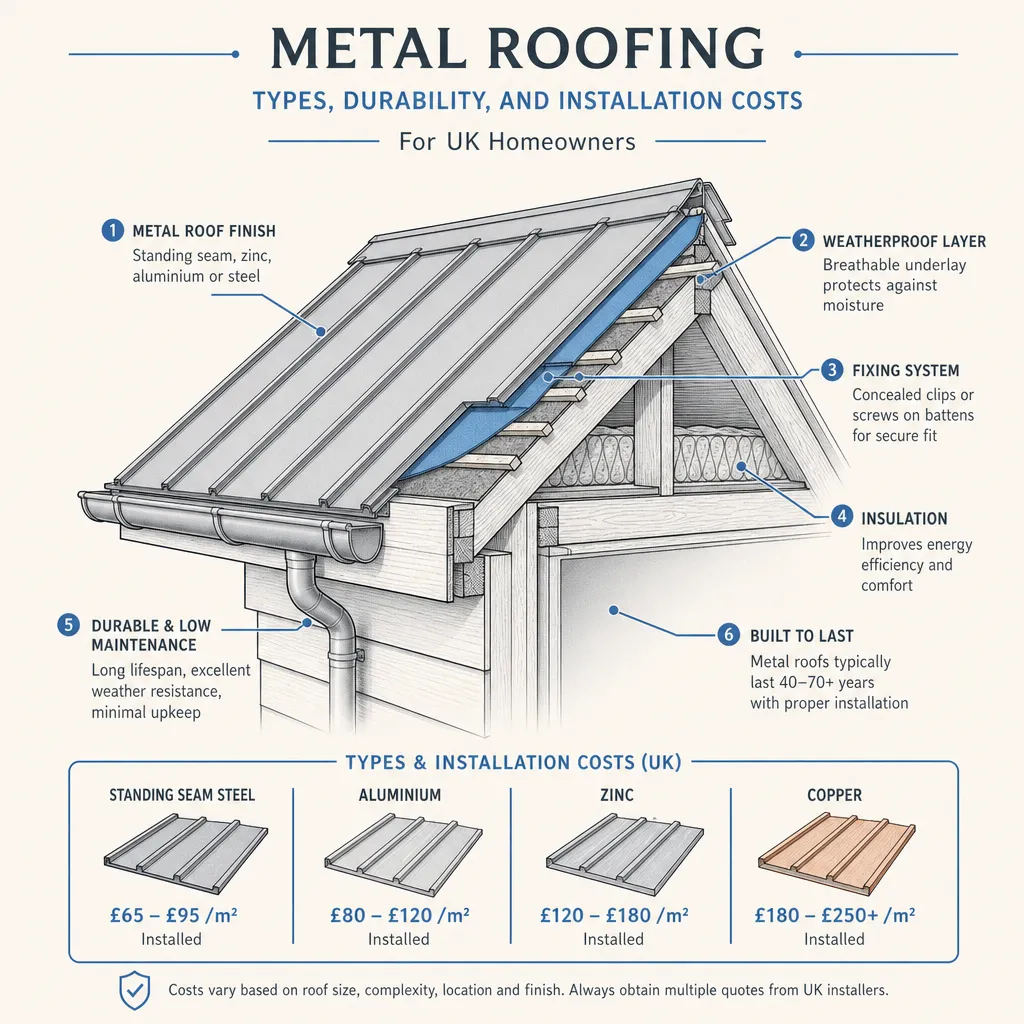
Metal Roofing: Types, Durability, and Installation Costs
Metal roofing in the UK includes standing seam, corrugated sheet, and metal tile systems in steel, aluminium, zinc, or copper.
 Improvement & Build
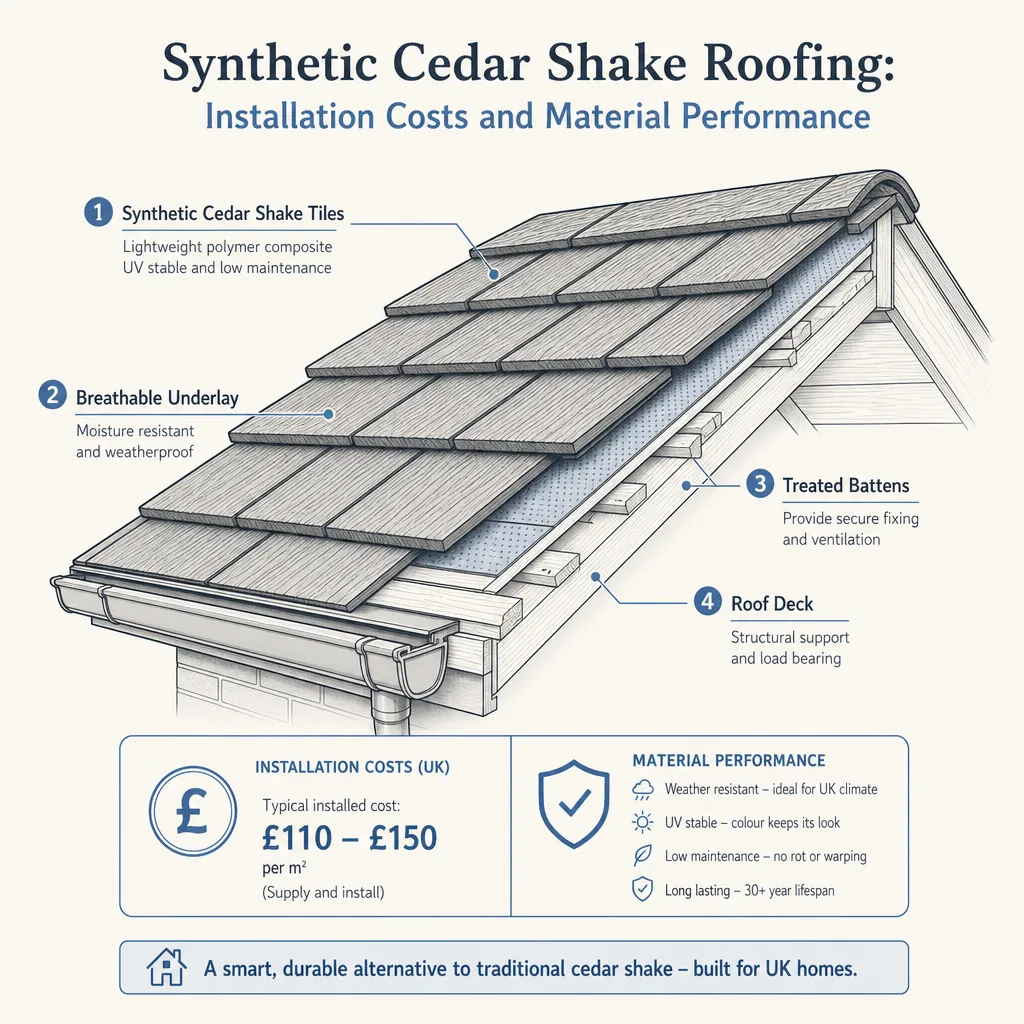
Synthetic Cedar Shake Roofing: Installation Costs and Material Performance
Synthetic cedar shake roofing uses polymer composite, rubber, or fibre-cement tiles to replicate the look of natural cedar wood shingles.
 Improvement & Build
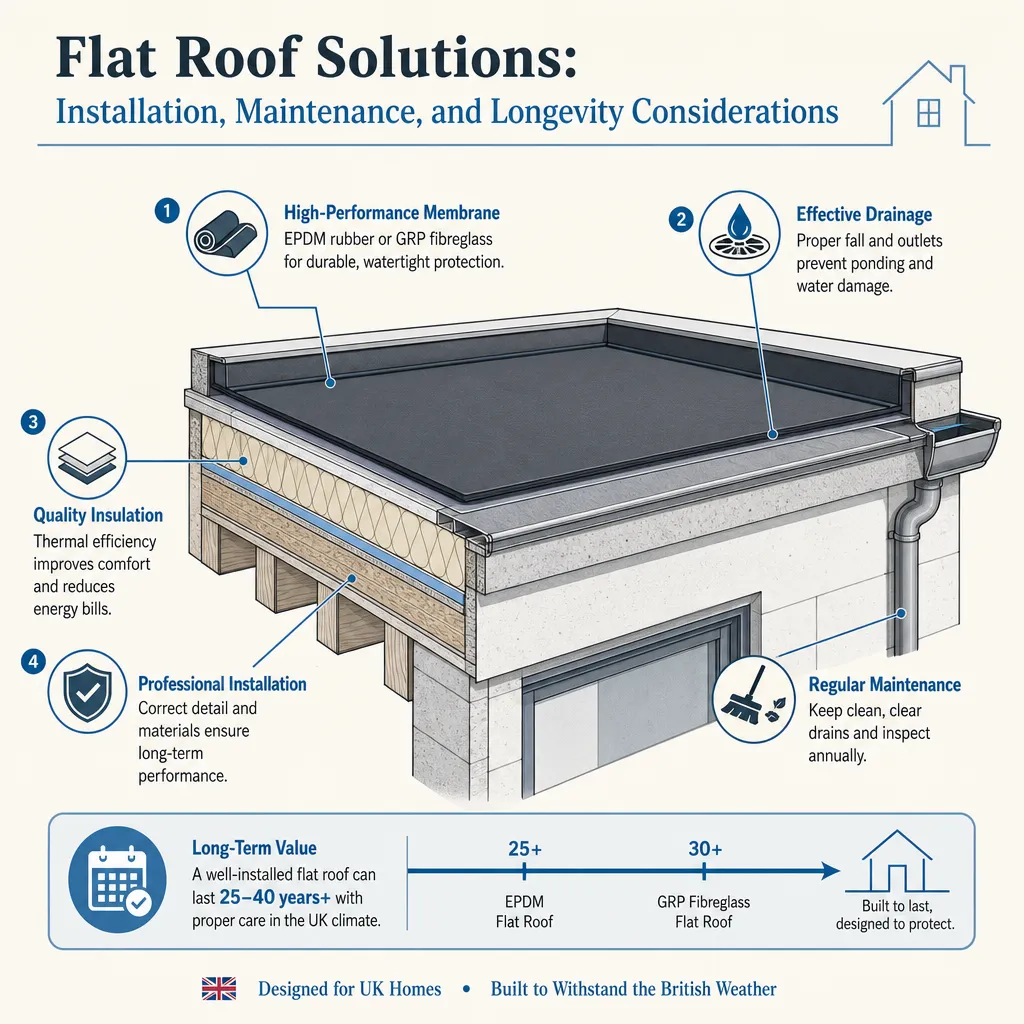
Flat Roof Solutions: Installation, Maintenance, and Longevity Considerations
Flat roofs use several waterproofing systems — EPDM rubber, GRP fibreglass, liquid-applied coatings, modified bitumen felt, lead, and zinc — each with different lifespans and installation requirements.
 Improvement & Build
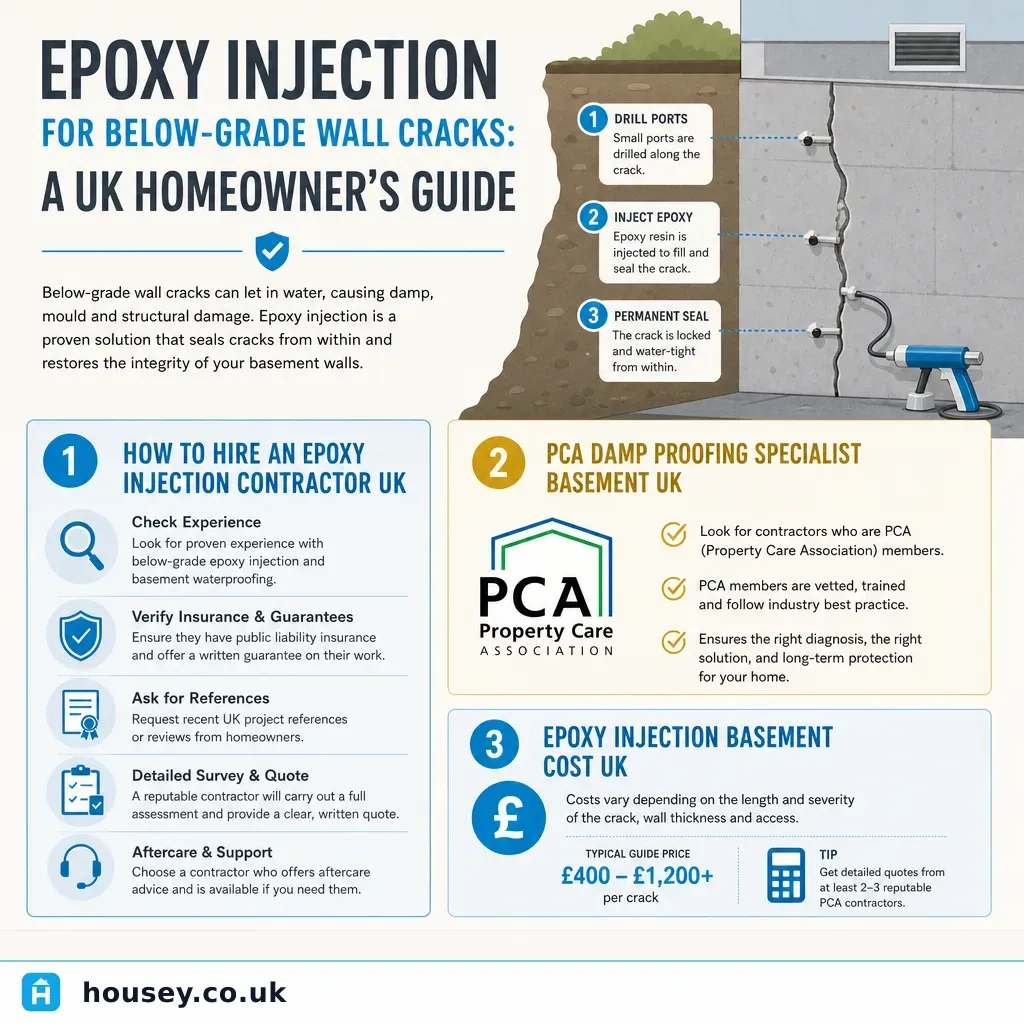
Epoxy Injection for Below-Grade Wall Cracks: A UK Homeowner's Guide
Epoxy injection seals stable, non-moving cracks in below-grade concrete walls but will not work on masonry, actively moving cracks, or as a standalone fix for habitable basement conversions.