Local Builders for Extensions and Custom Homes
By Housey · Last reviewed 24th of May 2026

Local Builders for Extensions and Custom Homes
Planning an extension or commissioning a custom build means choosing between a wide range of contractors — from sole traders to established firms — at a point when getting the decision wrong carries real financial and legal consequences. In the UK, extension and new-build projects must comply with Building Regulations regardless of whether planning permission is required, making contractor competence both a quality and a legal matter. Whether you are adding a rear kitchen extension to a 1930s semi or commissioning a full new-build plot, understanding how to assess and appoint the right builder protects your investment from the outset.
Key points
- Single-storey rear extensions up to 4 m deep for detached houses (or 3 m for other dwellings) may qualify as permitted development, but Building Regulations approval under the Building Regulations 2010 is still required regardless.
- Any builder carrying out structural or notifiable work must notify the relevant local authority building control or an Approved Inspector before work starts.
- Federation of Master Builders (FMB) members undergo independent vetting including financial and insurance checks; it is a useful baseline credential, though not the only indicator of competence.
- Public liability insurance of at least £2 million is the standard minimum for any contractor working on your property; always request the current certificate before signing any contract.
- NHBC Buildmark registration provides 10-year structural warranty cover for new-build homes — relevant if you are commissioning a full custom build rather than an extension.
What type of builder do you need?
The term "local builder" covers sole traders, small firms, and mid-sized contractors. Matching your project to the right type reduces the risk of scope creep, delays, and cost overruns.
Which professional should you choose?
- Choose a local independent builder if your project is a single-storey extension, internal structural opening, or straightforward refurbishment — provided the firm can demonstrate relevant experience with your property type and carries appropriate insurance.
- Choose a design-and-build firm if you want one point of responsibility for both architectural drawings and construction, or if you do not yet have an architect. These firms typically manage planning applications, Building Regulations drawings, and construction under a single contract.
- Choose a main contractor if your project spans multiple trades over an extended programme — such as a rear extension combined with a loft conversion — and you prefer one party to coordinate sub-contractors.
- Appoint a project manager separately if you already have architectural drawings and want independent oversight of a builder's progress, costs, and quality throughout the build.
- Instruct a structural engineer if the project involves removing a load-bearing wall, underpinning, or any significant alteration to the building's structure — even if a builder asserts it is straightforward.
Comparing your main options
Option | Best for | Not ideal for | Typical output | Key risk |
|---|---|---|---|---|
Local independent builder | Single-storey extensions, refurbishments, straightforward works | Complex multi-trade projects without strong PM capability | Finished structure to Building Regulations | Variable insurance cover; limited structural warranty |
Design-and-build firm | Single-contract simplicity; homeowners without an architect | Those with existing design views or a retained architect | Design package plus construction, often with 10-year warranty | Less design independence; mark-up on trades |
Main contractor with sub-contractors | Larger projects spanning multiple trades | Small simple works where coordination cost is disproportionate | Programme management, single contract | Higher overhead; sub-contractors may be unknown to you |
FMB-registered builder | Any project size as a basic vetting filter | Not a guarantee of specialist capability | Vetted membership status | Membership alone does not indicate design or structural expertise |
How to vet and compare local builders
Receiving quotes without a common scope of works makes comparison almost impossible. Before approaching builders, prepare a written schedule of works — or commission an architect or architectural technician to produce one — so every contractor is pricing the same job.
Homeowner checklist before appointing a builder
What to ask before accepting a quote
- What is explicitly included, and what is excluded from the price?
- Which trades will be sub-contracted, and who are they?
- What are the payment milestones, and do they correspond to defined stages of completed work?
- What happens if unforeseen groundworks, drainage issues, or structural problems are discovered once work starts?
- Will you provide a written programme with start and completion dates?
- What structural, materials, or workmanship warranties will be provided on completion?
- Is VAT included in the quoted figure?
- Who is the named site contact and how frequently will they provide progress updates?
Important limitations
This article provides general information only. Building Regulations requirements, permitted development thresholds, planning rules, and structural considerations vary by property type, location, prior works history, and local authority. Nothing in this guide constitutes legal, structural, or planning advice. A qualified architect, structural engineer, or planning consultant should assess your specific project before work begins or contracts are signed.
What to ask a qualified professional
If you are appointing an architect, structural engineer, or building control surveyor, ask:
- Does this project require planning permission, or does it fall within permitted development rights for my property?
- Is a full plans Building Regulations application or a building notice approach more appropriate for this project?
- Are there any Party Wall etc. Act 1996 obligations I need to discharge before work starts?
- Is there evidence of previous structural movement, damp, or unauthorised works that should be investigated before construction begins?
- Which structural elements — walls, floors, or foundations — may be affected by the proposed works?
- What level of retention and defects period would you recommend in the building contract?
When to get professional help
For any project involving structural alterations, extension work, or a new build, engaging an architect or architectural technician to produce drawings provides independent design oversight and stronger legal protection if disputes arise — even if you tender construction separately.
Seek specialist advice immediately if:
- A builder suggests bypassing Building Regulations or proceeding without building control notification — this is a serious red flag.
- The project involves removing a chimney breast, spine wall, or other load-bearing element.
- The property is listed or in a conservation area, where different and more restrictive consent rules apply.
- There is any evidence of subsidence, heave, or previous unauthorised structural work.
- Neighbouring properties share a boundary wall that the works will affect — the Party Wall etc. Act 1996 may require a formal party wall agreement before work begins.
How Housey can help
Housey connects you with vetted local extension builders and design-and-build firms reviewed by homeowners in your area. For larger projects spanning multiple phases, you can also compare experienced project managers and loft conversion companies to assemble the right team for your build.
Frequently asked questions
Do I need planning permission for a home extension?
Not always. Many single-storey rear extensions in England qualify as permitted development under the Town and Country Planning (General Permitted Development) (England) Order 2015, subject to size and height limits. Extensions on listed buildings or in conservation areas are more restricted. Always check with your local planning authority before starting work.
What is the difference between Building Regulations and planning permission?
Planning permission controls the visual impact and use of a development. Building Regulations govern the technical standards of construction — structural integrity, fire safety, drainage, insulation, and ventilation. An extension can have permitted development rights and still require Building Regulations approval; both regimes apply independently of each other.
How many quotes should I get for an extension?
Aim for at least three written, itemised quotes based on the same scope of works. Fewer than three limits your ability to assess value. A lump-sum quote with no breakdown makes it difficult to query costs or identify gaps in scope — always request itemisation from each contractor.
What should a builder's contract include?
A written contract should specify the scope of works, materials, start and completion dates, a payment schedule tied to defined stages, a procedure for variations, and a retention clause — typically 2.5–5% held during a 6–12 month defects period. The Federation of Master Builders publishes a standard homeowner contract template.
Sources and further reading
- Building Regulations approval (GOV.UK) — GOV.UK
- When is permission required? (Planning Practice Guidance) — GOV.UK
- Find a Master Builder (FMB) — Federation of Master Builders
- NHBC Buildmark warranty — NHBC
- Party Wall etc. Act 1996 — explanatory booklet — GOV.UK
Useful next reads
 Improvement & Build
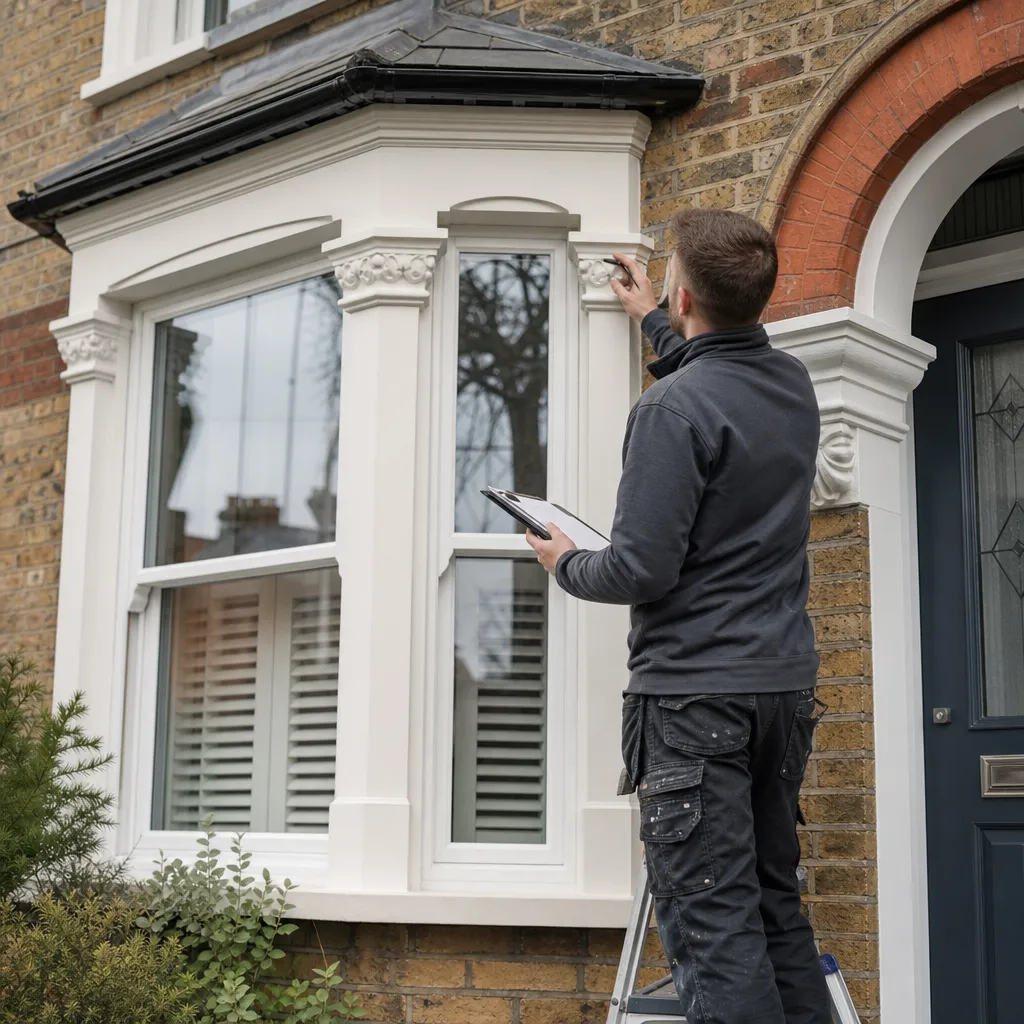
Quality Home Improvement Workmanship: What Good Looks Like
Quality home improvement workmanship shows from the first day on site: clean material storage, accurate setting-out, level and plumb finishes, and correct sequencing of trades.
 Improvement & Build
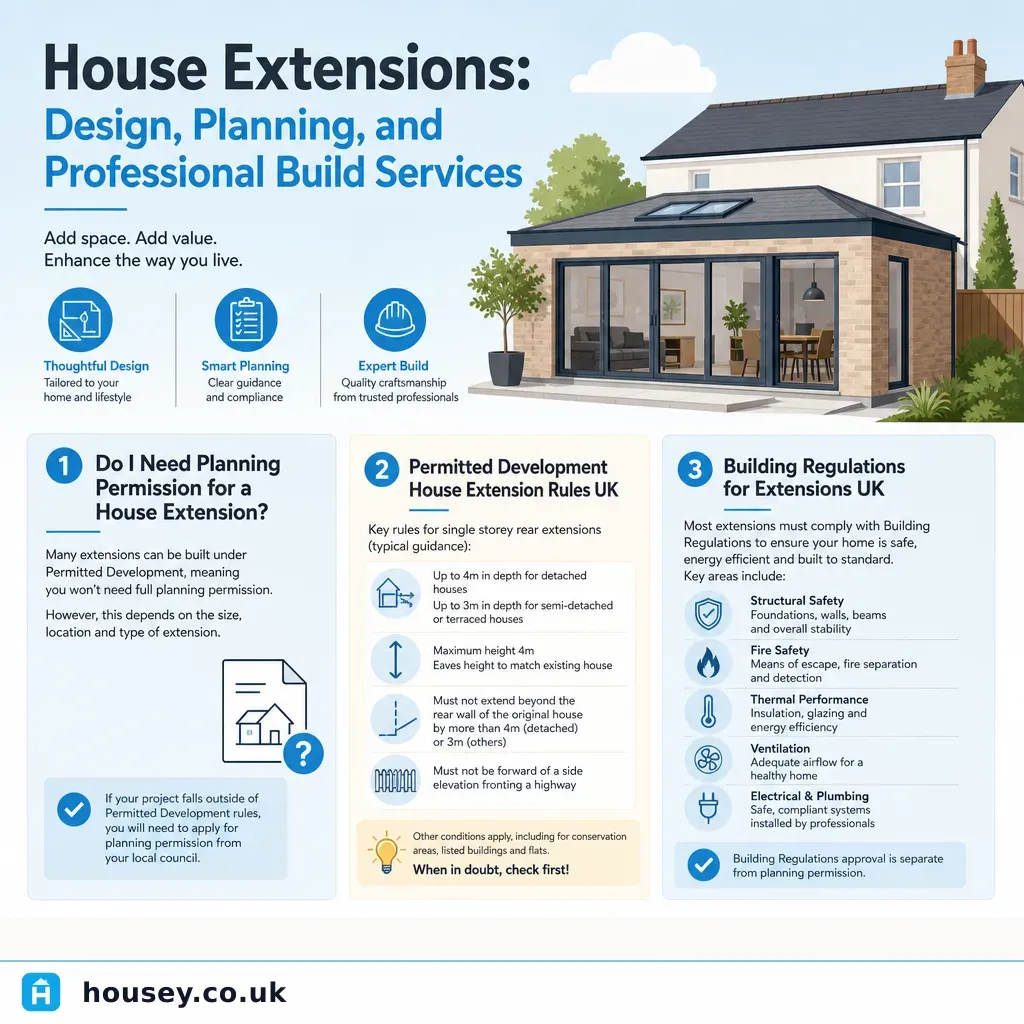
House Extensions: Design, Planning, and Professional Build Services
A UK house extension requires careful planning, structural design, and regulatory approval.
 Improvement & Build
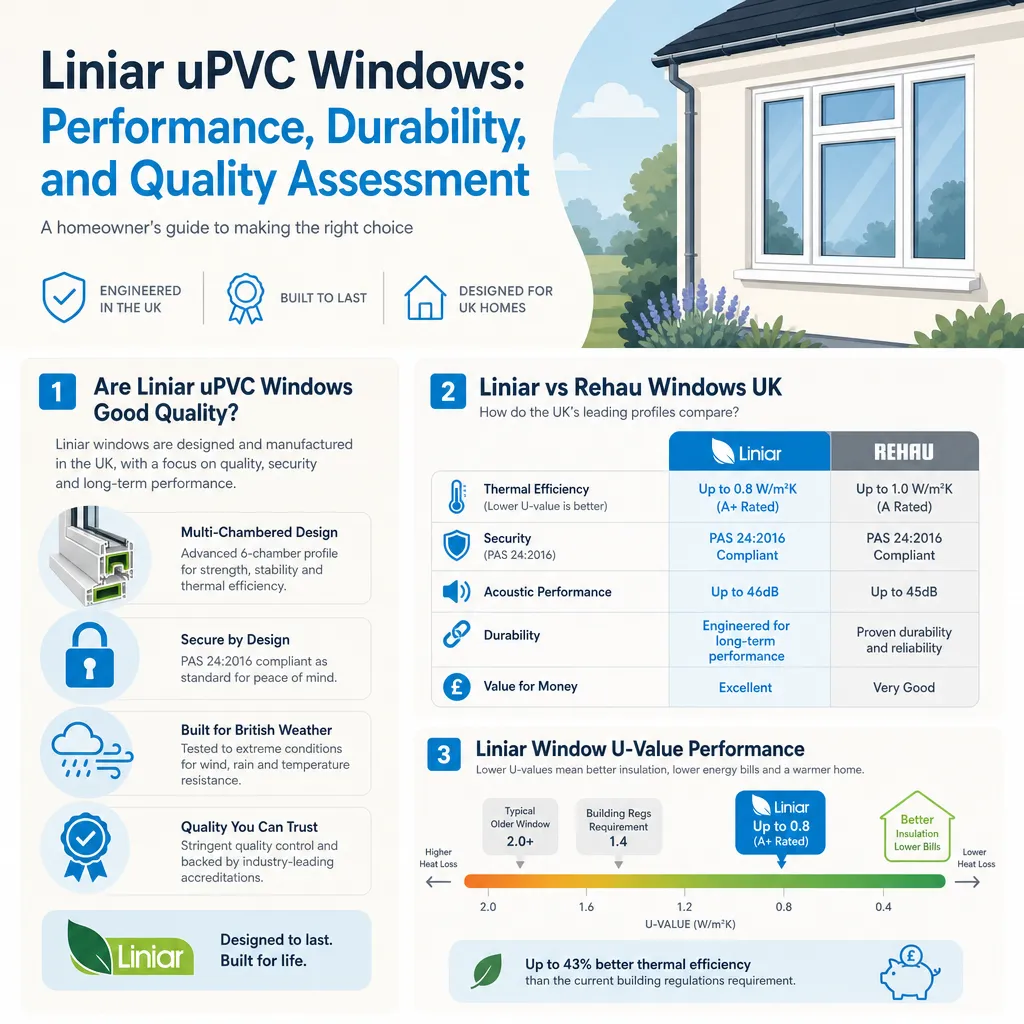
Liniar uPVC Windows: Performance, Durability, and Quality Assessment
Liniar uPVC window profiles are manufactured in the UK using multi-chambered, foamed frames.
 Improvement & Build
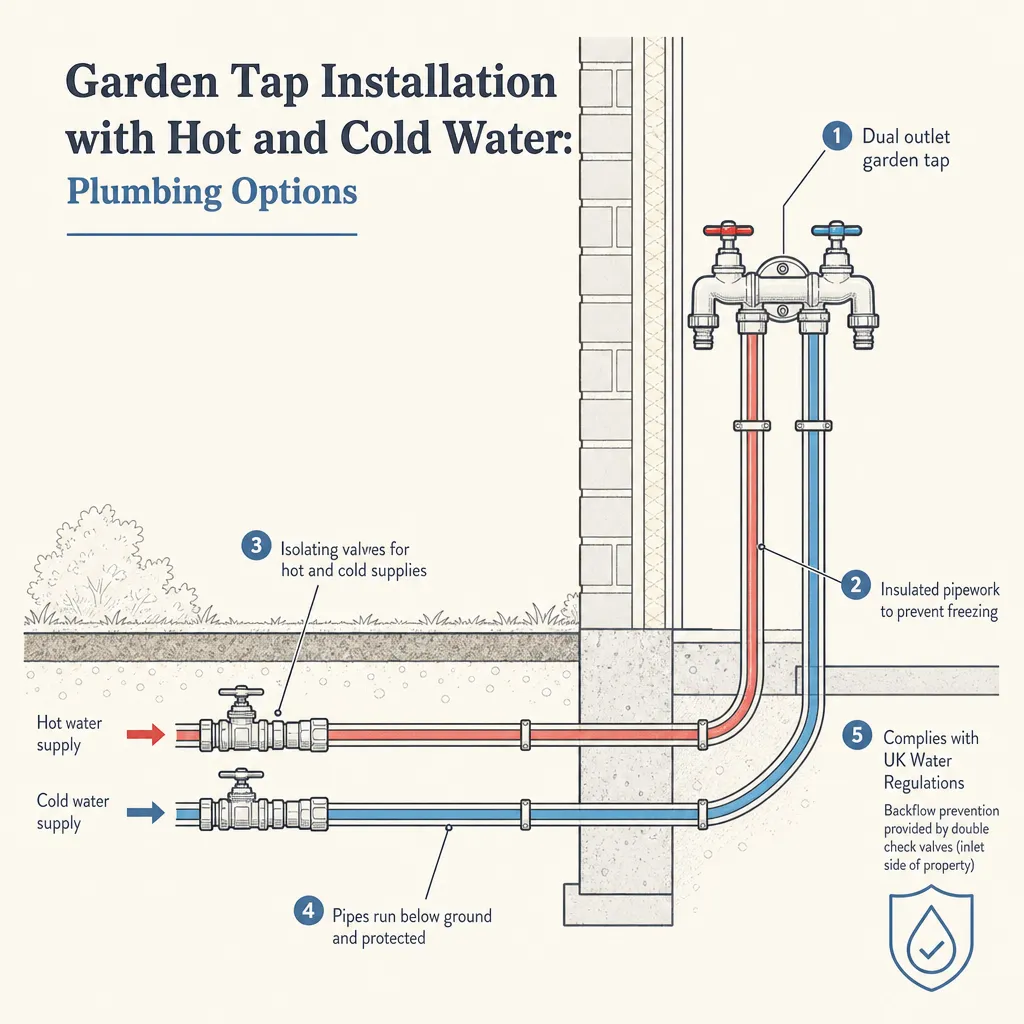
Garden Tap Installation with Hot and Cold Water: Plumbing Options
Adding a cold garden tap is a common DIY project, but routing hot water outdoors requires a plumber to connect to your domestic hot water system and comply with the Water Supply (Water Fittings) Regulations 1999.
 Improvement & Build
Sealing and Maintaining Historic Leaded Glass Windows: Preservation and Performance
Leaded glass windows are maintained using traditional linseed oil cement — not silicone or modern sealants, which prevent natural movement in the lead came.