Locating and Understanding Home Shutoff Valves
By Housey · Last reviewed 11th of May 2026
Locating and Understanding Home Shutoff Valves
Few home emergencies feel more alarming than a burst pipe or a leak that will not stop — and the difference between minor water damage and a flooded room often comes down to how quickly you can find the right valve. In UK homes, the network of stopcocks, isolation valves, and service entry points is rarely explained during a property purchase or tenancy, yet knowing where each one sits and what it controls is one of the most practical things a homeowner can learn before something goes wrong.
Key points
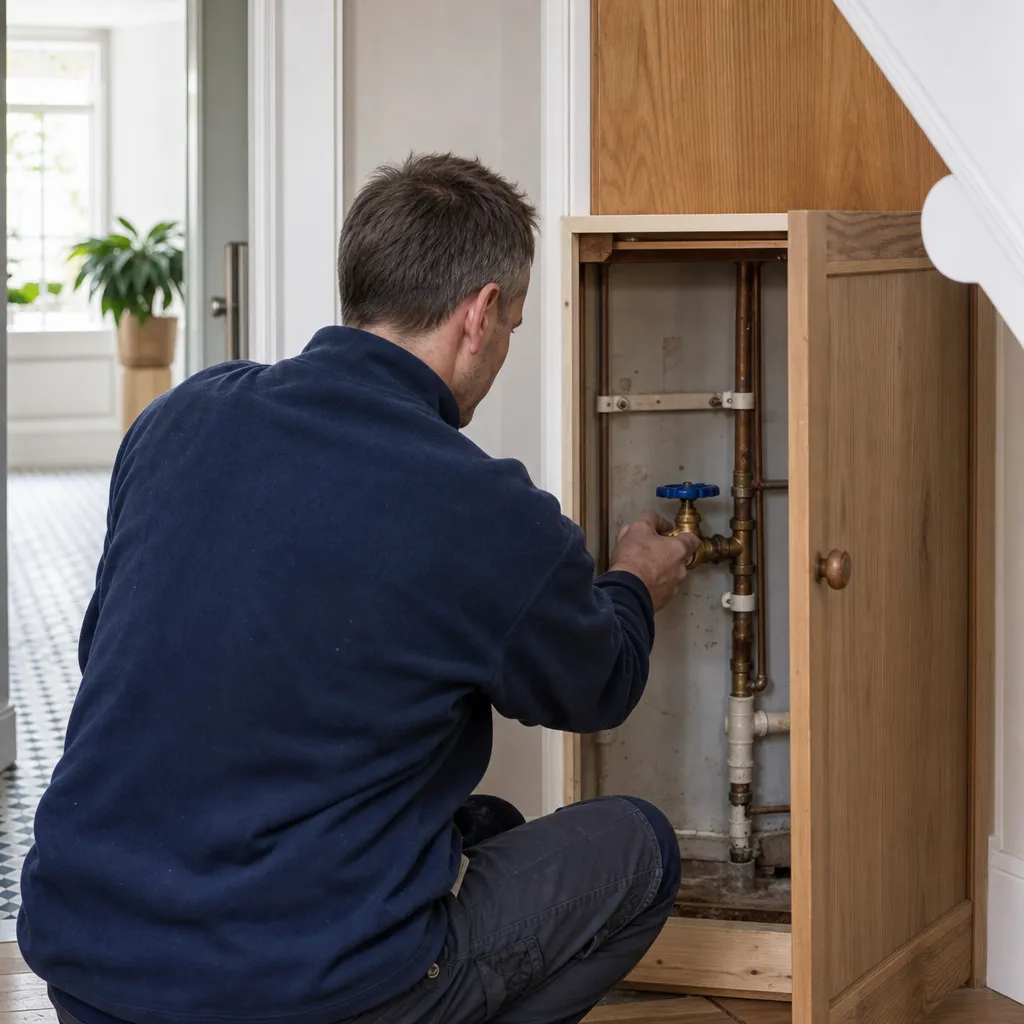
- The internal stopcock controls the mains water supply to your property and is most commonly found under the kitchen sink, beneath the stairs, or at the point where the supply pipe enters the building.
- An external stopcock in a metal-lidded box at pavement level or near the boundary can be turned off in an emergency using a square-head stopcock key, available from most DIY retailers.
- Individual isolation valves — recognised by a slot-head screw on the pipework — control water supply to a single appliance such as a toilet, basin, or washing machine.
- The gas emergency control valve (ECV) sits next to the gas meter; if you smell gas, turn it off immediately and call the National Gas Emergency Service on 0800 111 999.
- The electricity consumer unit contains individual circuit breakers and a main isolator; switching off the main isolator cuts all power to the property.
Where to find the internal mains water stopcock
The internal stopcock is a brass or plastic lever or wheel valve that controls all mains water entering your property. Turning it off prevents further water entering the building, though stored water in header tanks (common in older systems with a cold-water tank in the loft) will remain until drained.
Property type | Most likely stopcock location |
|---|---|
Post-1980s detached or semi-detached | Under the kitchen sink |
Victorian or Edwardian terraced house | Under the stairs, in the cellar, or beneath a ground-floor floorboard near the front wall |
1930s semi-detached | Under the kitchen sink or in a utility cupboard near the front door |
Ground-floor flat | Under the kitchen sink or in a service cupboard; may also have a communal shutoff in a shared riser cupboard |
Upper-floor flat | Isolation valve under the kitchen sink plus a communal valve in a shared riser |
New-build home | Under the kitchen sink or in a utility cupboard; often a lever valve requiring a quarter-turn |
If you cannot find the internal stopcock, check near where the supply pipe enters the building — typically through the floor or front wall close to the kitchen. Your water company can confirm the likely entry point.
How to operate a stopcock
- A traditional brass wheel or gate valve: turn clockwise to close (off) and anticlockwise to open.
- A modern lever valve (quarter-turn): open when the lever is inline with the pipe; closed when at 90 degrees to the pipe.
If the stopcock has not been used for years it may be stiff. Turn it gradually in small increments rather than forcing it, and apply penetrating oil if necessary. A seized stopcock should be repaired or replaced by a licensed plumber.
The external stopcock
The external stopcock is typically located in a small cast-iron or plastic box at pavement level, just inside or outside your boundary. Access requires a long-handled stopcock key with a square or crutch head, available from most DIY retailers for a few pounds.
The external stopcock is technically the water company's asset, but you are permitted to use it in an emergency. In the event of a major burst or if the internal valve cannot be operated, turning off the external stopcock will cut the supply to the property completely.
If the external stopcock is damaged, obstructed, or inaccessible, contact your water company immediately. Do not attempt to excavate or alter the supply pipework yourself.
Isolation valves for individual appliances
Isolation valves are fitted to the pipework supplying individual appliances and allow you to cut water to one fixture without turning off the mains. Common locations include:
- Toilet cistern cold supply, below or to the side of the cistern
- Bathroom basin and bath tap supplies
- Kitchen cold supply under the sink
- Dishwasher and washing machine inlet hoses
- Water softeners, filters, and boiler fill valves
Most isolation valves are operated with a flat-head screwdriver. When the slot in the valve body aligns with the pipe direction, the valve is open; at 90 degrees across the pipe, it is closed.
Gas: the emergency control valve
The gas emergency control valve (ECV) is located immediately beside the gas meter, which in UK homes is usually:
- In a box on an external wall near the front or side of the property.
- In a utility room or under-stairs cupboard for older properties with an internal meter.
- In a communal meter cupboard for flats.
The ECV lever is open when inline with the pipe and closed at 90 degrees to the pipe.
If you smell gas:
- Do not operate any electrical switches, including lights.
- Open windows and doors.
- Turn off the ECV at the meter.
- Leave the building immediately.
- Call the National Gas Emergency Service on 0800 111 999 (free, 24 hours).
Gas supply work must be carried out by a Gas Safe registered engineer. Unauthorised gas work is illegal under the Gas Safety (Installation and Use) Regulations 1998.
Electricity: the consumer unit
The consumer unit (commonly called the fuse box) is usually found in the hallway, under the stairs, or in a utility room. It contains:
- A main isolator switch — cuts all circuits in the property when switched off.
- Residual current devices (RCDs) — trip automatically when an earth fault is detected.
- Circuit breakers (MCBs) — protect individual circuits such as lighting, sockets, cooker, and shower.
To isolate the whole property, flip the main isolator to the off position. To isolate a single circuit, switch off the relevant MCB.
For any work at the consumer unit itself — changing MCBs, adding circuits, or investigating repeated RCD trips — contact a qualified electrician registered with NICEIC, NAPIT, or the Electrical Safety Register.
Worked example: burst flexi-hose under the kitchen sink in a 1930s semi-detached
A homeowner notices water spraying from the cold-feed flexi-hose under the kitchen sink.
- Immediate action: Turn the cold-supply isolation valve 90 degrees with a flat-head screwdriver — stopping the leak without cutting water to the rest of the house.
- If no isolation valve is present or it is seized: Locate the internal stopcock (on a 1930s semi, often near the front of the kitchen floor or under the stairs) and turn it clockwise to close.
- Call a plumber: Replace the flexi-hose, and ask the plumber to confirm the stopcock is operational while they are on site.
- Restore supply: Turn the isolation valve or stopcock back open once the repair is confirmed complete.
Emergency shutoff decision guide
- Localised appliance leak from a tap, toilet, or washing machine: Turn off the isolation valve for that appliance.
- Leak at a joint you cannot isolate individually: Turn off the internal stopcock to cut the mains supply to the whole property.
- Internal stopcock seized or inaccessible: Use the external stopcock with a stopcock key.
- Gas smell anywhere indoors: Turn off the ECV at the meter, open windows, leave the property, call 0800 111 999.
- Electrical burning smell, visible sparking, or shock risk: Switch off the main isolator at the consumer unit and call a qualified electrician.
Homeowner emergency preparedness checklist
Before you need any of these in a crisis, locate and record:
When to get professional help
Call a licensed plumber if:
- The internal stopcock is seized, corroded, or weeping water from the gland.
- The mains supply pipe has burst or is visibly damaged.
- Water is coming through the ceiling and you cannot identify or reach the source.
Call a Gas Safe registered engineer if:
- There is any suspicion of a gas leak or persistent smell of gas.
- The ECV does not operate as expected.
- You are unsure about any aspect of your gas supply pipework.
Call a qualified electrician registered with NICEIC or NAPIT if:
- An RCD is tripping repeatedly without an obvious cause.
- A circuit breaker will not reset.
- You are experiencing unexplained power losses or flickering lights.
How Housey can help
Housey helps UK homeowners find qualified local tradespeople quickly. Whether you need an emergency plumber to replace a faulty stopcock, a Gas Safe engineer for boiler or pipework concerns, or a registered electrician to investigate a tripping consumer unit, Housey matches you to vetted, insured professionals in your area.
Frequently asked questions
How do I know if my stopcock is open or closed?
A traditional wheel valve is open when turned fully anticlockwise and closed when turned fully clockwise. A lever valve is open when the handle is inline with the pipe direction and closed when it is at 90 degrees to the pipe. If the stopcock appears open but water pressure is low, it may be partially closed, corroded, or there may be a wider supply issue — contact your water company.
What if my internal stopcock is leaking?
If the stopcock is weeping water from around the spindle or gland nut, do not force it open or closed. Call a licensed plumber who can repair or replace the valve, using the external stopcock to isolate the supply during the repair if necessary. A seized or leaking stopcock is a common repair and should not be left unattended.
Can I operate the external stopcock myself?
Yes, you can use a stopcock key to operate the external stopcock in an emergency. The valve is your water company's asset but you have the right to use it to isolate your supply. If it is damaged, shared with a neighbour, or inaccessible, contact your water company directly — they have a statutory duty to maintain the supply infrastructure.
Do all flats have their own stopcock?
Most flats have an individual isolation valve, often under the kitchen sink, and may also have a communal building-level valve in a shared riser cupboard. Some older blocks rely entirely on communal valves. Confirm the shutoff arrangement with your building manager, freeholder, or managing agent when you move in.
Sources and further reading
- Water companies and your supply — Ofwat
- Gas Safety (Installation and Use) Regulations 1998 — legislation.gov.uk
- Gas Safe Register: in an emergency — Gas Safe Register
- Understanding your consumer unit — Electrical Safety First
Useful next reads
 Improvement & Build
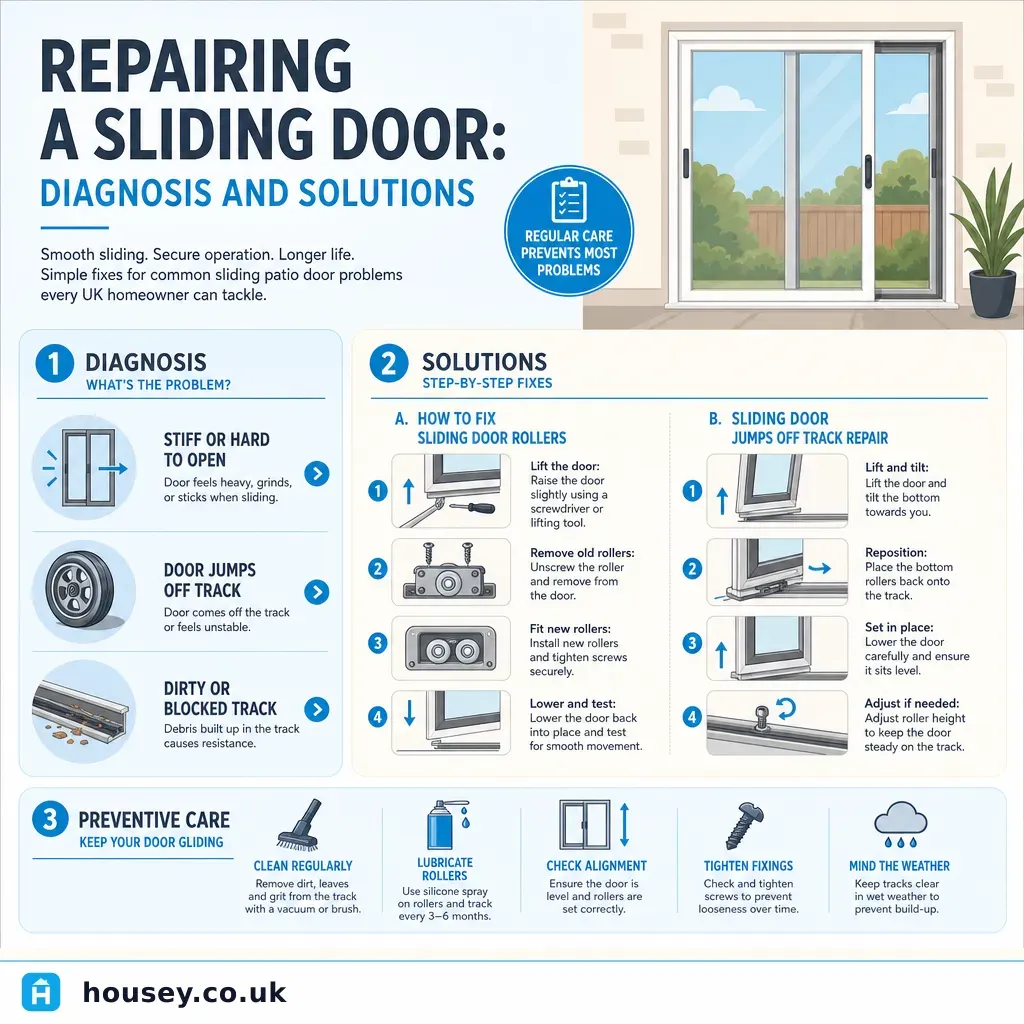
Repairing a Sliding Door: Diagnosis and Solutions
Most sliding door problems — stiffness, jumping off track, or draughts — are caused by dirty tracks, worn rollers, or misaligned guides.
 Improvement & Build
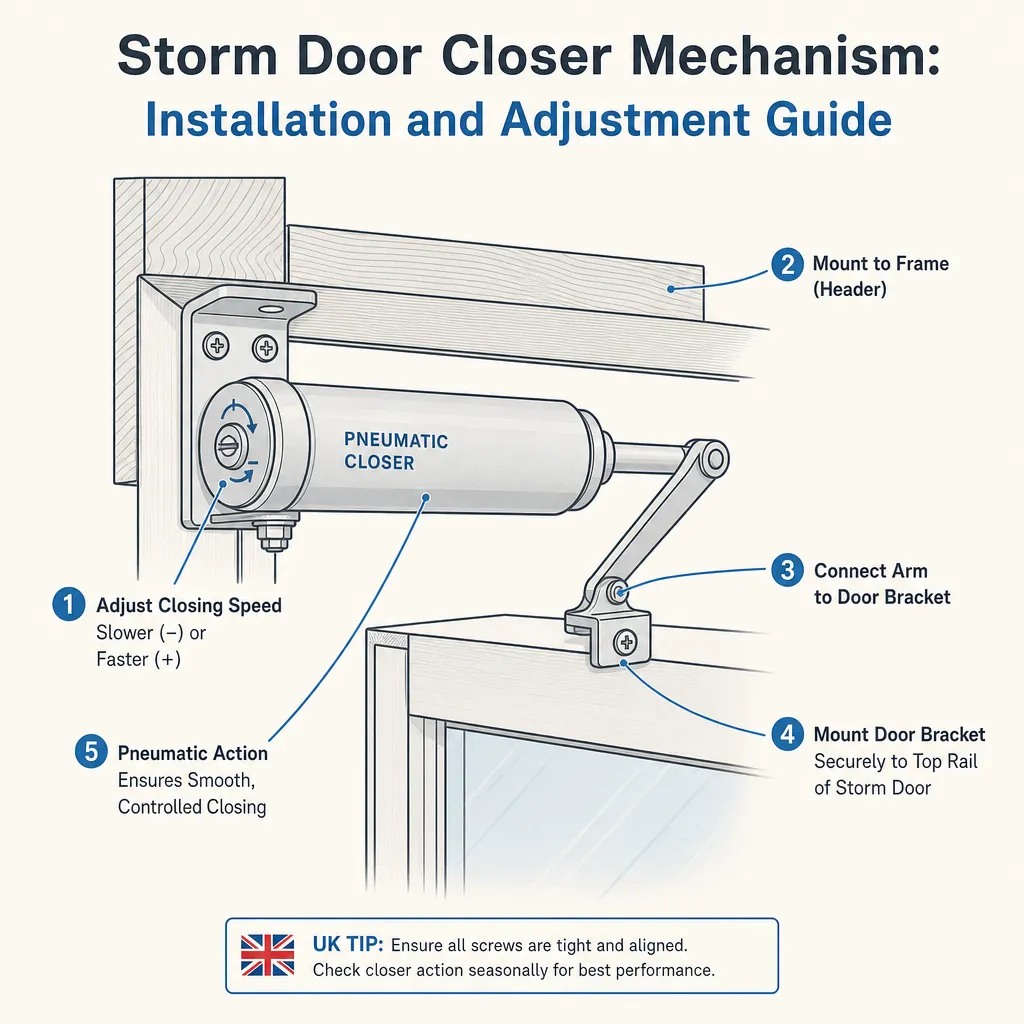
Storm Door Closer Mechanism: Installation and Adjustment Guide
Storm door closers are adjusted via a small screw at the end of the cylinder — clockwise slows the door, anticlockwise speeds it up.
 Improvement & Build
How to Find and Vet Professional Roofing Contractors
Professional roofing contractors should carry public liability insurance of at least £2m, provide a written workmanship guarantee, and hold accreditation from a recognised body such as the NFRC or the Competent Roofer scheme.
 Improvement & Build
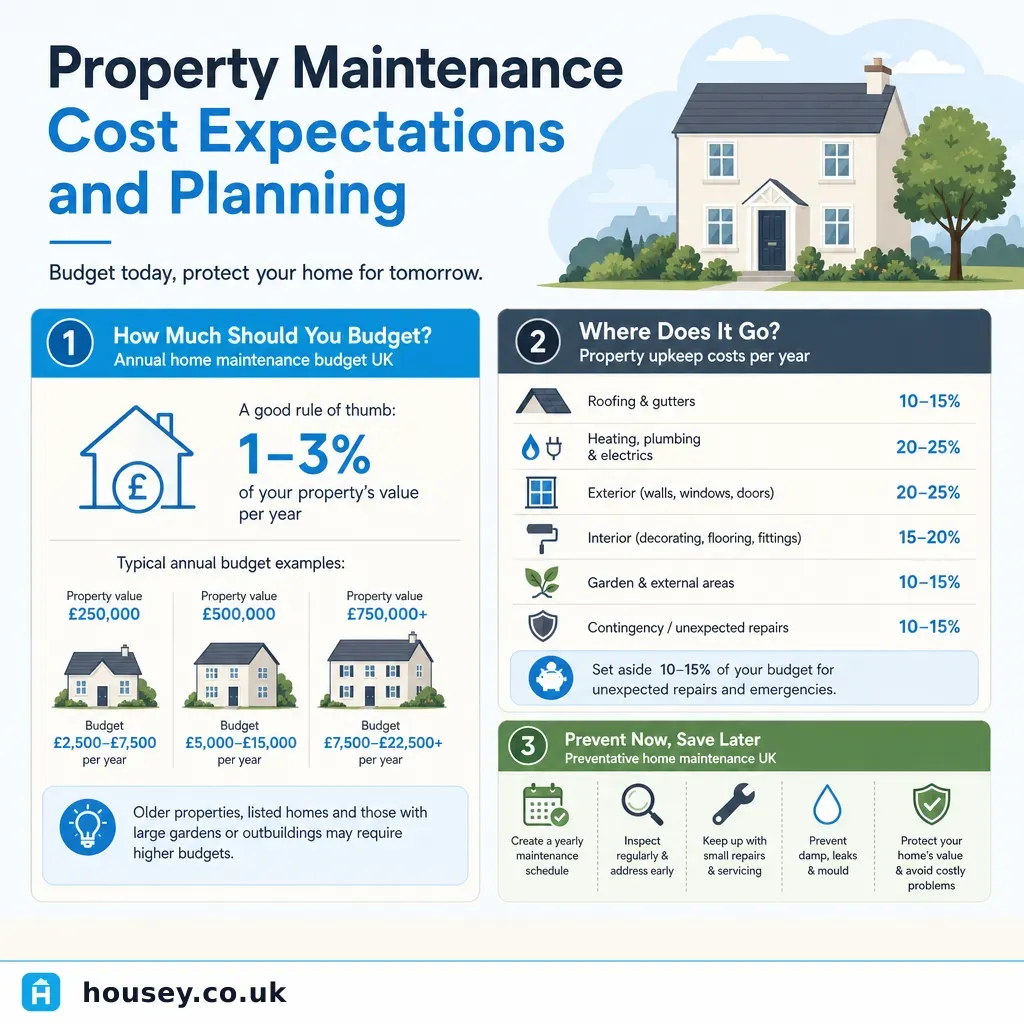
Property Maintenance Cost Expectations and Planning
UK homeowners typically budget between 1% and 3% of their property's value annually for maintenance and repairs.
 Improvement & Build
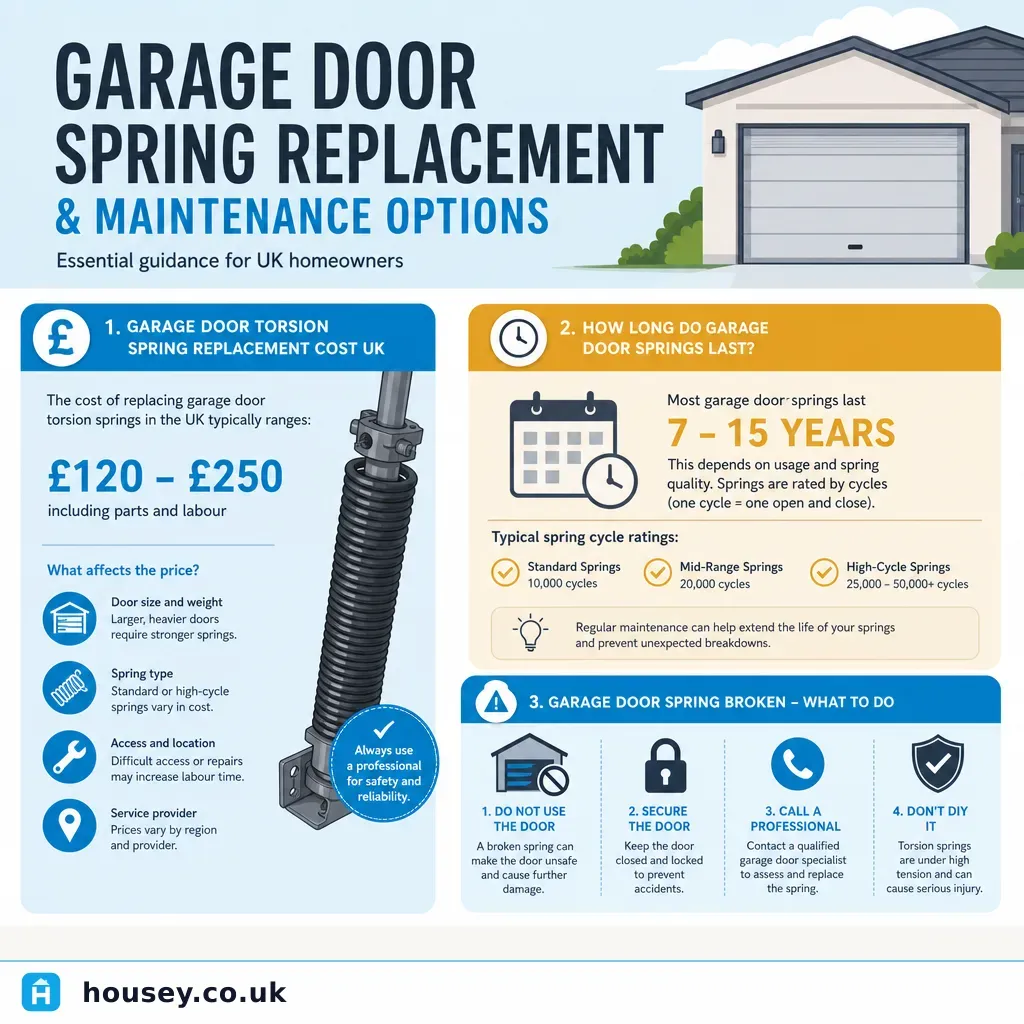
Garage Door Spring Replacement and Maintenance Options
Garage door spring replacement is not a DIY task — torsion springs store dangerous levels of mechanical energy and must be replaced by a qualified engineer.