Steel Doors versus Fibreglass Doors: Material Performance and Security Comparison
By Housey · Last reviewed 24th of May 2026
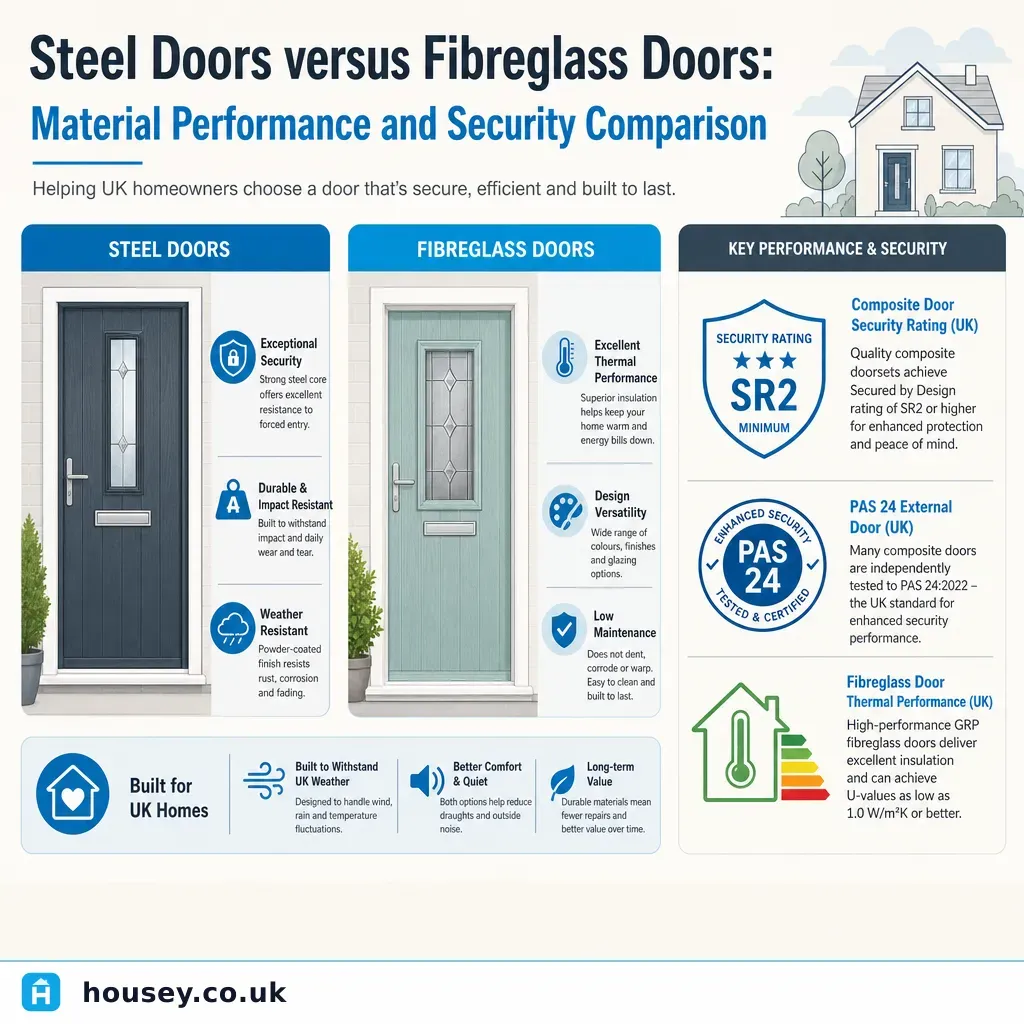
Steel Doors versus Fibreglass Doors: Material Performance and Security Comparison
Choosing between a steel and a fibreglass external door is a decision that affects security, thermal performance, and long-term maintenance costs for years — sometimes decades. Both materials are widely available alternatives to timber in the UK market, and homeowners often compare them when replacing a front or back door on a 1930s semi, a new-build property, or a period home undergoing renovation. Security requirements and energy efficiency obligations have both tightened in recent years, making material choice more consequential than it once was.
Key points
- PAS 24:2022 is the UK's enhanced security standard for external doorsets — the certificate applies to the complete doorset (door, frame, and hardware), not just the door leaf.
- Secured by Design (SBD) is the police-preferred security specification for external doors and is recognised by many UK home insurers — both steel and fibreglass (GRP) doors can achieve SBD accreditation.
- Building Regulations Part L (England) requires replacement external doors to achieve a minimum U-value of 1.4 W/m²K; new-build installations must meet the new dwellings energy performance pathway.
- Fibreglass (GRP) has lower thermal conductivity than steel, reducing thermal bridging risk at the door edge and frame junction where heat loss is most likely to occur.
- Steel doors are typically heavier (35–80 kg for a standard domestic door) and may require reinforced frames or upgraded hinges compared with comparable GRP alternatives.
How steel and fibreglass doors are constructed
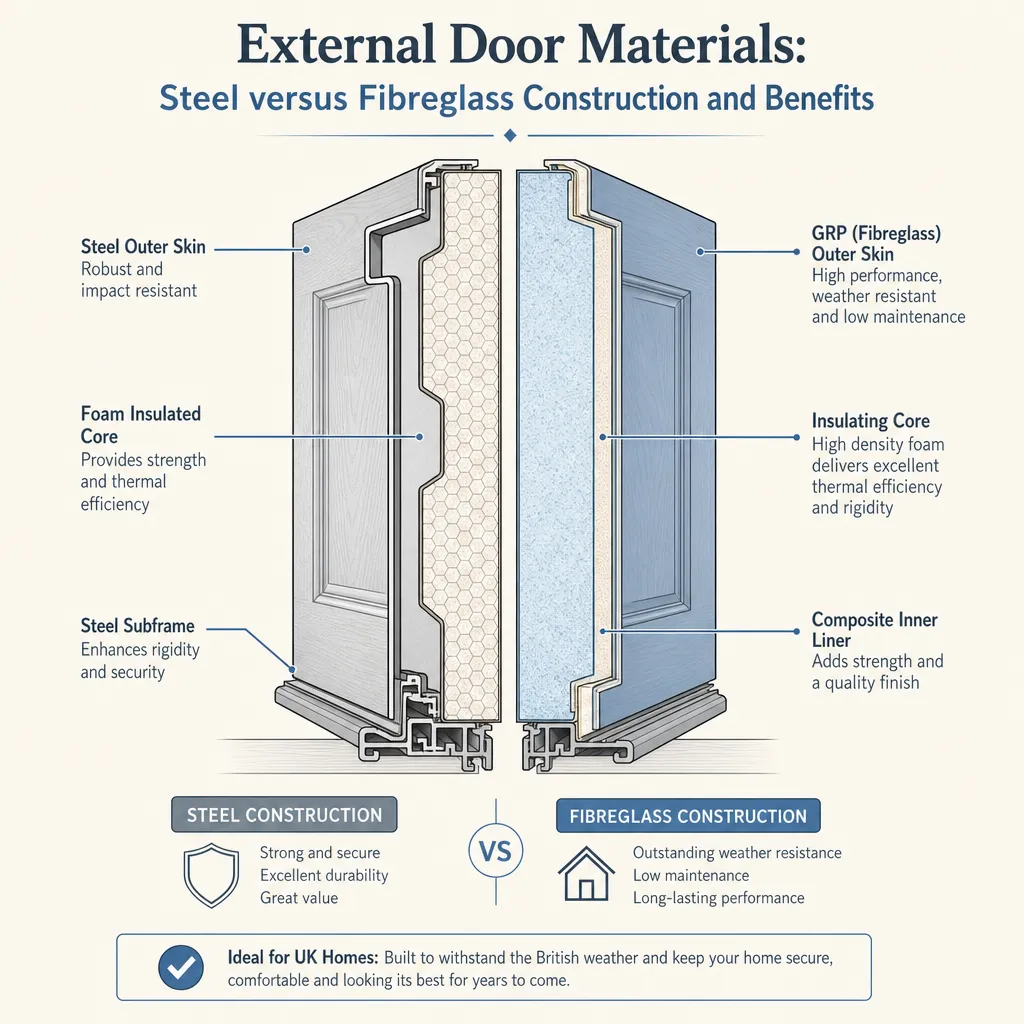
Steel doors use a cold-rolled or galvanised steel sheet outer skin — typically 0.7–1.2 mm thick for domestic applications — bonded to a steel inner frame, with a polyurethane foam or polystyrene core for insulation and rigidity. The steel skin can be smooth, wood-grain embossed, or panel-profile pressed to match various architectural styles. A thermal break — an insulating strip between the outer skin and the steel frame — is essential to prevent heat conduction through the door edge and reduce the risk of condensation on the inner face during cold weather.
Fibreglass (GRP) doors are manufactured by laying glass-fibre matting into a mould and curing it with polyester or vinyl ester resin. The resulting skin is rigid, dimensionally stable, and far less thermally conductive than steel. Two GRP skins are bonded to a timber or LVL (laminated veneer lumber) subframe with a polyurethane foam core. The moulding process allows detailed surface textures including wood-grain finishes that are difficult to match using pressed steel, making GRP the most common outer skin material in the UK composite door market.
Security performance compared
Feature | Steel door | Fibreglass (GRP) door |
|---|---|---|
PAS 24:2022 compliance | Available on many domestic and commercial steel doors | Available on most quality composite and GRP doors |
Secured by Design | Available from SBD-approved suppliers | Available from SBD-approved suppliers |
Resistance to forced entry | High — steel skin resists drilling and cutting | Moderate to high — GRP resists splitting; overall rating depends on frame |
Anti-crowbar resistance | High on commercial spec; varies on domestic | Depends on reinforcement and multipoint lock specification |
Resistance to kick-in | Frame strength and hinge specification usually the limiting factor | Same — frame and fixing strength critical |
Multipoint locking | Standard on most domestic steel doors | Standard on most composite and GRP doors |
For both material types, the weakest point in an external door installation is typically the frame, fixings, and hinges — not the door leaf itself. A certified installer should supply a tested doorset (door plus frame as a certified assembly) rather than a door leaf alone, since PAS 24:2022 certification applies to the complete assembly.
Thermal performance and U-values
Both steel and fibreglass doors can meet the Building Regulations Part L requirement of 1.4 W/m²K for replacement external doors, but the thermal pathway differs between the two materials.
Steel is a good thermal conductor. Without a correctly specified thermal break at the frame junction, heat can bridge through the edge of the door leaf, reducing real-world performance below the tested centre-of-panel U-value. Quality domestic steel doors include a thermal break as standard, but it is worth confirming this when specifying.
Fibreglass (GRP) is a poor thermal conductor by comparison. The GRP skin itself bridges less heat than steel, and the foam core contributes insulation value. GRP composite doors typically achieve complete doorset U-values of 1.0–1.4 W/m²K under standard test conditions.
If you are undertaking energy retrofit work or improving your property's EPC rating, confirm the tested doorset U-value with the supplier before purchasing — the centre-of-panel figure quoted in marketing material is not the same as the complete doorset U-value used for compliance purposes.
Durability and maintenance compared
Property | Steel door | Fibreglass (GRP) door |
|---|---|---|
Corrosion resistance | Galvanised or powder-coated; can corrode if surface coating is breached; marine environments accelerate risk | Does not rust — GRP is inherently corrosion-resistant in all climates |
Warping risk | None | None (unlike solid timber) |
Dent resistance | Thin domestic skins can dent under sharp impact | GRP resists denting but can crack under severe impact |
Repainting | Can be repainted; powder coat needs specialist repair | GRP can be painted but factory finish is typically maintenance-free for longer |
Annual maintenance | Check seals, locks, and hinges; touch up any coating chips | Annual check of seals and hardware; surface rarely needs intervention |
Typical product life | 30–50 years (domestic specification) | 25–35 years (domestic specification) |
In UK coastal or high-humidity environments, GRP has a practical durability advantage over standard domestic steel due to its inherent corrosion resistance.
Which material should you choose?
- Choose steel if you need the highest resistance to forced entry, particularly for commercial premises, high-value properties, or where insurers specify a minimum security door standard.
- Choose fibreglass (GRP) if you want a low-maintenance, corrosion-resistant door with a period-sympathetic wood-grain appearance, particularly for front doors on Victorian, Edwardian, or 1930s properties.
- Choose GRP for thermal performance if the door faces a cold exposure — a north or west elevation — and energy efficiency is a priority, as GRP composite typically delivers better real-world thermal performance at mid-market price points.
- Consult a certified installer if PAS 24:2022 or Secured by Design compliance is required — they can advise on certified doorsets from accredited manufacturers.
- Check with your insurer before specifying — some home insurance policies require minimum security standards, and failure to comply could affect the validity of a claim.
What to ask before accepting a quote
- Does the doorset (door plus frame) hold a PAS 24:2022 certificate or Secured by Design accreditation as a complete assembly?
- What is the tested doorset U-value — not just the door panel or centre-of-pane figure?
- What is the steel gauge or GRP skin thickness and frame construction material?
- Is the frame included in the quote, and what material is it made from?
- What warranty covers the door leaf, frame, hardware, and surface finish?
- Will the installer be FENSA-registered, or will a building control completion certificate be provided?
- Is VAT included and at what rate?
When to get professional help
For most external door replacements, a competent, accredited window and door installer can handle specification and fitting. Seek additional professional input if:
- The property is listed or in a conservation area — your local planning authority or a conservation officer may need to approve the door specification before purchase.
- The structural opening shows signs of lintel failure, cracking, or settlement — a structural engineer should assess the opening before a new door is fitted.
- You are installing a door as part of a wider retrofit or extension project where building control sign-off is required for the whole project.
How Housey can help
Housey connects homeowners with local, vetted window and door installers who can advise on certified steel and fibreglass doorsets, confirm compliance with PAS 24:2022 and Part L, and provide comparable, itemised quotes so you can make an informed decision.
Frequently asked questions
Are composite doors the same as fibreglass doors?
Not exactly. Composite door is a marketing term for doors made from more than one material — usually a GRP or steel outer skin over a timber or composite subframe with a polyurethane foam core. Most composite doors sold in the UK domestic market have a GRP outer skin, but some use steel. Always confirm the outer skin material if security or thermal performance specification is critical.
Do I need planning permission to replace an external door?
In most cases, replacing an external door like-for-like is permitted development in England. However, if the property is in a conservation area, is listed, or the new door significantly changes the external appearance, you may need planning permission or listed building consent. Check with your local planning authority before proceeding.
Does a new external door require building regulations approval?
Yes — replacement external doors in England and Wales require either FENSA or CERTAS self-certification, or a building control notification. Your installer should manage this process. A new door in a newly created structural opening requires a full building regulations application, regardless of whether a self-certification scheme is used.
What security standard should I look for on an external door?
Look for PAS 24:2022 on the doorset certificate — this is the UK's enhanced security standard for external doorsets. Secured by Design (SBD) is the police-preferred specification and may be required by some home insurers. Both standards apply to the complete doorset including door, frame, and hardware, not just the door leaf alone.
Sources and further reading
- PAS 24:2022 – Enhanced security performance requirements for doorsets — BSI Group
- Secured by Design: doors and windows guidance — Secured by Design (police-preferred specification)
- Building Regulations Approved Document L — GOV.UK
- FENSA: self-certification scheme for replacement windows and doors — FENSA
- Planning Portal: permitted development for doors — Planning Portal
Useful next reads
 Improvement & Build
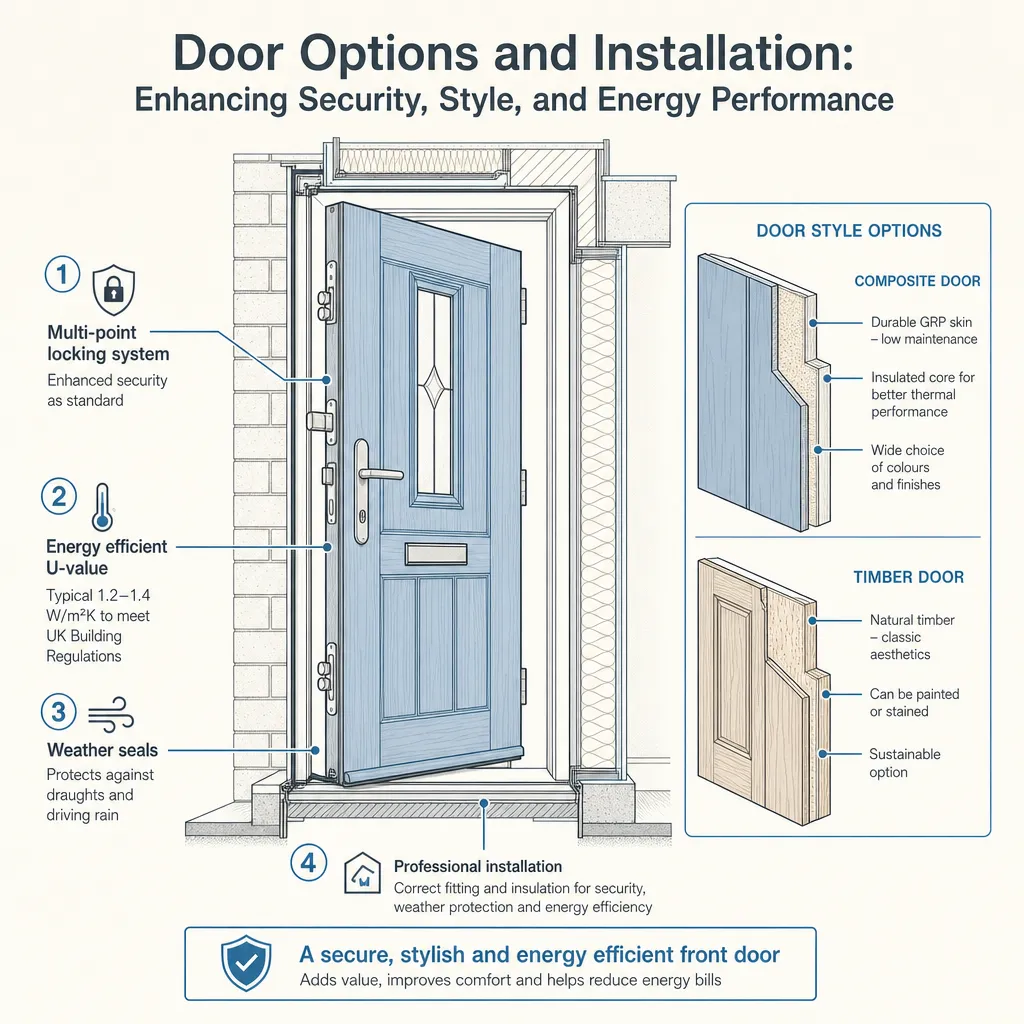
Door Options and Installation: Enhancing Security, Style, and Energy Performance
Choosing a new external door involves balancing security ratings, thermal performance, and style.
 Improvement & Build
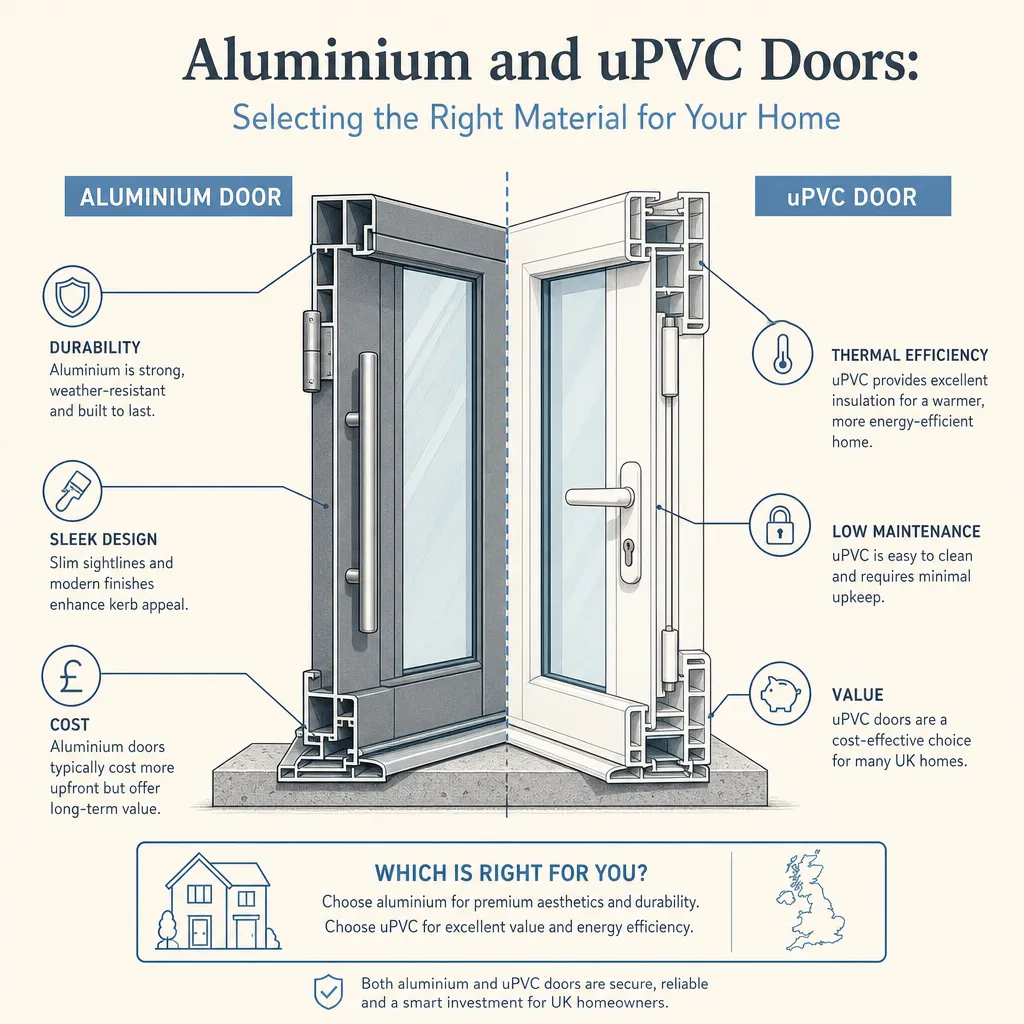
Aluminium and uPVC Doors: Selecting the Right Material for Your Home
uPVC doors are lower-cost and low-maintenance, making them a practical choice for most UK homes.
 Improvement & Build
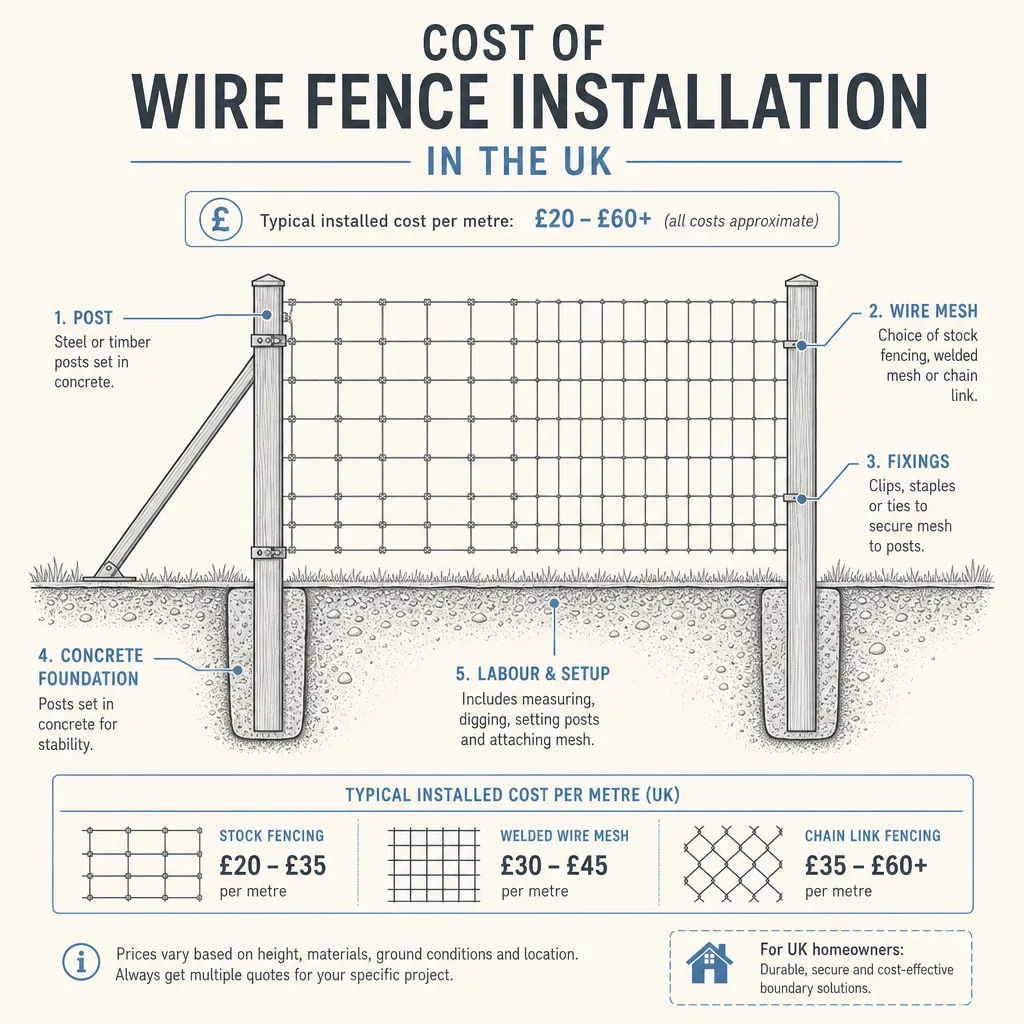
Cost of Wire Fence Installation in the UK
Wire fence installation in the UK typically costs £8–18 per metre for stock fencing, £15–35 per metre for chain-link, and £20–45 per metre for welded wire mesh panels, all installed.
 Improvement & Build
External Door Materials: Steel versus Fibreglass Construction and Benefits
Steel external doors use a cold-rolled steel skin over a foam-filled frame and offer high rigidity and security.
 Improvement & Build
UPVC Sliding Sash Window Installation Pricing
UPVC sliding sash windows are priced by size, glazing specification, balance system, finish, and access requirements.