UPVC Sliding Sash Window Installation Pricing
By Housey · Last reviewed 11th of May 2026
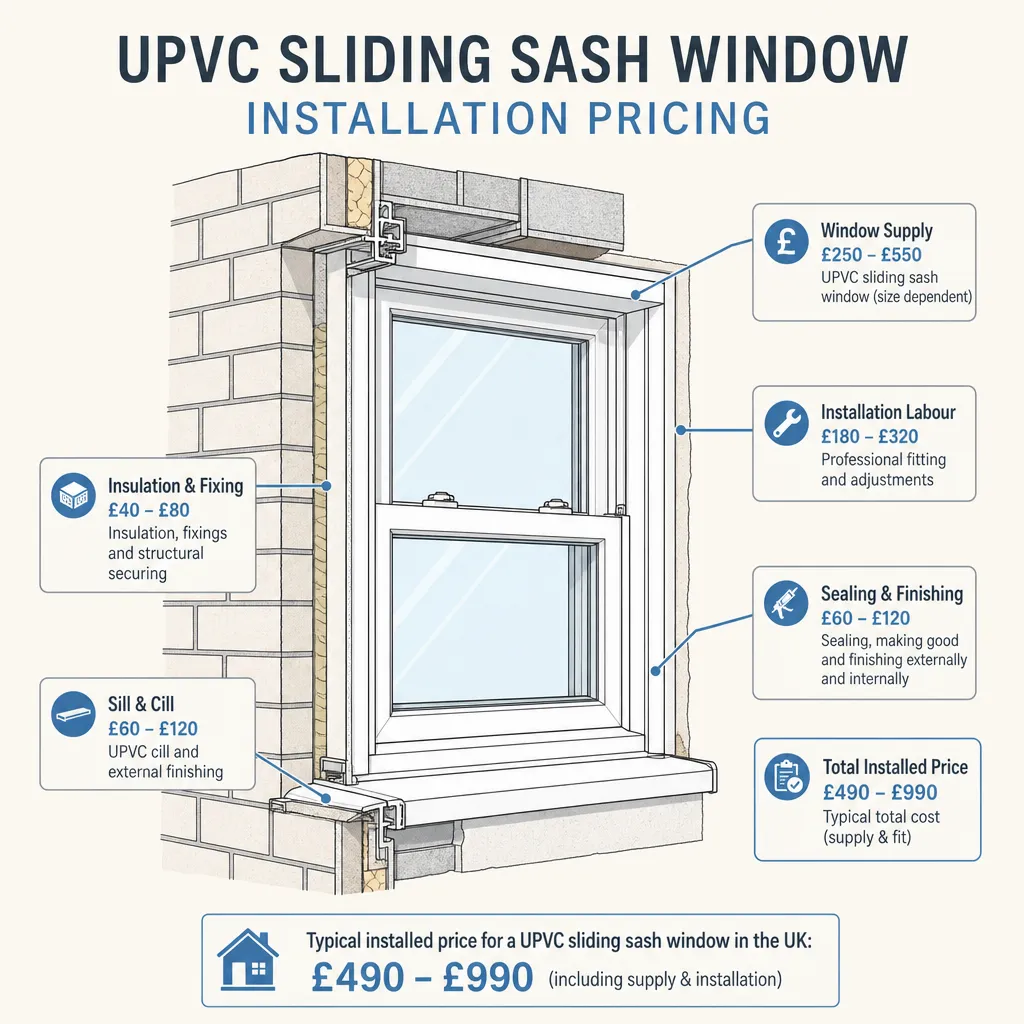
UPVC Sliding Sash Window Installation Pricing
Understanding how sliding sash window prices are structured helps enormously when comparing quotes — because unlike casement or tilt-and-turn windows, sash pricing is shaped by the counterbalance mechanism, meeting rail profile, glazing weight, and whether both panels move independently. Getting clarity on these details before accepting a quote saves disputes and avoids receiving a lower-specification product than expected.
Key points
- UPVC sliding sash windows use spring-balance or spiral-balance systems to allow both sashes to move independently; the mechanism type affects both price and long-term reliability.
- Indicative installed costs in the UK run from £500 to £1,400 per window, depending on size, glazing specification, finish, and access (Indicative UK costs, last reviewed 2026-05-11).
- Building Regulations Part L requires replacement windows in existing dwellings in England to achieve a centre-pane U-value of 1.4 W/m²K or better.
- Tilt-in functionality — allowing sashes to tilt inward for cleaning — is a popular upgrade, typically adding £50 to £150 per window to the unit cost.
- A FENSA or CERTASS registration number from your installer is required for self-certification against Building Regulations; always request it before work starts.
How sliding sash windows are priced
Installers price sliding sash windows differently from casements because the unit is more complex: two independently moving panels, a meeting rail, a counterbalance system, and draught seals along vertical run channels. Each component is a potential cost driver.
Key pricing components:
- Frame and sash profiles — the outer frame and both moving panels
- Balance system — spiral (coil spring) or block-and-tackle; some premium units replicate a traditional weight-and-pulley arrangement
- Glazing units — double or triple, standard or acoustic; the sealed glazing unit is typically the single largest material cost
- Meeting rail — the horizontal bar where upper and lower sashes meet; a deeper ovolo meeting rail replicates Georgian proportions but costs more to produce
- Finish — white UPVC is cheapest; foiled or dual-colour frames add 15–30% to the frame cost
- Tilt-in feature — adds a small premium per window, typically £50–£150
- Hardware — lift rails, cam locks, sash stops, child restrictors
- Labour and certification — installation, removal of existing frames, FENSA or CERTASS certificate
Pricing by specification
Specification | Indicative installed cost per window |
|---|---|
Standard white, double-glazed, no tilt | £500–£750 |
White, double-glazed, tilt-in | £600–£900 |
Foiled or dual-colour, double-glazed, tilt-in | £750–£1,100 |
White or foiled, triple-glazed, tilt-in | £900–£1,400 |
Indicative UK costs, last reviewed 2026-05-11. Prices exclude VAT. Regional variation applies — London and South East labour rates are typically higher.
What affects the total project cost?
Number of windows
Replacing several windows in one visit usually reduces the per-window price. Mobilisation costs — access equipment, van time, certification administration — are shared across the project. Ask for a project rate rather than accepting a per-window figure multiplied out.
Access and scaffold
Ground-floor windows are typically included in base labour costs. First- and second-storey windows that require scaffold or a mobile elevated work platform will add a separate day-rate cost. Ask installers to itemise access costs so you can compare quotes on equal terms.
Existing reveal condition
If brickwork, plasterwork, or sills around existing windows are in poor condition, additional preparation or remedial work will add to the price. A reputable installer should inspect the reveals before quoting and note any exclusions in writing.
Region
Labour rates vary across the UK. Expect to pay more in London, the South East, and parts of Scotland compared with the Midlands and Northern England.
Security features to ask about
Sliding sash windows have a different security profile from casement windows because the panel slides rather than swings shut onto a compression seal. Look for:
- Cam locks on the meeting rail — two cam locks, one at each end of the meeting rail, are standard practice; confirm they are included in the base specification.
- Sash stops — restrict how far each panel can open; useful for ventilation security and sometimes required by home insurers.
- Child window restrictors — limit the opening to 100 mm; recommended for windows accessible from height and required under Building Regulations for new-build dwellings.
- Laminated glass — available as an upgrade; increases smash resistance and can contribute to Secured by Design accreditation.
Some home insurers specify minimum window security standards. Check your policy before finalising the specification.
Red flags when reviewing quotes
Before accepting a quote for sliding sash windows, look out for:
- No mention of Building Regulations compliance. Any replacement window installation must comply with Part L. If a quote does not reference this, ask directly.
- No FENSA or CERTASS registration number. Without one, you will need to arrange and pay for local authority building control sign-off separately — an additional cost and administrative step.
- Vague scope of work. If the quote does not specify glazing U-value, balance type, finish, and hardware, you may receive a lower-specification product than expected.
- Access costs omitted. Scaffold or platform hire can add £300–£800 to a project. If upper-storey windows are involved and access is not mentioned, ask how it is planned.
- No detail on waste removal. Old frames should be removed and disposed of correctly; confirm this is included in the quoted price.
- An unusually low price. If a quote is 30–40% below comparable quotes for an apparently equivalent specification, ask why — possible explanations include lower-grade glazing units, thinner profiles, or omitted certification costs.
What to ask before accepting a quote
- What balance system is fitted — spiral or block-and-tackle — and what is the manufacturer's warranty on it?
- What is the centre-pane U-value of the glazing units?
- Is tilt-in functionality included or is it an optional extra?
- What is the meeting rail depth and profile style?
- Is VAT included in the quoted price?
- Is scaffold or access equipment included for upper-storey windows?
- What FENSA or CERTASS certificate will I receive on completion?
- Does the quote cover remedial work if reveals are found to be damaged on the day?
- What is the expected lead time from order to installation?
- What is the manufacturer's warranty on frames and sealed glazing units?
When to get professional help
Sliding sash window installation should always be carried out by a registered competent person. Seek professional advice beyond the installer if:
- Existing window openings show signs of structural movement — cracked lintels, stepped brickwork, or noticeably distorted reveals. A structural engineer or RICS-chartered surveyor should assess the openings before windows are removed.
- The property is in a conservation area or is listed — check with your local planning authority before ordering, and consider a pre-application enquiry.
- You are unsure whether changing the opening size, or other modifications, requires additional building control approval beyond standard FENSA self-certification.
How Housey can help
Use Housey to find accredited window and door installers in your area who can provide itemised quotes for UPVC sliding sash windows. Describe your project once and receive up to four quotes from vetted local installers.
Frequently asked questions
What is the difference between a sash window and a sliding sash window?
The terms are used interchangeably for vertically sliding windows. Sliding sash emphasises the mechanism — two panels that slide past each other on a vertical axis. Both refer to the same product type, and the same installation, Building Regulations, and certification requirements apply to both.
Are UPVC sliding sash windows as secure as casement windows?
With appropriate locks — cam locks and sash stops — and laminated glass, UPVC sliding sash windows can meet Secured by Design standards. The mechanism differs from a casement window, however, so it is worth confirming with your home insurer that the specification meets their minimum requirements before ordering.
How long does sliding sash window installation take?
Most installers can fit two to four sash windows in a single day, depending on size, glazing weight, and access. A whole-house replacement of six to eight windows typically takes one to two days. If upper-storey access requires scaffold, allow additional time for the access contractor to set up and strike.
Can I change the colour of UPVC sash windows after installation?
Yes — UPVC frames can be resprayed by specialist refurbishment companies after installation using coatings designed for plastics. The finish typically lasts 10 to 15 years if professionally applied. Respraying is usually more cost-effective than full window replacement when a colour change is the only goal.
Do sliding sash windows qualify for energy efficiency grants?
Window replacement is not currently covered by the main government schemes — ECO4 and the Great British Insulation Scheme focus on insulation and heating systems. Check the Energy Saving Trust website and your local authority for any regional support schemes that may apply to window upgrades in your area.
Sources and further reading
- Approved Document L1B: Conservation of fuel and power in existing dwellings — GOV.UK
- FENSA: Find a registered installer — FENSA
- Secured by Design: Window security standards — Secured by Design (Police Crime Prevention Initiatives)
- Planning Portal: Windows and doors guidance — Planning Portal
- Energy Saving Trust: Windows and glazing — Energy Saving Trust
Useful next reads
 Improvement & Build
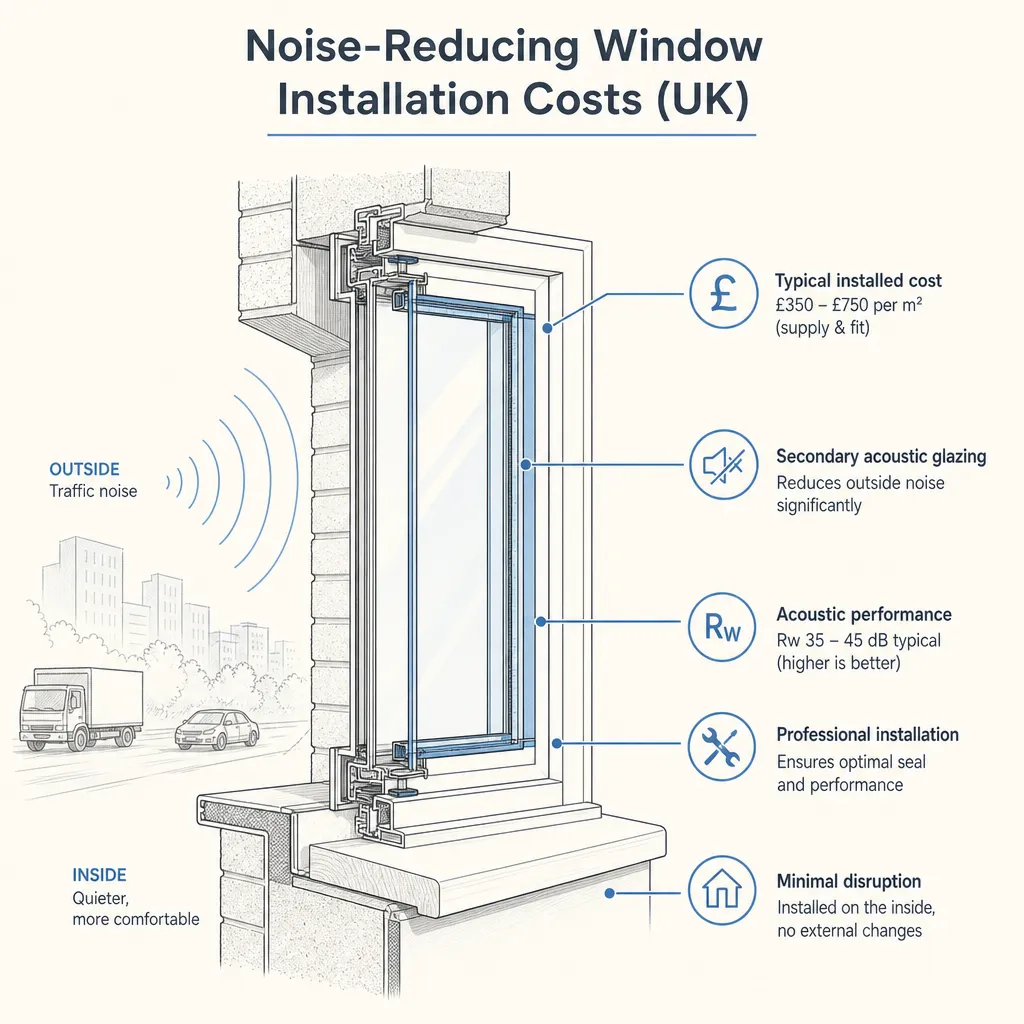
Noise-Reducing Window Installation Costs
Noise-reducing window installation in the UK typically costs £400–£1,500 per window depending on glazing specification, frame material, and property type.
 Improvement & Build
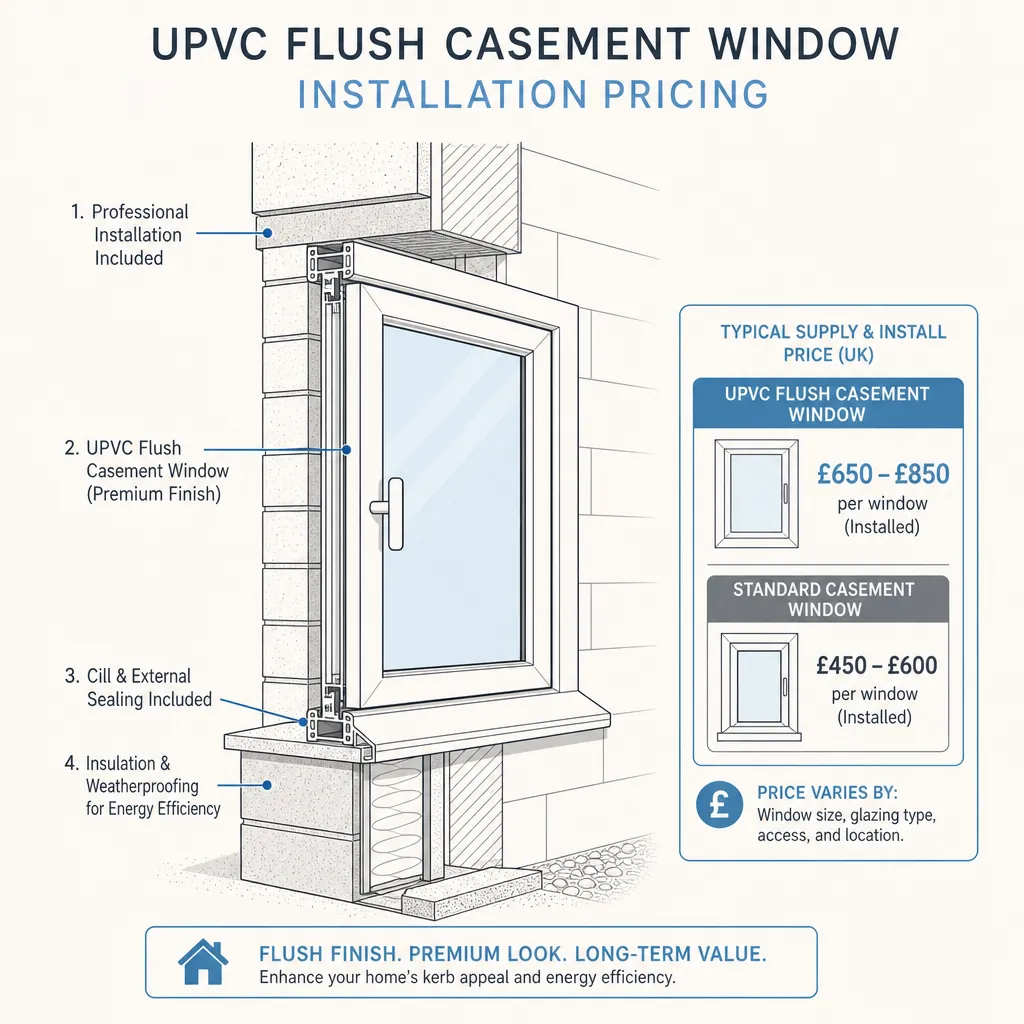
UPVC Flush Casement Window Installation Pricing
UPVC flush casement windows typically cost £400–£900 per window supplied and fitted in the UK, depending on size, glazing specification, and finish.
 Improvement & Build
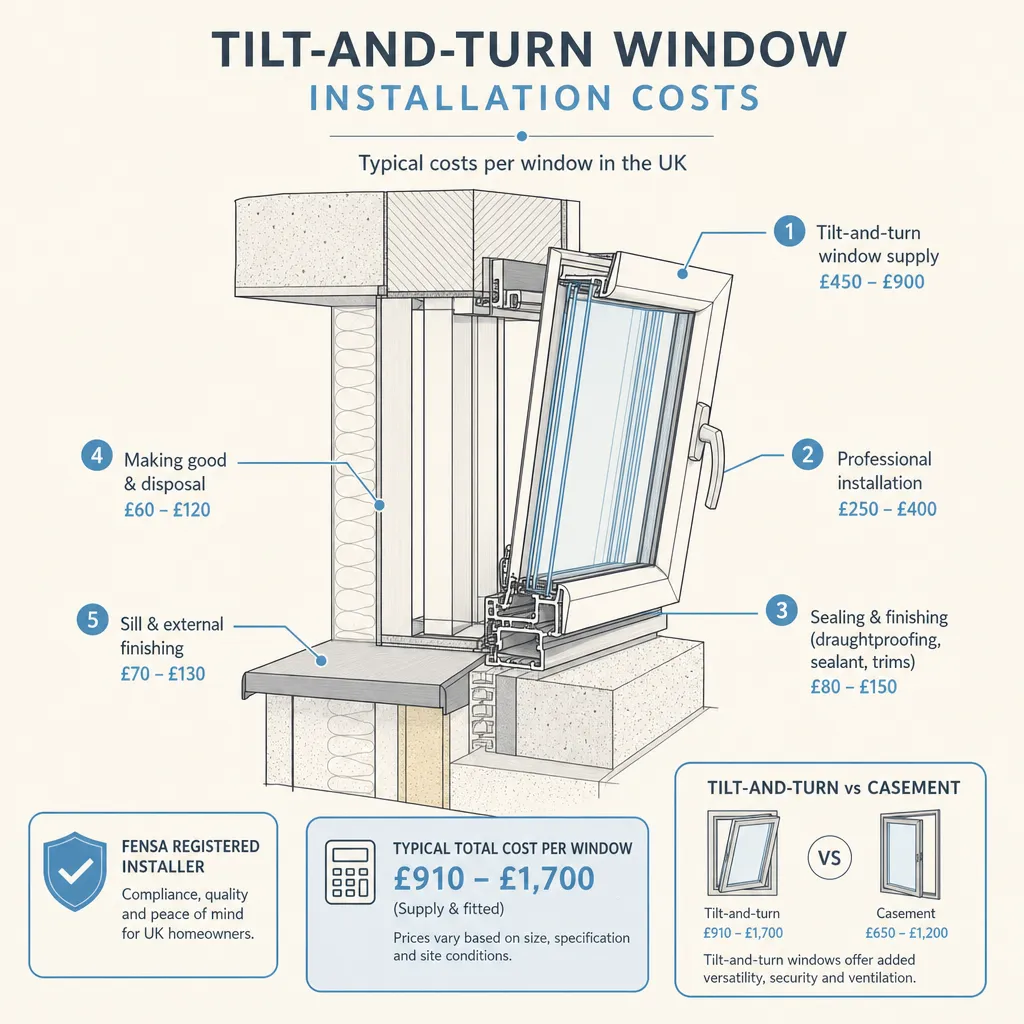
Tilt-and-Turn Window Installation Costs
Tilt-and-turn windows typically cost £400–£900 per window supply and fit in uPVC, rising to £600–£1,300 in aluminium and £700–£1,400 in timber.
 Improvement & Build
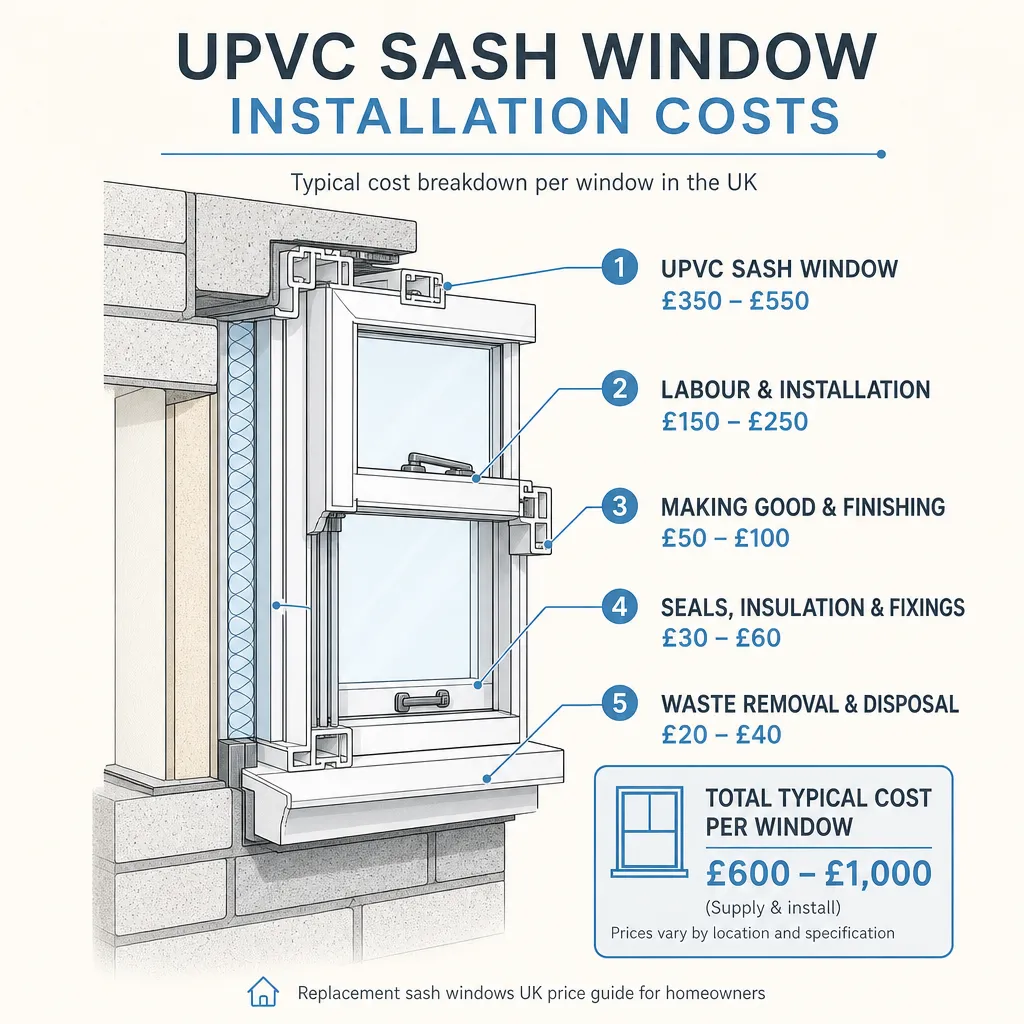
UPVC Sash Window Installation Costs
UPVC sash windows typically cost between £400 and £1,200 per window installed in the UK, depending on size, glazing specification, and access.
 Improvement & Build
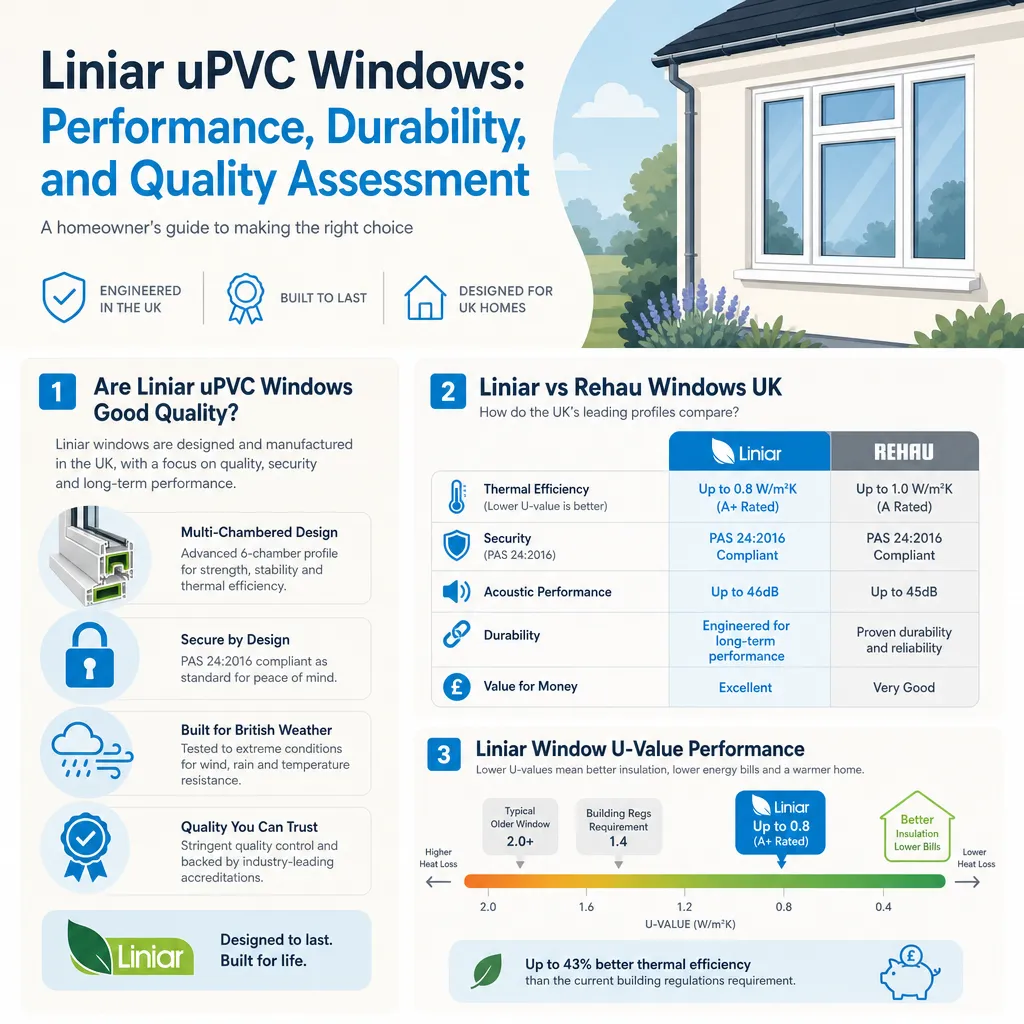
Liniar uPVC Windows: Performance, Durability, and Quality Assessment
Liniar uPVC window profiles are manufactured in the UK using multi-chambered, foamed frames.