Loft Ladder Installation and Access Equipment Costs
By Housey · Last reviewed 7th of May 2026
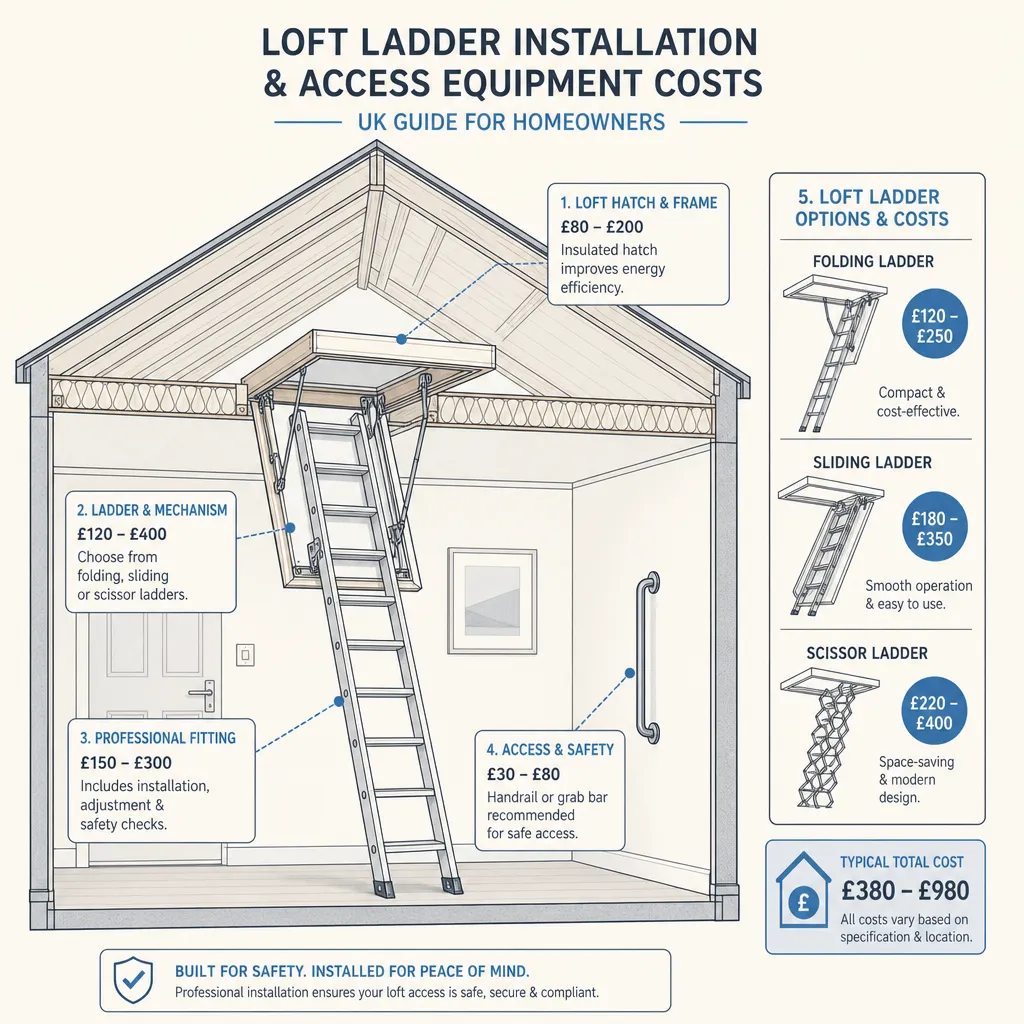
Loft Ladder Installation and Access Equipment Costs
A properly installed loft ladder transforms an awkward ceiling hatch into safe, regular-use access — whether the loft is used for seasonal storage, insulation work, or as the first step towards a full conversion project. The choice of ladder type, the existing hatch size, and the ceiling height all affect cost, safety, and whether Building Regulations come into scope, so it pays to plan before buying a unit or booking a carpenter.
Key points
- Loft ladder installation typically costs £150–£450 supply and fit for a standard folding or sliding ladder in a UK home (Indicative UK costs, last reviewed 2026-05-07).
- Three main ladder types are available in the UK: folding (concertina), sliding (two-section), and telescopic — each with different ceiling height requirements and minimum hatch size implications.
- Building Regulations Approved Document K (Protection from falling, collision and impact) applies where a loft is used as habitable space and fixed stair access is required.
- Enlarging a loft hatch may involve cutting or trimming a structural joist and could trigger a Building Regulations application or notification.
- A minimum hatch opening of around 550mm × 700mm is commonly recommended for safe single-person ladder access.
Types of loft ladder: a comparison
Choosing the right ladder depends on ceiling height, available hatch size, frequency of use, and whether you regularly need to carry items up and down.
Ladder type | Ceiling height range | Minimum hatch size | Best for | Typical supply cost |
|---|---|---|---|---|
Folding / concertina | 2.2m – 3.5m+ | 550mm × 700mm | Regular use, carrying items, wider hatch openings | £100–£350 |
Sliding (2-section) | 2.2m – 3.0m | 550mm × 700mm | Standard ceiling heights with frequent access | £80–£250 |
Telescopic | 2.4m – 3.5m | 450mm × 450mm | Small existing hatches, infrequent light-use access | £60–£180 |
Fixed timber loft stair | Varies (≥2.2m) | Larger opening required | Loft conversions and habitable loft rooms | Quoted as part of conversion works |
Supply costs above cover the ladder unit only. Installation labour typically adds £60–£150 for a straightforward fit into an existing correctly sized hatch, rising considerably if the hatch needs enlarging.
How much does loft ladder installation cost in the UK?
Indicative UK costs, last reviewed 2026-05-07.
For a standard installation — a folding or sliding ladder fitted into an existing hatch of adequate size — expect to pay £150–£450 all-in, covering the unit and a half-day's labour from a carpenter or joiner. This assumes no joist cutting is needed and the ceiling is in reasonable condition.
Hatch enlargement: If the opening is too small, cutting and re-trimming the hatch — potentially cutting a joist and fitting a timber trimmer — typically adds £150–£400 and may require a Building Regulations notification.
Insulated hatch door replacement: Replacing a draughty or damaged frame with an insulated hatch door as part of the installation adds roughly £100–£250 for the unit and fitting, and noticeably reduces heat loss through the loft access.
Other cost drivers:
- Ceiling height: Very high ceilings may need extended or bespoke ladder sections.
- Ceiling material: Lath-and-plaster in Victorian and Edwardian homes is more fragile than modern plasterboard and requires more careful cutting.
- Handrail: A fitted handrail at the hatch opening improves safety and typically adds £80–£200.
- Loft boarding at the landing point: If the ladder exits onto unboarded joists, adding boarding around the hatch is often quoted alongside for safety.
Does installing a loft ladder need Building Regulations approval?
For a standard loft ladder fitted into an existing correctly sized hatch in a storage loft, Building Regulations approval is not normally required. This is treated as minor building work.
Building Regulations may apply in these situations:
- A joist is cut to enlarge the hatch: This is structural work. Contact your local authority building control department or an approved inspector before proceeding.
- The loft is or will become habitable space: Under Approved Document K, habitable loft rooms require a permanent staircase, not a foldaway ladder. A loft ladder is not an acceptable primary means of access or means of escape for a habitable room.
- The property is listed or in a conservation area: Any alteration to the ceiling or loft structure may require listed building consent or conservation area approval in addition to Building Regulations.
If uncertain, many local authorities offer a free pre-application conversation with their building control team.
What to check before choosing a loft ladder
Work through this checklist before measuring up or requesting quotes:
- Ceiling height: Measure floor to ceiling directly below the hatch position.
- Existing hatch opening: Measure the clear opening inside the frame, not the outer frame dimensions.
- Floor-to-loft-floor distance: How far from the room floor to where the ladder feet will land in the loft.
- Ceiling material: Plasterboard or older lath-and-plaster? This affects cutting approach and cost.
- Intended use: Carrying large or heavy items is far easier on a wide folding staircase than a telescopic ladder.
- Obstructions above the hatch: Check for joists, noggins, pipes, or cables that may limit the hatch size or the angle the ladder can open to.
- Loft floor at the landing point: Unboarded joists are a fall hazard — confirm boarding is in place or budget for it separately.
What to ask before accepting a quote
When comparing quotes from carpenters or loft installation specialists:
- What ladder model are you supplying, and what is its rated load capacity?
- Does the quote include hatch frame replacement or an insulated hatch door?
- Will any joist cutting be required? If so, how will the opening be structurally supported?
- Is a Building Regulations application or notification included if structural work is needed?
- What is the manufacturer's warranty on the ladder mechanism?
- Is VAT included in the quoted price?
- Will you make good any ceiling damage around the hatch after installation?
- What is the estimated time from booking to completion?
When to get professional help
Most loft ladder installations are suitable for a competent carpenter or joiner. Seek additional input when:
- The installation requires cutting or trimming a joist — confirm the joist's role in the structure before cutting, and seek a structural engineer's view if load-bearing concerns arise.
- You are converting or plan to convert the loft into habitable space — Building Regulations and a permanent staircase will be required; involve a loft conversion companies specialist from the outset.
- The loft shows signs of damp, structural movement, or inadequate ventilation — address these before creating easy loft access.
- The property is listed or in a conservation area.
- Contractors will be working regularly at height in or around the loft — HSE working-at-height regulations apply to commercial operations.
How Housey can help
If your loft ladder installation is the first step in a bigger project — storage boarding, insulation, or a full loft conversion — Housey can connect you with experienced loft conversion companies who can advise on access requirements, structural considerations, and full conversion scope from the outset, saving you from repeating work at a later stage.
Frequently asked questions
Do I need planning permission to install a loft ladder?
No — a standard loft ladder installation does not require planning permission. Planning permission becomes relevant only if you are converting the loft into habitable space requiring structural changes or a new dormer. Building Regulations, particularly Approved Document K, is the more likely regulatory consideration when a hatch is enlarged or structural joists are cut.
What size hatch do I need for a loft ladder?
Most folding and sliding loft ladders require a minimum hatch opening of approximately 550mm × 700mm for comfortable single-person access. Larger openings — 600mm × 900mm or more — are preferable for carrying bulky items or if you want flexibility for a future conversion. Always check the ladder manufacturer's minimum hatch size specification before purchasing.
Can I fit a loft ladder myself?
Replacing a hatch cover with a loft ladder is within the capability of a competent DIYer with woodworking experience, provided no joist cutting is required. If the hatch needs enlarging or structural trimming is involved, a qualified carpenter is advisable to ensure the result is safe, correctly supported, and — where required — Building Regulations compliant.
How long does loft ladder installation take?
A standard installation into an existing correctly sized hatch typically takes two to four hours for an experienced carpenter. If the hatch needs enlarging, allow a full day, including time for cutting, trimming joists, making good the plasterboard or lath-and-plaster ceiling, and fitting the ladder and any handrail.
What loft ladder is best for low ceilings?
Telescopic ladders are the most compact option for ceiling heights from around 2.4m, folding to a small profile and fitting through a smaller hatch opening. They are narrower and less stable than folding ladders, making them better suited to infrequent, light-use storage access rather than regular trips carrying heavy or bulky items.
Sources and further reading
Useful next reads
 Improvement & Build
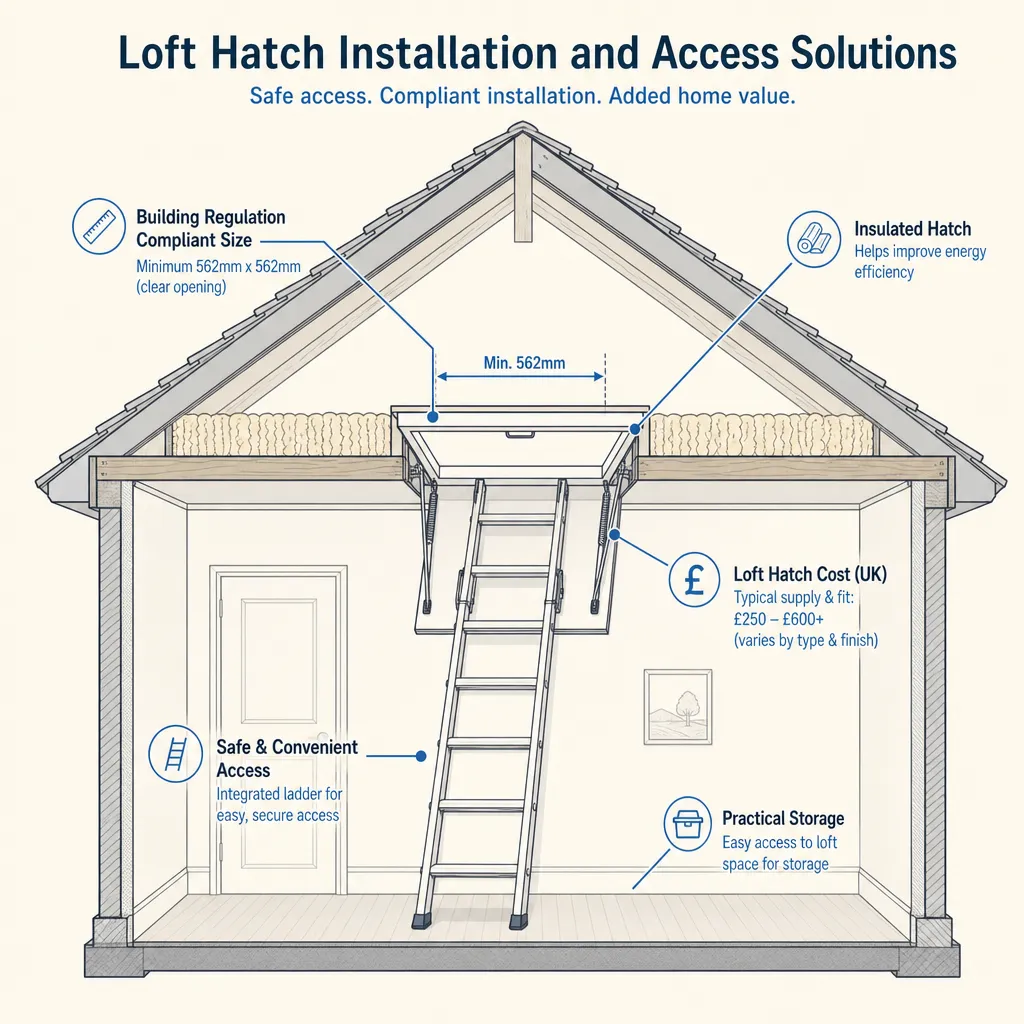
Loft Hatch Installation and Access Solutions
A basic loft hatch costs around £150–£350 fitted; a hatch with a folding ladder runs £350–£900.
 Improvement & Build
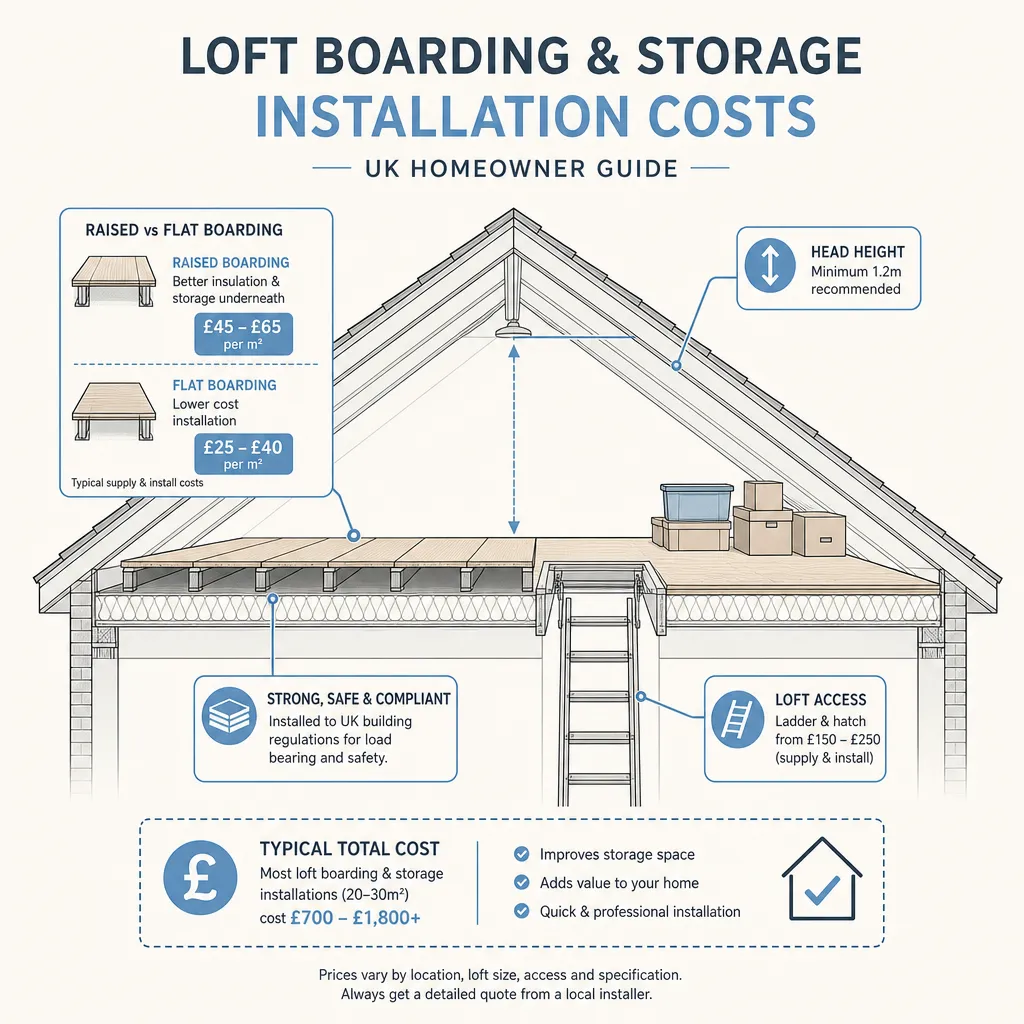
Loft Boarding and Storage Installation Costs
Basic loft boarding for an average semi-detached home costs £500–£1,500; a raised system that preserves insulation runs £800–£2,500.
 Improvement & Build
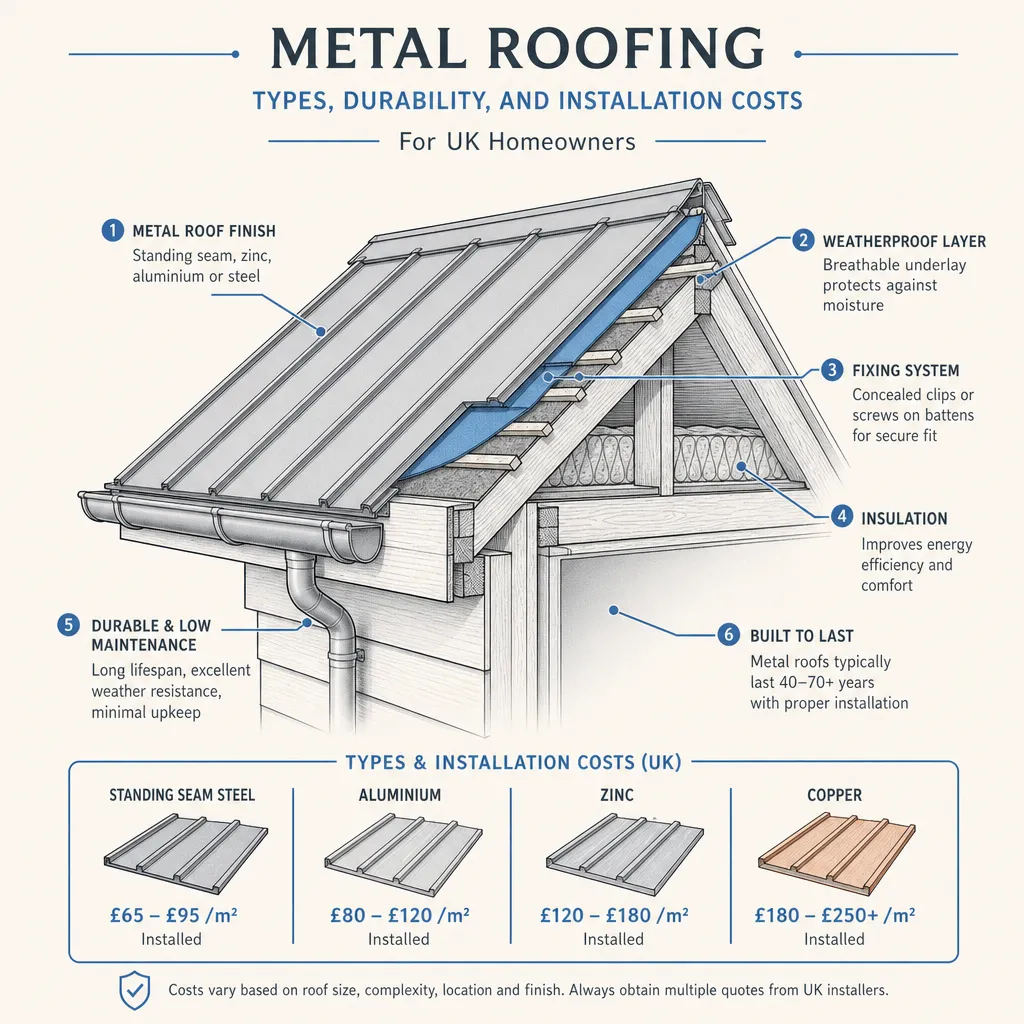
Metal Roofing: Types, Durability, and Installation Costs
Metal roofing in the UK includes standing seam, corrugated sheet, and metal tile systems in steel, aluminium, zinc, or copper.
 Improvement & Build
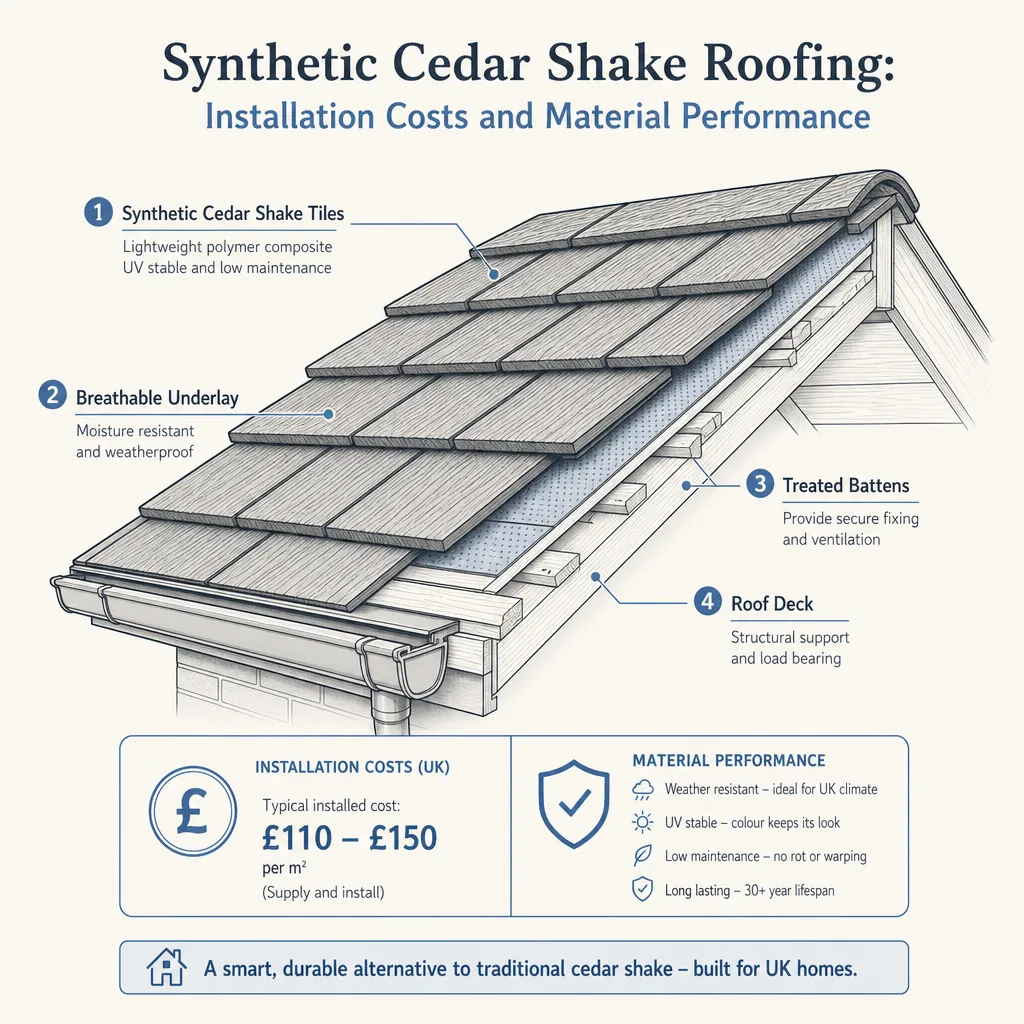
Synthetic Cedar Shake Roofing: Installation Costs and Material Performance
Synthetic cedar shake roofing uses polymer composite, rubber, or fibre-cement tiles to replicate the look of natural cedar wood shingles.
 Improvement & Build
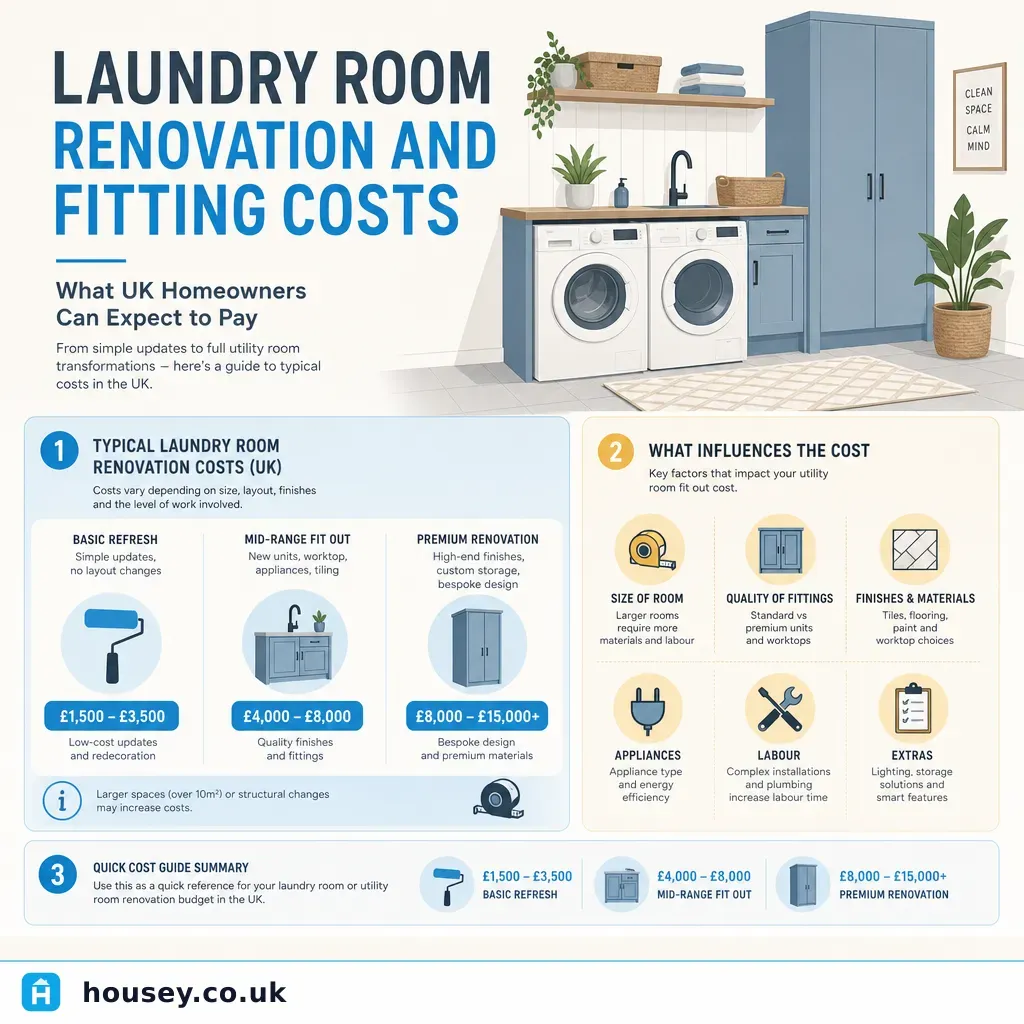
Laundry Room Renovation and Fitting Costs
A basic UK laundry room fit-out typically costs £2,000–£6,000 where plumbing and electrics are already in place, rising to £8,000–£15,000 or more when structural work, new drainage connections, or new electrical circuits are needed.