Roof Ventilation Installation and Considerations
By Housey · Last reviewed 10th of May 2026
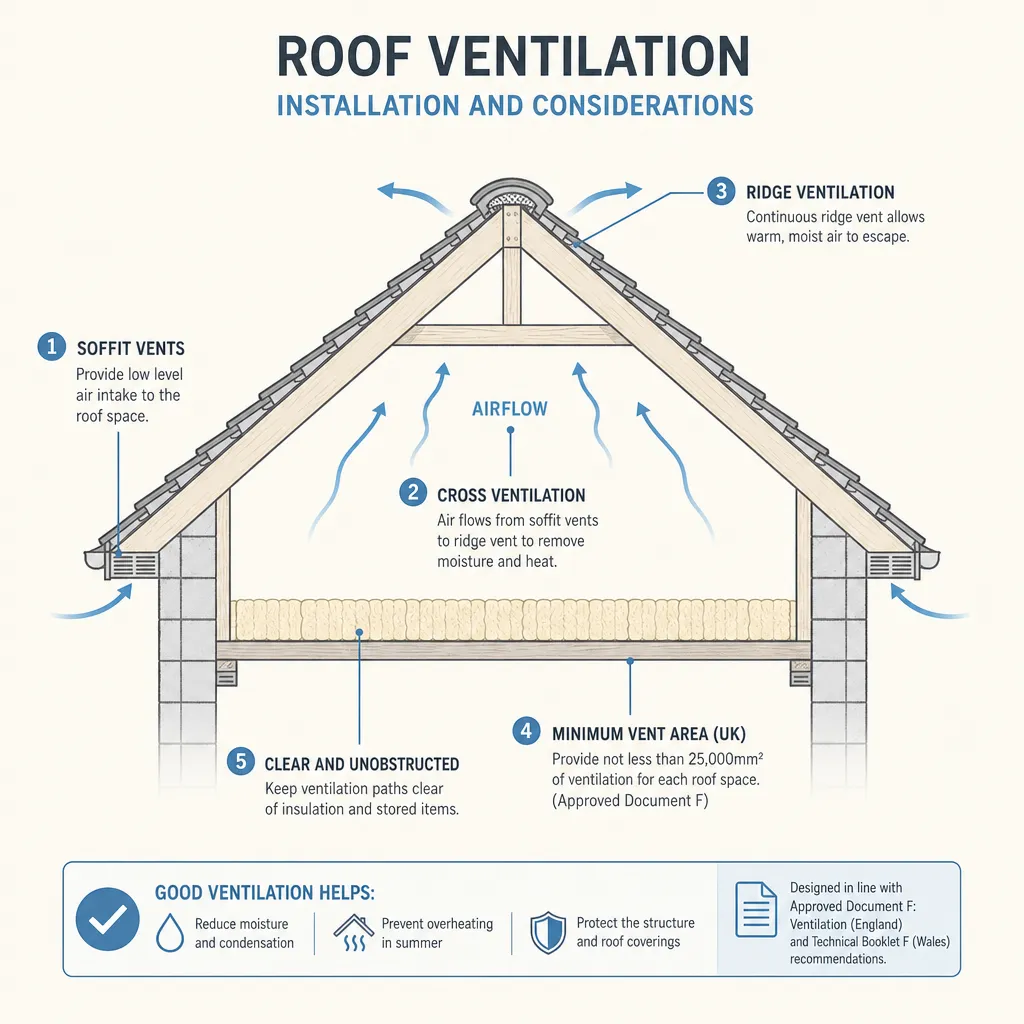
Roof Ventilation Installation and Considerations
Roof ventilation is frequently overlooked during renovation and retrofit works, yet inadequate ventilation is one of the leading causes of condensation, rot, and premature structural failure in UK roof spaces. The problem becomes particularly acute after energy-efficiency improvements — loft insulation top-ups, draught-proofing, or air-sealing measures — that reduce adventitious airflow and cause warm moist air from living spaces to accumulate in cold roof voids. Whether you are specifying a new-build roof or retrofitting ventilation to a 1930s semi or post-war terrace, understanding the regulatory requirements, product options, and moisture risks is essential before any work begins.
Key points
- Building Regulations Approved Document F (Ventilation, 2022 edition) specifies minimum free air areas at eaves and ridge level depending on roof pitch, span, and construction type.
- BS 5250:2021 (Code of Practice for Control of Condensation in Buildings) is the primary standard guiding condensation risk assessment in roof constructions and informs retrofit ventilation decisions.
- Cold-deck flat roofs without adequate cross-ventilation are particularly high-risk for interstitial condensation; retrofit typically involves either adding cross-ventilation or converting to a warm-deck or inverted roof detail.
- High-level ridge ventilators combined with low-level eaves ventilators create the stack-effect airflow required for effective cold-roof ventilation — both levels must be present for the system to function correctly.
- PAS 2035:2023 (Retrofitting Dwellings for Energy Efficiency) requires a whole-house moisture and ventilation risk assessment before fabric improvements on most funded retrofit projects including ECO4.
Why roof ventilation matters
In a conventional cold-roof construction — the most common arrangement in UK houses, where insulation is laid at ceiling level and the roof void above is unheated — warm moist air rising from the living space can reach the roof space through gaps in the ceiling and around light fittings. When that moist air meets cold surfaces such as sarking boards, rafters, or the underside of the roof deck, it condenses. Over time this leads to:
- wet rot in roof timbers, ridge boards, and purlins,
- mould growth on structural and insulating materials,
- degradation of mineral wool or rigid insulation in the roof void,
- in severe or long-standing cases, structural weakening of rafters and ceiling joists.
After loft insulation top-up or draught-proofing works, the problem often worsens: fewer pathways for moisture to escape from the building means higher relative humidity in the roof space. Proper roof ventilation maintains a flow of outside air through the void, carrying moisture away before it can condense on cold surfaces.
Types of roof ventilation
Ventilation type | Position | Best for | Key notes |
|---|---|---|---|
Eaves ventilator / soffit vent | Low-level at eaves | Most pitched cold-roof constructions | Must maintain minimum 25 mm clear airway above insulation per Approved Document F |
Over-fascia ventilator | Low-level at eaves | Where soffit is solid or inaccessible | Fitted between fascia board and lowest tile course |
Tile or slate ventilator | Mid or high pitch | Supplementary in-plane ventilation | Replaces one or more tiles with a ventilating equivalent; check pitch compatibility |
Ridge ventilator | High-level at ridge | Stack-effect cross-ventilation | Works best when paired with eaves-level inlet; essential for spans over 10 m |
Dry-fix ridge system with ventilation | Ridge | All new and re-roofed pitched roofs | Combines BS 5534-compliant fixing with ventilation in one system |
Flat roof ventilator (mushroom or inline) | Top of flat roof deck | Cold-deck flat roofs | Must provide cross-ventilation; sizing should be confirmed by an assessor |
Minimum ventilation requirements under Approved Document F
For cold-deck pitched roofs, the 2022 edition of Approved Document F requires:
- Low-level (eaves) ventilation equivalent to a continuous 25 mm gap on opposing sides of the roof.
- High-level (ridge or near-ridge) ventilation equivalent to a continuous 5 mm gap, where the roof pitch is 15° or more and the span exceeds 10 m.
- A minimum 50 mm clear airway between the top of insulation and the underside of the roof deck or underlay throughout.
These are minimum statutory requirements. In practice, a balanced eaves-to-ridge ventilation pathway is more effective than relying solely on eaves vents, especially in larger or more complex roof structures. Where an existing vapour-permeable (breathable) underlay is in place, the ventilation strategy may differ — check with a qualified assessor before specifying.
Cold-roof versus warm-roof construction
The choice of roof construction type is a critical decision, particularly when retrofitting or replacing a flat roof:
- Cold-deck flat roof: insulation sits below the structural deck; the deck is exposed to outside temperature and is inherently vulnerable to condensation. Requires cross-ventilation — often difficult to achieve reliably on existing narrow-span roofs.
- Warm-deck flat roof: insulation is installed above the structural deck; the deck stays warm and condensation risk is greatly reduced. No ventilation is required within the roof build-up.
- Inverted (upside-down) flat roof: insulation sits above the waterproof membrane, protecting it from thermal movement and UV degradation. Highly effective moisture management and increasingly preferred on new and re-roofing projects.
When retrofitting a flat roof, converting from cold-deck to warm-deck or inverted construction is often more reliable than attempting to retrofit adequate cross-ventilation into a cold-deck, but it requires structural assessment of the existing deck's capacity to carry additional insulation load.
PAS 2035 and retrofit moisture risk
Under PAS 2035:2023 — the standard that governs publicly funded energy retrofit work including ECO4 and the Great British Insulation Scheme — a Retrofit Coordinator must oversee any project involving fabric improvements. Part of this role includes identifying condensation and moisture risks introduced by the proposed works. If loft insulation is being upgraded or air-sealing measures applied, the risk assessment must confirm that roof ventilation is adequate for the post-improvement condition of the building.
Homeowners undertaking unfunded retrofit should apply the same logic. Adding 270 mm of mineral wool to a roof void with blocked or inadequate eaves ventilation can create conditions for accelerated condensation and rot within a few years of installation. A ventilation and condensation assessment can identify existing ventilation performance and specify the necessary improvements before insulation works proceed.
Important limitations
Roof ventilation requirements depend on roof type, construction method, pitch, span, existing underlay specification (vapour-permeable or traditional impermeable felt), insulation depth, and local climate conditions. This article provides general information based on Approved Document F (2022) and BS 5250:2021; it does not constitute a moisture risk assessment or condensation risk analysis for any specific property. Rules, standards, and acceptable solutions vary by construction type and tenure. A qualified professional — a Retrofit Coordinator registered under PAS 2035, a chartered building surveyor, or a specialist ventilation assessor — should assess your roof construction before ventilation measures are specified or installed.
When this becomes urgent
Stop relying on a general guide and seek professional assessment promptly if:
- there is visible mould growth, dark staining, or persistent condensation on roof timbers — these are signs that the ventilation system has already failed and moisture damage may be progressing,
- roof timbers feel soft or spongy when touched — possible wet rot; do not walk on ceiling joists without prior structural assessment,
- you are planning significant loft insulation improvements to a pre-2000 property with an existing eaves ventilation system that has not been inspected,
- a RICS Level 2 or Level 3 survey has flagged condensation, inadequate ventilation, or elevated moisture readings in the roof void,
- the property is a listed building or in a conservation area, where visible ventilation components may require consent before installation.
What to ask a qualified professional
- What is the existing clear airway depth above my loft insulation, and does it meet the 50 mm minimum required by Approved Document F?
- Is my underlay vapour-permeable (breathable) or traditional impermeable felt — and does this affect the ventilation strategy?
- Is eaves ventilation currently blocked by insulation, nesting material, or fascia boarding?
- For a flat roof: is this a cold-deck, warm-deck, or inverted construction, and is existing ventilation adequate for the construction type?
- Has a condensation risk analysis been carried out under BS 5250:2021 for the proposed insulation specification?
- If I am accessing ECO4 or Great British Insulation Scheme funding, has a PAS 2035 Retrofit Coordinator been appointed?
- What are the likely costs, and does the proposed solution require a building control notification?
How Housey can help
Housey connects you with specialists in ventilation and condensation assessments who can inspect your roof space, assess current performance against Approved Document F and BS 5250:2021, and recommend appropriate ventilation measures before any retrofit works proceed. For projects requiring building control sign-off, our building control consultants can manage the notification process on your behalf.
Frequently asked questions
How do I know if my loft has enough ventilation?
Signs of inadequate ventilation include condensation droplets on rafters or sarking boards, black mould on timber, damp or compressed insulation, and a persistent musty smell when entering the roof space. A professional assessment against Approved Document F and BS 5250:2021 is the most reliable way to confirm whether current provision is adequate and what remedial measures are needed.
Do new roof tiles block existing soffit ventilation?
They can. During any re-roofing or tile replacement work, contractors should check that eaves vent tiles or soffit ventilators are not inadvertently blocked by repositioned underlay or insulation. Ask your contractor to confirm that the minimum 25 mm clear airway above the insulation is maintained throughout the eaves zone, as required by Approved Document F.
Is roof ventilation required in a fully insulated warm-roof loft conversion?
In a warm-roof loft conversion — where insulation is installed between and below rafters with no unheated roof void — cross-ventilation of the void is not required. Instead, the habitable conversion space must meet Approved Document F whole-dwelling ventilation requirements. Always confirm the specific requirements with your building control officer before the conversion design is finalised.
Can I install roof ventilators myself?
Fitting an individual tile ventilator as a like-for-like replacement may be within reach of a competent DIYer at low level, but specifying the correct type and number of ventilators to meet Approved Document F should involve a professional. Any work on a pitched roof above 2 m must be carried out using appropriate work-at-height equipment by a qualified roofer.
Sources and further reading
- Approved Document F: Ventilation (2022 edition) — GOV.UK
- BS 5250: Code of Practice for Control of Condensation in Buildings — BSI Group
- PAS 2035: Retrofitting Dwellings for Energy Efficiency — BSI Group
- Roof and Loft Insulation Advice — Energy Saving Trust
- Building Regulations Approved Document C — GOV.UK
Useful next reads
 Energy & Retrofit
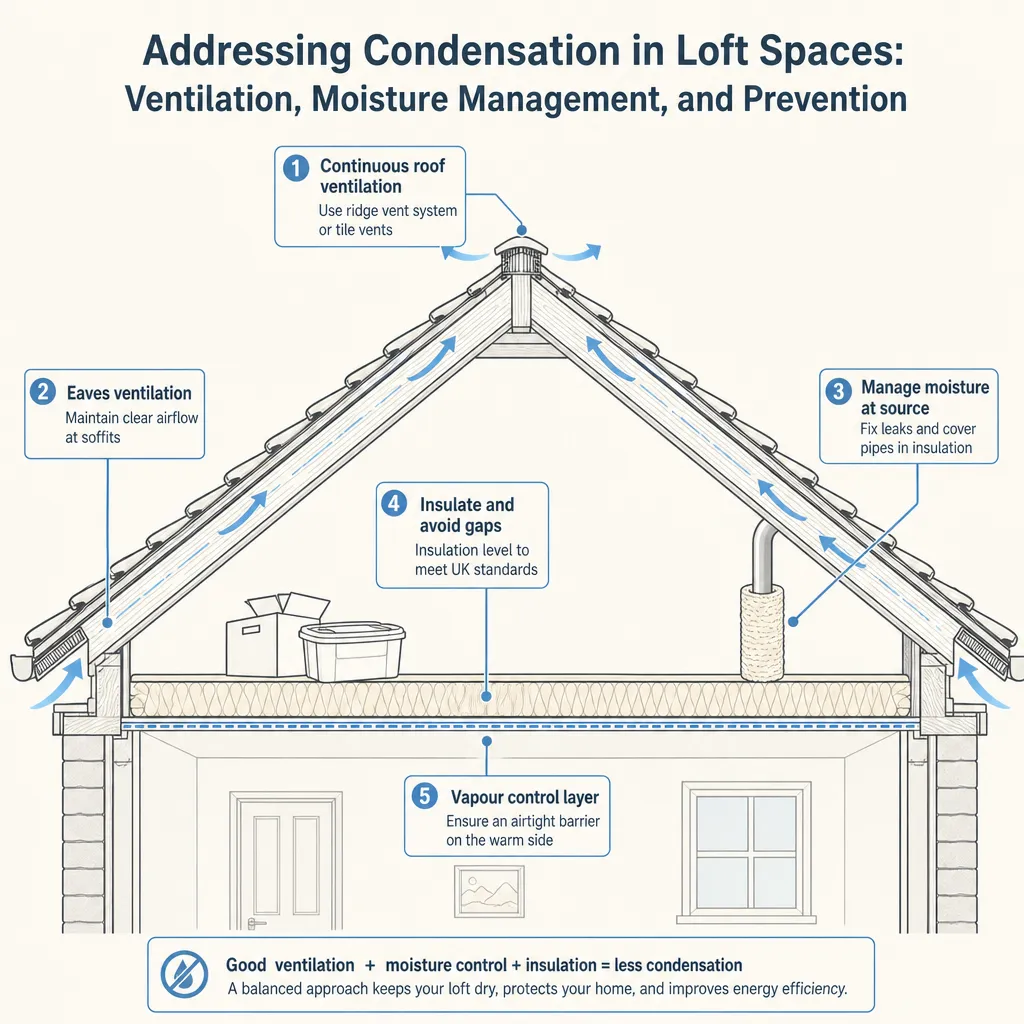
Addressing Condensation in Loft Spaces: Ventilation, Moisture Management, and Prevention
Loft condensation forms when warm, moist air from living spaces passes through ceiling gaps and deposits moisture on cold roof timbers or underfelt.
 Energy & Retrofit
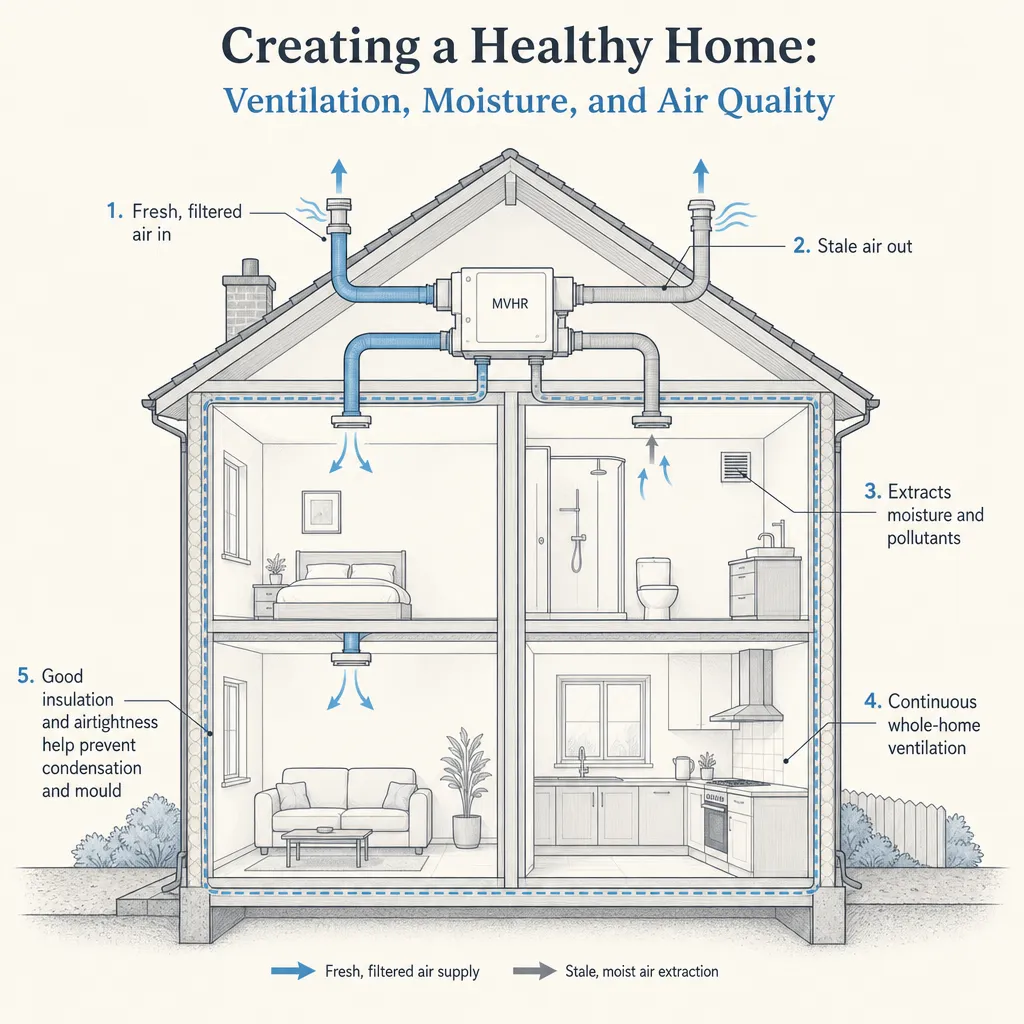
Creating a Healthy Home: Ventilation, Moisture, and Air Quality
Healthy indoor air quality depends on balancing airtightness with adequate ventilation, managing moisture from everyday activities, and removing pollutants at source.
 Energy & Retrofit
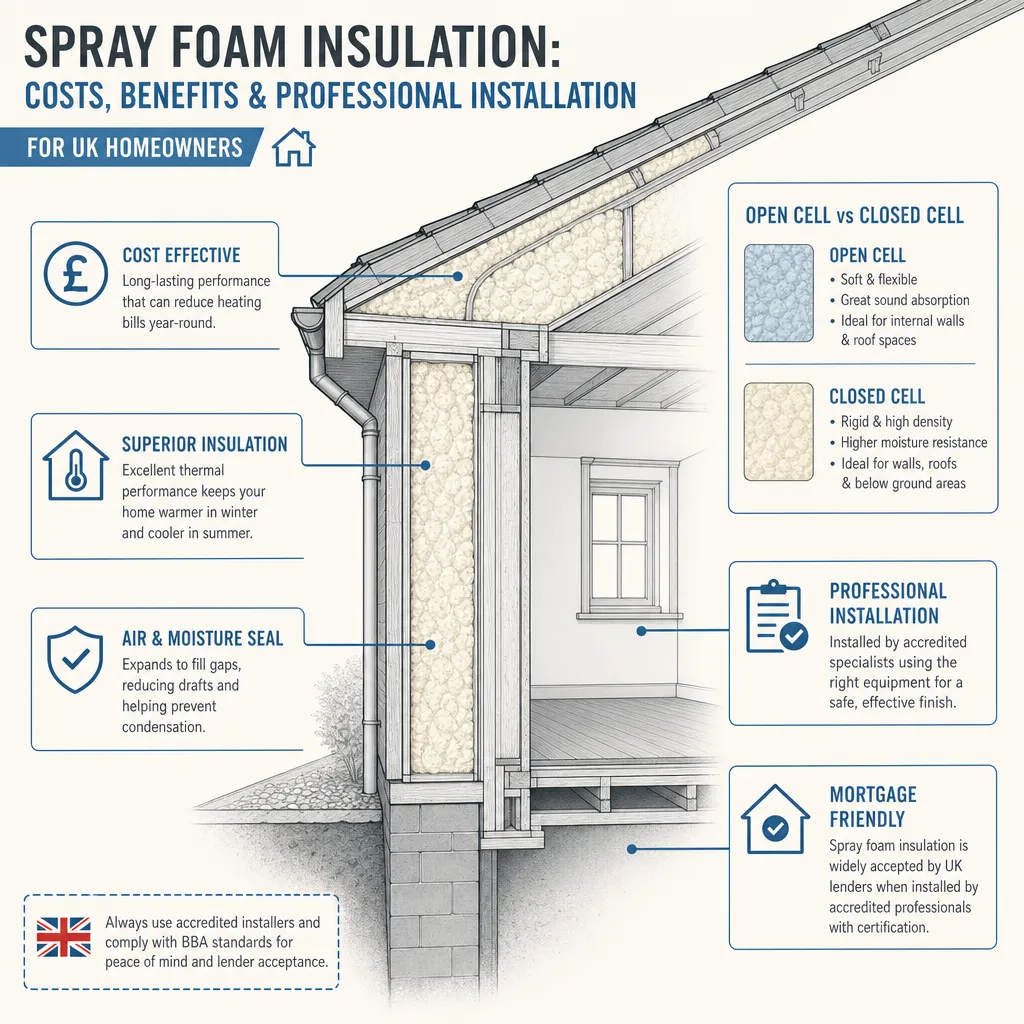
Spray foam insulation: costs, benefits and professional installation
Spray foam insulation costs between £15 and £60 per square metre installed in the UK, depending on whether open-cell or closed-cell foam is used.
 Energy & Retrofit
Diagnosing and Fixing Temperature Imbalances in Your Home
Temperature imbalances in UK homes usually stem from hydraulic imbalance in the central heating system, cold bridging at poorly insulated walls or junctions, air infiltration through gaps and draughts, or problems with thermostat placement.
 Energy & Retrofit
Home Ventilation Solutions and Air Quality Management
The right home ventilation solution depends on how airtight and well-insulated your property is.