Loft Conversion with Roof Lift: Budget and Feasibility
By Housey · Last reviewed 10th of May 2026
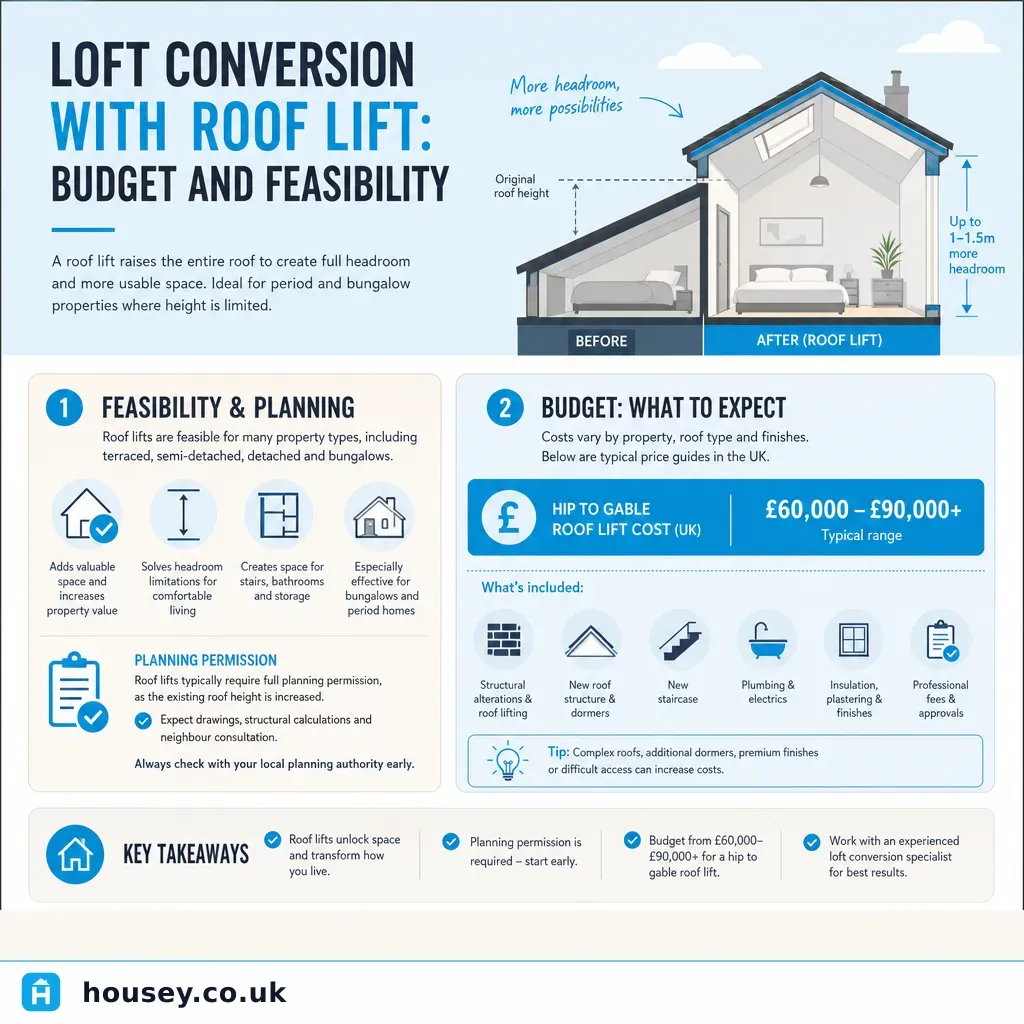
Loft Conversion with Roof Lift: Budget and Feasibility
For many 1930s semis, post-war bungalows, and properties with low-pitched hipped roofs, the only viable route to a usable loft conversion is a structural roof lift — physically raising the roof to achieve the headroom that Building Regulations require. The decision touches structural engineering, building regulations approval, and in most cases a planning application, so early professional input typically saves both money and programme time compared to discovering constraints mid-build.
Key points
- Building Regulations approval under Parts A (structure), B (fire safety), and L (energy efficiency) is required for all loft conversions, including those involving a roof lift, under the Building Act 1984 and associated Approved Documents.
- A full roof lift that increases the overall ridge height almost always requires a householder planning application; hip-to-gable conversions and rear dormers may qualify as permitted development if the ridge is not raised.
- A chartered structural engineer must design the new roof structure and provide structural calculations for building control; typical steelwork includes flitch beams or RSJ sections to carry new floor and roof loads.
- Indicative UK costs for a roof-lift loft conversion range from £40,000 to £80,000+, depending on roof type, structural complexity, and finish specification (Indicative UK costs, last reviewed 2026-05-10).
- The Party Wall etc. Act 1996 may require a formal party wall award if structural work affects a shared wall or roof structure on a semi-detached or terraced property.
What is a roof lift loft conversion?
A roof lift raises the existing roof structure — by increasing the ridge height, converting a hipped end to a vertical gable, or both — to create enough internal headroom for a habitable space. Building Regulations require a minimum of 2 m headroom over at least half the usable floor area, and many properties built between the 1920s and 1960s with shallow-pitched or hipped roofs fall short of this without structural modification.
Method | How it works | Best for | Typical structural impact |
|---|---|---|---|
Full ridge raise | Entire roof lifted by adding height to supporting walls or roof structure | Bungalows and very low-pitched roofs | High — new roof structure, wall plate modifications |
Hip-to-gable conversion | Hip end converted to a vertical gable wall, often combined with a rear dormer | 1930s semis and detached houses | Moderate — new gable wall and dormer frame |
Mansard conversion | Rear roof slope replaced with near-vertical section and flat or shallow top | Victorian and Edwardian terraces with shallow rear pitch | High — almost always requires planning permission |
A structural engineer and loft conversion specialist should assess which option is feasible for your specific roof type, property age, and local planning constraints before any design or tendering work begins.
Planning permission: when do you need it?
Permitted development (PD) rights allow certain loft alterations without a full planning application, as set out in the Town and Country Planning (General Permitted Development) (England) Order 2015.
You generally do not need planning permission for:
- A rear dormer that does not exceed 40 m³ of additional roof space (50 m³ for detached houses).
- A hip-to-gable conversion where the new gable does not protrude beyond the original roof plane at the front elevation.
- Rooflights that sit flush with the roof slope and do not project above the plane of the existing roof.
You usually do need planning permission for:
- Any increase in the overall ridge height of the property.
- Works on a listed building or in a conservation area, where PD rights are commonly withdrawn.
- Properties where PD rights have been removed by a planning condition or Article 4 Direction.
- Flats and maisonettes — PD rights do not apply to roof alterations on these property types.
Apply for a Certificate of Lawful Development (CLD) from your local planning authority (LPA) before instructing engineers if there is any doubt about your PD position. Pre-application planning advice is available from most LPAs for a modest fee and can clarify the position quickly.
Building Regulations: what approval is required?
All loft conversions require Building Regulations approval, separate from and in addition to any planning permission. The key Approved Documents are:
- Part A (Structure): New roof structure, steel beams, and floor joists must be structurally adequate for the loads they will carry.
- Part B (Fire Safety): An escape route from the loft — typically a protected staircase with fire-rated doors — and mains-wired interlinked smoke alarms on each floor.
- Part C (Moisture): Roof insulation and vapour control to prevent condensation in the new habitable space.
- Part L (Energy Efficiency): Roof insulation must achieve a U-value of ≤0.18 W/m²K under Approved Document L 2021.
- Part K (Protection from Falling): Guarding to any new staircase opening or exposed floor edge.
Applications can be submitted to your local authority building control team or a Registered Building Control Approver (a role formalised under the Building Safety Act 2022). Retain the completion certificate — it is required on resale and for remortgaging.
How much does a roof-lift loft conversion cost?
Indicative UK costs, last reviewed 2026-05-10. Costs vary significantly by region, roof type, access, and specification. Obtain site-specific written quotes from qualified contractors.
Cost element | Indicative range |
|---|---|
Structural engineer (design and calculations) | £1,500 – £4,000 |
Planning application fee (householder, England, 2024) | £258 |
Building regulations application | £500 – £1,500 |
Structural steelwork (supply and install) | £3,000 – £10,000 |
Roof lift or hip-to-gable conversion | £8,000 – £20,000 |
Dormer construction (if included) | £10,000 – £25,000 |
Internal fit-out (stairs, insulation, electrics, boarding) | £15,000 – £30,000 |
Total indicative range | £40,000 – £80,000+ |
Key cost drivers include whether the existing roof is a cut roof or trussed rafter construction (trussed rafters require individual rafter replacement, which adds significant cost), the number of dormers, finish specification, and regional labour rates. London and South-East labour typically runs 20–40% above national averages.
Homeowner checklist before instructing a contractor
Important limitations
This article provides general information about roof-lift loft conversions in England. Planning rules, permitted development thresholds, and Building Regulations requirements differ in Scotland, Wales, and Northern Ireland, and can vary by property type, planning history, and local planning authority. Cost figures are indicative ranges only — always obtain site-specific quotes and verify structural feasibility with a chartered structural engineer. Nothing in this article constitutes planning, legal, or structural engineering advice.
When this becomes urgent
Do not proceed with design or tendering if the roof already shows signs of active movement, sagging, rafter decay, or wet rot in the timber structure. These conditions must be assessed and remediated by a structural engineer before a roof lift is feasible. If you receive a planning enforcement notice relating to earlier unauthorised loft works, seek specialist planning or legal advice before instructing any contractors.
What to ask a qualified professional
Before instructing a structural engineer or loft conversion specialist, ask:
- Is the existing roof a cut roof or trussed rafter construction, and how does this affect the structural approach and overall cost?
- What minimum headroom can realistically be achieved, and will it meet Building Regulations Part A requirements?
- Do I need a full planning application, or is a Certificate of Lawful Development the appropriate route?
- Is a party wall agreement needed, and if so, who appoints and pays for the party wall surveyor?
- What structural steelwork is proposed, and what are the loading implications for the existing structure and foundations?
- What workmanship guarantees or structural warranties do you provide, and for what duration?
When to get professional help
A roof-lift loft conversion always requires a structural engineer and a qualified contractor. Seek professional advice promptly if:
- The existing loft shows roof movement, sagging, or timber decay — these must be assessed before any lift is designed.
- The property is listed or in a conservation area — LPA pre-application advice is essential.
- Neighbouring properties share a roof structure or party wall — appoint a party wall surveyor before design work begins.
- You receive contradictory advice about permitted development rights — a Certificate of Lawful Development resolves the position definitively.
How Housey can help
Housey connects you with vetted loft conversion companies and structural engineering specialists who can assess feasibility, prepare structural calculations, and manage the build from planning through to handover. Our network also includes building control consultants who can handle the Part L notification and see the project through to completion certificate. Submit a brief once and compare quotes from up to four qualified professionals.
Frequently asked questions
Does a roof lift always require planning permission?
Not always. A hip-to-gable conversion or rear dormer within permitted development limits may not need a planning application, provided the overall ridge height is not increased. Any increase to the ridge height almost always requires a householder planning application. Confirm your position with your local planning authority or apply for a Certificate of Lawful Development before instructing contractors.
How long does a roof-lift loft conversion take?
Most roof-lift conversions take 10 to 16 weeks from start to completion, depending on the scale of structural work, weather during the open-roof phase, and the internal fit-out specification. If planning permission is required, allow an additional 8 to 10 weeks before work can begin, plus time for the structural engineer to prepare drawings and calculations.
Can I do a roof lift on a bungalow?
Yes. A full ridge raise is the most common approach for bungalows with very low-pitched roofs. The structural work is more extensive than on a two-storey house, and the planning implications depend on whether the original roof line is altered. A structural engineer should assess the existing wall construction and foundation loading before any work is designed or tendered.
Will a roof-lift loft conversion add value to my home?
A well-executed loft conversion typically adds 10% to 20% to a property's value, though the actual uplift depends on location, property type, and local market conditions. Added value tends to be highest when the conversion creates a new bedroom with an en-suite bathroom, particularly in areas where demand for additional bedrooms is strong.
Sources and further reading
- Permitted development rights for householders: technical guidance — DLUHC / GOV.UK
- Loft conversion: do you need permission? — Planning Portal
- Approved Document A: Structure — HM Government
- Party Wall etc. Act 1996: explanatory booklet — GOV.UK
- Building Safety Act 2022: building control reforms — GOV.UK
Useful next reads
 Improvement & Build
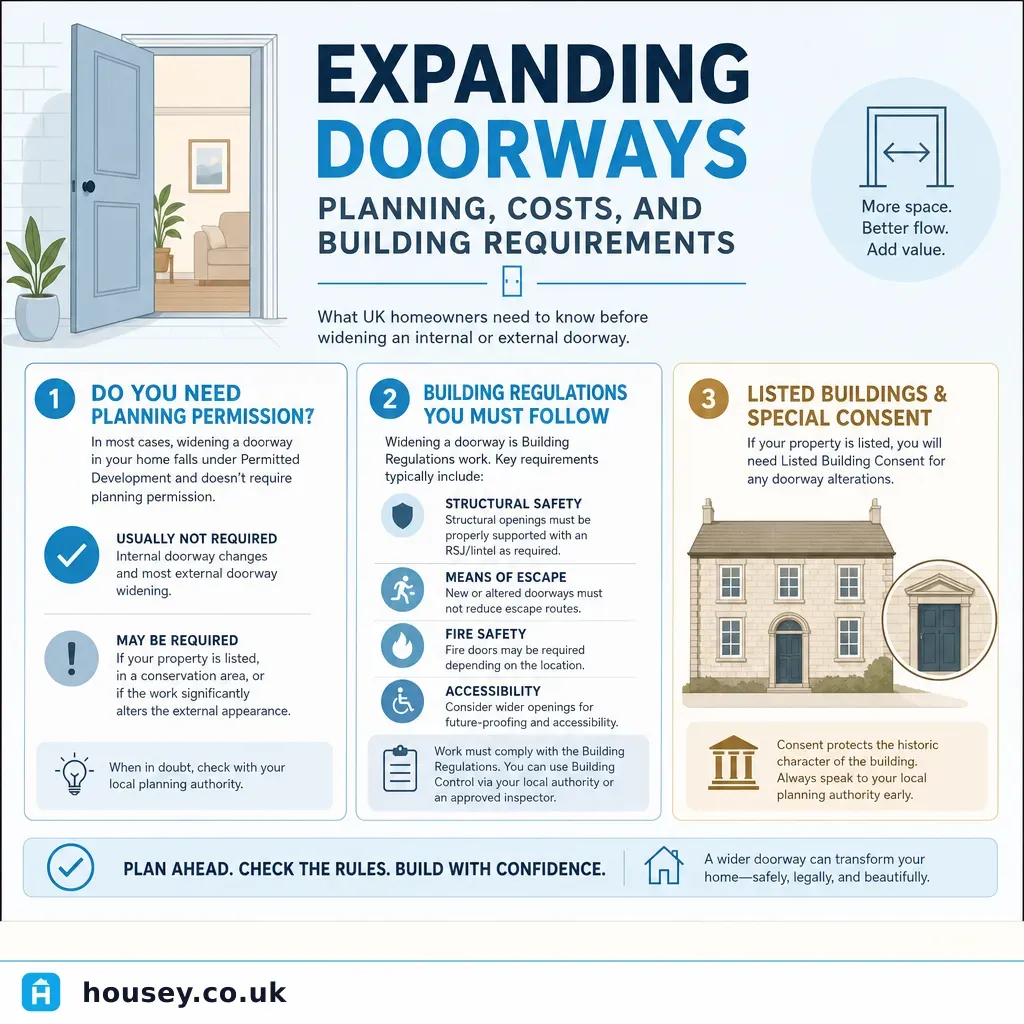
Expanding Doorways: Planning, Costs, and Building Requirements
Expanding a doorway in a load-bearing wall requires Building Regulations Part A approval and a structural engineer's lintel design.
 Improvement & Build
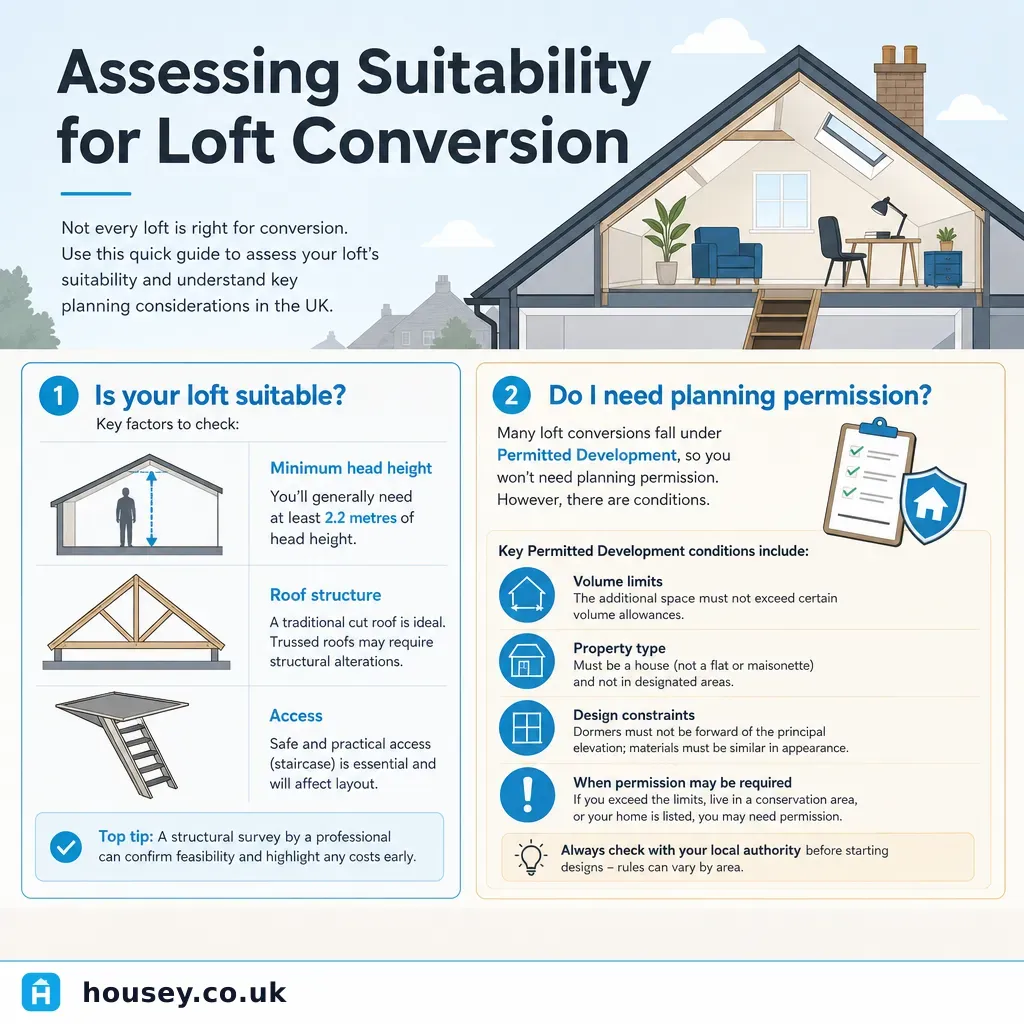
Assessing Suitability for Loft Conversion
Most loft conversions need a minimum ridge height of around 2.
 Improvement & Build
Estimate for Merging Two Properties into a Single Residence
Merging two properties into one typically costs £30,000–£120,000 or more, depending on property type, structural complexity, and professional fees.
 Improvement & Build
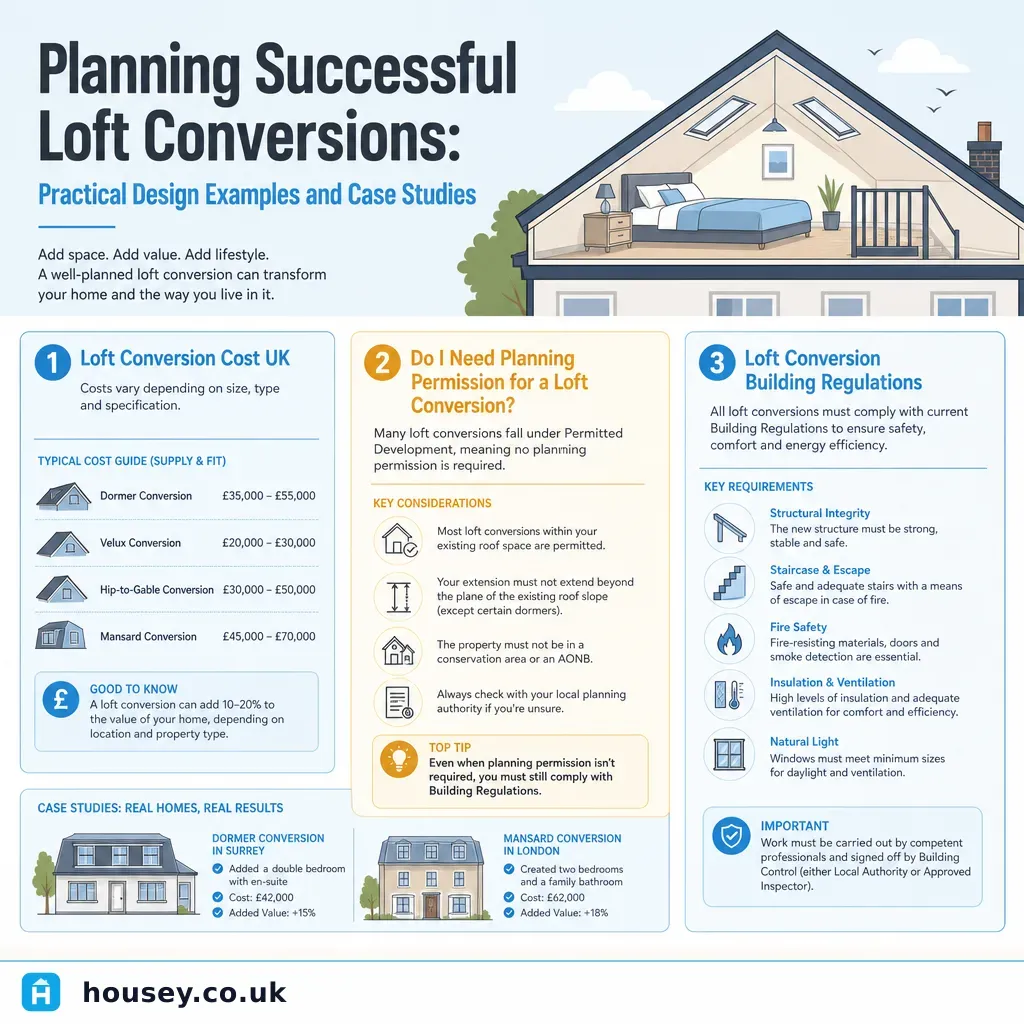
Planning Successful Loft Conversions: Practical Design Examples and Case Studies
Most UK loft conversions are permitted development and do not need planning permission, provided they remain within the volume allowances — 40 m³ for terraced houses and 50 m³ for detached or semi-detached properties.
 Improvement & Build
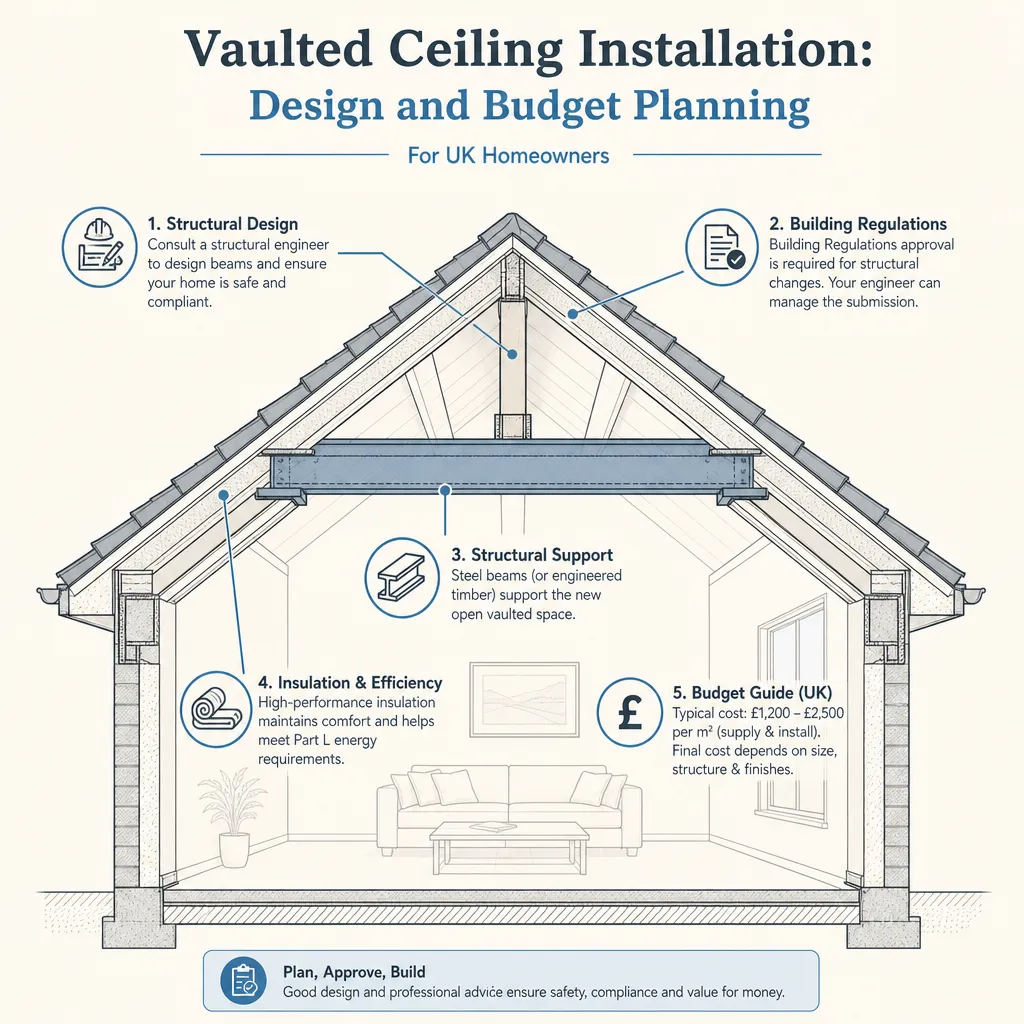
Vaulted Ceiling Installation: Design and Budget Planning
A vaulted ceiling removes ceiling joists and replaces their structural role with a ridge beam or collar ties — work that always requires a structural engineer's calculations and building regulations approval under Parts A and L.