London Property Costs vs Regional Alternatives: Price Comparison
By Housey · Last reviewed 9th of May 2026
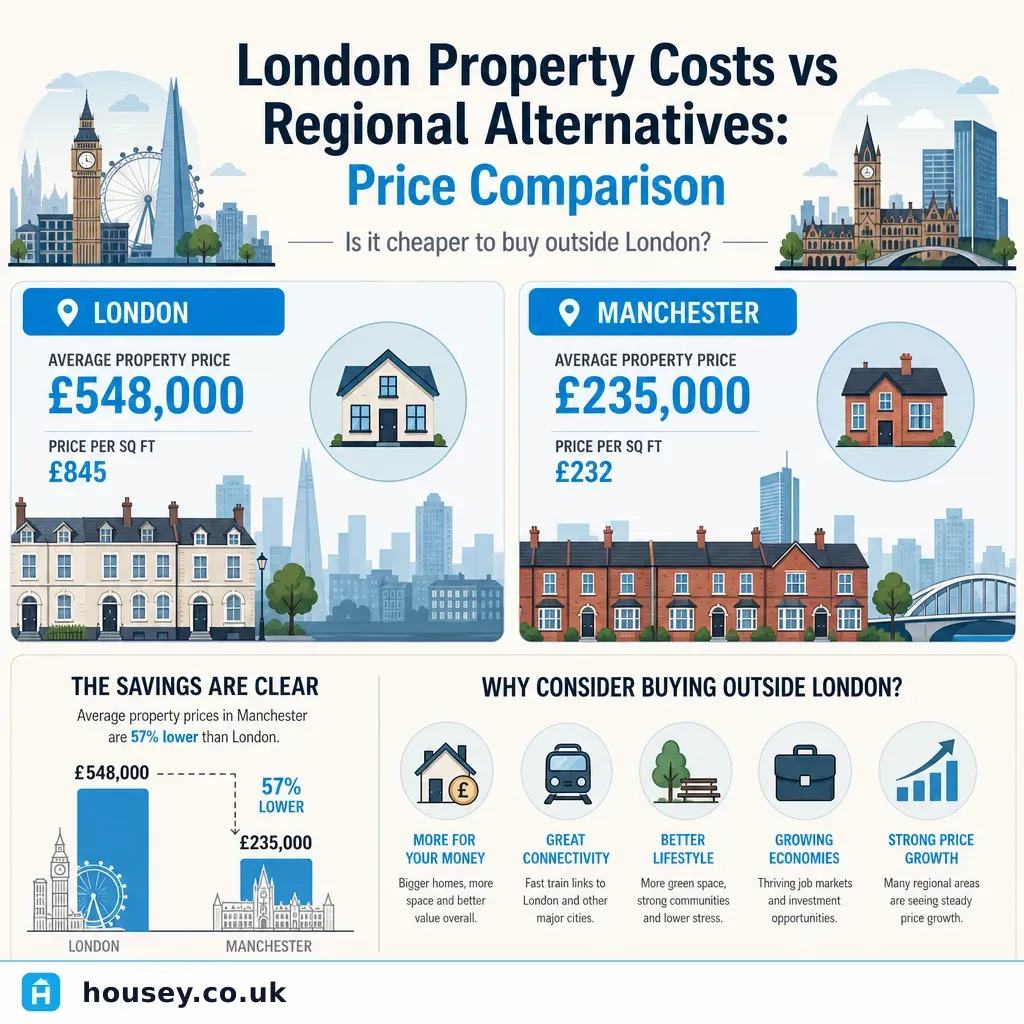
London Property Costs vs Regional Alternatives: Price Comparison
The question of whether to buy in London or look to regional cities is one more UK buyers are taking seriously, particularly as remote and hybrid working has reduced the pull of proximity to a London office. Understanding the scale of the price differential — and what it means in practical terms for space, mortgage affordability, and long-term financial planning — is an important first step in that decision.
Key points
- According to the HM Land Registry UK House Price Index, London's average property price has consistently been around double the UK average and roughly three times higher than cities such as Leeds, Sheffield, and Manchester.
- London's indicative average was approximately £520,000 in early 2026 (HM Land Registry UK House Price Index, last reviewed 2026-05-09), compared with a UK-wide average of approximately £290,000.
- Stamp Duty Land Tax (SDLT) applies in England; Scotland uses Land and Buildings Transaction Tax (LBTT) and Wales uses Land Transaction Tax (LTT), each with different rate structures and thresholds.
- The affordability ratio — median house price divided by median annual earnings — is approximately 12–13 times in London versus 5–8 times in most English regions, according to ONS data.
- Major infrastructure investment, including the Elizabeth line and planned HS2 improvements, has influenced prices along specific corridors, adding a premium to some commuter towns while opening up new regional connectivity.
How the London premium works
London's property market has commanded a sustained premium over other UK regions for several decades. The drivers are well-documented: concentrated high-wage employment, inward migration, constrained land supply within the Greater London boundary, and persistent investment demand, both domestic and international.
Within London, the premium varies significantly. Prime central boroughs — Kensington and Chelsea, Westminster, Camden, Islington — have average prices well above £1 million. Outer boroughs — Havering, Barking and Dagenham, Bexley, Croydon — are materially cheaper, but still substantially above most regional cities. For buyers comparing options seriously, the most relevant comparison is typically between outer London and the major regional cities of England, Scotland, Wales, and Northern Ireland.
Regional property price comparison
The following figures are indicative based on HM Land Registry UK House Price Index data, last reviewed 2026-05-09. Prices change frequently; consult the HM Land Registry interactive tool for current regional data before making any financial decision.
Region | Indicative average price (early 2026) | Approximate difference vs London |
|---|---|---|
London | ~£520,000 | — |
South East (excl. London) | ~£385,000 | ~26% lower |
East of England | ~£345,000 | ~34% lower |
South West | ~£320,000 | ~38% lower |
West Midlands | ~£245,000 | ~53% lower |
East Midlands | ~£240,000 | ~54% lower |
Yorkshire and The Humber | ~£215,000 | ~59% lower |
North West (incl. Manchester) | ~£225,000 | ~57% lower |
North East | ~£165,000 | ~68% lower |
Wales | ~£210,000 | ~60% lower |
Scotland | ~£195,000 | ~62% lower |
Northern Ireland | ~£185,000 | ~64% lower |
Indicative UK costs, last reviewed 2026-05-09. Sources: HM Land Registry UK House Price Index; Scottish Government house price statistics; Welsh Government house price statistics. All figures are approximate regional averages and mask significant local variation within each region.
Within these figures, city-centre properties, prime postcodes, and new-build developments in regeneration areas often carry their own local premiums. Conversely, market towns, former industrial areas, and smaller cities frequently offer prices below the regional average shown here.
What your budget buys: a worked UK property scenario
Consider a buyer with a £400,000 budget — slightly below the London average and well above the UK average — comparing realistic options across three locations.
London (outer borough — for example, Walthamstow E17 or Woolwich SE18): A £400,000 budget in a well-connected outer London borough would typically buy a one- or two-bedroom flat, possibly with a small outdoor space. A three-bedroom terraced house in these areas would generally cost £550,000 or above.
Manchester (for example, Chorlton M21 or Didsbury M20): The same £400,000 budget in a popular south Manchester suburb would typically buy a three- or four-bedroom semi-detached or terraced house with a garden — a property that would cost two to three times as much in a comparable London postcode.
Leeds (for example, Headingley LS6 or Chapel Allerton LS7): In a desirable inner Leeds suburb, £400,000 would typically buy a four-bedroom Victorian terraced house or a substantial three-bedroom modern detached property — a tier of home that would require a substantially higher budget anywhere in Greater London.
This scenario illustrates the structural nature of the London premium: for a given budget, buyers outside London typically access a meaningfully different tier of property in terms of size, type, and outdoor space.
Beyond the headline price: what else shapes affordability
Stamp Duty Land Tax in England. As of May 2026, standard SDLT rates are 0% on the first £125,000, 2% from £125,001–£250,000, and 5% from £250,001–£925,000. On a £520,000 London purchase, SDLT is approximately £14,000; on a £225,000 regional purchase, approximately £2,000. Check GOV.UK for current thresholds, which may have changed since this date.
Running costs and energy efficiency. Older terraced houses in northern cities may have lower EPC ratings due to solid wall construction, affecting heating costs. The capital cost of improving energy efficiency in a regional property is typically far lower than the equivalent purchase-price premium in London.
Commuting. For buyers retaining any London-based work commitments, periodic rail travel costs should be factored into affordability calculations. Annual season tickets from Manchester, Leeds, or Birmingham to London are significant but are often still materially below the difference in monthly mortgage costs between a London and regional purchase at the same budget.
Regional cities and their property dynamics
Not all regional markets behave in the same way. Manchester, Leeds, Bristol, Edinburgh, and Birmingham have each seen sustained price growth and increased demand over the past decade, narrowing the gap with London in some neighbourhoods. Parts of the North East, South Wales, and former industrial areas have seen more modest growth. Key factors shaping regional market dynamics include inward business investment, graduate retention, transport infrastructure improvements, and specific regeneration programmes. Buyers should look beyond regional averages to the specific local authority, neighbourhood, and property type they are considering.
When to get professional advice
Property decisions of this scale involve financial, legal, and practical considerations that price comparisons cannot fully resolve. Consider advice from:
- A mortgage broker familiar with both London and regional lending markets, particularly regarding income multiples and lenders' treatment of remote-working income.
- A RICS-accredited surveyor before exchange on any property, particularly older regional houses where defects, damp, or structural issues may not be apparent from a viewing.
- A conveyancing solicitor with local market knowledge, particularly for leasehold properties, unusual title histories, or properties subject to restrictions.
How Housey can help
Housey connects buyers across the UK with qualified property professionals — from surveyors and conveyancers to energy assessors and removals companies. Whether you are buying in London or exploring a regional move, our marketplace can help you find and compare local providers at each stage of the purchase process.
Frequently asked questions
How much cheaper is property in Manchester than London?
Based on HM Land Registry data, the North West regional average is approximately 55–60% lower than the London average. A budget of £400,000 that might buy a one- or two-bedroom flat in an outer London borough would typically buy a three- or four-bedroom house in popular south Manchester suburbs such as Chorlton or Didsbury. Prices change frequently; check the HM Land Registry tool for current figures.
Is it worth moving out of London to buy property?
This depends on personal circumstances: employment location, family ties, lifestyle preferences, and long-term plans. The price differential is substantial and persistent, but comes with trade-offs around commuting costs, career opportunities, and amenities. A thorough financial comparison — including mortgage costs, SDLT, transport, and running costs — is a useful starting point before making any decision.
Which UK cities offer the best value for property buyers?
Value depends on individual priorities, but cities with strong graduate retention, major employers, and improving transport links — such as Leeds, Manchester, Birmingham, and Edinburgh — tend to combine relative affordability with long-term demand fundamentals. The North East and parts of Wales and Northern Ireland offer the lowest absolute prices but also have weaker demand drivers in some areas.
Does Stamp Duty apply when buying in Scotland or Wales?
No. Scotland uses Land and Buildings Transaction Tax (LBTT) and Wales uses Land Transaction Tax (LTT), each with their own rate structures and thresholds. The relevant revenue authorities are Revenue Scotland and the Welsh Revenue Authority respectively. Check their websites for current rates before budgeting for a purchase.
Are regional property markets more volatile than London?
Regional markets have historically shown higher short-term price volatility in some areas, but London has also experienced significant corrections. Buyers in any market should take a long-term view, particularly given the high transaction costs — SDLT, legal fees, and survey costs — associated with UK residential property purchases.
Sources and further reading
- UK House Price Index — HM Land Registry / GOV.UK
- House price to workplace-based earnings ratio — Office for National Statistics
- Stamp Duty Land Tax rates and thresholds — GOV.UK
- Land and Buildings Transaction Tax — Revenue Scotland
- Land Transaction Tax guide — Welsh Revenue Authority / Welsh Government
Useful next reads
 General property advice
Property Type Preferences: Understanding Market Demand
Semi-detached houses consistently attract the highest transaction volumes in England and Wales, making them the most liquid part of the UK market.
 General property advice
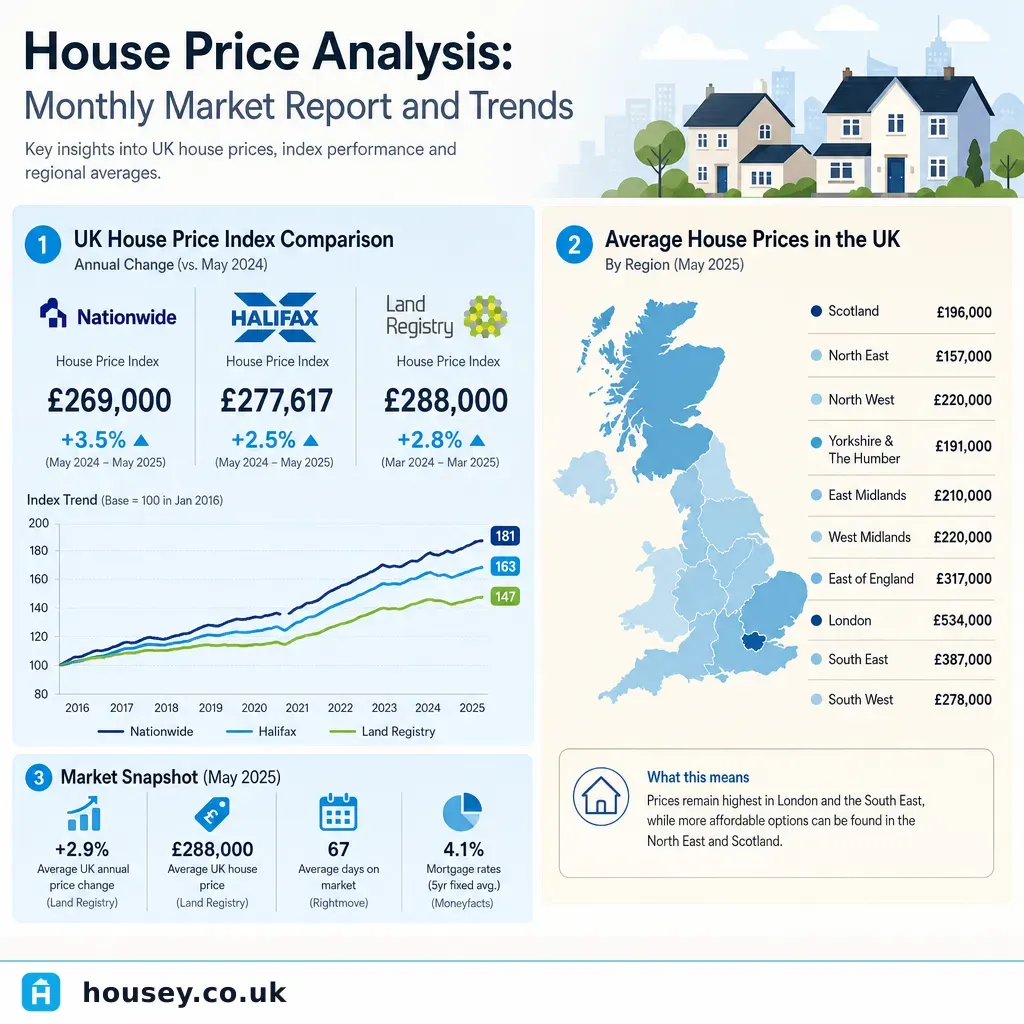
House Price Analysis: Monthly Market Report and Trends
UK house prices are tracked by several major indices — the HM Land Registry UK House Price Index, the ONS House Price Index, and lender-based measures from Nationwide and Halifax.
 General property advice
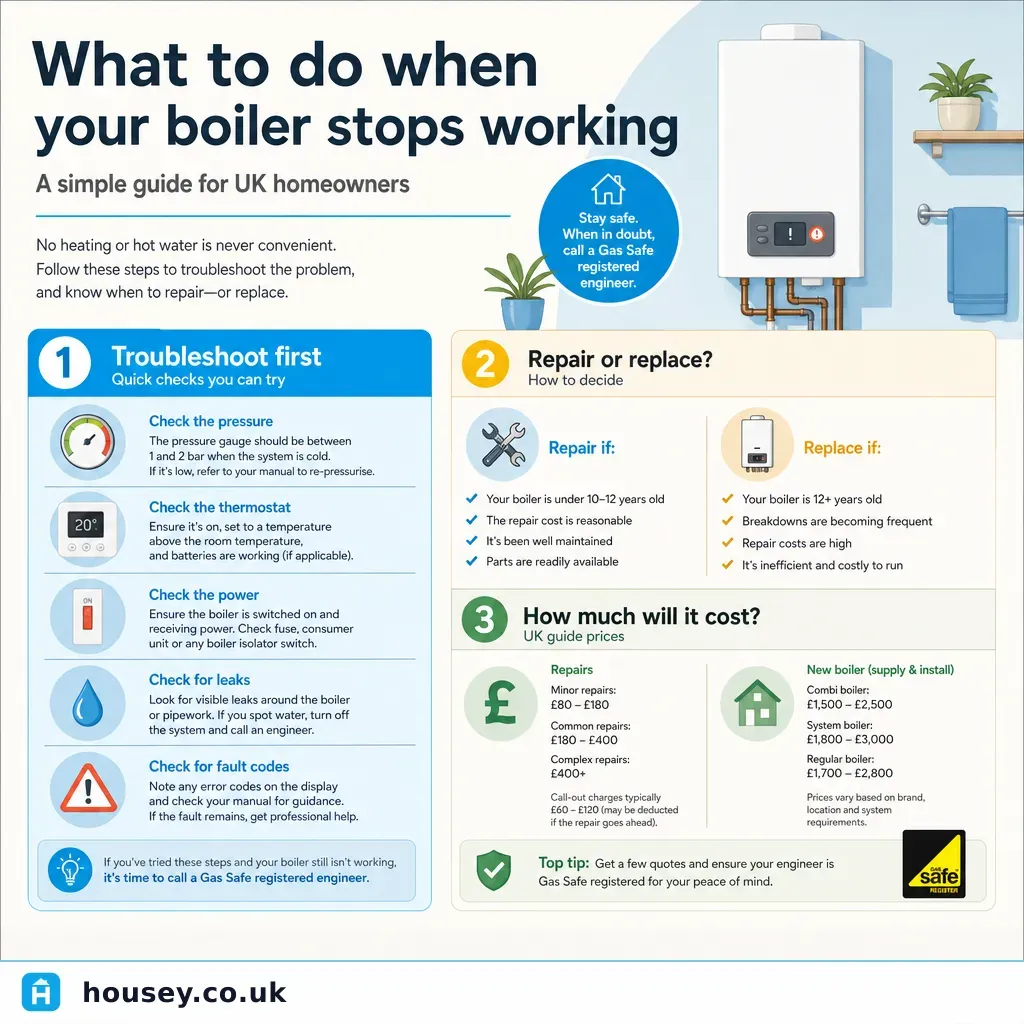
What to do when your boiler stops working
When your boiler stops working, check the pressure gauge (should read 1–1.
 General property advice
Property Market Trends: Activity Growth and Price Movements
UK property market activity is measured through completed sale registrations (HM Land Registry), lender mortgage data, and transaction volumes from HMRC.
 General property advice
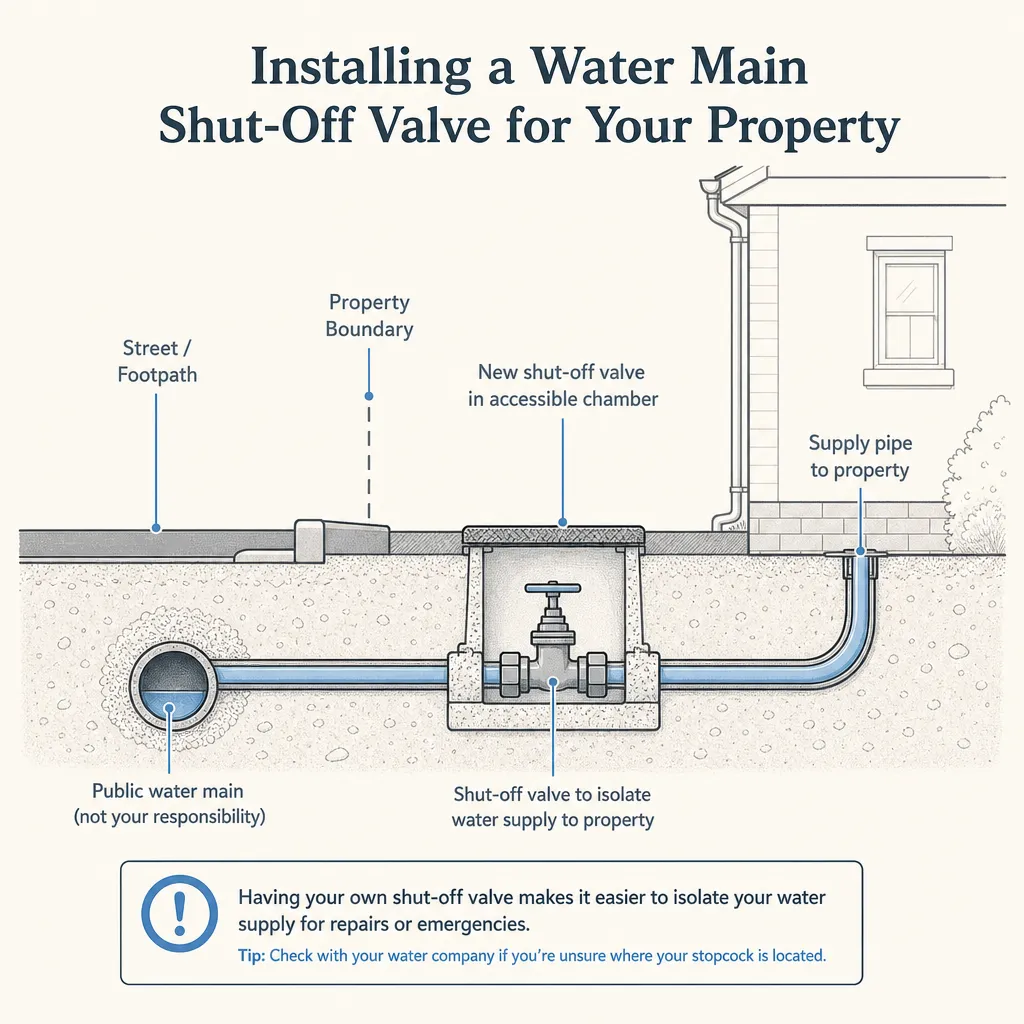
Installing a water main shut-off valve for your property
A water main shut-off valve — commonly called a stopcock — controls all water entering your home from the mains.