Low-Emissivity Glazing and Window Film: Thermal Control Options
By Housey · Last reviewed 1st of June 2026
Low-Emissivity Glazing and Window Film: Thermal Control Options
Energy costs, comfort levels, and EPC ratings are pushing more UK homeowners to look more carefully at their windows. Whether you are planning a full glazing replacement, exploring whether window film can improve an older or heritage property, or comparing options before a wider retrofit project, understanding what low-emissivity (low-e) coatings and window films actually do — and where each works best — will help you choose the right approach and avoid costly mistakes.
Key points
- Building Regulations Approved Document L (England) requires replacement windows to meet a whole-window U-value of 1.4 W/m²K or better; Scotland, Wales, and Northern Ireland have equivalent standards under their respective Building Regulations.
- Low-e double glazing with argon fill typically achieves whole-window U-values of 1.0–1.3 W/m²K, compared with approximately 2.8 W/m²K for standard double glazing without a low-e coating.
- The British Fenestration Rating Council (BFRC) Window Energy Rating (WER) system grades windows from A++ to E, combining U-value, solar heat gain coefficient (SHGC), and air leakage rate into a single performance index.
- In England and Wales, replacement windows installed by a FENSA- or CERTASS-registered installer are self-certified under Building Regulations; if your installer is not registered, you must obtain local authority building control sign-off before work begins.
- Retrofit window film applied to existing single glazing can reduce its U-value from approximately 5.6 W/m²K to around 3.5–4.5 W/m²K — useful for heritage or listed buildings where replacement glazing is restricted, but it cannot match the thermal performance of modern low-e double glazing.
What is low-emissivity (low-e) glazing?
Low-e glass has a microscopically thin metallic oxide coating — typically silver or tin oxide — applied to one surface of the glass. This coating reflects long-wave infrared radiation (heat) back into the room in winter while still allowing short-wave solar radiation (daylight and passive solar gain) to pass through. The result is a window that retains significantly more heat than standard glass without substantially reducing natural light.
Soft-coat vs hard-coat low-e:
Soft-coat low-e coatings are applied off-line during manufacturing and offer superior thermal performance. They must be sealed inside a double-glazed unit to protect the coating from moisture and abrasion during the product's lifetime.
Hard-coat coatings are applied during the float glass production process and are more durable in exposed conditions. They can be used in single glazing or secondary glazing applications, making them suitable for some heritage and conservation area contexts where fully sealed double-glazed units would not be permitted.
Most modern double-glazed units sold in the UK use soft-coat low-e glass as standard.
What is window film, and what can it realistically achieve?
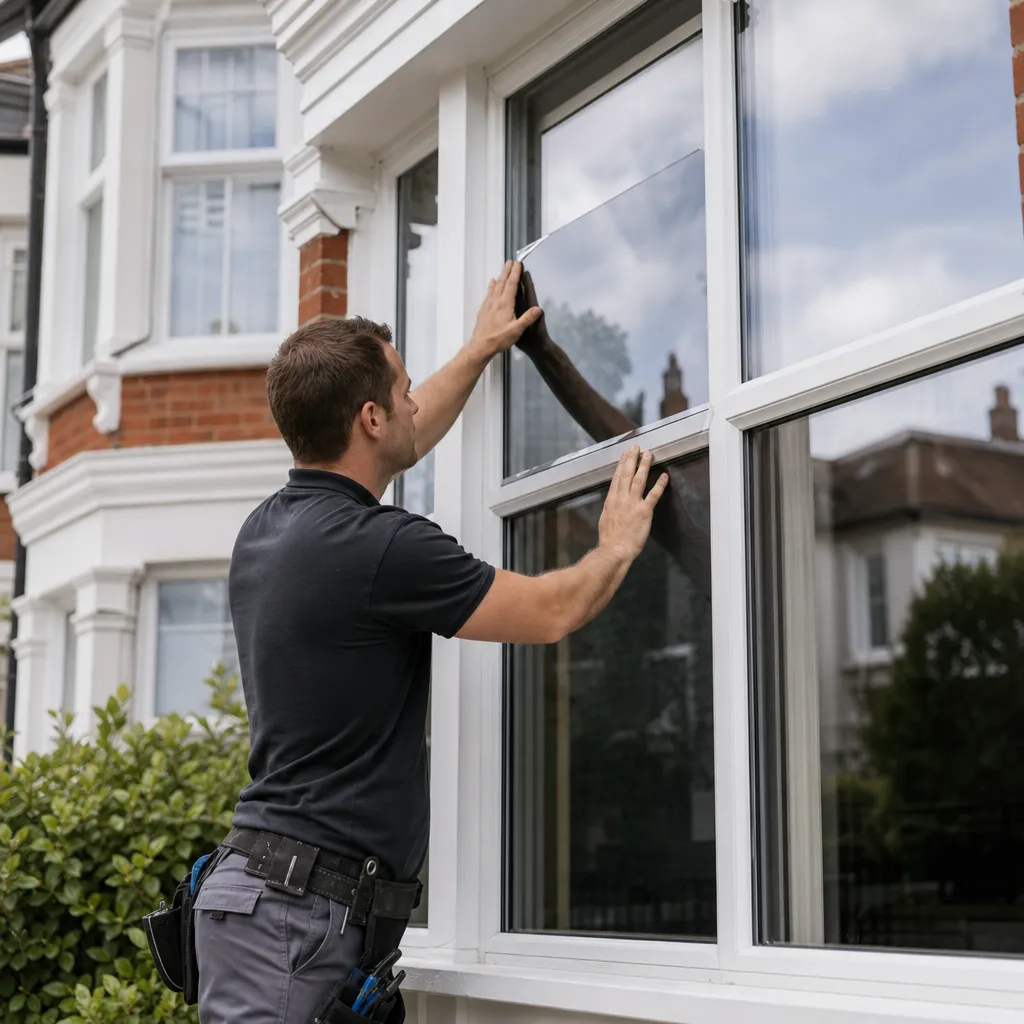
Window film is a thin polyester laminate applied to the interior face of existing glass. Different types serve quite different purposes:
- Solar control film reduces the solar heat gain coefficient (SHGC) of glass, cutting summer overheating and glare. It has limited effect on winter heat loss and does not meaningfully improve a window's U-value.
- Low-e window film (thermal retention film) includes a metallic layer that reflects interior heat back into the room. Applied to single glazing, it can reduce heat loss meaningfully, though not to the standard of modern double glazing.
- Safety or security film holds glass together on impact — a safety function with no thermal benefit.
- Decorative or privacy film — no thermal function.
Window film is not assessed under the BFRC WER scheme and does not count towards Building Regulations compliance for replacement windows. However, it is widely used in conservation areas and for listed buildings where full glazing replacement may be refused or require listed building consent from the local planning authority.
Comparing your options: low-e glazing, window film, and secondary glazing
Option | Best for | Not ideal for | Typical U-value (whole window) | Key compliance point |
|---|---|---|---|---|
Low-e double glazing (replacement) | Most standard UK properties requiring full frame replacement | Listed buildings or conservation areas where consent is refused | 1.0–1.3 W/m²K | FENSA / CERTASS self-cert or building control sign-off required |
Low-e triple glazing | Passivhaus or high-spec new build or deep retrofit projects | Older frames that cannot support additional weight | 0.6–0.8 W/m²K | As above; structural suitability of existing frames should be assessed |
Secondary glazing (hard-coat low-e pane) | Listed buildings, original sash windows, conservation areas | Properties where planning rules or aesthetics prohibit additional inner frames | 1.8–2.2 W/m²K (combined with single glazing) | Usually permitted development; check whether listed building consent is needed |
Low-e / thermal retention window film | Quick retrofit, rental properties, heritage buildings with restrictions | Achieving Part L compliance for replacement windows | 3.5–4.5 W/m²K (single glazing with film applied) | No Building Regulations certificate issued |
Solar control film | South or west-facing rooms with significant summer overheating | Cold-climate heat retention; provides no meaningful winter benefit | Minimal change to U-value | No compliance certification |
U-values are indicative whole-window figures. Actual performance depends on frame material, spacer bar type, gas fill, and installation quality.
Which option should you choose?
- Choose low-e double or triple glazing if your existing frames are failing, your property is not listed or in a conservation area, and you want to meet current Building Regulations and improve your EPC rating.
- Choose secondary glazing with a hard-coat low-e pane if your property is listed, in a conservation area, or has original sash windows you want to retain — secondary glazing is usually permitted development and does not alter the external appearance.
- Choose low-e window film if replacement or secondary glazing is refused or impractical, the situation is temporary (for example, you are a tenant), or you need a budget solution for single-glazed windows in a heritage or rental property context.
- Choose solar control film only if summer overheating is your primary problem — south or west-facing rooms receiving excessive solar gain — and winter heat retention is not the priority.
- Ask an energy-efficiency consultant if your property has a complex mix of window types, is subject to planning restrictions, or you want to assess the whole-building thermal envelope before committing to glazing upgrades.
FENSA certificates and Building Regulations compliance
In England and Wales, replacing windows is notifiable work under the Building Regulations. Homeowners have two routes to compliance:
- Use a FENSA- or CERTASS-registered installer: The installer self-certifies compliance with Part L and issues a certificate on completion. This is the most common route for domestic window replacements. Keep the certificate safely — you will need to provide it to your solicitor when selling the property.
- Local authority building control: If your chosen installer is not FENSA- or CERTASS-registered, you must apply for building control approval before work begins. A building control officer will inspect the installation and issue a completion certificate.
Scotland's Building Regulations are administered by local authority verifiers under the Scottish Building Standards system; Northern Ireland operates its own Building Regulations regime. U-value requirements differ slightly between nations — check the relevant approved document for your property's location before specifying glazing.
When to get professional help
Glazing choices can interact with planning consent, listed building regulations, building control compliance, and EPC ratings in ways that affect a property's saleability and legal rental status. Seek professional advice when:
- Your property is listed at any grade — replacement windows or even secondary glazing may require listed building consent from your local planning authority, and unauthorised works can be a criminal offence
- You are in a conservation area and want to replace original windows — permitted development rights may be restricted under an Article 4 Direction
- You need the glazing upgrade to contribute to improving your EPC rating for Minimum Energy Efficiency Standards (MEES) compliance in a rental property
- The existing frames show signs of moisture ingress, rot, or warping — a thermal upgrade will underperform if the frames themselves are failing
- You are considering triple glazing — older or lighter frames may require a structural assessment before they can support the additional weight
How Housey can help
Housey connects you with vetted window and door installers who can advise on low-e glazing specifications and provide FENSA-compliant installation across the UK, as well as energy-efficiency consultants who can assess your whole-property thermal envelope and confirm whether glazing upgrades alone will achieve your EPC or comfort targets.
Frequently asked questions
Does low-e glass make a room noticeably darker?
Modern soft-coat low-e glass transmits around 75–80% of visible light, compared with approximately 80% for standard float glass. The difference is barely perceptible in most residential settings. Earlier low-e coatings could produce a slightly greenish or reflective tint, but current A-rated products from established manufacturers are near-neutral in appearance and light transmission.
Can I apply window film to an existing double-glazed unit?
Window film can be applied to the interior face of double-glazed glass, but check with the unit manufacturer or your installer first. Some films trap heat within the sealed unit and raise glass temperatures significantly, increasing thermal stress and potentially voiding the unit's warranty. Solar control film on south-facing double-glazed units carries a particular risk of thermal breakage in certain glass types.
Do I need planning permission to replace windows in the UK?
In most cases, replacing like-for-like windows in England is permitted development and does not require a planning application, but Building Regulations compliance is still required. Key exceptions include listed buildings, properties in conservation areas where front-elevation changes may be restricted, and properties subject to an Article 4 Direction. Check with your local planning authority if in any doubt.
What is the difference between a U-value and a Window Energy Rating?
A U-value measures thermal transmittance — how much heat passes through a window per square metre per degree Celsius difference (W/m²K). Lower is better. The BFRC Window Energy Rating (WER) is a broader index that also accounts for solar heat gain in winter and air leakage rate. A window with a slightly higher U-value may still achieve a better WER if its solar gain performance is strong.
Sources and further reading
- Approved Document L: Conservation of fuel and power (England) — GOV.UK / MHCLG
- British Fenestration Rating Council (BFRC): Window Energy Ratings — BFRC
- FENSA: replacement window certification — FENSA
- Double glazing: savings and costs — Energy Saving Trust
- Windows in traditional buildings — Historic England
Useful next reads
 Energy & Retrofit
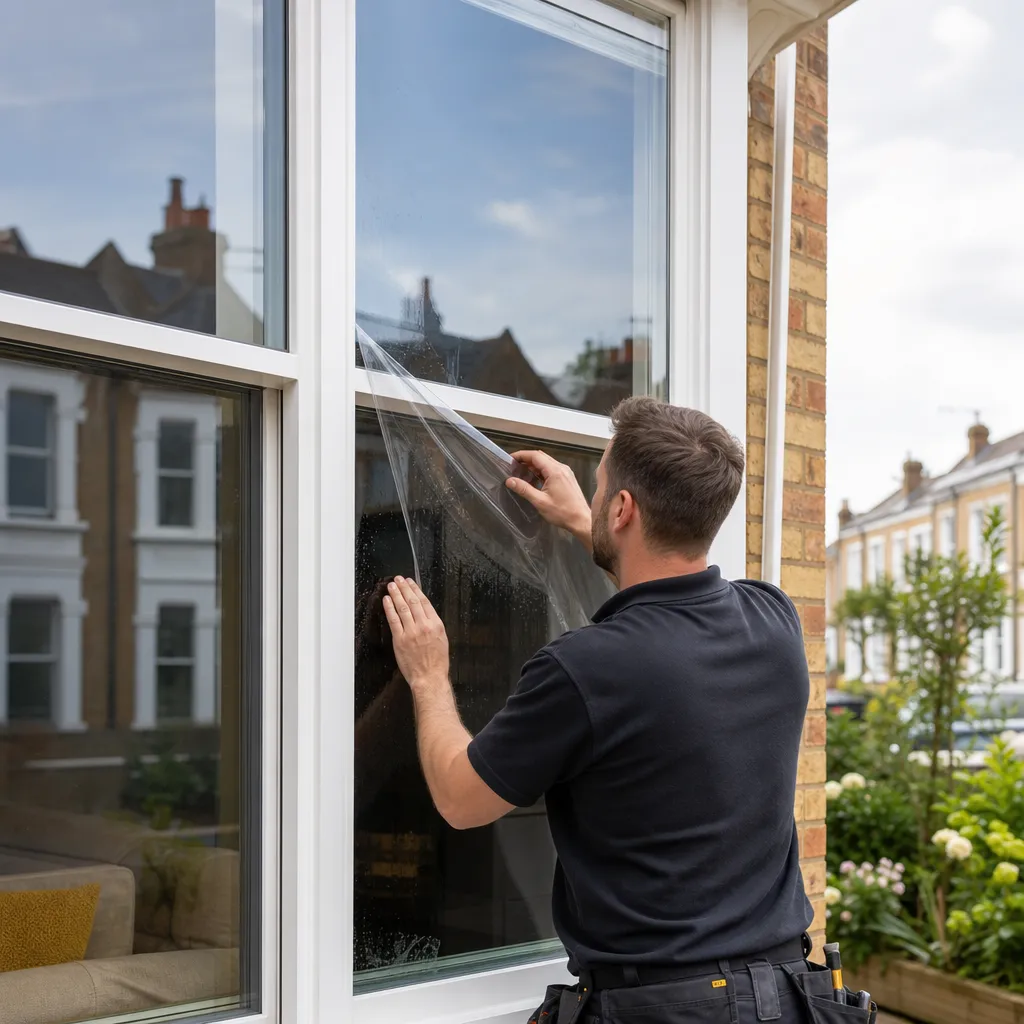
Solar window film: enhancing thermal performance and energy efficiency
Solar window film is a thin laminate applied to glass that reduces solar heat gain by 30–80% depending on specification.
 Energy & Retrofit
Smart Glass Windows: How Dynamic Glazing Works and Its Benefits
Smart glass changes its optical properties through one of four physical mechanisms: electrochromic glass tints gradually when a small voltage is applied and holds that state without continuous power; PDLC glass aligns liquid crystals to become transparent when mains voltage is applied; SPD glass aligns particles under voltage; and thermochromic glass responds passively to heat.
 Energy & Retrofit
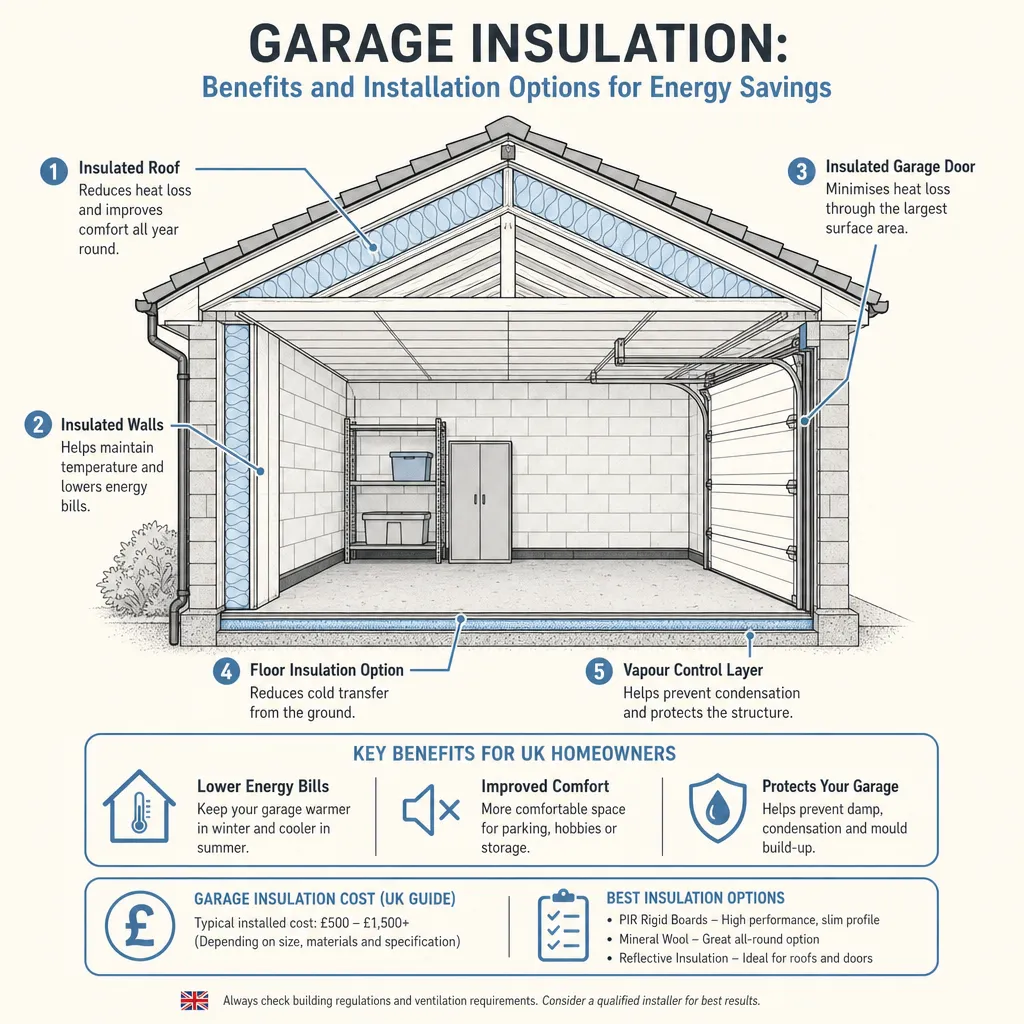
Garage Insulation: Benefits and Installation Options for Energy Savings
Insulating a garage reduces heat loss, lowers energy bills, and makes an attached garage more comfortable year-round.
 Energy & Retrofit
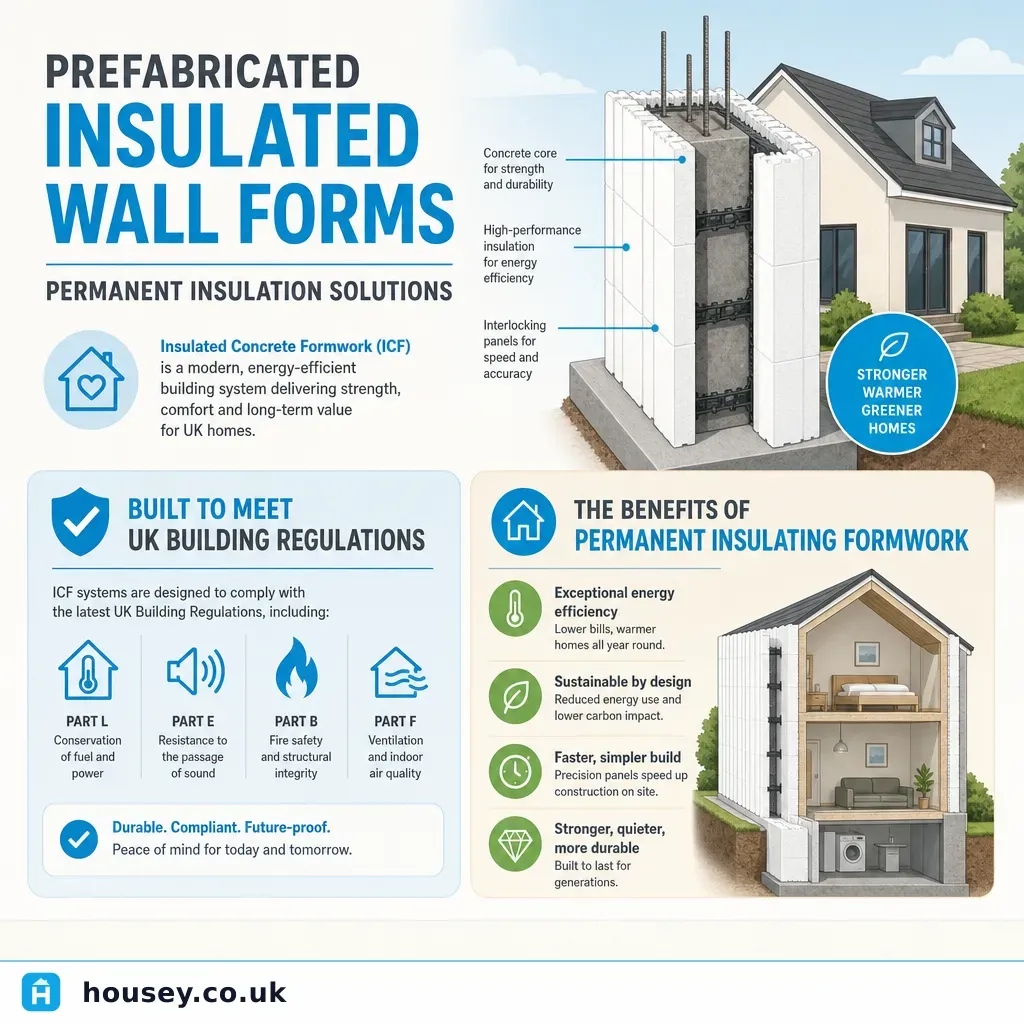
Prefabricated Insulated Wall Forms: Permanent Insulation Solutions
Prefabricated insulated wall forms — including ICF and SIPs systems — deliver high thermal performance by combining permanent insulation with structural concrete or timber in a single wall assembly.
 Energy & Retrofit
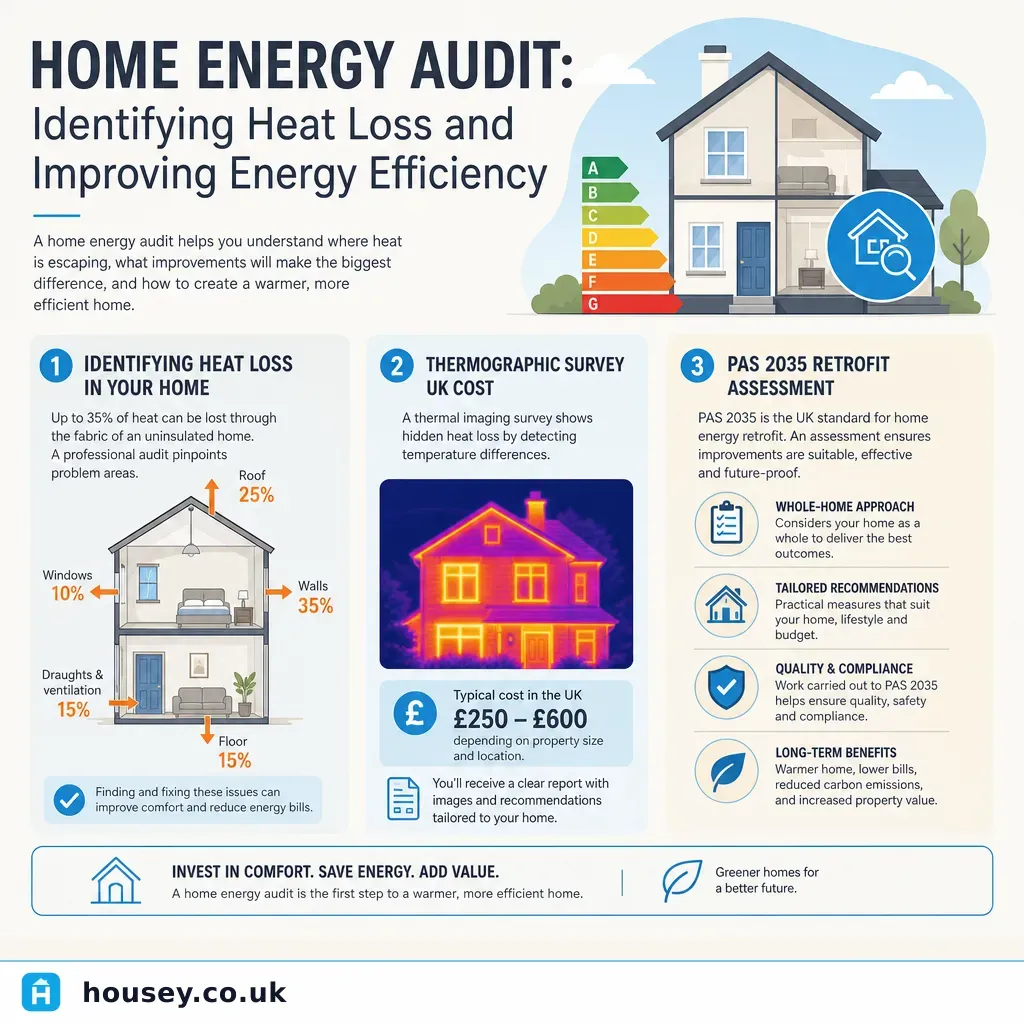
Home Energy Audit: Identifying Heat Loss and Improving Energy Efficiency
A home energy audit is a structured assessment of where your property loses heat and how efficiently it uses energy.