Smart Glass Windows: How Dynamic Glazing Works and Its Benefits
By Housey · Last reviewed 31st of May 2026
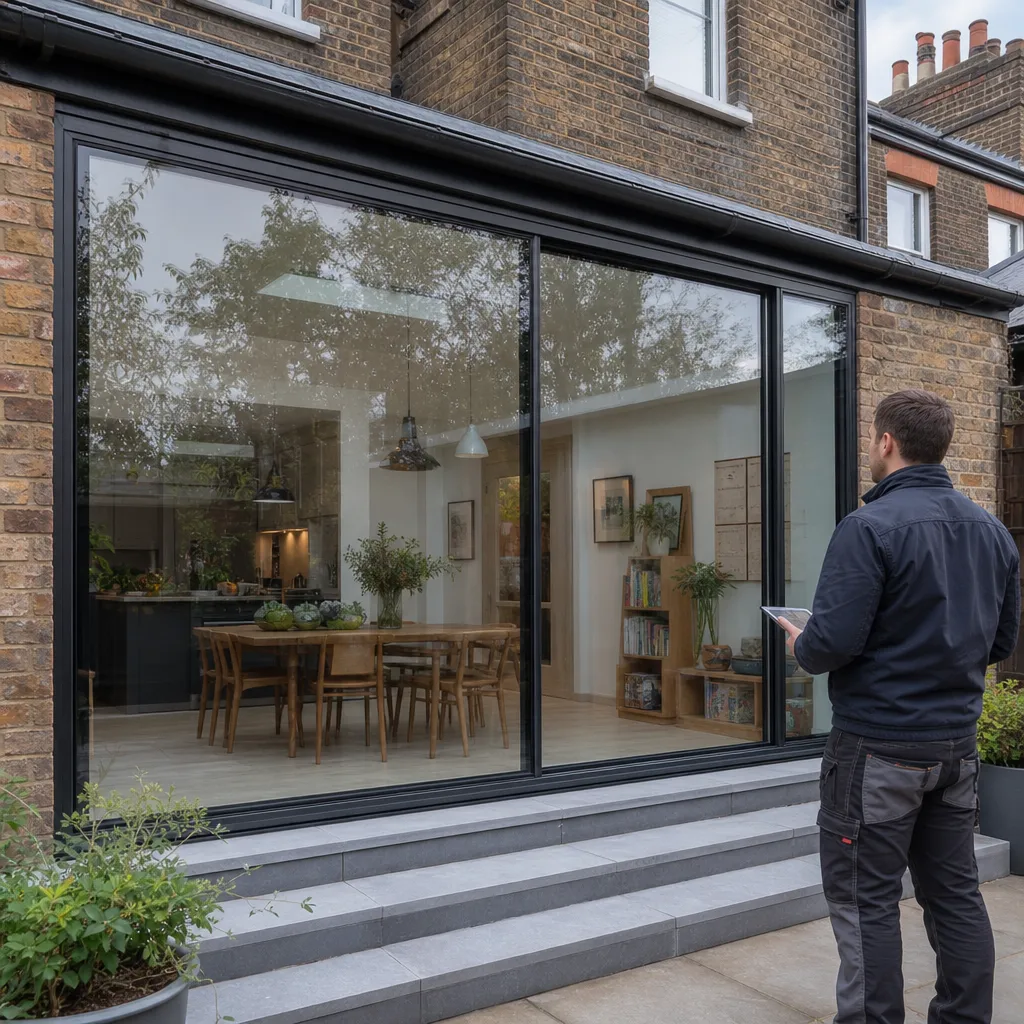
Smart Glass Windows: How Dynamic Glazing Works and Its Benefits
When a bathroom window turns opaque at the touch of a switch, or a conservatory roof gradually darkens on a summer afternoon, a specific physical mechanism is at work. Homeowners and specifiers increasingly encounter smart glass as an option during extension projects, bathroom renovations, and energy retrofits — and the technology each product uses determines what it can realistically deliver in a UK home.
Key points
- Smart glass changes its optical properties through one of four physical mechanisms: electrochromic (ion migration through a coating), PDLC (liquid crystal alignment), SPD (particle alignment under voltage), or thermochromic (passive heat response).
- PDLC glass is opaque in its default unpowered state and requires continuous AC mains power to remain transparent — a power cut returns all panels to frosted.
- Electrochromic glass applies a low-voltage DC signal to set its tint level; once set, it holds that state with near-zero ongoing power consumption.
- Building Regulations Part L requires replacement windows in England to achieve a U-value of ≤ 1.4 W/m²K; confirm manufacturer certification before installation, as not all smart glass units meet this without additional specification.
- Dynamic glazing does not automatically improve a property's EPC rating unless the thermal performance of the complete glazing unit is also upgraded relative to what it replaces.
How does each smart glass technology work?
Electrochromic (EC) glass passes a small DC voltage through a tungsten-oxide-based electrochromic coating laminated within the glass. Ions migrate within this layer, causing it to absorb more or less visible light. The transition is gradual — between 30 seconds and several minutes — but the resulting tint is stable without continuous power. EC glass is well-suited to solar-control applications on south- and west-facing glazing.
Polymer Dispersed Liquid Crystal (PDLC) glass contains microscopic liquid-crystal droplets suspended in a polymer film between two conductive glass layers. With no voltage applied, the crystals orient randomly, scattering light and producing a milky, opaque appearance. When mains voltage is applied, they align parallel to the electrical field, allowing light through. The panel requires continuous power to remain clear.
Suspended Particle Device (SPD) glass uses elongated, light-absorbing particles suspended in a film. Unaligned particles block light; applying a low DC voltage aligns them, increasing transparency. SPD offers finer intermediate tint control than PDLC and switches in under a second, making it popular for conservatory roofs and large skylights.
Thermochromic glass uses a coating that reacts to temperature — darkening automatically as ambient heat rises. No electrical connection is required. The limitation is that the tint cannot be manually overridden; in overcast or cold conditions the glass may remain fully clear even when some privacy is wanted.
Comparison: four dynamic glazing technologies
Technology | Switching method | Speed | Default state (unpowered) | Full privacy possible? | Variable tint? |
|---|---|---|---|---|---|
Electrochromic | Low-voltage DC | Slow (0.5–5 min) | Clear | No | Yes |
PDLC | AC mains | Fast (< 1 sec) | Opaque | Yes | Limited |
SPD | Low-voltage DC | Fast (< 1 sec) | Clear | No | Yes |
Thermochromic | Heat (passive) | Gradual | Varies with temperature | No | Yes (passive only) |
What are the main benefits of dynamic glazing?
Privacy on demand — PDLC is the most common privacy application in UK homes. Full-height glass in bathrooms and en-suites can remain clear during the day, with instant opacity when required, without permanent frosted glazing or blind hardware.
Solar and glare control — EC and SPD glazing reduce solar heat gain through south-facing elevations and conservatory roofs. This can make spaces more comfortable in summer without supplementary cooling and reduce low-sun glare year-round.
Aesthetic simplicity — removing the need for blinds, curtains, and fixed obscure glass allows cleaner sight lines and more consistent natural light distribution through a room.
Acoustic improvement — smart glass is typically specified as a laminated unit, which offers better sound insulation than standard float glass: typically 35–45 dB Rw depending on specification and build-up. This is a secondary benefit rather than a primary reason to specify smart glass.
Does dynamic glazing improve energy efficiency?
The honest answer is: it depends on the technology and its specific application.
EC and SPD glazing can meaningfully reduce summer solar heat gain through south- or west-facing glazing, reducing reliance on portable cooling and improving thermal comfort. On clear winter days, switching to maximum transparency increases passive solar gain and can reduce heating demand.
Against these benefits: PDLC and SPD glass consume continuous power when transparent — typically 5–15 W/m². For a 4 m² conservatory roof, that is 20–60 W consumed continuously whenever the glazing is clear. This running cost can offset modest passive gains over the course of a year.
An independent energy-efficiency consultant can model the net effect for your property, orientation, and usage pattern before you commit. Do not rely solely on manufacturer marketing materials, which typically present best-case assumptions.
What to ask before specifying smart glazing
What to ask a glazing supplier before ordering
- What is the certified U-value of the complete glazing unit (not just the switching film)?
- What is the visible light transmittance (VLT) in both clear and maximum-tint states, and the solar heat gain coefficient (SHGC)?
- What is the power consumption per m² when the panel is in its active transparent state?
- What is the default state on power failure — clear or opaque?
- What switching speed should I expect, and does any intermediate state look distracting in use?
- Who is responsible for the electrical connection, and does it require a Part P-certified electrician?
- Is the unit CE-marked, and what warranty covers the switching mechanism?
Red flags to watch for
- A supplier who cannot provide a certified U-value data sheet — Part L compliance cannot be confirmed without this.
- A quote that separates glazing supply from electrical installation without clearly specifying who closes the gap between trades.
- Claims of significant EPC rating improvements without supporting thermal calculations.
- PDLC glass being recommended for solar heat-gain control — its primary function is privacy switching, not tint-based solar management.
- No mention of FENSA registration or building control notification for a window-replacement project.
When to get professional help
Smart glass spans glazing, electrical, and building control disciplines. Get professional advice when:
- You are unsure whether the glazing specification meets Part L — ask the supplier for EN-certified U-value data and share it with your building control officer or FENSA-registered installer.
- The building is listed or in a conservation area — planning or listed building consent may be required before any glazing change.
- You want an impartial energy-performance assessment — an independent consultant can advise without a product to sell.
- The electrical installation requires a new circuit or any modification to a consumer unit — this is notifiable under Part P of the Building Regulations and must be carried out by a certified electrician.
How Housey can help
Housey connects you with vetted window and door installers who are experienced in dynamic glazing specifications and Part L compliance requirements. If you want independent advice on whether smart glass suits your energy-performance goals, our energy-efficiency consultants can assess your property without the bias of a product recommendation.
Frequently asked questions
Is smart glass suitable for a listed building?
Alterations to glazing in a listed building require listed building consent. Smart glass is not automatically refused, but you must demonstrate the specification is sympathetic to the building's character and period. Speak to your local planning authority's conservation officer before placing any order; proceeding without consent is a criminal offence under the Planning (Listed Buildings and Conservation Areas) Act 1990.
Can smart glass be set to intermediate tint levels?
Electrochromic and SPD glass both offer variable intermediate tint levels between fully clear and maximum tint — you are not limited to two positions. PDLC glass is effectively binary: clear when powered, opaque when not, with limited useful intermediate states. If variable tint control matters for your application, EC or SPD is the more appropriate technology to specify.
Does smart glass need specialist cleaning?
The exterior glass surface is cleaned exactly like any other glazing — standard glass cleaner and a non-abrasive cloth. Avoid abrasives on exposed laminate edges. PDLC and SPD interior film surfaces are sensitive to sharp objects and harsh solvents; manufacturers recommend a mild detergent solution and a soft cloth for those faces.
How reliable is smart glass over time?
Electrochromic and thermochromic glass, having no rapidly moving mechanical parts, typically show good long-term reliability. PDLC and SPD reliability depends on the integrity of the conductive film and electrical connections; localised damage or wiring faults can cause visible failures in affected zones. Choose manufacturers with a verifiable UK track record and review warranty terms carefully before purchasing.
Sources and further reading
- Conservation of fuel and power: Approved Document L (2021) — GOV.UK
- FENSA self-certification scheme — FENSA
- Double glazing: energy performance guidance — Energy Saving Trust
- Windows: technical guidance for historic buildings — Historic England
- Glass and Glazing Federation technical resources — Glass and Glazing Federation
Useful next reads
 Energy & Retrofit
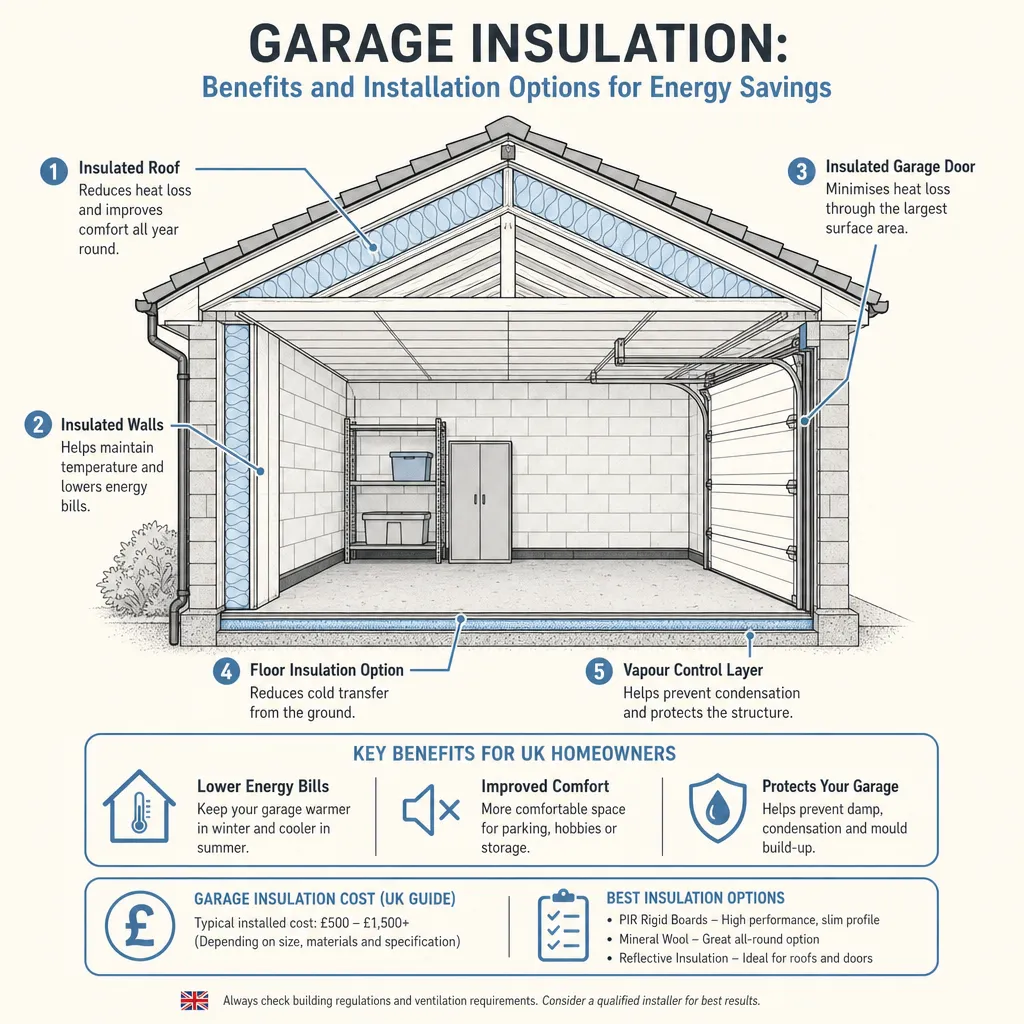
Garage Insulation: Benefits and Installation Options for Energy Savings
Insulating a garage reduces heat loss, lowers energy bills, and makes an attached garage more comfortable year-round.
 Energy & Retrofit
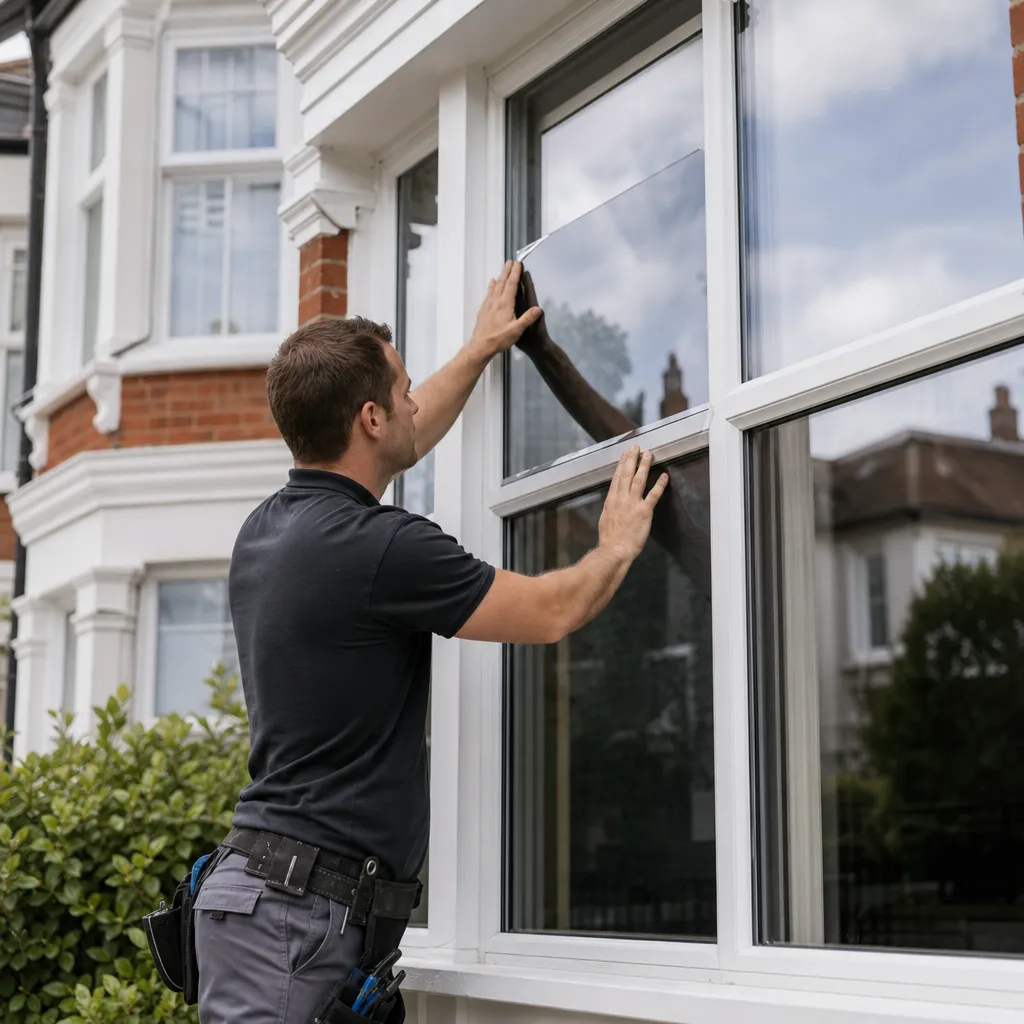
Low-Emissivity Glazing and Window Film: Thermal Control Options
Low-emissivity (low-e) glazing uses a metallic oxide coating to reflect heat back into a room, typically achieving whole-window U-values of 1.
 Energy & Retrofit
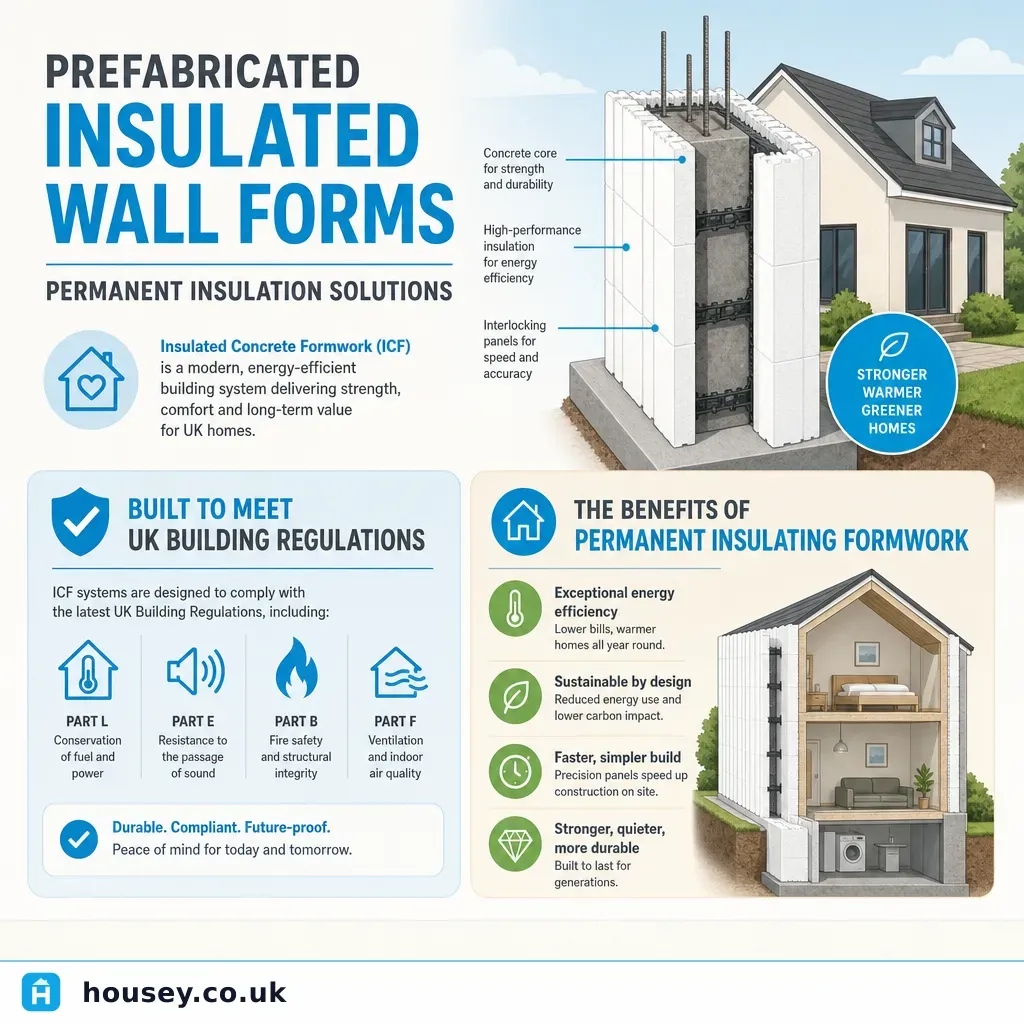
Prefabricated Insulated Wall Forms: Permanent Insulation Solutions
Prefabricated insulated wall forms — including ICF and SIPs systems — deliver high thermal performance by combining permanent insulation with structural concrete or timber in a single wall assembly.
 Energy & Retrofit
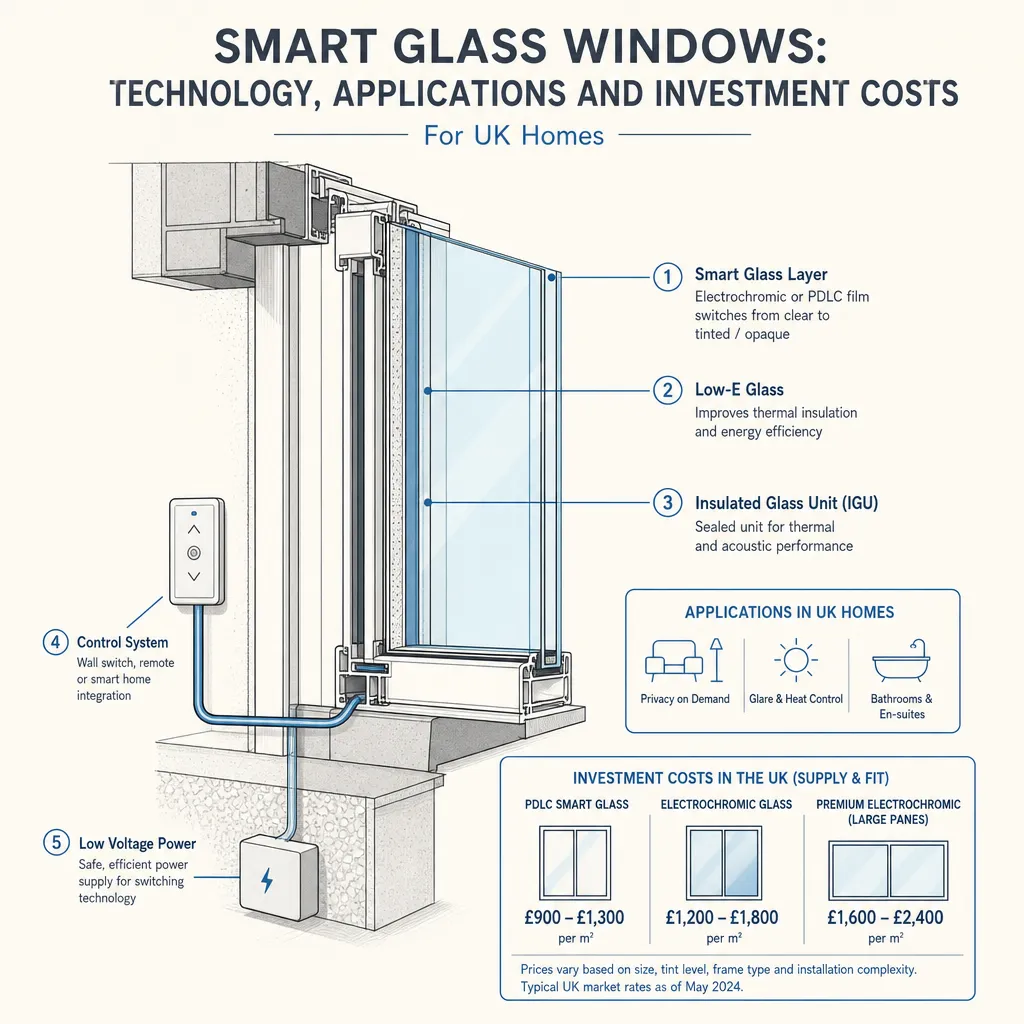
Smart Glass Windows: Technology, Applications and Investment Costs
Smart glass windows switch between transparent, tinted, or opaque states using electrical signals or heat.
 Energy & Retrofit
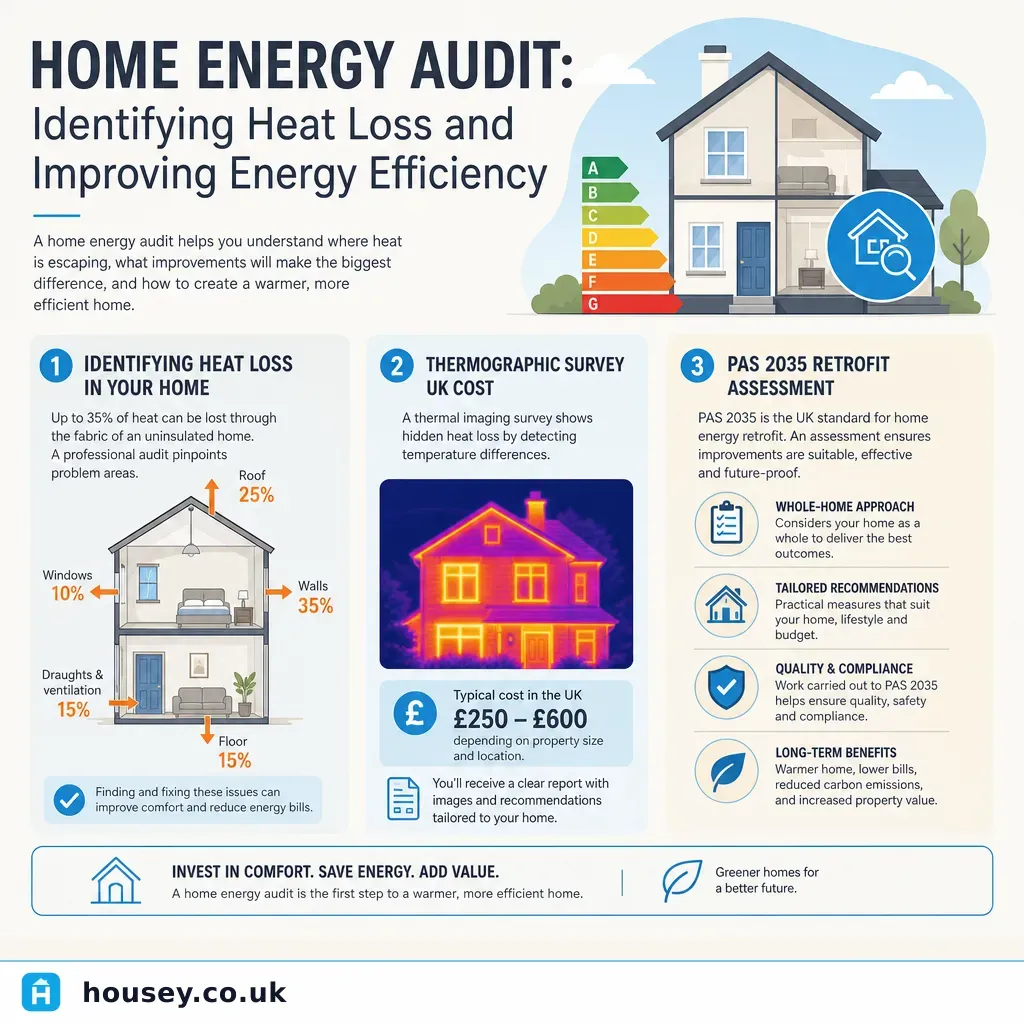
Home Energy Audit: Identifying Heat Loss and Improving Energy Efficiency
A home energy audit is a structured assessment of where your property loses heat and how efficiently it uses energy.