Low-Emissivity Windows: Energy Performance and Modern Glass Technology
By Housey · Last reviewed 11th of May 2026
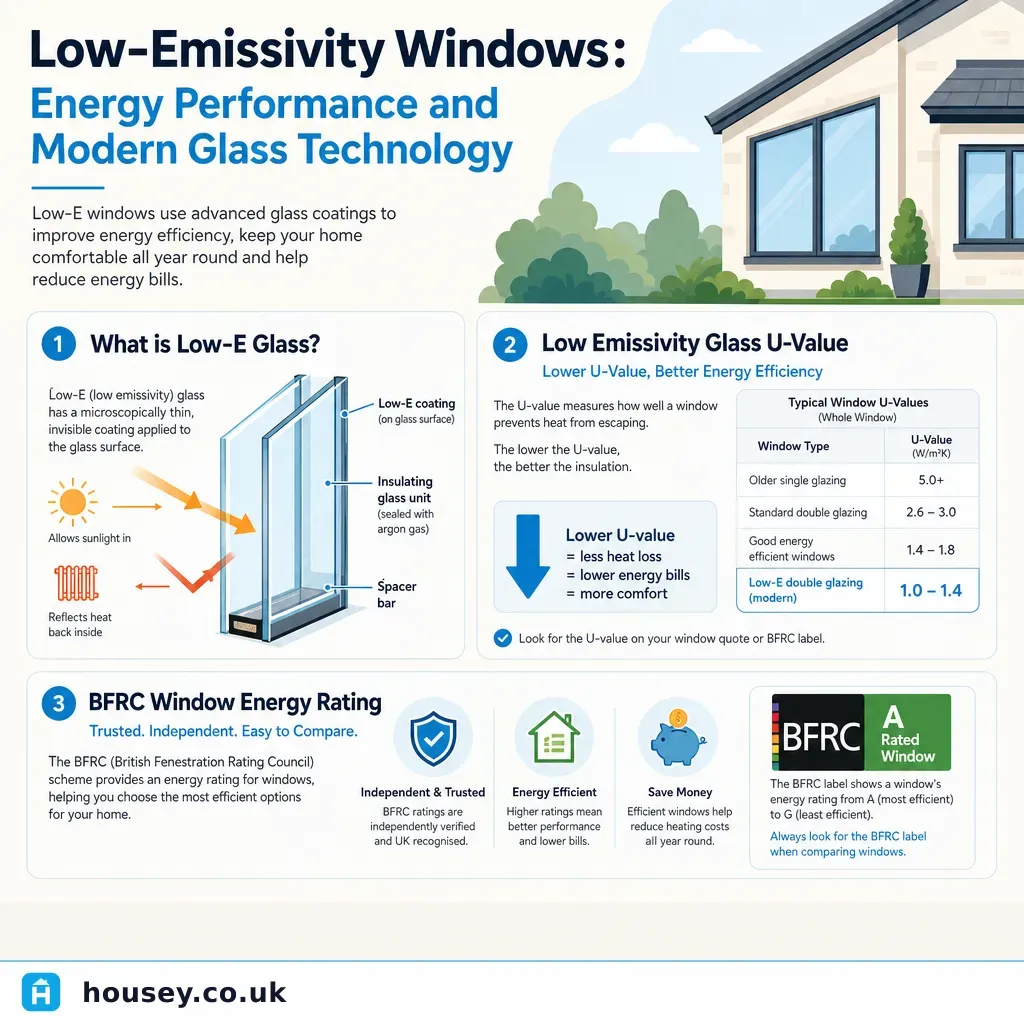
Low-Emissivity Windows: Energy Performance and Modern Glass Technology
Replacing windows is one of the most visible home improvement decisions, and the glass specification has a larger effect on thermal performance than many homeowners appreciate. Low-emissivity glass has become the standard in UK replacement glazing, yet the technical terminology — U-values, solar gain coefficients, coating positions — can make it difficult to compare products or interpret a quote accurately. Understanding the basics before speaking to an installer helps you ask the right questions and specify glass that genuinely improves your home's energy performance.
Key points
- Low-E glass carries a microscopically thin metallic or metallic-oxide coating that reflects long-wave infrared radiation (heat) back into a room while transmitting visible light.
- Building Regulations Approved Document L (2021 edition, England) sets a maximum whole-window U-value of 1.4 W/m²K for replacement windows; many modern low-E double-glazed units achieve 1.0–1.2 W/m²K.
- FENSA (Fenestration Self-Assessment Scheme) and CERTASS are the two main competent-person schemes for window installation in England and Wales; a certificate from either confirms Building Regulations compliance without a separate building control application.
- The BFRC (British Fenestration Rating Council) Window Energy Rating (WER) system grades windows from A++ to E — a rating of A or above generally meets or exceeds current Approved Document L requirements.
- Soft-coat (sputtered) low-E glass must be sealed inside the glazed unit to prevent oxidation; hard-coat (pyrolytic) glass is more durable but typically less thermally effective.
What is low-emissivity glass and how does it work?
Standard glass allows both visible light and infrared heat to pass through relatively freely. Low-emissivity (low-E) glass adds a coating — usually silver or tin oxide, deposited in layers just nanometres thick — that reflects long-wave infrared radiation. When room temperatures rise, the coating bounces heat back towards the interior rather than allowing it to escape through the glass.
The key technical property is emissivity: ordinary clear float glass has an emissivity of around 0.89, meaning it emits 89% of thermal energy as radiation. Quality soft-coat low-E glass achieves emissivities of 0.02–0.05, dramatically reducing heat loss through the glazed unit. This is the dominant factor in the centre-pane U-value, which is the most common performance figure quoted by manufacturers.
Hard-coat versus soft-coat low-E glass
There are two main production methods, each with distinct properties:
Type | Production method | Typical emissivity | Durability | Position in unit | Best application |
|---|---|---|---|---|---|
Hard-coat (pyrolytic) | Fused to glass during float manufacturing | 0.15–0.20 | Very durable; can face outward | Inner or outer pane | Secondary glazing, commercial, exposed use |
Soft-coat (sputtered) | Deposited post-manufacture in a vacuum chamber | 0.02–0.05 | Must be sealed inside the unit | Cavity-facing surface of outer pane | Modern residential double and triple glazing |
Most residential replacement windows in the UK use soft-coat low-E glass on the cavity-facing surface of the outer pane — position 2 in double glazing, or position 2 or 5 in triple glazing. This configuration maximises heat retention in a heated room during a UK winter.
U-values, WER ratings, and Building Regulations
The two main ways manufacturers and installers describe window thermal performance in the UK are:
U-value (W/m²K): Measures the rate of heat flow through the unit. Lower is better. Approved Document L (2021, England) requires replacement windows to achieve a whole-window U-value of 1.4 W/m²K or better. Scotland's Building Standards Section 6 has comparable requirements. Many modern low-E products achieve 1.0–1.2 W/m²K as standard.
BFRC Window Energy Rating (WER): A consumer-facing A++ to E scale that accounts for U-value, solar gain (g-value), and air infiltration. A WER of A or above generally meets or exceeds Approved Document L requirements, though you should always verify the whole-window U-value on the product data sheet.
Note that a "centre-pane U-value" quoted in a brochure will always be better than the whole-window U-value used in compliance calculations, which includes the frame and spacer bar. Ask installers which figure they are quoting.
Double glazing versus triple glazing with low-E
Which type should you choose?
- Choose low-E double glazing if your home already has good wall and roof insulation, your budget is moderate, or you are in a milder part of England where the marginal gains from triple glazing are difficult to justify financially.
- Choose low-E triple glazing if you are building to Passivhaus or near-Passivhaus standards, undertaking a deep retrofit of a solid-wall home, or are in Scotland or northern England where heating-degree days and temperature differentials are higher.
- Ask an energy-efficiency consultant if you want to model the payback period or assess how window specification interacts with wall insulation, ventilation strategy, and heating system changes.
- Check with your installer before specifying triple glazing: the additional weight (typically around 36 kg/m² versus 24 kg/m² for double) may require frame reinforcement or a structural lintel check.
Feature | Low-E double glazing | Low-E triple glazing |
|---|---|---|
Typical centre-pane U-value | 1.0–1.6 W/m²K | 0.5–0.8 W/m²K |
Solar gain (g-value, typical) | 0.30–0.62 | 0.20–0.40 |
Weight per m² (approx.) | ~24 kg | ~36 kg |
Cost relative to standard double | Low to moderate premium | Moderate to high premium |
Noise reduction | Moderate | Better (greater pane mass) |
Best use case | Most UK residential retrofit | High-performance new build or deep retrofit |
Indicative UK costs, last reviewed 2026-05-11. Actual costs vary by frame material, size, and installer.
What to check before buying or specifying low-E windows
Homeowner checklist
When to get professional help
Low-E window replacement is a standard home improvement for most properties, but professional advice is worthwhile when:
- The property is listed or in a conservation area — permitted development rights for window replacement are restricted, and like-for-like appearance may be required by condition.
- You are planning a whole-house retrofit — window specification should be coordinated with wall insulation, ventilation strategy, and heating system changes to avoid moisture risk and thermal bridging.
- Windows are non-standard size, curved, or in a structural opening — specialist glazing advice and, potentially, a structural check may be needed.
- You are building a new home or extension and targeting high energy performance — an energy assessor or Standard Assessment Procedure (SAP) calculation should inform the glass specification.
How Housey can help
Housey connects you with accredited window and door installers registered with FENSA or CERTASS, who can supply BFRC-rated low-E products and issue a certificate of compliance. If you want guidance on how window specification fits into a wider energy improvement project, our energy-efficiency consultants can review your property and recommend the right performance targets before you commit to a product.
Frequently asked questions
Does low-E glass reduce natural light?
Modern soft-coat low-E glass typically achieves visible light transmission of 70–80%, comparable to ordinary clear float glass. Earlier hard-coat products sometimes showed a slight blue or green tint; current residential products are largely neutral in colour. In standard double-glazed units the reduction in light transmission is not perceptible to most occupants.
Is low-E glass the same as solar-control glass?
No. Low-E glass is primarily designed to retain heat in winter by reflecting long-wave infrared radiation back into a room. Solar-control glass prioritises reducing summer heat gain by combining a low solar gain coefficient (g-value) with low emissivity — useful for south-facing or heavily glazed rooms where overheating is a concern.
Will replacing windows improve my EPC rating?
Possibly, though the extent depends on your starting point. Replacing single glazing with low-E double glazing typically produces a noticeable SAP score improvement. Replacing older double glazing with modern low-E double glazing has a smaller effect. An energy assessor can model the expected EPC improvement before you commit to the expenditure.
Do I need planning permission to install low-E windows?
In most cases in England, replacing windows in a like-for-like style and finish is permitted development. However, if the property is listed, in a conservation area, or covered by an Article 4 Direction, you may need planning consent and the style of frames may be restricted. Always check with your local planning authority first.
Sources and further reading
- Approved Document L — Conservation of fuel and power (2021) — GOV.UK / MHCLG
- BFRC Window Energy Ratings explained — British Fenestration Rating Council
- FENSA homeowner guidance — FENSA
- Double glazing — Energy Saving Trust advice — Energy Saving Trust
- Scottish Building Standards — Section 6 Energy — Scottish Government
Useful next reads
 Improvement & Build
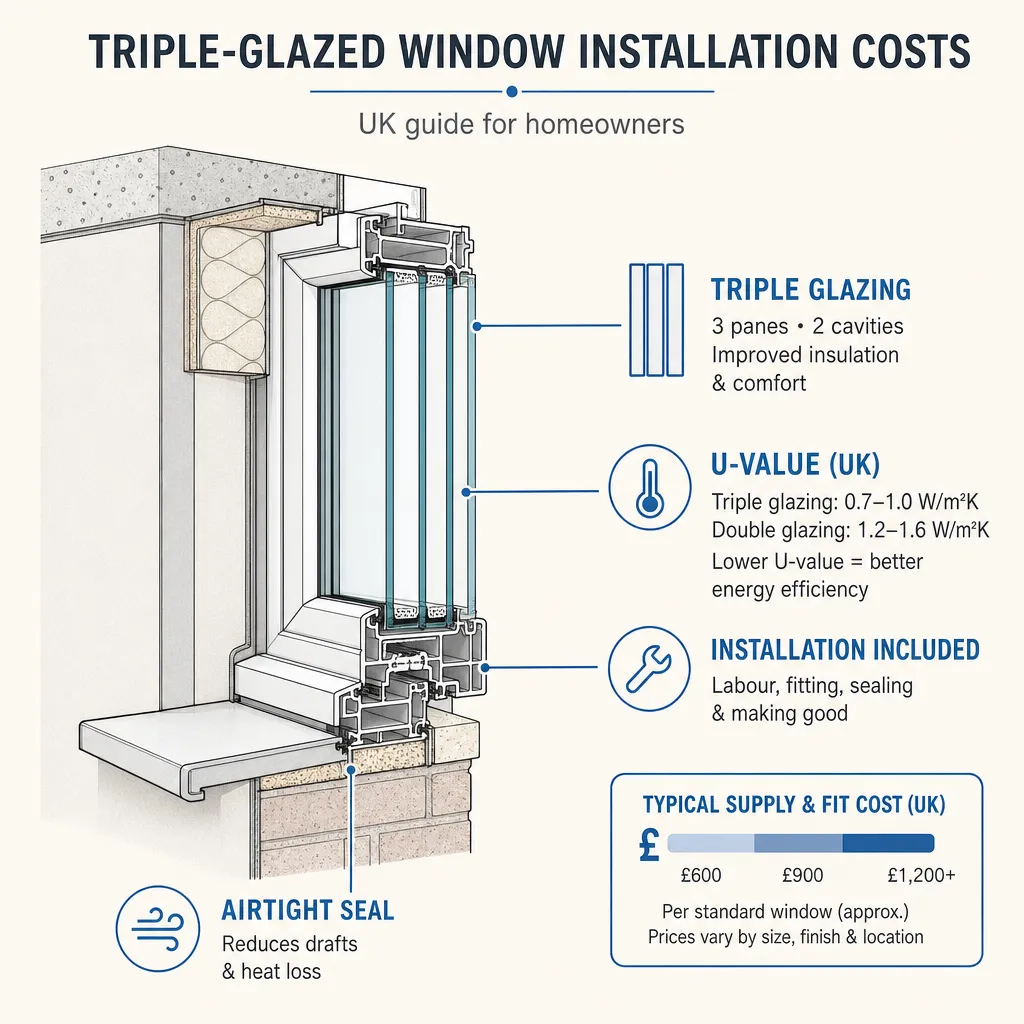
Triple-Glazed Window Installation Costs
Triple-glazed window installation in the UK typically costs £800–£1,800 per window, depending on size, frame material, and glazing specification.
 Improvement & Build
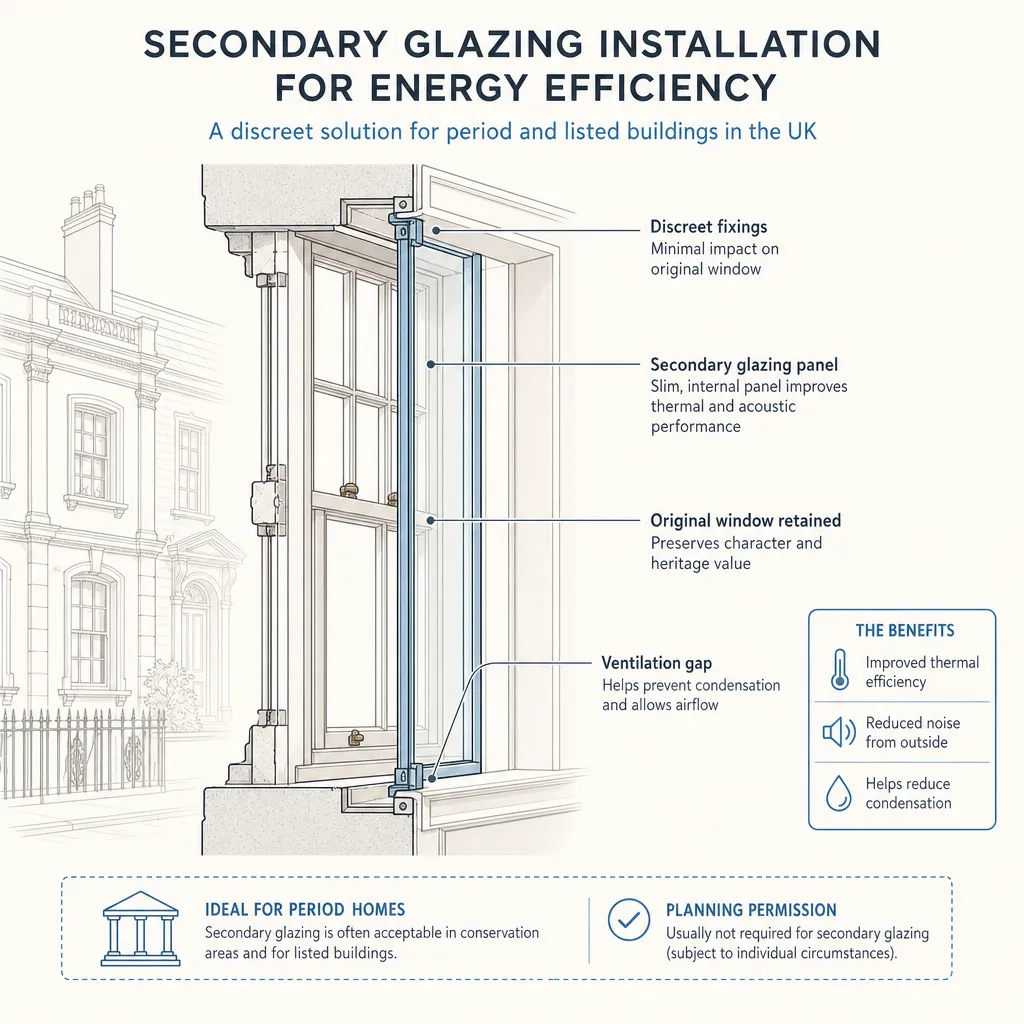
Secondary Glazing Installation for Energy Efficiency
Secondary glazing adds a separate inner pane to an existing window, improving thermal performance without replacing the original frame.
 Improvement & Build
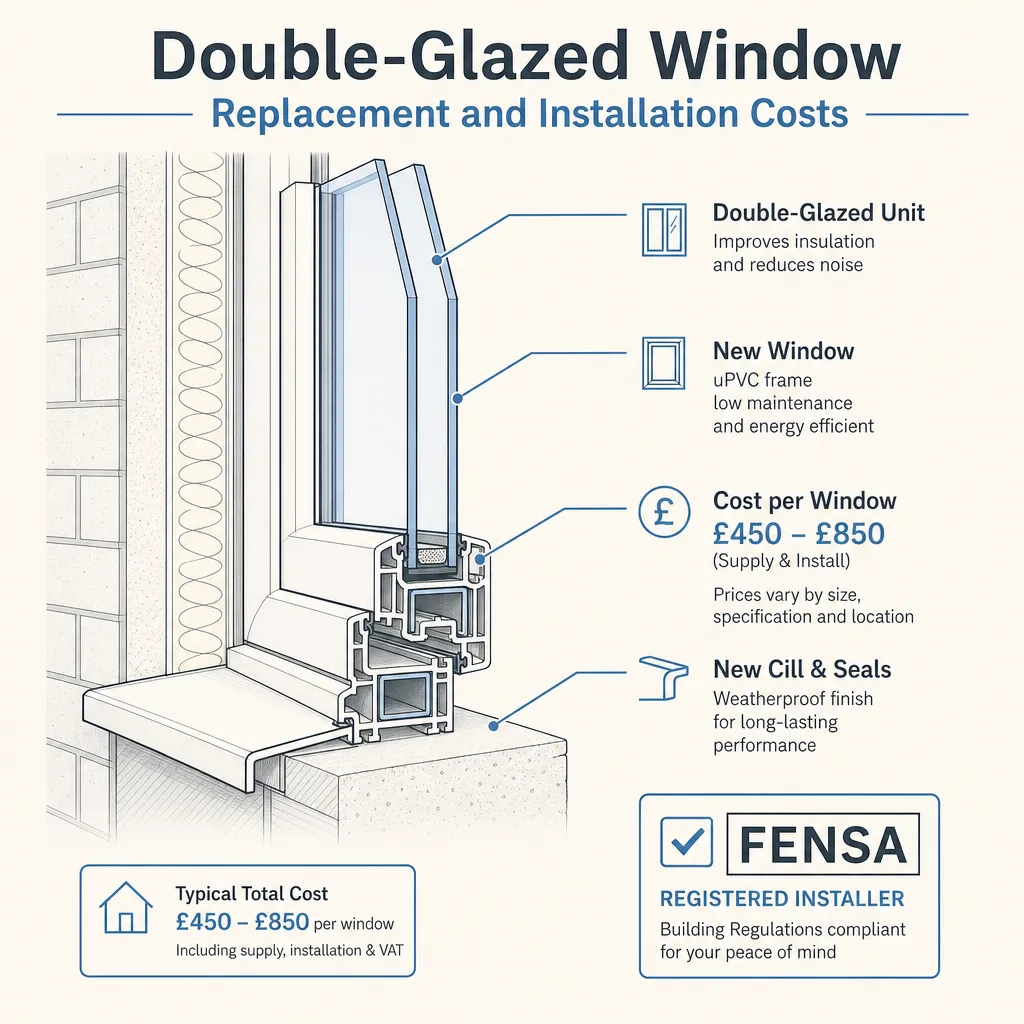
Double-Glazed Window Replacement and Installation Costs
Replacing double-glazed windows in a typical UK home costs roughly £300–£600 per uPVC casement window installed, rising to £500–£1,200 for timber and £400–£800 for aluminium.
 Improvement & Build
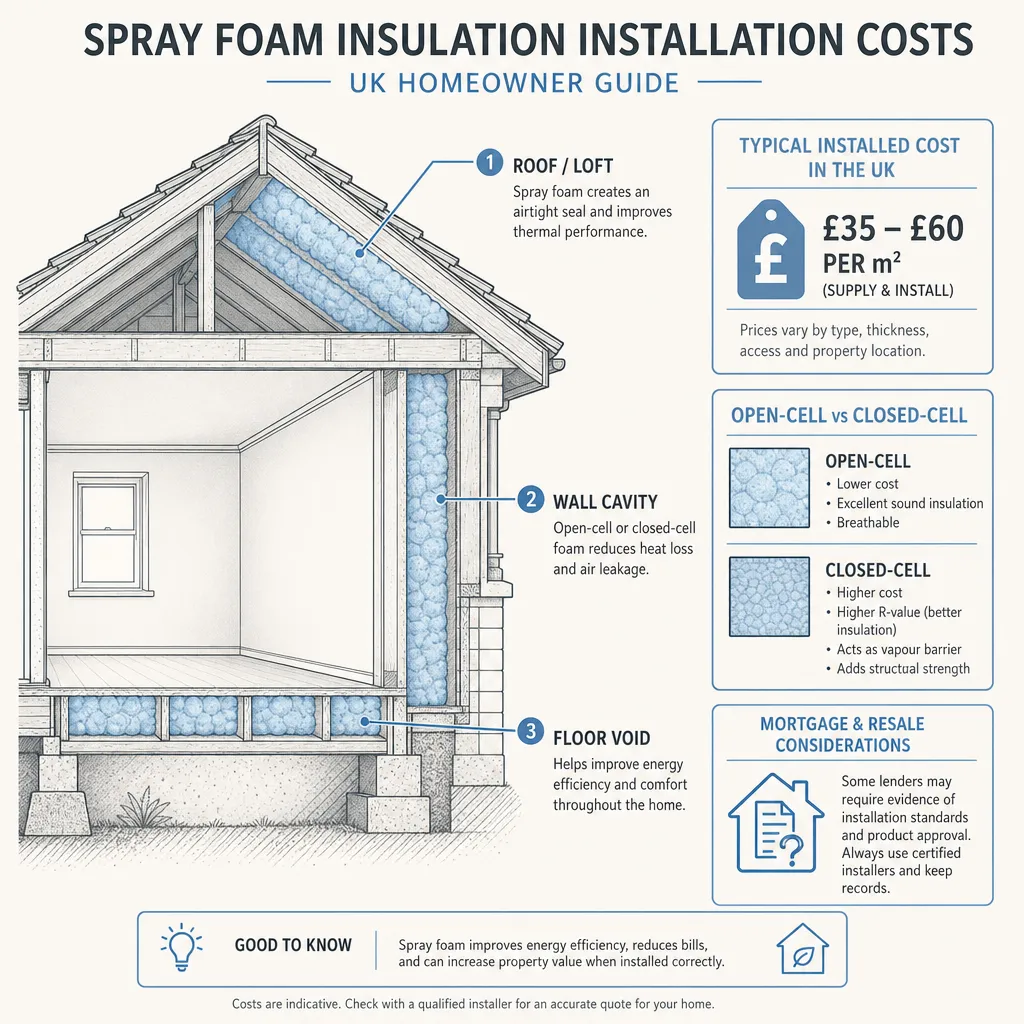
Spray Foam Insulation Installation Costs
Spray foam insulation typically costs £20–£80 per m² installed in the UK, depending on foam type and area treated.
 Improvement & Build
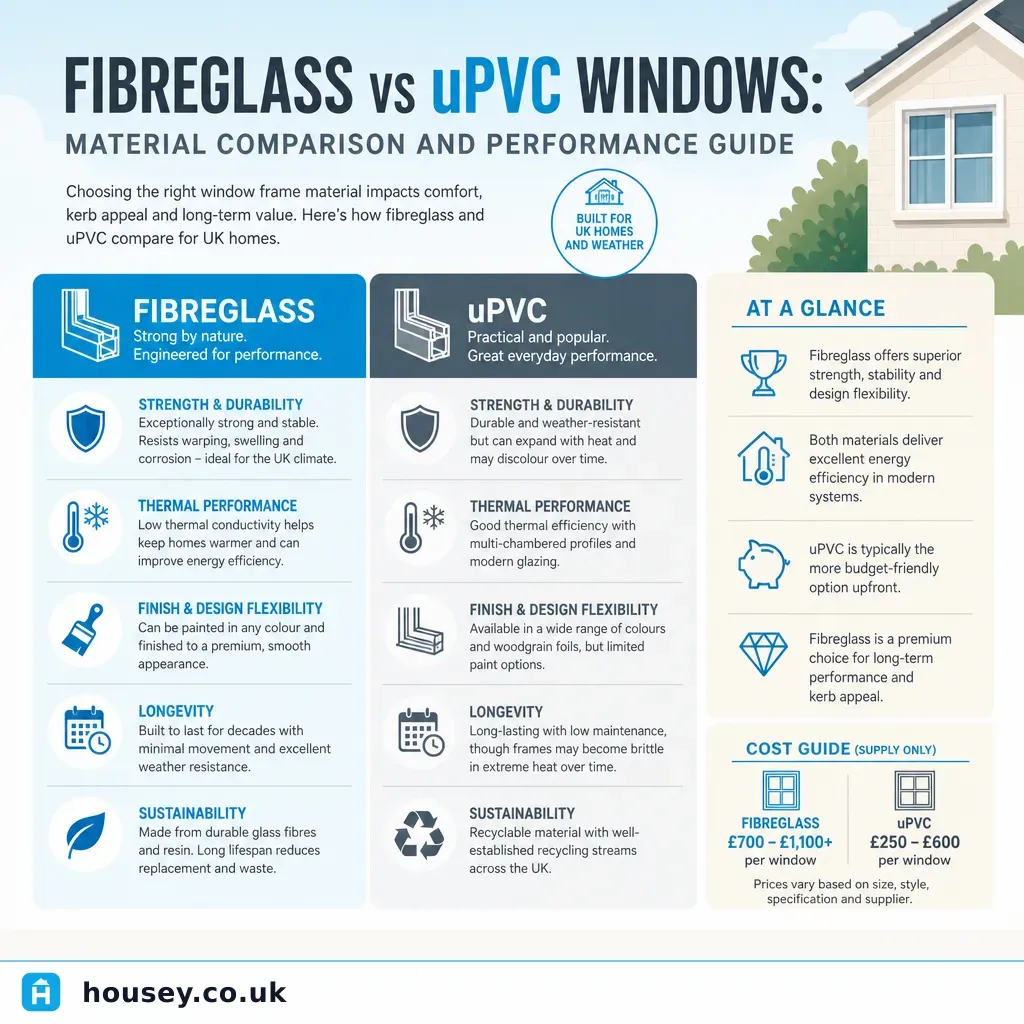
Fibreglass vs uPVC Windows: Material Comparison and Performance Guide
In the UK, vinyl windows are sold as uPVC — the dominant frame material for replacement windows.