Luxury Garage Spaces and Automotive Features in Properties
By Housey · Last reviewed 31st of May 2026
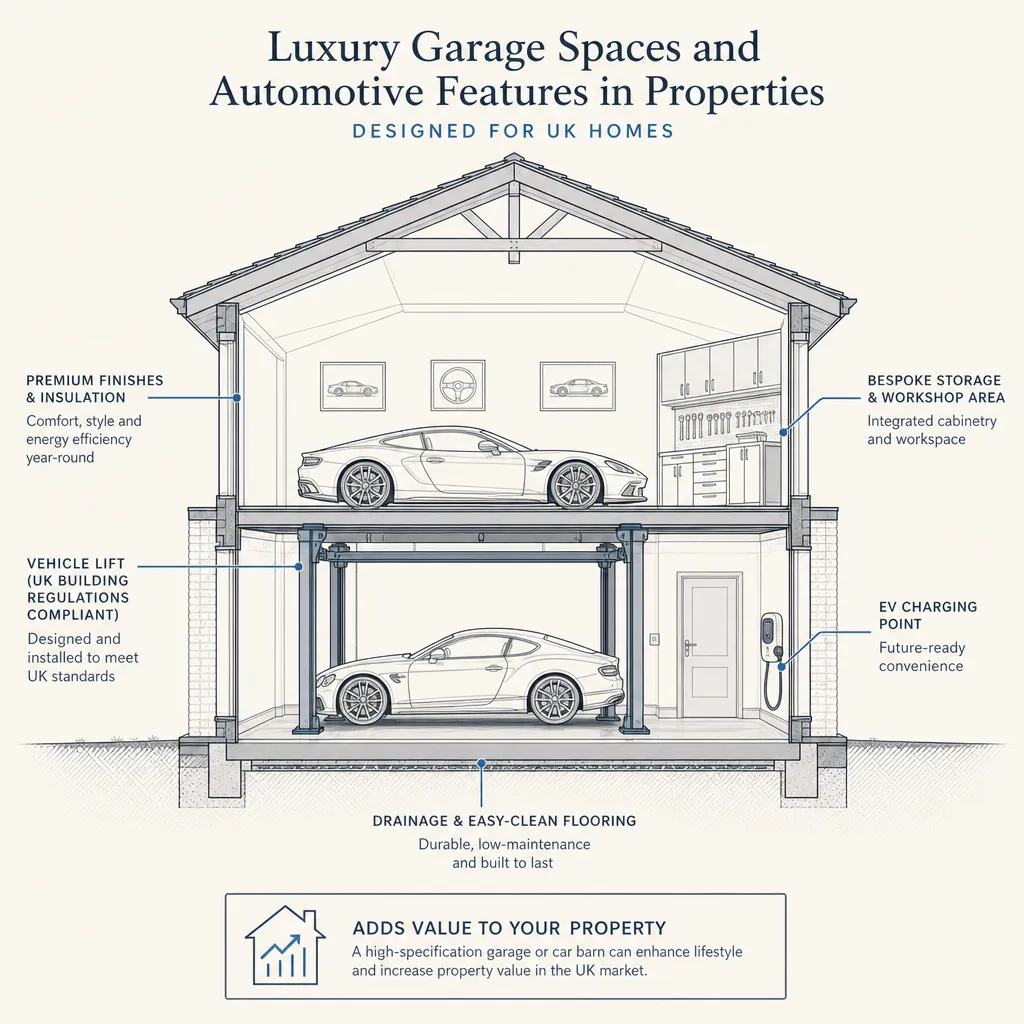
Luxury Garage Spaces and Automotive Features in Properties
High-specification garage provision has moved from a practical afterthought to a primary selling point in premium UK residential property. For buyers with performance, classic, or electric vehicle collections, the garage specification can be as decisive as the kitchen or master suite — and for sellers, having the correct planning consents and building regulations approvals in place can meaningfully affect both saleability and achievable price. Understanding the regulatory framework alongside the design and valuation implications helps you invest with confidence.
Key points
- A new detached garage over 15 m² in floor area will usually require building regulations approval; one over 30 m² always requires it under the Building Regulations 2010.
- Planning permission is typically required for any new detached garage that exceeds the permitted development limits set out in the Town and Country Planning (General Permitted Development) (England) Order 2015.
- A hydraulic car lift or stacking system is a structural alteration and requires building regulations sign-off; a structural engineer should be involved in the design and specification.
- Home EV charge point installations must be carried out by an OZEV-approved installer or notified to the local building control body under the relevant Competent Person Scheme.
- Listed buildings and properties within conservation areas face additional restrictions; listed building consent is required for any works affecting the character of the listed structure or its curtilage.
Types of luxury garage provision
Not all high-specification garages are equivalent. The distinction between a well-fitted integral garage and a purpose-built car barn affects planning requirements, build cost, insurance, and resale value in quite different ways.
Garage type comparison
Garage type | Best for | Planning implications | Building regs | Typical valuation impact |
|---|---|---|---|---|
Integral double or triple garage | Urban and suburban properties; secure and weathertight | Usually permitted development if part of original build | Part B (fire separation from dwelling), Part L (energy efficiency) | Moderate; depends heavily on finish and size |
Detached double or triple garage | Country houses, large plots | PD rules apply; external appearance must suit the setting | Required if >30 m²; advisable from 15 m² | Good in markets where parking is scarce |
Car barn / agricultural-style building | Rural estates, large plots | Often requires full planning permission; rural policy applies | Applies to all permanent structures | High for collector-focused buyers |
Underground or basement parking | Urban mansions, mews conversions | Almost always needs planning and engineering input | Structural approval essential | Premium uplift, but high build cost |
Hydraulic stacking system | Smaller plots needing multiple spaces | External works may trigger planning requirements | Structural building regs required | Good in space-constrained settings |
What makes a luxury garage specification
Beyond the number of parking bays, buyers of premium properties assess garage quality against a range of features. The following checklist covers the elements most commonly specified at the high end of the UK market.
Luxury garage feature checklist
Planning and building regulations: what applies
Permitted development rights allow certain outbuildings without a planning application, but the constraints are more restrictive than many buyers or sellers assume. Under the Town and Country Planning (General Permitted Development) (England) Order 2015, key limits include:
- The outbuilding must not cover more than 50% of the total land area around the original house.
- It must not be positioned forward of the principal elevation facing a highway.
- Maximum eaves height: 2.5 m; maximum overall height: 4 m (dual-pitched roof) or 3 m (any other roof form).
- These rights do not apply to listed buildings, and are curtailed within conservation areas, AONBs, and National Parks.
Building Regulations 2010 under Part A (structure), Part B (fire safety), and Part L (energy efficiency) apply to most permanent garages of significant size. If the space will serve any habitable use, Part F (ventilation) and Part P (electrical safety) also apply. Confirm specific requirements with your local building control body before work begins.
How garage specification affects property valuation
The value added by a luxury garage depends heavily on location, property type, and the buyer pool. In prime rural and country house markets, a purpose-built car barn with a hydraulic lift can command a meaningful premium — particularly where the buyer demographic includes collectors or enthusiasts. In mainstream suburban settings, a high-specification workshop may not recover its full build cost in a standard residential valuation.
A RICS-registered valuer assesses garage provision as part of a standard valuation, but may note that specialist automotive features appeal to a limited market and could be valued conservatively. If you are investing significantly in a specialist fit-out, commission valuation surveys before committing to work, and retain all planning consents and building regulations completion certificates — both are essential when selling.
Important limitations
This article provides general guidance on luxury garage provision and relevant planning and building regulations in England. Planning rules vary significantly by property type, location, planning history, and local planning authority policy — what constitutes permitted development for one property may require a full application for another. This article does not constitute planning, structural, or legal advice. Confirm all requirements with your local planning authority, building control body, and a qualified structural engineer before starting any work.
When this becomes urgent
Seek professional advice before starting work if:
- Your property is listed or within a conservation area, AONB, or National Park — permitted development rights are restricted or absent in these designations.
- You are planning any underground construction, hydraulic lift installation, or structural alteration to an existing building.
- Your proposed garage will exceed 50% of the original curtilage or be positioned forward of the principal elevation.
- You are selling a property where a garage or outbuilding was constructed without the necessary consents — this can stall or block a sale and may require retrospective permission or indemnity insurance.
What to ask a qualified professional
Before appointing any contractor for a luxury garage project, ask:
- Has a planning application been submitted and approved, or have you confirmed in writing that the works fall within permitted development?
- Who will provide structural design and sign-off for any car lift, inspection pit, or underground element?
- Is the drainage specification compliant with Environment Agency oil separation guidance?
- What building regulations completion certificate will be issued, and by which building control body?
- Is the EV charge point installer OZEV-approved and registered under the Competent Person Scheme?
- Is VAT included in the quotation, and at what rate does it apply to the works?
- What warranty is provided on the lift mechanism, and who carries out ongoing maintenance and inspection?
When to get professional help
Some aspects of a luxury garage project should always involve qualified professionals:
- Structural work — car lift foundations, inspection pit construction, or underground parking: commission a structural engineer before appointing a contractor. A structural survey can identify existing site constraints before design work begins.
- Planning applications: a planning consultant or architect familiar with your local authority's design guidance for outbuildings and extensions.
- Electrical installation: a Part P-registered electrician for all new circuits; an OZEV-approved installer for EV charge points.
- Garage conversion: if converting an existing garage to habitable use, our garage conversion specialists can advise on building regulations compliance and any planning requirements specific to your property type.
How Housey can help
Housey connects homeowners with specialists across the luxury garage project lifecycle. Whether you need a structural survey to assess an existing site before design begins, or valuation surveys to quantify the likely return on a planned fit-out before you commit, our vetted professionals can help you make a well-informed decision.
Frequently asked questions
Do I need planning permission for a luxury garage?
It depends on size, position, and location. Under permitted development rules in England, some detached garages can be built without a planning application — but the rules are tightly constrained on size, height, and siting, and do not apply to listed buildings, conservation areas, or AONBs. Always confirm requirements with your local planning authority or a planning consultant before starting any work.
Does a car lift need building regulations approval?
Yes. A hydraulic car lift is a structural installation that requires building regulations sign-off in England. The structural design, including foundations and pit construction, should involve a qualified structural engineer, and the installation must be inspected and certificated by the local building control body before the lift is used.
Will a luxury garage add value to my property?
It can, particularly in markets where buyers have car collections or where private secure parking is scarce. The added value depends on location, property type, and the specific fit-out. A RICS-registered valuer can provide an independent assessment; note that highly specialist features may be valued conservatively due to their limited buyer pool.
What EV charging provision should a luxury garage include?
Most high-specification garages now include at least one 7 kW Type 2 wall box per bay. Some installations specify 22 kW three-phase chargers for performance electric vehicles. All electrical installation must be carried out by a competent person registered under the relevant Competent Person Scheme. A 64A supply circuit is worth considering where multiple bays are planned.
Sources and further reading
- Town and Country Planning (General Permitted Development) (England) Order 2015 — legislation.gov.uk
- Building Regulations 2010 — legislation.gov.uk
- Planning permission for extensions and outbuildings — GOV.UK / Planning Portal
- Electric vehicle infrastructure grants and guidance — OZEV / GOV.UK
- Pollution prevention guidance — Environment Agency
Useful next reads
 Improvement & Build
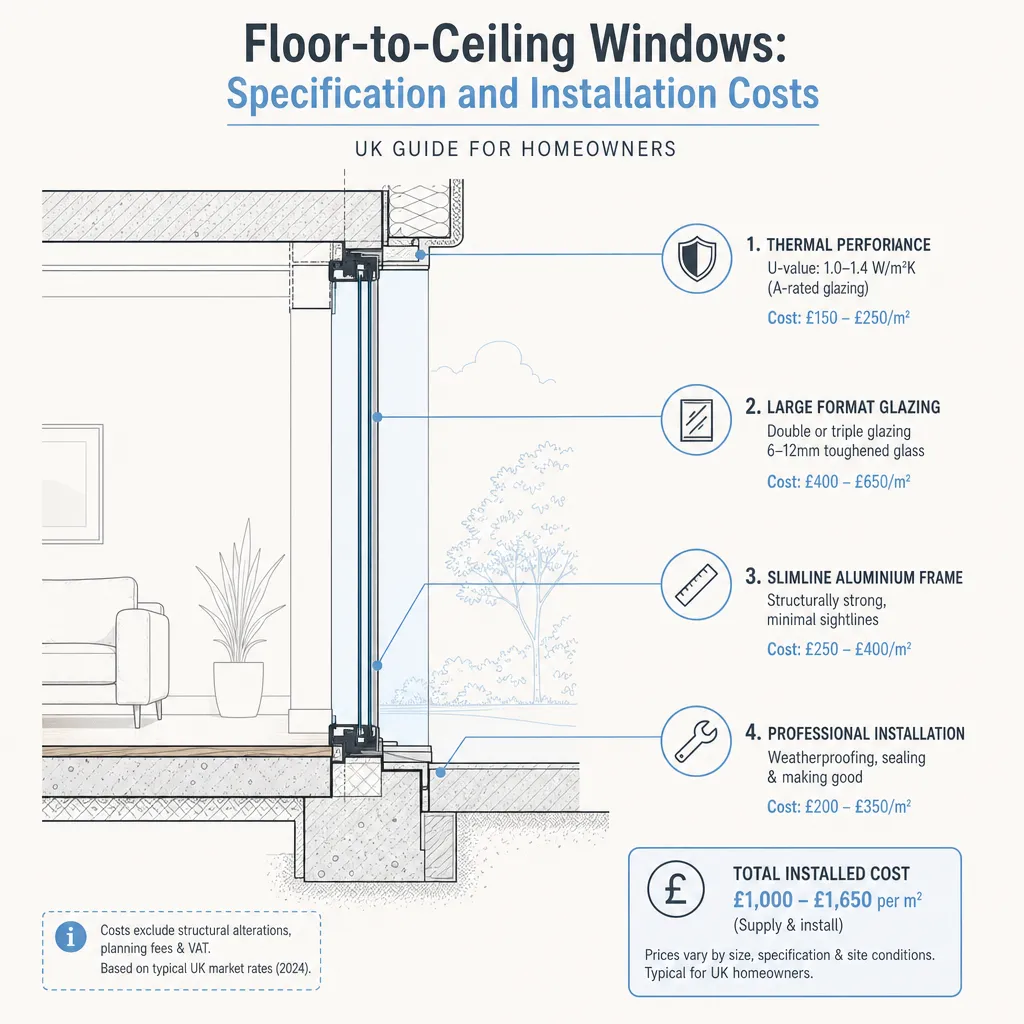
Floor-to-Ceiling Windows: Specification and Installation Costs
Floor-to-ceiling windows in the UK typically cost £1,800–£6,500 per unit installed, depending on glazing type, frame material, and whether structural alterations are needed.
 Improvement & Build
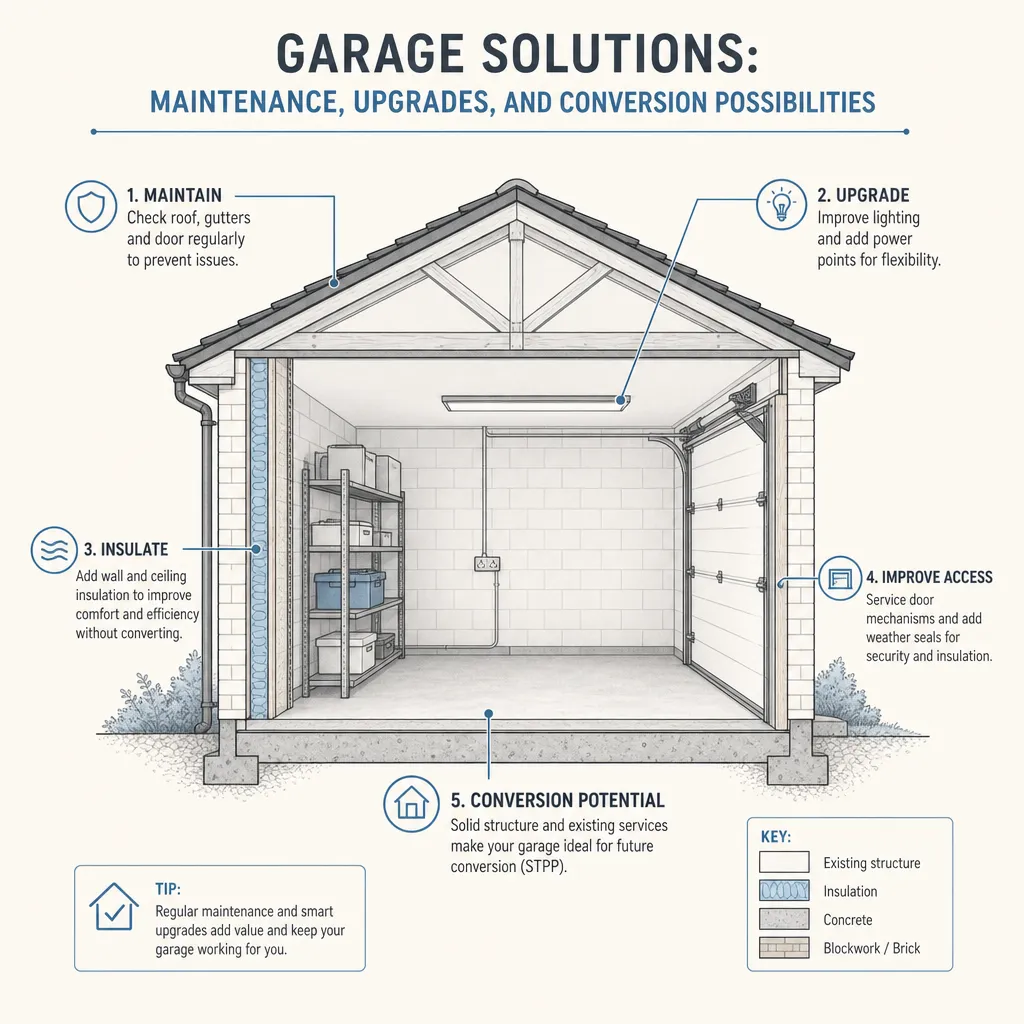
Garage Solutions: Maintenance, Upgrades, and Conversion Possibilities
Your garage can serve many functions — storage, workshop, hobby space, or a full habitable room conversion.
 Improvement & Build
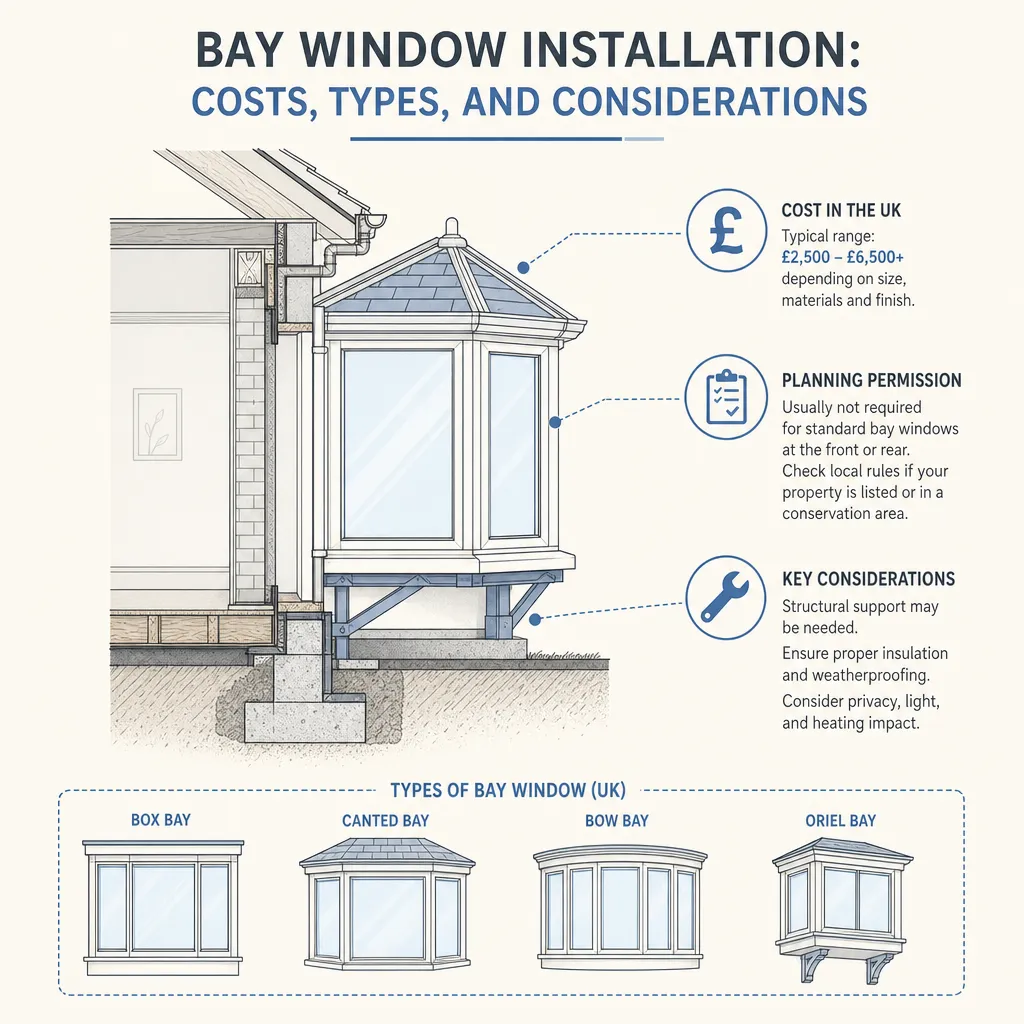
Bay Window Installation: Costs, Types, and Considerations
Bay window installation in the UK involves structural support, glazing to Part L energy standards, and — for new openings — a building control application.
 Improvement & Build
Bay Windows: Characteristics, Installation, and Architectural Benefits
Bay windows project outward from the main wall, adding floor space, natural light, and architectural character.
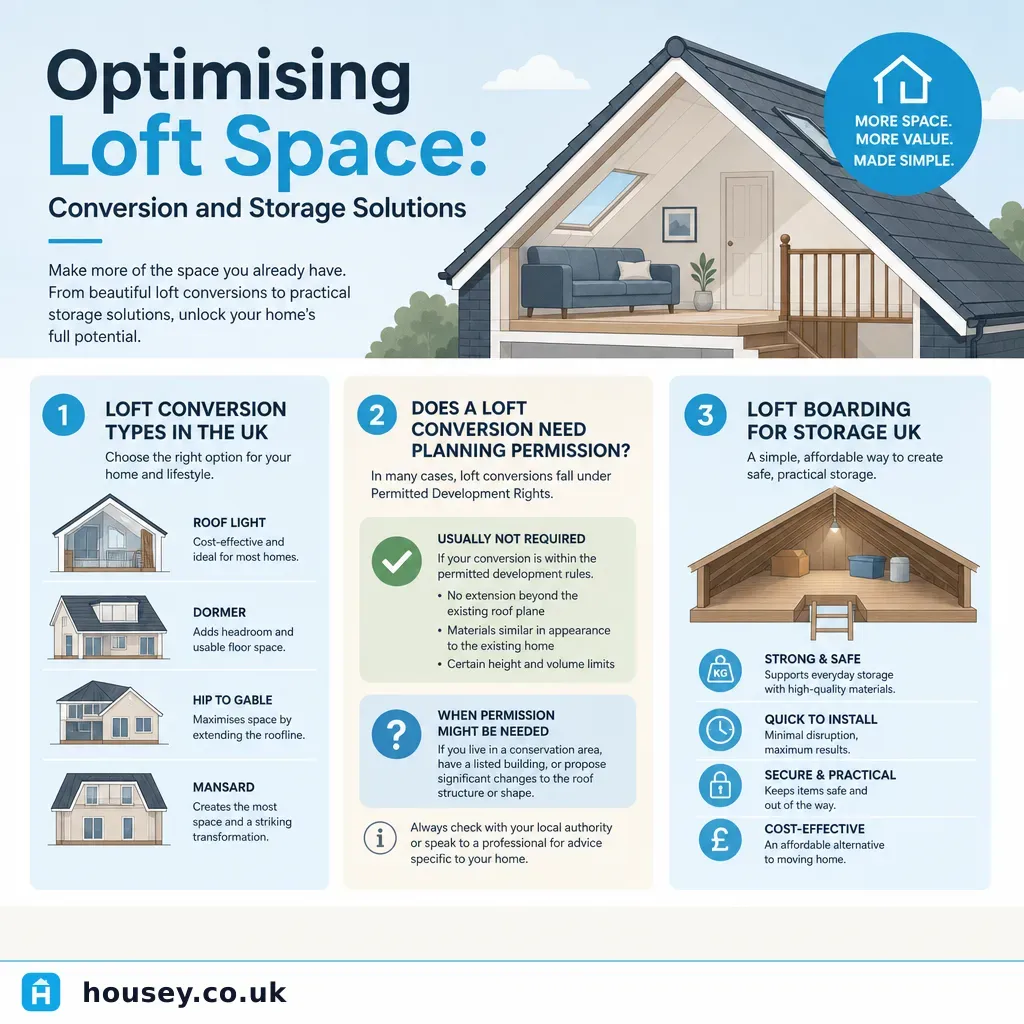 Improvement & Build
Optimising Loft Space: Conversion and Storage Solutions
Whether you convert your loft into a habitable room or optimise it for storage depends on available headroom, budget, and your goals.