Macerating Toilet Installation and System Costs
By Housey · Last reviewed 6th of May 2026
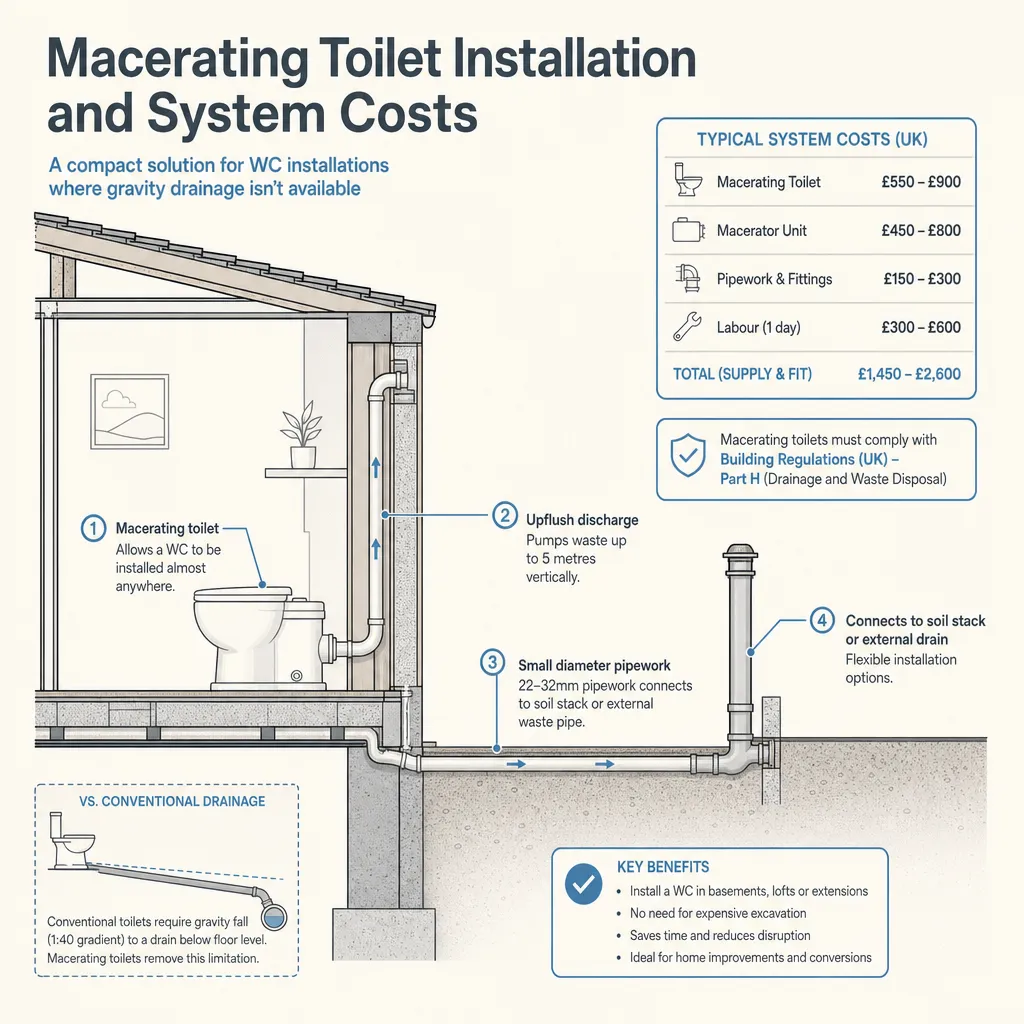
Macerating Toilet Installation and System Costs
Macerating toilets — often called upflush toilets, or Saniflo systems after the UK's best-known brand — allow a WC, shower room, or full bathroom to be added where conventional gravity drainage would be impractical or prohibitively expensive. They are particularly common in basement conversions, loft rooms, ground-floor extensions, and outbuildings where breaking up a concrete floor slab or routing large-bore soil pipework through the structure would involve significant disruption and cost.
Key points
- A macerating toilet unit alone costs £200–£700; total installed cost including labour typically ranges from £400 to £1,500+, depending on system type and discharge pipe complexity. (Indicative UK costs, last reviewed 2026-05-06.)
- Macerating systems require a 230V power supply within approximately 1 metre of the unit — any new electrical socket within a bathroom zone must comply with Part P of the Building Regulations (Approved Document P).
- Adding a new WC or bathroom is notifiable under Building Regulations in most circumstances; a Building Notice or Full Plans application to your local authority building control is usually required.
- Only toilet paper and human waste should enter a macerating unit — wipes, sanitary products, dental floss, and food waste block the cutting blade and typically void the manufacturer's warranty.
- Annual descaling with a proprietary macerator cleaner is the primary maintenance task; neglecting it causes limescale build-up on the cutting mechanism and significantly shortens unit life.
How a macerating toilet works
A macerator unit sits behind or below the toilet pan and contains a high-speed rotating blade that grinds waste and toilet paper into a fine slurry. A pump then forces this slurry under positive pressure through a small-bore discharge pipe — typically 22–28 mm in diameter — to the nearest soil stack, inspection chamber, or external drain.
Because the pump creates positive pressure, the discharge pipe can run horizontally or slightly uphill for several metres before connecting to the drainage system. A conventional gravity-fed toilet requires a 110 mm diameter soil pipe falling at a consistent gradient of at least 1:40. A macerating system needs only a narrow pipe that can be routed through walls or under floors with far less structural intervention.
Macerating toilet costs
Item | Indicative UK cost (2026) |
|---|---|
Entry-level macerator unit (WC connection only) | £200–£350 |
Mid-range unit (WC + handbasin waste connection) | £350–£550 |
Full bathroom system (WC + basin + shower) | £500–£900 |
Labour — basic installation (unit pre-purchased) | £200–£400 |
Labour — full fit including discharge pipe run | £300–£600 |
Electrical socket installation (if required) | £80–£200 |
Building Regulations Building Notice fee | £206–£462 (varies by local authority) |
Typical total installed cost (mid-range) | £600–£1,200 |
Indicative UK costs, last reviewed 2026-05-06. Costs vary by location, property type, and discharge pipe complexity. Obtain at least two quotes from qualified plumbers.
When to choose a macerating system
Decision tree: macerating vs conventional drainage
- Choose conventional gravity drainage if the new bathroom is at ground or first-floor level with reasonable access to an existing soil stack, and you can accept the disruption of breaking floors or chasing walls for 110 mm pipework.
- Choose a macerating system if conventional drainage would require breaking a concrete floor slab, routing through load-bearing elements, or running a long pipe with no achievable gradient.
- Choose a macerating system for basement rooms where the toilet outlet is below the level of the external drain — gravity drainage is physically impossible in this situation without a sewage pump.
- Consider a larger grinder or sewage pump system if the application involves high daily usage or multiple fixtures; a domestic macerator may not be the right scale.
- Ask a drainage contractor to assess if the discharge route exceeds 10 metres horizontal, involves multiple bends, or discharges into a private treatment system rather than a mains sewer.
Macerating vs conventional drainage: comparison
Factor | Macerating system | Conventional gravity drainage |
|---|---|---|
Installation disruption | Low — narrow pipe, minimal floor breaking | High — 110 mm soil pipe, floor and wall works required |
Typical installed cost | £400–£1,500 | £800–£3,000+ depending on structural works |
Ongoing maintenance | Annual descaling; blade replacement every 10–15 years | Minimal if correctly installed |
Noise | Audible pump cycle (3–10 seconds per flush) | Near-silent |
Blockage risk | Higher if misused (wipes, fibrous waste) | Low if gradient is correct |
Building Regulations | Notifiable; Part P for electrics | Notifiable; Approved Document H for drainage |
Best for | Basements, outbuildings, loft rooms, extensions | Main bathrooms, new builds, refurbishments with drain access |
Not suitable for | Commercial high-usage settings; fibrous waste | Rooms below the level of the external drain |
Building Regulations and permissions
Adding a new WC or bathroom is notifiable under Building Regulations in England and Wales, whether you use macerating or conventional drainage.
- A Building Notice application is simpler and allows work to begin quickly, but any issues found during inspection must be remedied at your cost. A Full Plans application provides more certainty — drawings are approved before work starts.
- The electrical socket for the macerator must comply with Part P (Approved Document P). Unless you are registered with NICEIC, NAPIT, or an equivalent Part P competent person scheme, socket installation must be carried out or certified by a registered electrician.
- If the property is listed or in a conservation area, check with your local planning authority before starting — permitted development rights may be restricted.
- Planning permission is not normally required when installing a bathroom inside an existing dwelling. Creating a new WC in a detached garage or outbuilding as a separate unit may be treated differently.
Important limitations
This article provides general guidance on macerating toilet systems and typical UK costs. Building Regulations requirements, local authority fees, and planning rules vary by property type and location. Nothing in this article constitutes professional plumbing, drainage, or building control advice. A qualified plumber and, where relevant, a building control surveyor should assess your specific situation before you commission any work.
What to ask a qualified professional
Before accepting a quote for macerating toilet installation, ask:
- What system do you recommend for my specific discharge route, and why?
- How long will the discharge pipe run be, and how many bends does it involve?
- Where will the pipe connect to the existing drain or soil stack, and has compatibility been checked?
- Will you handle the Building Regulations application, or do I need to arrange this separately?
- Is electrical work included in the quote, or do I need a separate registered electrician?
- What maintenance does the system require, and is a service contract available?
- What does the manufacturer's warranty cover, and what usage will void it?
- Have you installed this system or brand before, and can you provide references?
When to get professional help
Always use a qualified plumber for macerating toilet installation — the drainage connection and electrical supply both carry regulatory requirements. Contact a drainage contractor promptly if:
- The discharge route is long (over 10 metres), involves significant uphill runs, or needs to pass through structural elements.
- The toilet outlet is below the level of the nearest drain — a sewage pump or grinder pump system may be required instead of a domestic macerator.
- You notice slow drainage, gurgling sounds, or persistent odours after installation; these suggest a drainage connection issue requiring prompt investigation.
- The property connects to a private treatment system (septic tank or package treatment plant) — macerator compatibility with private drainage must be confirmed before installation.
How Housey can help
Housey connects UK homeowners with qualified drainage contractors who can assess your site, advise on the best discharge route, and carry out installation to Building Regulations standards. Describe your project to receive competitive quotes from vetted local providers.
Frequently asked questions
Do macerating toilets need planning permission?
Not normally when installed within an existing dwelling. Adding a WC to an outbuilding, converting a garage, or creating a self-contained annexe may require planning permission — check with your local planning authority before starting. Building Regulations notification is required in most cases regardless of whether planning permission applies.
How noisy is a macerating toilet?
Most modern units produce around 45–55 dB during the pump cycle, which typically lasts 3–10 seconds per flush — comparable to a kitchen appliance. In a room adjacent to a bedroom this can be noticeable at night. Some homeowners install acoustic boxing around the unit to reduce sound transmission.
Can a macerating toilet be the only WC in a house?
Yes — there is no Building Regulations rule preventing this. However, because macerating systems can fail through blockage, mechanical fault, or power cut, most homeowners prefer to retain at least one conventionally drained WC as a backup where the property layout allows.
What voids a macerator warranty?
Using the toilet to dispose of wipes (including those labelled flushable), sanitary products, nappies, cotton wool, dental floss, or food waste typically voids the manufacturer's warranty and causes blade blockage. Major UK manufacturers state that only toilet paper and human waste should enter the unit.
How long does a macerating toilet last?
A well-maintained unit — descaled annually and used correctly — typically lasts 10–15 years. The macerator blade and impeller are the components most likely to need replacement. Replacement parts are generally available for established UK brands for at least 10 years after manufacture.
Sources and further reading
Useful next reads
 Improvement & Build
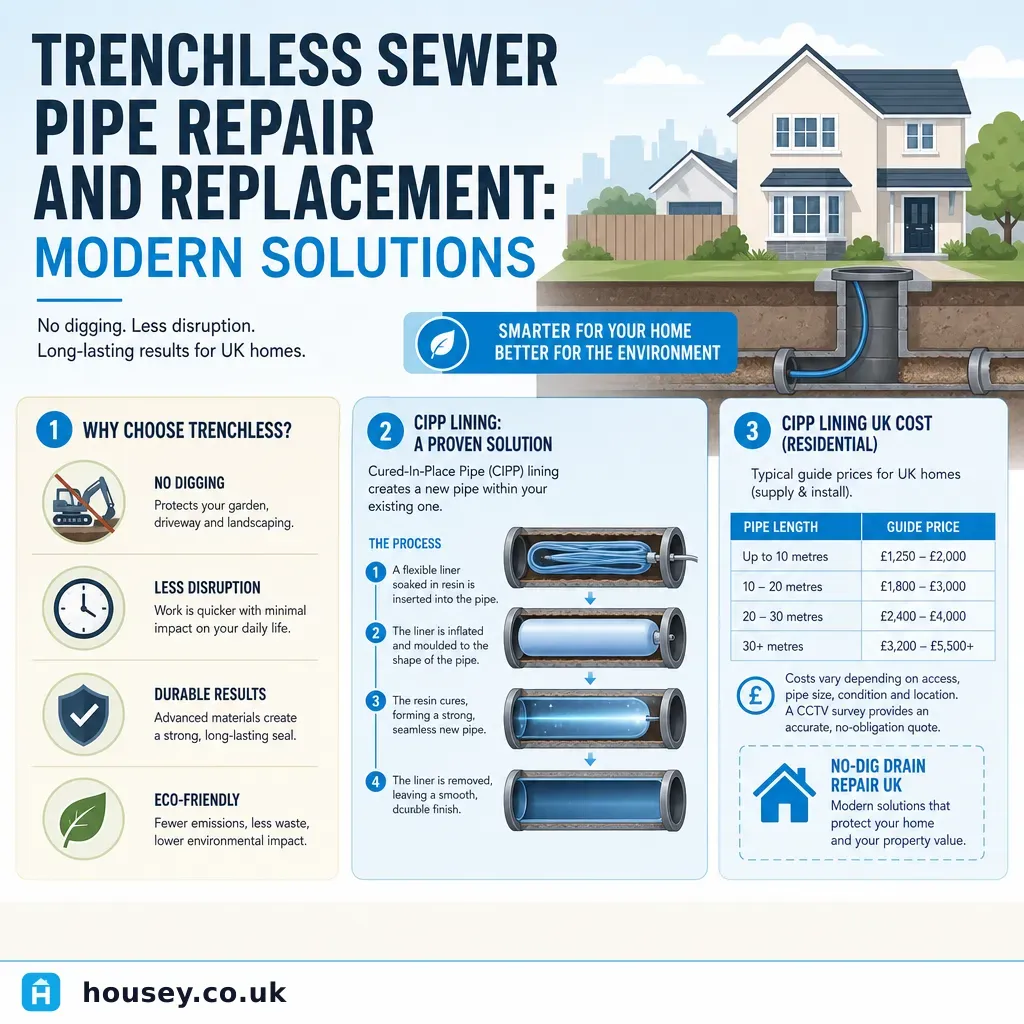
Trenchless Sewer Pipe Repair and Replacement: Modern Solutions
Trenchless sewer pipe repair uses methods such as CIPP (cured-in-place pipe) lining and pipe bursting to rehabilitate or replace underground drain pipes with minimal excavation.
 Improvement & Build
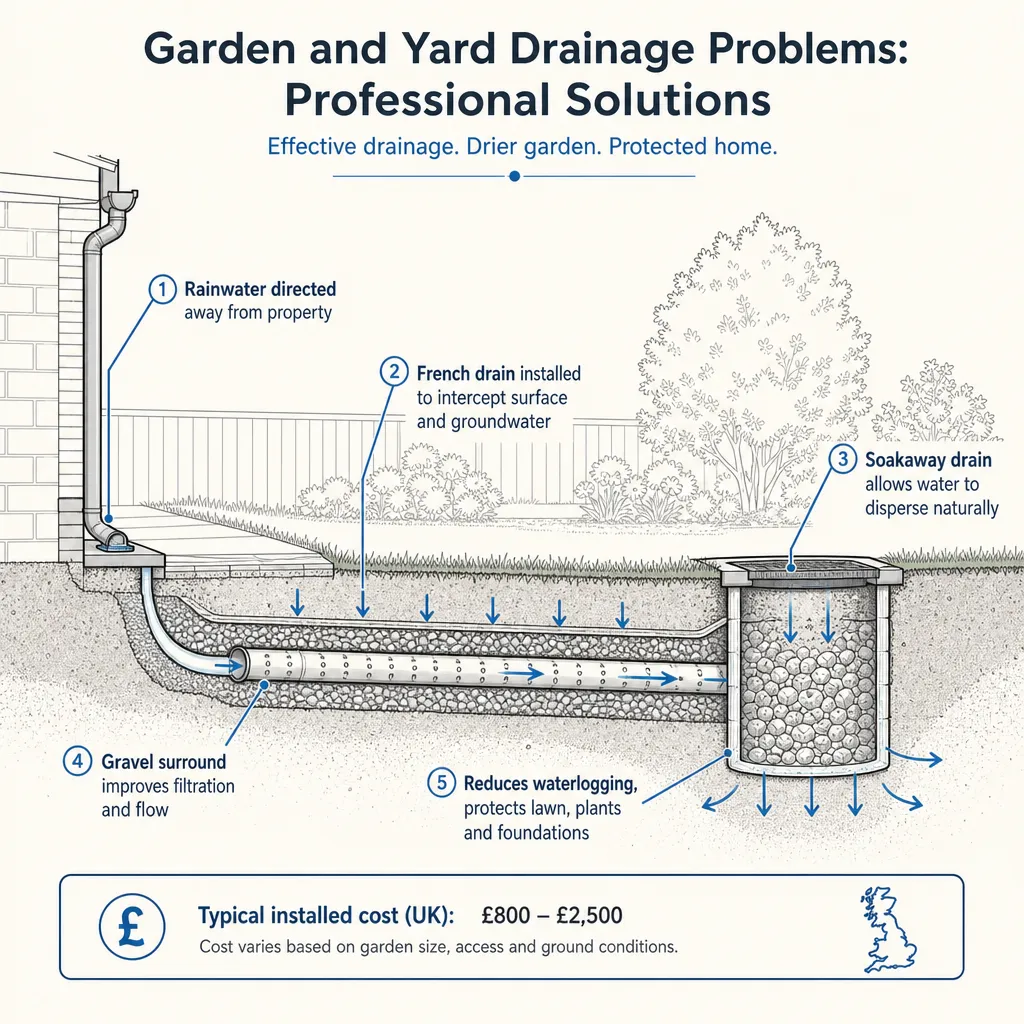
Garden and Yard Drainage Problems: Professional Solutions
Garden drainage problems in the UK are most often caused by clay soil, impermeable surfacing, or insufficient ground fall.
 Improvement & Build
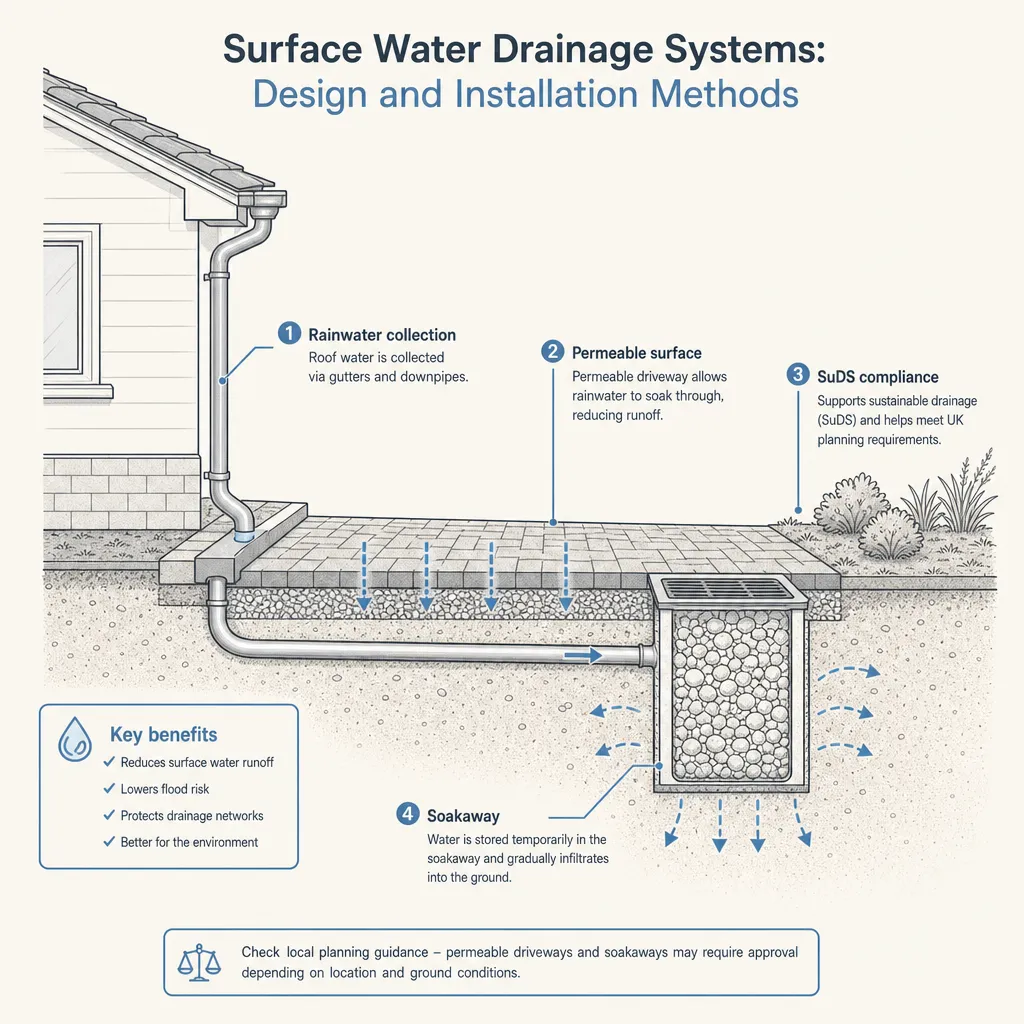
Surface Water Drainage Systems: Design and Installation Methods
Surface water drainage manages rainwater run-off from roofs, driveways, and hard standing.
 Improvement & Build
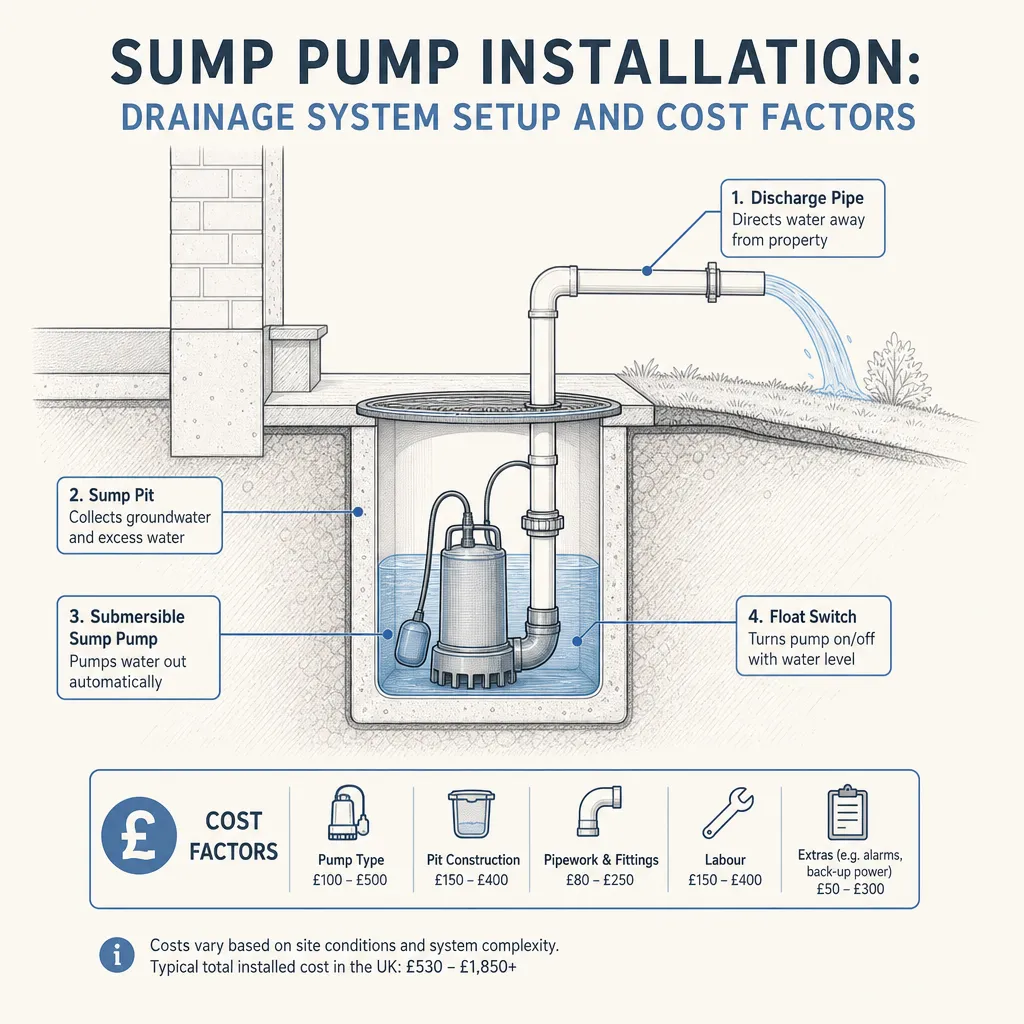
Sump Pump Installation: Drainage System Setup and Cost Factors
Sump pump installation in the UK typically costs £800–£2,500 for a submersible pump in a new or existing pit, including excavation, liner, discharge pipework, and connection to a suitable outlet.
 Improvement & Build
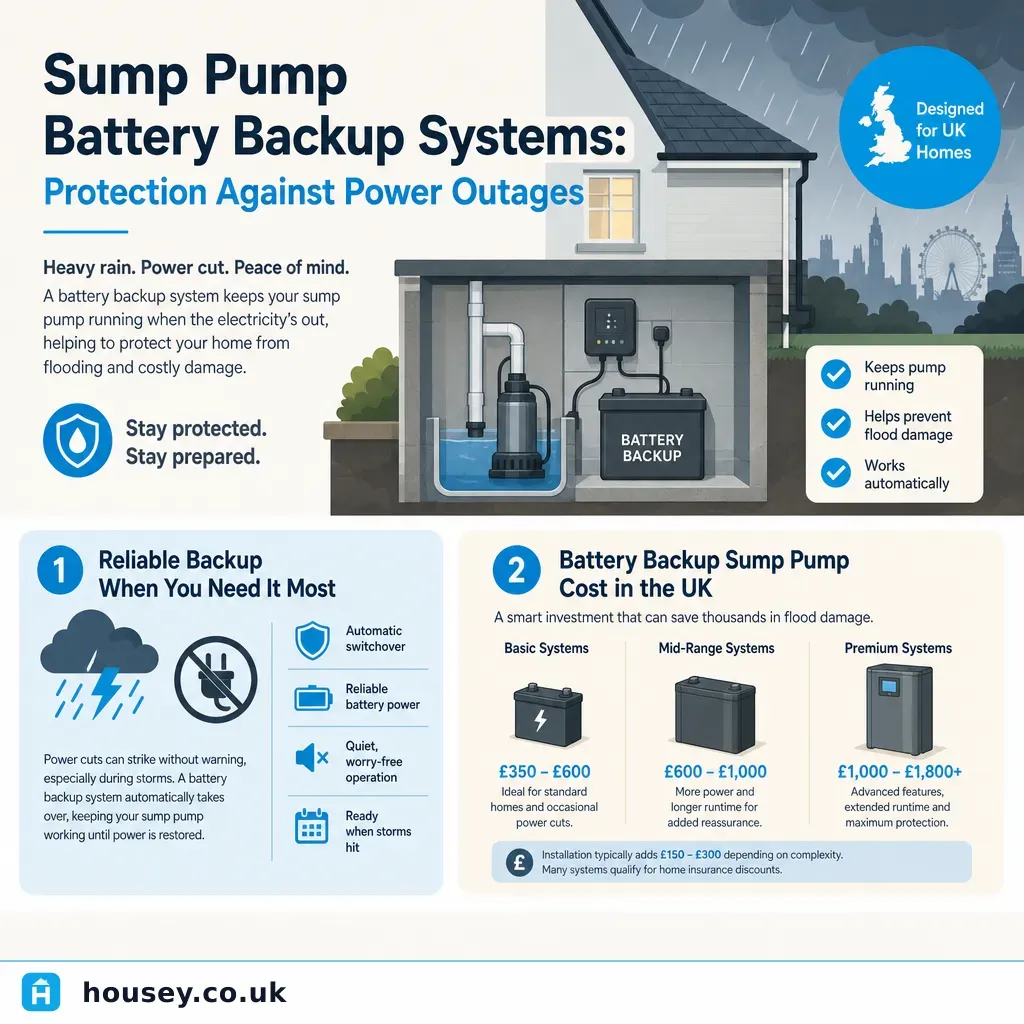
Sump Pump Battery Backup Systems: Protection Against Power Outages
A sump pump battery backup activates automatically when mains power fails, continuing to pump water from your sump pit to protect against flooding.