Sump Pump Battery Backup Systems: Protection Against Power Outages
By Housey · Last reviewed 25th of May 2026
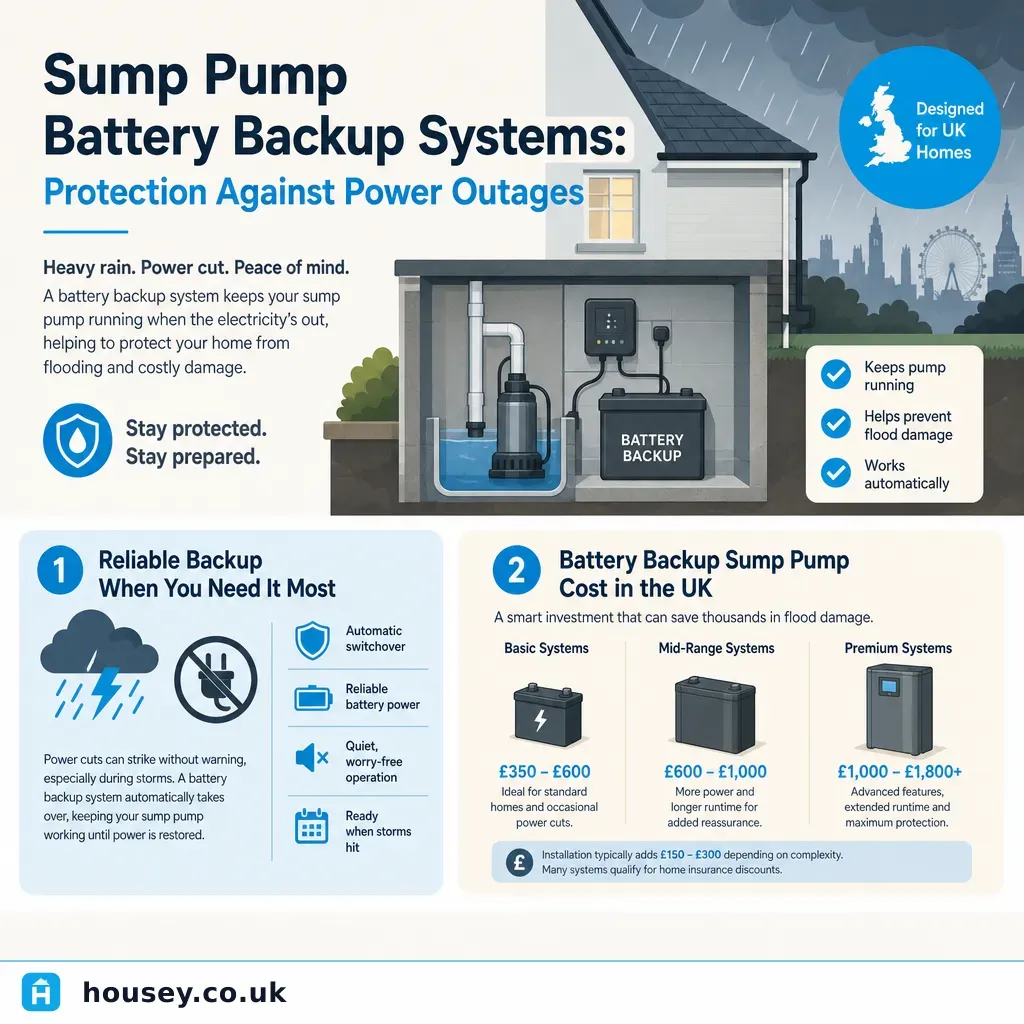
Sump Pump Battery Backup Systems: Protection Against Power Outages
For UK homeowners who rely on a sump pump to keep a basement, cellar, or sub-basement void dry, a power cut at the wrong moment — during a severe storm, for instance — can undermine an otherwise well-designed drainage system. Battery backup systems address this specific vulnerability, providing automatic secondary power when mains electricity fails. With UK winters bringing extended periods of heavy rainfall and, in some regions, prolonged power interruptions, a backup system is a practical component of any flood-resilience strategy where a sump pump plays a central role.
Key points
- A mains-powered sump pump stops when mains electricity fails; a battery backup system provides automatic secondary power, typically activating within seconds.
- Sealed lead-acid (SLA) batteries are the most common choice for residential sump pump backup in the UK; lithium-iron-phosphate (LFP) alternatives offer longer service life at a higher upfront cost.
- Typical run times for SLA backup systems in residential use are 4–8 hours of continuous pumping under normal inflow conditions.
- SLA and AGM backup batteries typically require replacement every 3–5 years; the backup function should be tested manually at least once a year.
- Flood Risk Zones 2 and 3, as designated by the Environment Agency in England, identify areas where backup drainage capacity is most critical.
Why battery backup matters for UK properties
Mains electricity and severe weather are not reliably concurrent. UK distribution networks experience planned and unplanned outages throughout the year, and major storm events — precisely the conditions under which a sump pump works hardest — can knock out local supply for hours at a time.
For properties in Flood Risk Zones 2 or 3 (Environment Agency designations for England; Natural Resources Wales provides equivalent flood map guidance), or in areas with a documented history of surface water flooding, a battery backup is a meaningful contribution to flood resilience. The Environment Agency's flood map for planning is a practical first check on your property's exposure.
For homes with basements converted under Permitted Development rights or following full planning consent, maintaining a working drainage system is often essential to habitability below ground. A backup system ensures that a power cut during heavy rainfall does not immediately compromise that habitability.
Types of sump pump battery backup system
Dedicated DC backup pump with battery: A separate pump powered by a battery sits in the sump pit alongside the primary AC pump. When mains power fails, the DC pump activates automatically via a float switch. This is the most widely used arrangement in UK residential properties and the most straightforward to retrofit.
Combination unit: Primary pump and battery backup are integrated into a single housing. More compact, but replacement of the primary pump requires changing the full unit.
UPS (uninterruptible power supply): A mains UPS supplies AC power to the existing pump for a limited period. Less common for sump applications — the power draw of a typical pump means a UPS capable of meaningful run time is bulky and expensive for residential use.
Battery type comparison
Battery type | Typical run time | Service life | Relative cost | Maintenance requirement |
|---|---|---|---|---|
Sealed lead-acid (SLA) | 4–8 hours | 3–5 years | Lower | Check charge indicator every 6 months |
AGM (absorbed glass mat) | 5–10 hours | 4–6 years | Moderate | Minimal; sealed unit |
Lithium-iron-phosphate (LFP) | 8–16 hours | 8–12 years | Higher | Very low; battery management system managed |
Performance figures are indicative and depend on pump draw, depth of discharge, and ambient temperature. Confirm specifications with your system supplier.
Choosing the right backup capacity
The key question is how long the backup needs to run. In most UK residential applications, this depends on:
- Typical power cut duration in your area — your distribution network operator (DNO) publishes reliability data; Ofgem provides a tool to identify your local DNO.
- How quickly your sump pit fills — a pit that reaches its float switch level within minutes under heavy inflow demands a pump that runs almost continuously, drawing heavily from the battery.
- Whether a water-powered backup is feasible — where mains water pressure is consistently high, a water-powered sump pump can supplement or replace a battery backup in some installations.
As a general guide, a 75Ah SLA battery paired with a typical 0.5 HP backup pump offers approximately 6–10 hours of protection under normal residential inflow conditions.
Installation and ongoing maintenance
Battery backup systems are usually installed by a drainage contractor. The process involves fitting the backup pump in the sump pit, running discharge pipework to the existing outlet, installing the battery unit in a dry accessible location near the sump, and connecting the automatic changeover relay. Most modern units are plug-and-play for the changeover function, but discharge pipework should always be installed by a competent tradesperson to avoid backflow risks.
Ongoing maintenance for SLA and AGM systems:
- Check the battery charge indicator every six months
- Test the backup function by simulating a power cut at least once a year
- Replace the battery within the manufacturer's recommended service interval (typically 3–5 years)
- Inspect the discharge pipework for blockages annually
What to ask before purchasing a battery backup system
Before committing to a system, ask the supplier or installer:
- What is the maximum continuous run time on a full charge at the pump's rated draw?
- Does the unit activate automatically on power failure, or is manual intervention required?
- What charge indicator or alarm does the system include?
- What is the expected battery service life, and what does a replacement battery cost?
- Is the unit rated for use in a damp environment?
- What warranty covers the pump and battery separately?
- Is installation included, and what does it cover?
Red flags: when to seek professional help before purchasing
- Your sump pit fills faster than the primary pump can manage at peak inflow — a backup may only delay the problem; the primary installation may need upgrading first.
- Your basement conversion was completed without building control sign-off — drainage adequacy may be subject to retrospective review before adding further capacity.
- Your primary pump is more than 10 years old — adding a backup to an ageing primary unit may not be cost-effective; consider replacing both at the same time.
- You are in a high flood-risk area and have made a claim on flood insurance — your insurer may impose specific drainage specification requirements.
When to get professional help
A drainage contractor can assess whether your existing sump installation is correctly specified before backup capacity is added. If the sump and primary pump have never been formally inspected, or if the discharge route is uncertain, a professional assessment is the right starting point. Consider getting professional input if your sump system has not been inspected since installation, if the discharge route has not been confirmed for your typical inflow volume, or if an operational backup pump is a condition of your flood insurance policy.
How Housey can help
Housey connects UK homeowners with experienced drainage contractors who can assess your existing sump drainage installation, recommend an appropriate battery backup specification, and carry out the installation to a professional standard — including testing of the automatic failover function.
Frequently asked questions
How long will a sump pump battery backup last during a power cut?
Run time depends on battery capacity and how often the pump needs to activate. A typical sealed lead-acid backup system paired with a standard residential sump pump provides 4–8 hours of continuous operation. Where the pump cycles on and off in moderate inflow conditions — which is normal in most residential scenarios — effective protection can extend to 10–15 hours or more.
Do I need a professional to install a sump pump battery backup?
Many plug-and-play backup units can be installed by a competent DIYer where the existing sump and discharge pipework are already in place. However, where the sump forms part of a basement conversion or flood resilience strategy, professional installation by a drainage contractor is advisable to ensure the failover function is correctly commissioned and the discharge route is confirmed as adequate.
How often should I replace the battery in my backup system?
Sealed lead-acid batteries typically need replacing every 3–5 years. AGM variants may last 4–6 years, while lithium-iron-phosphate alternatives can remain serviceable for 8–12 years. Check the manufacturer's guidance and test the backup function annually to detect capacity degradation before it becomes a problem during a storm or flood event.
Does a battery backup sump pump require building regulations approval?
Adding a battery backup to an existing operational sump pump does not generally require building regulations notification. If the sump forms part of a basement conversion or habitable cellar drainage system, any material change to the drainage arrangement should be checked against the original building control approval. Contact your local authority building control if you are uncertain.
Sources and further reading
- Flood map for planning — Environment Agency
- Flood risk and coastal change guidance — GOV.UK
- Find your electricity network operator — Ofgem
- Property Flood Resilience Action Plan — GOV.UK / DEFRA
Useful next reads
 Improvement & Build
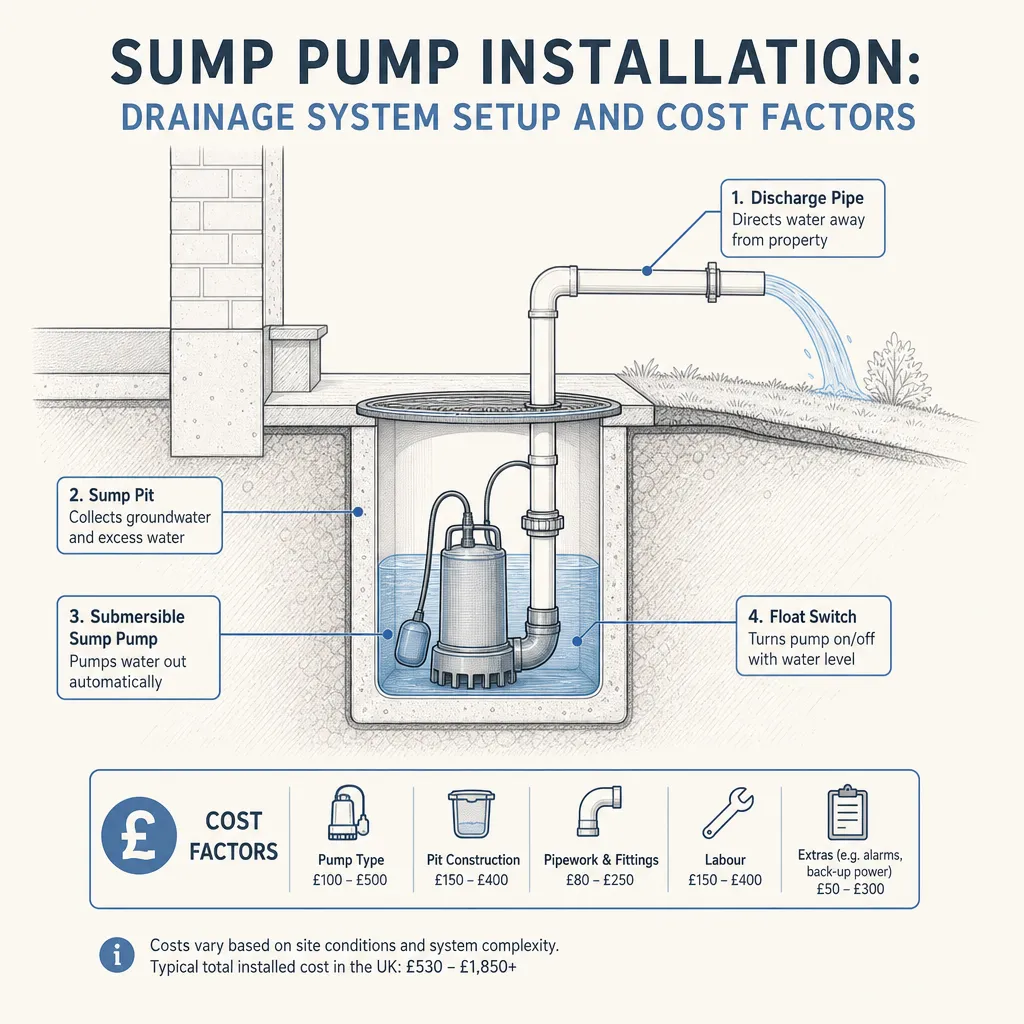
Sump Pump Installation: Drainage System Setup and Cost Factors
Sump pump installation in the UK typically costs £800–£2,500 for a submersible pump in a new or existing pit, including excavation, liner, discharge pipework, and connection to a suitable outlet.
 Improvement & Build
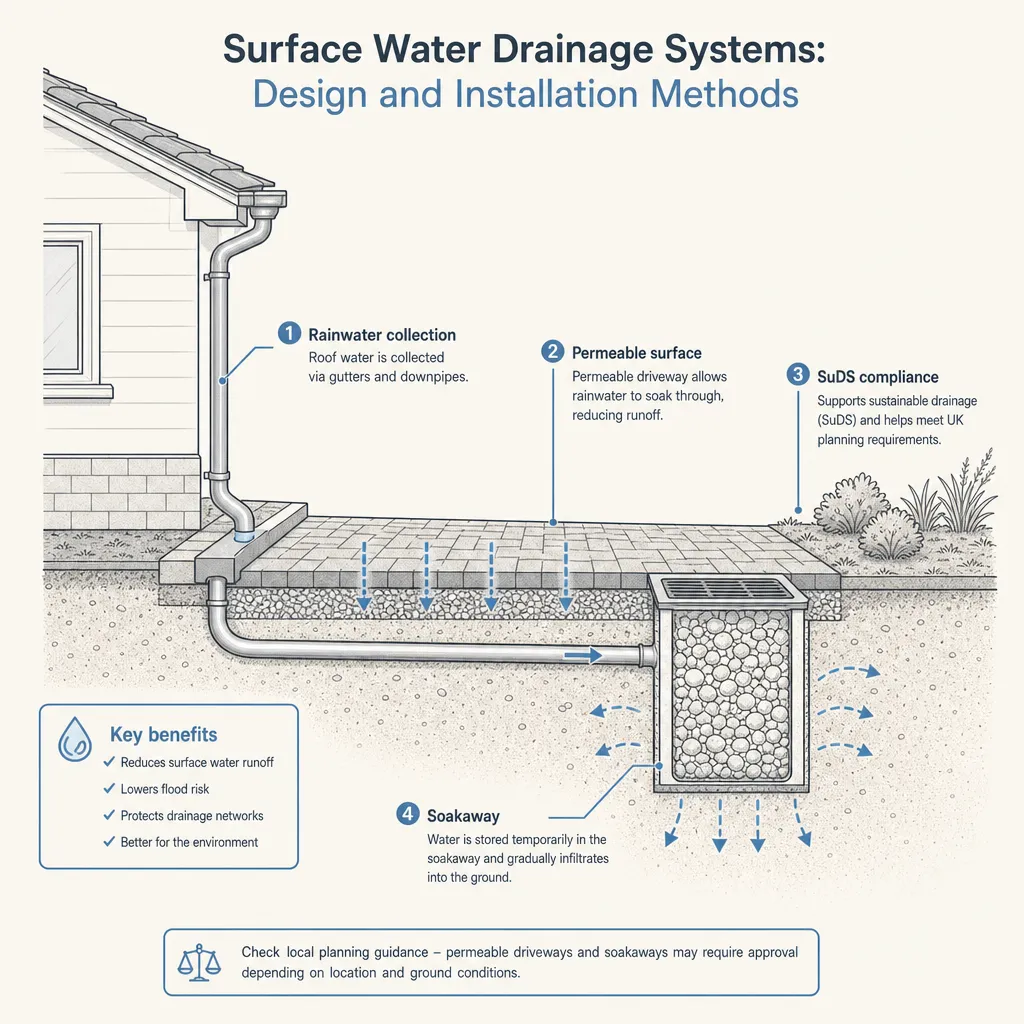
Surface Water Drainage Systems: Design and Installation Methods
Surface water drainage manages rainwater run-off from roofs, driveways, and hard standing.
 Improvement & Build
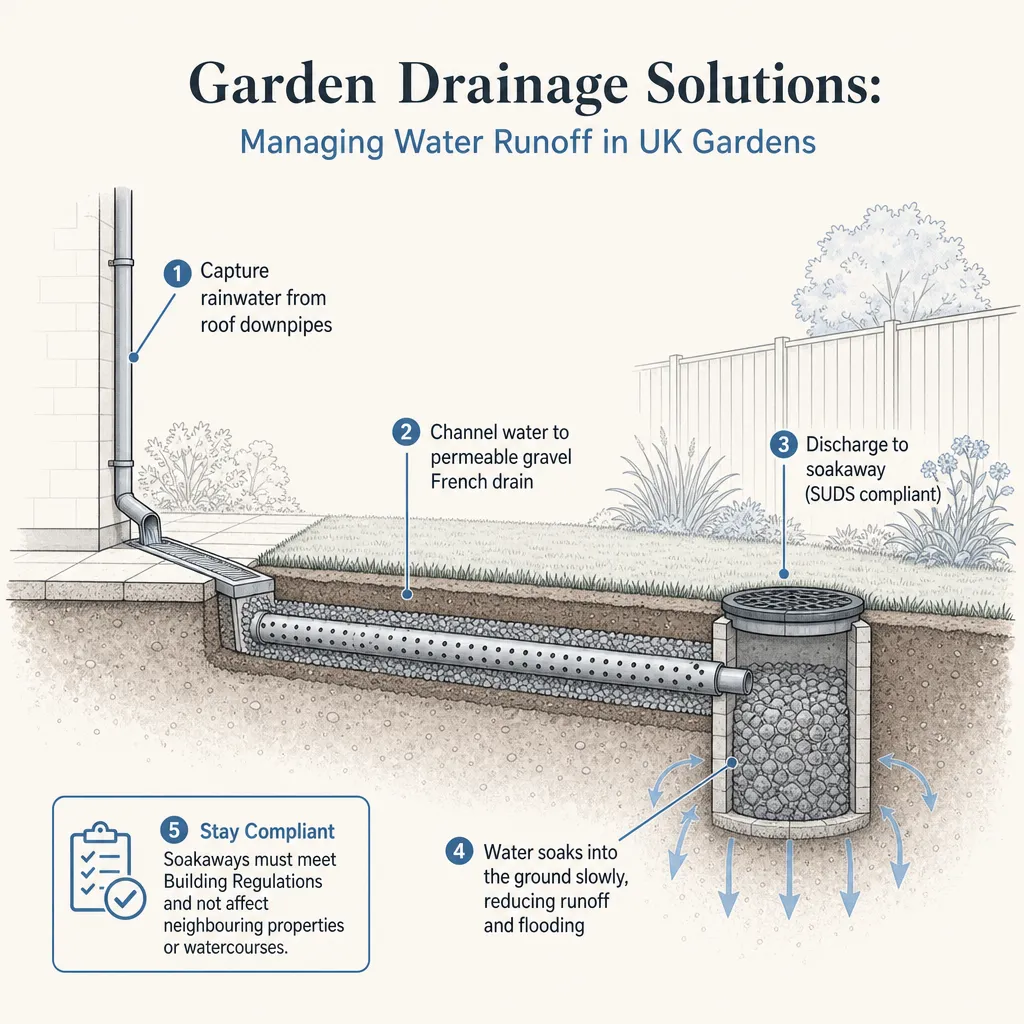
Garden Drainage Solutions: Managing Water Runoff in UK Gardens
Poor garden drainage in the UK is usually caused by clay soil, surface compaction, or too much hard-standing.
 Improvement & Build
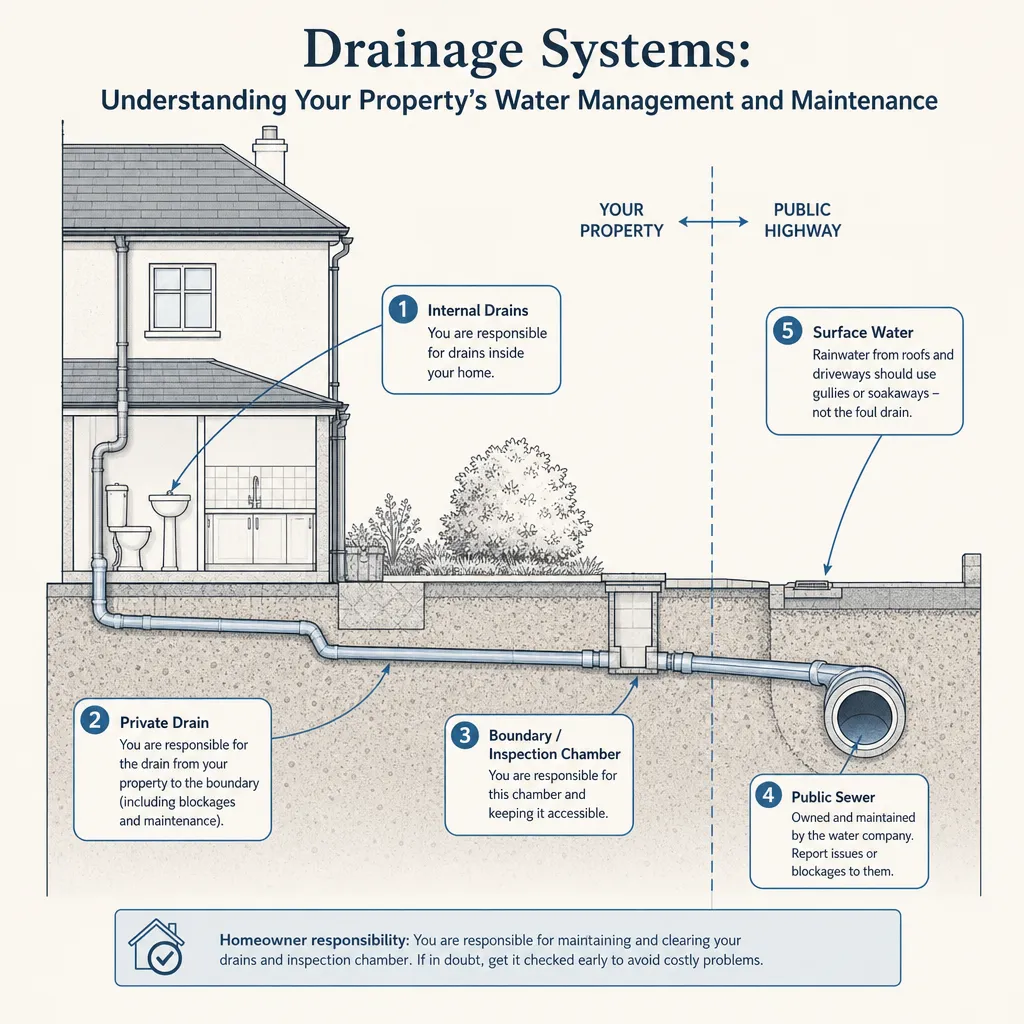
Drainage Systems: Understanding Your Property's Water Management and Maintenance
Most UK homes have separate foul water and surface water drainage systems.
 Improvement & Build
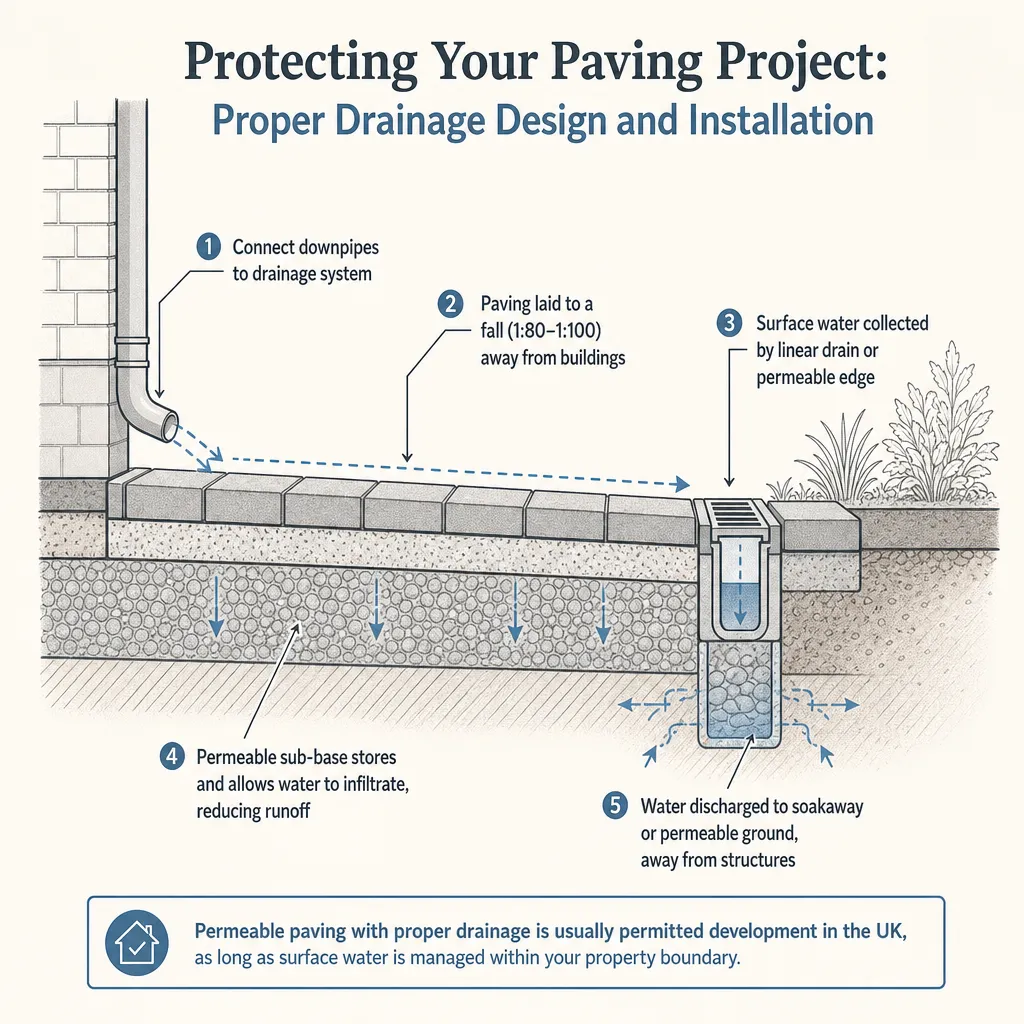
Protecting Your Paving Project: Proper Drainage Design and Installation
Good paving drainage starts with a minimum fall of 1:60 to 1:80 away from buildings, a correctly specified sub-base, and a clear outlet for surface water.