Sump Pump Installation: Drainage System Setup and Cost Factors
By Housey · Last reviewed 25th of May 2026
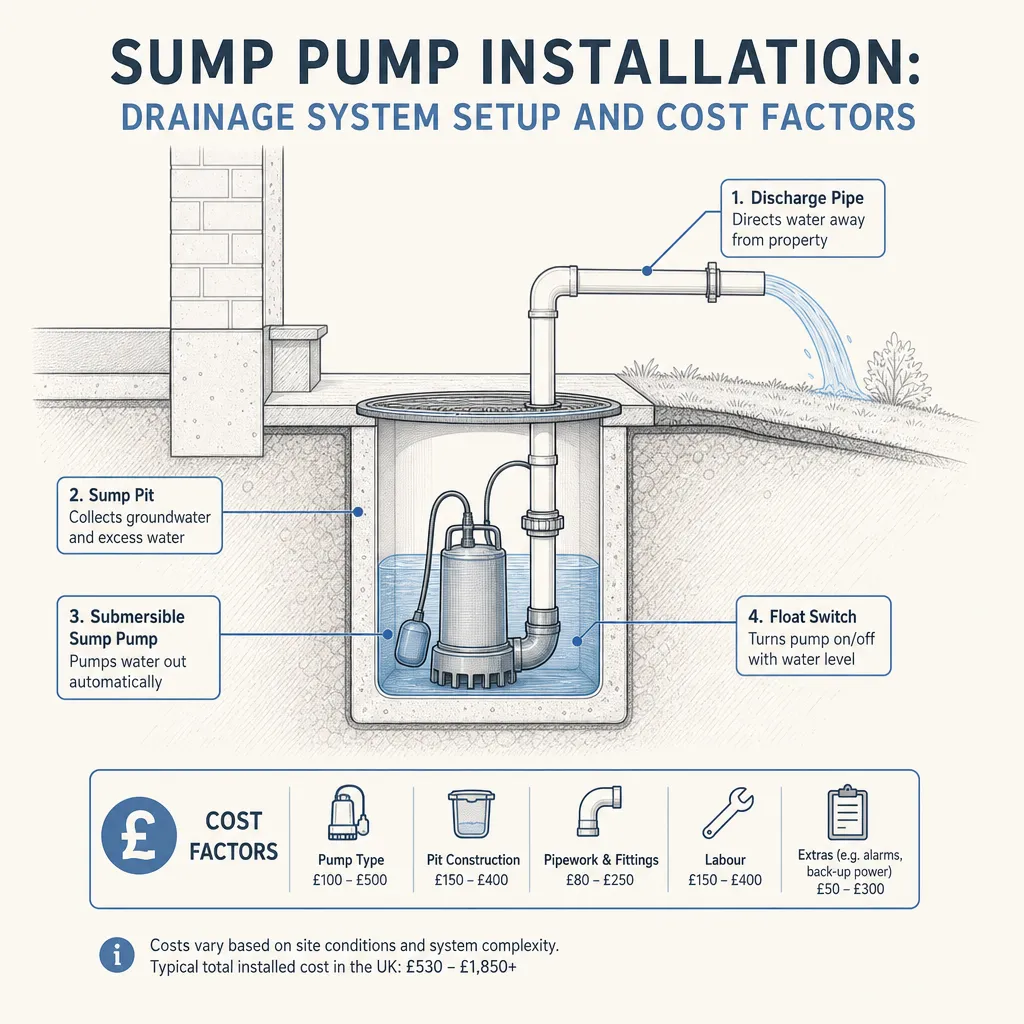
Sump Pump Installation: Drainage System Setup and Cost Factors
A sump pump is the active component of a basement or cellar waterproofing system, collecting water that enters through the structure and pumping it away to a safe discharge point. Installation is most commonly carried out during a basement conversion, as part of a structural waterproofing system using cavity drain membrane, or in response to persistent water ingress in an existing cellar. Understanding the process and key cost drivers helps homeowners plan works realistically and compare contractor quotes with confidence.
Key points
- A sump pump installation involves constructing or preparing a collection pit (sump), fitting a liner, installing the pump, and routing discharge pipework to a suitable outlet — typically a surface drainage gully, soakaway, or drainage ditch.
- Submersible sump pumps are the most widely used type in UK residential installations; they sit within the sump pit and are designed to operate while submerged.
- Building Regulations Approved Document H (Drainage and Waste Disposal) and, where the sump forms part of a basement conversion, Approved Document C (Moisture Resistance) are the primary applicable standards.
- Discharge must be directed to a suitable drainage outlet; discharging to a public sewer generally requires prior consent from the water authority under the Water Industry Act 1991.
- Indicative installation costs range from £800 to £2,500 for a standard residential submersible pump and new sump pit, before electrical connection costs (Indicative UK costs, last reviewed 2026-05-25).
Which type of sump pump suits your property?
The two main pump types used in UK residential properties differ in how the motor is positioned relative to the water in the pit.
Submersible vs pedestal: a comparison
Feature | Submersible pump | Pedestal pump |
|---|---|---|
Motor position | Submerged inside the sump pit | Mounted above the pit on a pedestal |
Typical UK application | Basement conversions, cavity drain systems | Shallower pits, where motor access is a priority |
Noise level | Quieter (motor muffled by water) | More audible motor noise |
Typical service life | 5–15 years | 10–20 years (motor stays dry) |
Maintenance access | Pump must be removed from pit | Motor accessible without entering pit |
Best for | Most UK residential applications | Shallow or narrow pits, easier servicing |
Which approach should you choose?
- Choose a submersible pump if you have a basement conversion, a cavity drain waterproofing system, or if the sump will be sealed with a lid.
- Choose a pedestal pump if your sump pit is shallow (typically less than 500mm deep), if ongoing service access is a priority, or if the pit geometry makes submersible installation difficult.
- Ask a drainage contractor to specify the pump if the installation forms part of a BS 8102 compliant structural waterproofing system — pump capacity must match the design inflow rate.
- Check with your water authority and local drainage authority whether your intended discharge route requires consent under the Water Industry Act 1991 or Land Drainage Act 1991.
The sump pump installation process
A standard residential sump pump installation follows this sequence:
- Site assessment — the drainage contractor identifies the lowest point of water entry, the most practical sump location, and the available discharge routes.
- Pit excavation or preparation — a new sump pit is excavated (typically 500–800mm internal diameter, 700–1,000mm deep for standard residential use) or an existing pit is cleaned and inspected.
- Liner installation — a polypropylene or high-density polyethylene sump liner is placed to prevent pit wall collapse and maintain a clean collection chamber.
- Pump installation — the submersible pump is positioned in the liner with a float switch set to the appropriate activation level.
- Discharge pipework — pipework is run from the pump outlet to the discharge point, incorporating a non-return valve to prevent backflow.
- Electrical connection — the pump is connected to a dedicated circuit; a Part P registered electrician must carry out and certify this work.
- Testing and commissioning — the system is tested by simulating water inflow; float switch activation, pump operation, and discharge flow rate are all verified.
- Cover and access — the sump is fitted with a sealed lid (required in cavity drain systems) or a removable cover for future maintenance access.
Where the sump forms part of a basement conversion with a cavity drain membrane, installation is coordinated with membrane laying and is often specified and warranted as a single integrated waterproofing system by the contractor.
What affects the cost of sump pump installation?
- Ground conditions — dense clay, made ground, or rock significantly increases excavation time and cost.
- Access — a basement with low head height or a restricted access staircase adds labour time.
- Discharge route — a short run to an existing surface water gully is cheaper than routing pipework across the full footprint of the property or installing a new soakaway.
- Pump specification — pumps are rated in litres per minute; heavier inflow demands a higher-capacity unit at greater cost.
- Dual-pump systems — where flood risk justifies redundancy, two pumps are installed as duty and standby, roughly doubling the pump cost.
- Battery backup — adding a battery backup system typically adds £300–£800 to the installation cost.
- Electrical works — a new dedicated circuit from the consumer unit requires a Part P registered electrician.
Indicative cost ranges
Indicative UK costs, last reviewed 2026-05-25. Costs vary significantly by region, site access, and specification. Obtain at least three itemised quotes.
Installation type | Typical indicative cost |
|---|---|
Pump replacement in existing lined pit | £300–£600 |
New sump pit and submersible pump | £800–£1,800 |
New sump pit, pump, and battery backup | £1,200–£2,500 |
Dual-pump system (duty and standby) | £1,800–£3,500 |
Full basement waterproofing with integrated sump system | £5,000–£15,000+ |
Homeowner preparation checklist
Before instructing a drainage contractor for sump pump installation:
When to get professional help
Standard sump pump installation in a straightforward existing cellar with good access is a contained project for an experienced drainage contractor. Specialist input is recommended when:
- The installation is part of a BS 8102 structural waterproofing system — a PCA-accredited contractor should design and install it.
- Structural cracking or ground movement is evident alongside the water ingress — commission a structural engineer's report before proceeding.
- The property is listed or in a conservation area — check with your local planning authority before any excavation.
- The discharge route leads to a watercourse or ordinary watercourse — Land Drainage Act consent from the lead local flood authority may be required.
How Housey can help
Housey connects homeowners across the UK with qualified drainage contractors who can assess your drainage situation, specify the right pump and sump configuration, and manage the installation from excavation through to commissioning and building control sign-off where required.
Frequently asked questions
Does sump pump installation require building regulations approval?
It depends on context. A like-for-like pump replacement in an existing sump pit generally does not require notification. If the sump is installed as part of a basement conversion, habitable cellar, or structural waterproofing system, building regulations approval under Part C (moisture resistance) and Part H (drainage) is likely required. Confirm requirements with your local authority building control before starting work.
Where should the sump pump discharge to?
The discharge must lead to a suitable drainage point outside the property — typically a surface water gully, soakaway, or drainage ditch. Discharge directly to a public surface water sewer usually requires prior consent from the water authority. Discharge to a combined sewer is not generally permitted for sump drainage. Your drainage contractor should confirm the compliant discharge route for your specific property.
How long does a sump pump last?
A submersible sump pump in residential use typically lasts 5–15 years, depending on build quality, operating frequency, and maintenance. Annual inspection and float switch testing, periodic sump pit clearing, and timely battery replacement where a backup is fitted are the main maintenance tasks. Quality units from recognised manufacturers often carry 2–5 year warranties.
Can I install a sump pump myself?
The physical sump pit and pump installation may be achievable for an experienced DIYer in straightforward circumstances. However, the electrical connection to a dedicated circuit must be carried out and certified by a Part P registered electrician. For installations forming part of a structural waterproofing or basement conversion system, professional contractor involvement is strongly recommended to ensure the design is adequate and warranted.
Sources and further reading
- Building Regulations: Approved Document H (Drainage and Waste Disposal) — GOV.UK
- Building Regulations: Approved Document C (Site Preparation and Moisture Resistance) — GOV.UK
- BS 8102:2022 Code of Practice for Protection of Below Ground Structures Against Water from the Ground — BSI Group
- Property Care Association: basement waterproofing guidance — Property Care Association
- Water Industry Act 1991 — legislation.gov.uk
Useful next reads
 Improvement & Build
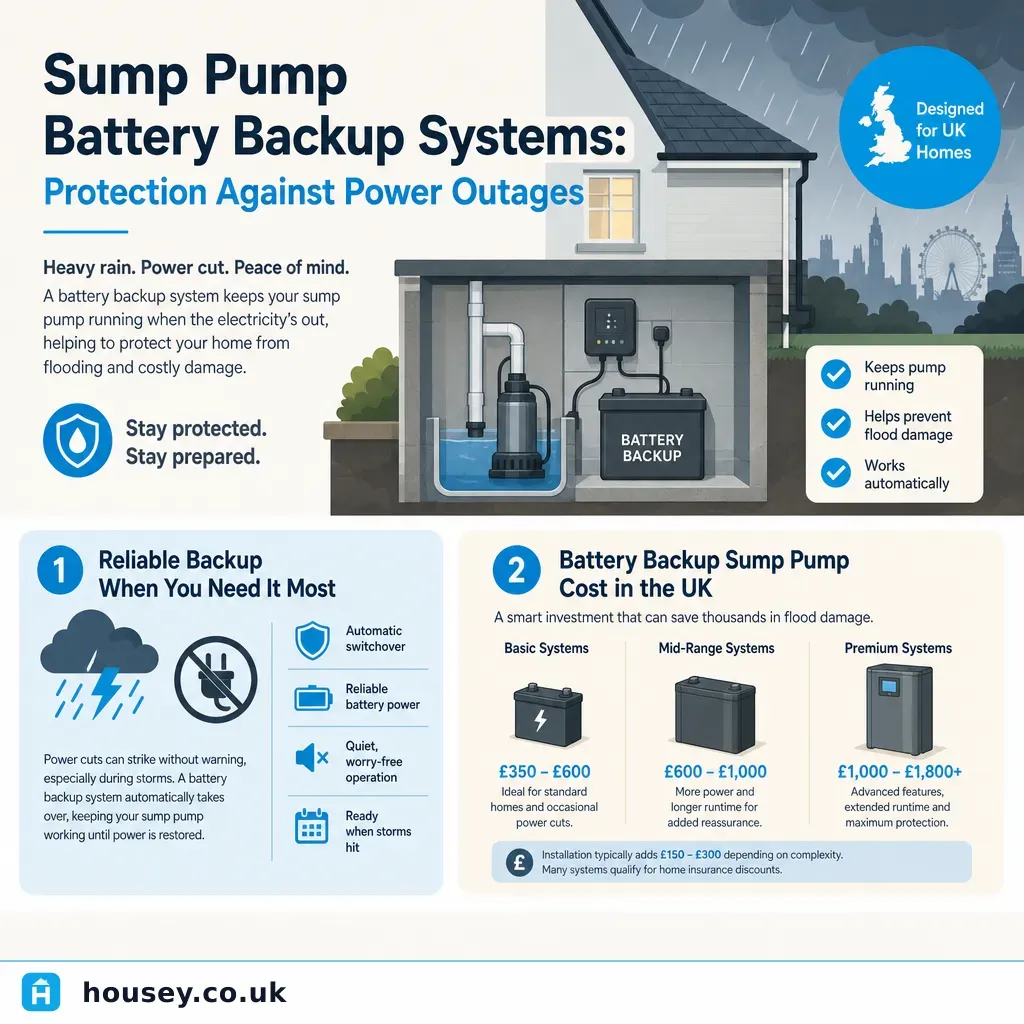
Sump Pump Battery Backup Systems: Protection Against Power Outages
A sump pump battery backup activates automatically when mains power fails, continuing to pump water from your sump pit to protect against flooding.
 Improvement & Build
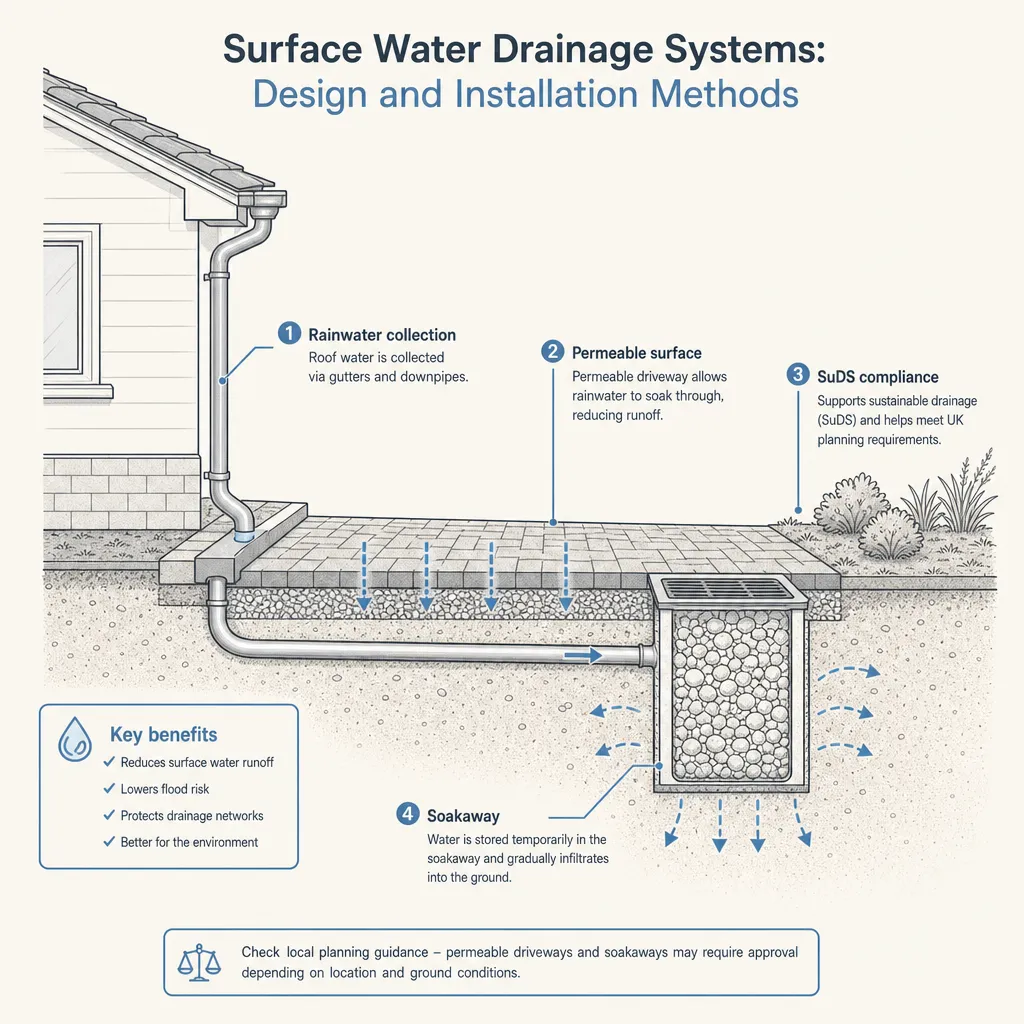
Surface Water Drainage Systems: Design and Installation Methods
Surface water drainage manages rainwater run-off from roofs, driveways, and hard standing.
 Improvement & Build
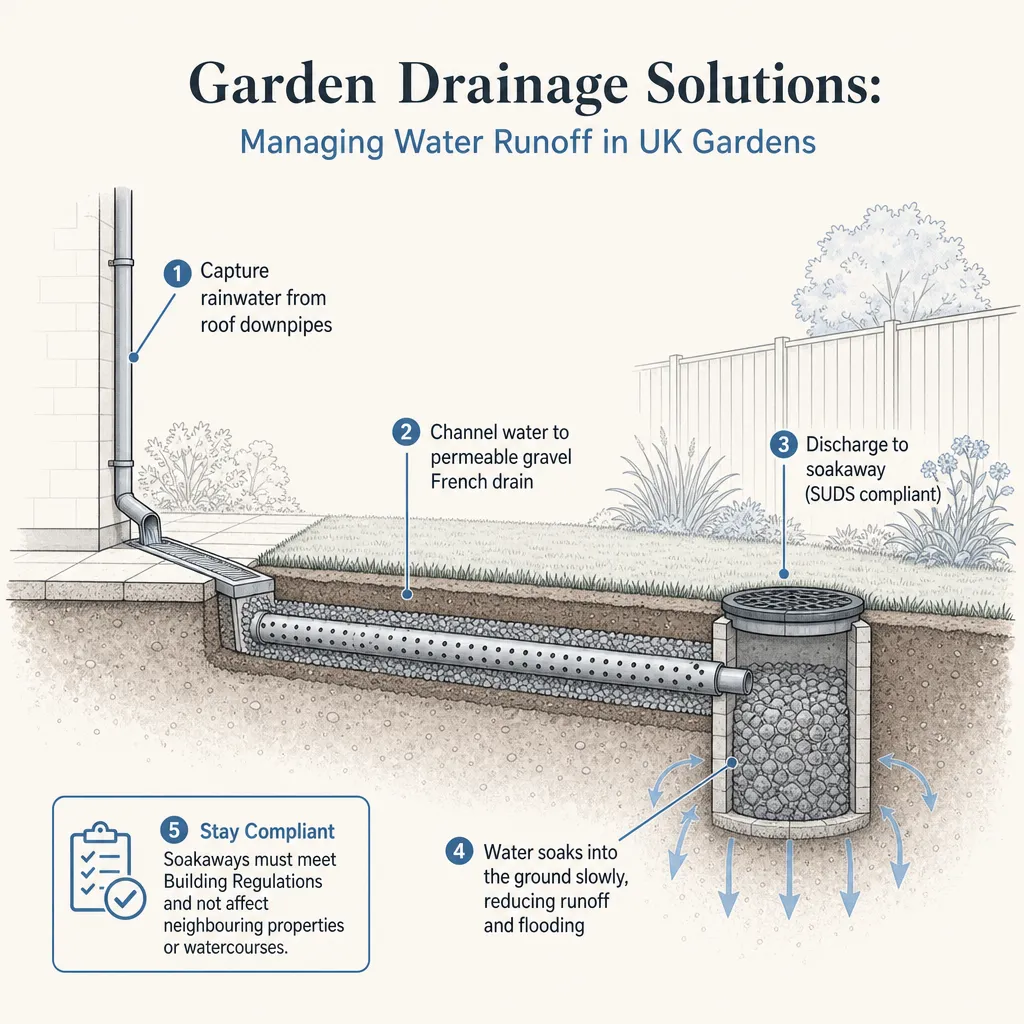
Garden Drainage Solutions: Managing Water Runoff in UK Gardens
Poor garden drainage in the UK is usually caused by clay soil, surface compaction, or too much hard-standing.
 Improvement & Build
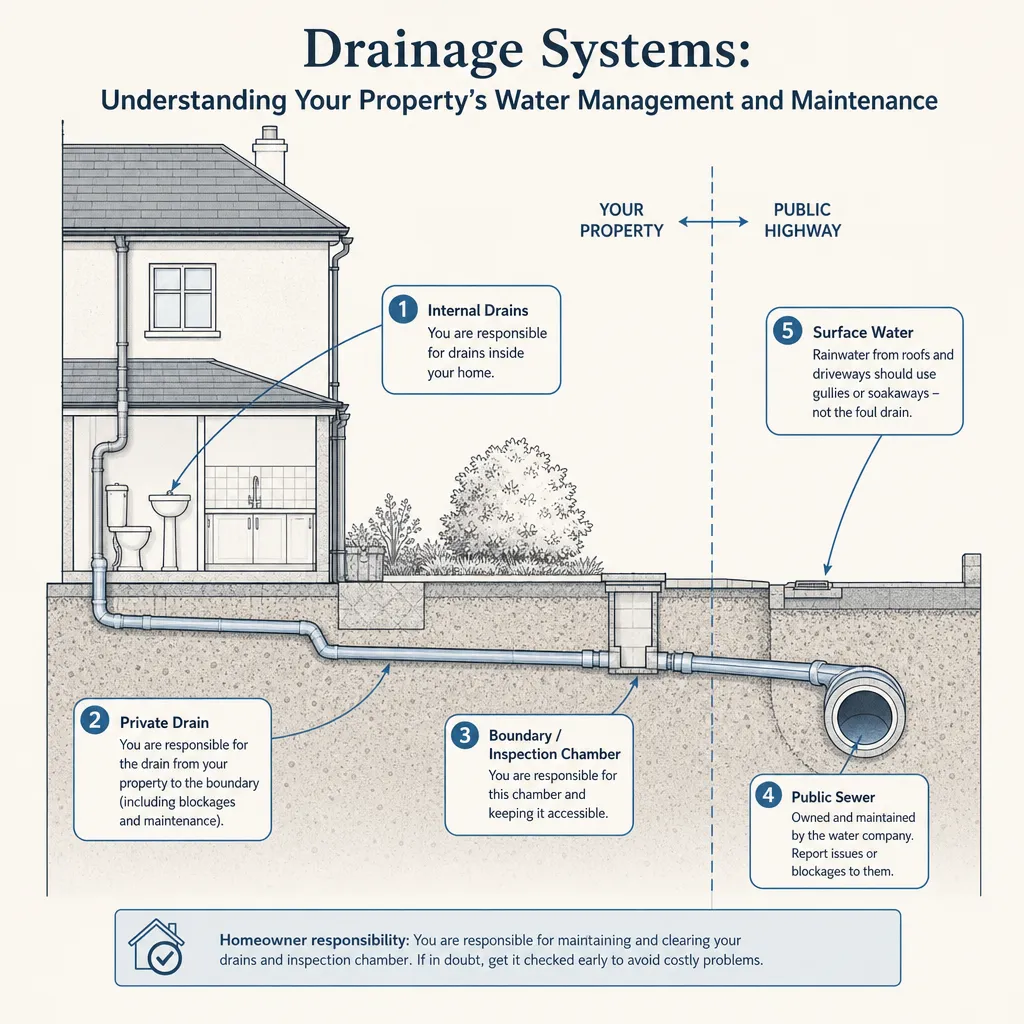
Drainage Systems: Understanding Your Property's Water Management and Maintenance
Most UK homes have separate foul water and surface water drainage systems.
 Improvement & Build
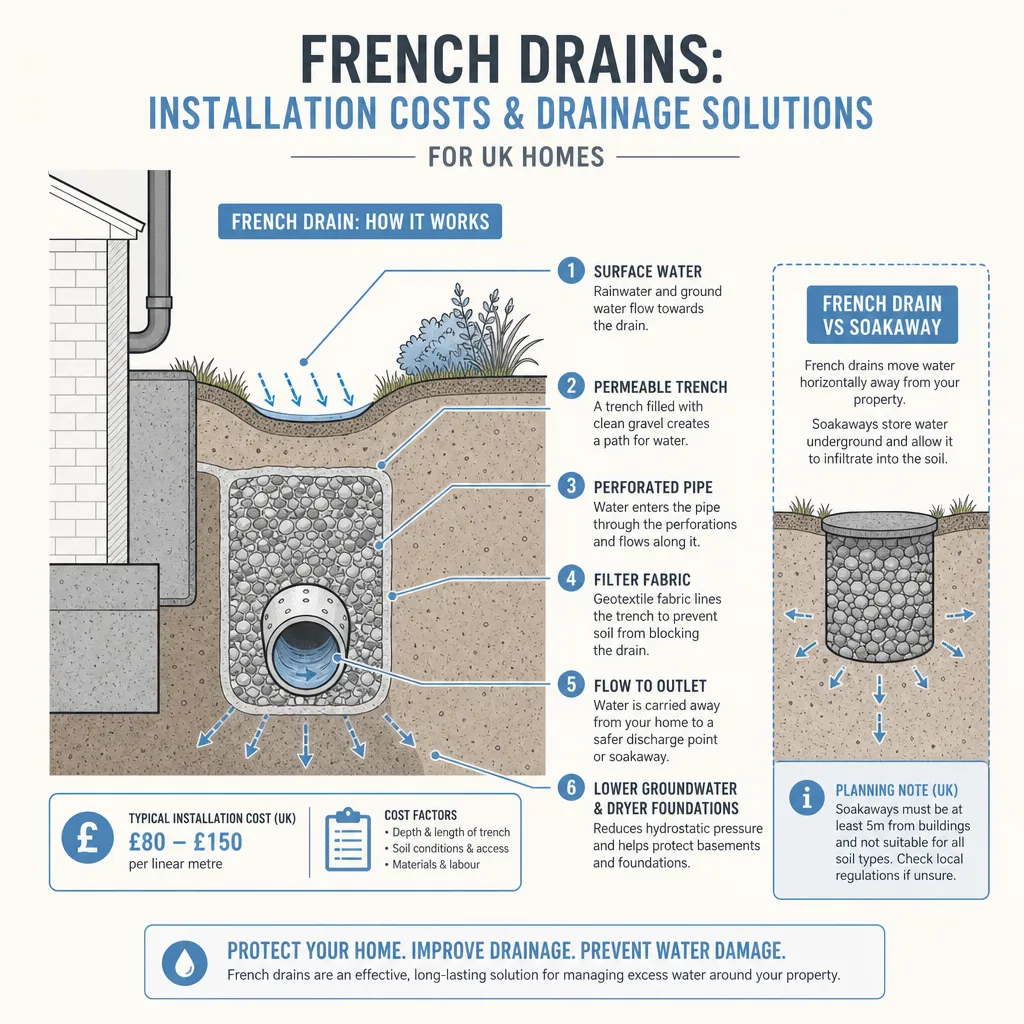
French Drains: Installation Costs and Drainage Solutions
A French drain is a gravel-filled trench with a perforated pipe that redirects groundwater away from a building or waterlogged area.