Maintaining slate roofs: essential care and upkeep guidance
By Housey · Last reviewed 1st of June 2026
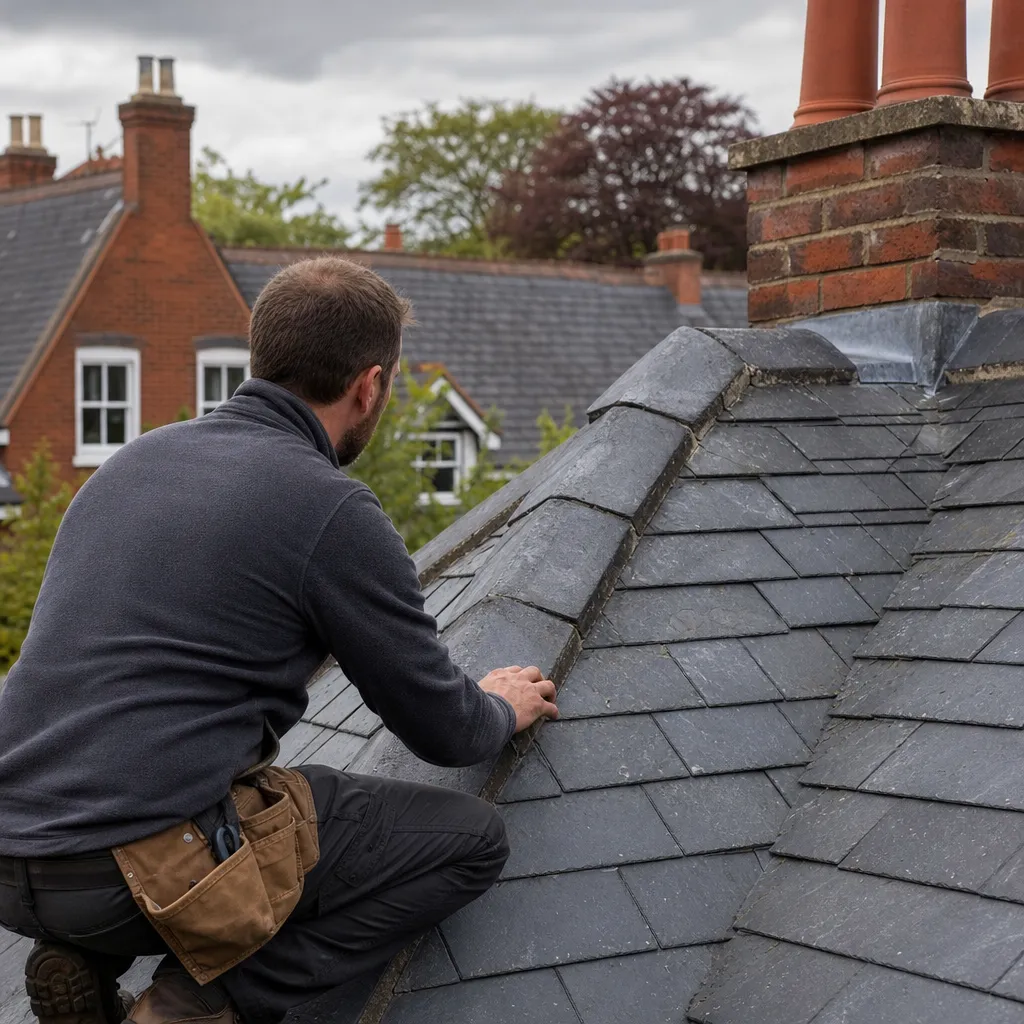
Maintaining slate roofs: essential care and upkeep guidance
Natural slate is one of the most durable roofing materials available, and many Victorian and Edwardian properties across the UK still carry their original roof coverings after more than a century. But longevity depends on consistent care. Neglecting minor faults — a single slipped slate, a failing lead flashing, or a blocked valley — can allow water ingress that damages roof timbers, plasterwork, and insulation at a repair cost far exceeding what preventative maintenance would have cost. Understanding what a slate roof needs, and how to spot problems early, helps homeowners and buyers make better-informed decisions before faults escalate.
Key points
- High-quality Welsh or Cumbrian slate (such as Penrhyn, Ffestiniog, or Burlington) can last 100–150 years or more; Spanish and Chinese slate typically lasts 30–60 years — the provenance of your slates significantly affects maintenance expectations and replacement timescales.
- The most common cause of premature slate roof failure is not the slates themselves but corroded iron nails ("nail sickness"), failed lead flashings, and deteriorating mortar at ridges and hips.
- A professional roof inspection is advisable every five years, and after any period of severe frost, sustained high winds, or hail — guidance supported by the National Federation of Roofing Contractors (NFRC).
- Ground-level visual checks twice a year — in spring after winter frost cycles and in autumn before the wet season — allow most visible defects to be identified without accessing the roof.
- Replacing a single slate promptly typically costs £150–£300 including access equipment (indicative UK costs, last reviewed 2026-06-01); water damage to roof timbers and internal plasterwork can run to several thousand pounds if left unaddressed.
Understanding your slate roof
Slate roofs are fixed using copper, stainless-steel, or historically wrought-iron nails into timber battens. Each slate overlaps the course below, with the lap designed for the roof pitch — a typical double-lap installation on a 30° pitch provides two full layers of slate at every point on the roof.
Natural vs fibre-cement slate: Not all slate-effect roofs use natural stone. Fibre-cement slates (such as Cembrit or Eternit) are widely used in 20th-century construction and last around 30–50 years. They are generally heavier and larger than natural slate and cannot always be replaced on a like-for-like basis without checking batten spacing and the structural capacity of the roof.
Welsh vs imported slate: Penrhyn and Ffestiniog slates from North Wales, and Burlington slate from Cumbria, are considered the most durable — some Welsh slate roofs have lasted well over 150 years. Spanish and Chinese slate is more affordable but typically softer and more prone to delamination (splitting into layers), particularly in the freeze-thaw cycles common across much of the UK in winter.
Seasonal maintenance checklist
Spring checks (March–May)
Autumn checks (September–November)
Red flags: signs that need immediate attention
Do not wait for a scheduled inspection if you notice any of the following:
- Daylight visible through the roof from inside the loft — a gap is present and water ingress is likely.
- Water staining on ceilings or walls after heavy rain — indicates active ingress somewhere in the roof covering.
- Slates on the ground or in the gutters — slipped slates leave sections of underlay or bare batten exposed to the elements.
- Lifted or displaced ridge tiles — ridges are vulnerable to wind loading and a displaced tile allows water and birds into the roof space.
- A sagging or distorted roof plane — may indicate rotten or failed roof timbers; this warrants immediate professional assessment.
- Green or black streaking running down the wall below the eaves — suggests overflowing gutters or a failed valley lining rather than simple moss growth.
- Lead flashing lifted away from a chimney or dormer — a visible gap at the flashing is a direct water entry point and should be repaired without delay.
How to extend a slate roof's lifespan
Keep gutters and valleys clear
Blocked gutters are one of the most preventable causes of slate roof damage. Overflowing water saturates rafter feet, fascias, and soffits, leading to rot that may require a partial re-roof to rectify. Fitting leaf guards reduces maintenance frequency if large trees overhang the roof.
Treat moss carefully — do not pressure-wash
Moss holds moisture against the slate surface and can contribute to frost damage over time. Biocide treatments applied by a competent contractor can reduce moss without mechanical damage. Pressure washing is not appropriate for slate roofs — the force dislodges slates, damages nibs, and disrupts the lap, potentially introducing new points of water entry.
Repair flashings promptly
Lead flashings at chimney stacks, dormers, valleys, and abutments typically fail before the slates themselves. Code 4 or Code 5 lead (as specified by the Lead Sheet Association) should last 50–60 years, but older or thinner lead deteriorates sooner, particularly where mortar pointing covering the top edge has cracked. Repointing a chimney flashing costs a fraction of repairing the timber damage that follows prolonged water ingress.
Address nail sickness before it spreads
When iron nails corrode and fail, slates begin to slip progressively — this is known as "nail sickness." If more than 20–25% of slates on a section are affected, a partial re-nail or re-hang is usually more economical than replacing individual slates one by one. A qualified roofer can carry out a nail sickness assessment to advise the most appropriate intervention.
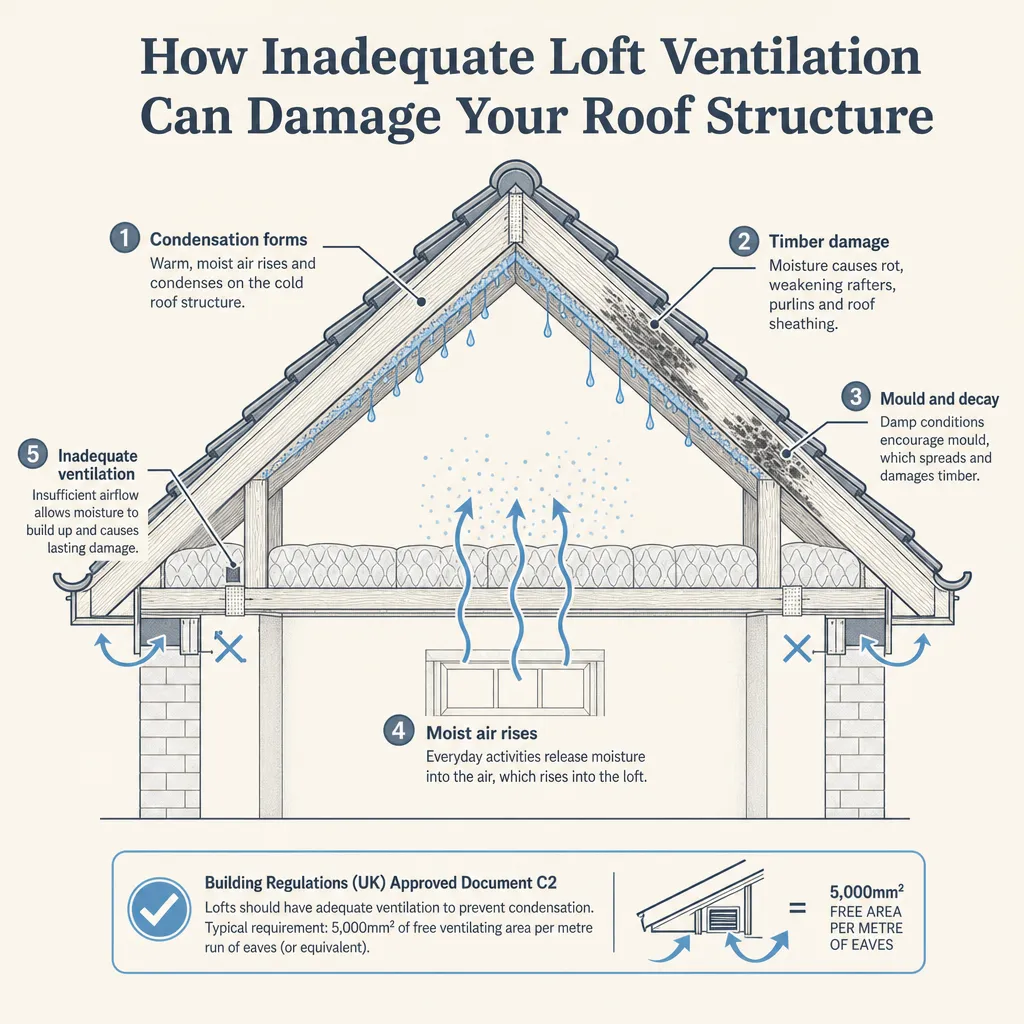
Maintain loft ventilation
Approved Document F (Ventilation) sets minimum ventilation requirements for roof spaces. Poor ventilation causes interstitial condensation on timber rafters and underlay, accelerating decay even when the external covering is intact. Insulation upgrades should not block eaves ventilation paths — check that any loft insulation work has maintained clear airflow from the eaves.
When to get professional help
Working at height on a roof is hazardous and should not be attempted by homeowners. Instruct a qualified roofer when:
- Any slate is missing, slipped, or cracked — do not attempt to access the roof yourself.
- You observe daylight from inside the loft, water staining on ceilings, or wet insulation.
- Ridge, hip, or valley work is needed — mortar, lead, and ridge tiles require competent installation to ensure a weathertight finish.
- You suspect nail sickness affecting a significant section of the roof.
- The roof plane appears distorted or sagging — a structural issue may underlie the visible defect and may require assessment beyond a standard roof inspection.
- You are buying or selling a property with a slate roof — a professional roof survey or RICS Level 3 Home Survey will assess the condition and remaining lifespan of the slates, flashings, and structure.
A specific defect survey focused on the roof can be a cost-effective way to investigate a particular area of concern before commissioning broader works.
How Housey can help
Housey can connect you with qualified roofers experienced in natural slate repair, re-hanging, and maintenance, as well as specialists who can carry out a professional roof survey to give you a clear condition assessment and recommended maintenance programme. If a defect has been flagged during a purchase survey or your own inspection, a specific defect survey can provide the detailed diagnosis needed before appointing a contractor.
Frequently asked questions
How long does a natural slate roof last in the UK?
High-quality Welsh or Cumbrian slate can last 100–150 years or more with good maintenance. Spanish and Chinese slate typically lasts 30–60 years. The overall lifespan of a slate roof is usually limited by the flashings, nails, and ridge mortar rather than the slates themselves — routine maintenance of these elements extends the serviceable life of the whole roof.
How often should a slate roof be inspected?
A ground-level visual check twice a year (spring and autumn) is advisable for most properties. A professional inspection by a qualified roofer is recommended every five years, or sooner after severe weather, or if you notice any slipped slates or signs of water ingress. Properties in exposed coastal or upland locations may benefit from more frequent professional checks.
Can individual slates be replaced without re-roofing?
Yes — individual slate replacement is usually cost-effective when defects are isolated. However, if nail sickness is affecting 20–25% or more of slates in a section, a partial re-hang is often more economical than continued single-slate repairs. A qualified roofer can assess the extent of nail failure and advise the most appropriate approach.
Is moss on a slate roof a problem?
Moss retains moisture and can contribute to frost damage over time, and may partially block valleys and gutters. Pressure washing is not suitable as it can dislodge slates and damage the lap. A biocide treatment applied by a competent contractor is the safer approach, combined with regular gutter clearing to prevent moisture build-up.
Does repairing a slate roof require planning permission?
Routine like-for-like repairs generally do not require planning permission in England. However, if your property is listed or in a conservation area, you may need listed building consent or conservation area consent before altering the roof covering — even for repairs using matching materials. Always check with your local planning authority before starting work on a listed building.
Sources and further reading
- National Federation of Roofing Contractors: slate and tile roofing guidance — NFRC
- Historic England: technical advice on roofing maintenance and repair — Historic England
- Approved Document F: Ventilation — GOV.UK
- Lead Sheet Association: flashings specification guidance — Lead Sheet Association
- RICS home survey standards — RICS
Useful next reads
 Surveys & Inspections
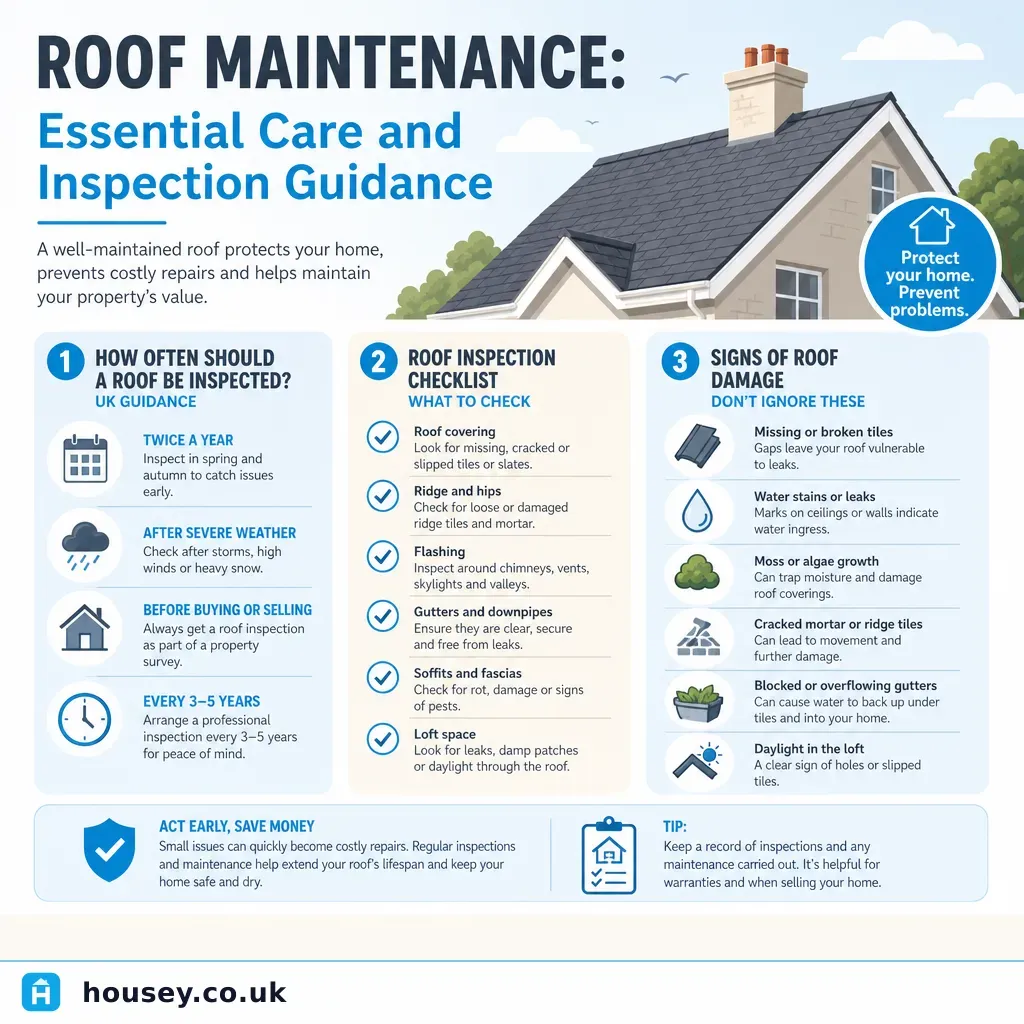
Roof Maintenance: Essential Care and Inspection Guidance
UK roofs should be visually inspected at least once a year — ideally in autumn before winter — and after any significant storm.
 Surveys & Inspections
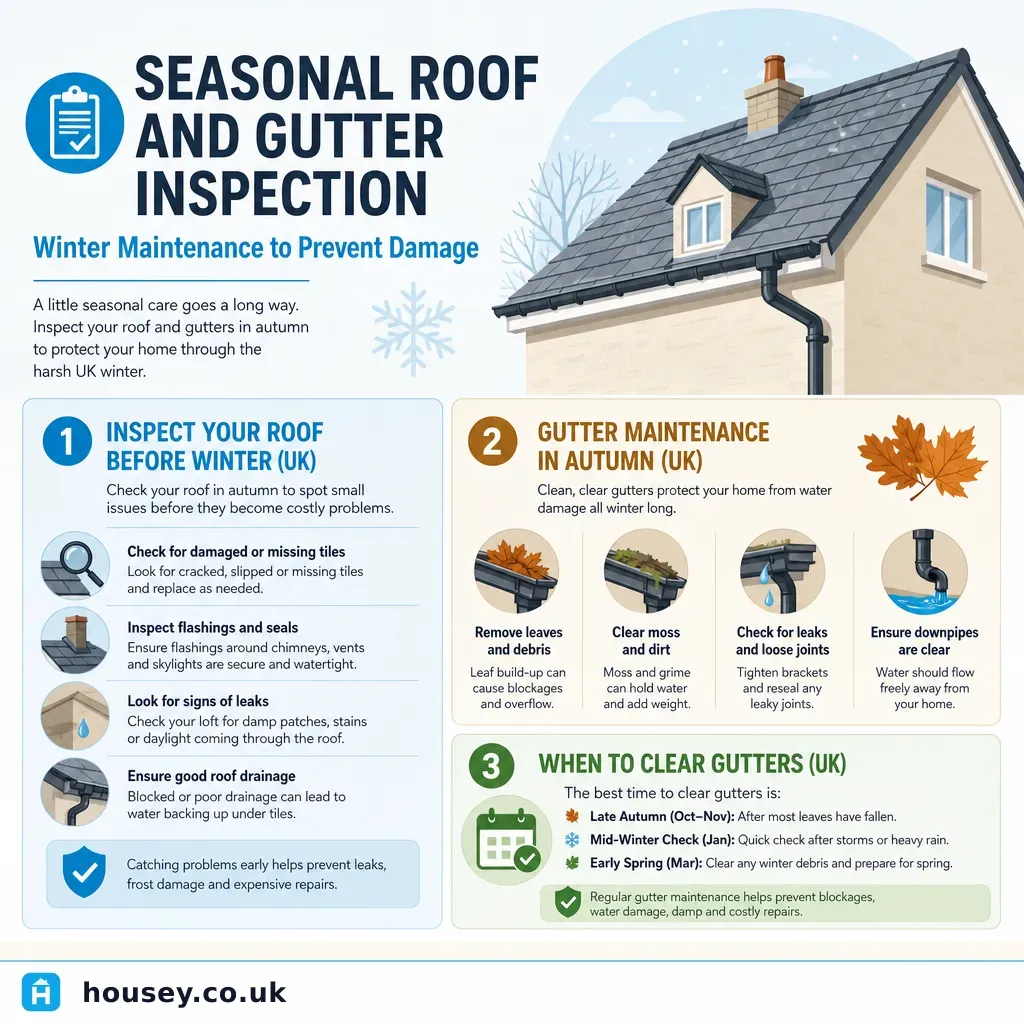
Seasonal Roof and Gutter Inspection: Winter Maintenance to Prevent Damage
UK roofs and gutters need inspection before and after winter to catch loose tiles, blocked gutters, and failed flashings before they cause water ingress.
 Surveys & Inspections
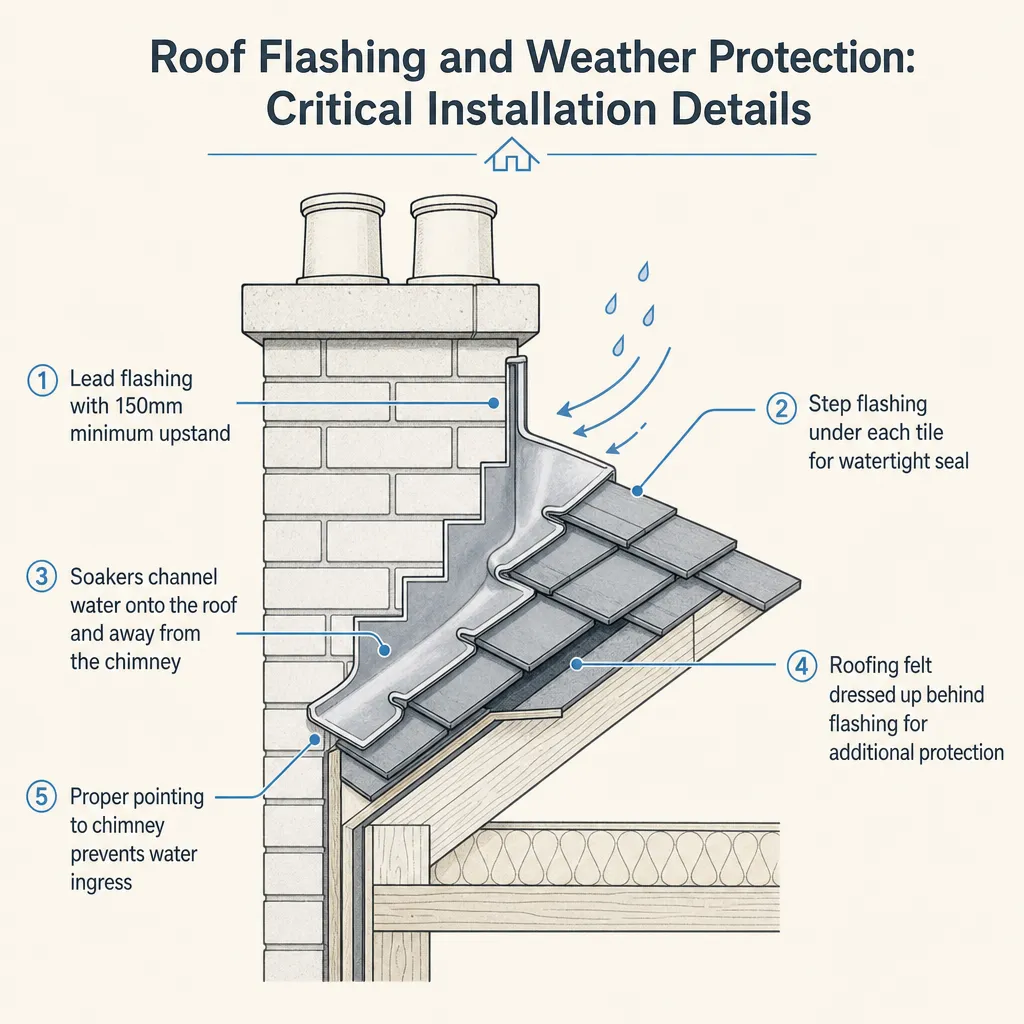
Roof Flashing and Weather Protection: Critical Installation Details
Roof flashing is waterproof material — usually lead or a metal alternative — installed at junctions between roof surfaces and vertical elements such as chimneys, dormers, and abutments.
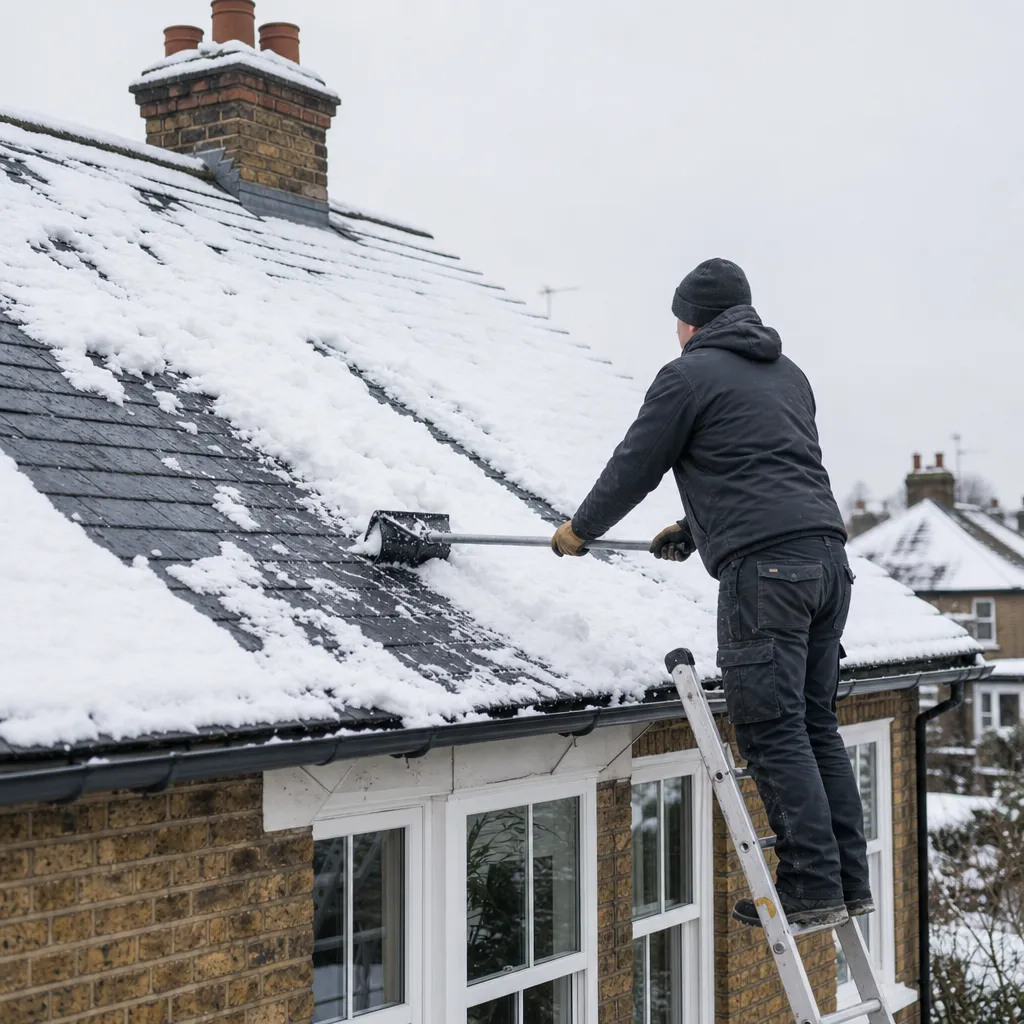 Surveys & Inspections
Roof Snow Removal: Safety and Structural Considerations
In the UK, most pitched roofs in good condition can tolerate typical snowfall without intervention.
 Surveys & Inspections
How Inadequate Loft Ventilation Can Damage Your Roof Structure
Inadequate loft ventilation allows warm, moist air to condense on cold roof timbers.