Roof Snow Removal: Safety and Structural Considerations
By Housey · Last reviewed 1st of June 2026
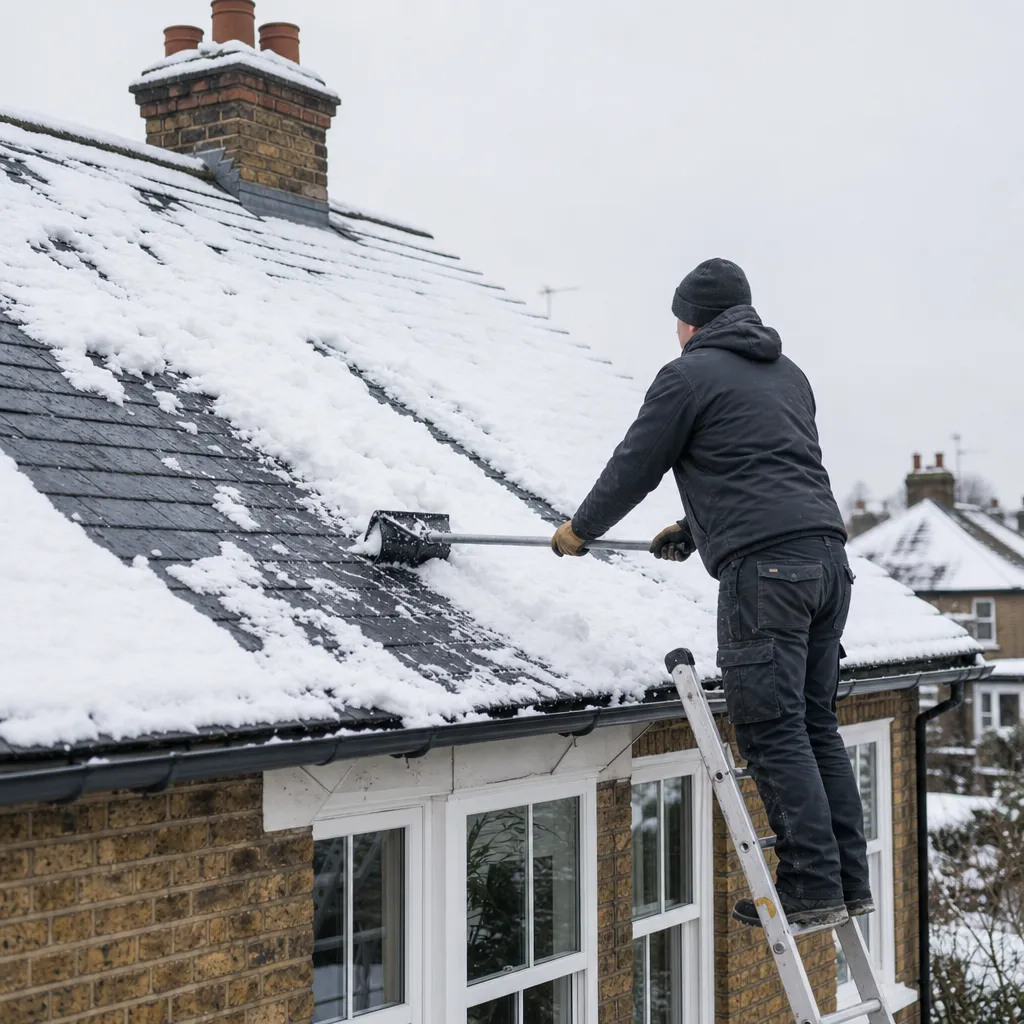
Roof Snow Removal: Safety and Structural Considerations
Snow accumulation on UK roofs is relatively uncommon across most of the country, but when it does occur — particularly during prolonged cold spells or in northern and upland regions — it raises genuine questions about structural load, roof integrity, and the risks of intervention. Homeowners in older properties, those with flat or low-pitch roofs, and anyone who has noticed existing roof defects are right to take the question seriously.
Key points
- Fresh snow weighs approximately 80–100 kg/m³; wet, compacted snow can reach 300–500 kg/m³, significantly increasing load on a roof structure.
- UK Building Regulations and BS EN 1991-1-3 (Eurocode 1) set snow load design values by geographic zone — properties in Scotland and upland areas are designed to higher thresholds than lowland southern England.
- Working at height beyond 2 m is regulated under the Work at Height Regulations 2005 (SI 2005/735); removing snow from a roof without professional equipment carries serious fall risk.
- Flat roofs and older roofs with pre-existing defects — deteriorated joists, rot, or prior storm damage — are most vulnerable to snow overload.
- A RICS Level 2 or Level 3 roof survey after a heavy snow event can identify load-related damage before it becomes a structural emergency.
How much snow load can a UK roof handle?
Snow load design is governed by BS EN 1991-1-3 and its UK National Annex. Characteristic ground snow load varies from around 0.3–0.5 kN/m² in lowland southern England to over 1.0 kN/m² in the Scottish Highlands. Roofs are designed to meet the expected load for their location, but several factors can reduce effective capacity in practice:
- Age and condition of roof timbers — Victorian and Edwardian properties may have undersized or degraded rafters.
- Roof pitch — Snow tends to slide off steeper pitched roofs (above approximately 30°) more readily. Flat roofs (below 10° pitch) accumulate snow without natural shedding.
- Drifting — Wind-driven snow can concentrate load in valleys, behind parapets, and around dormer windows, creating localised overloading even when overall depth appears modest.
- Previous damage — Existing rot, insect attack, or storm damage reduces the load-carrying capacity of roof timbers.
As a rough guide, 30 cm of fresh snow on a 50 m² flat roof can add around 1,500–2,000 kg. Wet or compacted snow multiplies this considerably. Indicative load figures only — structural capacity must be assessed professionally for your specific property.
When is snow on a roof dangerous?
For most well-maintained UK homes, light to moderate snowfall poses no immediate structural risk. Risk increases with snow depth, duration, drifting, and any pre-existing weakness in the roof structure.
Red flags — act immediately if you notice these
- Creaking or cracking sounds from the ceiling or roof structure during or after snowfall.
- New cracks appearing in ceiling plasterwork, particularly if linear or running to room corners.
- Doors or windows sticking that were previously free — a possible indicator of structural movement.
- Visible roof sag or deformation when viewed from ground level.
- Water ingress appearing during the thaw — snow melt can exploit cracked flashings or damaged tiles.
- Snow depth exceeding 30 cm on a flat roof, or visible wind-driven drifting behind parapets or into roof valleys.
If any of these signs are present, contact a structural engineer or qualified roofing contractor before attempting any intervention yourself.
Should you remove snow from your roof?
For most UK homes experiencing typical snowfall — under 15–20 cm on a pitched roof in good condition — the roof will cope without intervention. Snow often clears naturally within a few days as temperatures rise.
However, the question "should I remove it?" is separate from "can I safely remove it?" — and the answer to the second question is almost always: not yourself.
Decision tree: what should you do?
- Monitor from ground level if snow depth is under 20 cm, the roof is pitched above 15°, the property was built after 1970, and there are no visible defects. Check periodically for cracking, sagging, or sticking doors.
- Contact a roofing contractor if snow depth exceeds 20–30 cm on any roof type, or if accumulation has persisted for more than one week without natural clearance.
- Contact a roofing professional urgently for any flat or low-pitch roof with significant accumulation — do not attempt access yourself.
- Call a structural engineer or your buildings insurer immediately if any red flag from the section above is present. If you suspect imminent structural failure, vacate the affected area.
- Lower your intervention threshold for pre-1945 properties with unmodernised roof structures — seek professional advice even for moderate snowfall.
The risks of DIY snow removal
Working at height is governed by the Work at Height Regulations 2005 (SI 2005/735), which require that work at height is properly planned, supervised, and carried out using appropriate equipment. These requirements apply to employers and the self-employed, but the underlying hazards apply to everyone.
Specific risks include:
- Falls — Snow-covered roof surfaces are extremely slippery. Even a short fall from a roof can cause fatal or life-changing injuries.
- Hidden structural damage — Walking on a snow-covered roof means potentially walking on compromised materials invisible beneath the snow.
- Roof surface damage — Raking or shovelling can crack tiles, tear felt underlays, and dislodge flashings, creating new points of water ingress.
- Avalanche risk — Dislodging snow can trigger sudden large-scale movement, endangering anyone standing below.
Do not attempt removal using long-handled rakes, ladders, or improvised equipment. If removal is necessary, this is work for a qualified roofing contractor with appropriate access equipment and safety training.
What a qualified roofing professional will do
A qualified roofing contractor or structural engineer will approach the situation systematically:
- Assess from ground level first — binoculars or inspection cameras can provide useful information without roof access.
- Use appropriate access equipment — scaffolding, mobile elevated working platforms (MEWPs), or harness and anchor systems where roof access is necessary.
- Evaluate structural integrity before undertaking any physical work on the roof surface.
- Remove snow carefully using tools that avoid direct impact on tiles, slates, or membrane.
- Inspect for snow-related damage — cracked tiles, displaced ridge or hip components, damaged flashings, and gutter displacement.
- Provide a written record of findings and any recommended remedial work.
A post-snow roof survey is particularly valuable if you suspect damage has occurred, or if your property has a flat roof or dates from before 1945.
Important limitations
This article provides general information about snow loads and roof safety in the UK. Structural behaviour depends on your specific property's age, construction type, condition, location, and maintenance history. The presence of snow alone does not determine whether a structural risk exists — a qualified structural engineer or chartered surveyor must assess your individual property. Do not rely on this guide as a substitute for professional advice where safety or structural concerns are present.
When this becomes urgent
Seek immediate professional advice or contact your buildings insurer's emergency line if:
- You hear structural cracking or creaking from the roof or ceiling during or after snowfall.
- Ceilings visibly bow or deform.
- New cracks appear in internal plasterwork.
- Any part of the roof structure appears to have shifted or settled.
If you believe the structure may be unsafe, vacate the affected rooms and do not re-enter until a qualified professional has assessed the situation.
What to ask a qualified professional
Before instructing a roofing contractor or structural engineer, ask:
- What qualifications and accreditations do you hold? (Look for RICS chartered surveyors, IStructE or ICE chartered structural engineers, or NFRC-registered roofing contractors.)
- Will you provide a written report of your findings?
- How will you access the roof safely — what equipment and safety measures will you use?
- What remedial work, if any, do you recommend, and what are the indicative costs?
- Do you carry public liability insurance and, for height work, employers' liability insurance?
When to get professional help
Contact a qualified roofing contractor or structural engineer in any of the following situations:
- Any flat roof with significant or persisting snow accumulation.
- Pre-1945 property with unmodernised roof timbers.
- Any of the structural red flags described above.
- Snow depth that has persisted for more than one week without natural clearance.
- Visible damage to tiles, ridge, hip, flashing, or guttering following snowfall.
How Housey can help
If you are concerned about your roof following heavy snow, Housey can connect you with qualified local professionals for a roof survey to assess condition, identify any snow-related damage, and recommend appropriate next steps.
Frequently asked questions
How much does snow weigh on a UK roof?
Fresh snow weighs roughly 80–100 kg/m³, while wet or compacted snow can reach 300–500 kg/m³. A 30 cm accumulation of wet snow on a 50 m² flat roof can add several tonnes of load. Whether this exceeds safe limits depends on your roof's design, age, and condition — a qualified professional should assess any situation where structural concerns exist.
Should I remove snow from my roof myself?
In almost all cases, no. Working at height on a snow-covered roof is extremely hazardous. Risks include falls, walking on hidden structural damage, and causing further harm to the roof covering. If you are concerned about snow load, contact a qualified roofing contractor or structural engineer rather than attempting removal yourself.
When should I call a structural engineer after heavy snow?
Contact a structural engineer if you hear cracking or creaking from the roof or ceiling, if new cracks appear in plasterwork, if doors or windows unexpectedly stick, or if you see visible roof deformation from ground level. Also seek advice for flat roofs with significant accumulation or pre-1945 properties with unmodernised roof structures.
Does buildings insurance cover snow damage to my roof?
Most standard UK buildings insurance policies cover sudden and unexpected damage caused by the weight of snow. Gradual deterioration, pre-existing defects, and maintenance-related issues are typically excluded. Check your policy wording and contact your insurer promptly if you suspect snow-related damage has occurred.
Sources and further reading
- Work at Height Regulations 2005 (SI 2005/735) — legislation.gov.uk
- HSE: Working at height — Health and Safety Executive
- NFRC: Find a roofing contractor — National Federation of Roofing Contractors
- RICS: Find a chartered surveyor — Royal Institution of Chartered Surveyors
- IStructE: Find a structural engineer — Institution of Structural Engineers
Useful next reads
 Surveys & Inspections
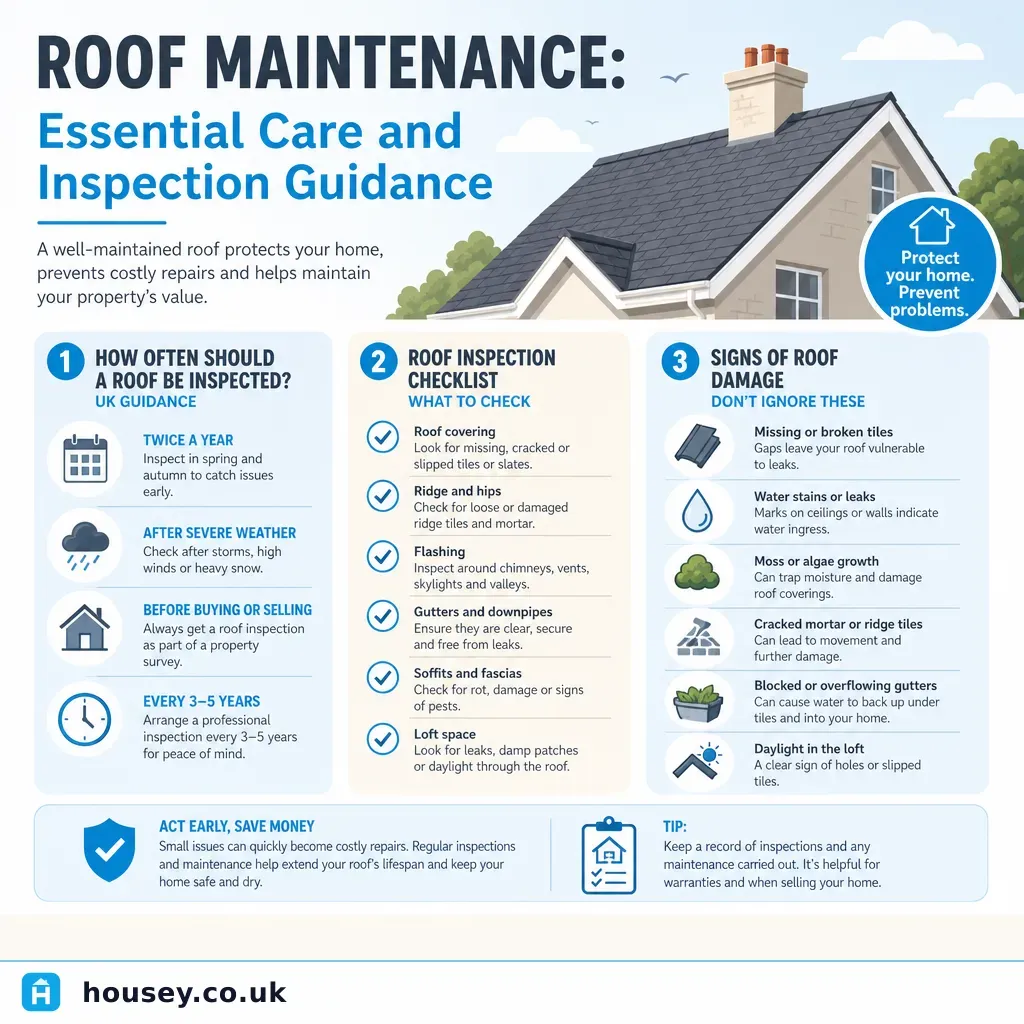
Roof Maintenance: Essential Care and Inspection Guidance
UK roofs should be visually inspected at least once a year — ideally in autumn before winter — and after any significant storm.
 Surveys & Inspections
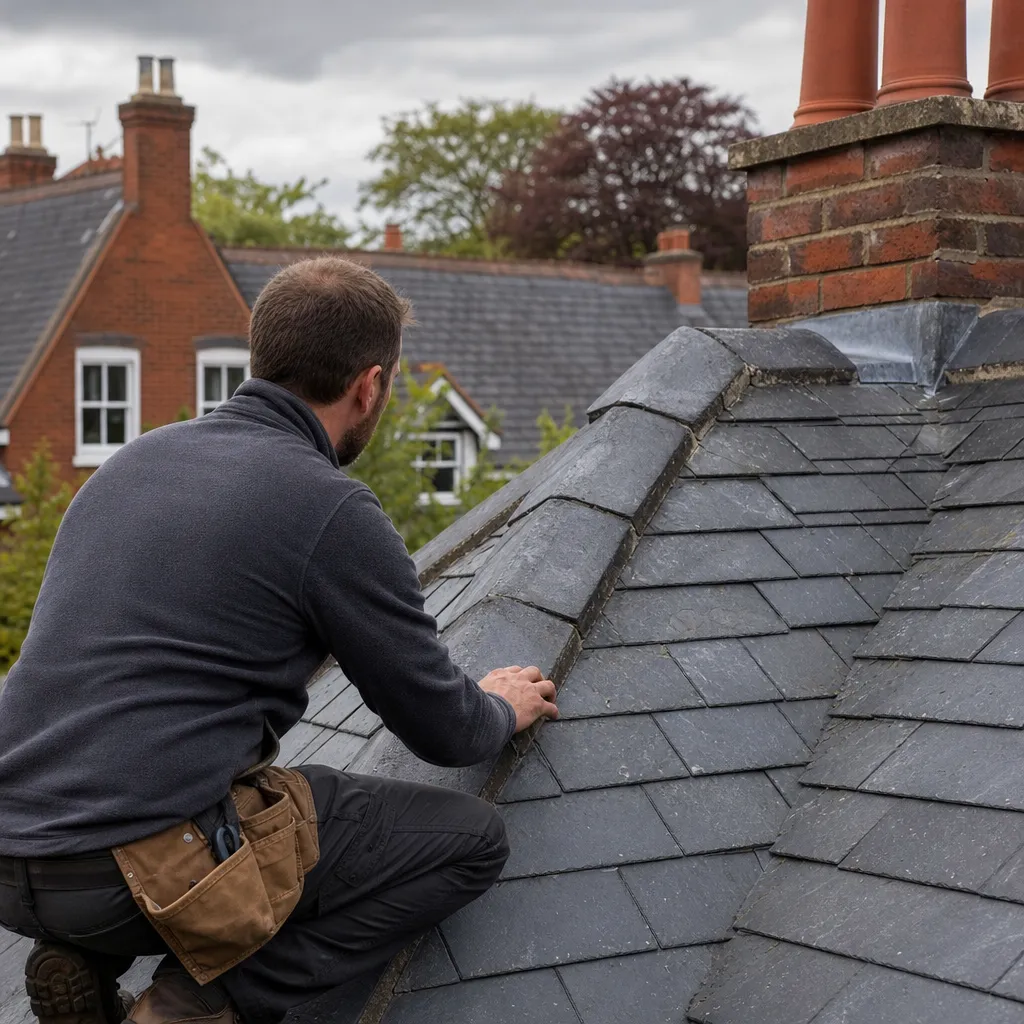
Maintaining slate roofs: essential care and upkeep guidance
A well-maintained natural slate roof can last 80–150 years, but it relies on regular inspections, prompt replacement of slipped or cracked slates, clear gutters, and sound lead flashings.
 Surveys & Inspections
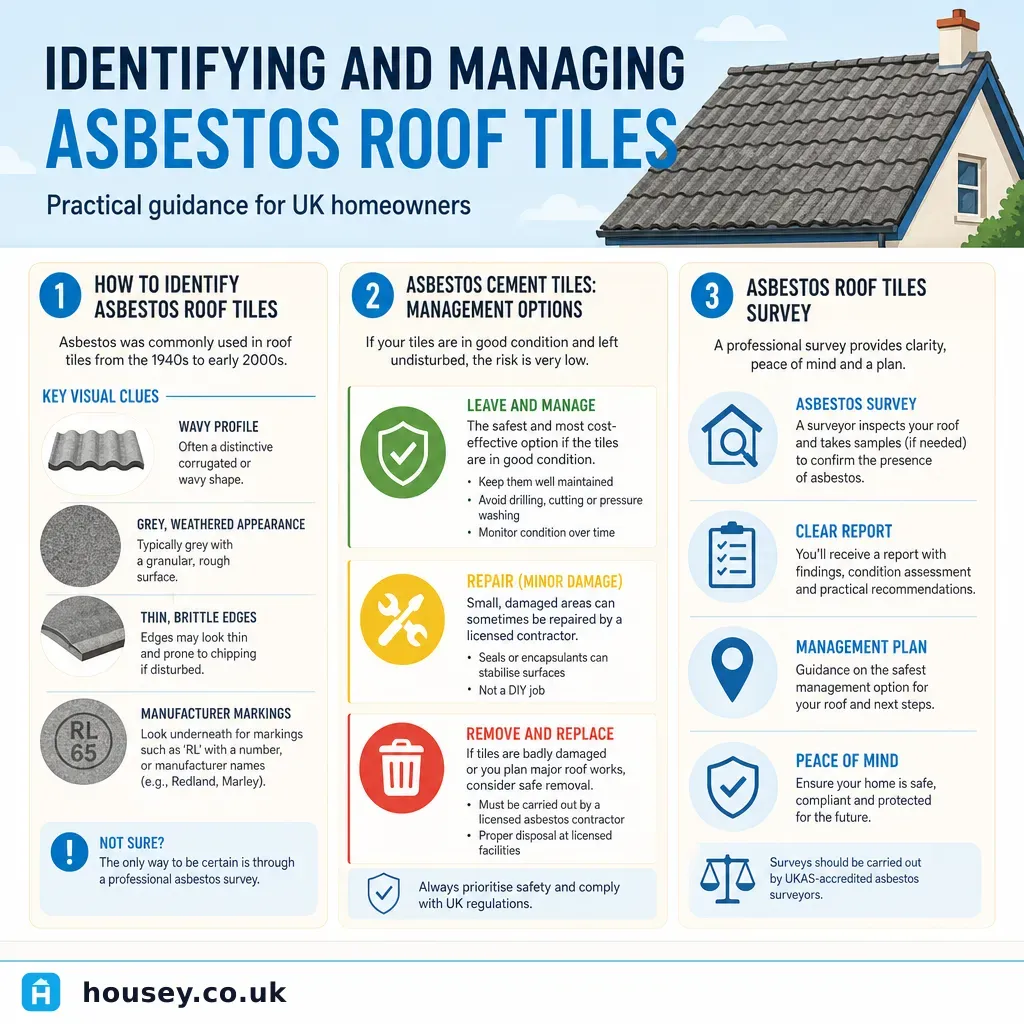
Identifying and managing asbestos roof tiles
If your roof was installed before 2000, asbestos cement tiles may be present.
 Surveys & Inspections
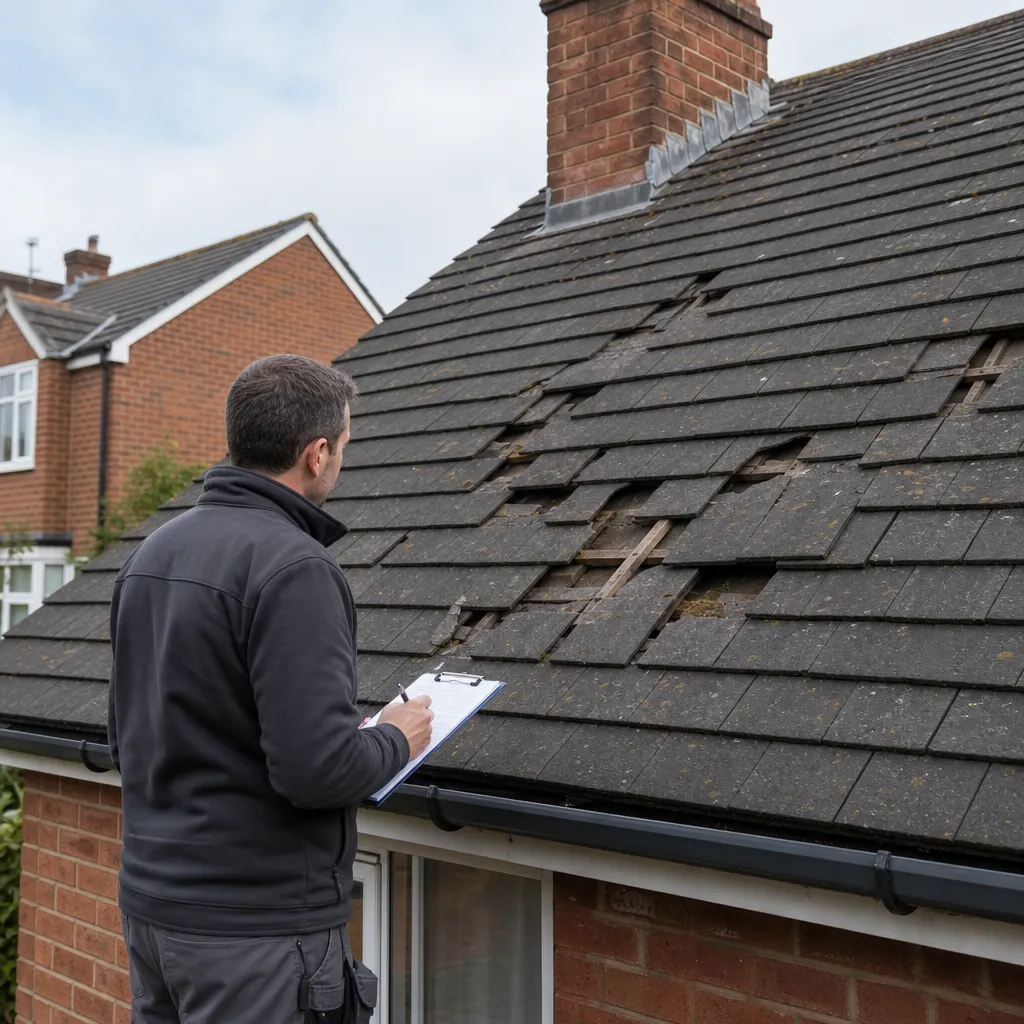
Wind Damage to Roof Tiles and Shingles: Inspection and Repair Guidance
After a storm, inspect your roof from ground level using binoculars before attempting access.
 Surveys & Inspections
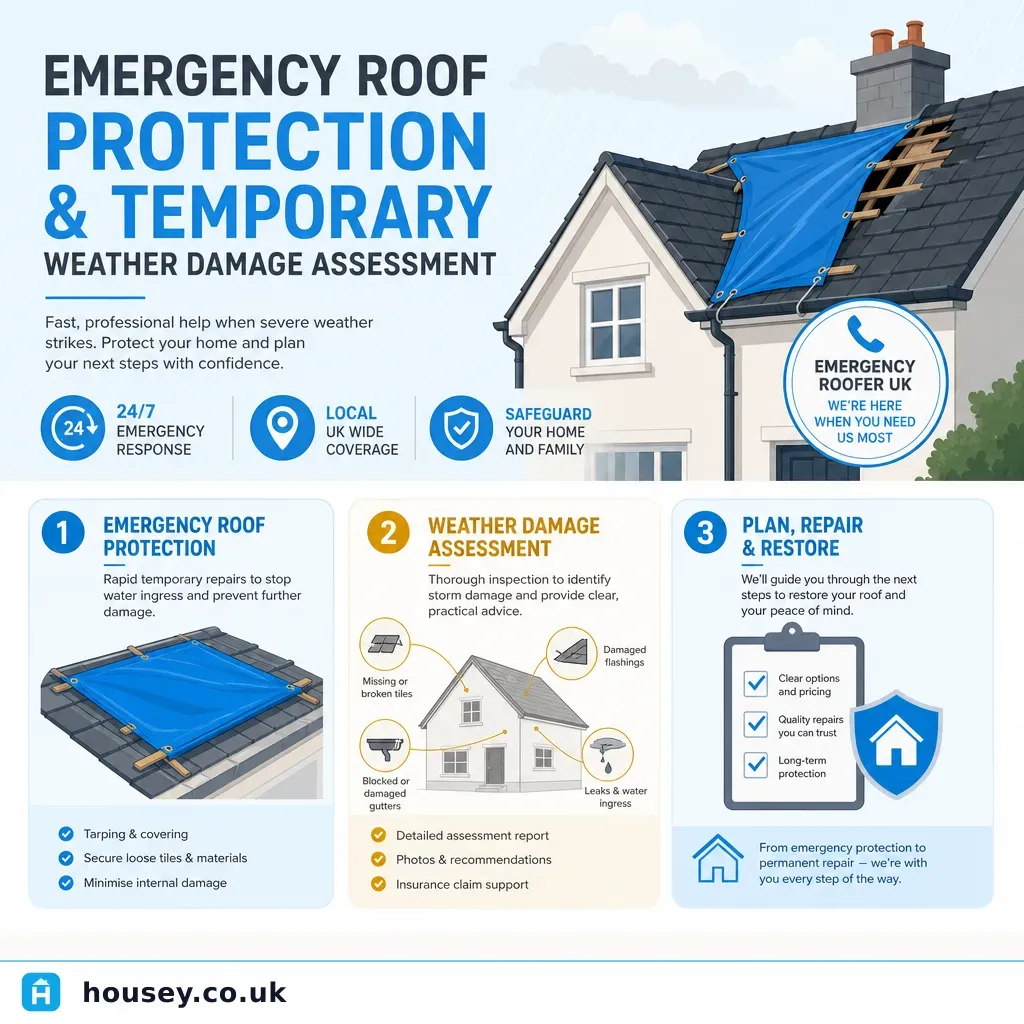
Emergency Roof Protection and Temporary Weather Damage Assessment
After roof damage, your priority is safe temporary protection — typically a tarpaulin secured by a roofer — followed by a professional inspection to assess structural impact.