Maintaining solar panels: cleaning schedules and care guidance
By Housey · Last reviewed 31st of May 2026
Maintaining solar panels: cleaning schedules and care guidance
Solar photovoltaic (PV) systems are often described as low-maintenance — and they broadly are — but "low" is not the same as "none". UK weather patterns, seasonal debris, and bird activity all affect how cleanly panels absorb light, and a consistent care routine protects both your energy output and your system warranty. Whether your panels were installed last year or a decade ago, understanding the right cleaning schedule and what to watch for helps you get the most from your investment.
Key points
- The Solar Trade Association recommends inspecting panels at least once a year and cleaning them as needed — typically one to two times per year for most UK locations.
- Soiling losses — the reduction in output caused by dirt, dust, lichen, or bird droppings — can reduce a panel's efficiency by 5–25% if left untreated, according to the Energy Saving Trust.
- Most manufacturers' warranties require panels to be kept clean and unobstructed; repeated neglect may provide grounds to void a warranty claim.
- Panels should never be cleaned with abrasive materials, pressure washers above 40 bar, or harsh chemicals — these can scratch the anti-reflective coating or damage frame seals.
- The Work at Height Regulations 2005 apply to roof-mounted solar panels: DIY cleaning from a rooftop without appropriate equipment carries the same legal duties as any other work at height.
How often do UK solar panels need cleaning?
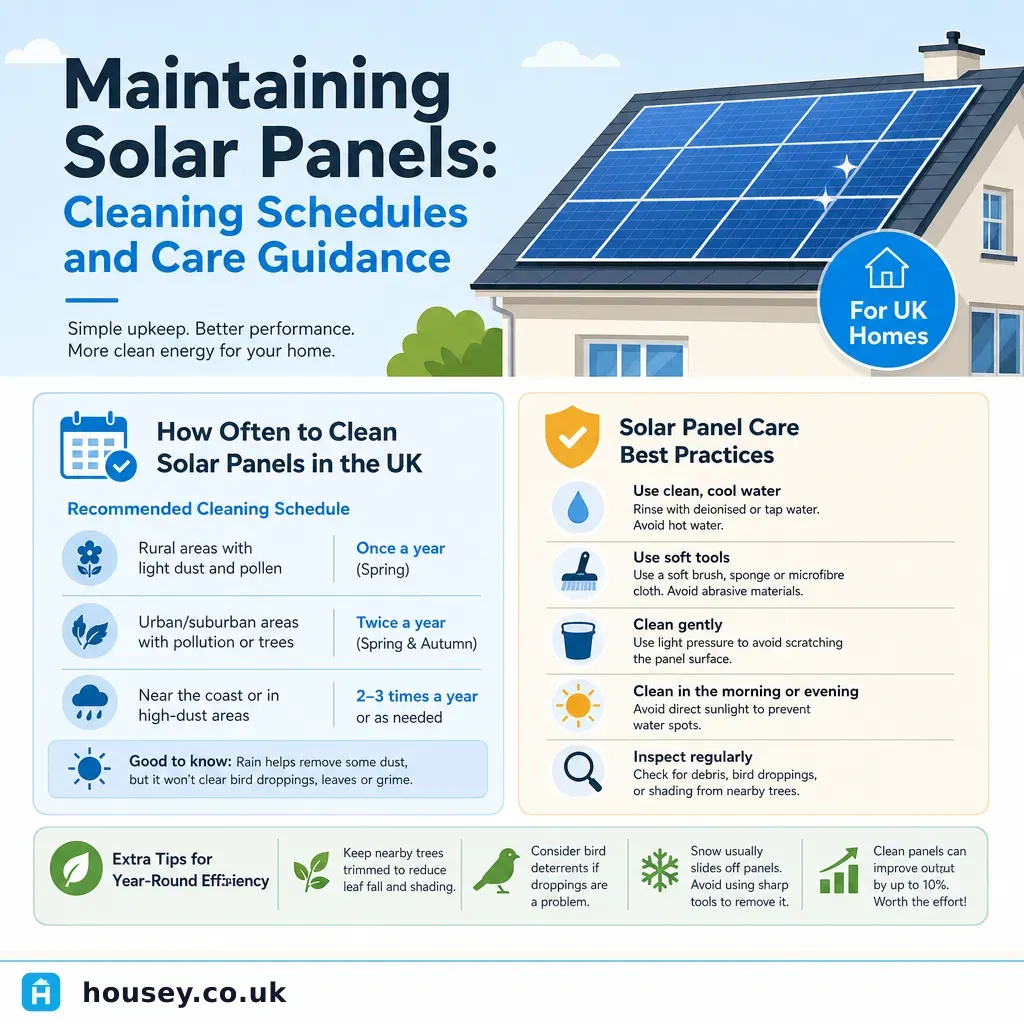
For most UK homes, cleaning panels once or twice a year is usually sufficient. Late winter (February–March) and late summer (August–September) are practical windows: the first clears the winter accumulation of grime and moss before spring sunshine peaks; the second removes summer dust and bird droppings before autumn reduces daylight hours.
Panels in urban areas, near agricultural land, or beneath trees may need more frequent attention. Coastal locations can accumulate salt deposits, and areas with high pollen counts see noticeable seasonal fouling.
Your inverter's monitoring data is the most reliable guide. If daily output drops noticeably compared with the same day in a previous year — accounting for cloud cover — soiling is worth investigating before assuming a system fault.
Seasonal cleaning decision guide
- Clean in late winter if output is lower than expected for the time of year, panels are visibly dirty, or moss or lichen is starting to establish at panel edges.
- Clean in late summer if bird droppings are present, there has been a prolonged dry spell, or you are preparing the system for winter monitoring.
- Check immediately if a panel is shaded by debris, a fallen object, or overgrown vegetation that was not there before — partial shading on one panel can reduce output across the whole string.
- Call a professional if you cannot safely access the roof, panels show discolouration or cracks, or cleaning does not restore expected output.
Which cleaning methods are safe?
Method | Safe for panels? | Notes |
|---|---|---|
Soft brush + deionised water | Recommended | Low risk; deionised water avoids streaking from mineral deposits |
Hose at low pressure | Generally safe | Avoid directing water at junction boxes or cable entries |
Microfibre cloth + warm water | Safe for accessible panels | Effective for spot-cleaning bird droppings |
Pressure washer above 40 bar | Not recommended | Can force water under frames, damage seals, or crack cells |
Abrasive pads or scourers | Not recommended | Scratches anti-reflective coating; permanently reduces light absorption |
Bleach or acid-based cleaners | Not recommended | Degrades encapsulant materials and may void manufacturer warranties |
Specialist panel-cleaning fluid | Check manufacturer guidance | Some products are manufacturer-approved; verify before use |
Rainwater alone removes light surface dust reasonably well in the UK climate, which is partly why most UK panels need no more than two cleans per year. It does not shift bird fouling, lichen, or mineral scale effectively.
Beyond cleaning: what else does routine care involve?
Cleaning is the most visible maintenance task, but a complete care routine covers several other areas.
Inverter monitoring: Most modern inverters include a display or connected app showing daily generation figures. Review these at least monthly — an unexpected drop is often the first sign of a fault, not a dirty panel.
Ground-level visual inspection: Check panels for cracks, discolouration, or physical damage after severe weather. Hail, falling branches, and high winds can all cause damage. Photograph and date anything unusual.
Wiring and mounting checks: Over time, cable ties degrade and frames can work loose in high winds. These are not DIY tasks — a professional inspector can assess them safely during a scheduled visit.
Vegetation management: Trees that were small at installation may now shade panels during parts of the day. A shadow on even one panel can trigger the inverter's shade management system and reduce whole-string output. Address problematic growth before it becomes a season-long issue.
Battery storage systems: If your system includes a battery, follow the manufacturer's guidance on temperature range and state-of-charge management, particularly for batteries kept in uninsulated outbuildings.
Homeowner solar maintenance checklist
Use this list at least once a year, or whenever you suspect reduced output:
When to get professional help
Routine visual checks and gentle cleaning from a safe position are tasks most homeowners can manage. A professional should be involved when:
- Panels are on a steep pitch, dormer roof, or otherwise inaccessible without specialist access equipment
- Output has dropped but panels appear visually clean and there is no obvious shading change
- You can see cracked glass, discolouration (hotspots), or burn marks on any panel
- The inverter is showing fault codes that the manufacturer's troubleshooting guide cannot resolve
- The system is approaching or has passed the 10-year mark without a formal professional inspection
- You are planning to sell the property and want documented evidence of system condition
Under the Work at Height Regulations 2005, anyone working at height — including on domestic roofs — must use appropriate equipment and safe working practices. A professional cleaning or inspection company will carry their own access equipment, public liability insurance, and site-specific risk assessments.
How Housey can help
If your system is due a routine check or you suspect it needs more than a clean, a solar survey from a qualified assessor can cover panel condition, inverter performance, wiring integrity, and shading analysis in a single visit. Housey connects you with vetted local professionals so you can compare quotes before committing.
Frequently asked questions
Do solar panels clean themselves in the rain?
Rain removes light surface dust reasonably well, which is why UK panels in average locations rarely need more than one or two manual cleans per year. However, it does not remove hardened bird droppings, lichen, or mineral scale effectively — these require manual cleaning with a soft brush and low-mineral water.
Can I clean my solar panels myself?
You can clean accessible panels safely using a soft brush and deionised water, provided you can reach them without climbing onto the roof. For roof-mounted panels on a standard pitch, most homeowners should not attempt cleaning from the roof without proper access equipment. The Work at Height Regulations 2005 apply to domestic as well as commercial situations.
Will dirty panels void my warranty?
Most manufacturers' warranties require the system to be maintained in line with their guidelines, which typically includes keeping panels clean and unobstructed. Consistent neglect documented at the time of a claim could give grounds to dispute coverage. Always check your specific warranty documentation for the exact maintenance requirements.
How do I know if my panels need cleaning?
The most reliable indicator is a drop in inverter output compared with the same period in a previous year, after ruling out cloud cover differences. Visually, if you can see a film of dirt, green growth at panel edges, or bird droppings covering more than a small area of any panel, cleaning is likely overdue.
How much does professional solar panel cleaning cost?
Indicative UK costs, last reviewed 2026-05-31: professional cleaning for a typical 4kWp domestic system costs approximately £80–£200 depending on access, location, and whether the visit includes a basic inspection. Quotes vary significantly; always check what is included and whether the provider holds appropriate public liability insurance.
Sources and further reading
- Solar panels — consumer guidance — Energy Saving Trust
- Solar Trade Association — Solar Trade Association
- Work at Height Regulations 2005 — legislation.gov.uk
- HSE — working at height — Health and Safety Executive
Useful next reads
 Energy & Retrofit
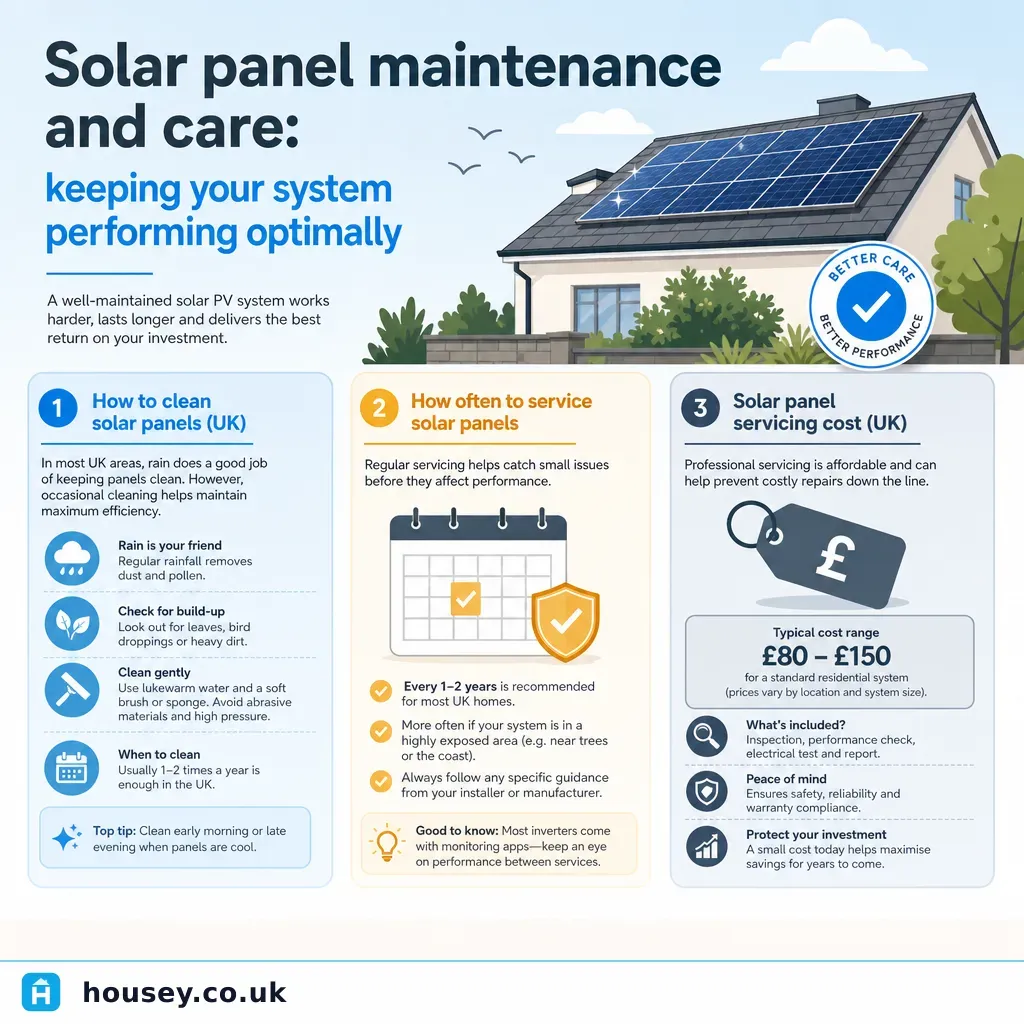
Solar panel maintenance and care: keeping your system performing optimally
Solar panels in the UK need a professional inspection every one to two years, plus regular monitoring of your inverter data throughout the year.
 Energy & Retrofit
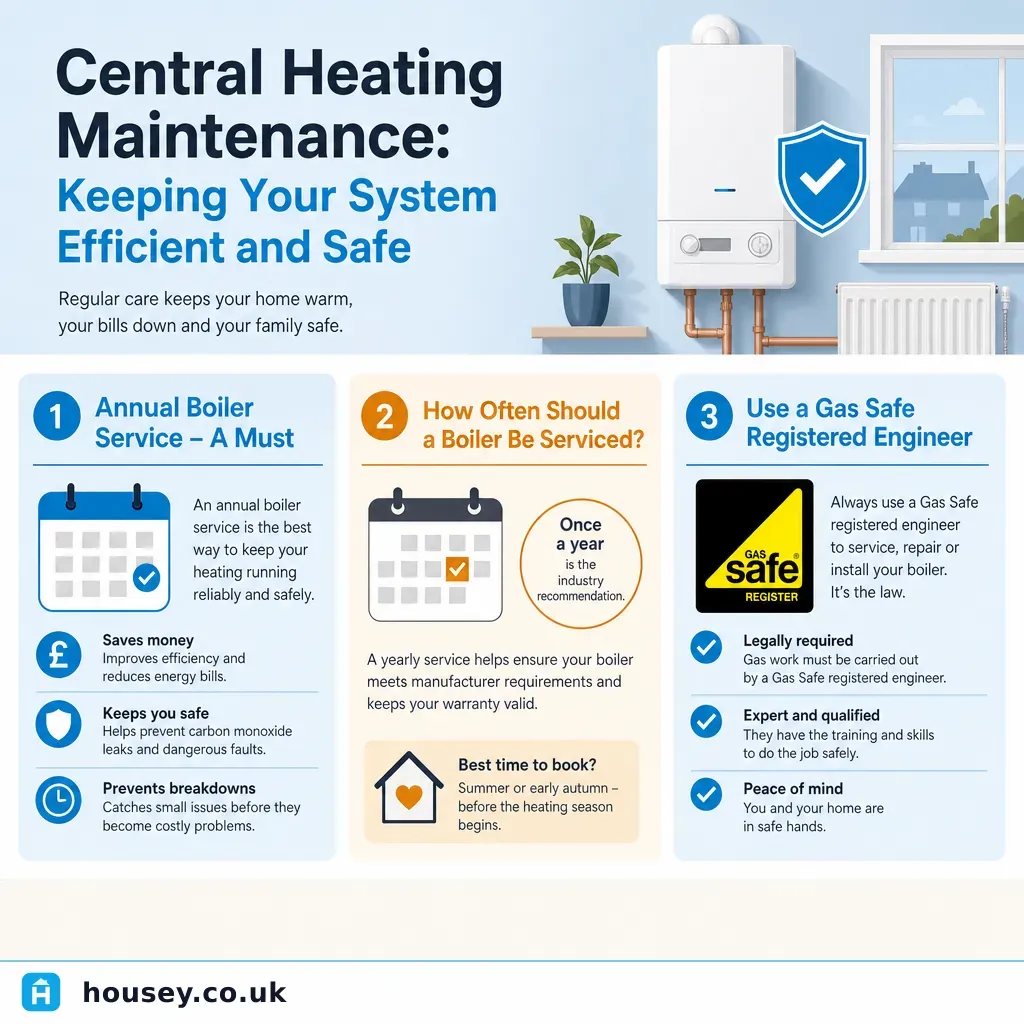
Central Heating Maintenance: Keeping Your System Efficient and Safe
Annual servicing by a Gas Safe registered engineer is the most important task for a gas central heating system.
 Energy & Retrofit
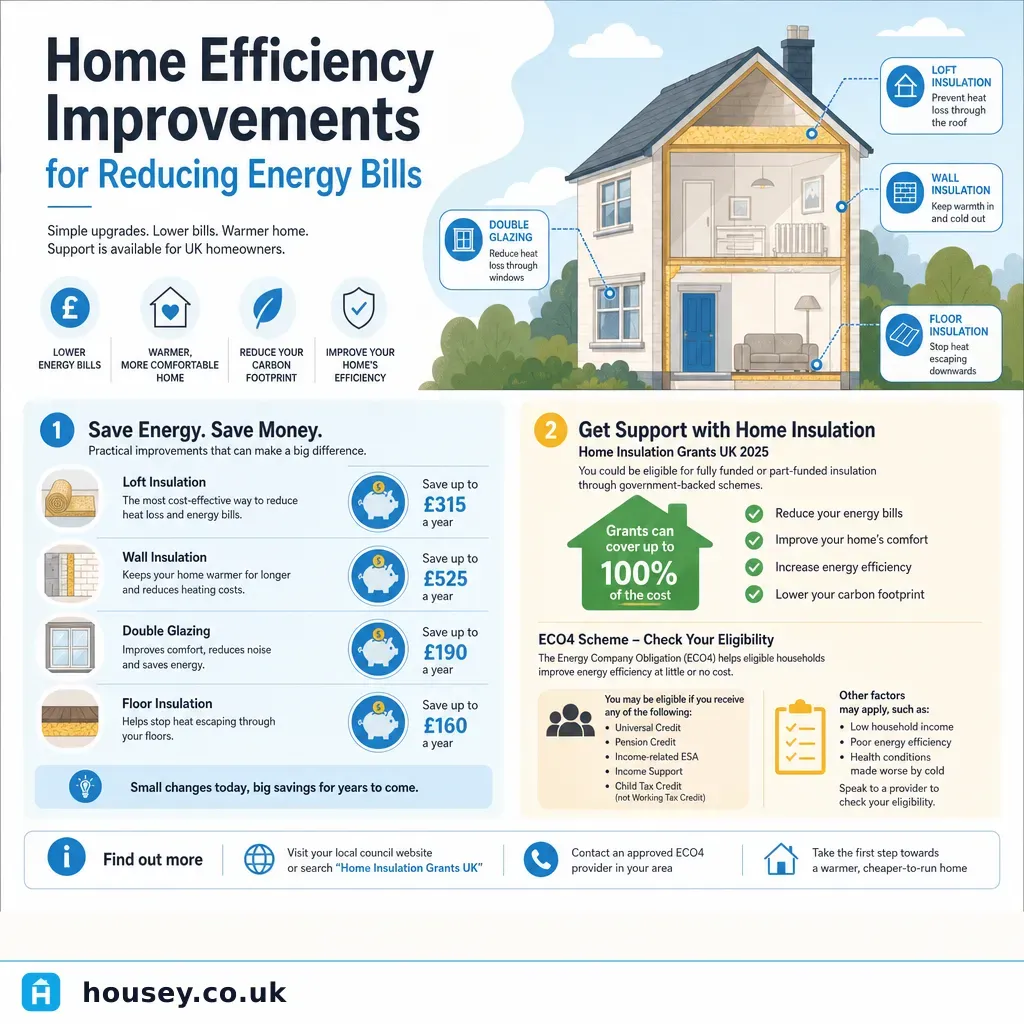
Home Efficiency Improvements for Reducing Energy Bills
The most cost-effective UK home efficiency improvements are usually loft insulation, cavity wall insulation, draught-proofing, and upgrading heating controls.
 Energy & Retrofit
The Value of an Energy Performance Audit for Your Home
A home energy performance audit is a detailed, site-specific assessment of a property's fabric, heating, ventilation, and controls.
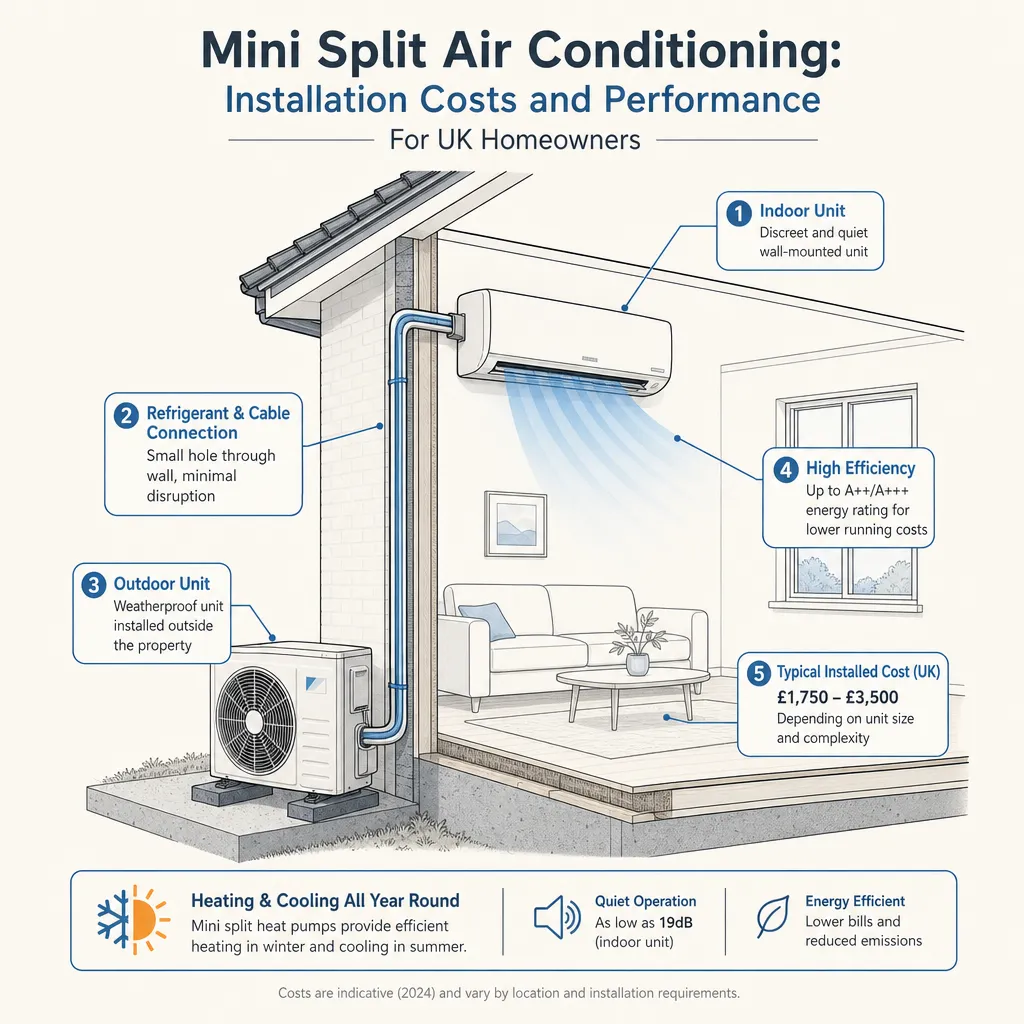 Energy & Retrofit
Mini Split Air Conditioning: Installation Costs and Performance
A mini-split (ductless) air conditioning unit costs roughly £1,500–£4,000 installed for a single room in the UK.