Solar panel maintenance and care: keeping your system performing optimally
By Housey · Last reviewed 12th of May 2026
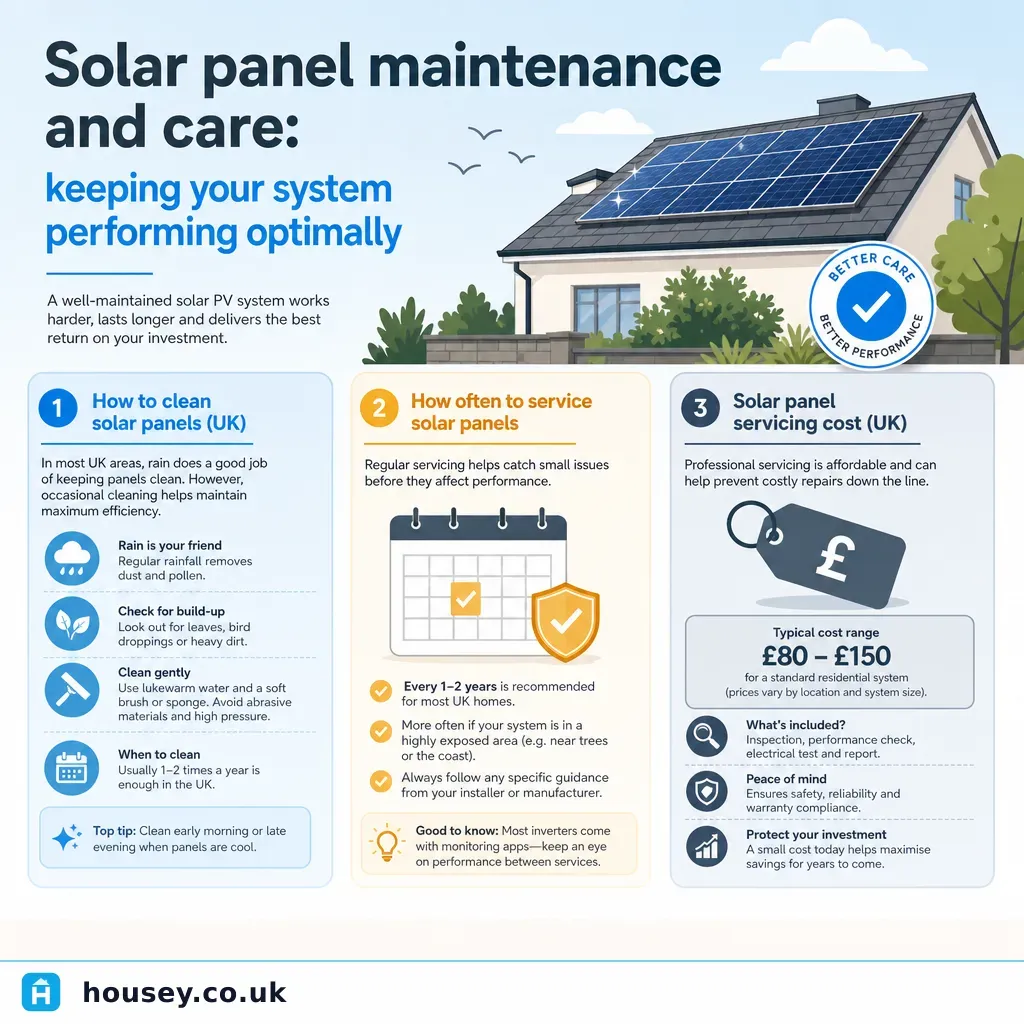
Solar panel maintenance and care: keeping your system performing optimally
Solar panels are often described as low-maintenance, but low does not mean zero. UK weather — persistent rain, autumn leaf fall, bird activity, and occasional heavy snow — creates conditions that can gradually reduce output and, if ignored for years, cause preventable faults. Most homeowners notice a problem only when their electricity bills rise or their monitoring app flags underperformance; by then, the cause may have been building for months.
Key points
- Solar panels typically lose around 0.5% of output efficiency per year through natural degradation, but soiling, shading, and inverter faults can cause much steeper short-term drops.
- MCS-certified installers are required to provide a commissioning sheet and system documentation at completion; keep these — they are essential for warranty claims and future servicing.
- Inverters generally require servicing or replacement every 10–15 years; this is the component most likely to need attention before your panels reach end of life.
- Bird-proofing mesh fitted below and around the array significantly reduces debris accumulation and nesting damage, which is a common but under-reported cause of underperformance on UK roofs.
- Most panel manufacturers require evidence of regular maintenance to honour their 25-year performance warranty.
How often do solar panels need servicing?
The Energy Saving Trust and most MCS-certified installers recommend a professional inspection every one to two years, alongside homeowner monitoring throughout the year. The inspection should cover panel condition, mounting integrity, DC and AC wiring, inverter performance, and any shading changes caused by new vegetation or neighbouring structures.
Annual servicing costs in the UK are typically in the range of £100–£300 depending on system size, roof access difficulty, and the scope of work. These are indicative UK costs, last reviewed 2026-05-12; always obtain at least two quotes.
A typical service visit should include:
- Visual inspection of panels for micro-cracks, delamination, and soiling
- Check of all mounting brackets and roof fixings for corrosion or movement
- Inverter data review and fault-code check
- String voltage and current testing where appropriate
- Review of generation figures against expected output for the system size and location
Cleaning solar panels: what UK homeowners need to know
In most UK locations, rainfall keeps panels reasonably clean between professional visits, but properties near trees, in rural areas with heavy bird or agricultural activity, or in urban areas with significant traffic pollution will accumulate soiling faster. A dirty panel can lose 5–20% output in extreme cases, though 3–5% is a more typical UK figure for moderate soiling.
Approach | Best for | Not ideal for | Approximate cost |
|---|---|---|---|
Letting rain do the work | Panels pitched at 15° or steeper with no nearby trees or heavy pollution | Panels near trees, farms, or urban pollution sources | No cost |
DIY cleaning from ground level | Single-storey extensions or conservatory roofs accessible without climbing | Any work above 2m — do not access the roof yourself | Extendable brush kit approximately £30–£80 |
Professional clean | Any pitched roof array; systems where output has visibly dropped | Not applicable — always the safest option | Approximately £50–£150 per visit |
Important safety note: Do not attempt to clean panels on a pitched roof without appropriate access equipment and training. Working at height above 2m carries serious risk of injury — always use a professional cleaning service.
When a professional cleans your panels, they should use purified (deionised) water and soft brushes, not pressure washers or abrasive materials, which can damage anti-reflective coatings and void manufacturer warranties.
Monitoring your system's output
Modern solar installations include an inverter with data logging — either via a display unit or a connected app. Common brands include SolarEdge, SMA, Enphase, Solis, and GivEnergy. Monitoring your daily and monthly output against the installer's predicted figures is the most reliable way to catch underperformance early.
Signs to investigate:
- Generation is consistently 15% or more below the installer's projected figures for the same season and weather
- The inverter is showing a fault code or has stopped logging data
- Individual panel strings show significant imbalance in a microinverter or optimiser system
If you do not have remote monitoring, ask your installer about retrofit options; many modern inverters support cloud logging via an add-on datalogger.
Seasonal maintenance checklist for UK homeowners
Season | Action |
|---|---|
Spring | Check for winter damage; clear any moss or algae growth; review inverter data for the winter period |
Summer | Arrange a professional inspection or clean; check for shading from trees in full leaf |
Autumn | Clear leaves from around and beneath panels; check bird-proofing mesh if fitted |
Winter | After snowfall, allow snow to slide off naturally — do not climb onto the roof; check generation data once panels are clear |
Inverter care and replacement
The inverter is the most service-intensive component in a solar PV system. String inverters — the most common type in UK residential installations — typically last 10–15 years. Microinverters, fitted under each panel, are rated for up to 25 years but are more expensive to replace individually if they fail.
Key maintenance points:
- Ensure the inverter's ventilation clearances are not blocked (typically 20–30 cm around the unit)
- Check for error lights or fault codes at least monthly
- Keep the area around the inverter dry and free from condensation
- Retain the inverter's original commissioning documentation for warranty purposes
Replacement inverter costs vary by type and capacity. A standard string inverter for a 4 kWp system is typically £500–£1,500 for the unit plus installation labour. Indicative UK costs, last reviewed 2026-05-12.
Red flags: when to call a professional immediately
- Burning smell or visible scorch marks near the inverter, DC cables, or consumer unit — isolate the system and call a qualified electrician
- Cracked or shattered panels — these may still be live and should not be touched; contact your installer
- Water ingress into the inverter housing or junction boxes
- Roof fixings or mounting rails showing signs of movement or corrosion
- Generation dropping suddenly rather than gradually — often indicates an inverter fault or wiring issue
Do not attempt to work on the DC wiring of a solar array yourself. Solar panels generate electricity whenever daylight reaches them and cannot be fully switched off on the DC side by the consumer.
When to get professional help
Annual professional servicing is advisable even for well-performing systems. Seek professional advice promptly if your system shows any of the red flags above, if generation drops noticeably below predicted figures, or if your inverter reaches the end of its recommended service life. Landlords should also check current Ofgem guidance regarding any energy performance obligations that apply to their property.
How Housey can help
Housey connects you with qualified solar professionals who can carry out inspections, cleans, and inverter health checks. Use our solar surveys service to find accredited local specialists who can assess your system's condition and provide a written report.
Frequently asked questions
How often should I have my solar panels professionally inspected?
Every one to two years is generally recommended by installers and the Energy Saving Trust. More frequent checks may be worthwhile if your roof is affected by heavy bird activity, overhanging trees, or if your monitoring data shows unexplained dips in output.
Can I clean my solar panels myself?
Only if they are accessible safely from the ground using an extendable brush and purified water — never climb onto a pitched roof. For most UK installations, professional cleaning is the safest and most effective option. Pressure washers and abrasive materials can damage panel coatings and void warranties.
Does maintenance affect my panel warranty?
Yes. Most manufacturers require evidence of regular maintenance to honour their 25-year performance warranty. Keep records of all service visits, inspection reports, and any component replacements. Without these records, a warranty claim for panel underperformance may be refused.
What happens if I ignore maintenance?
Gradual soiling, undetected micro-cracks, and inverter degradation can significantly reduce output over time. In the worst cases, wiring faults can create a fire risk. Warranty claims may also be refused if maintenance records are absent, leaving you without recourse if panels underperform.
How long do solar inverters last?
String inverters typically last 10 to 15 years. Microinverters are rated for up to 25 years but individual units can fail earlier. When planning the total cost of ownership of a solar system, budget for at least one inverter replacement within its 25-year lifespan.
Sources and further reading
- Energy Saving Trust — solar panels — Energy Saving Trust
- MCS — microgeneration certification scheme — MCS
- GOV.UK — Smart Export Guarantee — GOV.UK
- Electrical Safety First — solar PV safety — Electrical Safety First
- HSE — working at height regulations — Health and Safety Executive
Useful next reads
 Energy & Retrofit
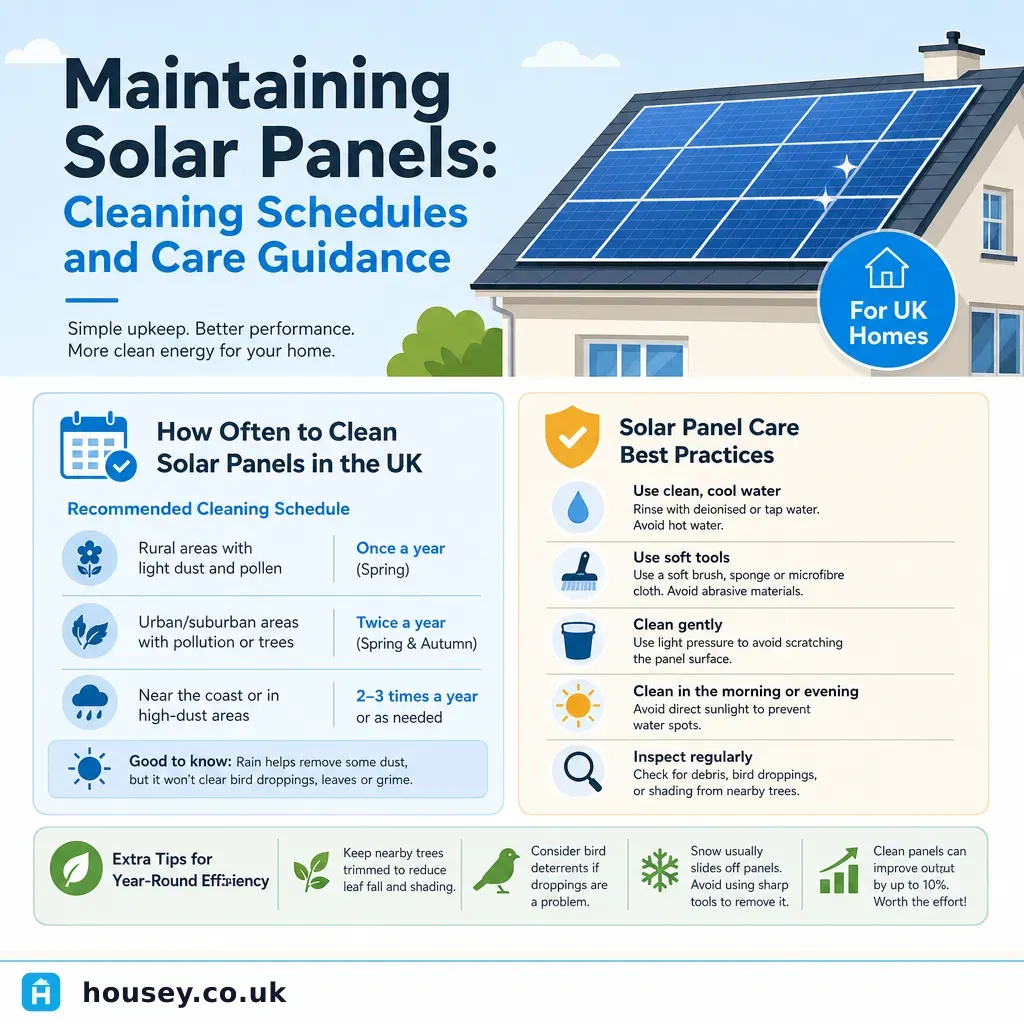
Maintaining solar panels: cleaning schedules and care guidance
Most UK solar panels need cleaning once or twice a year, typically in late winter and late summer.
 Energy & Retrofit
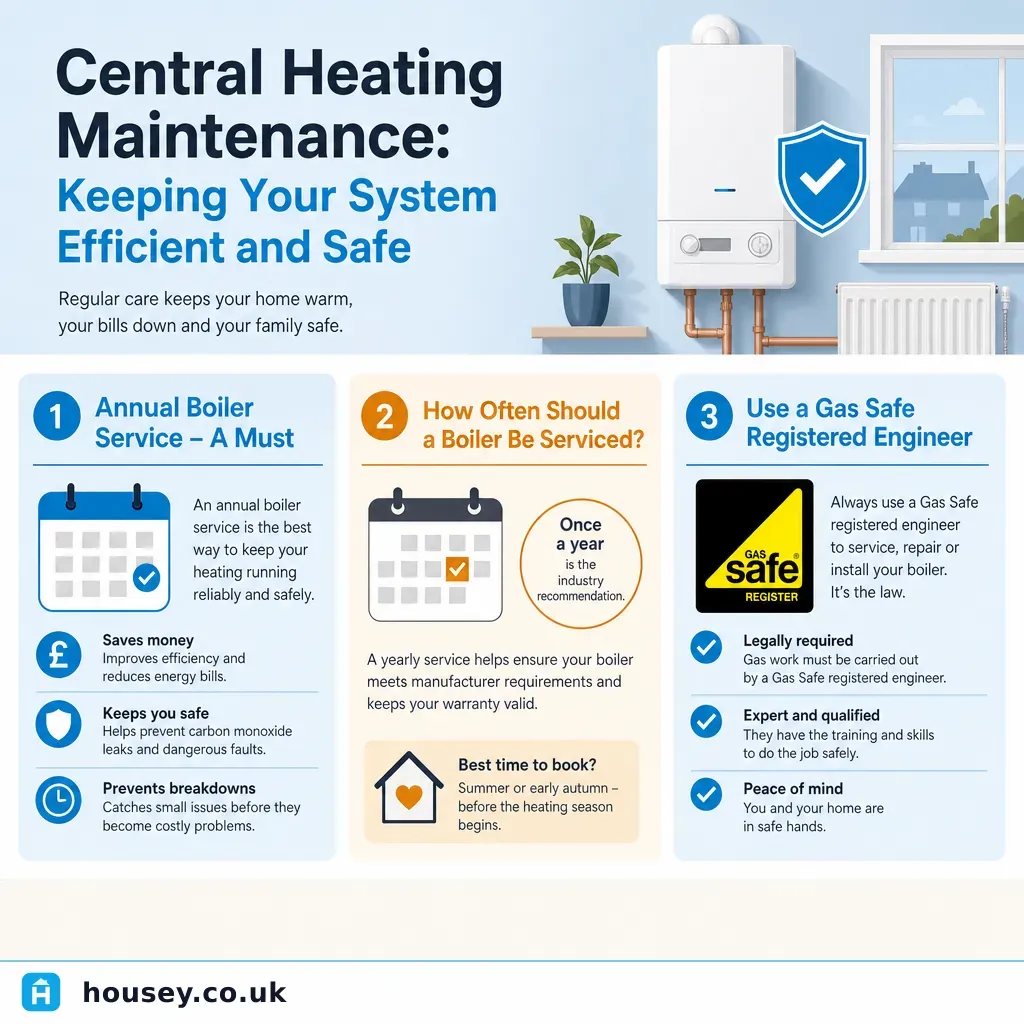
Central Heating Maintenance: Keeping Your System Efficient and Safe
Annual servicing by a Gas Safe registered engineer is the most important task for a gas central heating system.
 Energy & Retrofit
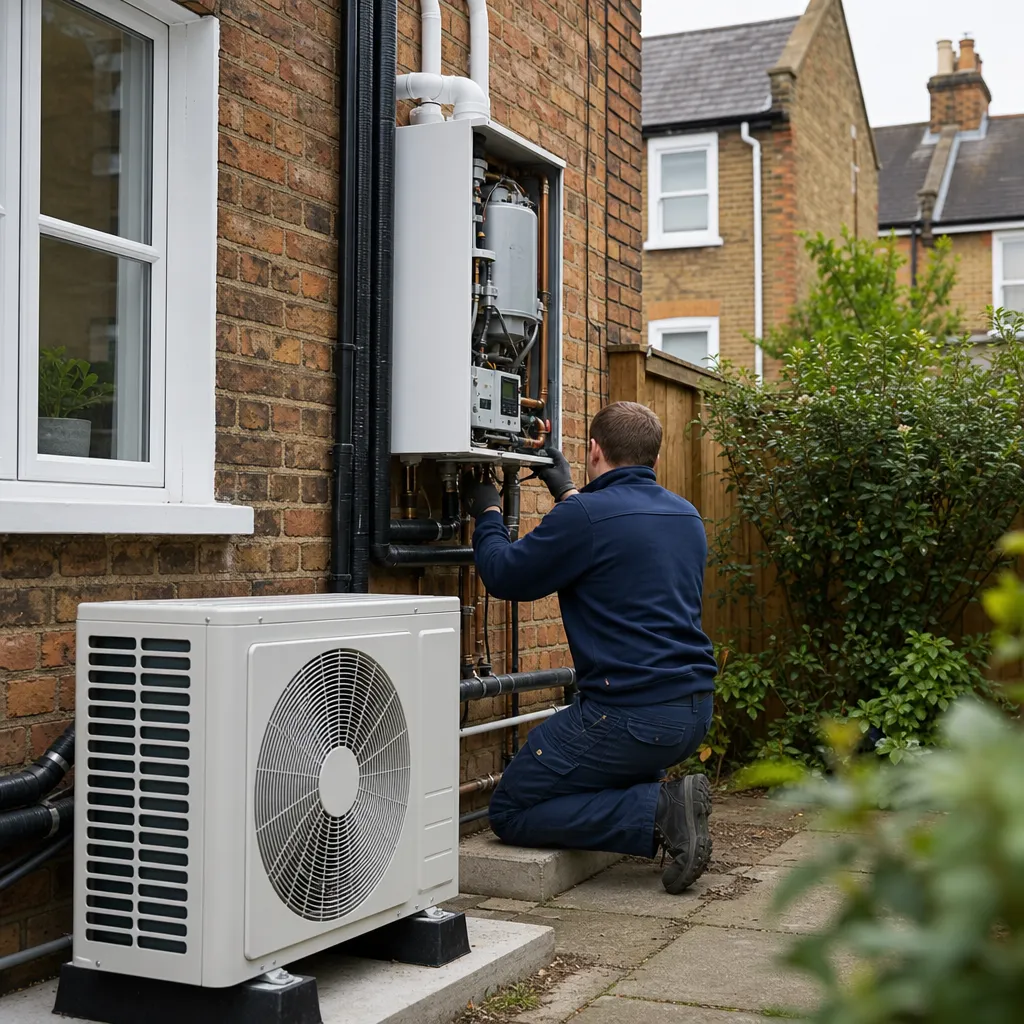
Heat Pump and Boiler Hybrid Systems: Optimising Efficiency in UK Homes
A hybrid heat pump system pairs an air source heat pump with a gas boiler, letting the heat pump handle most heating loads while the boiler activates during very cold weather.
 Energy & Retrofit
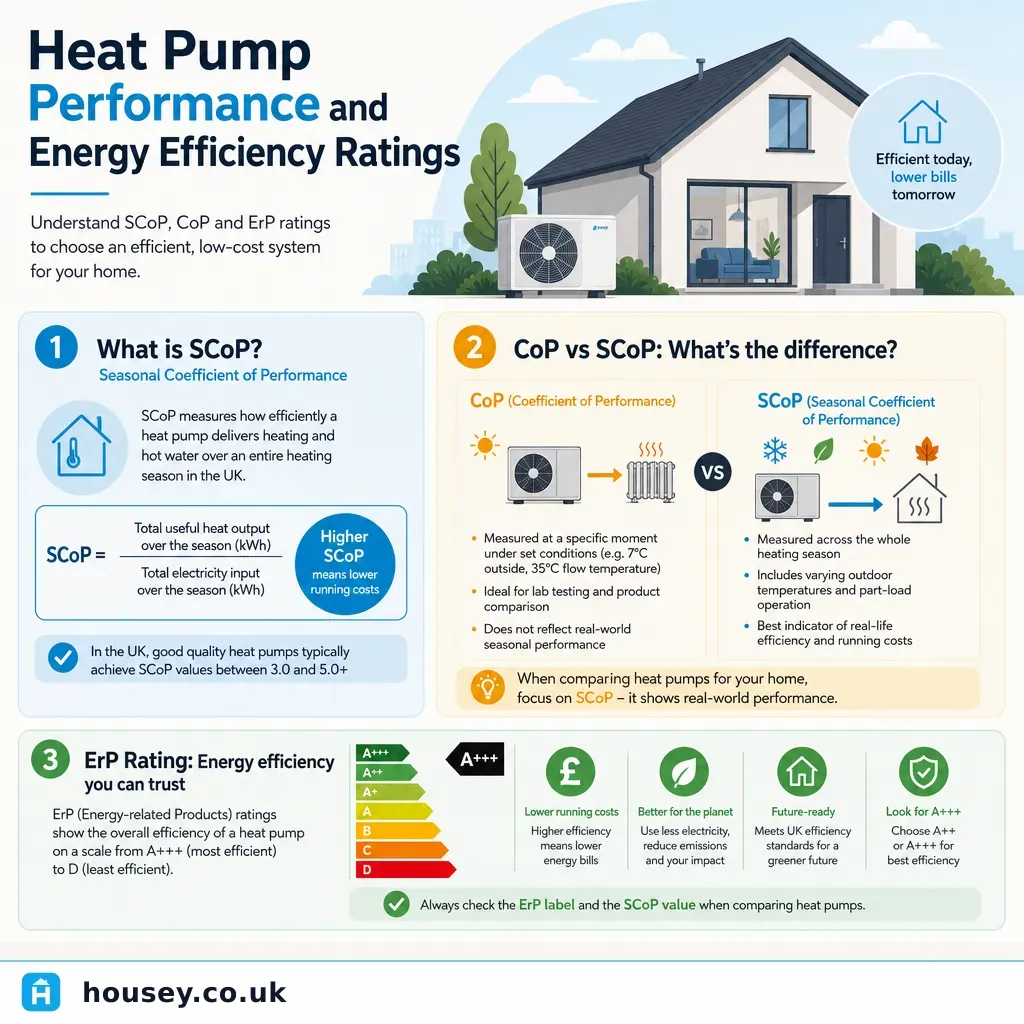
Heat Pump Performance and Energy Efficiency Ratings
Heat pump efficiency is measured by the Seasonal Coefficient of Performance (SCoP) — the annual ratio of heat delivered for every unit of electricity consumed.
 Energy & Retrofit
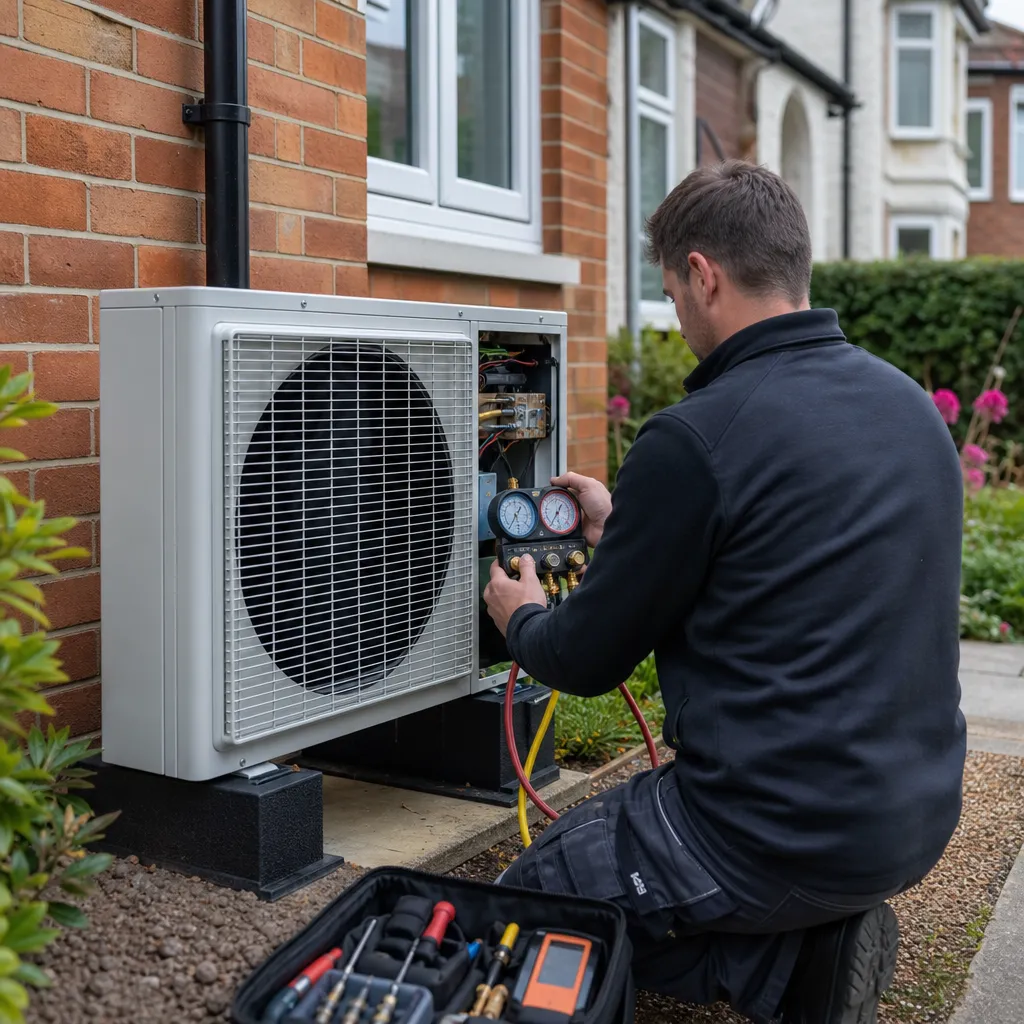
Diagnosing Heat Pump Performance Issues: Why Cooling Fails
Heat pump cooling failure is usually caused by refrigerant loss, a dirty air filter, a blocked outdoor unit, incorrect controller settings, or an undersized system.