Man Cave Room Conversion and Build Costs
By Housey · Last reviewed 7th of May 2026
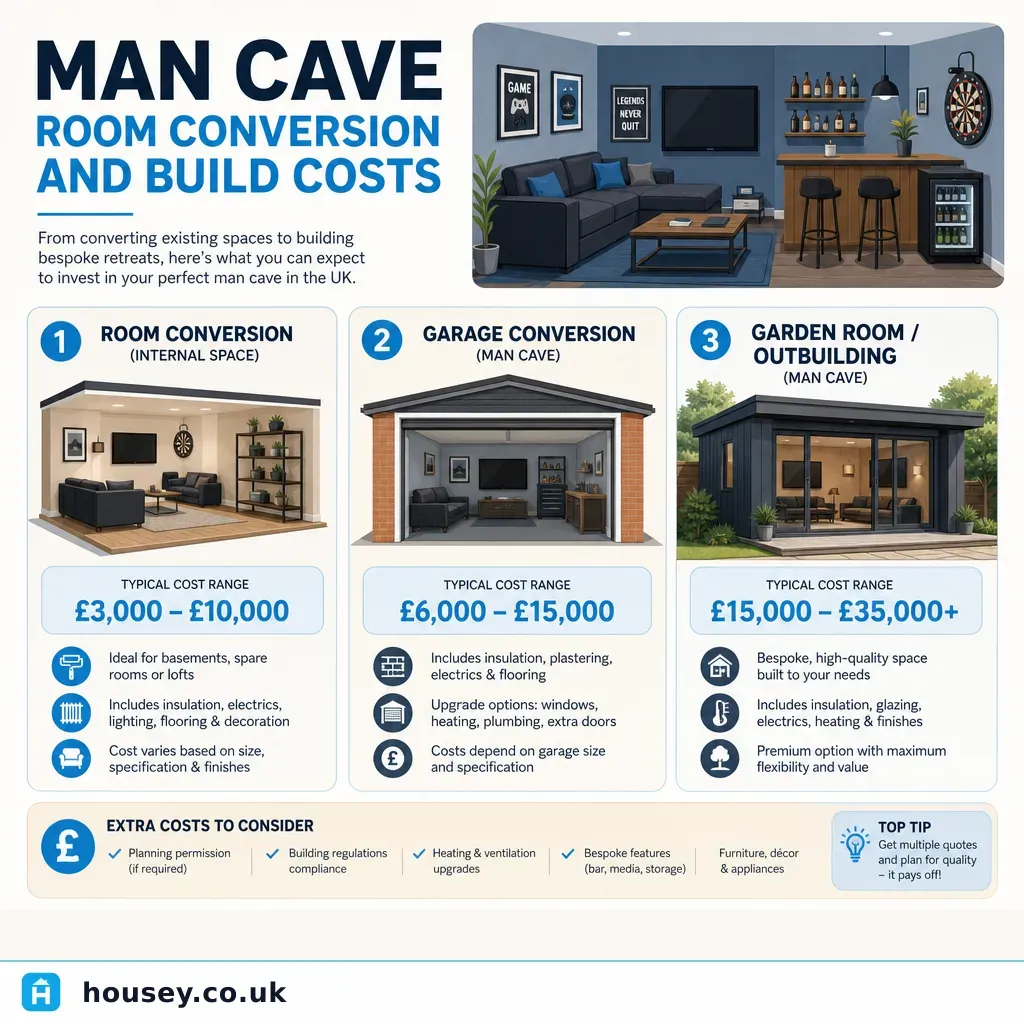
Man Cave Room Conversion and Build Costs
Dedicated hobby, gaming, home cinema, and relaxation spaces have become one of the most sought-after home improvement projects in the UK. Whether you are fitting out a spare bedroom, converting a garage, adapting a loft, or commissioning a purpose-built garden room, costs and planning requirements vary widely. Getting a clear picture of what is involved before commissioning work avoids budget surprises and keeps the project on the right side of planning and building regulations.
Key points
- Converting an existing internal room typically costs £1,500–£5,000 for insulation, electrics, and basic fit-out (Indicative UK costs, last reviewed 2026-05-07); this excludes AV systems or bespoke joinery.
- A garage conversion usually costs £8,000–£20,000 and requires building regulations approval in most cases, even if planning permission is not needed.
- A purpose-built garden room or outbuilding costs £10,000–£40,000+; most fall under permitted development if under 30m² and within the relevant height limits.
- Electrical work in any man cave must be carried out by a Part P-registered electrician who can self-certify to building control under Building Regulations Approved Document P.
- Conservation areas, listed buildings, and properties with Article 4 directions have tighter permitted development rules — check with your local planning authority before starting any work.
Which type of space should you choose?
The right approach depends on budget, available space, tolerance for disruption, and whether planning permission or building regulations approval will be needed.
Decision tree — choosing your man cave space:
- Choose an internal room conversion if you have a spare bedroom or reception room and want the lowest-cost, quickest option with minimal planning risk.
- Choose a garage conversion if your garage is attached or integral to the house and you want a self-contained space; expect building regulations approval to be needed.
- Choose a loft conversion if head height is sufficient (typically 2.2m or more at the ridge) and you want to preserve garden space; this is generally the most expensive residential route.
- Choose a garden room or outbuilding if you want a fully separate retreat with its own power and enough insulation for year-round use.
- Consult an extension builder or architect if the footprint you need exceeds permitted development limits, or the site is in a conservation area, listed building curtilage, or subject to an Article 4 direction.
Indicative costs by space type
Indicative UK costs, last reviewed 2026-05-07. Prices vary significantly by region, specification, and fit-out.
Space type | Typical cost range | Generally includes | Generally excludes |
|---|---|---|---|
Internal room conversion | £1,500–£5,000 | Insulation, electrics, plastering, basic fit-out | AV or gaming systems, bespoke furniture |
Garage conversion | £8,000–£20,000 | Insulation, new floor, electrics, plastering, window or door | Building regulations fees, planning if required |
Garden room (prefab or modular) | £10,000–£25,000 | Supply and installation, basic electrics | Groundworks, drainage, high-spec AV |
Garden room (bespoke build) | £20,000–£40,000+ | Design, full electrics, high-spec insulation | Internal fit-out, planning fees |
Loft conversion (man cave use) | £20,000–£45,000 | Structural works, roof lights or dormer, staircase, electrics | AV systems, bespoke carpentry |
Fit-out costs — AV systems, custom joinery, acoustic treatment, bar areas — are separate from construction costs and can add £2,000–£15,000 depending on specification.
What affects the total cost?
- Insulation standard — a garden room used year-round needs a higher-performance thermal envelope and possibly mechanical ventilation; a cheaper uninsulated structure will be uncomfortable in winter and may suffer condensation.
- Electrics — the number of circuits, sockets, lighting zones, and whether a new consumer unit spur is required all affect the electrician's fee.
- Soundproofing — acoustic treatment is important if neighbours or other household members will be affected by music, gaming, or home cinema noise. Planning this into the original build is far cheaper than retrofitting it.
- Connectivity — running Cat6 data cabling or a dedicated Wi-Fi access point to a garden room is far cheaper during the build than adding it retrospectively.
- Heating — electric panel heaters have low installation cost; underfloor heating or an air source heat pump costs more upfront but is more comfortable for regular use.
- Groundworks — garden rooms on sloped plots, or those requiring concrete pads, drainage connections, or retaining walls, cost considerably more than flat, well-drained sites.
Planning permission and building regulations
Internal room conversions
Changing how you use an existing bedroom or reception room does not require planning permission, provided you are not making structural changes or creating a separate self-contained unit. If electrics are added or upgraded, the work must be carried out by a Part P-registered electrician.
Garage conversions
Most garage conversions fall within permitted development and do not require planning permission, but building regulations approval is almost always required. Building control will check thermal performance (Approved Document L), ventilation (Approved Document F), electrical safety (Approved Document P), fire safety (Approved Document B), and the structural adequacy of walls and roof.
Garden rooms and outbuildings
Under Class E of Schedule 2 to the Town and Country Planning (General Permitted Development) (England) Order 2015, outbuildings in rear gardens are permitted development if they are under 30m² floor area, no more than 2.5m high within 2m of the boundary (or 4m with a dual-pitched roof), used incidentally to the dwelling, and not in front of the principal elevation. Exceptions apply in conservation areas, listed building curtilages, Areas of Outstanding Natural Beauty, and National Parks. Always check with your local planning authority before starting.
Red flags to watch for
Before accepting a quote or starting work, watch for these warning signs:
- A contractor who says building regulations approval is not needed for a garage conversion — it almost always is.
- An outbuilding marketed as habitable sleeping accommodation without reference to planning permission — this changes the use class.
- Electrical work being offered by a contractor who is not Part P-registered and cannot self-certify to building control.
- A garden room supplier who does not raise permitted development limits or planning status during the initial consultation.
- No mention of a drainage plan for a garden room that will include a toilet or sink.
- A quote that excludes groundworks on a sloped or poorly drained site without flagging this as a cost risk.
When to get professional help
For a simple internal room conversion, a competent local builder and a Part P-registered electrician are usually sufficient. For garage conversions, garden rooms with full services, or loft conversions, engage professionals from the outset:
- An extension builder can manage the full build from groundworks to fit-out and coordinate required subcontractors.
- An architect or architectural technologist can produce drawings, manage building regulations submissions, and handle planning applications where required.
- A structural engineer is needed if you are removing or altering load-bearing walls or modifying the roof structure.
- A Part P-registered electrician is required for any new circuits; verify registration with NICEIC, NAPIT, or ELECSA.
How Housey can help
Whether you are planning a garage conversion, a garden room, or a more ambitious loft project, Housey can connect you with experienced extension builders who handle man cave conversions from initial structural assessment through to finished fit-out.
Frequently asked questions
Does a man cave count as a habitable room for planning purposes?
If the space is used for hobbies, entertainment, or occasional relaxation rather than sleeping, it is generally treated as ancillary accommodation and does not trigger a formal change of use. If the space is regularly used as a bedroom, planning permission may be required. If you are uncertain, consult your local planning authority before proceeding.
Do I need planning permission for a garden room man cave?
Most garden rooms used for hobbies and built within permitted development limits do not need planning permission. The key conditions are: rear garden, under 30m² floor area, and within the relevant height limits. Conservation areas, listed buildings, and properties with Article 4 directions have stricter rules — always check with your local planning authority first.
Can I soundproof a man cave for music or drums effectively?
Effective acoustic isolation for music or percussion requires specialist treatment involving mass, decoupling, and absorption — ideally designed into the build from the start. Retrofitting meaningful soundproofing is expensive and rarely achieves the same result. A specialist acoustic consultant can advise on realistic attenuation levels before you commit to a specification.
Will a man cave conversion add value to my home?
A well-built, insulated garden room or garage conversion with electrics can appeal to buyers where additional leisure or workspace is in demand locally. An uninsulated or poorly finished space is less likely to be viewed positively. Market conditions, location, and build quality are the key variables — no universal value uplift can be guaranteed.
Do I need building regulations approval for a garden room?
Most garden rooms under 30m² used for hobbies or entertainment are exempt from building regulations. However, the electrical installation must comply with BS 7671 and be certified by a Part P-registered electrician. If the garden room contains a bathroom or is over 30m², building regulations approval is likely required.
Sources and further reading
- Permitted development rights for householders: technical guidance — GOV.UK
- Building Regulations Approved Document P: Electrical Safety — GOV.UK
- Building Regulations Approved Document L: Conservation of fuel and power — GOV.UK
- Outbuildings: planning guidance — Planning Portal
- Town and Country Planning (General Permitted Development) (England) Order 2015 — legislation.gov.uk
Useful next reads
 Improvement & Build
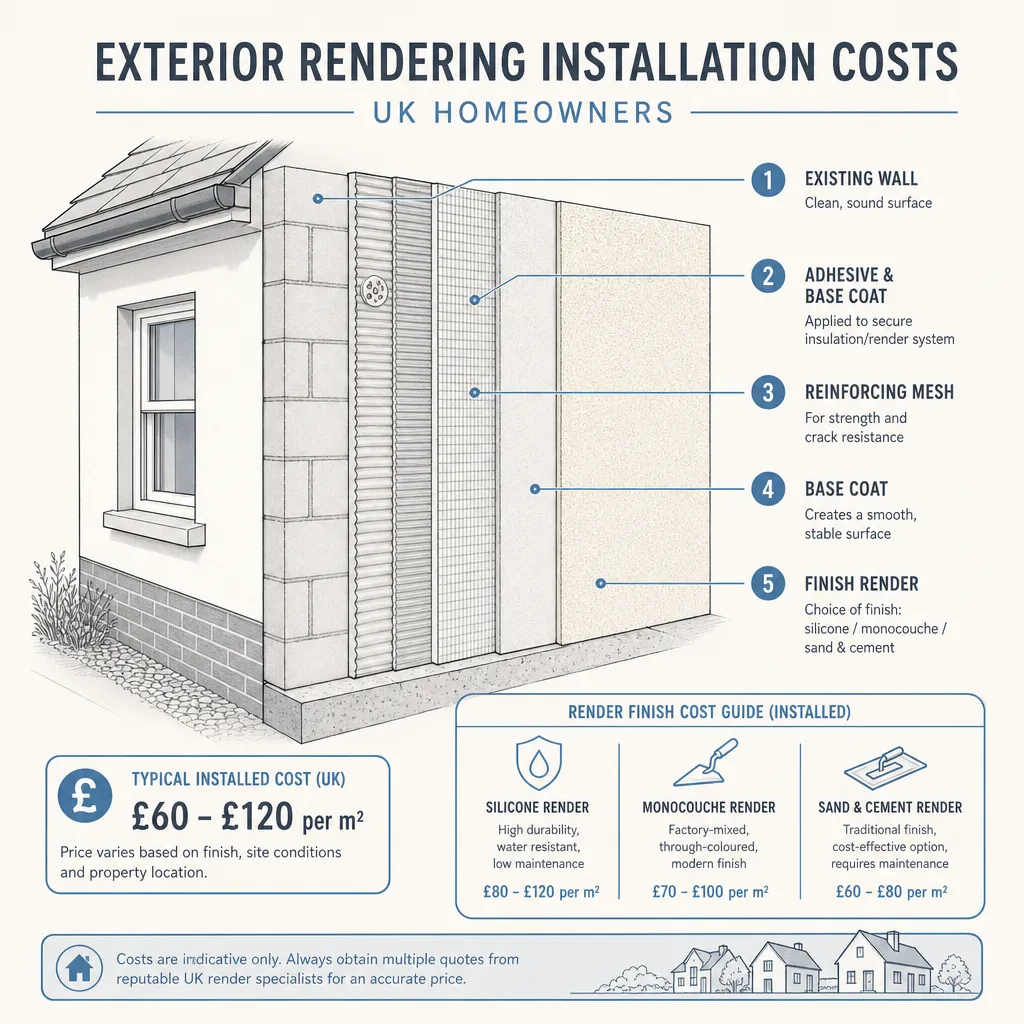
Exterior Rendering Installation Costs
Exterior rendering in the UK typically costs £20–£60 per square metre for standard render systems, or £80–£150 per square metre for External Wall Insulation with a render finish.
 Improvement & Build
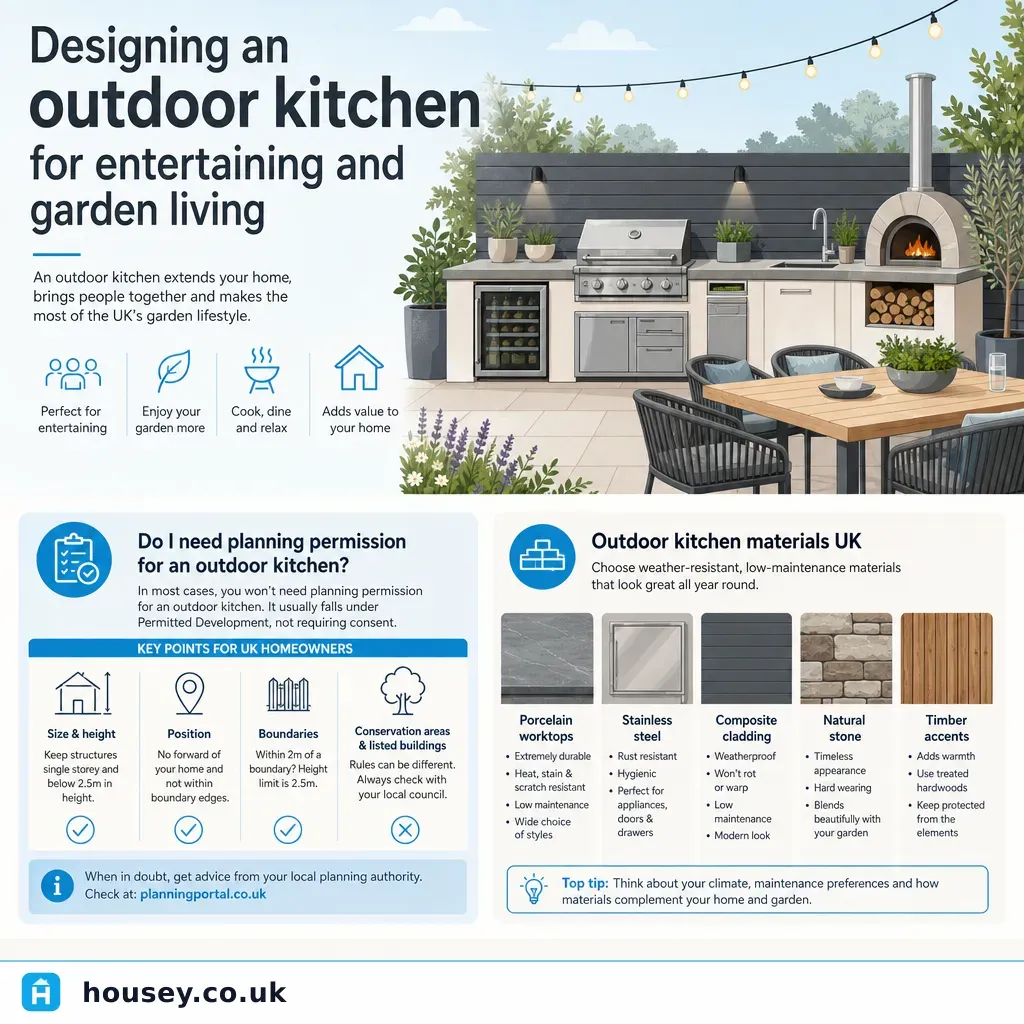
Designing an outdoor kitchen for entertaining and garden living
An outdoor kitchen in a UK garden needs a stable, level base — typically a concrete slab or quality paving — with weather-rated materials such as stainless steel grade 316 or frost-rated porcelain.
 Improvement & Build
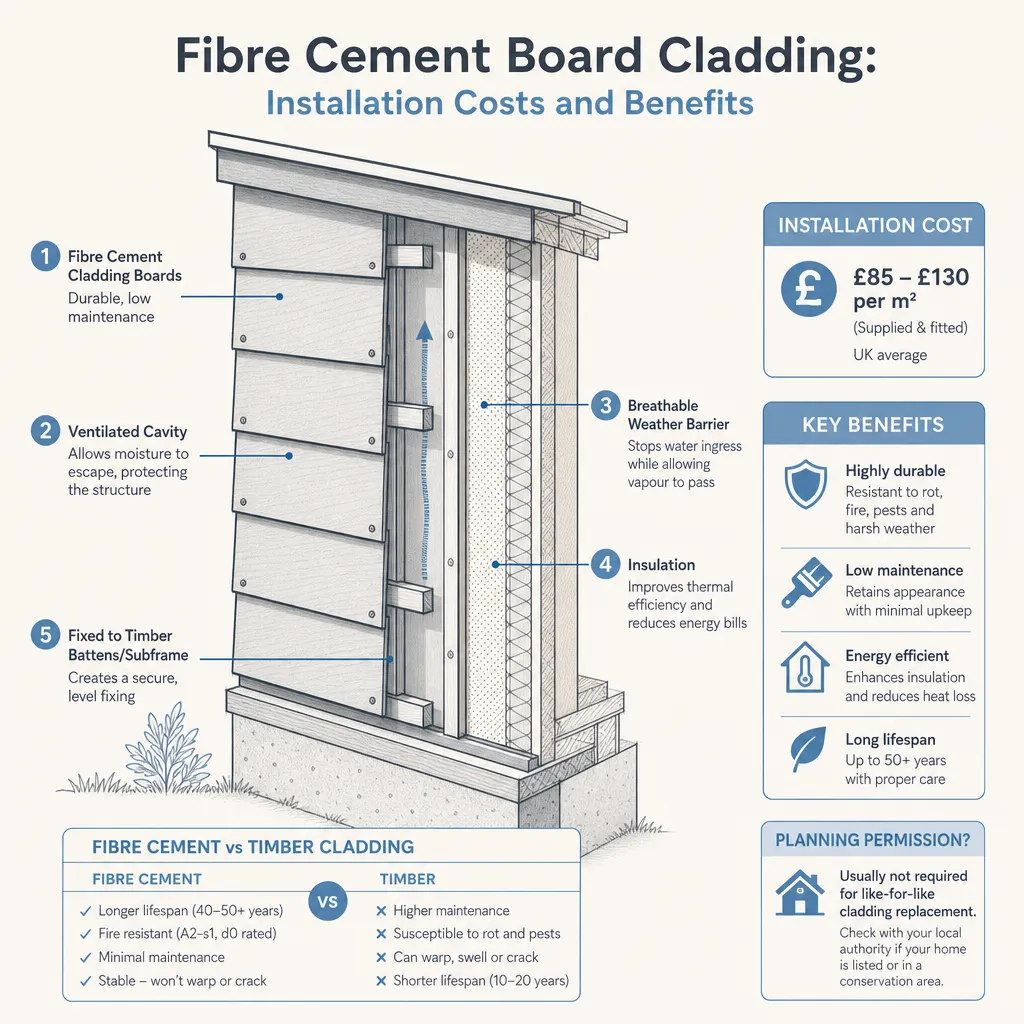
Fibre Cement Board Cladding: Installation Costs and Benefits
Fibre cement board cladding typically costs £80–£180 per m² installed in the UK, including boards, battens, breather membrane, and labour.
 Improvement & Build
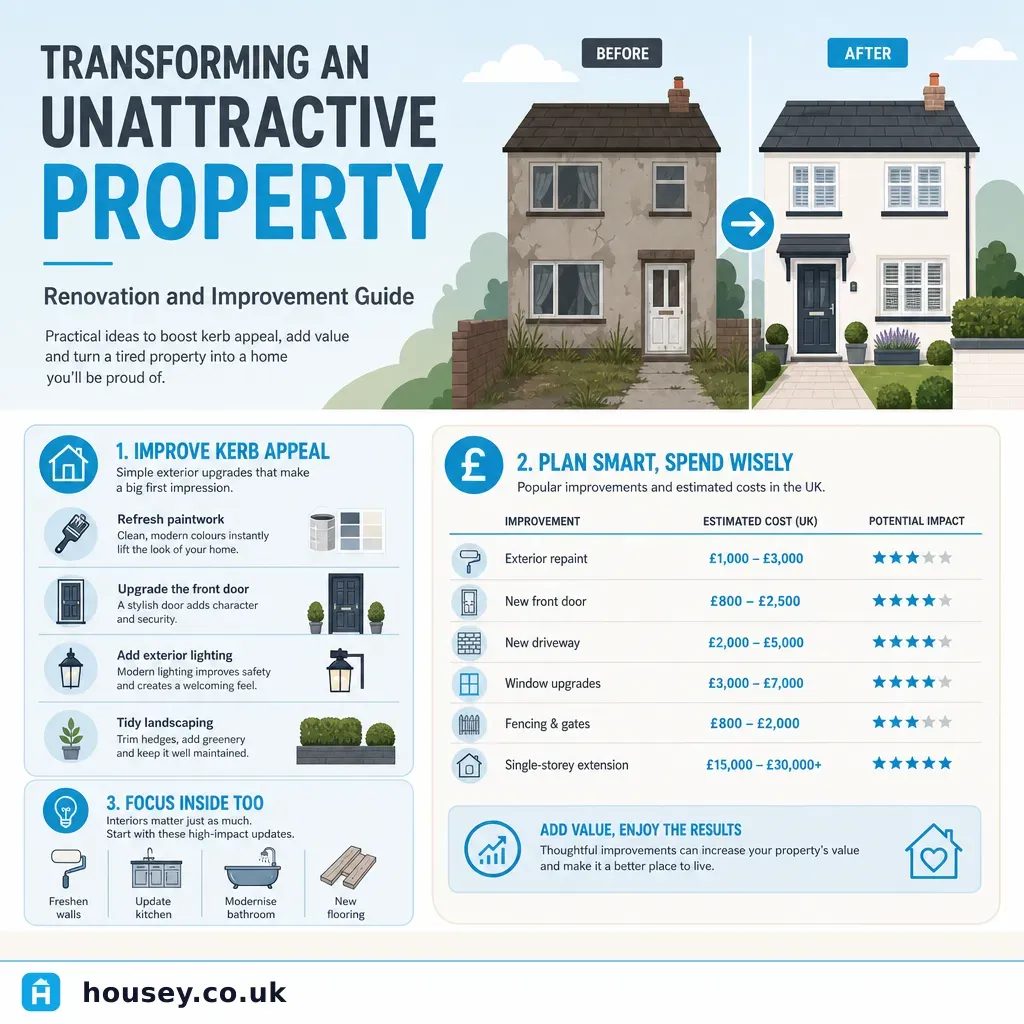
Transforming an Unattractive Property: Renovation and Improvement Guide
Transforming an unattractive UK property usually starts with surface-level improvements — render, windows, doors, and front landscaping — before tackling structural changes like extensions.
 Improvement & Build
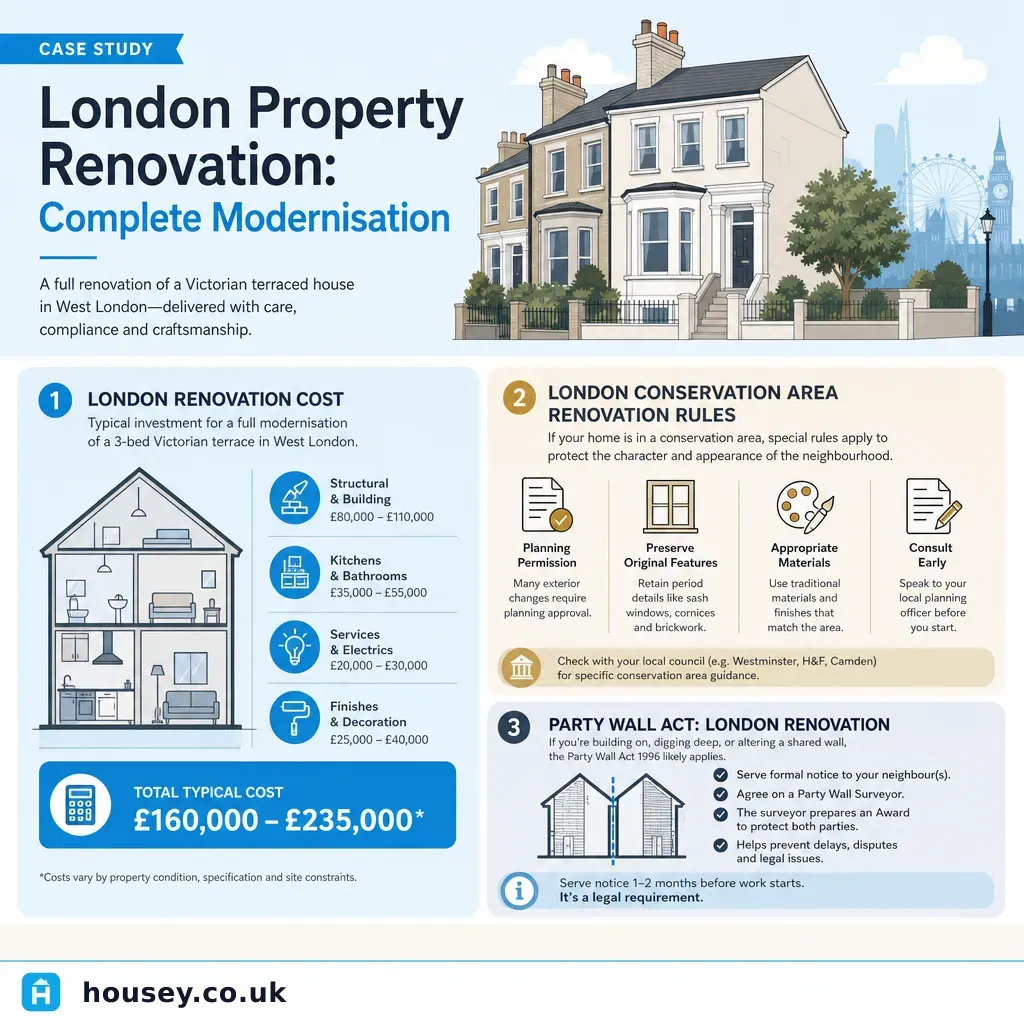
London Property Renovation: Complete Modernisation Case Study
Modernising a London property means navigating conservation area restrictions, party wall obligations, and Building Regulations alongside the build work itself.