Managing Construction Costs on Your Property Project
By Housey · Last reviewed 31st of May 2026
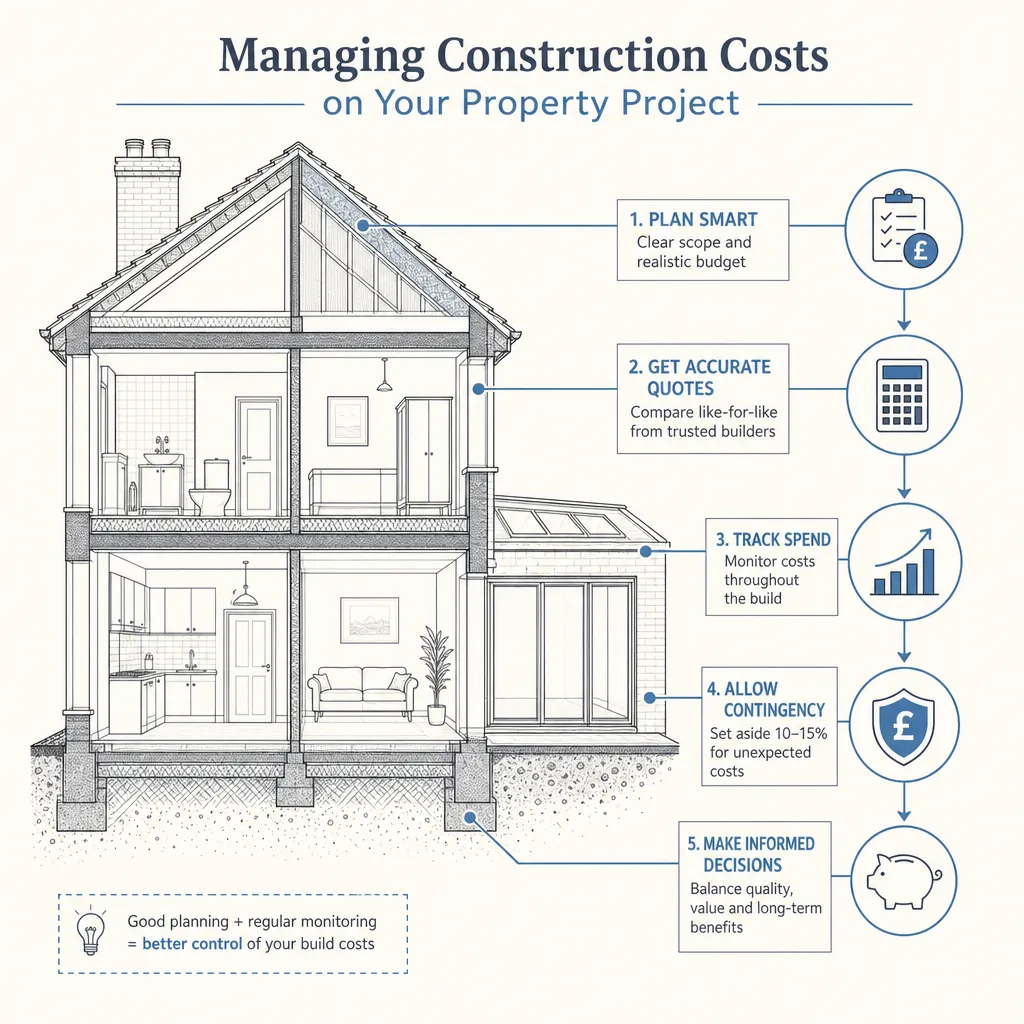
Managing Construction Costs on Your Property Project
The decision to extend, convert, or build from scratch is usually made weeks or months before a shovel enters the ground — and the gap between early estimate and final bill is where most UK homeowners run into difficulty. Whether you are managing a rear extension on a 1930s semi or a full-scale conversion, the same principles apply: specificity upfront, a robust contract, and consistent monitoring throughout the build.
Key points
- Contingency should be 10–20% of the contract sum; 20% is more appropriate for older properties or projects where ground conditions are unknown.
- A JCT Homeowner Contract (or similar standard form) sets out how variations, delays, and payment schedules are managed — verbal agreements leave you exposed.
- RICS publishes benchmarks for build costs per square metre through its Building Cost Information Service (BCIS), which are a useful cross-check against contractor quotes.
- Variations — changes to the agreed scope during the build — are the single most common cause of budget overruns; each one should be priced in writing before work proceeds.
- VAT on residential new-build is zero-rated; extensions and most refurbishments are charged at 20%, while converting a non-residential building to a home usually attracts the reduced 5% rate under HMRC Notice 708.
Why construction costs overrun — and how to get ahead of it
The most common reasons a build goes over budget are not contractor error or fraud. They are:
- Incomplete or ambiguous drawings at tender. Contractors price what they see; anything unspecified becomes a variation once work is under way.
- Unrealistic benchmarks. Early online searches return national averages that may not reflect your property's location, specification, or site access constraints.
- Scope creep. "While they're here, can we also..." is one of the most expensive phrases in construction.
- Unexpected ground conditions. Soft ground, contamination, or buried obstructions discovered during excavation are rarely priced into a fixed-price tender.
- Rising material costs. Prices for timber, steel, and insulation can shift between tender and build. A lump-sum contract locks the contractor's labour rate; some materials may still be subject to fluctuation clauses.
Understanding these pressure points gives you the tools to manage against them before they become problems.
Setting a realistic budget
Before approaching contractors, establish a budget range rather than a single figure. Different sources give you different things.
Source | What it gives you | Limitation |
|---|---|---|
BCIS cost benchmarks | National cost-per-m² ranges by construction type | Regional and specification variation not captured |
RICS-registered quantity surveyor (QS) | Project-specific cost plan with defined assumptions | Incurs a fee; most valuable at RIBA Stage 2–3 |
Contractor pre-tender estimate | Useful market check | Based on limited information; may be optimistic to win the work |
Recent comparable projects | Real-world cross-check | Hard to source unless you know someone who has built recently |
A RICS-accredited QS or cost consultant can produce a cost plan at RIBA Stage 2 (Concept Design) that breaks down anticipated costs by element — substructure, superstructure, finishes, services, and external works. This is far more useful than a per-m² headline figure when making financial decisions.
Indicative UK costs, last reviewed 2026-05-31. Quantity surveying fees for domestic projects typically range from 1.5% to 5% of the contract sum depending on project size and scope. Obtain itemised quotes from at least three firms.
Choosing the right contract type
The contract structure directly affects how risk is shared between you and your contractor.
Contract type | How it works | Best for | Main risk |
|---|---|---|---|
Fixed-price (lump sum) | Contractor prices a defined scope; you pay that sum plus agreed variations | Well-specified projects with detailed drawings | Incomplete spec leads to variations that erode the fixed price |
Cost-plus | You pay actual costs plus an agreed fee or margin | Fast-start or complex projects where full spec is not yet ready | Budget exposure if costs rise; requires active monitoring |
Schedule of rates | Unit prices agreed upfront; final cost depends on quantities | Refurbishment where exact quantities are uncertain | Final bill unpredictable; needs careful QS oversight |
JCT Homeowner Contract | Standard consumer-facing JCT form for smaller domestic projects | Extensions, loft conversions, garage conversions | Requires a clear specification to be effective |
For most domestic projects, a JCT Homeowner Contract or Minor Works Building Contract is appropriate. The JCT publishes a suite of contracts with guidance on which form suits different project sizes.
Managing variations
A variation is any instruction to change the agreed scope of work. Every variation — however small — should follow four steps:
- Requested in writing.
- Priced by the contractor before work proceeds.
- Agreed in writing by both parties.
- Recorded as a running total against the contingency budget.
Homeowner checklist — variation log:
Date | Description of change | Estimated cost (excl. VAT) | Approved by | Running total |
|---|
Keep this log updated throughout the build. If variations are consuming your contingency rapidly, pause and review scope before authorising further changes.
Monitoring costs during the build
Regular financial monitoring prevents surprises at the end of the project.
- Monthly valuations. Agree payment by milestone or monthly valuation, assessed by a QS if the project is large enough. Pay only for work completed to a satisfactory standard.
- Retention. A 5% retention held back until practical completion — and released after a defects period — gives you leverage to ensure snagging is addressed. This is standard in JCT forms.
- Site meetings. Attend fortnightly site meetings with the contractor. Note any changes discussed; these must still go through the formal variation process.
- Cash flow forecast. Ask your contractor or QS for a projected monthly spend so you can manage drawdown from savings or a self-build mortgage facility.
Red flags that suggest cost control is breaking down
- Contractor requesting payment significantly ahead of the agreed schedule.
- Verbal variations accepted without written pricing.
- Unexplained programme delays accompanied by pressure to commit to additional work.
- No written contract or agreed programme in place.
- No retention mechanism in the payment terms.
- The contingency has been fully spent before the project reaches practical completion.
If you encounter any of these signals, stop and seek independent professional advice before the situation escalates.
When to get professional help
For projects above around £50,000 in value, engaging a RICS-accredited quantity surveyor or experienced project manager adds a cost that is usually recovered through better-managed variations and avoided disputes.
Seek professional help if:
- You are managing a project worth more than £50,000 without professional oversight.
- Your contractor has asked to remove the retention clause.
- You have received a final account claim significantly above the contract sum.
- You are in dispute about the value of variations.
- Your contractor has become insolvent during the build.
How Housey can help
Housey connects UK homeowners with RICS-accredited professionals offering build cost estimating and construction project managers. Whether you need a cost plan before tender or ongoing QS support during a build, you can compare quotes from local specialists and review their credentials before committing.
Frequently asked questions
How much contingency should I allow on a UK building project?
Most construction professionals recommend 10–15% for new-build projects with well-defined specifications, and 15–20% for refurbishments, conversions, or older properties. If ground conditions are unknown, 20% may still prove insufficient. Keep contingency as a separate budget line, not embedded in the contract sum, so you can monitor how quickly it is being consumed.
Can I manage a building project myself without a project manager?
You can act as your own project manager for smaller, well-defined projects with a single main contractor. For projects involving multiple contractors, phased works, or complex specifications, an experienced project manager or site architect usually saves more in cost control and programme management than their fee costs. CIOB publishes guidance on self-managed domestic projects.
What is a JCT Homeowner Contract?
The JCT Homeowner Contract is a standard-form building contract designed for smaller domestic projects such as extensions and loft conversions. It sets out payment terms, variation procedures, practical completion, a defects liability period, and dispute resolution. Both parties sign before work starts, giving you enforceable rights if the project does not go to plan.
Is VAT charged on home building work in the UK?
VAT treatment depends on the work type. New residential construction is zero-rated. Extensions and most refurbishments are standard-rated at 20%. Converting a non-residential building to a home attracts a reduced 5% rate on qualifying work. HMRC Notice 708 sets out the full rules; confirm the position with your accountant or contractor before signing the contract.
Sources and further reading
- RICS Building Cost Information Service (BCIS) — RICS
- JCT Homeowner Contract guidance — Joint Contracts Tribunal
- HMRC Notice 708: Buildings and Construction — HMRC
- Chartered Institute of Building (CIOB) — CIOB
Useful next reads
 Improvement & Build
Complete Guide to Budgeting and Planning a House Renovation
Budgeting a house renovation means defining the full scope before seeking quotes, adding a 15–20% contingency, and sequencing structural and building control stages first.
 Improvement & Build
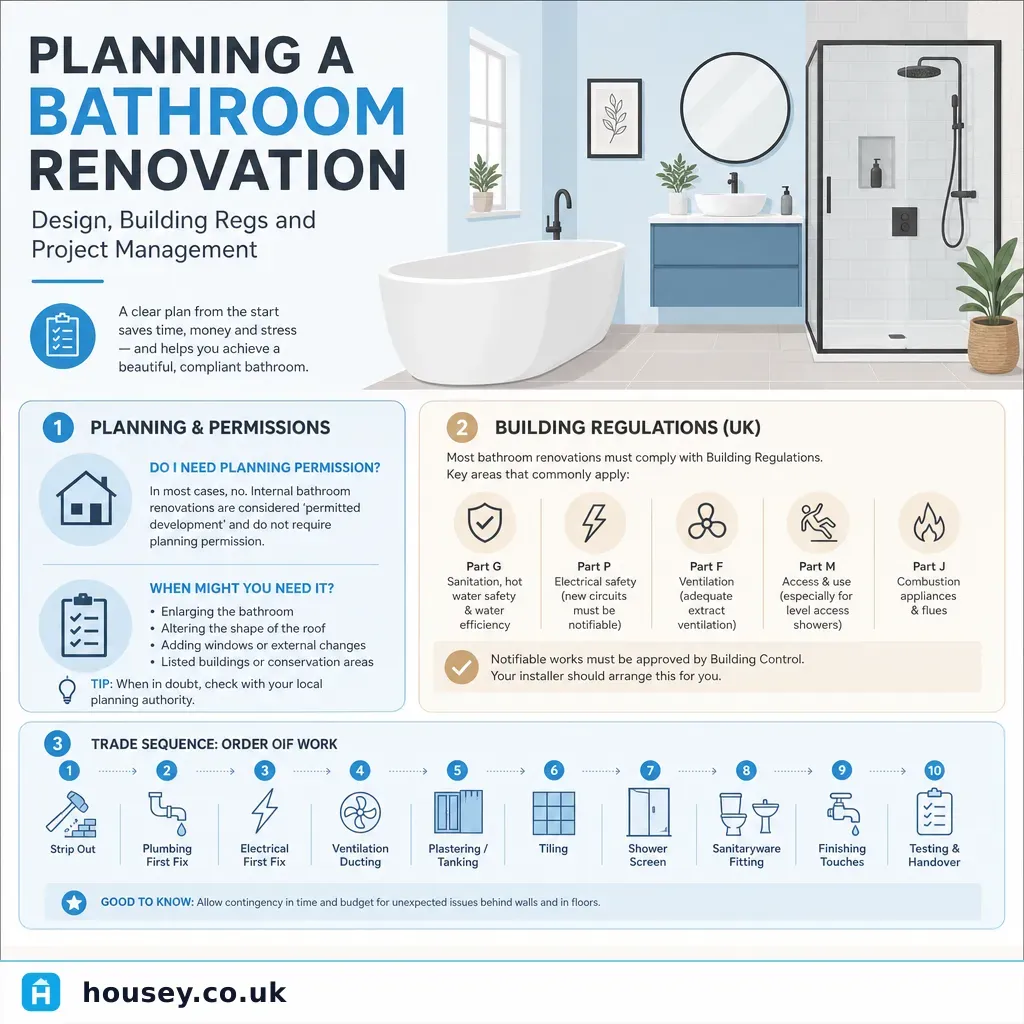
Planning a Bathroom Renovation: Design, Building Regs and Project Management
Most bathroom renovations replacing existing sanitaryware in the same location do not need building regs or planning permission.
 Improvement & Build
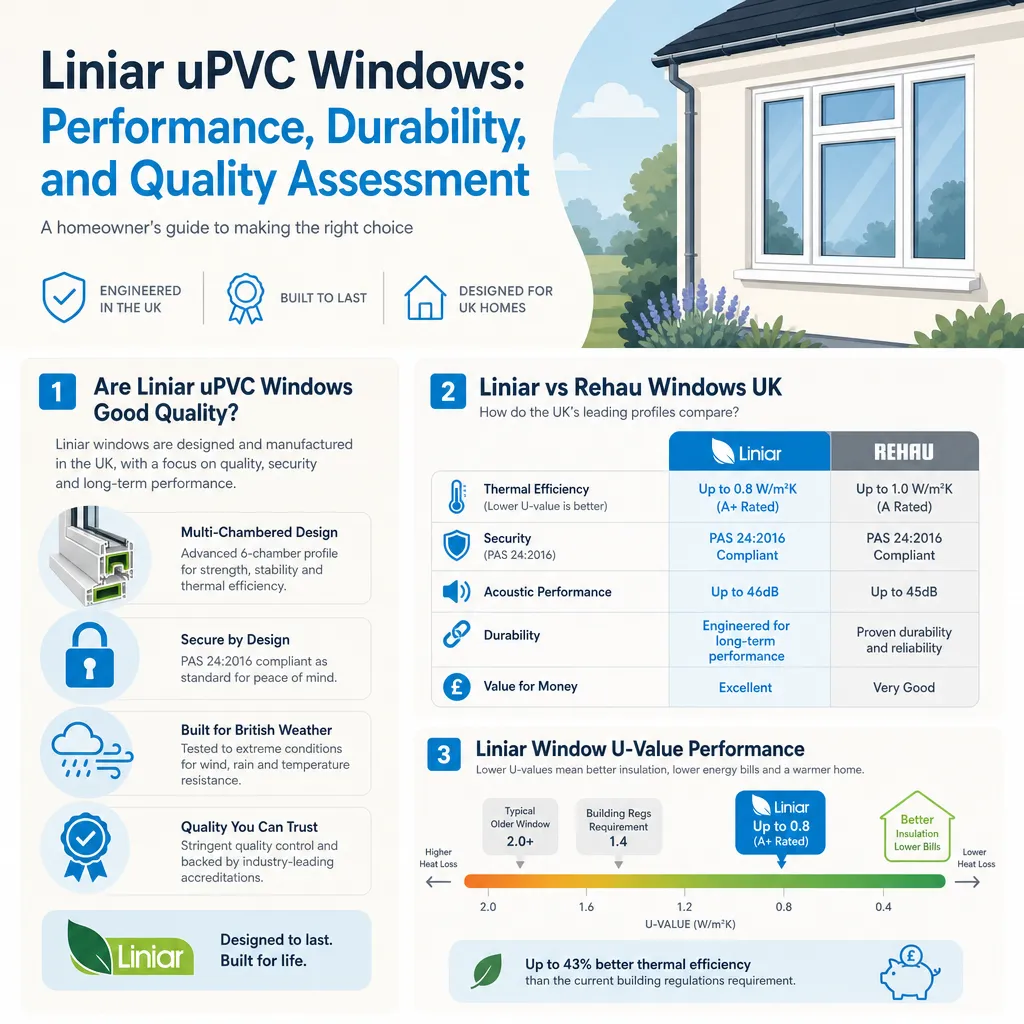
Liniar uPVC Windows: Performance, Durability, and Quality Assessment
Liniar uPVC window profiles are manufactured in the UK using multi-chambered, foamed frames.
 Improvement & Build
Garden Tap Installation with Hot and Cold Water: Plumbing Options
Adding a cold garden tap is a common DIY project, but routing hot water outdoors requires a plumber to connect to your domestic hot water system and comply with the Water Supply (Water Fittings) Regulations 1999.
 Improvement & Build
Sealing and Maintaining Historic Leaded Glass Windows: Preservation and Performance
Leaded glass windows are maintained using traditional linseed oil cement — not silicone or modern sealants, which prevent natural movement in the lead came.