Planning a Bathroom Renovation: Design, Building Regs and Project Management
By Housey · Last reviewed 19th of May 2026
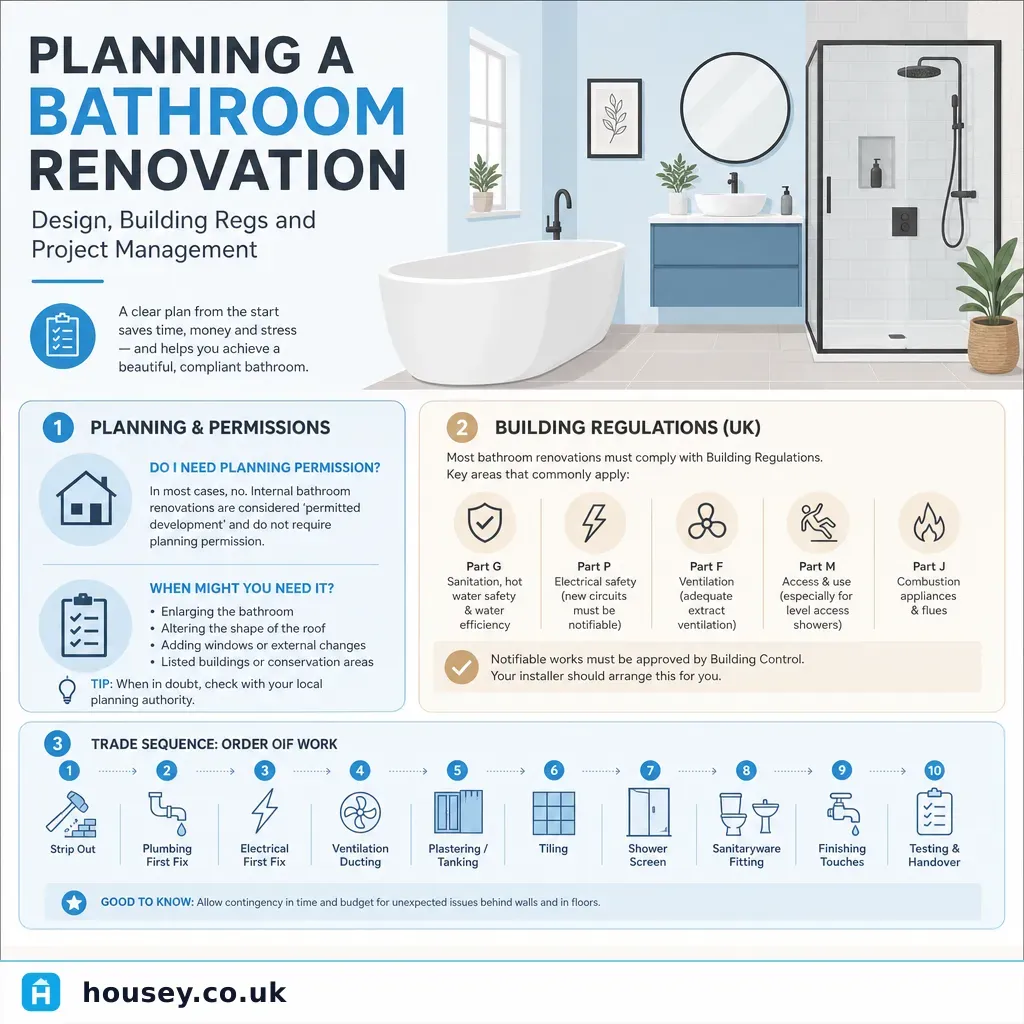
Planning a Bathroom Renovation: Design, Building Regs and Project Management
Bathroom renovations are among the most disruptive and complex home improvements a UK homeowner can undertake, yet they consistently rank as one of the highest-return projects when done well. Whether you are replacing a tired 1980s suite in a 1930s semi or reconfiguring a compact en suite in a new-build flat, careful planning before a single tile is lifted determines whether your project finishes on time, on budget, and without a building control headache.
Key points
- Most bathroom renovations require Building Regulations notification under Part G (sanitation and hot water) if you are adding a new bathroom, and under Part P (electrical safety) if new electrical circuits are installed.
- A like-for-like bathroom replacement in the same position usually does not require planning permission; adding a bathroom in a new location — such as in a loft conversion — may require planning or permitted development approval.
- The correct trade sequence is: strip-out → first-fix plumbing and electrics → waterproofing → boarding and plastering → tiling → sanitaryware → second-fix plumbing and electrics → decoration.
- An NICEIC- or NAPIT-registered electrician must carry out or certify any new bathroom electrical circuits under Part P of the Building Regulations.
- Wet rooms and walk-in shower areas require a tanked (waterproofed) substrate; improper tanking is one of the most common causes of structural moisture damage behind tiles.
Do I need building regulations for a bathroom renovation?
For straightforward like-for-like replacements — swapping a bath, toilet, or basin in the same position — building regulations approval is not usually required. However, Building Regulations Part G applies when you are adding a new bathroom, creating an additional WC, or installing a new unvented hot water cylinder. Unvented cylinders must be fitted by a competent person registered under Part G3 and require notification to your local authority building control or self-certification through a recognised scheme.
Part P of the Building Regulations governs electrical work in bathrooms. Any new lighting circuit, shower circuit, or shaver socket installation in what is defined as a special location (the zones around the bath or shower) must either be notified to your local building control authority or carried out by an electrician registered with a Part P competent-person scheme such as NICEIC, NAPIT, or ELECSA. Self-certification by a registered electrician avoids the need for a formal building control application and is the most common route.
If your renovation is part of a wider project — such as a loft conversion with an en suite — additional regulations covering structural work, fire safety, ventilation, and thermal performance will also apply.
Planning the design: what to decide before getting quotes
The most expensive mistakes in bathroom renovations happen when homeowners change their minds mid-project. Finalise the following before instructing tradespeople.
Layout and sanitaryware positions
Moving soil pipes or the soil stack is significantly more expensive than keeping existing drainage runs. A plumber or architectural technologist can advise on viable layout options within your current drainage configuration.
Shower, bath, or wet room?
Option | Best for | Not ideal for | Key consideration |
|---|---|---|---|
Wet room (full tanking) | Accessibility, contemporary finish | Tight budgets, upper-floor timber structures | Thorough waterproofing essential; upper-floor installations need a structural check |
Walk-in shower enclosure | Most homes | Very small bathrooms | Tray size, screen height, and drain position |
Bath with shower over | Families with young children | Small bathrooms | Over-bath screens vary in quality; check fixings to the wall |
Combined bath and separate shower | Larger bathrooms | Small or awkward layouts | More flexibility; higher installation cost |
Ventilation
Building Regulations Approved Document F requires mechanical extract ventilation of at least 15 litres per second for rooms containing a bath or shower. A humidity-controlled extractor fan satisfies Part F requirements in most situations. Passive vents alone are not adequate for enclosed bathrooms without openable windows.
Electrical zones
Bathrooms are divided into IP-rated zones around the bath and shower. Light fittings, shaver sockets, and heated towel rails must carry appropriate IP ratings for their zone. Your electrician should issue a completion certificate confirming the installation meets Part P requirements.
Project management: the correct trade sequence
The order in which trades work matters. Carrying out work out of sequence risks expensive rework or damage to completed finishes.
- Agree design, sanitaryware, and all materials before booking trades — allow for lead times on tiles and brassware.
- Strip out the existing suite, tiles, and flooring.
- Carry out any structural or subfloor work (joist repairs, levelling, substrate preparation).
- First-fix plumbing — relocate or extend pipe runs, rough in waste positions.
- First-fix electrics — cable runs for lighting, extractor, and shower circuit.
- Waterproofing and tanking — particularly around shower areas and wet zones.
- Boarding and plastering — use moisture-resistant board in wet areas.
- Tiling — walls before floor where possible.
- Sanitaryware installation — bath, toilet, basin, shower tray or wet room former.
- Second-fix plumbing — connect taps, waste, and cistern.
- Second-fix electrics — fit light fittings, extractor fan, and heated towel rail.
- Decoration, sealants, and accessories.
- Testing and sign-off — electrical completion certificate, check all joints and seals.
Budgeting and getting quotes
Indicative UK costs, last reviewed 2026-05-19. Costs vary by region, specification, and trade availability.
A basic bathroom renovation (same layout, mid-range sanitaryware, ceramic tiles) typically costs £4,000–£8,000. High-specification renovations with wet rooms, underfloor heating, and premium sanitaryware can reach £12,000–£20,000 or more. Always obtain at least three written, itemised quotes.
What to ask before accepting a quote
- Is VAT included in the quoted price?
- Who carries out the electrical and plumbing work, and are they NICEIC-, NAPIT-, or Gas Safe-registered where applicable?
- What is excluded — waste disposal, tiling, decoration, building control fees?
- Will a Part P completion certificate be provided on completion?
- What happens if concealed damage (rotten joists, corroded pipes) is discovered during strip-out?
- What is the payment schedule — avoid large upfront payments.
Homeowner checklist: before work starts
When to get professional help
Most bathroom renovations are managed directly with individual trades or a specialist bathroom installer. Consider engaging an architectural technologist or a project manager if:
- You are relocating the bathroom to a new room or a different floor
- The renovation is part of a larger programme of works such as a loft conversion or extension
- You are installing a wet room on an upper timber floor requiring joist assessment
- Concealed damage — rotten joists, corroded pipes, or mould behind tiles — is found during strip-out
- The property is listed or in a conservation area
- You are coordinating multiple trades simultaneously and need a single point of accountability on site
Red flags to watch for during works:
- A tiler preparing to tile over a suspect or damp substrate without waterproofing
- A plumber connecting waste pipes without discussing drainage falls or stack ventilation
- An electrician working in the bathroom without discussing zones or confirming IP ratings
- Any trade claiming that building regulations are not required without having checked
How Housey can help
Housey connects you with vetted local professionals for every stage of your bathroom renovation. If your project involves layout changes or forms part of a wider programme of works, an architectural technologist can produce measured drawings and advise on compliance requirements. Where your project requires building regulations drawings — for a new bathroom location or unvented hot water installation — Housey can match you with a local specialist. For larger or more complex bathroom projects, a project manager can coordinate trades, manage the programme, and act as your single point of contact on site.
Frequently asked questions
Do I need planning permission for a bathroom renovation in the UK?
In most cases, no. Replacing or upgrading a bathroom in its existing location does not require planning permission. However, if you are adding a new bathroom as part of a loft conversion or extension, or changing the use of a room, planning permission or permitted development approval may be required depending on your property type and local authority area. Always check with your local planning authority if in doubt.
What is Part P and does it apply to my bathroom renovation?
Part P of the Building Regulations covers electrical safety in dwellings. It applies to new electrical circuits in bathrooms, including shower circuits, lighting, and extractor fan wiring. Work must be carried out by an NICEIC-, NAPIT-, or ELECSA-registered electrician who can self-certify, or notified to your local building control. A completion certificate should be issued on completion, which you will need when selling the property.
What order should bathroom trades work in?
The correct sequence is: strip-out, structural or subfloor work, first-fix plumbing, first-fix electrics, waterproofing, boarding, tiling, sanitaryware installation, second-fix plumbing, second-fix electrics, then decoration and sealants. Working out of sequence — for example, tiling before first-fix plumbing is complete — risks expensive rework and potential water damage to the new finish.
How long does a bathroom renovation take?
A standard bathroom renovation installation phase is typically 5–10 working days, depending on scope and the number of trades involved. Allow additional time for sanitaryware and tile lead times, which often add 4–8 weeks before work can begin. Complex projects involving wet rooms, structural work, or re-routing of drainage and electrical circuits take longer.
Do I need building regs approval for a new shower?
Replacing an existing shower unit like-for-like generally does not require building regulations notification. If you are installing a new shower circuit, Part P applies to the electrical work. Adding a shower room in a new location also triggers Part G, requiring notification to your local authority building control or self-certification by a registered competent person.
Sources and further reading
- Building Regulations Approved Document G: Sanitation, hot water safety and water efficiency — GOV.UK
- Building Regulations Approved Document P: Electrical safety in dwellings — GOV.UK
- Building Regulations Approved Document F: Means of ventilation — GOV.UK
- NICEIC: Competent Person Scheme for electrical work — NICEIC
- Bathroom electrical safety guidance — Electrical Safety First
Useful next reads
 Improvement & Build
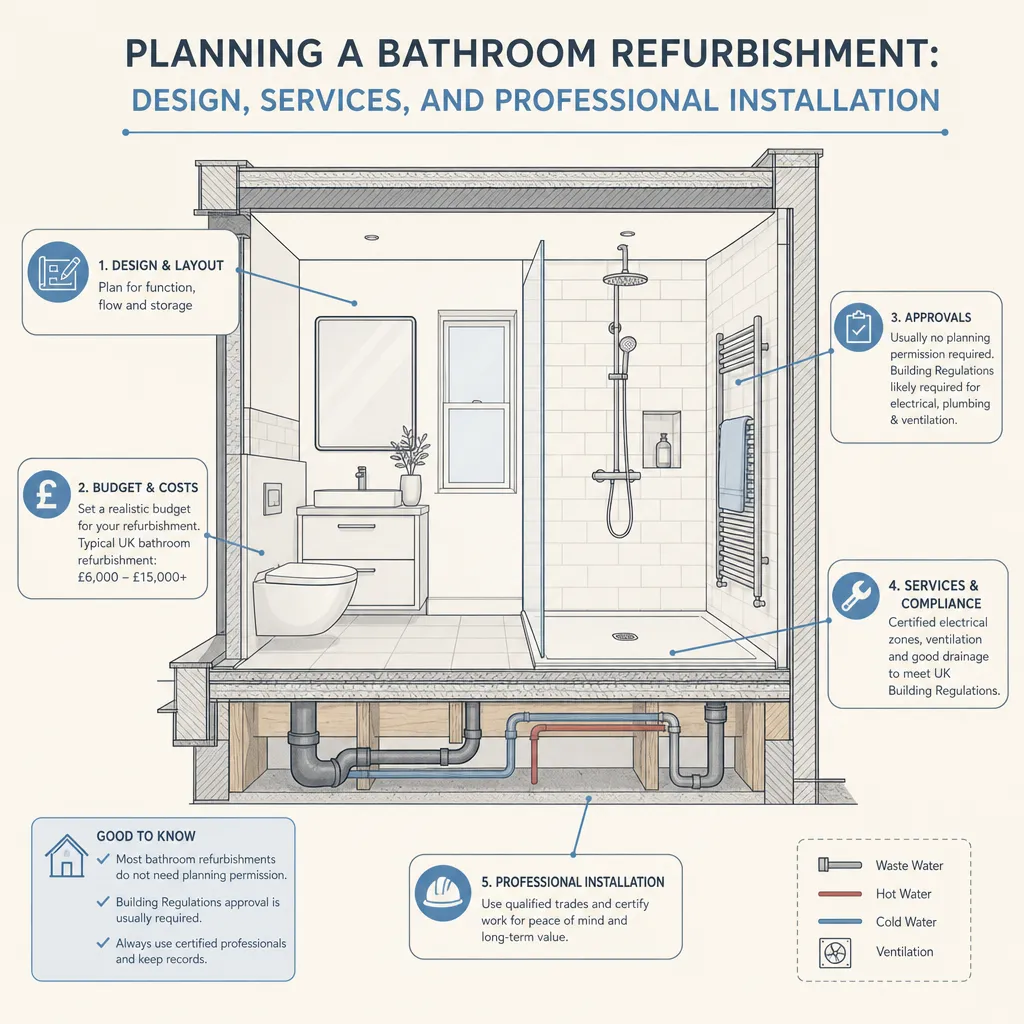
Planning a Bathroom Refurbishment: Design, Services, and Professional Installation
A bathroom refurbishment in the UK typically involves at least three trades — plumber, electrician, and tiler — and costs £4,000–£12,000 for a full project.
 Improvement & Build
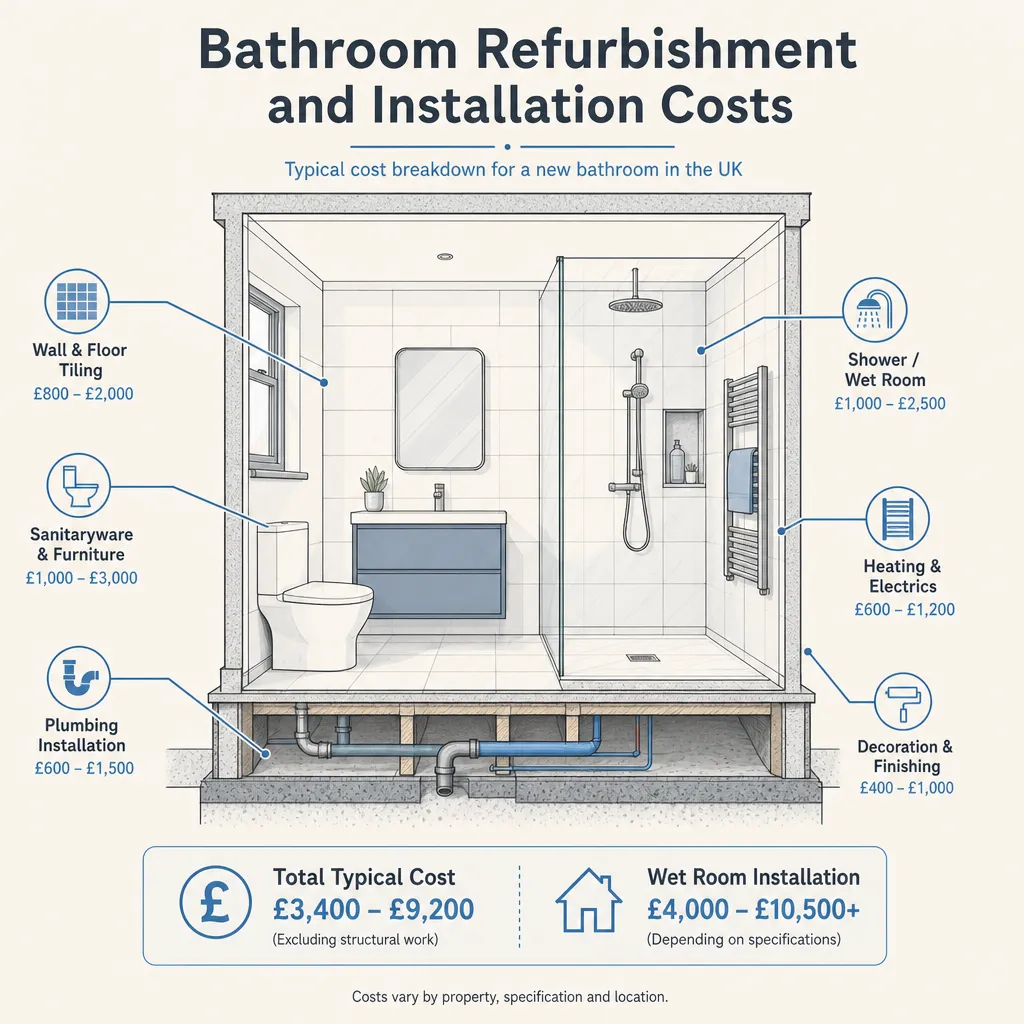
Bathroom Refurbishment and Installation Costs
A basic UK bathroom refurbishment typically costs £2,500–£5,000; a mid-range renovation with a revised layout runs £5,000–£10,000; a high-end or wet room installation can reach £12,000–£16,000 or more.
 Improvement & Build
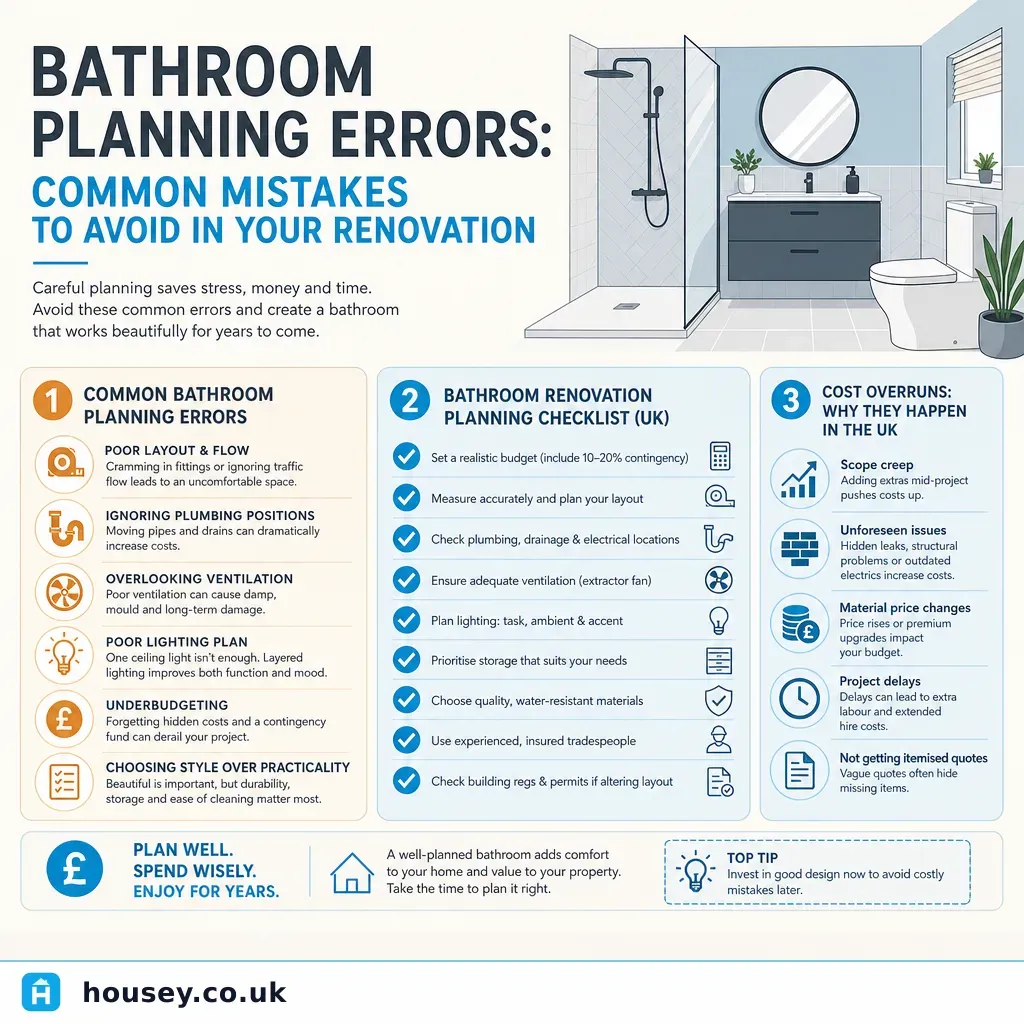
Bathroom Planning Errors: Common Mistakes to Avoid in Your Renovation
The most costly bathroom renovation mistakes tend to happen before work begins — fixing a layout without checking drain positions, ordering materials before measuring accurately, or skipping a contingency budget.
 Improvement & Build
Complete Guide to Budgeting and Planning a House Renovation
Budgeting a house renovation means defining the full scope before seeking quotes, adding a 15–20% contingency, and sequencing structural and building control stages first.
 Improvement & Build
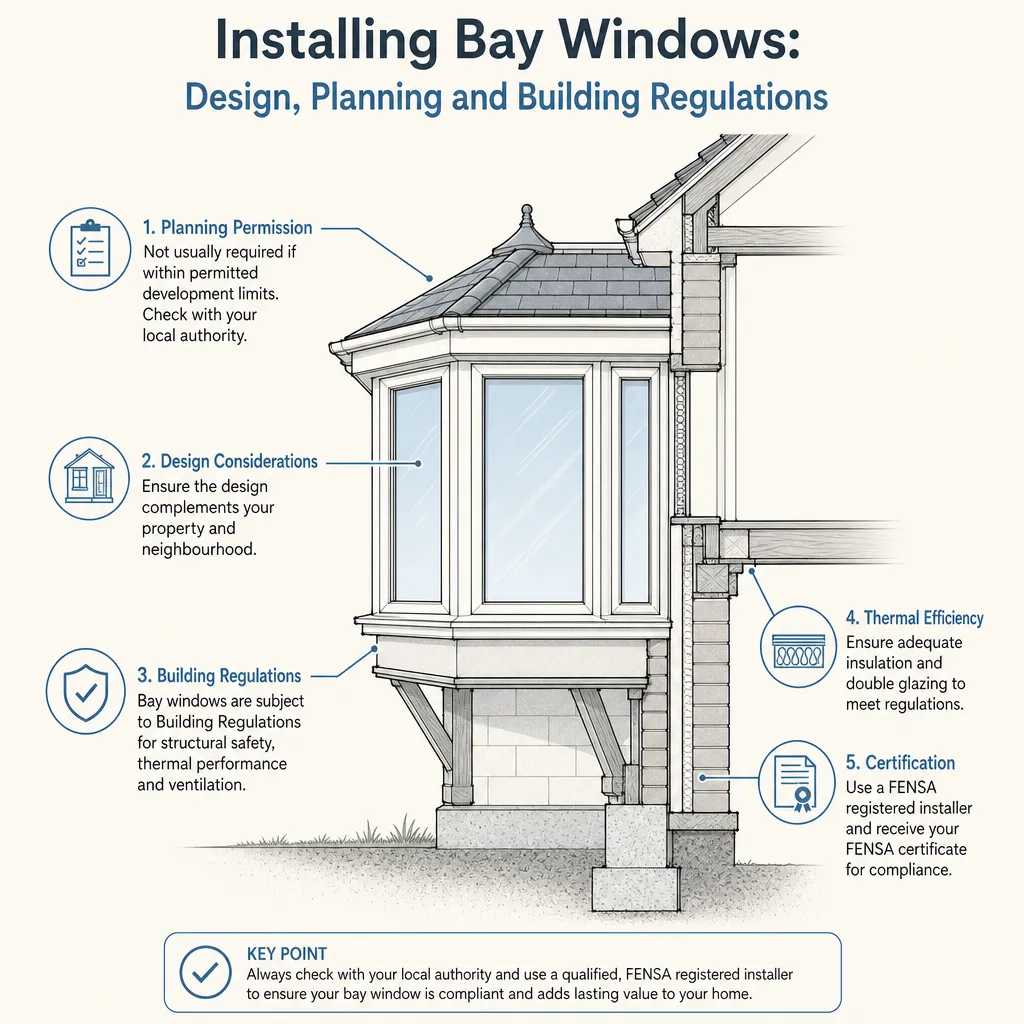
Installing Bay Windows: Design, Planning and Building Regulations
Most like-for-like bay window replacements are permitted development — no planning permission is needed unless the property is listed or in a conservation area.