Managing Construction Quality in Summer Heat: Best Practices
By Housey · Last reviewed 11th of May 2026

Managing Construction Quality in Summer Heat: Best Practices
For UK homeowners running extensions, renovations, or new builds, a hot summer can feel like a welcome boost to site progress — but high temperatures introduce real risks to material performance that both builders and clients need to manage actively. Understanding what can go wrong in the heat, and what good hot weather site practice looks like, puts you in a far better position to oversee your project with confidence.
Key points
- Concrete mixed and placed at ambient temperatures above 30°C can suffer accelerated water evaporation, reducing workability and increasing the risk of shrinkage cracking; BS 8500-1:2015+A2:2019 recommends precautions when air temperature exceeds 25°C.
- Mortar and render are susceptible to premature drying in direct sunlight, which inhibits full carbonation and reduces both bond strength and compressive strength.
- Hot weather increases the risk of heat stress and fatigue in site workers; HSE guidance requires employers to take reasonable steps to keep workers cool, and this can affect productivity and the quality of workmanship.
- Structural timber should not be installed with a moisture content above 19% (TRADA guidance); however, prolonged hot weather can cause green or kiln-dried timber to shrink and check faster than anticipated once in position.
- Building Regulations Part L (Conservation of Fuel and Power) requires that thermal performance targets are met regardless of season; improperly cured adhesives or insulation fixings used in hot conditions can affect airtightness test results.
How heat affects key construction materials
Different materials behave differently under summer conditions. The table below summarises the main risks and how a competent site team should manage them.
Material | Hot weather risk | Good practice | Warning sign |
|---|---|---|---|
Concrete | Rapid water loss, reduced slump, increased shrinkage cracking | Pour early morning; use chilled mix water; wet cure with hessian or polythene; avoid pouring onto hot formwork | Surface crazing or map-cracking within 24 hours of placing |
Mortar | Premature stiffening; poor bond to substrate | Mix smaller batches; dampen substrate before laying; shade work in progress | Hollow sound when finished brickwork is tapped; visible joint shrinkage cracks |
Render | Rapid surface drying; shrinkage cracking | Apply in shade; mist substrate; avoid south-facing elevations at peak heat | Crack pattern appearing within hours of application |
Roof membranes | Thermal expansion; blistering; adhesive failure | Allow for expansion; check manufacturer temperature range for adhesive | Blistering or ridge lines in finished roof |
Structural timber | Accelerated drying; checking; dimensional change | Check moisture content on delivery; stack with spacers away from direct sun | Visible checking or splitting in floor joists or rafters |
Adhesives and sealants | Altered open time; failure to cure if too hot | Check manufacturer's maximum application temperature | Adhesive skinning before substrate contact; uncured sealant after 24 hours |
What to check as a homeowner during a hot spell
Homeowners overseeing a project are not expected to supervise technical work — but watching for warning signs helps you have informed conversations with your contractor.
Homeowner oversight checklist
If the answer to any of these is no, raise it with your contractor or project manager — they should have procedures for hot weather working.
What to ask your contractor about summer site management
Before works begin, or when a hot spell is forecast during your project, ask your main contractor or site manager:
- Do you have a documented hot weather working procedure, and can I see it?
- At what ambient temperature will you adjust your concrete mix design or pouring schedule?
- How will you protect and cure the concrete slab or foundations during the first 72 hours?
- What is your approach to mortar and render work when temperatures exceed 25°C or in direct sun?
- How are you managing worker welfare during hot weather — water, shade, rest breaks?
- Has the structural engineer or building inspector been informed of any material substitutions made because of weather conditions?
- How will weather-related delays affect the programme, and who absorbs any additional costs?
Concrete in summer heat: the most common risk
Of all hot weather site issues, concrete placement is the one most likely to create latent defects. UK ambient temperatures of 25–35°C are increasingly common in July and August and can push freshly placed concrete into a zone where cracking and strength loss become probable without intervention.
Precautions a competent contractor should take:
- Adjust mix design — specify a retarding admixture to BS EN 934-2 to extend workability in hot conditions.
- Pre-wet formwork and substrate — reduces absorption of mix water from fresh concrete.
- Schedule pours for early morning or late afternoon — avoids peak afternoon temperatures.
- Protect from sun and wind — use temporary shading, windbreaks, and damp hessian immediately after placing.
- Wet cure for at least seven days — keep the surface continuously moist; longer for high-strength mixes.
- Monitor fresh concrete temperature — BS 8500 recommends that concrete temperature at point of delivery should not exceed 30°C.
Building control officers may request a curing record or core test if there is evidence of poor hot weather practice on a structural element. Confirm with your contractor that records are being kept.
When to involve a project manager or building inspector
For larger projects — extensions over 50 m², structural concrete frames, or any work involving specification-critical pours — having a project manager or independent building inspector visit during hot weather is a worthwhile precaution. They can confirm that slump and temperature tests are being carried out at point of delivery, check that curing protection is applied correctly and promptly, identify any deviation from the agreed specification, and document non-conformances for building control.
When to get professional help
Most hot weather quality risks can be managed by a competent contractor. Escalate if:
- Visible surface cracking appears across a concrete slab within 24 hours of pouring.
- Finished mortar joints sound hollow when tapped after the first few weeks (suggesting poor bond caused by premature drying).
- Render has cracked significantly or is delaminating from the substrate.
- Structural timber is checking or splitting badly after installation.
- The contractor cannot explain what hot weather precautions are in place.
If you are concerned about the quality of structural concrete placed in difficult conditions, contact your building control officer or commission an independent structural assessment.
How Housey can help
Whether you are starting an extension or managing a more complex build, Housey helps you find and compare vetted tradespeople who understand UK site conditions. Compare quotes from extension builders, design-and-build firms, and project managers — including those experienced in managing quality control across seasonal site conditions.
Frequently asked questions
Does hot weather affect concrete strength?
Yes, it can. When ambient temperatures rise above 25–30°C, fresh concrete loses water more rapidly, which reduces workability, can lead to surface cracking, and — in severe cases — reduces long-term compressive strength. The risk is manageable with good practice (retarding admixtures, morning pours, wet curing), but requires active management by the contractor rather than being ignored.
What temperature is too hot for laying concrete in the UK?
BS 8500-1 recommends precautions above 25°C ambient air temperature. Above 30°C, more significant adjustments to mix design and scheduling are needed. Most specialist guidance suggests concrete should not be placed when its temperature at point of delivery exceeds 30°C, and that large pours in direct sunlight during peak afternoon heat should be rescheduled where possible.
How can I check my builder is managing hot weather correctly?
Ask to see the contractor's hot weather working procedure. On site, look for: pours happening in the morning or evening rather than at midday; fresh concrete covered with damp hessian or polythene within 20–30 minutes of finishing; mortar mixed in small batches; structural timber covered when not being installed immediately. Building control officers can provide an independent check if you have specific concerns.
Does summer heat affect mortar and render?
Yes. Mortar and render gain strength through carbonation and hydration, both of which are disrupted by premature drying. In hot or dry conditions, mortar can stiffen before proper bond is achieved. Good practice includes dampening down brickwork before laying, shading work in progress, and avoiding application on south-facing elevations during peak afternoon heat.
Sources and further reading
- BS 8500-1:2015+A2:2019 — Concrete specification — BSI
- HSE guidance on working in hot weather (heat stress) — HSE
- Building Regulations Approved Document A (Structure) — GOV.UK
- Building Regulations Approved Document L (Conservation of Fuel and Power) — GOV.UK
- TRADA — timber in construction guidance — TRADA
- BRE Group — concrete and construction guidance — BRE Group
Useful next reads
 Improvement & Build
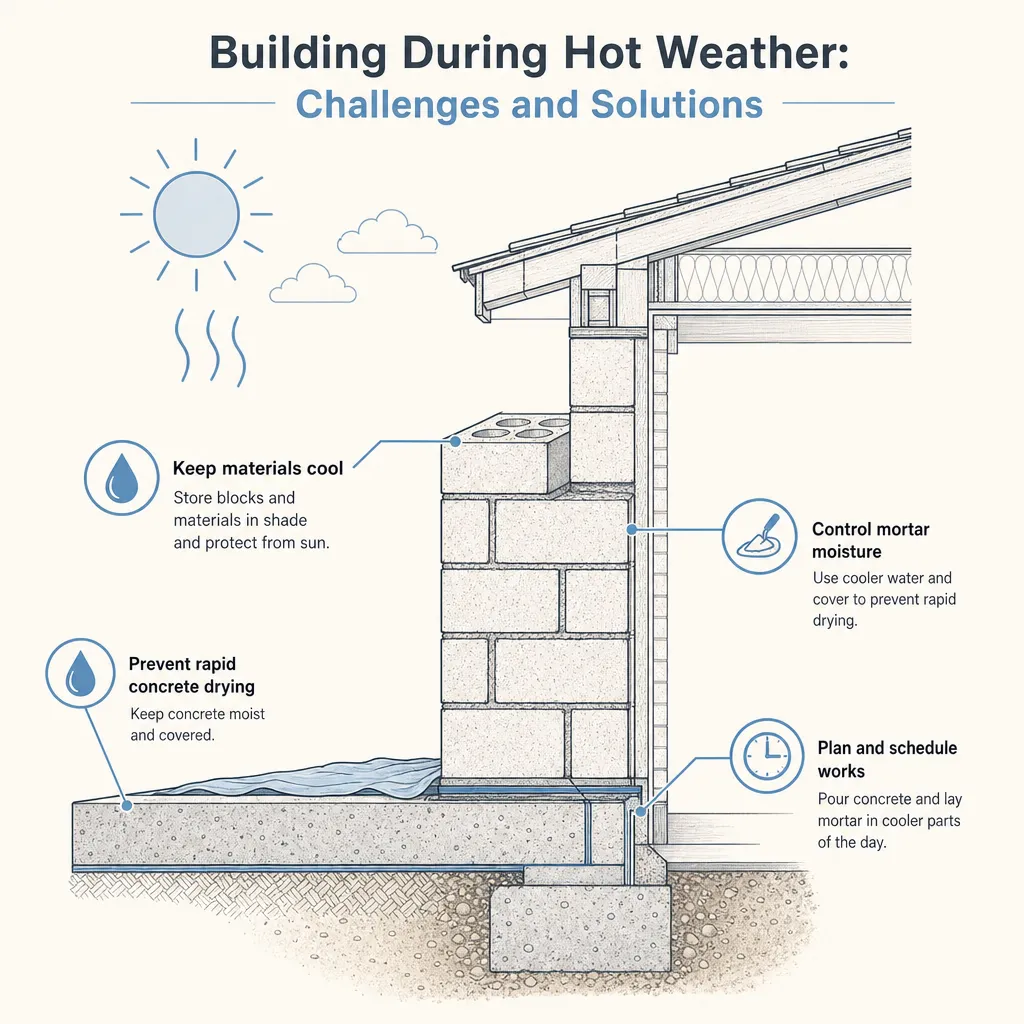
Building During Hot Weather: Challenges and Solutions
Building in hot weather risks premature drying of concrete and mortar, reduced material workability, and heat stress for workers.
 Improvement & Build
Gardening in Hot Weather: Growing Successfully in Summer Conditions
In hot weather, UK gardens benefit most from deep watering in the early morning, a 5–7.
 Improvement & Build
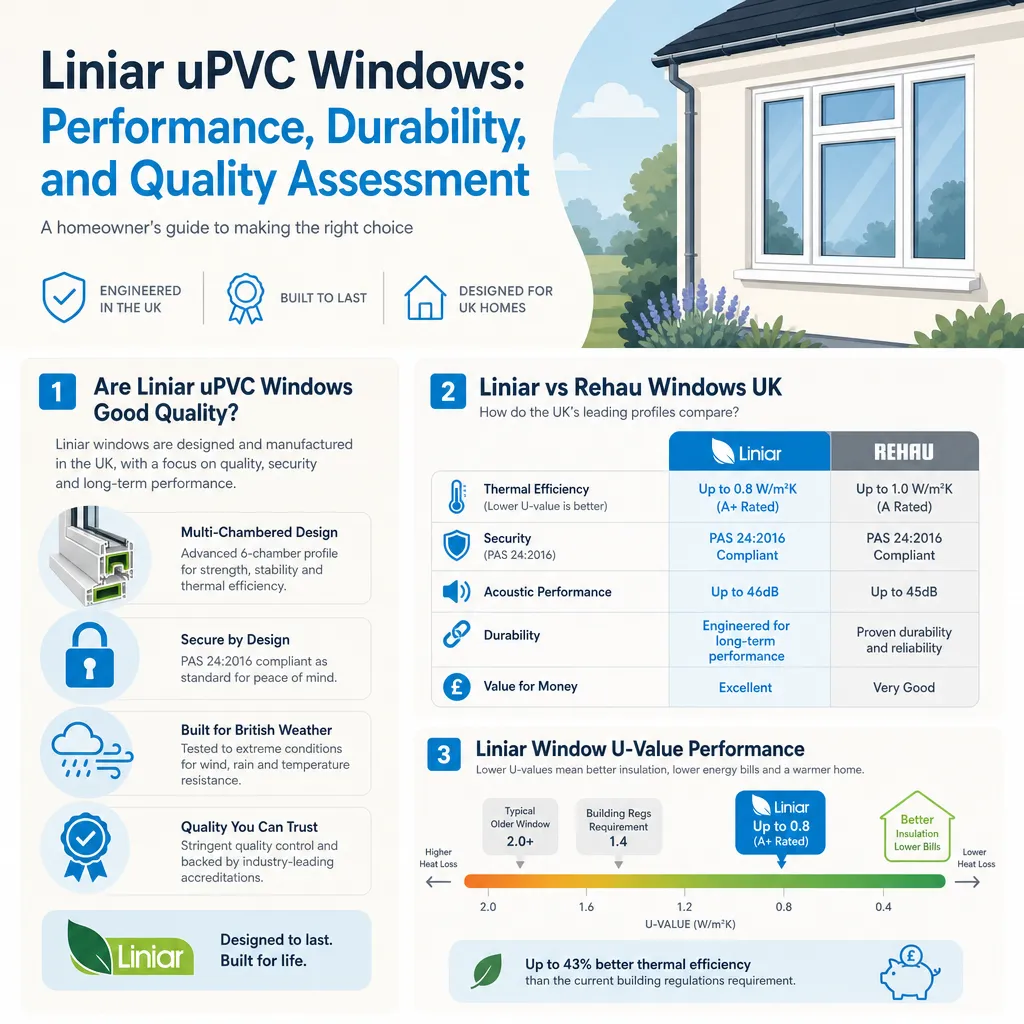
Liniar uPVC Windows: Performance, Durability, and Quality Assessment
Liniar uPVC window profiles are manufactured in the UK using multi-chambered, foamed frames.
 Improvement & Build
Garden Tap Installation with Hot and Cold Water: Plumbing Options
Adding a cold garden tap is a common DIY project, but routing hot water outdoors requires a plumber to connect to your domestic hot water system and comply with the Water Supply (Water Fittings) Regulations 1999.
 Improvement & Build
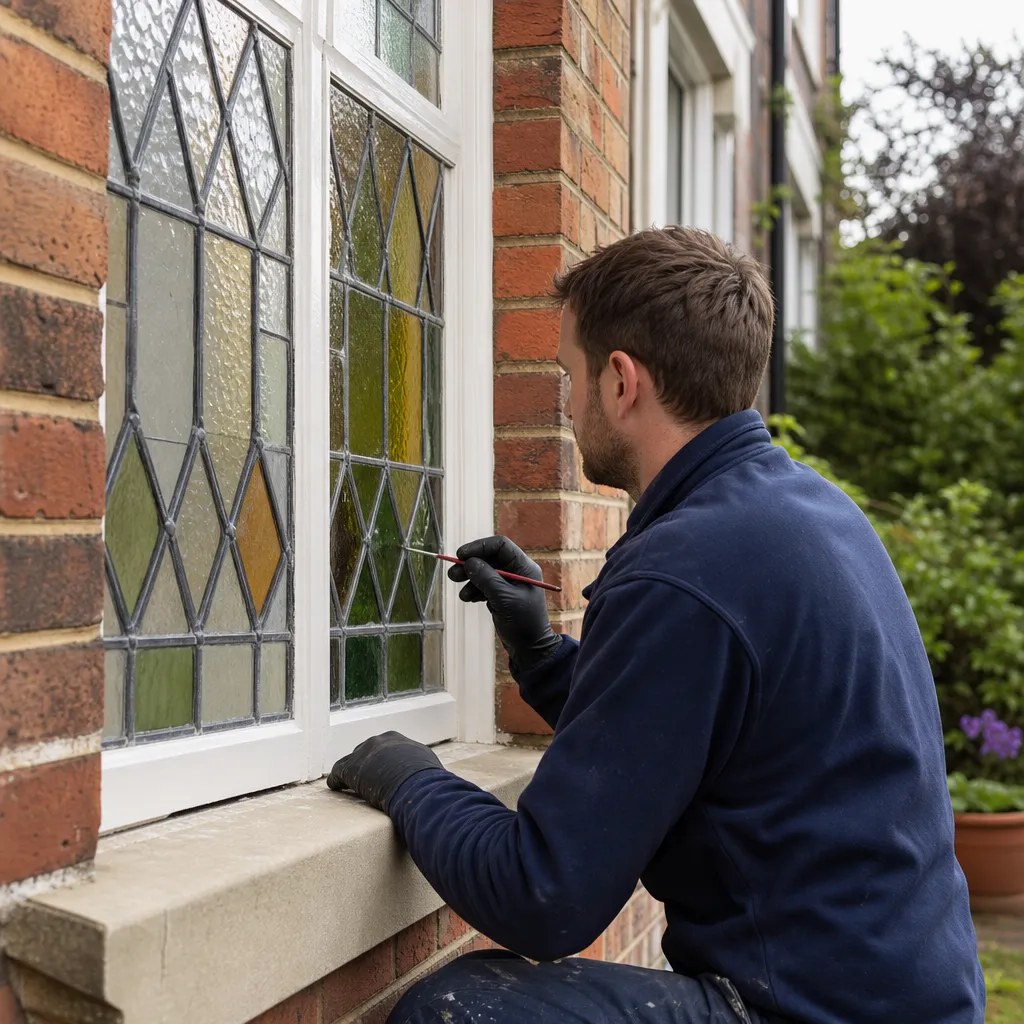
Sealing and Maintaining Historic Leaded Glass Windows: Preservation and Performance
Leaded glass windows are maintained using traditional linseed oil cement — not silicone or modern sealants, which prevent natural movement in the lead came.