Managing Costs When Building a Swimming Pool: Hidden Expenses and Contingencies
By Housey · Last reviewed 11th of May 2026
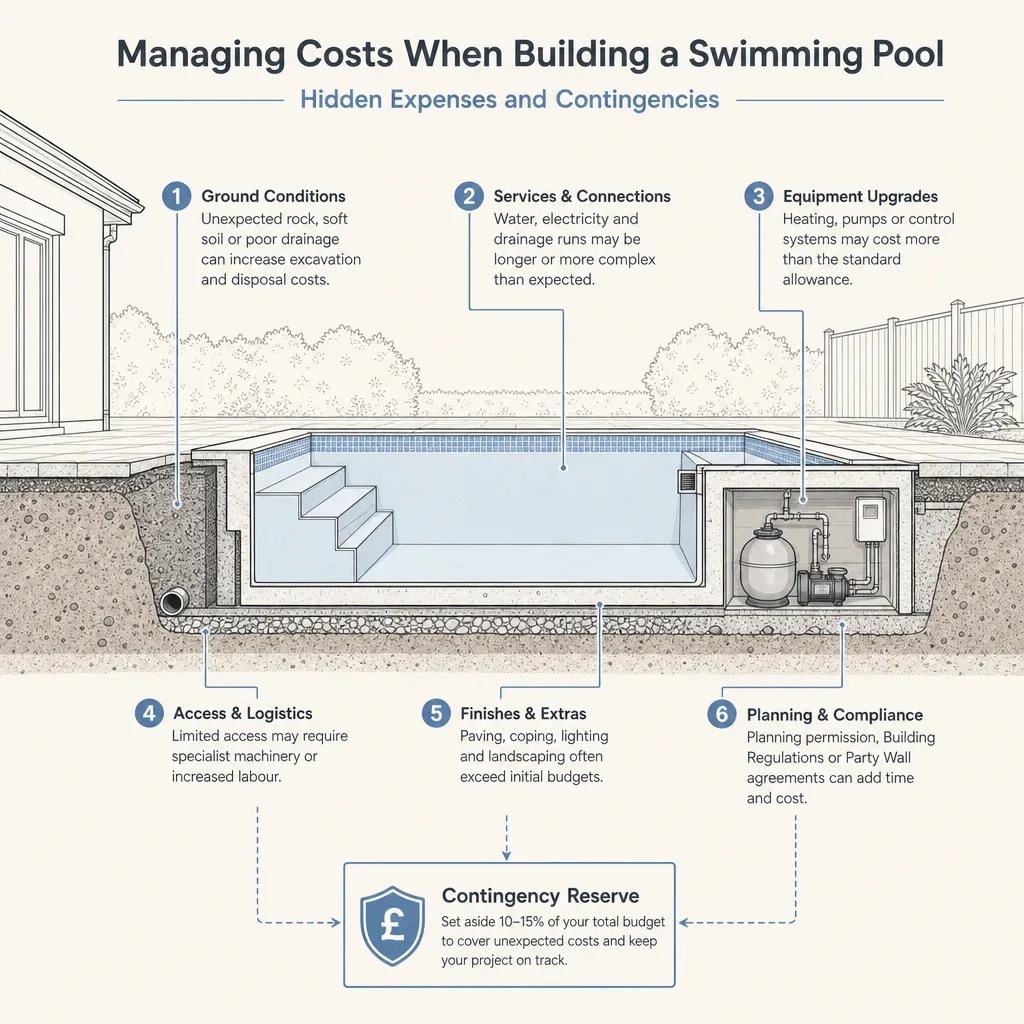
Managing Costs When Building a Swimming Pool: Hidden Expenses and Contingencies
Swimming pool projects in the UK have a reputation for budget overruns — not because contractors are dishonest, but because pools involve groundworks, drainage, electrical infrastructure, landscaping, and ongoing running costs that are easy to underestimate at the outset. Many homeowners focus on the initial quote for the pool structure itself without fully accounting for the complete project scope, only to encounter a succession of additional costs once excavation begins. The difference between a realistic budget and a nasty surprise is usually knowing which costs are commonly excluded from headline figures before you request quotes.
Key points
- In-ground concrete or gunite pools typically cost £45,000–£100,000 for the shell alone; fully installed costs including heating, filtration, paving, and landscaping commonly reach £80,000–£150,000 or more.
- Fibreglass (GRP) pool shells offer faster installation — typically 2–4 weeks for the shell versus 8–16 weeks for concrete — and can cost £25,000–£65,000 installed, though ground conditions must be assessed before committing to this construction method.
- A contingency budget of at least 15% of the contract sum is advisable for pool projects; groundworks frequently reveal unexpected ground conditions, high water tables, or buried services.
- Standard-rate VAT at 20% applies to pool construction; any quote that does not show VAT separately is understating the true project cost.
- Pool fencing is not legally mandated for private domestic pools in England, but the Royal Society for the Prevention of Accidents (RoSPA) strongly recommends it — this cost is regularly omitted from initial quotes.
The most common hidden costs in pool construction
Pool quotations vary enormously in what they include. Understanding which line items are typically absent from headline prices helps you build a realistic budget before you commit to a contractor.
Groundworks and excavation surprises
The largest source of cost overruns in pool projects is groundwork. Standard quotes assume straightforward soil conditions and reasonable machine access. Additional costs commonly arise from:
- High water table: If excavation encounters groundwater, de-watering pumps and modified construction methods are needed. This can add £5,000–£20,000 to a concrete pool build.
- Rock or difficult strata: Chalk, clay shrinkage, or rock close to the surface requires specialist breaking equipment. In some cases, rock-breaking plant or even blasting may be required.
- Restricted access: If the only route to the garden runs through the house or a narrow side gate, a tracked mini-digger is needed at higher daily hire cost, and spoil removal takes longer.
- Existing services: Water mains, gas pipes, or drain runs beneath the proposed footprint must be diverted — at the homeowner's cost and with utility company approval.
Electrical and drainage infrastructure
Most domestic pool installations require a dedicated or upgraded electrical supply. A standard single-phase domestic supply may be insufficient for a pool with a heat pump, filtration pumps, underwater lighting, and a motorised pool cover. Upgrading the incoming supply or running a new dedicated circuit can cost £2,000–£8,000 before pool-specific electrical work under Approved Document P begins.
Pool drainage must handle backwash from the filtration system and overflow during heavy rainfall. If the existing garden drainage cannot accommodate this, soakaways or connections to a surface water sewer may be required — each carrying their own design and installation cost.
Heating system choice and running costs compared
Heating method | Typical installed cost | Approximate annual running cost | Best for |
|---|---|---|---|
Air source heat pump | £4,000–£10,000 | £800–£2,000 | Extended season, energy efficiency |
Gas heater | £2,500–£5,000 | £1,500–£4,000 | Fast heat-up, shorter season |
Solar thermal | £3,000–£8,000 | £200–£600 | Seasonal use, suitable roof or ground area |
Electric element heater | £1,500–£3,000 | £3,000–£6,000+ | Low install cost, high running cost |
Indicative UK costs, last reviewed 2026-05-11. Running costs depend on pool volume, target temperature, and usage pattern.
Pool cover, surround, and landscaping
A pool without a cover loses heat rapidly and accumulates debris — but a motorised safety cover can cost £5,000–£15,000 depending on pool dimensions. Thermal blanket covers are cheaper (£500–£2,000) but must be handled manually and do not provide the same safety benefit.
The pool surround is often quoted separately or excluded entirely. Natural stone paving around a standard 5 × 10 m pool can add £8,000–£20,000 depending on material; slip-resistant porcelain is a common lower-cost alternative. Boundary treatments, feature lighting, and planting can add a further £5,000–£30,000 depending on scope.
Planning, building control, and professional fees
Swimming pools in domestic gardens in England typically do not require planning permission — they are classified as engineering operations rather than building operations — but local planning authorities vary in their interpretation, and pools in conservation areas, listed building curtilages, or Green Belt land are more likely to face scrutiny. Check with your local planning authority before commissioning groundworks.
Building regulations apply to associated works: electrical installations (Part P), drainage (Part H), and structural elements of concrete shells may require engineer sign-off. A structural engineer's fee, building control charges, and any planning pre-application fees typically amount to £1,500–£4,000 — costs that rarely appear in pool contractor quotes.
Contingency planning: building a realistic budget
The industry standard contingency for domestic groundworks projects is 10–15% of the total contract sum. For swimming pool projects — where ground conditions and access are harder to predict than for above-ground construction — 15% is a more prudent starting point.
How to structure contingency:
- Hold contingency separately from the main contract sum — do not let it become a general float
- Release contingency only against itemised change orders agreed in writing with the contractor
- If groundworks are completed without incident, apply remaining contingency to landscaping or specification upgrades
- Do not treat the contingency as discretionary spending before the project is complete
Red flags in pool quotes
Watch for the following when reviewing contractor quotations:
- No groundworks allowance: A quote that does not mention excavation volumes, spoil disposal costs, or ground condition assumptions is almost certainly incomplete
- Shell-only pricing: Headline figures that exclude heating, filtration equipment, electrical connections, and paving can represent less than half the true project cost
- No VAT shown: Standard-rate VAT at 20% applies to pool construction; a quote showing no VAT either omits a significant cost or signals the contractor is below the registration threshold
- No programme or payment milestones: Reputable contractors provide a build programme with stage payments tied to defined completion milestones
- No mention of building control: Part P electrical certificates and drainage sign-off are legal requirements — not optional extras
- Unusually low mobilisation deposit: Standard practice is 10–20% on contract exchange; significantly lower deposits can indicate cash-flow risk
What to ask before accepting a quote
- Is VAT at 20% included in all figures shown?
- What does the quote assume about ground conditions, and what triggers a change order if those assumptions prove wrong?
- Are heating, filtration equipment, pool cover, and paving included or excluded?
- What is the process for managing unforeseen groundwork costs, and is there a cap on variations?
- Who applies for building control, and what Part P certificate will be issued on completion?
- What warranty covers the pool shell, tiling, filtration equipment, and heating system respectively?
- Do you offer a maintenance or servicing contract for the first year after completion?
When to get professional help
Pool projects of significant value benefit from independent oversight or at minimum a pre-contract ground investigation. Consider instructing a structural engineer to review the pool shell design if your garden has significant changes in level, a known high water table, or visible evidence of shrinkable clay. If you are commissioning a pool alongside a pool house or major landscaping scheme, a project manager or specialist design-and-build firm can coordinate contractors, manage the programme, and reduce the risk of costly delays.
How Housey can help
Housey helps UK homeowners plan and manage improvement projects by connecting you with vetted local contractors. Describe your project to receive comparable, itemised quotes from professionals with demonstrable experience in pool construction and associated groundworks in your area — making it easier to compare quotes on a like-for-like basis.
Frequently asked questions
Do I need planning permission to build a swimming pool in my garden?
In most cases, no. In-ground swimming pools in domestic gardens in England are treated as engineering operations and do not typically require planning permission. However, pools in conservation areas, listed building curtilages, Green Belt land, or areas where permitted development rights have been removed may require consent. Always check with your local planning authority before commissioning groundworks.
How long does it take to build an in-ground swimming pool?
A concrete or gunite pool typically takes 12–20 weeks from groundworks to water-filling, depending on size, ground conditions, and finishes. A fibreglass shell installs faster — often 2–4 weeks for the shell itself — but total project time including drainage, electrical, and landscaping is usually 8–14 weeks. Both timescales assume no significant groundwork complications are encountered.
Is heating a swimming pool expensive in the UK?
Running costs depend on pool volume, target temperature, and the length of your heating season. An air source heat pump heating a 35,000-litre pool to 28°C for a six-month season typically costs £800–£2,000 per year in electricity. A gas heater used for the same period can cost £1,500–£4,000 depending on gas tariffs. A well-fitted thermal cover reduces all heating costs significantly.
What ongoing maintenance does a domestic swimming pool require?
A domestic pool requires regular water chemistry testing and adjustment (typically two to three times per week in season), filter backwashing, surface skimming, and seasonal deep cleans. Annual servicing of the pump, filter, and heating system is advisable. Budget £500–£1,500 per year for chemicals and consumables, plus any service contract costs with a pool maintenance company.
Sources and further reading
- Planning permission: when you need it — GOV.UK
- Approved Document P: Electrical safety — Dwellings — GOV.UK
- Private swimming pool safety — Royal Society for the Prevention of Accidents (RoSPA)
- Heat pumps — Energy Saving Trust
Useful next reads
 Improvement & Build
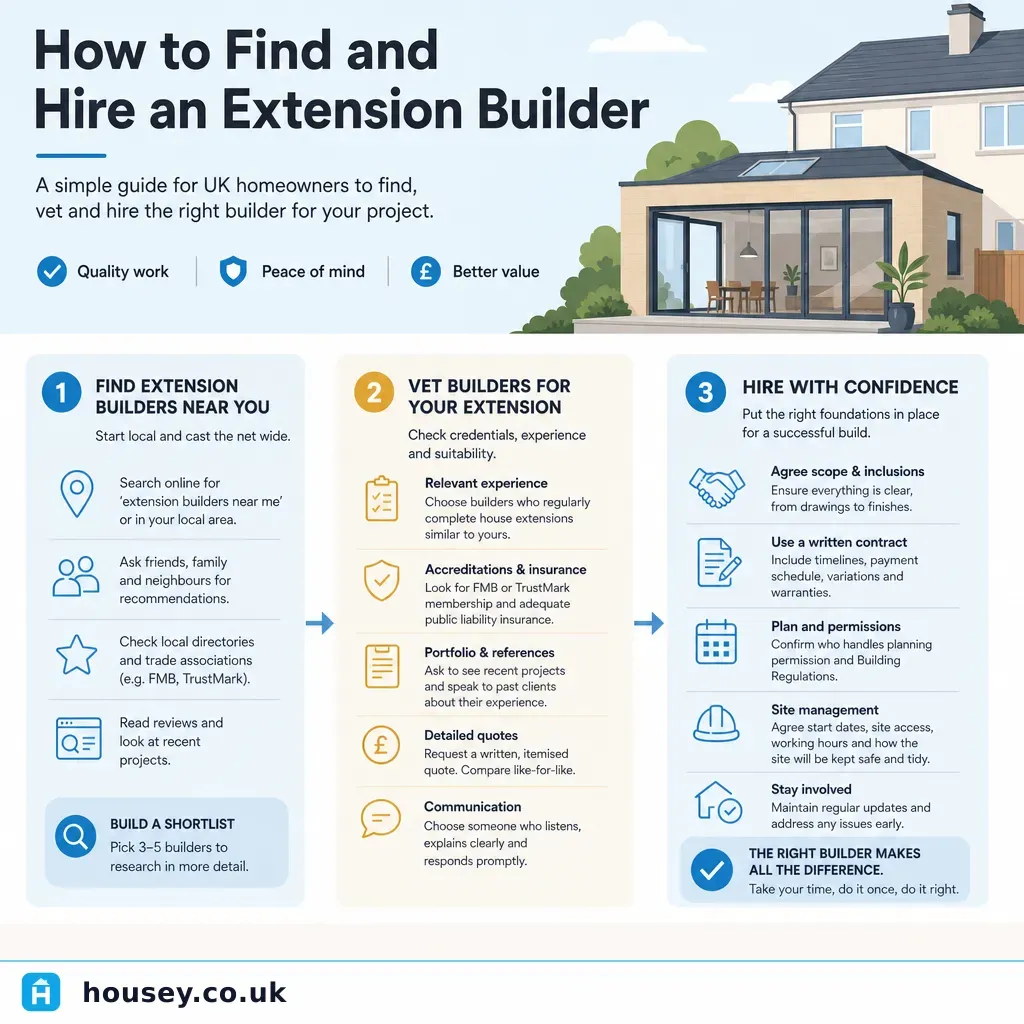
How to Find and Hire an Extension Builder
To hire a reliable extension builder, get at least three detailed written quotes from contractors with documented experience of similar projects.
 Improvement & Build
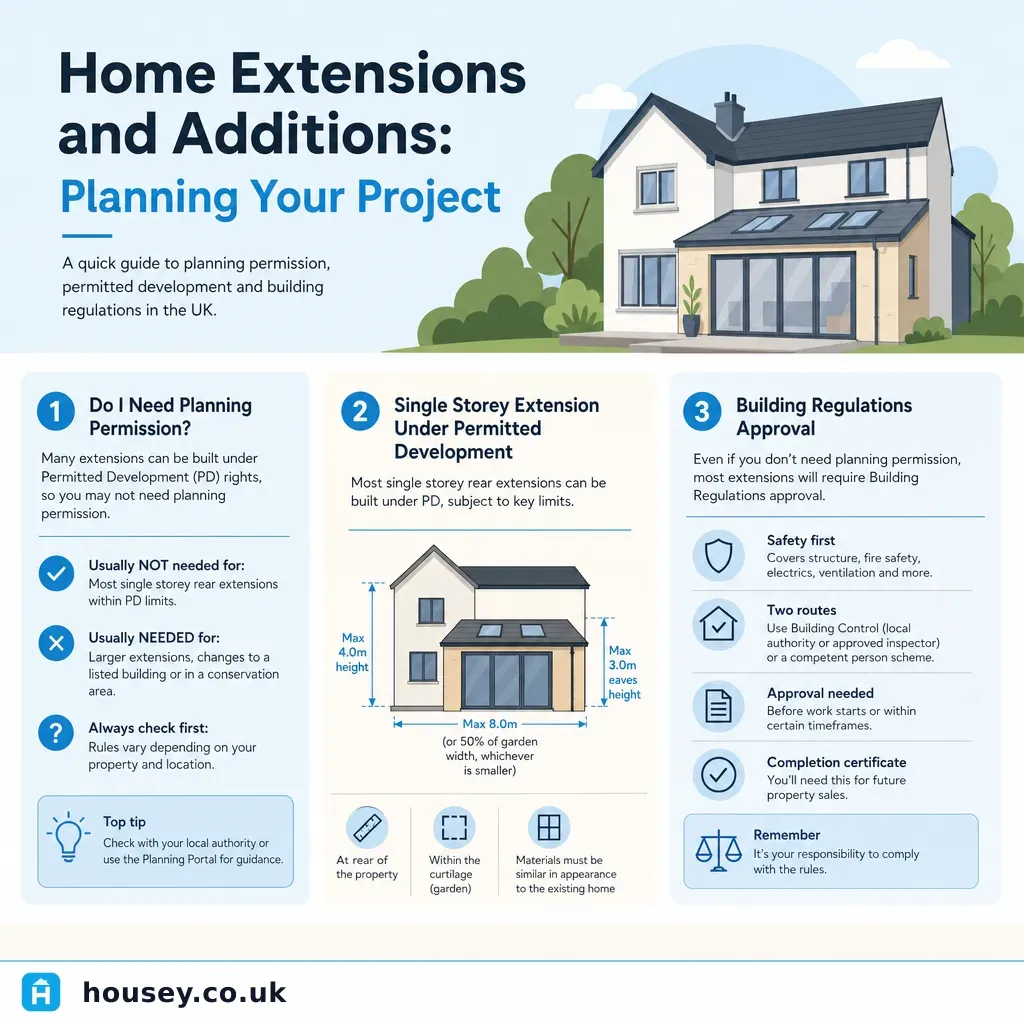
Home Extensions and Additions: Planning Your Project
Most single-storey rear extensions can be built under permitted development without a full planning application, provided they stay within depth limits of 4 m for detached or 3 m for semi-detached and terraced properties.
 Improvement & Build
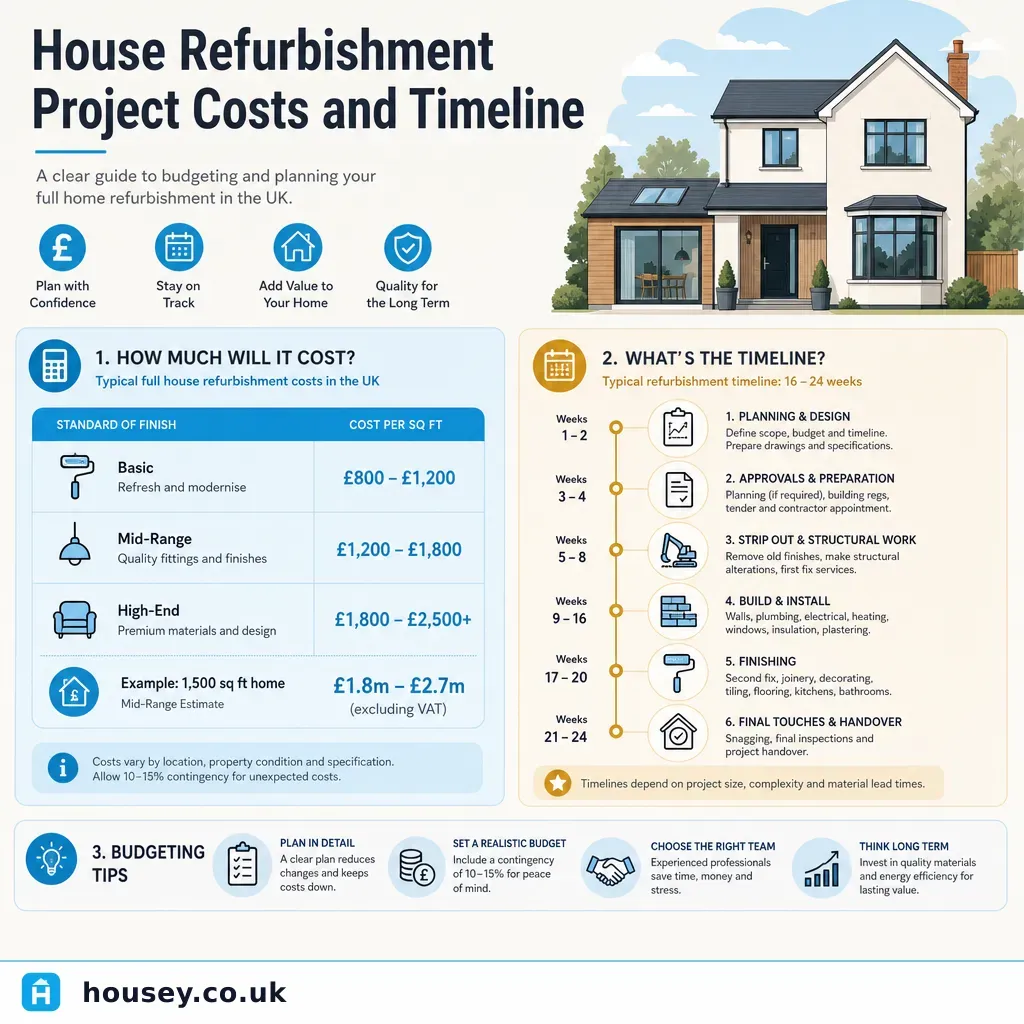
House Refurbishment Project Costs and Timeline
A full house refurbishment in the UK typically costs £30,000–£225,000+ depending on property size, scope, and location.
 Improvement & Build
Building During Wet Weather: Managing Construction in Rain
Rain affects different construction stages differently.
 Improvement & Build
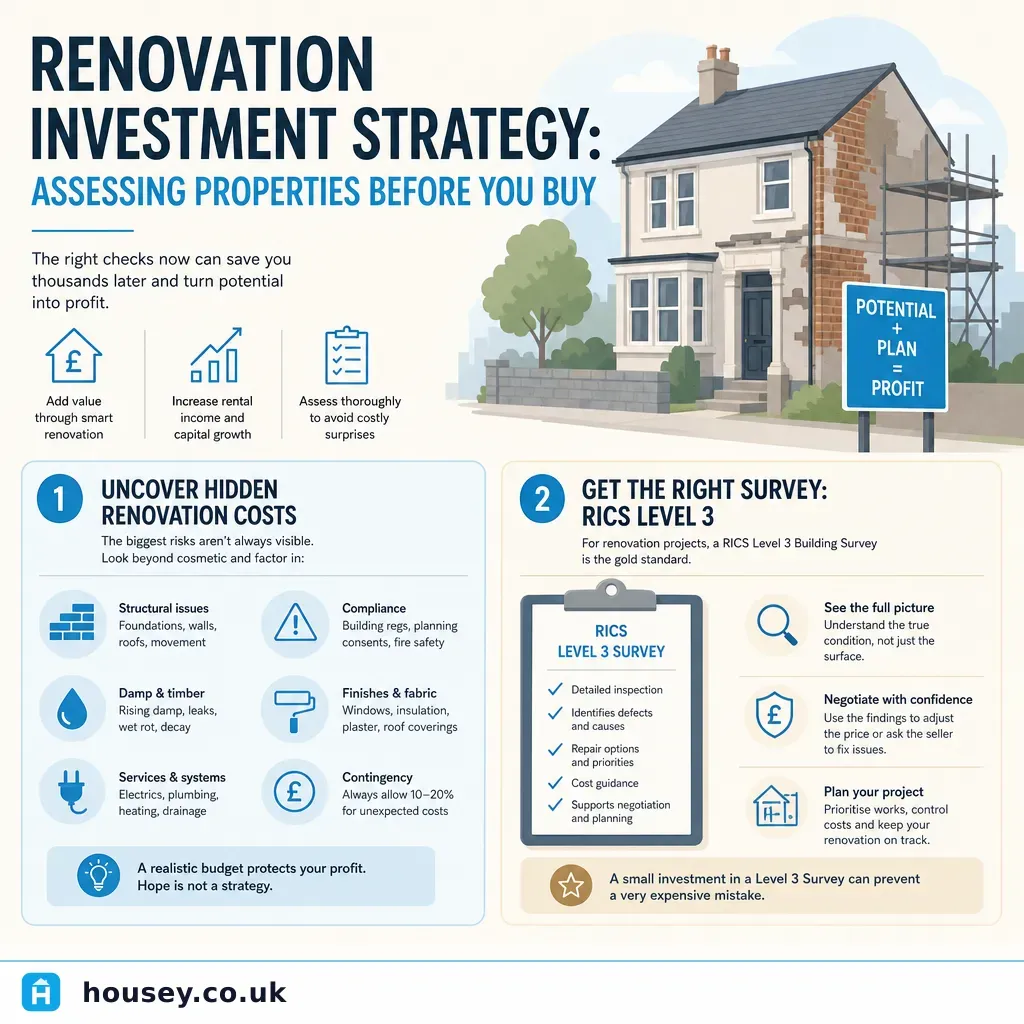
Renovation Investment Strategy: Assessing Properties Before You Buy
Renovation investment properties require more due diligence than a standard home purchase.