Managing Shared Driveway Rights and Responsibilities
By Housey · Last reviewed 11th of May 2026
Managing Shared Driveway Rights and Responsibilities
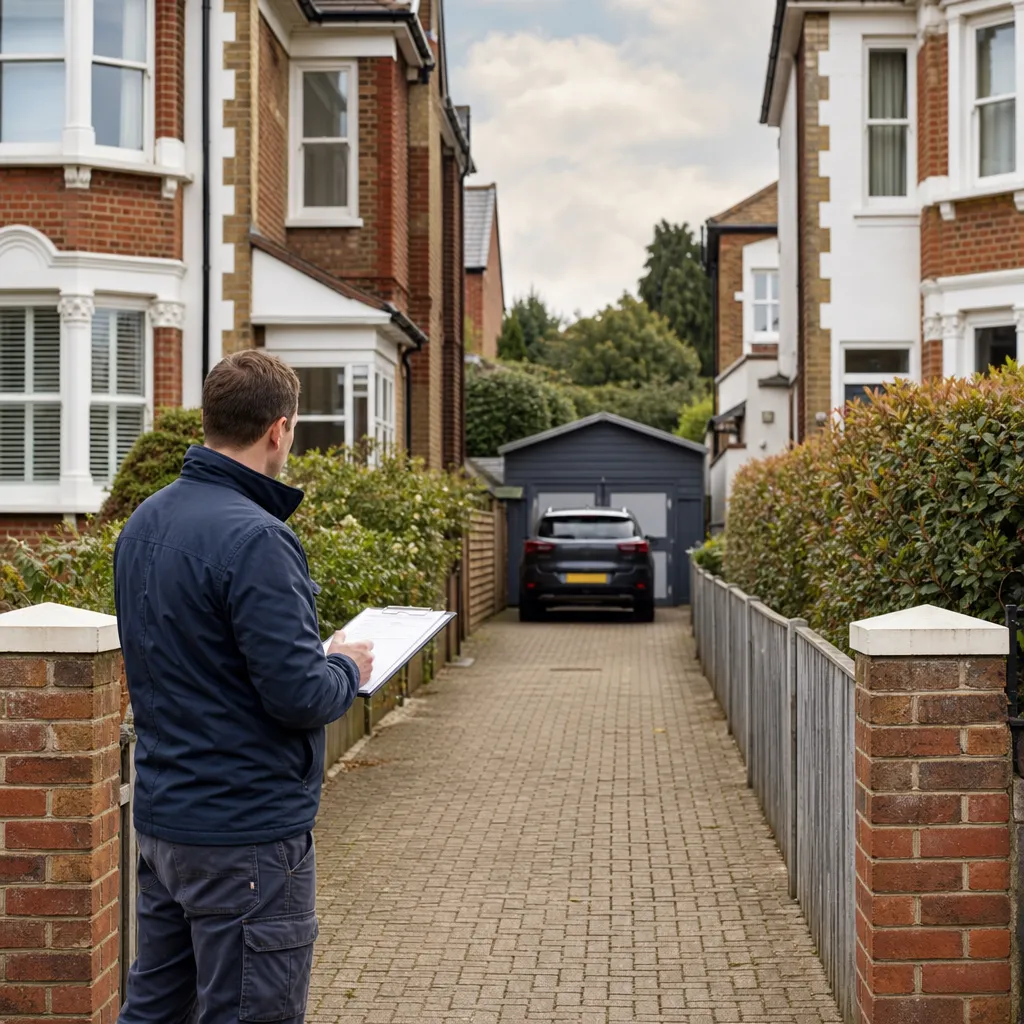
Shared driveways are a feature of many UK properties — from terraced houses with a joint rear-access passage to semi-detached homes that share a split-width drive. Questions about who can use the space, who pays for repairs, and what happens when a neighbour blocks access most commonly surface when a dispute arises, when a buyer's solicitor raises enquiries before exchange, or when major resurfacing is needed. The answers sit primarily in your title deeds, the Land Registry, and English property law — not in informal agreements.
Key points
- Shared driveway rights are usually created as easements and recorded in the title register at HM Land Registry — check the title deeds and any express grant before assuming you have, or lack, access rights.
- The Law of Property Act 1925 governs how easements are created and implied; there is no automatic statutory duty on either owner to maintain a shared surface in good repair.
- Rights of way can be express (written in the deeds), implied (arising from necessity or common intention at sale), or prescriptive (acquired through long use — typically 20 years under the Prescription Act 1832).
- Where deeds are silent on costs, courts have found that users of a shared access may need to contribute to upkeep proportionate to their use, but enforcing this without a deed clause is costly and the outcome uncertain.
- Listed buildings, conservation areas, and some permitted development conditions can restrict what materials and works are permitted on a shared driveway surface.
What gives someone the right to use a shared driveway?
Most shared driveway rights are established as easements — legal rights attached to the land rather than to individuals. An easement grants the holder the right to use another person's land for a specific purpose (here, access) without owning it.
There are three main ways an easement can arise:
- Express grant or reservation — the most common route. The right is written into the conveyance or transfer document and appears on the title register. If both properties were once in the same ownership, the right may have been granted when the plots were first separated.
- Implied easement — arises where, without an express grant, a right must have been intended by both parties, or where access over the driveway is strictly necessary for the property to function. This is fact-specific and often disputed.
- Prescriptive easement — acquired through continuous, uninterrupted, open, and non-permissive use for at least 20 years. A prescriptive easement cannot be acquired over land you already own.
Check the official title register entries for both your property and your neighbour's via HM Land Registry's property search service. The filed plan shows the extent of registered rights.
Type of shared access | Typical arrangement | Key document | Risk if unclear |
|---|---|---|---|
Easement — express | Right written in title deeds | Title register or conveyance | Low if clearly drafted |
Easement — implied | Right inferred from sale circumstances | Conveyance or Land Registry notes | Moderate — may need legal ruling |
Prescriptive easement | Acquired through long use | Evidence of use, statutory declarations | High — disputes are common |
Shared ownership of the surface | Both parties own the driveway jointly | Title register or deed of trust | High — requires written agreement on costs |
Licence | Personal permission from one owner | Written or verbal agreement | Very high — can be revoked at any time |
Who is responsible for maintaining a shared driveway?
This is the most common source of neighbour disputes, and the position in English and Welsh property law is not automatic:
- No automatic duty to repair — unless your title deeds contain a maintenance covenant, neither the landowner nor the party with the easement is legally obliged to keep the surface in good repair.
- Right to repair, not obligation to pay — the dominant owner (the party benefiting from the easement) generally has the right to carry out repairs at their own expense, but usually cannot compel the servient owner (whose land it crosses) to contribute.
- Deed clauses on costs — well-drafted conveyances include a maintenance clause apportioning repair costs, often 50/50 for a two-property shared drive. Where this clause exists, it is legally enforceable.
- Common law contribution — courts have occasionally found an implied duty to contribute proportionately where no express clause exists, but litigation to enforce this is expensive and the outcome uncertain.
If you are buying a property where title documents are silent on maintenance costs, raise this with your solicitor before exchange. Agreeing a deed of easement with a cost-sharing clause is far simpler than disputing costs retrospectively.
Common disputes and how to resolve them
Shared driveway disputes typically fall into a few categories:
- Obstruction — a neighbour parks or places objects preventing access. If your easement right is clearly established, this may constitute interference with a legal right.
- Maintenance disagreements — one party wants to resurface; the other refuses to contribute.
- Boundary encroachments — the driveway's legal extent is unclear and one party has built over or narrowed it.
- Change of use — a neighbour begins commercial use or creates a new access opening, increasing use beyond what the easement anticipated.
A sensible resolution route:
- Review your title documents first — many apparent disputes resolve once both parties check what the deeds actually say.
- Written correspondence citing the relevant title provisions can settle minor obstruction issues.
- RICS-registered boundary surveyors can produce a boundary determination report providing an authoritative record for negotiation or legal proceedings.
- Mediation through a RICS-accredited mediator or property solicitor is usually faster and cheaper than court.
- Court action — injunction or declaration of rights — is a last resort. The First-tier Tribunal (Property Chamber) handles some land registration and easement disputes.
Which professional do you need?
- Choose a boundary surveyor if you need a professional determination of the driveway's exact extent, written evidence for a dispute, or an expert report for a Land Registry application.
- Choose a property solicitor if the dispute involves interpreting deed language, enforcing a maintenance covenant, or obtaining a formal declaration of rights.
- Choose a RICS party wall surveyor if a proposed wall, fence, or structure alongside the driveway is close to or on the legal boundary and may engage the Party Wall etc. Act 1996.
- Check with your local planning authority if you intend to alter the driveway surface — some changes require permitted development compliance or consent in conservation areas.
Red flags when buying a property with a shared driveway
Watch for these warning signs during conveyancing:
- Title deeds that refer to access informally or by a plan that no longer matches the physical layout.
- No maintenance clause and no record of costs ever being shared — future disputes are more likely.
- Evidence of recent or ongoing neighbour disputes noted in the seller's Property Information Form (TA6).
- A prescriptive easement claim rather than an express grant — these can be challenged.
- The driveway surface in noticeably poor condition with no agreement on who funds repairs.
- No evidence of dropped kerb approval from the local highway authority where the driveway crosses a public footway.
Important limitations
This article provides general information about shared driveway rights and responsibilities in England and Wales. It is not legal advice. The law of easements is highly fact-specific — outcomes depend on the exact wording of your title deeds, the history of the land, and the particular acts of the parties involved. Scots property law applies in Scotland, and some differences exist in Northern Ireland.
Always consult a solicitor or RICS-registered surveyor before taking action in a dispute, before buying a property where shared driveway arrangements are unclear, or before carrying out works that could affect another party's access rights.
What to ask a qualified professional
Before instructing a boundary surveyor or property solicitor about a shared driveway matter, ask:
- What do my title deeds and the Land Registry filed plan show about the driveway's extent and permitted use?
- Does the current use of the driveway match what the easement permits?
- Is there an enforceable maintenance clause, and if not, what options do I have?
- If works are planned, do I need the other party's consent, and should we formalise a new deed?
- What evidence would be needed to support a prescriptive easement claim if one is relevant?
- Are there any planning or highway authority conditions affecting works to the surface?
When to get professional help
Seek advice promptly if:
- A neighbour has blocked your access and is refusing to remove obstructions.
- You are about to exchange contracts on a property where shared driveway arrangements are not clearly documented.
- You want to carry out resurfacing, widening, or boundary works but cannot agree costs with your neighbour.
- There is a discrepancy between the Land Registry filed plan and the physical driveway layout.
- A neighbour is claiming a prescriptive easement over your land.
How Housey can help
Housey connects you with vetted boundary surveyors who can professionally determine the legal extent of your driveway and produce reports suitable for dispute resolution or conveyancing. Where a boundary wall or structure is also involved, our party wall surveyors can advise whether a notice is required under the Party Wall etc. Act 1996 before works begin.
Frequently asked questions
Can my neighbour block my shared driveway?
If you hold a valid easement granting the right of access, your neighbour cannot lawfully obstruct it. Obstruction of a right of way can constitute a private nuisance and may entitle you to seek an injunction. However, the strength of your position depends on whether the easement is clearly established in the title deeds. Take legal advice before escalating the matter.
What happens if my deeds say nothing about driveway maintenance?
Without an express maintenance clause, neither party has an automatic legal obligation to repair the surface. Parties often reach an informal cost-sharing arrangement, but enforcing an implied obligation through the courts is uncertain and expensive. If you are buying a property, ask your solicitor to negotiate a deed of easement including a maintenance clause before completion.
Do I need planning permission to resurface a shared driveway?
Replacing a private driveway surface may be permitted development, but drainage method matters. Under Schedule 2, Part 1, Class F of the Town and Country Planning (General Permitted Development) (England) Order 2015, laying a new surface of over 5 m² requires a permeable surface or drainage to a soakaway if planning permission is not sought. Conservation area and listed building rules can also apply — check with your local planning authority.
Can I acquire rights over my neighbour's driveway through long use?
Possibly, through a prescriptive easement. You would need to show continuous, uninterrupted, open, and non-permissive use for at least 20 years under the Prescription Act 1832 or the lost modern grant doctrine. If the owner granted permission for your use, or if use was intermittent, a prescriptive claim is unlikely to succeed. Seek specialist legal advice before relying on this route.
Sources and further reading
- Search for property information — HM Land Registry
- Law of Property Act 1925 — legislation.gov.uk
- Prescription Act 1832 — legislation.gov.uk
- Party Wall etc. Act 1996 — legislation.gov.uk
- Town and Country Planning (General Permitted Development) (England) Order 2015 — legislation.gov.uk
Useful next reads
 Surveys & Inspections
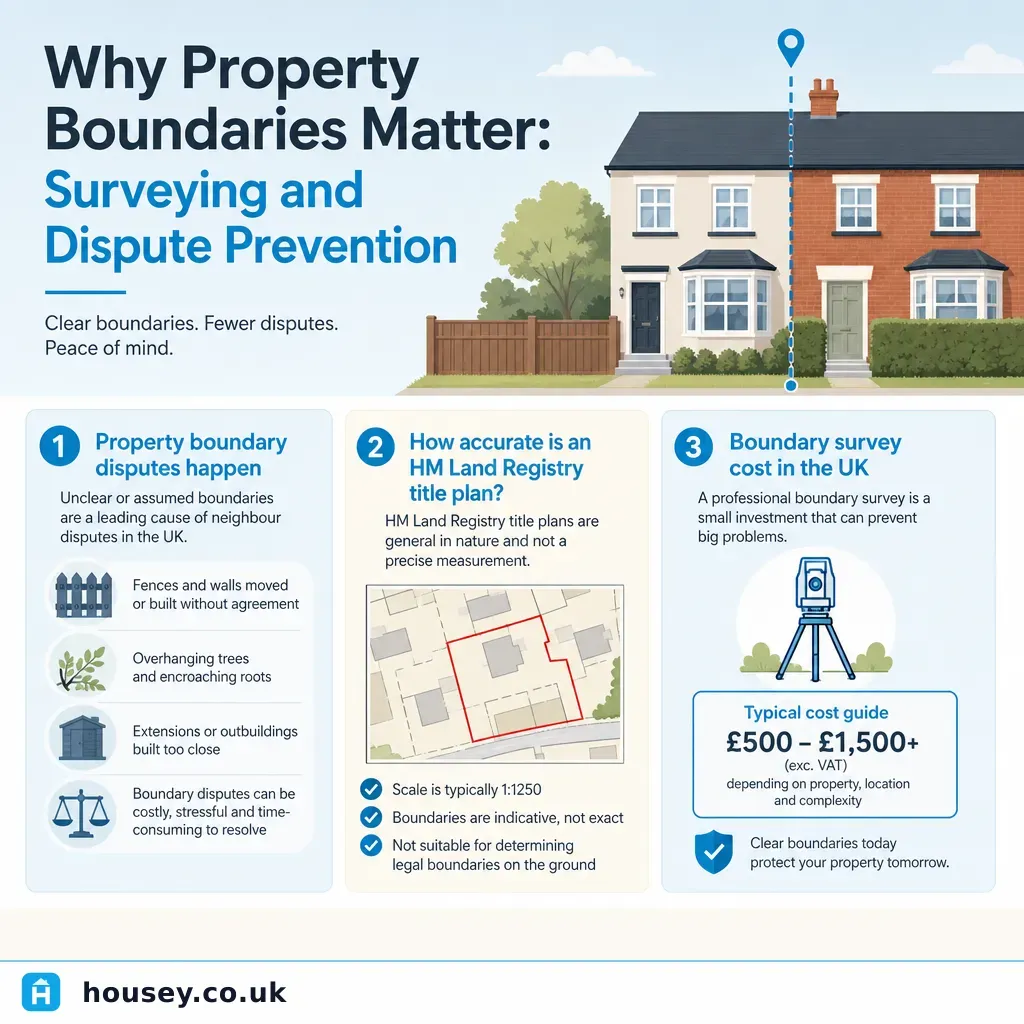
Why Property Boundaries Matter: Surveying and Dispute Prevention
Property boundaries in England and Wales are recorded as general boundaries by HM Land Registry — not precise measurements.
 Surveys & Inspections
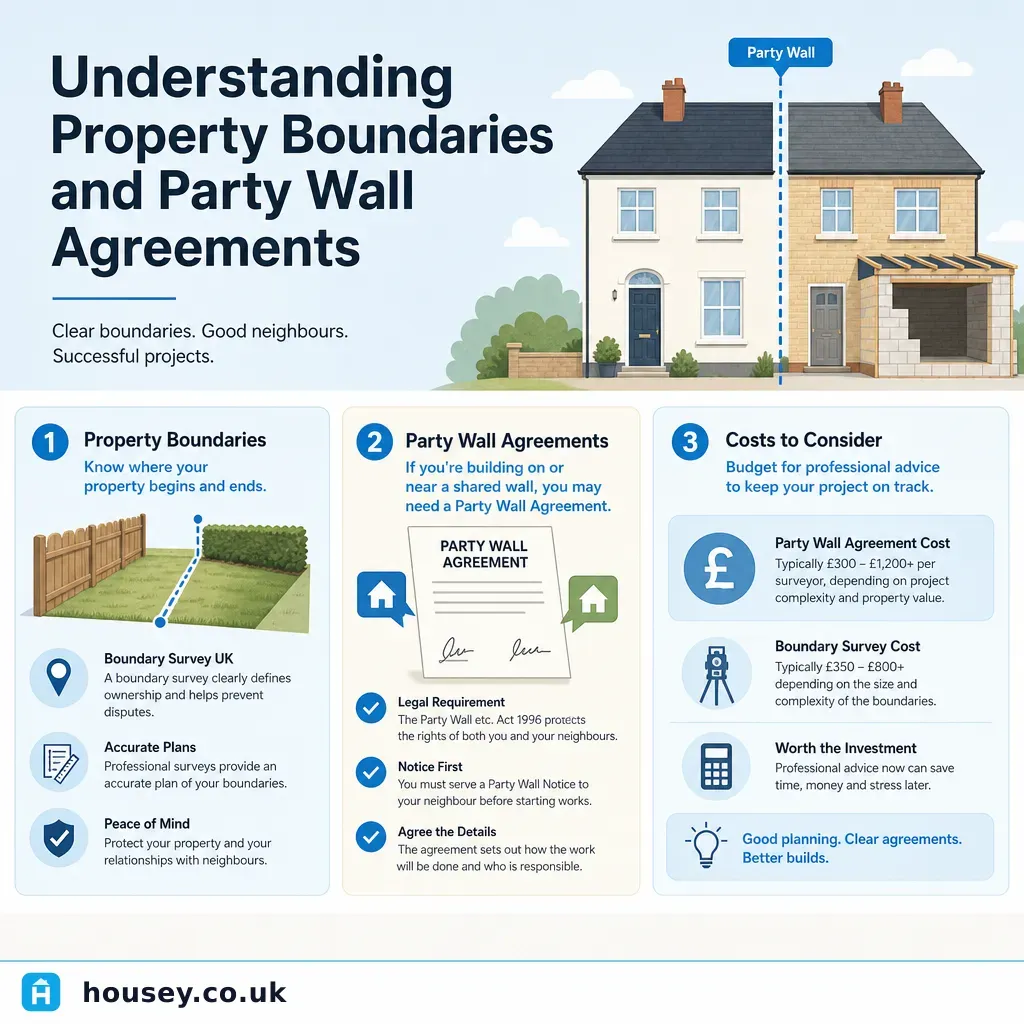
Understanding Property Boundaries and Party Wall Agreements
Property boundaries define the legal extent of your land; the Party Wall etc.
 Surveys & Inspections
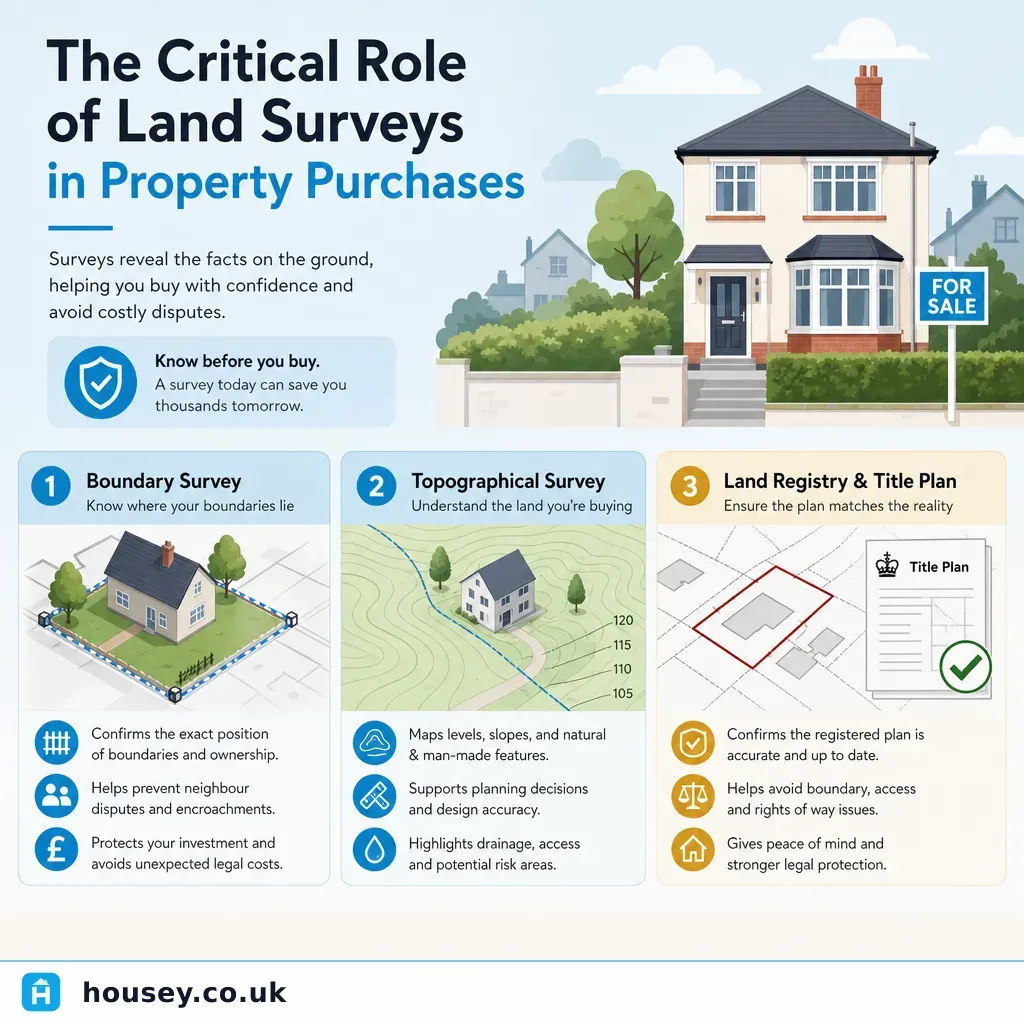
The Critical Role of Land Surveys in Property Purchases
A land survey can identify boundary discrepancies, missing access rights, encroachments, and topographical issues that a RICS home survey or conveyancing search will not cover.
 Surveys & Inspections
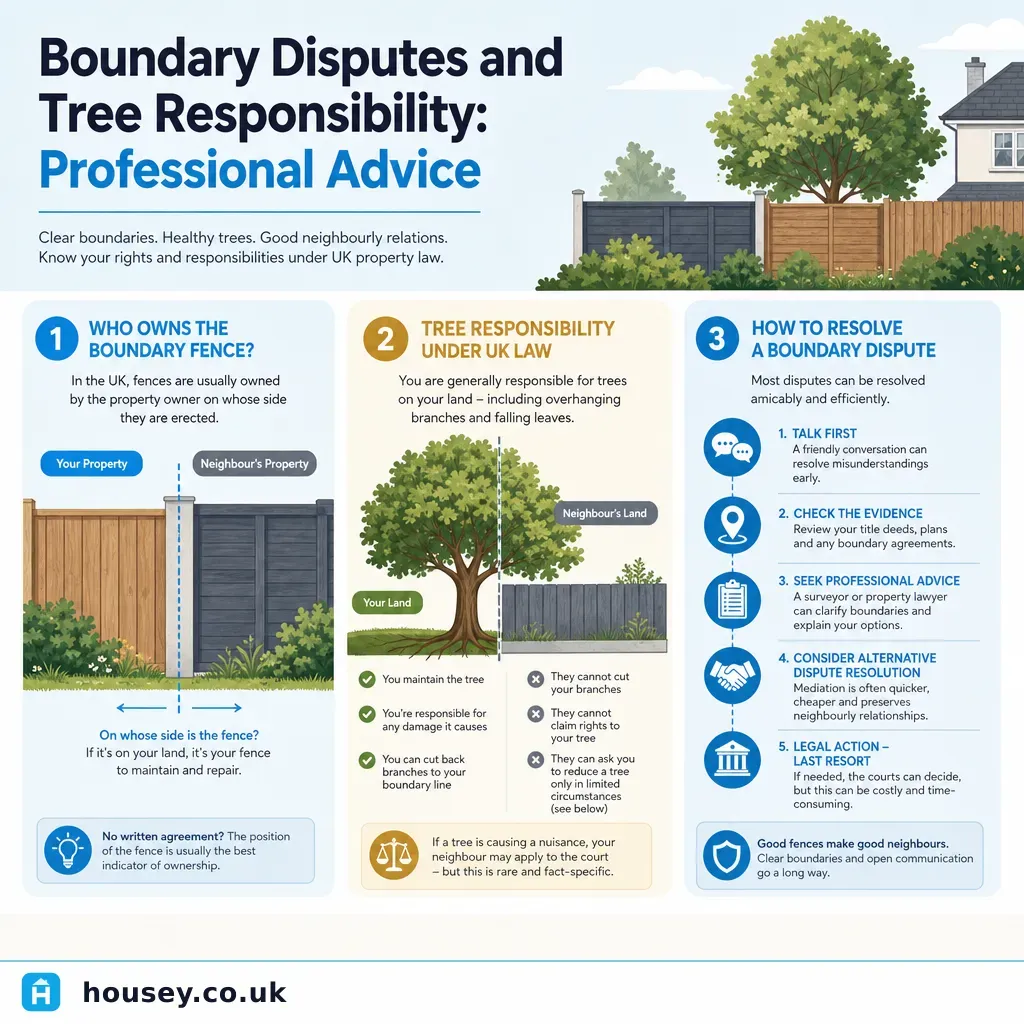
Boundary Disputes and Tree Responsibility: Professional Advice
Boundary disputes in the UK are typically resolved by instructing a RICS-accredited boundary surveyor to prepare a measured survey and expert report.
 Surveys & Inspections
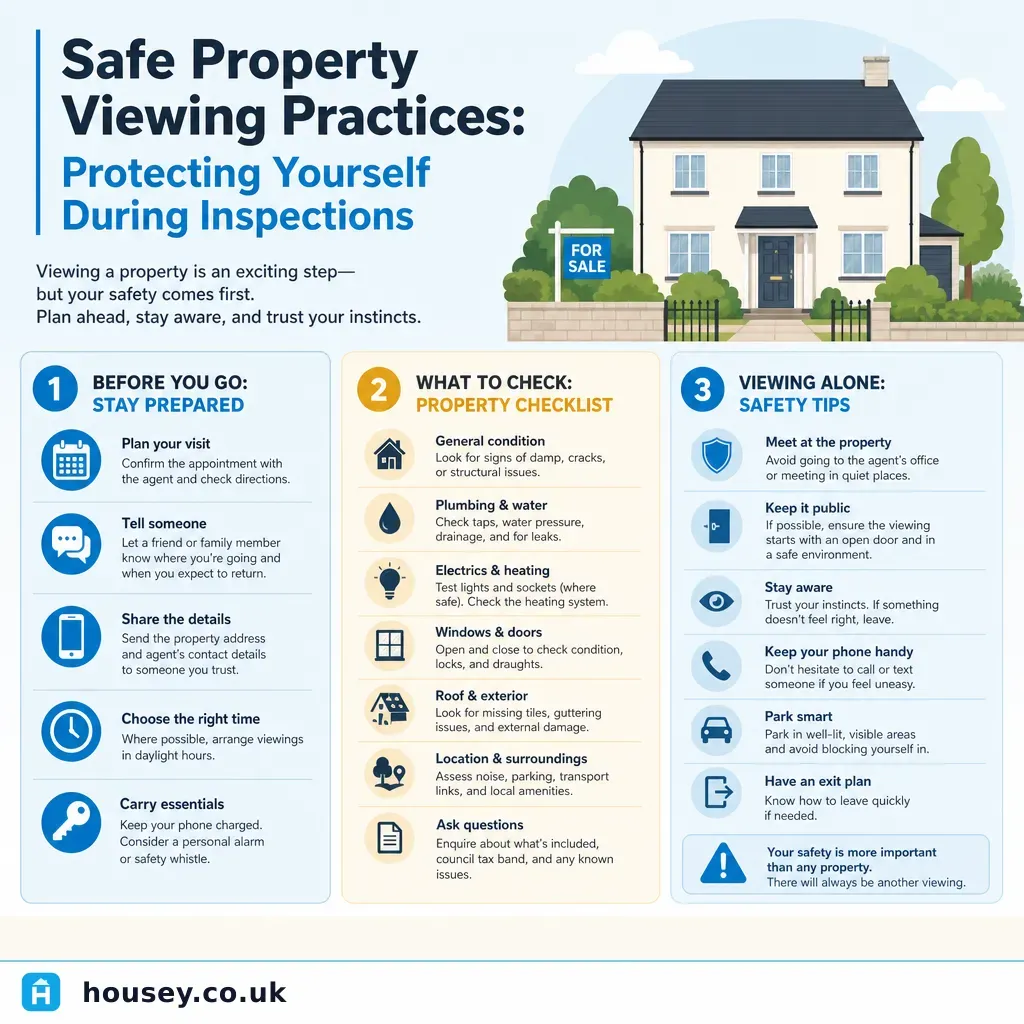
Safe Property Viewing Practices: Protecting Yourself During Inspections
When viewing a property in the UK, always tell someone where you are going and share the full address before you leave.