Mandatory Repairs After Home Inspection: Understanding Obligations
By Housey · Last reviewed 31st of May 2026
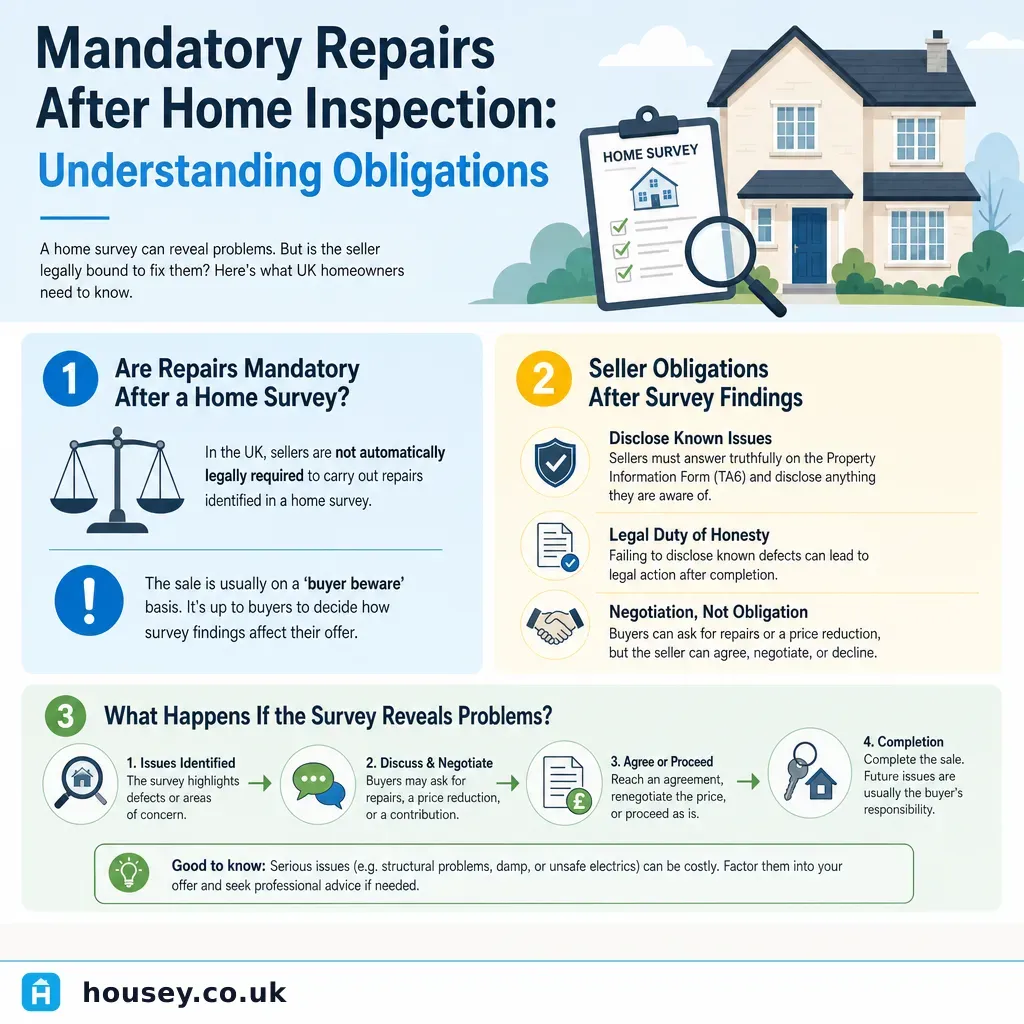
Mandatory Repairs After Home Inspection: Understanding Obligations
A survey revealing defects is one of the most stressful moments in any property purchase. It most commonly arises between offer acceptance and exchange of contracts — the window when buyers feel financially exposed yet remain legally free to renegotiate or walk away. Understanding what sellers are and are not required to do is essential for anyone navigating this stage of a transaction in England, Wales, or Scotland.
Key points
- In England and Wales, no legislation requires a seller to carry out repairs identified in a buyer's survey before completion.
- A RICS Home Survey uses a three-tier condition rating: Condition 1 (satisfactory), Condition 2 (repairs or further investigation needed), Condition 3 (urgent or significant defects).
- Sellers may respond by completing repairs, reducing the asking price, offering a solicitor-held retention, or declining to act — there is no obligation to choose any particular option.
- A solicitor-held retention is a sum withheld from completion funds until specified works are done; it requires lender approval and must be formally negotiated, not assumed.
- Buyers retain the right to withdraw from a purchase at any point before exchange of contracts in England and Wales without legal penalty, subject to any reservation-fee terms on new builds.
Are any repairs legally mandatory after a survey?
No legislation in England or Wales compels a seller to make good defects identified in a buyer's survey. The survey is a document commissioned and paid for by the buyer; its findings inform the buyer's decision but create no contractual obligation on the seller.
The position changes only if a specific repair obligation has been written into the sale contract — for example, if a seller agreed pre-survey to address a known issue as a condition of the offer. Even then, enforcement is a contractual matter, not an automatic right.
In Scotland the selling process differs: sellers must provide a Home Report (including a Single Survey) before marketing the property. While this changes who pays for the survey and when defects are disclosed, it still does not legally require the seller to remedy findings before sale.
How sellers typically respond to survey findings
When a survey surfaces defects, sellers broadly have four options:
Seller response | What it means | Typical use case |
|---|---|---|
Complete repairs before completion | Seller arranges and pays for works; buyer may request evidence or sign-off | Minor or cosmetic defects; seller keen to protect the sale |
Reduce the asking price | Sale proceeds at a lower agreed price; buyer funds repairs post-completion | Moderate defects; straightforward negotiation |
Offer a solicitor-held retention | A sum withheld from completion monies, released once works are done | Defects that cannot be fixed before completion but need addressing |
Decline to act | Seller holds firm; buyer decides whether to proceed, renegotiate further, or withdraw | Competitive market; seller has other interested parties |
Sellers are not obliged to choose any particular option. The outcome depends on the negotiating position of each party and the nature and severity of the defects.
Negotiating after a survey: a practical framework
Effective post-survey negotiation depends on distinguishing between types of findings.
Condition 3 defects (urgent or major)
These findings are most likely to support a meaningful price reduction or repair request. Examples include:
- Active roof leaks or widespread failure of roof coverings
- Structural movement or cracking that the surveyor recommends a structural engineer assess
- Rising or penetrating damp affecting habitable rooms
- Electrical installation requiring an Electrical Installation Condition Report (EICR)
- Evidence of asbestos-containing materials in a condition requiring survey or management
For significant defects, buyers often obtain independent specialist quotes and use those figures as the basis for a specific price reduction request, rather than relying solely on indicative cost figures in the surveyor's report.
Condition 2 defects (repairs or investigation needed)
Condition 2 items are common in older properties — particularly Victorian terraces and 1930s semis — and do not always support a large price adjustment. Attempting to renegotiate every Condition 2 finding risks antagonising the seller and may not reflect realistic remediation costs.
What not to assume
- Do not assume the surveyor's cost estimate is precise. Surveyors are not quantity surveyors; their indicative figures are often broad ranges. Obtain contractor quotes before negotiating specific amounts.
- Do not assume the seller knew about all defects. Many vendors are genuinely unaware of hidden issues. A factual, measured approach tends to produce better outcomes than assuming bad faith.
- Do not assume a retention is straightforward. Lenders may object to retentions; some mortgage products do not permit them. Check with your solicitor and lender before proposing one.
Red flags that should always be investigated further
Some survey findings warrant specialist investigation before a buyer proceeds, regardless of the seller's response:
- Subsidence or structural movement: Stepped cracking through brickwork, diagonal cracks at window corners, or cracks that appear to be widening — a structural engineer's report is usually needed.
- Japanese knotweed: Identified or suspected on or near the property. Lenders routinely decline to lend where knotweed is untreated; a specialist management plan is usually required before exchange.
- Asbestos-containing materials in poor condition: Do not disturb; instruct a licensed asbestos surveyor before any works proceed.
- Undisclosed alterations: Extensions or conversions without building regulations sign-off may require indemnity insurance or retrospective approval — your solicitor should investigate.
- Drainage defects: A CCTV drain survey is inexpensive relative to the cost of replacing failed drains discovered after completion.
Checklist: before deciding how to proceed after a survey
When to get professional help
Most post-survey negotiations are managed by solicitors without further specialist input. Seek additional professional advice if:
- The survey identifies structural movement or cracking and recommends a structural engineer's assessment.
- Asbestos-containing materials are mentioned in anything other than a satisfactory monitoring context.
- The report identifies potential Japanese knotweed, subsidence, or flood risk.
- Your solicitor flags undisclosed alterations, missing building regulations completion certificates, or planning enforcement risks.
- The seller's repair offer appears unrealistically low compared to your independent contractor quotes.
How Housey can help
If the survey outcome prompts a more detailed inspection, Housey connects you with qualified surveyors for a RICS Level 2 survey on a standard property in reasonable condition, or a RICS Level 3 survey where defects — or the property's age and construction — suggest a more thorough assessment is warranted. Explore the full range of RICS Home Surveys available through Housey to find the right level of inspection for your property.
Frequently asked questions
Can a buyer force a seller to fix defects found in a survey?
No. In England and Wales, there is no legal mechanism that compels a seller to carry out repairs identified in a buyer's survey. A buyer's options are to negotiate a price reduction, request a solicitor-held retention, ask the seller to complete repairs voluntarily, or withdraw from the purchase before exchange of contracts.
What is a solicitor-held retention and how does it work?
A retention is a sum withheld from the completion funds and held by solicitors until specified works are completed, or until an agreed period lapses. The amount and conditions are agreed between both parties' solicitors. Not all lenders permit retentions, so confirm with your lender before proposing this option.
Should I share my survey report with the seller?
There is no obligation to share the full report. Sharing relevant sections — particularly specialist findings or contractor quotes — can support a price reduction request by demonstrating the basis for your negotiation, rather than citing a reduction figure without evidence.
What if the seller refuses to negotiate after a bad survey?
You can withdraw from the purchase at any point before exchange of contracts in England and Wales without legal penalty, other than survey and legal fees already incurred. Weigh the estimated remediation costs against the asking price and how strongly you want the property before deciding.
Do the same rules apply in Scotland?
No. Scotland operates a different system. The seller provides a Home Report — including a Single Survey — before marketing, so buyers see the property's condition before making an offer. Post-offer renegotiation based on survey findings is less common, though still possible if material defects were not adequately disclosed in the Home Report.
Sources and further reading
- Buying or selling your home — GOV.UK
- RICS Home Survey Standard — RICS
- Home Reports in Scotland — mygov.scot
- Problems with buying a house — Citizens Advice
Useful next reads
 Surveys & Inspections
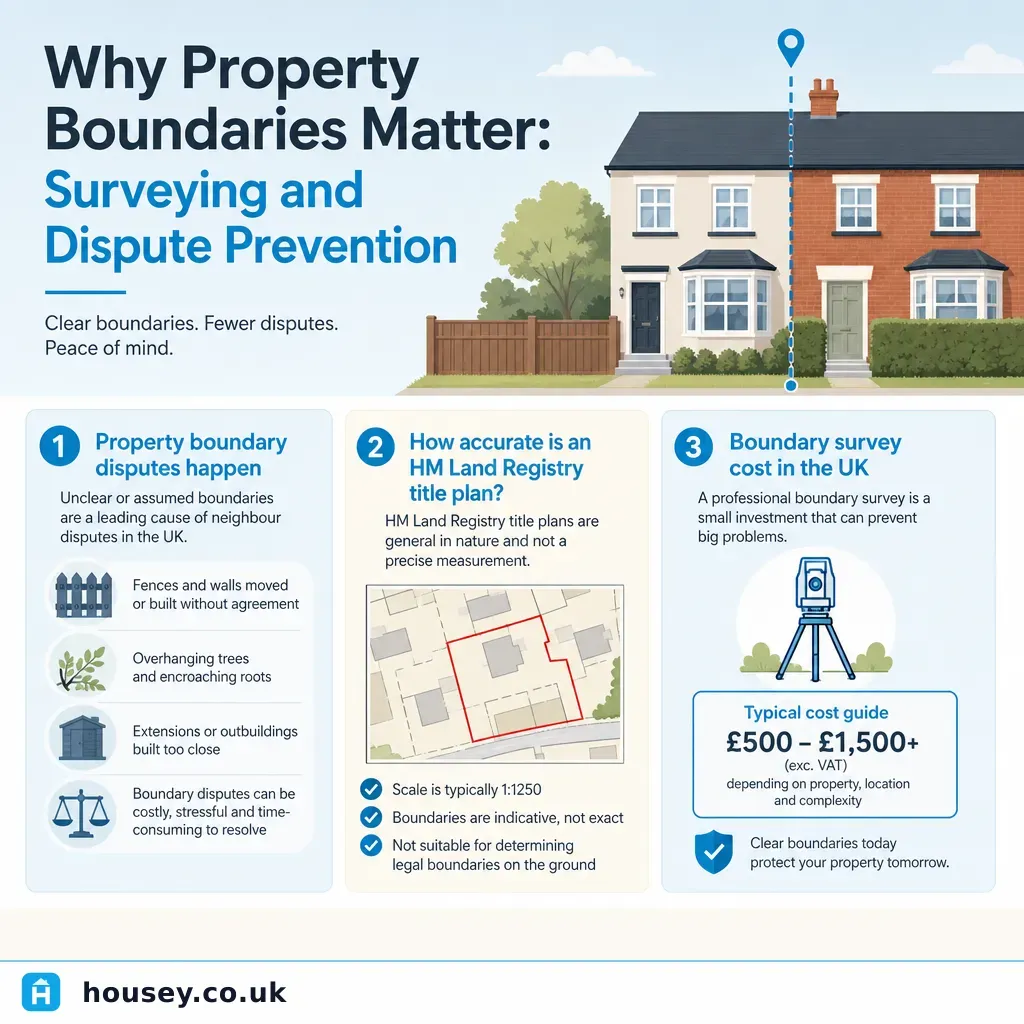
Why Property Boundaries Matter: Surveying and Dispute Prevention
Property boundaries in England and Wales are recorded as general boundaries by HM Land Registry — not precise measurements.
 Surveys & Inspections
Safe Property Viewing Practices: Protecting Yourself During Inspections
When viewing a property in the UK, always tell someone where you are going and share the full address before you leave.
 Surveys & Inspections
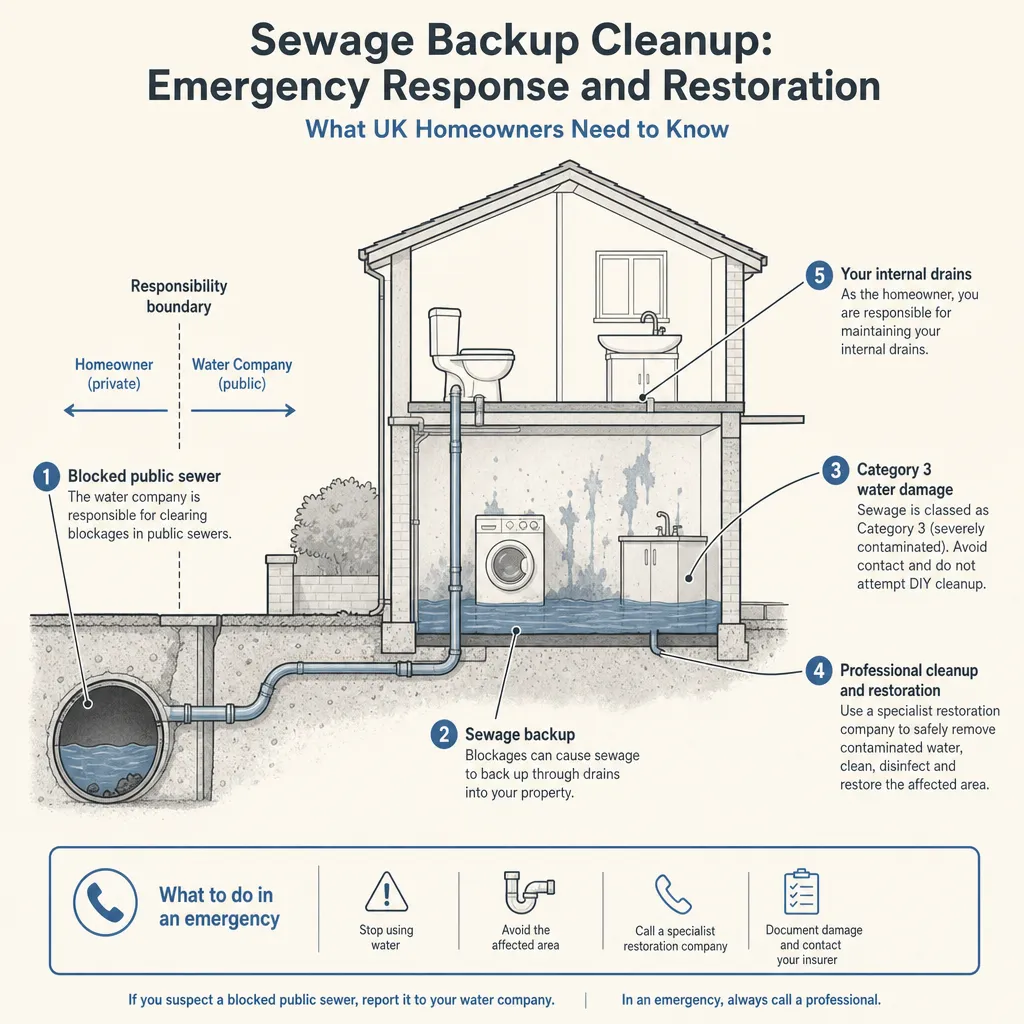
Sewage Backup Cleanup: Emergency Response and Restoration
A sewage backup should be treated as a Category 3 contamination event.
 Surveys & Inspections
Identifying Asbestos Insulation: What You Need to Know for Your Property
Asbestos insulation was widely used in UK properties built before 2000, commonly found in pipe lagging, ceiling tiles, loose-fill loft insulation, and around boilers.
 Surveys & Inspections
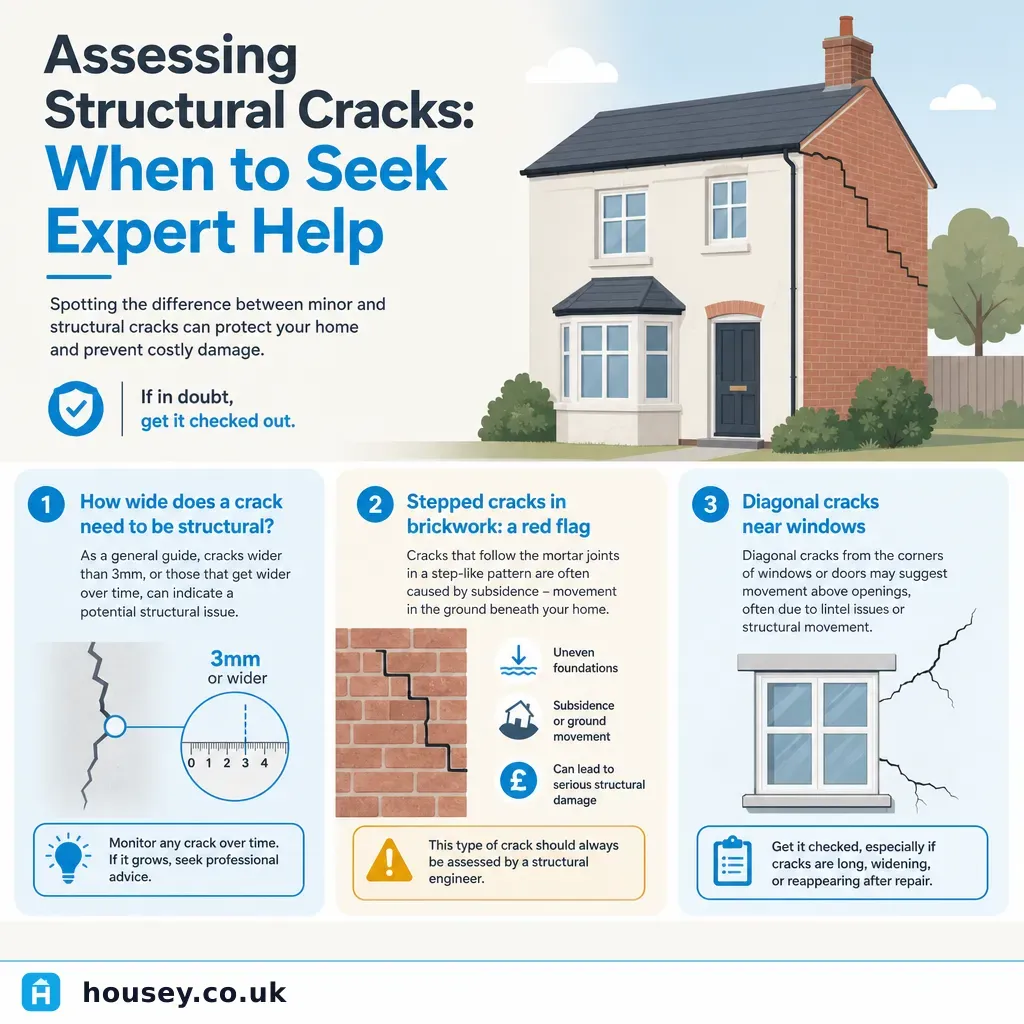
Assessing Structural Cracks: When to Seek Expert Help
Structural cracks range from harmless shrinkage hairlines to signs of subsidence or foundation movement.