Window and Door Market Growth Drivers and Installation Service Demand
By Housey · Last reviewed 30th of May 2026
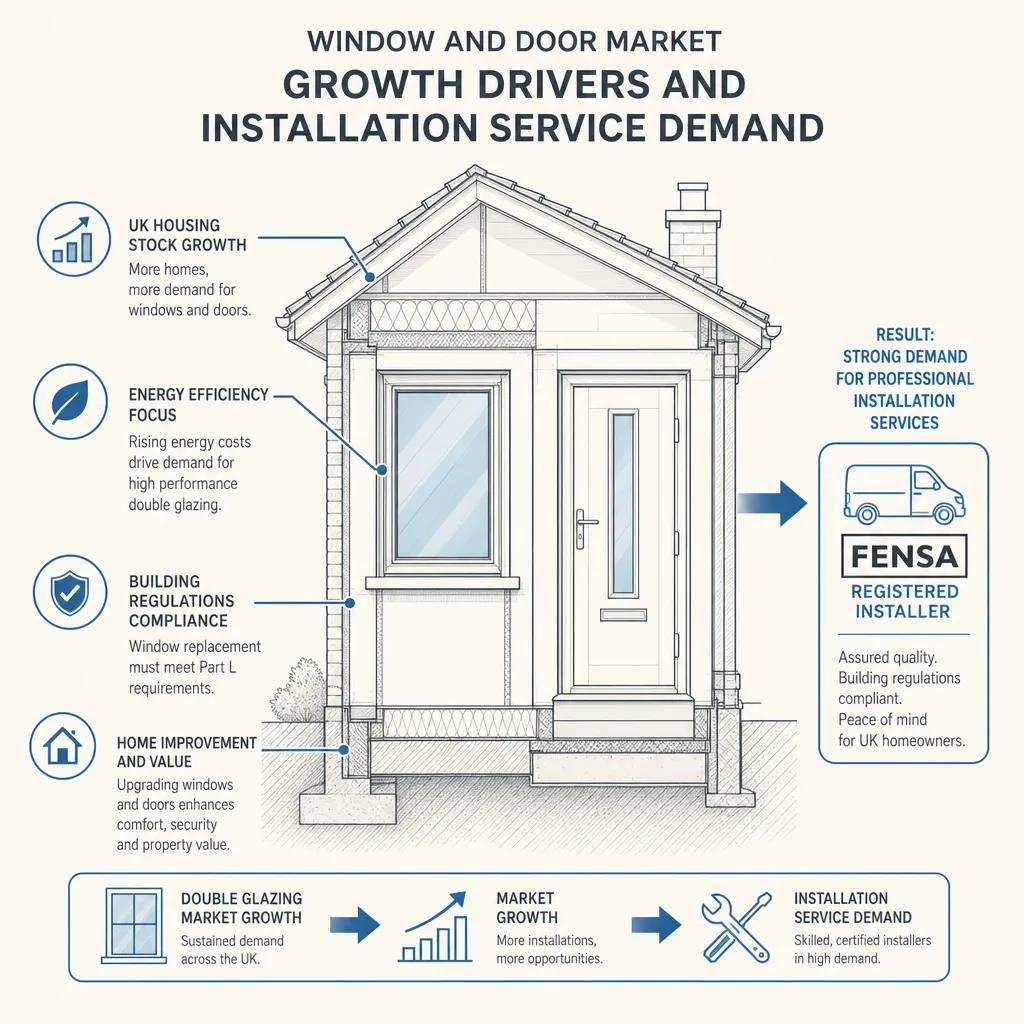
Window and Door Market Growth Drivers and Installation Service Demand
Replacing windows and doors is one of the most common improvement projects undertaken by UK homeowners — and one where the regulatory context, installer accreditation, and documentation requirements matter more than many people realise. Whether you are driven by heat loss from ageing frames, a requirement to improve an EPC rating ahead of a tenancy renewal, a security upgrade, or a property sale where missing FENSA certificates have surfaced during conveyancing, understanding the market and what to look for in an installer helps you make a well-informed decision.
Key points
- FENSA (Fenestration Self-Assessment Scheme) is the UK's primary competent persons scheme for window and door replacement; using a FENSA-registered installer means the work is self-certified as compliant with building regulations, removing the need for a separate local authority building control application.
- Building Regulations Approved Document L (Conservation of Fuel and Power), updated in 2022, requires replacement windows to achieve a whole-window U-value of 1.4 W/m²K or better, or a Window Energy Rating of Band C or above.
- Privately rented properties in England and Wales must currently hold an EPC rating of at least E; a further tightening to Band C by 2028 is proposed, driving early landlord investment in glazing and insulation upgrades.
- The Green Homes Grant closed in 2021, but the Great British Insulation Scheme, local authority Flexible Eligibility schemes, and devolved programmes in Scotland and Wales may offer support in certain circumstances — check via the Simple Energy Advice service.
- For listed buildings or properties in conservation areas, planning permission is typically required before replacing windows or doors, and replacement materials must usually match originals in style and appearance — always confirm with your local planning authority before placing any order.
What is driving window and door installation demand
Ageing frames in older properties. A large proportion of UK homes were built before 1980. Single-glazed frames from this era are well beyond their functional lifespan, and many double-glazed units installed in the 1990s are now showing seal failure — indicated by condensation between panes — alongside degraded frames and draughts. The volume of homes requiring upgrade work is substantial and sustained.
Energy costs and EPC requirements. Rising energy prices from 2021 onwards made heat retention a financial priority for homeowners and landlords alike. Windows and doors are among the most significant contributors to heat loss in older homes — a single-glazed window may have a U-value of approximately 5 W/m²K compared to 1.4 W/m²K for a compliant modern replacement. Landlords are accelerating investment ahead of proposed EPC tightening, adding landlord-driven demand to the owner-occupier market.
Permitted development simplicity. Most window and door replacements in non-listed, non-conservation-area homes are permitted development — no planning application is required. This administrative simplicity sustains steady market demand compared to more complex improvement projects that require planning consent.
Composite doors and aluminium frames. Composite doors and aluminium-framed windows have grown in popularity for their durability and low maintenance. UPVC remains dominant by volume, but the market share of composite and aluminium products has increased, often at higher price points, reflecting consumer preference for longevity and aesthetics.
Repair or replacement: choosing the right approach
Not every draughty window or stiff door requires full replacement. This table helps homeowners assess the right course of action:
Situation | Repair likely sufficient | Full replacement advisable |
|---|---|---|
Condensation between glass panes | No — this indicates a failed sealed unit | Yes — at minimum the sealed unit; possibly the whole frame |
Draughts around the frame | Often — draught sealing strips, putty repair, or bead replacement | Yes — if the frame is rotted, cracked, or badly warped |
UPVC frames aged 15–25 years | Sometimes — handle, hinge, or seal replacement | Yes — if seals are fully degraded or frames have distorted |
Original wooden frames, pre-1970 | Often viable with maintenance, painting, and secondary glazing | Consider replacement for maximum thermal improvement |
Door draughts and security concerns | Possibly — weatherstripping and new lock hardware | Yes — if the door leaf is warped, rotting, or thermally non-compliant |
Listed building with original frames | Conservation repair almost always preferred | Only if approved in writing by the local planning authority |
Checklist: what to confirm before installation
Decision guide: choosing the right installer
- Choose a FENSA-registered specialist for straightforward like-for-like replacements in a standard non-listed home — the self-certification route is simpler and avoids a separate building control fee.
- Check CERTASS membership as an equivalent alternative to FENSA — both are Government-approved competent persons schemes for glazing and window installation.
- Engage a RIBA-chartered architect or conservation specialist if your property is listed or in a conservation area, before approaching any installer — incorrect materials or styles can result in planning enforcement action.
- Choose a design-and-build contractor if window and door replacement is part of a larger renovation — coordinating trades via one contractor simplifies programme and accountability.
- Consider an energy assessor first if you are unsure which windows or doors are the highest priority — an EPC assessment identifies areas of greatest heat loss before you commit expenditure.
- Ask a solicitor if FENSA certificates are missing for past window installations you have discovered during a purchase — you may need retrospective certification or an indemnity insurance policy.
When to get professional help
For most window and door replacements in standard modern homes, a FENSA-registered installer and a clear written contract are sufficient. Seek additional professional advice from a planning consultant, conservation officer, or chartered surveyor if:
- Your property is Grade I or Grade II listed — Listed Building Consent is almost certainly required for any window or door changes, even like-for-like replacements in some cases.
- Your property is in a conservation area and the replacement would change the window style, material, or glazing bar pattern from that which was approved or originally fitted.
- You are buying or selling a property and FENSA certificates are missing for past window replacements — this affects conveyancing and may require retrospective certification or indemnity insurance, adding cost and delay.
- Structural defects — cracked or failed lintels, movement in reveals — are identified when old frames are removed during installation.
How Housey can help
Housey connects homeowners with vetted window and door installers across the UK. Whether you are replacing a single front door or undertaking a whole-house re-glazing programme, Housey's matching service identifies FENSA-registered and accredited installers suited to your property type and location.
Frequently asked questions
Do I need planning permission to replace my windows?
In most cases, replacing windows with similar ones in a standard residential property is permitted development — no planning permission is required. However, if your property is listed, in a conservation area, or if you are significantly changing the window style or materials, you must check with your local planning authority before proceeding. The Planning Portal provides guidance on what changes are permitted for standard householder properties.
What is a FENSA certificate and why do I need one?
A FENSA certificate confirms that replacement window or door work complies with building regulations. It is registered on the national FENSA database, which solicitors and conveyancers check during property sales. Without one, you may need retrospective building control approval or an indemnity insurance policy — both of which can delay and add cost to a conveyancing transaction. Always confirm your installer will provide a certificate on completion.
What U-value should my replacement windows achieve?
Under Building Regulations Approved Document L (2022 update), replacement windows must achieve a whole-window U-value of 1.4 W/m²K or a Window Energy Rating of Band C or above. High-performance double glazing typically achieves 1.0–1.4 W/m²K; triple glazing 0.8–1.0 W/m²K. Your installer should confirm the rated performance of proposed units before you place an order — ask for the product technical data sheet.
Can I get a grant to help pay for window replacement?
The national Green Homes Grant closed in 2021. However, the Great British Insulation Scheme supports eligible lower-income households and homes with low EPC ratings. Local authority Flexible Eligibility schemes and devolved grants in Scotland and Wales may also provide support in certain circumstances. The Simple Energy Advice service at simpleenergyadvice.org.uk is the recommended starting point for checking current eligibility.
Sources and further reading
- FENSA: Check an Installer — FENSA
- Approved Document L: Conservation of Fuel and Power — GOV.UK
- Permitted Development for Householders: Windows — Planning Portal
- Simple Energy Advice — Energy Saving Trust / DESNZ
- Minimum Energy Efficiency Standards for Private Rented Properties — GOV.UK
Useful next reads
 Improvement & Build
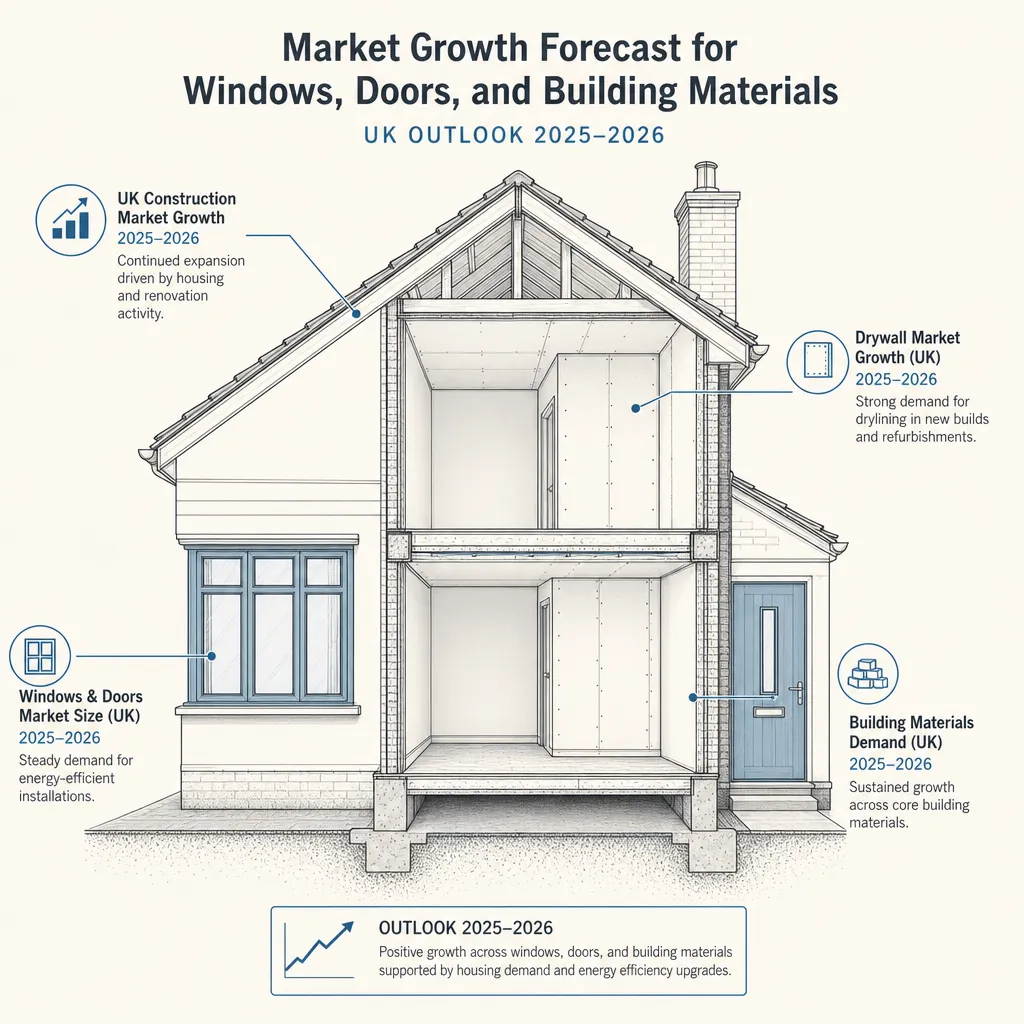
Market Growth Forecast for Windows, Doors, and Building Materials
Demand for UK windows, doors, and drywall is driven by a mix of replacement cycles, energy efficiency regulations, and housing activity.
 Improvement & Build
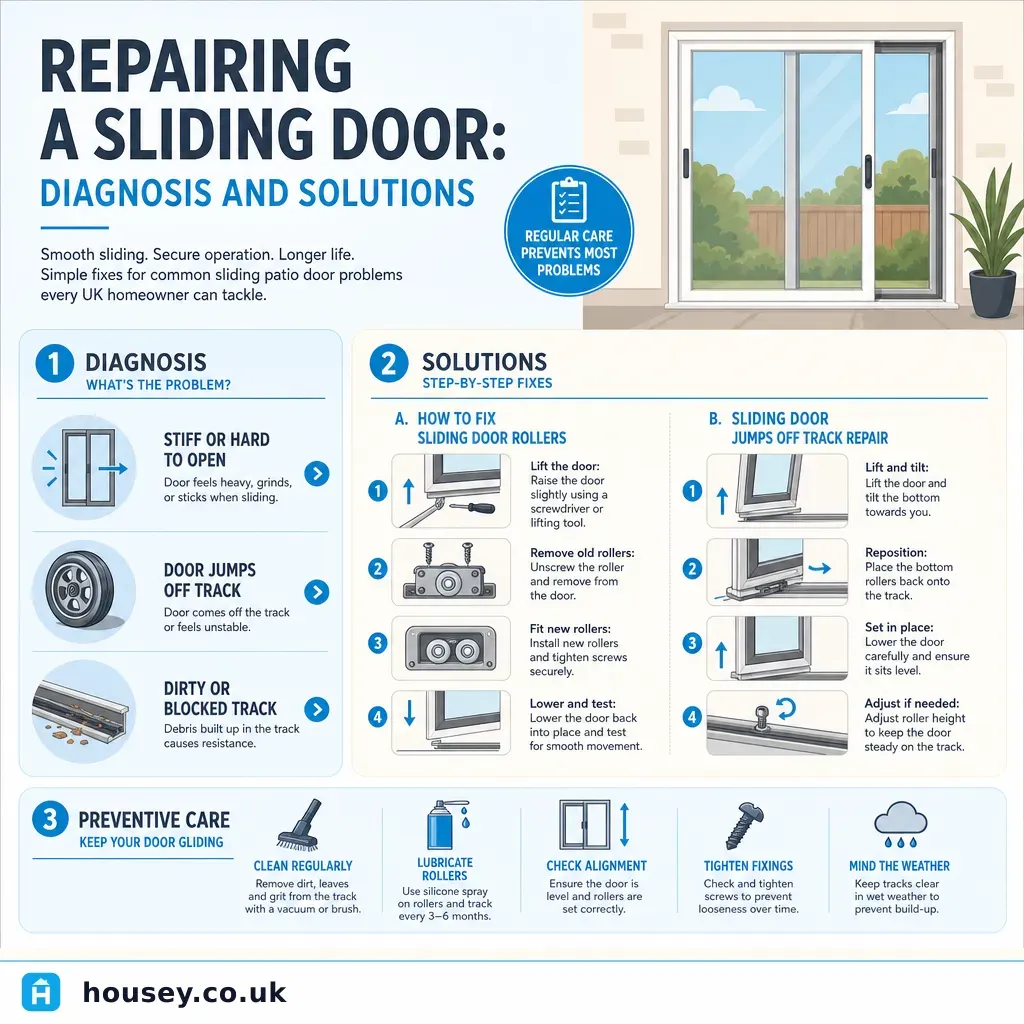
Repairing a Sliding Door: Diagnosis and Solutions
Most sliding door problems — stiffness, jumping off track, or draughts — are caused by dirty tracks, worn rollers, or misaligned guides.
 Improvement & Build
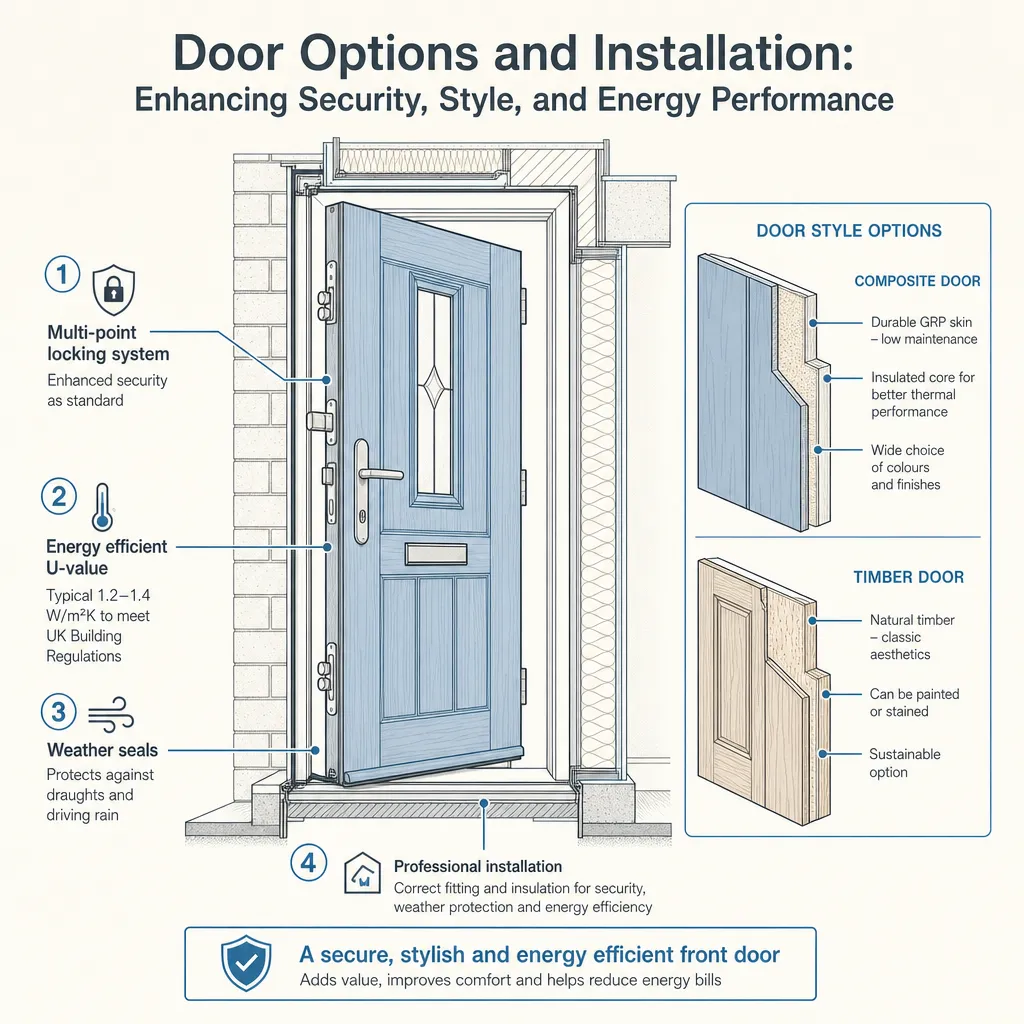
Door Options and Installation: Enhancing Security, Style, and Energy Performance
Choosing a new external door involves balancing security ratings, thermal performance, and style.
 Improvement & Build
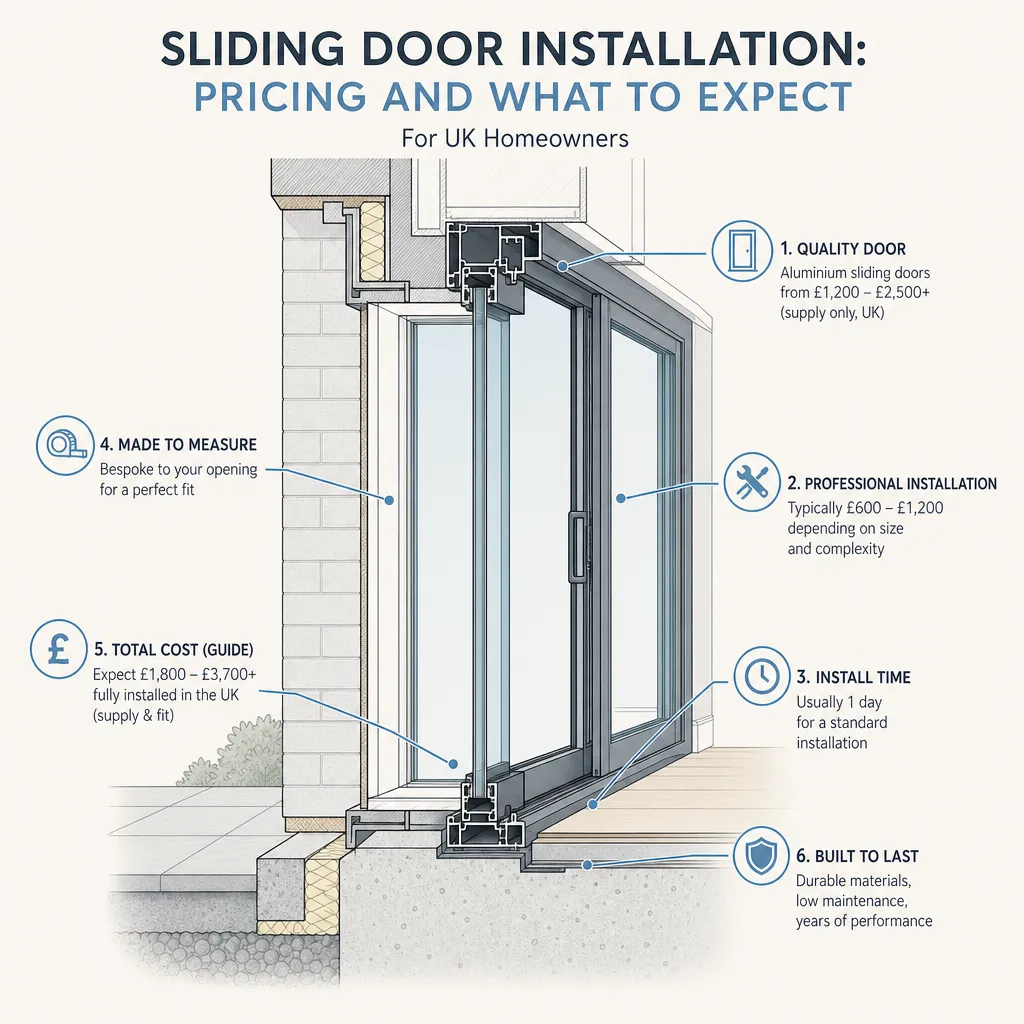
Sliding door installation: pricing and what to expect
A new sliding patio door in the UK typically costs £800–£3,000 fully installed, depending on size, material, and glazing specification.
 Improvement & Build
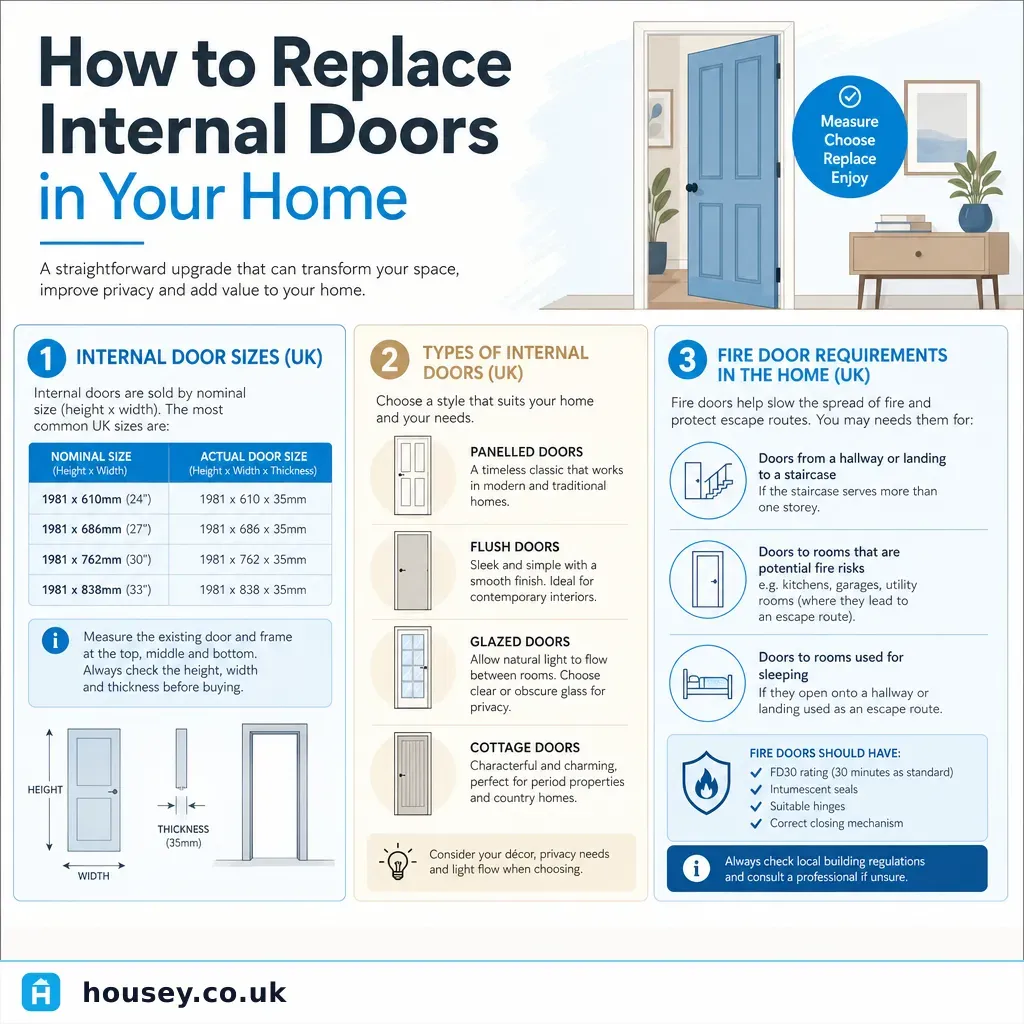
How to Replace Internal Doors in Your Home
Replacing internal doors is a straightforward home improvement that most competent DIYers or a joiner can complete.