Maximising garage space: storage and conversion ideas
By Housey · Last reviewed 31st of May 2026
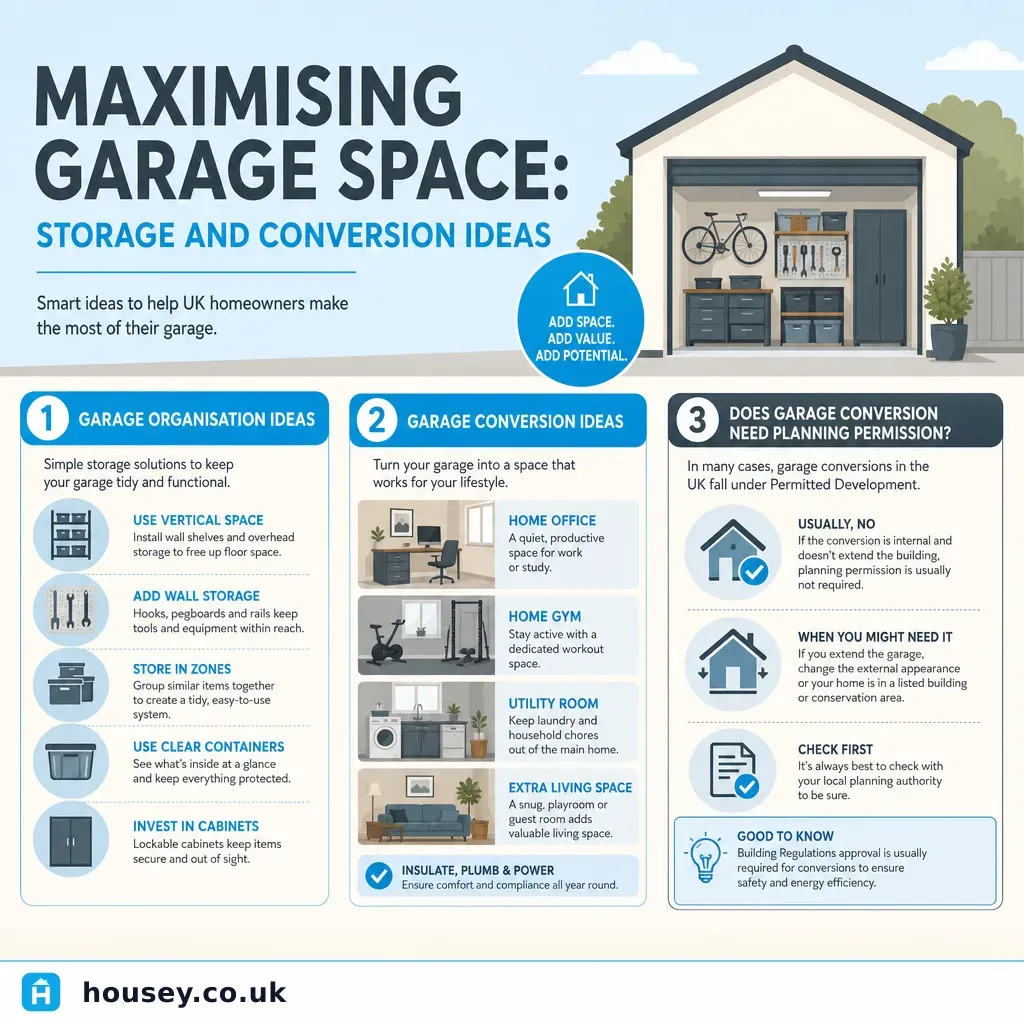
Maximising garage space: storage and conversion ideas
A single or double garage represents some of the most underused square footage in a UK home. Whether yours currently stores a car alongside a clutter of tools and cardboard boxes, or has never been used for parking at all, the right approach — from intelligent wall-mounted storage to a full habitable conversion — can meaningfully expand your home's usefulness and potentially its value. The scale of intervention, however, determines how much regulatory involvement is required, so it pays to be clear about your goals before committing to a plan.
Key points
- Wall-mounted racking, overhead ceiling storage, and slatwall panel systems can typically be installed without planning permission or building regulations approval.
- Garage conversions to habitable rooms are usually permitted development in England, but Article 4 directions, conservation area designations, or conditions on the original planning consent can remove this right — check with your local planning authority before starting.
- Building Regulations approval is required for any garage conversion that creates habitable space, covering insulation (Approved Document L), ventilation (Approved Document F), fire safety (Approved Document B), and electrical work (Approved Document P).
- A full single-garage conversion to habitable use typically costs £15,000–£30,000 in the UK (Indicative UK costs, last reviewed 2026-05-31); a double garage may cost £20,000–£40,000 or more.
- Internal ceiling height below 2.4 m can restrict habitable use; check early, as raising the roof is a significant and potentially planning-relevant alteration.
Storage versus conversion: which approach suits your situation?
The first decision is whether you need more storage capacity or more usable living or working space. These require very different levels of investment and regulatory involvement.
Approach | Indicative cost (UK, 2026) | Planning needed? | Building regs? | Best for |
|---|---|---|---|---|
Wall-mounted racking and shelving | £200–£1,500 | No | No | Maximising storage without structural change |
Overhead ceiling storage racks | £150–£600 | No | No | Seasonal items, roof boxes, bulky sports equipment |
Slatwall or pegboard panel system | £300–£1,000 fitted | No | No | Organised tools, garden equipment, workshop use |
Mezzanine storage platform | £1,500–£5,000 | Usually no | May be needed | High-volume storage or workshop above parking area |
Partial conversion (home office, workshop) | £5,000–£15,000 | Often permitted development | Yes | Working-from-home space, hobby room |
Full habitable conversion | £15,000–£30,000 | Often permitted development | Yes | Bedroom, sitting room, annexe |
Demolish and replace with extension | £30,000–£80,000+ | Usually yes | Yes | Maximum living space gain |
Indicative UK costs, last reviewed 2026-05-31. Costs vary by region, specification, and garage dimensions. Obtain at least two quotes.
Storage improvements that need no regulatory approval
For many homeowners, a well-organised garage can be transformed without any planning or building regulations involvement. These options are worth fully exploring before committing to the greater cost and complexity of a conversion.
Wall-mounted systems are the most versatile starting point. Steel shelving anchored to masonry or timber stud walls, slatwall panels with interchangeable hooks and bins, and pegboard tool boards can dramatically increase usable vertical space. Fix to load-bearing walls using appropriate fixings for cavity or solid masonry — consult a fixing supplier if you are unsure of wall construction.
Overhead storage racks suspended from ceiling joists work well for bulky items used infrequently — roof boxes, camping equipment, or seasonal garden furniture. Ceiling-mounted pulley systems can raise and lower bicycles or kayaks. Check that the garage roof structure can carry the additional load before installation, particularly in older or pre-fabricated garages.
Floor-level organisation using lockable metal cabinets, purpose-built garage furniture, or durable shelving units keeps frequently used items accessible without floor clutter. Rubber matting or interlocking floor tiles protect the concrete slab, make the space more comfortable underfoot, and help delineate workshop, storage, and parking zones clearly.
Planning and building regulations for garage conversions
Do you need planning permission?
In England, converting an integral or attached garage to habitable use is generally permitted development — meaning planning permission is not required — provided the external appearance of the house does not substantially change and permitted development rights have not been removed. Rights can be restricted by:
- Article 4 directions, which are common in conservation areas and on some new-build estates
- Conditions attached to the original planning permission for the house
- Listed building status, which requires listed building consent for internal and external alterations
In Wales, Scotland, and Northern Ireland, the rules differ in detail. Always check with your local planning authority before starting work. Where there is any doubt, a lawful development certificate application provides written confirmation that the conversion is permitted development.
Replacing the garage door with a window or wall — the most visible change in a conversion — usually falls within permitted development in England, but it materially alters the street-facing elevation. Local planning authorities may view this differently depending on the character of the area.
Building regulations: always required for habitable conversions
Even when planning permission is not needed, Building Regulations approval is required for any garage conversion that creates habitable space. The main areas assessed include:
- Structural: the existing floor slab often requires a damp-proof membrane and insulation layer; the roof structure must be demonstrated as adequate
- Insulation: walls, floor, and roof must achieve current U-value targets under Approved Document L
- Ventilation: habitable rooms require controlled ventilation to Approved Document F standards
- Fire safety: escape windows, fire doors between garage and house, and smoke alarms per Approved Document B
- Electrics: new electrical installations must comply with Approved Document P and be certified by an NICEIC- or NAPIT-registered electrician
Use a building control body — your local authority or an approved inspector — and ensure a completion certificate is issued. This document is required when you sell the property.
Decision tree: which garage improvement is right for you?
- Choose storage optimisation if you still need to park a car or store large equipment, and the primary need is organisation rather than extra rooms.
- Choose a partial conversion (home office, hobby workshop) if you want a dedicated working space but do not need a full habitable room and parking is not a priority.
- Choose a full habitable conversion if you need an additional bedroom, living area, or annexe, and you are willing to go through building regulations approval.
- Choose an extension instead if your garage is detached and the conversion value would be limited, or if you want a larger, purpose-designed living space — speak with extension builders to compare options.
- Check with your local planning authority first if the property is in a conservation area, is listed, or is a new-build that may have restrictive planning conditions.
- Consult a structural engineer or garage conversion specialist if you are uncertain about floor slab condition, roof loading, or rising damp.
Homeowner checklist: preparing for a garage conversion quote
Work through this list before approaching tradespeople — it helps you describe the project accurately and spot potential complications early.
When to get professional help
A garage conversion touches structural, electrical, heating, drainage, and regulatory elements — making professional involvement important. Consult a specialist if:
- You are unsure whether planning permission is needed for your specific property or location
- The floor slab shows signs of damp, cracking, or differential settlement
- You want to add a bathroom or kitchenette (which adds drainage and potentially gas work)
- The project involves removing or altering a wall shared with the main house
If you are considering alternative ways to add space — such as a loft conversion — loft conversion companies can help you weigh up the options alongside a garage conversion.
How Housey can help
Housey connects you with experienced garage conversion specialists who can assess your garage, handle building regulations, and manage the conversion from strip-out to completion. For larger projects or extensions, Housey can also match you with extension builders who work across the full range of home addition options.
Frequently asked questions
Do I need planning permission to convert my garage in the UK?
In England, converting an integral or attached garage to habitable use is usually permitted development and does not require planning permission, provided the external appearance is not substantially changed and permitted development rights have not been removed. Rules vary in Wales, Scotland, and Northern Ireland. Always check with your local planning authority or apply for a lawful development certificate before starting work.
How much does a garage conversion cost in the UK?
A single garage conversion to habitable use typically costs £15,000–£30,000 depending on specification, region, and the condition of the existing structure. A double garage may cost £20,000–£40,000 or more. Storage improvements using racking and shelving systems range from a few hundred to a few thousand pounds (Indicative UK costs, last reviewed 2026-05-31).
Can I add a mezzanine floor to my garage without planning permission?
A mezzanine used purely for storage does not usually require planning permission in England. However, if it creates habitable floor space or substantially alters the building, it may become notifiable under building regulations. Check with your local planning authority if you are unsure — rules can vary by property type and local planning conditions.
What building regulations apply to a garage conversion?
Building regulations approval is required for any garage conversion creating habitable space. The key Approved Documents are: L (insulation and energy efficiency), F (ventilation), B (fire safety), and P (electrical safety). A building control body inspects at key stages and issues a completion certificate — an important document when you come to sell.
Sources and further reading
- Planning Portal: garage conversion guidance — Planning Portal
- GOV.UK: building regulations approval — GOV.UK
- Building Regulations Approved Document L: Conservation of fuel and power — GOV.UK
- Building Regulations Approved Document F: Ventilation — GOV.UK
- GOV.UK: check if you need planning permission — GOV.UK
Useful next reads
 Improvement & Build
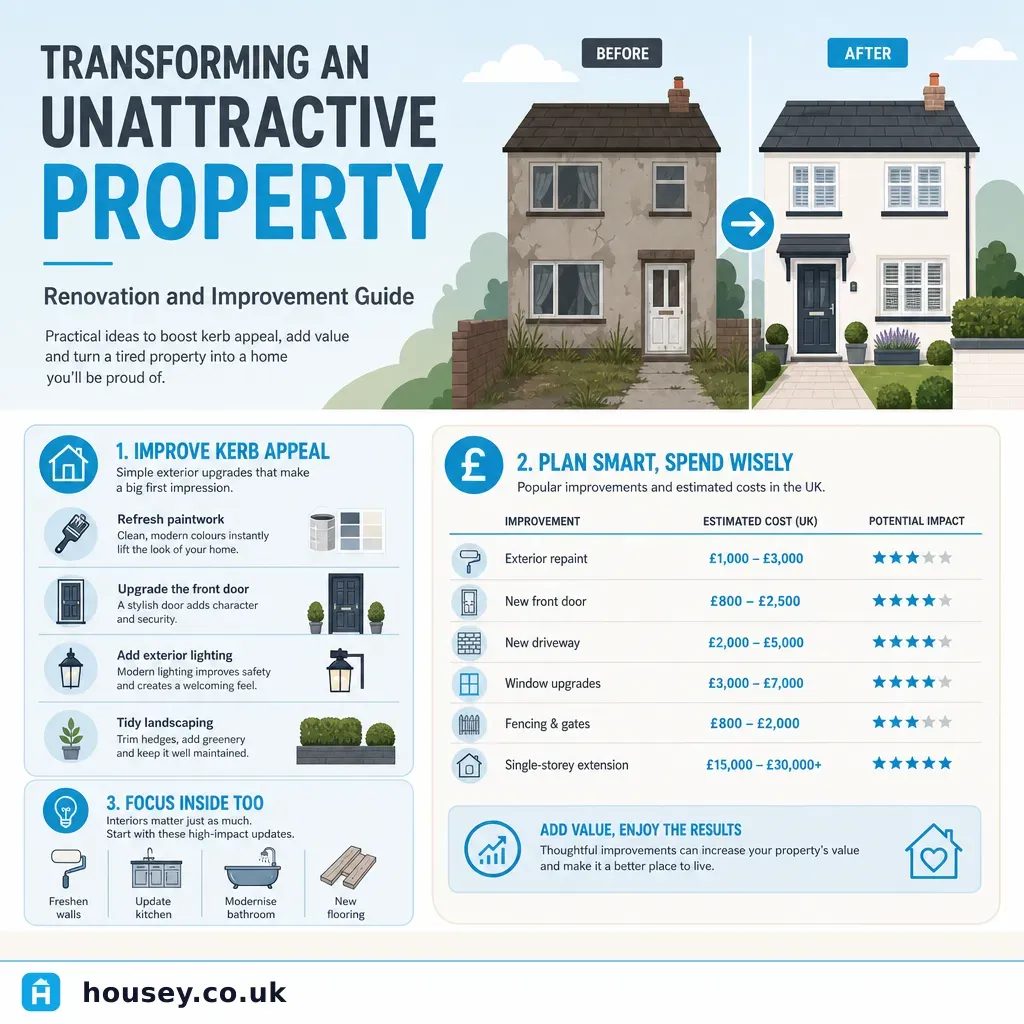
Transforming an Unattractive Property: Renovation and Improvement Guide
Transforming an unattractive UK property usually starts with surface-level improvements — render, windows, doors, and front landscaping — before tackling structural changes like extensions.
 Improvement & Build
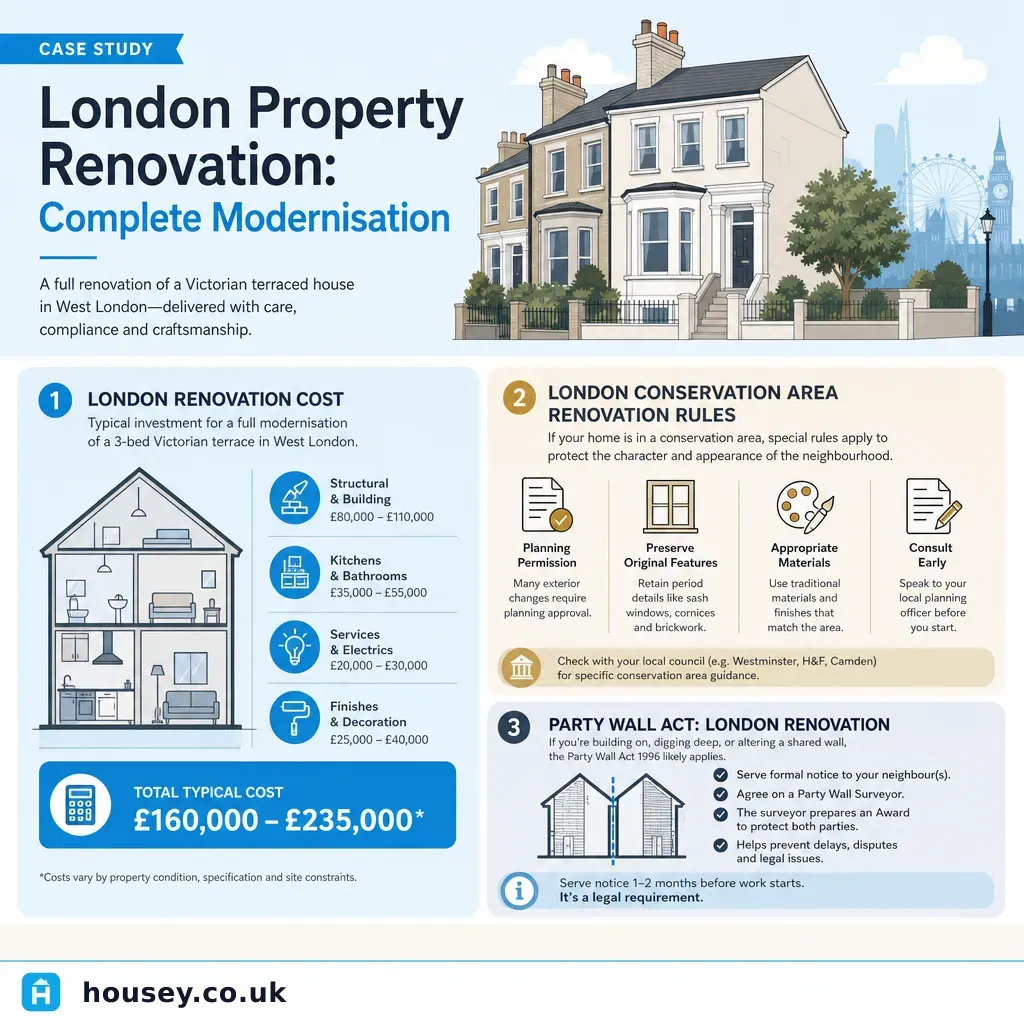
London Property Renovation: Complete Modernisation Case Study
Modernising a London property means navigating conservation area restrictions, party wall obligations, and Building Regulations alongside the build work itself.
 Improvement & Build
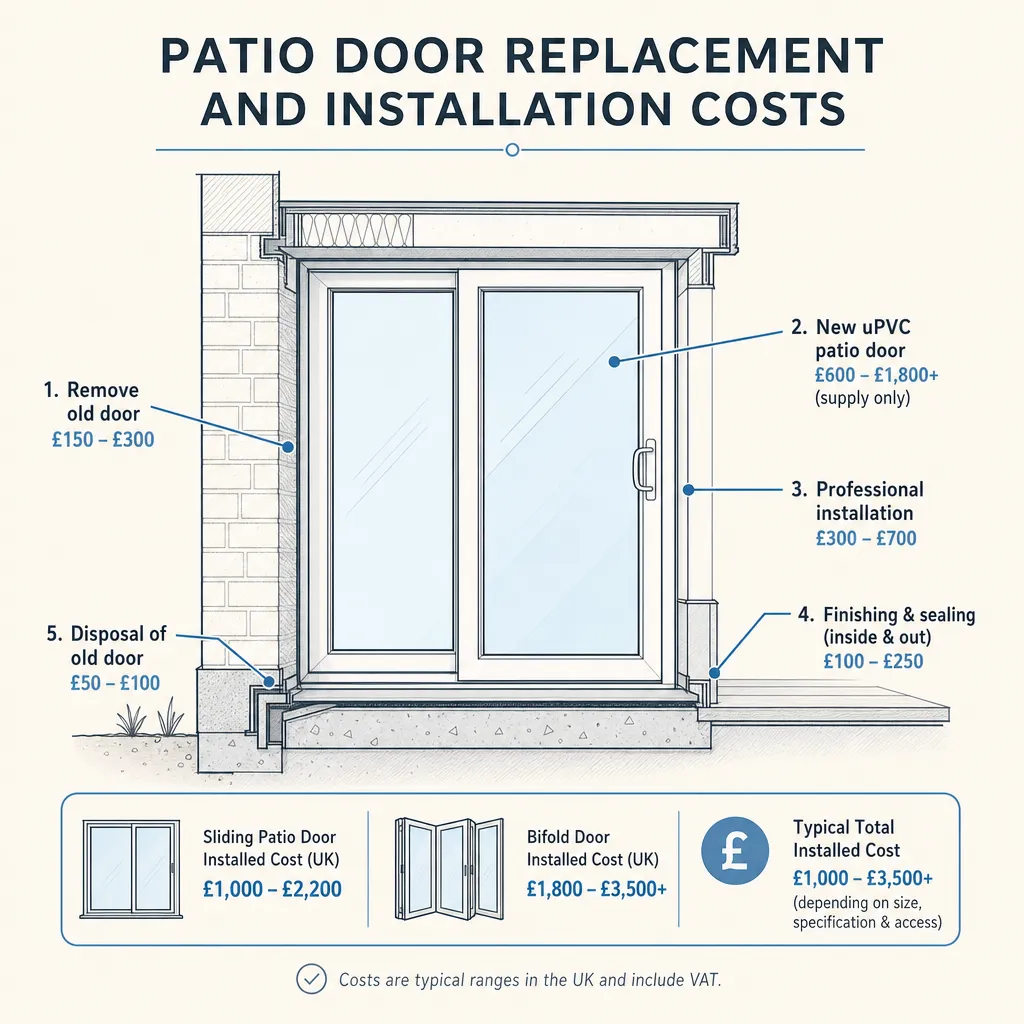
Patio Door Replacement and Installation Costs
Replacing patio doors in the UK typically costs £800–£2,000 installed for a standard uPVC sliding unit, rising to £3,000–£8,000 or more for aluminium bifold doors.
 Improvement & Build
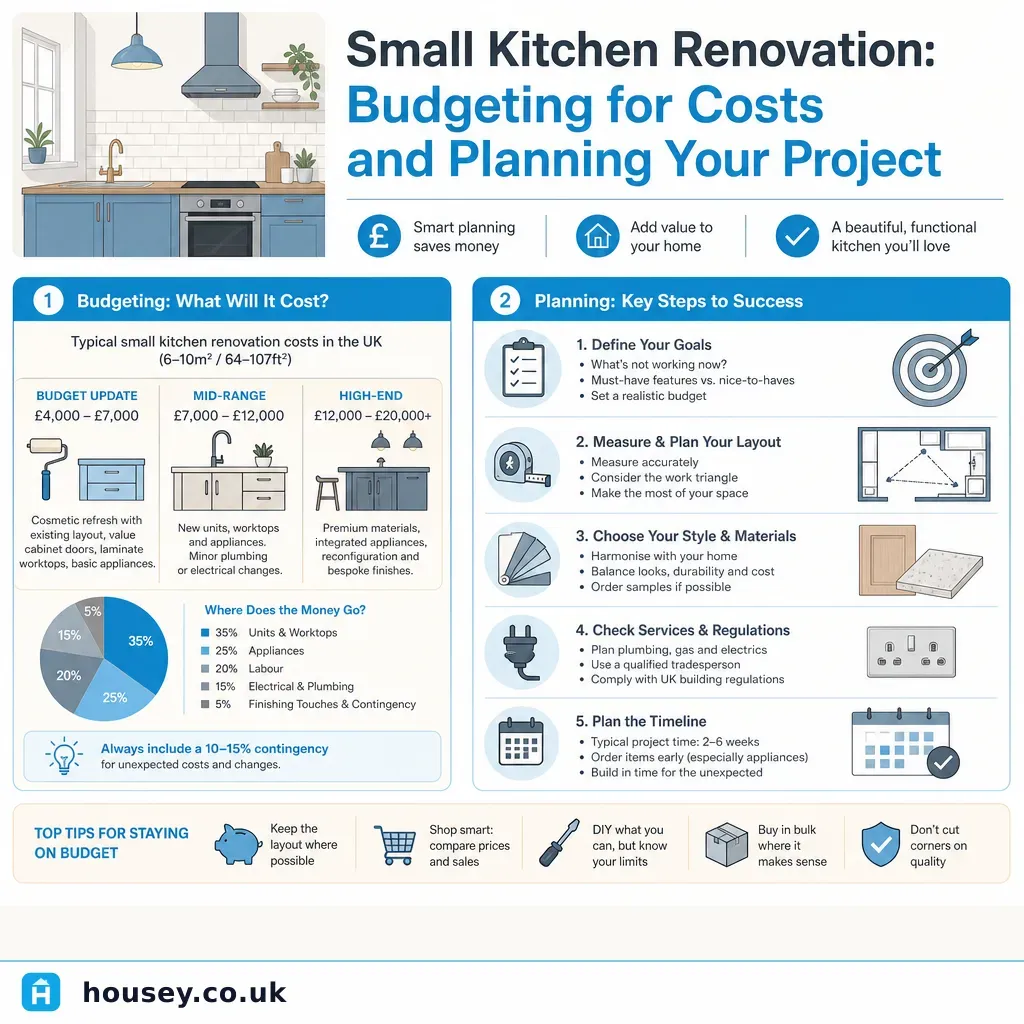
Small kitchen renovation: budgeting for costs and planning your project
A small kitchen renovation in the UK typically costs £5,000–£15,000 for a full refresh including new units, worktops, tiling, and appliances, though costs vary widely by specification, region, and whether structural changes or rewiring are involved.
 Improvement & Build
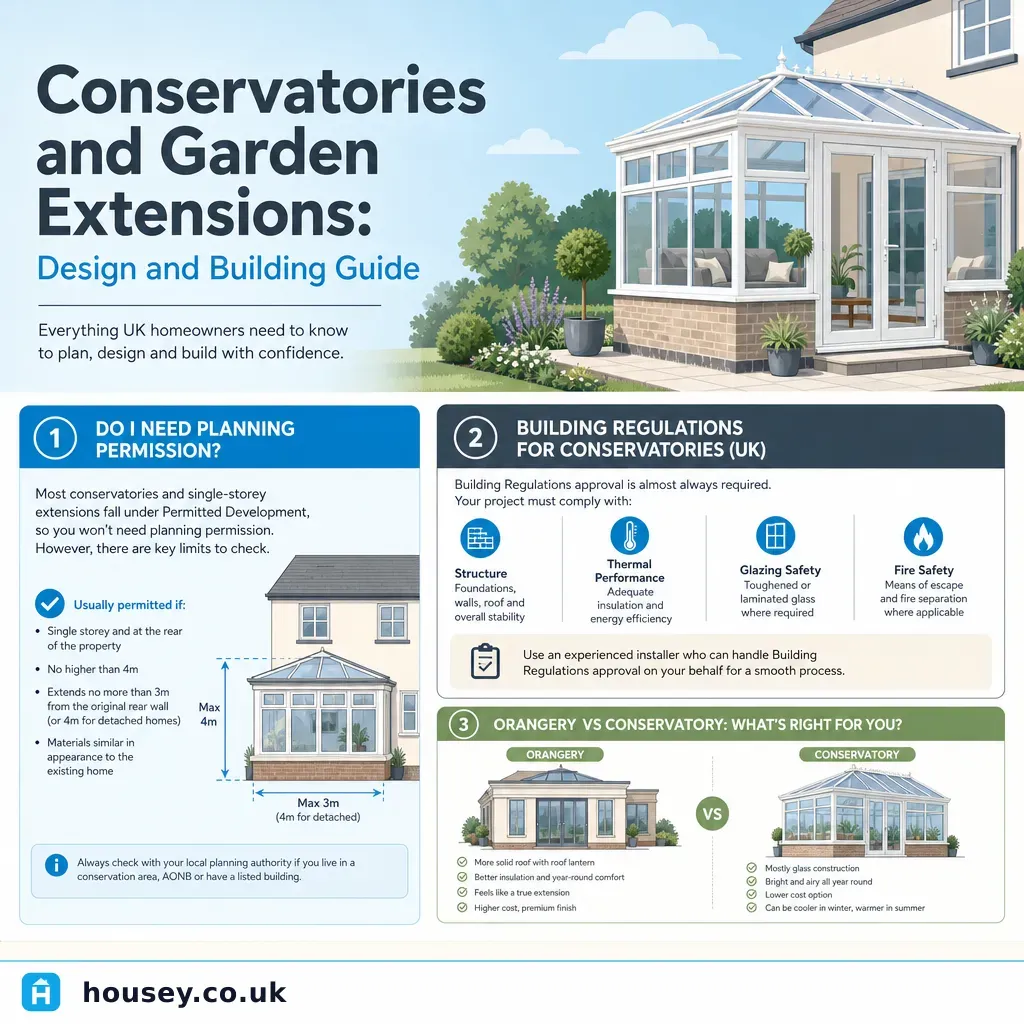
Conservatories and Garden Extensions: Design and Building Guide
Most conservatories qualify as permitted development in England if they are single-storey, within 50% of original curtilage, and meet dimensional limits.