Mechanical Ventilation with Heat Recovery System Costs
By Housey · Last reviewed 7th of May 2026
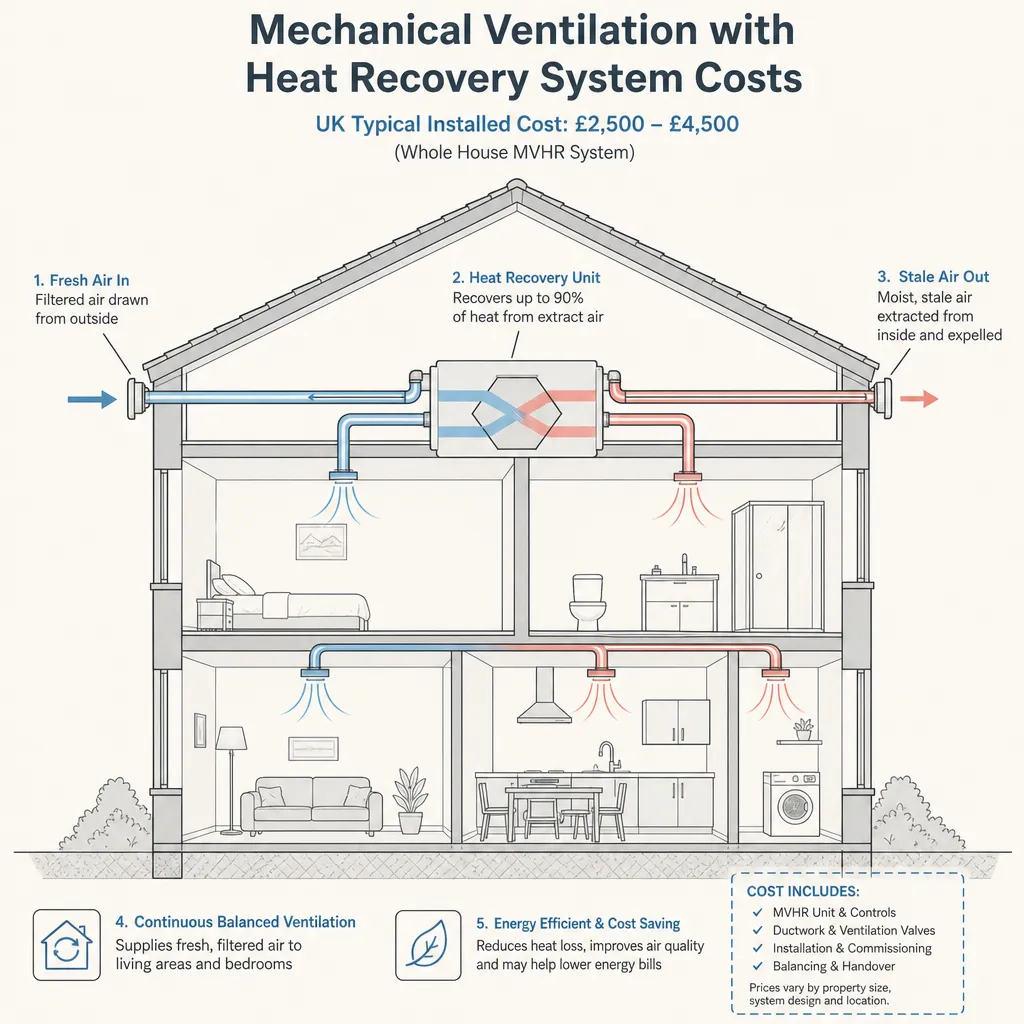
Mechanical Ventilation with Heat Recovery System Costs
Mechanical ventilation with heat recovery (MVHR) is increasingly specified in new-build homes and retrofitted into existing properties as part of whole-house energy-efficiency programmes. Questions about cost most often arise during a retrofit assessment, when planning an extension to a well-sealed home, or when investigating persistent condensation and poor indoor air quality. Getting the specification right matters as much as the upfront cost — a poorly designed or under-commissioned MVHR system can create moisture and air-quality problems rather than solving them.
Key points
- A whole-house MVHR system for a typical 3-bedroom UK home costs £3,000–£8,000 supplied and installed; costs can exceed £10,000 for larger or more complex properties (indicative UK costs, last reviewed 2026-05-07).
- The MVHR unit alone typically costs £800–£3,500; ductwork and installation labour make up the majority of the total project cost.
- Building Regulations Approved Document F (2021 edition, effective June 2022) sets minimum ventilation rates that all MVHR installations must meet.
- MVHR is most effective in well-sealed buildings with air permeability at or below 5 m³/(h·m²) at 50 Pa; in draughty older properties, heat recovery efficiency drops significantly.
- Systems should be commissioned and balanced in line with CIBSE TM26 guidance; TrustMark or MCS registration provides additional quality assurance for retrofit installations.
What does an MVHR system cost in the UK?
MVHR project costs break down into four main elements: the unit, ductwork and fittings, installation labour, and commissioning. Each element varies considerably depending on property size and system specification.
Cost element | Typical indicative range | Notes |
|---|---|---|
MVHR unit (supply only) | £800–£3,500 | Varies by brand, airflow capacity, and efficiency rating |
Ductwork and fittings | £800–£3,000 | Rigid duct systems perform better but cost more to install than flexible alternatives |
Installation labour | £1,200–£3,000 | Depends on property size, ductwork complexity, and ceiling or loft access |
Commissioning and balancing | £200–£600 | Essential for correct airflow rates; sometimes included in the installer's quote |
Electrical connection | £100–£300 | If consumer unit work is required, a Part P-registered electrician is needed |
Annual servicing | £150–£300 | Filter changes plus airflow checks; filter sets alone cost £20–£80 |
Indicative UK costs, last reviewed 2026-05-07. Prices vary by region, system specification, and property type.
For a typical 3-bedroom semi-detached, total installed costs usually fall between £3,500 and £7,000. A larger 5-bedroom detached with complex ductwork routing through existing structure could reach £10,000–£15,000.
What affects the price of MVHR installation?
Several factors push costs up or down significantly:
Property size and layout: The number of wet rooms and habitable rooms determines the airflow capacity required and the ductwork route length. Single-storey properties are generally easier and cheaper to duct than multi-storey homes.
Airtightness level: MVHR works best in well-sealed buildings. If your home has not been pressure-tested, an installer may recommend an airtightness test first — typically £200–£500 — to establish whether the system will perform as intended.
Ductwork type: Semi-rigid or flexible ductwork is quicker to install but less efficient and harder to clean. Rigid metal ductwork is the preferred specification for performance, particularly in PAS 2035 retrofit projects, but adds cost.
Unit placement: The MVHR unit is typically located in a loft, plant room, or utility cupboard. Difficult access — such as a poorly boarded loft or confined cupboard — increases labour time and cost.
Grade and brand of unit: Entry-level units from European manufacturers typically start around £800–£1,200; higher-efficiency or larger-capacity units from premium brands can cost £2,500–£3,500.
Retrofit versus new-build: Retrofitting MVHR into an existing occupied property nearly always costs more than specifying it during construction, due to the need to route ductwork through existing structure and fabric.
Is MVHR right for your home?
MVHR is not the appropriate ventilation solution for every UK property. Use this decision guide before commissioning any design work:
- Choose MVHR if: your home is newly built or has been substantially air-sealed as part of a deep retrofit; you have or intend to achieve air permeability of 5 m³/(h·m²) or below at 50 Pa; or you are addressing whole-house ventilation as part of a PAS 2035 retrofit project.
- Consider alternatives if: your property is a draughty Victorian terrace or pre-1919 solid-wall home with high air permeability — background ventilation via trickle vents and localised extract fans may be considerably more cost-effective.
- Seek specialist advice first if: you have noticed mould growth, condensation on internal surfaces, or indoor air quality complaints — a ventilation and condensation assessment can diagnose the root cause before any system is specified.
- Consult a retrofit coordinator if: your project involves multiple energy measures under ECO4 or the Great British Insulation Scheme — moisture and ventilation interaction must be assessed holistically under PAS 2035:2023.
MVHR versus other ventilation options
System | How it works | Best for | Approximate installed cost | Heat recovery? |
|---|---|---|---|---|
Trickle vents and extract fans | Background ventilation plus localised kitchen and bathroom extract | Older, leakier homes; tight budgets | £500–£2,000 | No |
Centralised mechanical extract (MEV) | Single fan extracts from wet rooms via ductwork | Moderately airtight homes | £800–£2,500 | No |
MVHR | Balanced supply and extract with heat exchanger | Airtight new-builds and deep retrofits | £3,000–£10,000+ | Yes — 70–95% |
Positive input ventilation with heat recovery (PVHR) | Positive pressure system with partial heat recovery | Some retrofit situations | £1,500–£4,000 | Partial |
Indicative UK costs, last reviewed 2026-05-07. Always seek a professional ventilation assessment to determine the right system for your property.
Important limitations
This article provides general cost and specification information only. MVHR design, sizing, and commissioning must be carried out by a suitably qualified professional. An undersized, oversized, or poorly balanced system can cause noise problems, inadequate airflow, condensation within ductwork, and may fail to meet Building Regulations Part F requirements.
Retrofit projects involving MVHR as part of a wider energy improvement programme must follow PAS 2035:2023, which requires a whole-house retrofit assessment and a retrofit coordinator overseeing the interaction between measures. Moisture risk assessment is a specific requirement under PAS 2035 and must not be skipped.
Rules, costs, and performance outcomes vary significantly by property type, construction, location, and the installed system. Always seek professional assessment for your specific property before committing to any ventilation strategy.
When this becomes urgent
Stop relying on general guidance and seek professional assessment without delay if:
- You notice active mould growth on walls, ceilings, or window frames — this is a health risk that requires professional diagnosis before any ventilation system is specified or altered.
- A newly installed MVHR system is making excessive noise, failing to move air through all terminals, or producing condensation inside ductwork — these are signs of commissioning or design errors that need immediate correction.
- You have recently air-sealed or insulated your home and are now experiencing persistent condensation on internal surfaces — this indicates that background ventilation is inadequate and may be causing interstitial condensation within the building fabric.
- Any household member experiences unexplained respiratory symptoms following airtightness works or a new ventilation installation — seek medical advice and arrange an independent air quality assessment.
What to ask a qualified professional
Before instructing an MVHR installer or ventilation specialist, ask the following questions:
- What airflow capacity (m³/h) are you specifying for my property, and how have you calculated this in line with Approved Document F 2021?
- Will you require or carry out an airtightness test before or after installation, and how will results affect the system design?
- What type of ductwork are you specifying — rigid, semi-rigid, or flexible — and why is that appropriate for this property and budget?
- How will the system be commissioned and balanced, and will you provide a commissioning certificate with measured airflow rates at each terminal?
- Are you registered with TrustMark, MCS, or another recognised competent-person scheme for ventilation work?
- What servicing regime do you recommend, and what are the ongoing filter costs for the unit you are proposing?
- Is VAT included in your quote, and does this project qualify for the reduced 5% VAT rate applicable to certain energy-saving installations?
- What happens if the installed system does not achieve the specified airflow rates after commissioning?
When to get professional help
MVHR installation should always be carried out by a qualified ventilation engineer — this is not a DIY project. Seek specialist input before any works begin:
- Start with a ventilation and condensation assessment to establish the root cause of any air quality or moisture problem before specifying a solution.
- For whole-house retrofit projects, engage a PAS 2035-qualified retrofit coordinator to oversee the ventilation strategy alongside insulation and airtightness measures.
- If your property is listed or within a conservation area, check whether external penetrations for supply and exhaust terminals require listed building consent or conservation area approval before any work starts.
How Housey can help
A ventilation and condensation assessment is often the right starting point before committing to any MVHR system. Housey can connect you with qualified specialists who can assess your property's ventilation needs, identify the root cause of moisture or air quality issues, and provide an evidence-based specification for the most appropriate solution.
Frequently asked questions
How long does MVHR installation take?
A typical whole-house MVHR installation in a 3-bedroom home takes 2–4 days for a skilled team. More complex properties with difficult ductwork routing through existing structure may take longer. Commissioning and airflow balancing is usually carried out on the same visit or shortly afterwards, and a commissioning certificate should be provided.
Does MVHR installation require planning permission?
MVHR installation does not normally require planning permission for a standard house. External supply and exhaust terminals must be carefully positioned. On listed buildings or in conservation areas, additional consent may be required for external penetrations through the building fabric. Check with your local planning authority if your property has any designations.
What maintenance does an MVHR system need?
Filters should be checked and replaced every 3–12 months depending on the manufacturer's guidance and local air quality — filter sets typically cost £20–£80. The heat exchanger and ductwork should be professionally serviced every 1–2 years. Neglecting maintenance reduces heat recovery efficiency and can negatively affect indoor air quality.
Is there any grant funding for MVHR in the UK?
MVHR is not typically funded as a standalone measure under ECO4 or the Great British Insulation Scheme. Where it forms part of a PAS 2035-compliant whole-house retrofit, it may be included in a funded package alongside insulation and heating measures. Check eligibility with a qualified retrofit coordinator or your energy supplier.
What heat recovery efficiency should I look for in an MVHR unit?
Look for units with heat recovery efficiency of 80% or above, measured in accordance with EN 13141-7. Units should also have a specific fan power of 0.45 W/(l/s) or below to meet Approved Document F 2021 requirements. Independently tested performance data is available from manufacturers such as Zehnder, PAUL, and Vent-Axia.
Sources and further reading
- Building Regulations Approved Document F: Ventilation (2021) — Ministry of Housing, Communities & Local Government
- PAS 2035:2023 — Retrofitting Dwellings for Improved Energy Efficiency — BSI / BEIS
- Energy Saving Trust: Ventilation — Energy Saving Trust
- TrustMark: Find a Registered Installer — TrustMark
- CIBSE TM26: Hygrothermally Efficient Retrofitting — Chartered Institution of Building Services Engineers
Useful next reads
 Energy & Retrofit
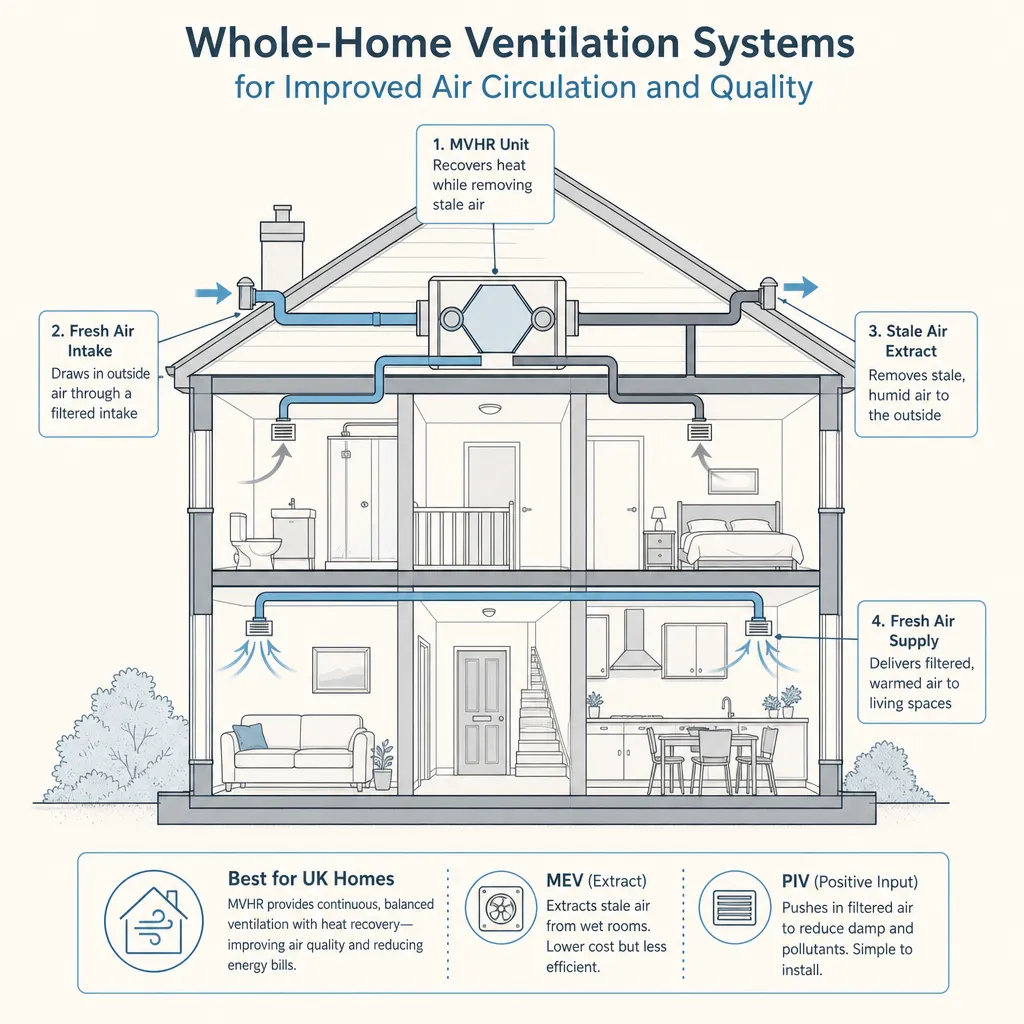
Whole-Home Ventilation Systems for Improved Air Circulation and Quality
Whole-home ventilation systems — including MVHR, MEV, dMEV, and PIV — improve indoor air quality and control condensation in UK homes.
 Energy & Retrofit
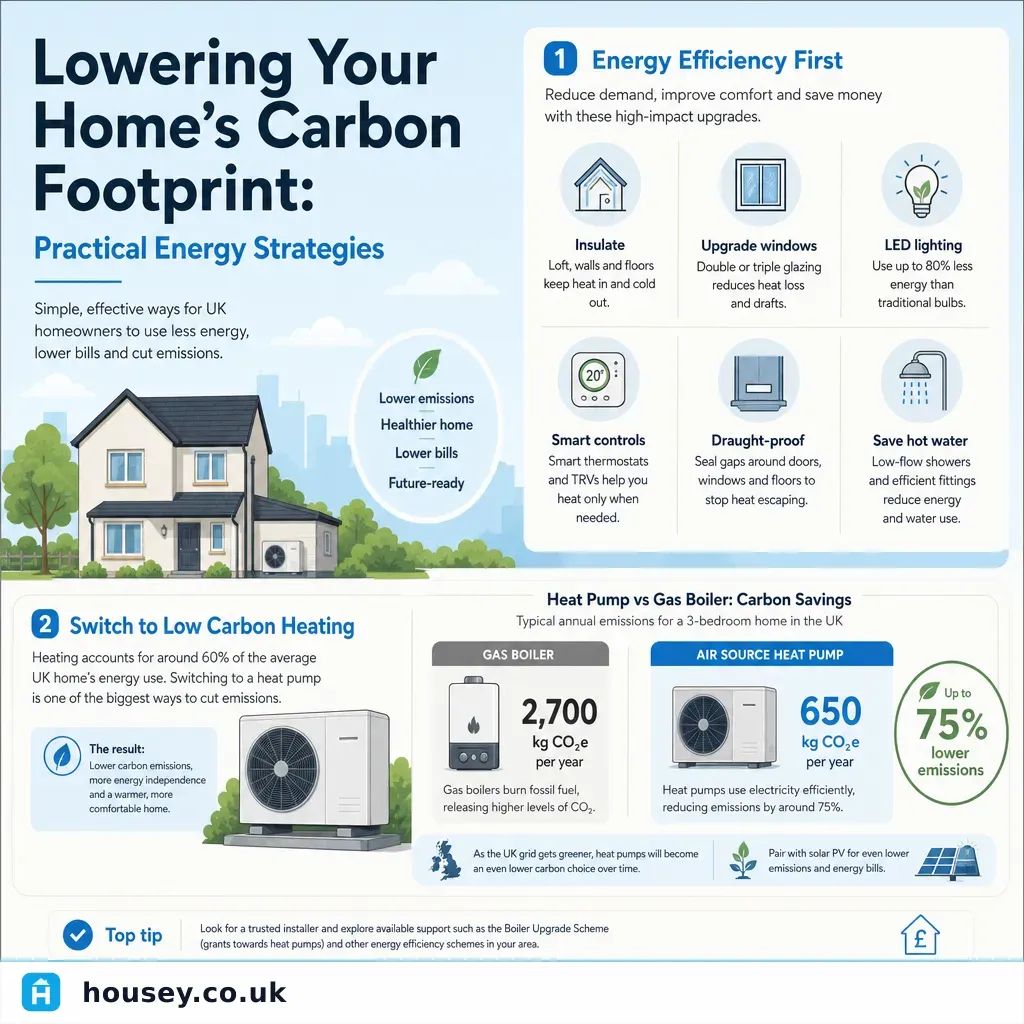
Lowering Your Home's Carbon Footprint: Practical Energy Strategies
UK homes produce around 19% of national greenhouse gas emissions, mostly from gas heating.
 Energy & Retrofit
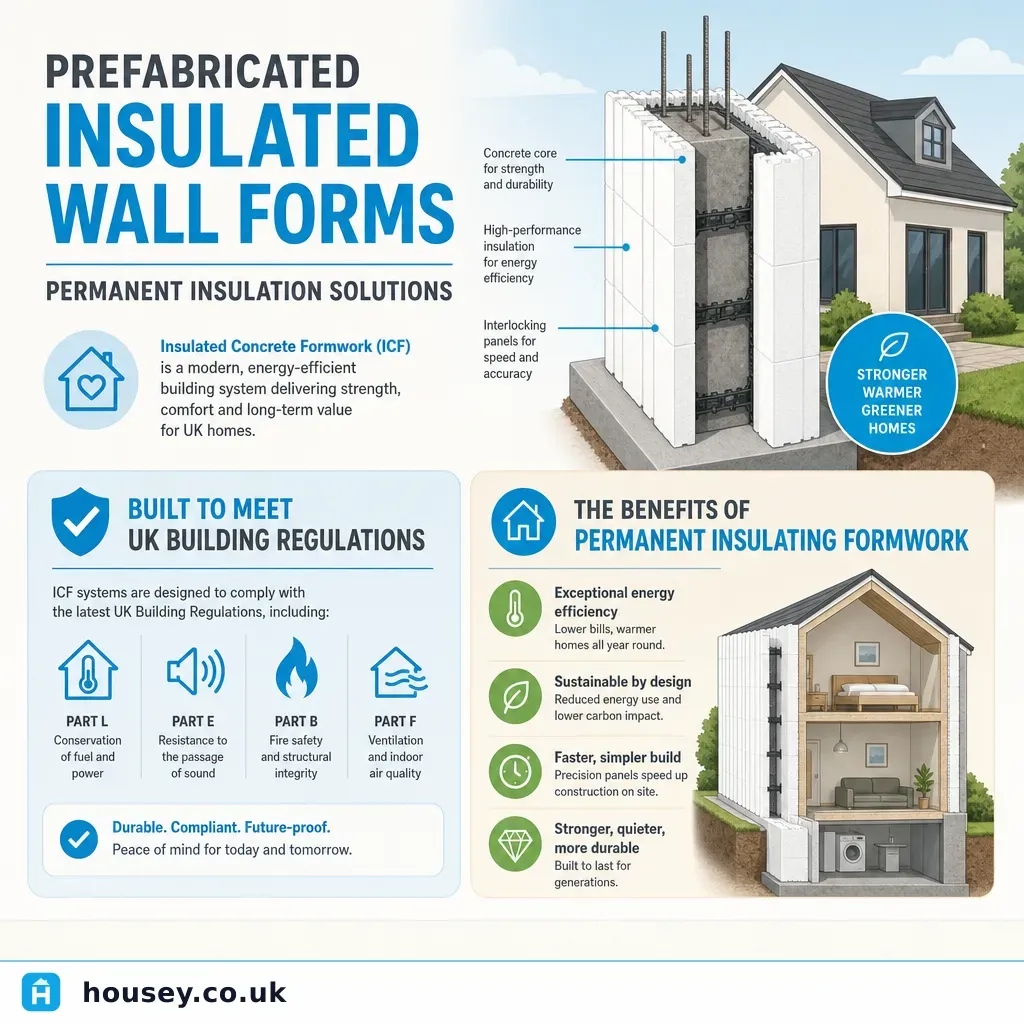
Prefabricated Insulated Wall Forms: Permanent Insulation Solutions
Prefabricated insulated wall forms — including ICF and SIPs systems — deliver high thermal performance by combining permanent insulation with structural concrete or timber in a single wall assembly.
 Energy & Retrofit
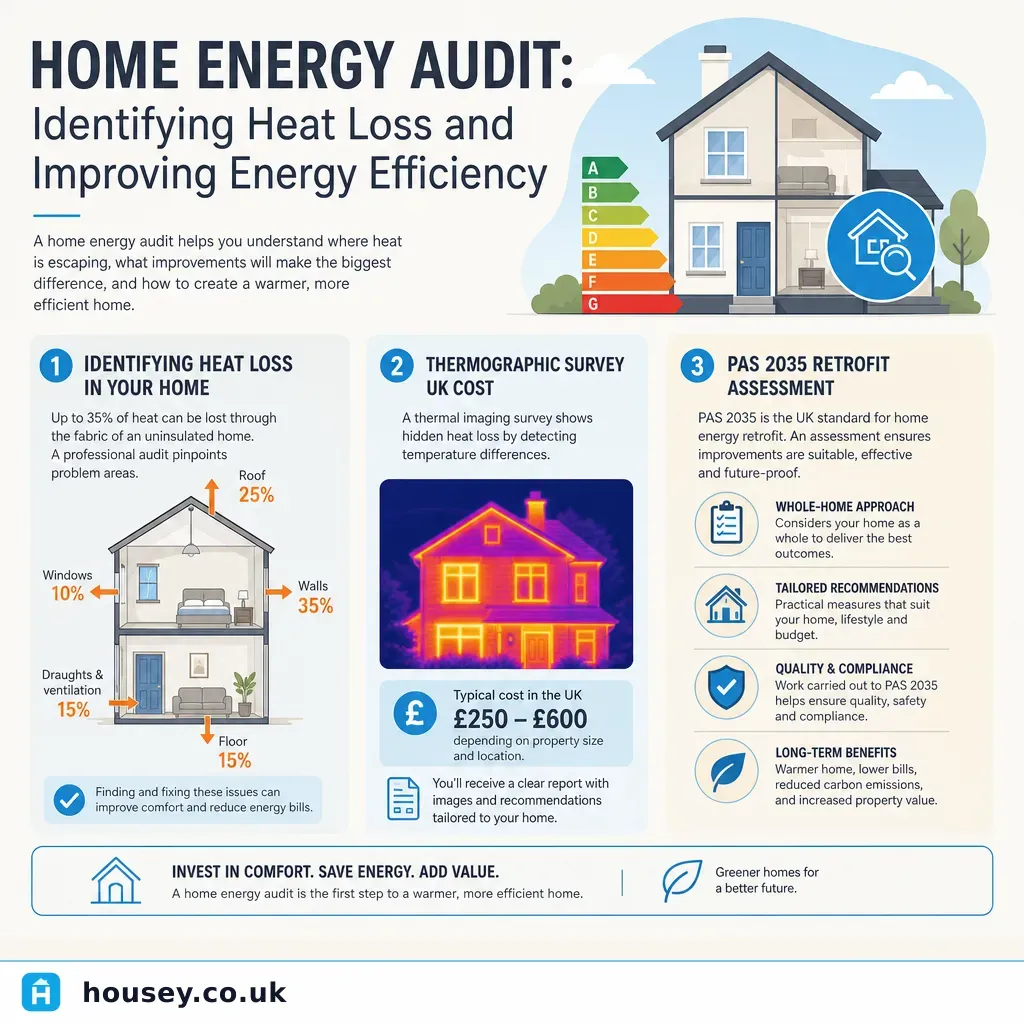
Home Energy Audit: Identifying Heat Loss and Improving Energy Efficiency
A home energy audit is a structured assessment of where your property loses heat and how efficiently it uses energy.
 Energy & Retrofit
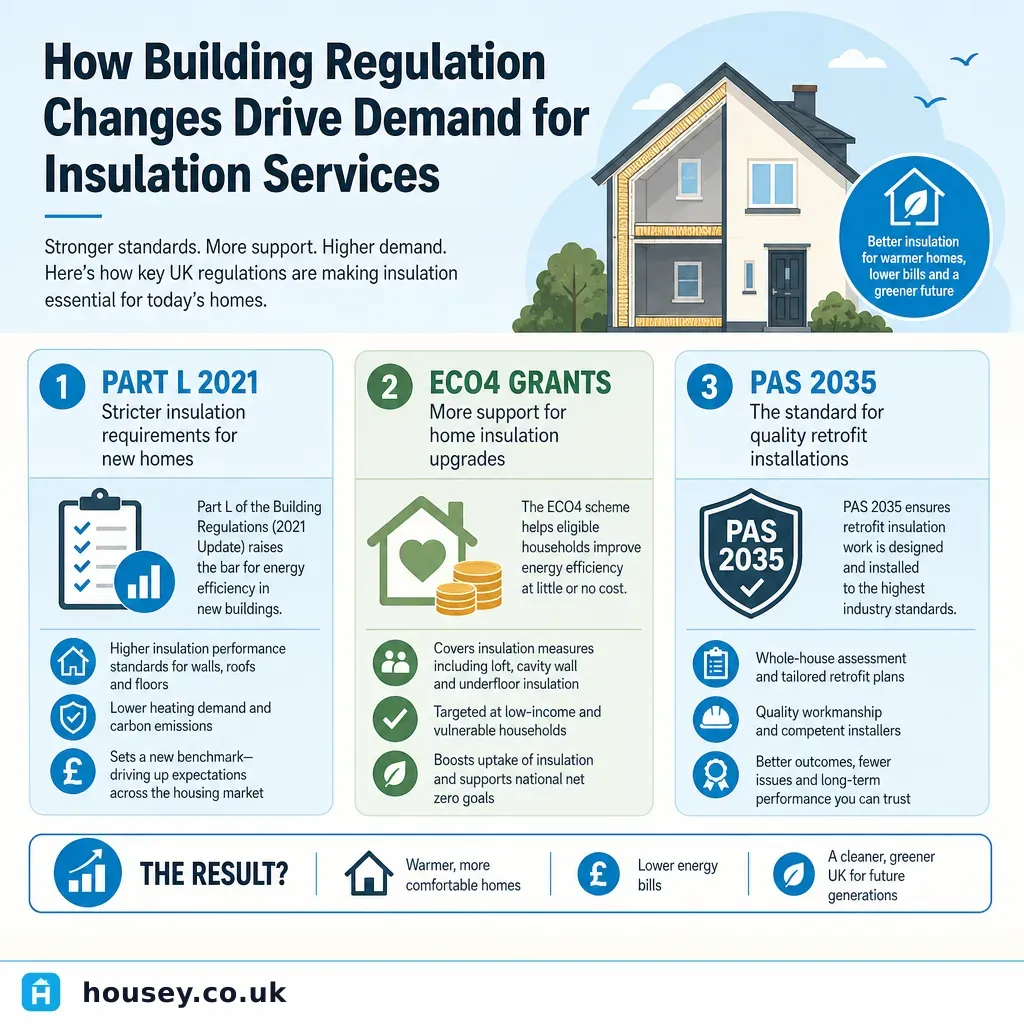
How Building Regulation Changes Drive Demand for Insulation Services
Building regulation changes — including 2021 updates to Approved Document L, ECO4 funding obligations, and proposed MEES tightening — are creating sustained demand for insulation services across the UK.