Memorial Tree Planting: Services and Considerations
By Housey · Last reviewed 30th of May 2026
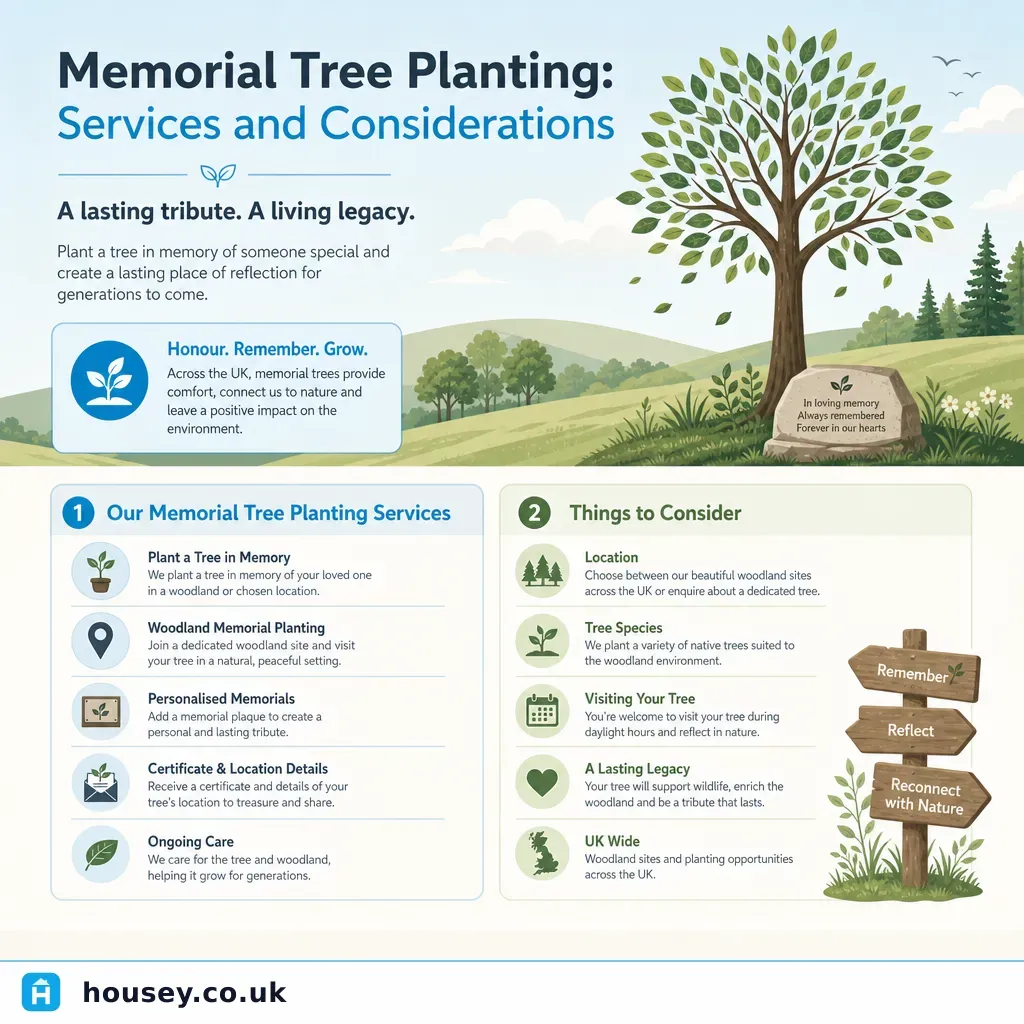
Memorial Tree Planting: Services and Considerations
Planting a tree in memory of a loved one is a meaningful and lasting tribute — and in the UK, there are more options for where and how to arrange this than many people initially realise. Whether you are considering a tree in your own garden, contributing to a managed woodland scheme, or using a dedicated memorial planting service, each route involves practical decisions about species selection, site suitability, ongoing ownership, and aftercare. Understanding these considerations before you commit helps ensure the memorial endures through the decades.
Key points
- Bare-root trees planted between November and March are significantly cheaper than container-grown specimens and generally establish more reliably in UK conditions.
- A Tree Preservation Order (TPO) protects specific trees from felling or significant alteration — check with your local planning authority before undertaking any work near an existing protected tree.
- The Woodland Trust's Dedicate a Tree programme places a tree in a managed UK woodland in exchange for a charitable donation from around £25, with professional long-term care included.
- Planting on public land — parks, roadsides, open spaces — always requires permission from the relevant landowner or authority, typically a council parks department or land trust.
- Native UK species such as rowan (Sorbus aucuparia), silver birch (Betula pendula), and wild cherry (Prunus avium) establish well across most UK soil types and provide strong wildlife value.
Where can you plant a memorial tree?
The right location depends on what you want the memorial to achieve and how much ongoing involvement you want in its care.
Your own garden or land: You retain full ownership and can visit at any time. You choose the species, position, and any accompanying planting. You are also responsible for all ongoing care and maintenance. This option works best where the property is likely to remain in the family long term.
Managed woodland scheme: Organisations such as the Woodland Trust, Trees for Cities, and local wildlife trusts offer programmes where a tree is planted and maintained in a managed site. The tree is typically not individually identifiable or available to visit, but it contributes to habitat creation and receives professional long-term care.
Dedicated memorial grounds: Some arboreta, estates, and memorial gardens offer named memorial tree placements — often with a small plaque — for a fee. These sites are privately managed and offer a combination of permanence and individual recognition.
Local council schemes: Many local authorities offer memorial bench and tree planting programmes in parks and cemeteries. Contact your council's parks or bereavement services team for current availability, costs, and species options.
Comparison: memorial planting options
Option | Ownership | Ongoing care | Typical cost | Best for |
|---|---|---|---|---|
Own garden — bare-root sapling | You | You | £30–£150 (tree + planting materials) | Families staying in the property long term |
Own garden — semi-mature specimen | You | You | £300–£1,500+ (tree + professional planting) | Immediate visual impact; formal occasion planting |
Woodland Trust scheme | Charity (managed woodland) | Charity | £25–£100 donation | Conservation contribution; no maintenance required |
Dedicated memorial ground | Site operator | Site operator | £200–£800+ (with named plaque) | Individual recognition; professional long-term care |
Local council park scheme | Council | Council | £150–£500 | Community setting; no home garden required |
Indicative UK costs, last reviewed 2026-05-30. Prices vary by region, species, tree size, and service provider.
Choosing the right tree species
Species selection affects long-term maintenance burden, wildlife value, and whether the tree will thrive in your local conditions. Key questions worth considering:
- What is the eventual size? A small urban garden cannot comfortably accommodate an English oak or beech; a rowan, crab apple, or ornamental cherry is more appropriate.
- What is the soil type and drainage? Silver birch tolerates wetter ground; cherry prefers free-draining soil. The RHS online plant finder includes drainage and soil requirements for most species.
- Is the site exposed or sheltered? Exposed upland gardens suit hardy natives; coastal gardens may need windbreak-tolerant varieties.
- What is the wildlife value? Native species generally support a significantly wider range of insects and birds than ornamental cultivars or imported varieties.
The RHS Plant Finder and the Woodland Trust's species guides both offer searchable, UK-specific information. A qualified arborist or landscaper with horticultural knowledge can assess your site conditions and recommend species suited to your soil, climate, and available space.
What does memorial tree planting cost in the UK?
Indicative UK costs, last reviewed 2026-05-30. Costs vary by region, species, size, and whether professional planting is required.
- Bare-root sapling (self-planted): £5–£30 per tree, plus optional stakes and protective guards (£10–£25)
- Container-grown specimen, small (up to 2 m): £40–£150 supplied; professional planting by a landscaper typically adds £80–£200
- Semi-mature or heavy standard tree (2–4 m): £300–£1,000+ for the tree itself; professional planting adds £200–£600 depending on access and ground conditions
- Arborist site assessment and planting service: £100–£300 per visit for small garden projects
Cost drivers include tree species and nursery stock size, delivery charges for large specimens, ground preparation (compacted urban soils may need breaking up or amendment), staking and guard requirements, and any aftercare or watering programme.
A memorial tree planting checklist
Before arranging planting on private land:
Red flags when using a tree planting service
- A company quotes for planting without visiting the site or asking about soil type, aspect, and available space.
- No mention of stakes, tree guards, or first-season aftercare guidance — young trees need physical support and protection for at least two years.
- The supplier cannot confirm the tree's provenance or nursery stock grade — for amenity planting, BS 3936 compliance is the standard to ask for.
- A charity memorial scheme charges a substantial fee but provides little information about where, when, or how the tree will be planted or managed long term.
- A contractor proposes felling or significantly pruning an adjacent tree without checking first for a Tree Preservation Order.
When to get professional help
For trees planted in a private garden, engaging a professional tree surgeon or landscaper is worthwhile for semi-mature specimens, sites with difficult access, compacted or contaminated ground, or planting close to structures, boundaries, or drainage runs. Professional planting includes correct backfilling, staking, and initial aftercare guidance — all of which significantly affect long-term establishment success.
How Housey can help
Housey connects homeowners with experienced tree surgeons and landscapers who can advise on species selection, carry out professional planting, and provide site-specific aftercare programmes. Whether you are planting a single memorial sapling or planning a more substantial garden scheme, a qualified professional helps the tree establish well and endure for generations to come.
Frequently asked questions
Can I plant a memorial tree in a public park or open space?
You cannot plant in a public park or council-managed land without permission from the relevant landowner. Most local authorities and land managers have formal memorial tree schemes — contact your local parks or bereavement services department. Organisations including Woodland Trust and Trees for Cities also run sponsored planting programmes where the tree is planted and cared for on your behalf in a managed site.
Are there restrictions on planting trees in my own garden?
Generally you can plant a tree in your private garden without planning permission. However, in conservation areas there may be restrictions on removing or significantly altering existing trees, and Tree Preservation Orders (TPOs) protect specific trees from felling or major works. Check with your local planning authority if the planned planting could affect nearby protected trees.
What is the best time of year to plant a memorial tree?
Bare-root trees are best planted between November and March when dormant — this is the most cost-effective option and gives the highest establishment success rate. Container-grown specimens can be planted year-round but need consistent watering in dry spells. Avoid planting in hard frost conditions or when the ground is waterlogged.
How do I choose the right memorial tree species?
Consider the tree's eventual size, your soil type, drainage, and aspect. Native UK species such as rowan, silver birch, and wild cherry suit most UK climates and provide strong wildlife value. The RHS and Woodland Trust both publish species selection guides for UK conditions. An arborist or landscaper can assess your specific site and recommend the most suitable options.
Sources and further reading
- Dedicate a Tree — Woodland Trust
- Tree Preservation Orders and trees in conservation areas — GOV.UK
- Find a qualified arborist — Arboricultural Association
- RHS Plant Finder — Royal Horticultural Society
Useful next reads
 Improvement & Build
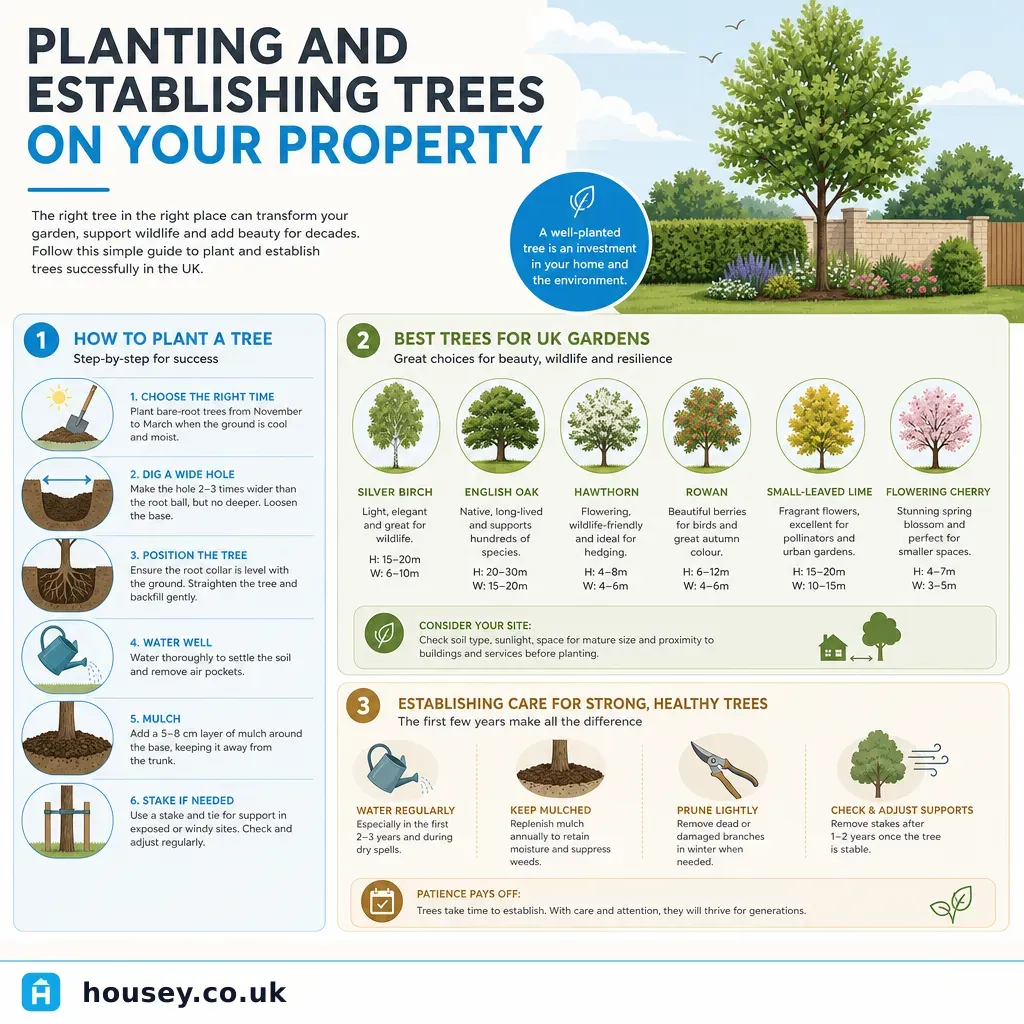
Planting and Establishing Trees on Your Property
Trees planted in the right season (October to March for bare-root stock), in well-prepared ground, and with appropriate staking and aftercare will establish most successfully.
 Improvement & Build
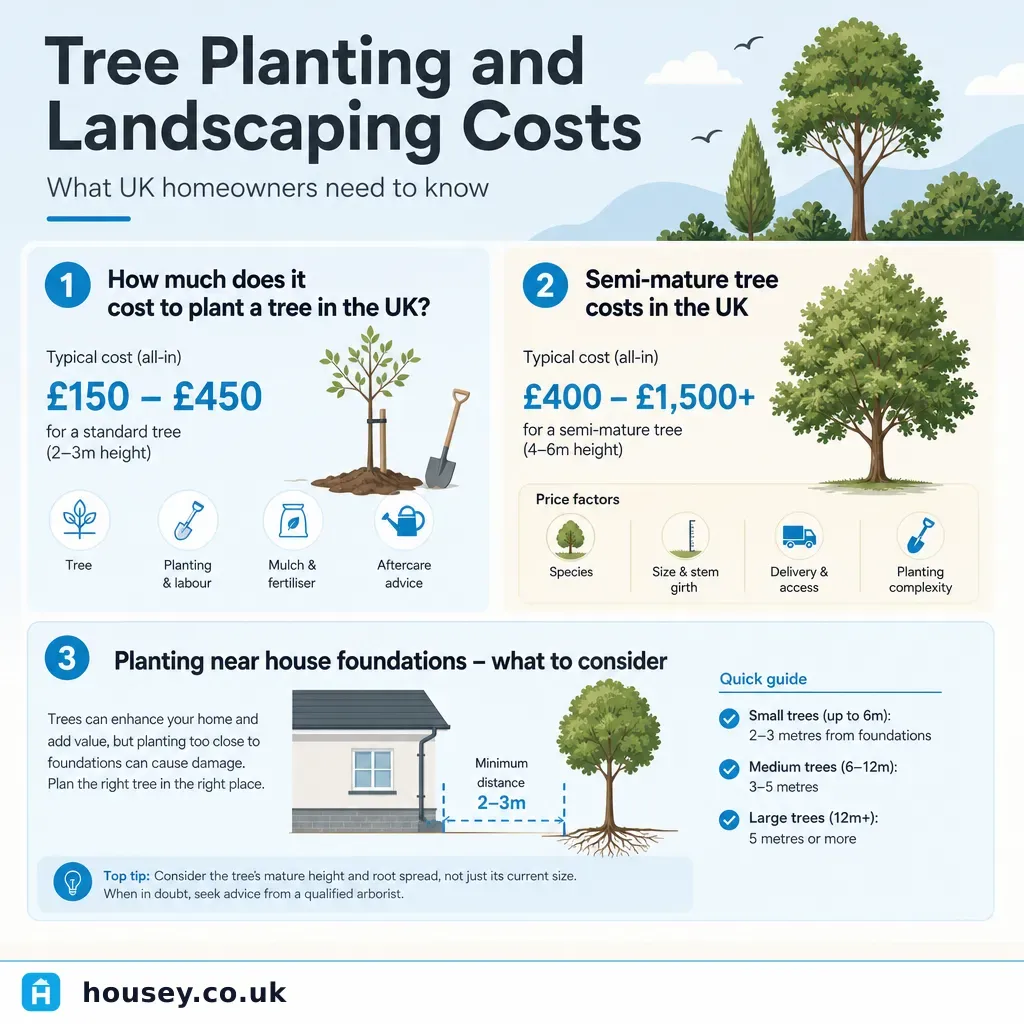
Tree Planting and Landscaping Costs
Tree planting costs range from around £5 for a bare-root whip to £5,000 or more for a semi-mature specimen with professional planting.
 Improvement & Build
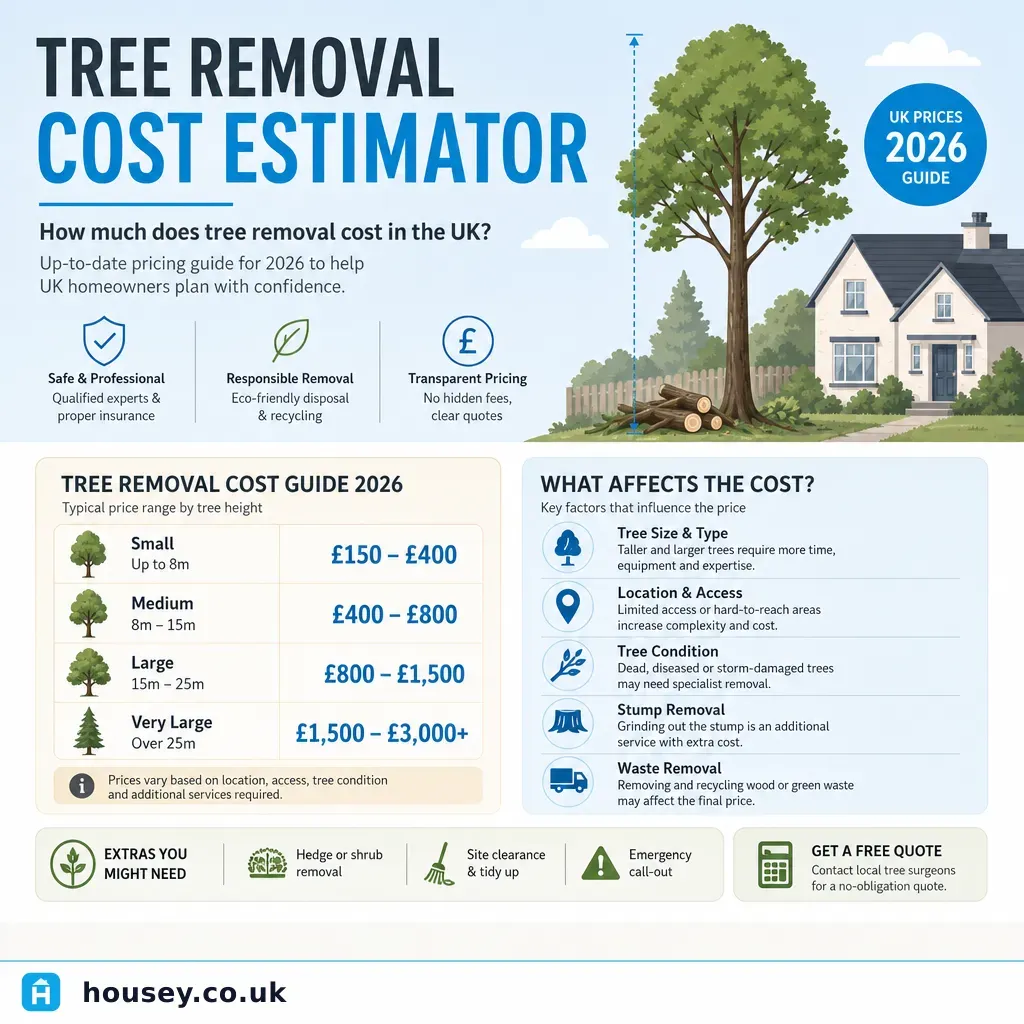
Tree Removal Cost Estimator
Tree removal in the UK costs roughly £150 to £5,000 or more, depending on the tree's height, species, access conditions, and whether stump removal is needed.
 Improvement & Build
Identifying and Addressing Dying Tree Branches: Common Causes
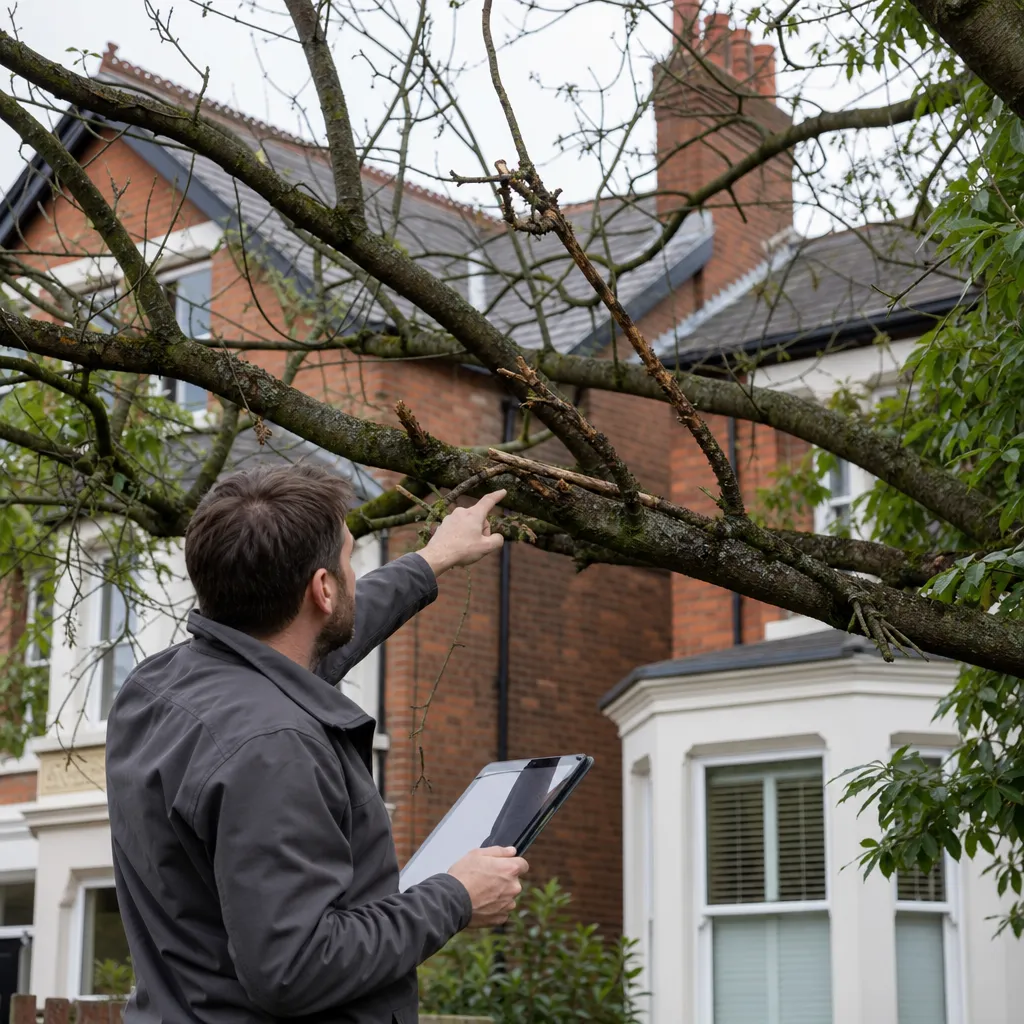
Dying branches on UK garden trees can result from fungal diseases such as ash dieback or honey fungus, pest damage, drought stress, physical injury, or root problems.
 Improvement & Build
Tree Removal Service Costs
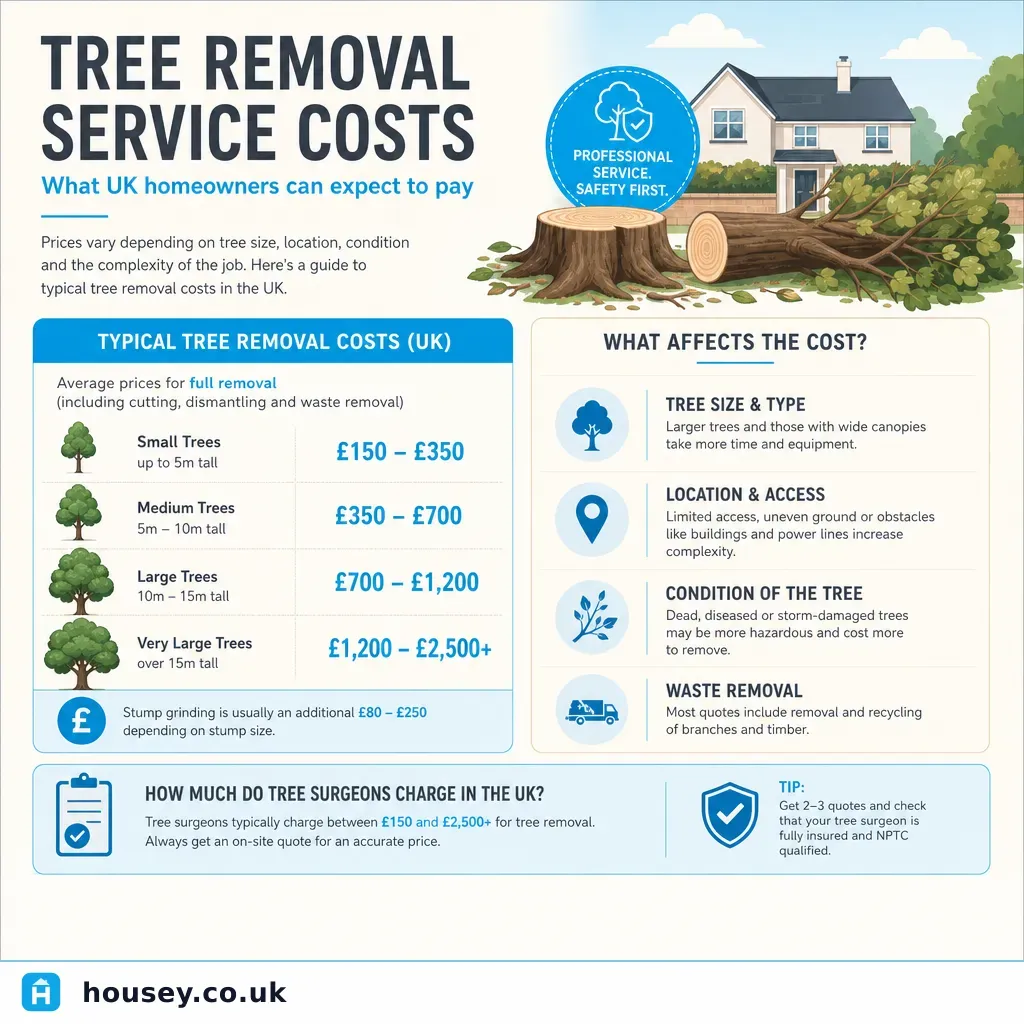
Professional tree removal costs in the UK depend on tree height, access, species, and the scope of work included.