Planting and Establishing Trees on Your Property
By Housey · Last reviewed 30th of May 2026
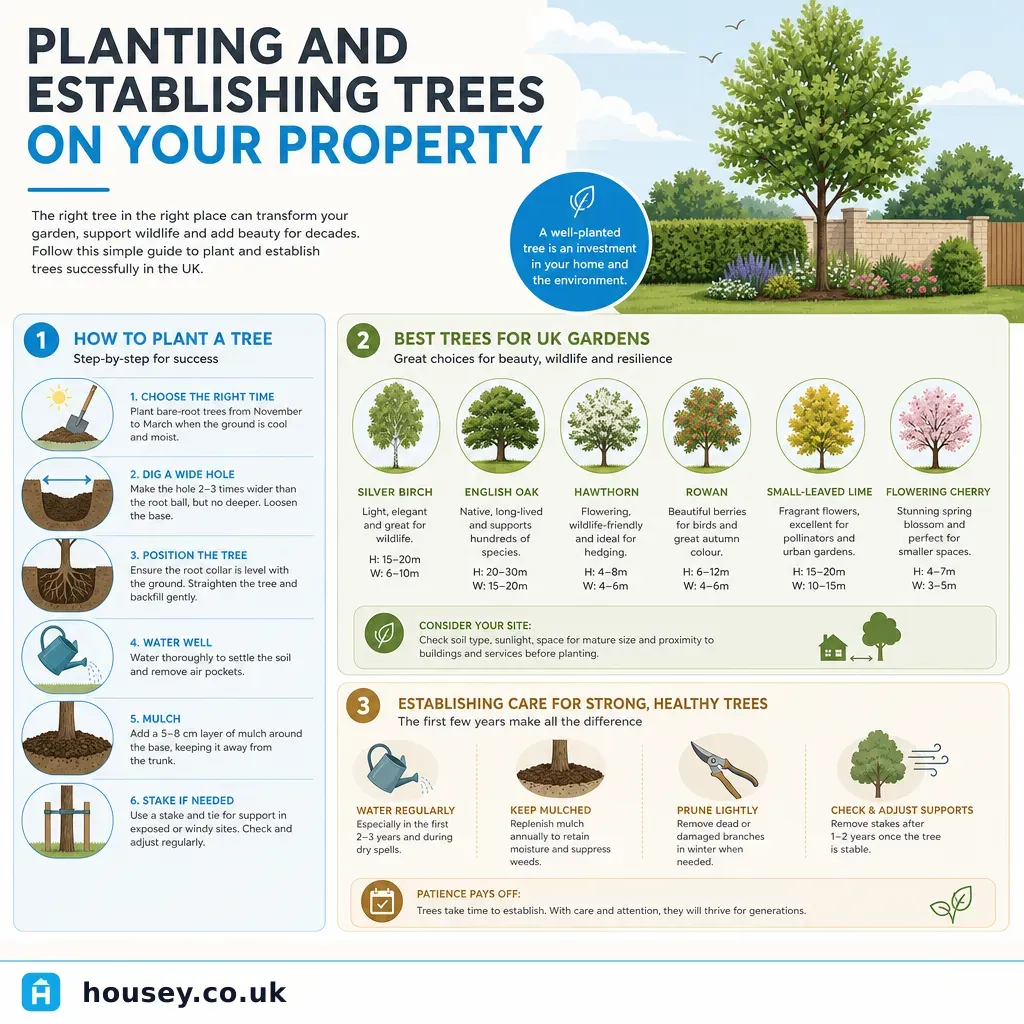
Planting and Establishing Trees on Your Property
Tree planting is one of the highest-value long-term improvements a UK homeowner can make to a property, yet it is also one of the easiest to get wrong — with consequences that can persist for decades. The wrong species in the wrong position, planted at the wrong time or depth, may fail to establish, create subsidence risk on clay soils, or cause disputes with neighbours over light, roots, or boundary encroachment. Getting the basics right from the outset — species selection, timing, ground preparation, and aftercare — makes the difference between a tree that thrives and one that never takes.
Key points
- Bare-root trees should be planted between October and March during dormancy; container-grown trees can be planted year-round but establish best in autumn when soil moisture is high and root growth continues before winter.
- Trees covered by a Tree Preservation Order (TPO) cannot be removed, pruned, or significantly altered without written consent from the local planning authority — check the local authority's TPO register before any work near established trees.
- Newly planted trees generally need watering every 7–10 days during dry spells for the first two growing seasons to establish an adequate root system.
- Large-canopy species should not be planted within 10–15 metres of buildings on shrinkable clay soils, though the safe distance varies by species — seek professional advice before planting near existing structures.
- Under the Highways Act 1980 and common law nuisance, property owners can be liable for damage or injury caused by trees on their land.
Choosing the right species for your site
Species selection is the most consequential decision in tree planting. The wrong tree — too large, incompatible with the soil, or poorly positioned — creates problems that can only be corrected expensively later.
Key factors to assess:
- Final size: A mature English oak can reach 20–25 metres; a crab apple 4–6 metres. Measure available space at maturity, not at planting.
- Soil type: Most UK garden soils are clay, sandy loam, or chalk. Silver birch tolerates sandy, acid soils; field maple and yew tolerate chalk; most fruit trees prefer well-drained loam.
- Aspect and exposure: South- or west-facing positions suit most native UK trees. North-facing or exposed coastal sites benefit from wind-tolerant species such as hawthorn, rowan, or Scots pine.
- Proximity to structures: Avoid species with vigorous, spreading root systems (poplar, willow, horse chestnut) near buildings, drains, or underground utilities on clay soils.
- Wildlife value: Native UK species — oak, hawthorn, rowan, silver birch, crab apple, holly — support significantly more invertebrates and birds than ornamental non-native cultivars.
Comparison: common UK garden tree types
Tree | Mature height | Best soil | Minimum distance from buildings on clay | Wildlife value | Notes |
|---|---|---|---|---|---|
Silver birch | 15–20 m | Sandy, acid, well-drained | ≥12 m | High | Fast-growing; graceful in groups |
Crab apple | 4–8 m | Most well-drained soils | ≥4 m | High | Excellent small-garden choice; blossom and fruit |
Rowan (mountain ash) | 8–15 m | Most soils incl. acid | ≥7 m | High | Tolerates exposure; berries attract birds |
Field maple | 10–15 m | Clay, chalk, most | ≥7 m | Medium–high | Good autumn colour; slow-growing |
Wild cherry | 10–20 m | Well-drained loam | ≥7–10 m | Medium | Striking blossom; shorter-lived than oak |
Willow (most species) | 10–25 m | Any, incl. wet | ≥25 m | Medium | Avoid on clay near structures; very extensive roots |
Distances are indicative guidance for shrinkable clay soils based on NHBC and RICS published ranges, which vary by species. Always seek professional advice before planting near any structure.
When and how to plant
Bare-root trees (October–March): Field-grown trees lifted and sold without soil around the roots. Usually cheaper than container stock and establish well if planted while fully dormant. Keep roots moist from purchase to planting — never allow them to dry out, even briefly.
Container-grown trees (year-round, preferably autumn): More reliable in summer with consistent watering, but autumn planting takes advantage of warm soil and seasonal rainfall to stimulate root growth before winter.
Planting steps:
- Dig a planting pit two to three times the width of the root ball but no deeper — planting too deep is one of the most common causes of tree failure.
- Loosen the sides and base of the pit, particularly on compacted or heavy clay ground, to allow root penetration into surrounding soil.
- Position the tree so the root flare (where the trunk widens at the base) sits at or just above surrounding soil level.
- Backfill with the excavated soil; light amendment with compost is acceptable, but avoid heavily enriching the pit alone, which can discourage roots from spreading outward.
- Use a short angled stake or two-post system with a flexible tie; the stem should flex in the wind to encourage strong trunk development. Remove stakes after 2–3 years.
- Apply a 75 mm mulch ring of bark or wood chip to the canopy edge, kept clear of the trunk, to retain moisture and suppress weeds.
- Water thoroughly at planting.
Establishment aftercare checklist
Legal and planning considerations
Tree Preservation Orders (TPOs): TPOs protect specific trees or groups of trees of amenity value, registered by the local planning authority. They attach to the land, not the owner. Before removing or pruning any established tree on your property, check your local council's TPO register — available on most local authority websites or via the Planning Portal.
Conservation areas: Trees in conservation areas are automatically protected. You must notify the local planning authority at least six weeks before carrying out any work on a tree in a conservation area, giving them time to consider a TPO if appropriate.
Restrictive covenants: Check your title deeds or Land Registry documents for any restrictive covenants that may limit the height of trees, prohibit planting near the boundary, or require neighbour consent. Covenants can bind future owners as well as the current one.
Neighbour and boundary trees: A tree growing on your land but overhanging a neighbour's property is your legal responsibility. Neighbours may trim overhanging branches to the boundary line without permission, though cut material should be offered back to the tree owner. Confirm boundary positions before planting trees close to a property line.
Underground services: Contact your utilities provider or use a cable and pipe avoidance tool (CAT scanner) before planting large trees near buried gas, water, or drainage infrastructure.
When to get professional help
Planting a small ornamental tree in an open garden is a manageable task for a confident homeowner. Seek professional advice if:
- You are planting near buildings on clay or shrinkable soils and are uncertain about safe distances.
- The property has existing trees that may be covered by TPOs.
- You are in a conservation area and plan significant tree works or associated groundworks.
- You want professional guidance on species selection for a specific site, soil type, or microclimate.
- You are establishing trees as part of a wider landscape scheme, ecological planting project, or screening plan.
How Housey can help
Housey connects UK homeowners with local professionals who can advise on species selection, site assessment, and ongoing tree care. Find qualified tree surgeons for arboricultural assessment and aftercare, experienced landscapers for ground preparation and planting, and garden designers who can develop a planting scheme suited to your property, soil, and space.
Frequently asked questions
Do I need permission to plant a tree in my garden?
In most cases, no permission is required to plant a tree in a private UK garden. If you live in a conservation area, notify the local planning authority before carrying out significant ground works near existing trees. Also check your title deeds for any restrictive covenants that might limit tree planting or height near the boundary.
What is the best time of year to plant trees in the UK?
Autumn, particularly October to November, is generally the best planting window for most UK trees, especially bare-root stock. The soil is still warm from summer, moisture levels are rising, and root growth continues through mild winter periods, giving trees a head start before the following growing season.
How far from my house should I plant a tree?
The safe distance depends on species and soil type. On shrinkable clay soils — common across much of southern and central England — large trees such as oak or willow should be planted at least 15–25 metres from foundations. Smaller ornamental trees such as crab apple or rowan can often be planted 4–7 metres away. Ask an arboriculturist for advice near existing buildings.
Will a newly planted tree require much watering?
Yes, particularly in the first two growing seasons. Young trees cannot draw on deep soil reserves until their root systems are established. During dry spells, water every 7–10 days with at least 10–20 litres per tree. A mulch ring extending to the canopy edge significantly reduces moisture loss and lowers watering frequency.
Sources and further reading
- Tree Preservation Orders and trees in conservation areas — GOV.UK
- A–Z of British trees — Woodland Trust
- Trees and subsidence — RICS
- Highways Act 1980 — legislation.gov.uk
- National Tree Week and planting guidance — Tree Council
Useful next reads
 Improvement & Build
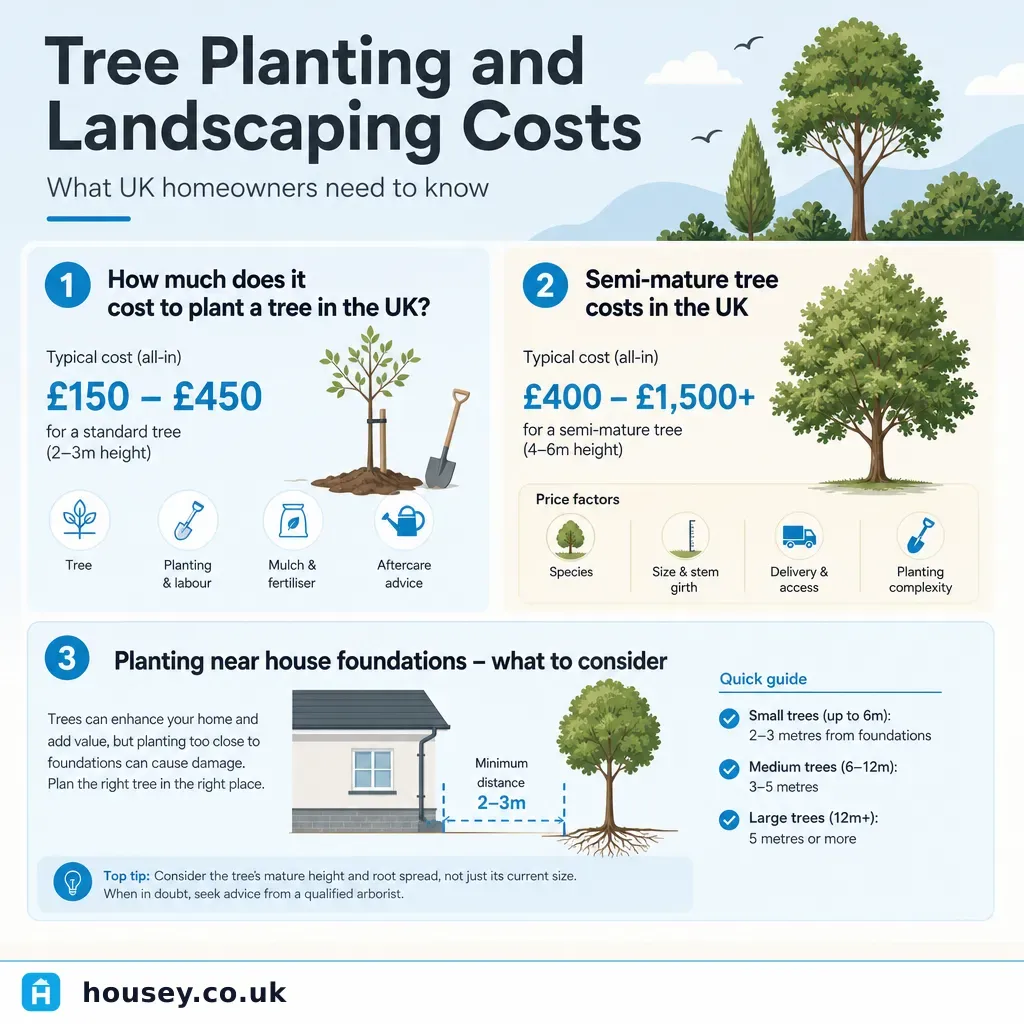
Tree Planting and Landscaping Costs
Tree planting costs range from around £5 for a bare-root whip to £5,000 or more for a semi-mature specimen with professional planting.
 Improvement & Build
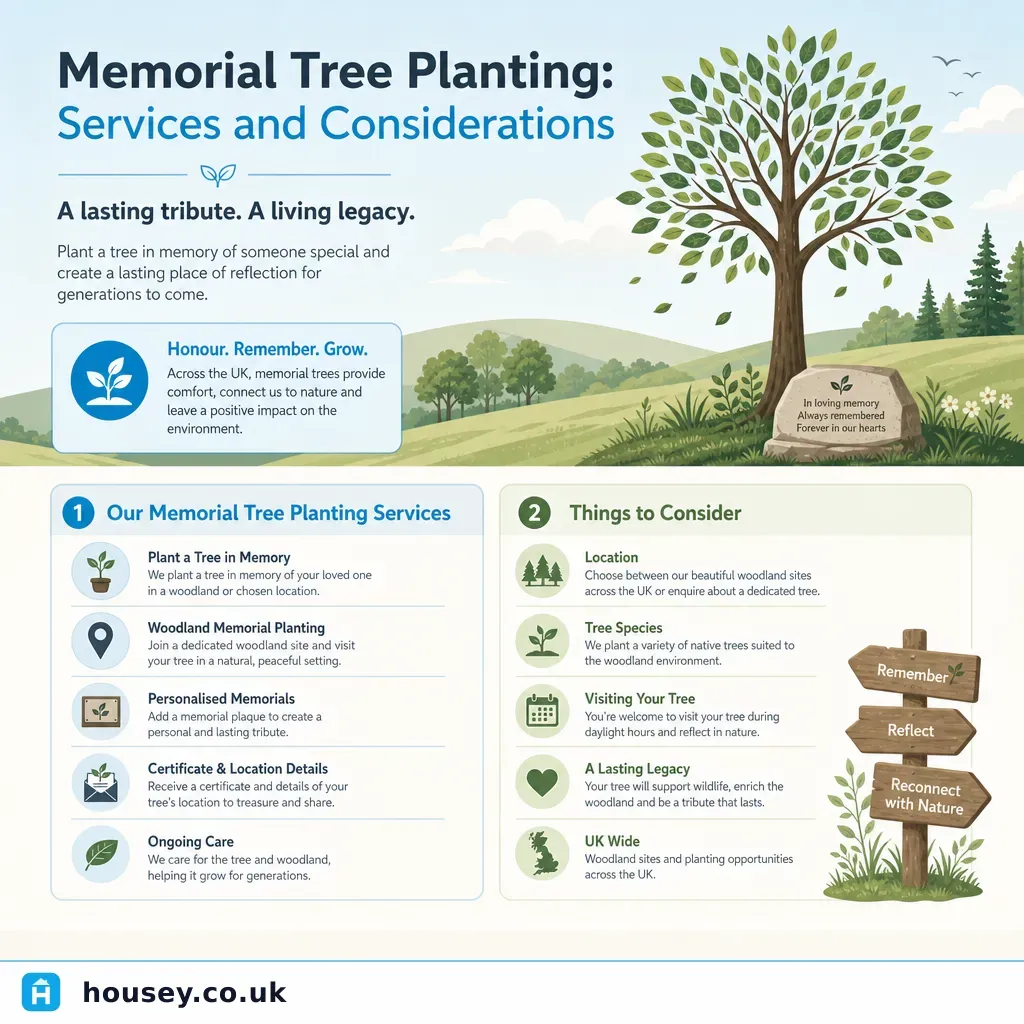
Memorial Tree Planting: Services and Considerations
Memorial tree planting in the UK involves choosing a species, selecting a suitable site — your own garden, a managed woodland scheme, or a dedicated memorial ground — and arranging planting with appropriate aftercare.
 Improvement & Build
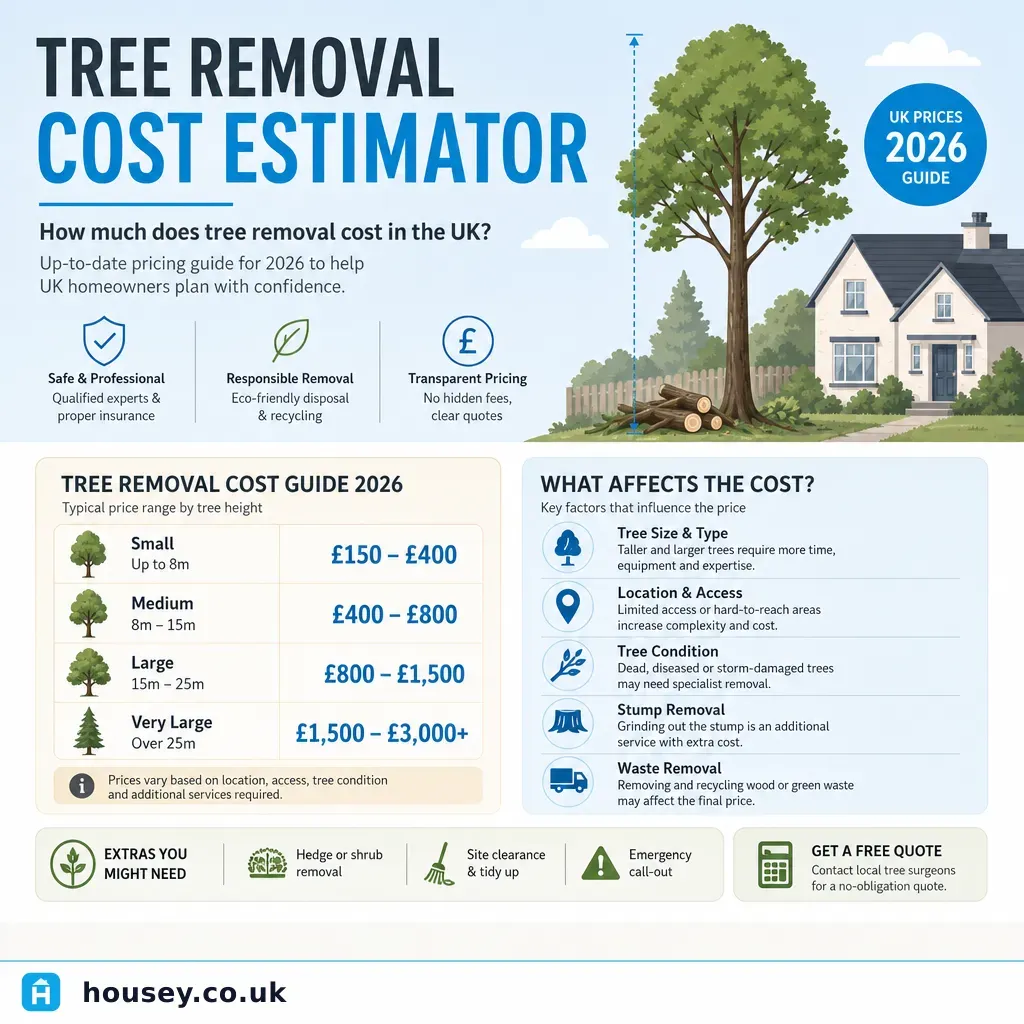
Tree Removal Cost Estimator
Tree removal in the UK costs roughly £150 to £5,000 or more, depending on the tree's height, species, access conditions, and whether stump removal is needed.
 Improvement & Build
Identifying and Addressing Dying Tree Branches: Common Causes
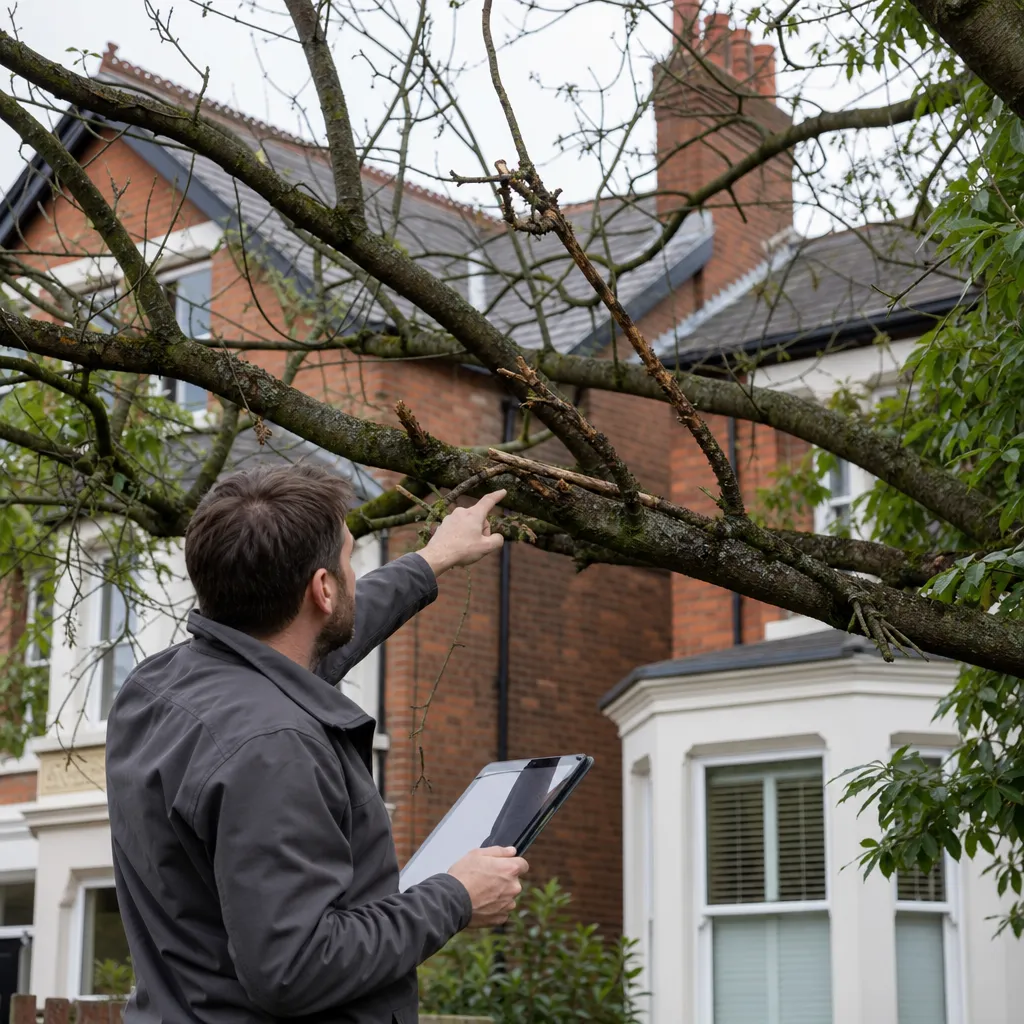
Dying branches on UK garden trees can result from fungal diseases such as ash dieback or honey fungus, pest damage, drought stress, physical injury, or root problems.
 Improvement & Build
Tree Removal Service Costs
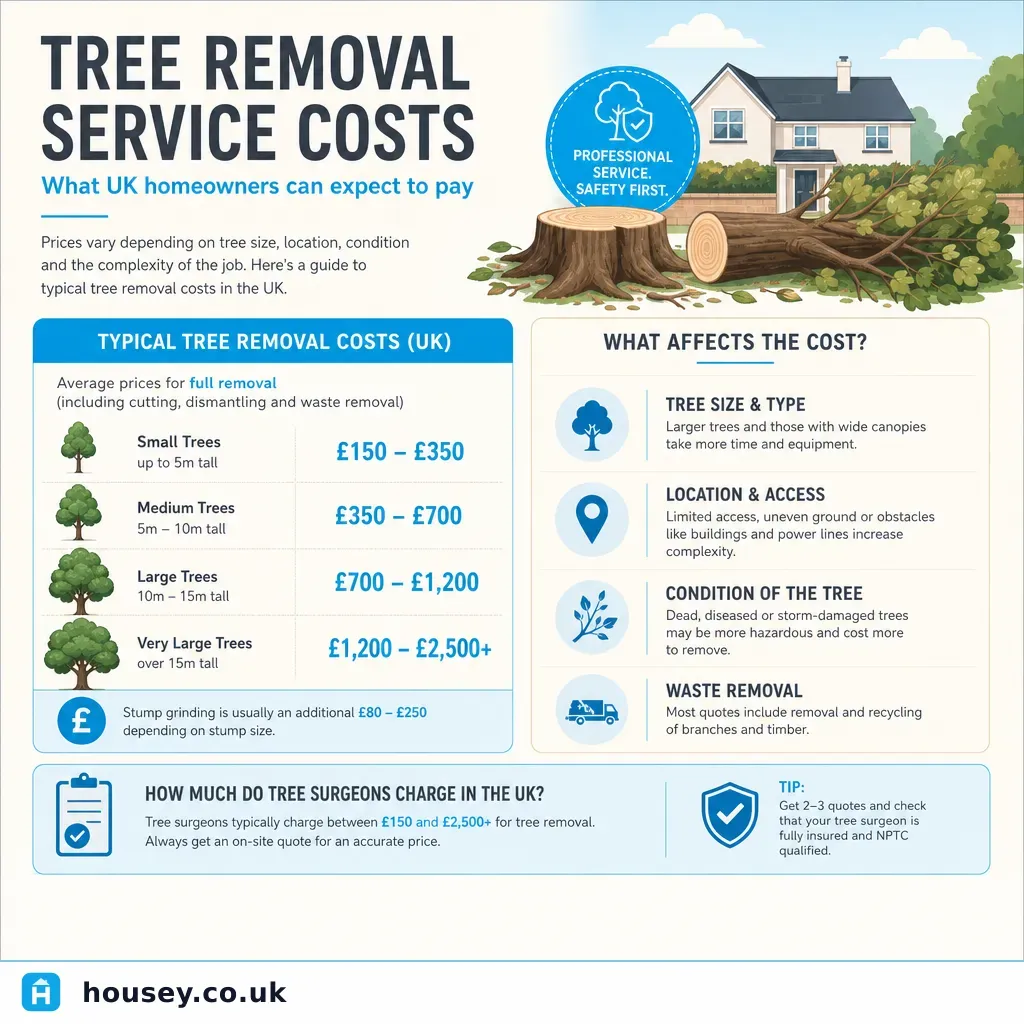
Professional tree removal costs in the UK depend on tree height, access, species, and the scope of work included.