Metal and Aluminium Window Installation Costs
By Housey · Last reviewed 7th of May 2026
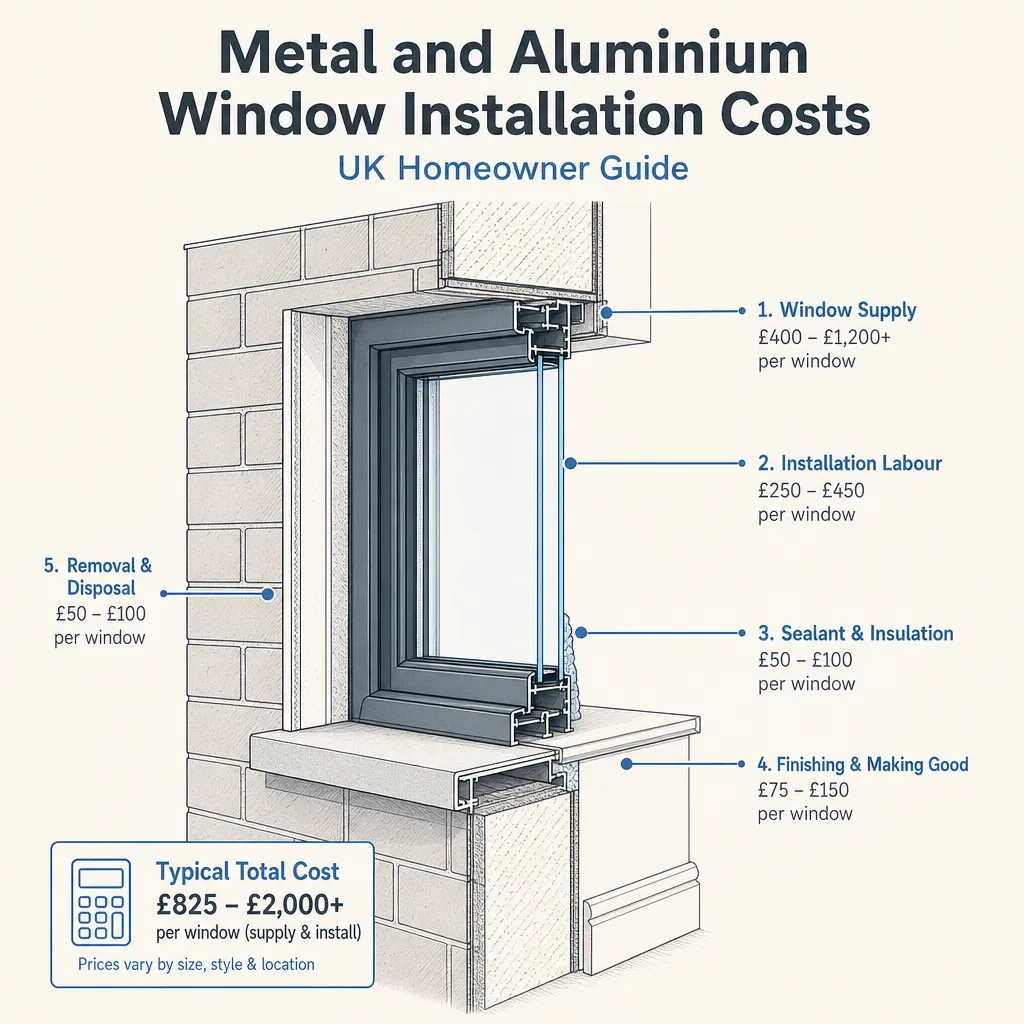
Metal and Aluminium Window Installation Costs
Aluminium and steel windows are increasingly chosen for extensions, new builds, and replacement projects where slim sightlines, durability, and a contemporary or period-appropriate aesthetic are priorities. Cost questions typically arise when planning a home extension, replacing ageing metal windows on a 1930s or Art Deco property, or specifying glazing for a modern rear addition.
Key points
- Supply-and-fit costs for standard aluminium casement windows typically range from £450 to £1,500 per window, depending on size, glazing specification, and frame system.
- All replacement window installers in England and Wales must be registered under a competent person scheme such as FENSA or CERTASS, or the homeowner must obtain local authority building control sign-off.
- Approved Document L (2021 edition, England) requires replacement windows to achieve a whole-window U-value of 1.4 W/m²K or better, or a minimum energy rating of Band C.
- Steel Crittall-style windows typically cost £900–£2,500+ per window installed and are often specified for listed buildings or conservation area replacements.
- Triple-glazed aluminium windows add roughly 15–30% to the cost of double-glazed equivalents and can achieve whole-window U-values of 0.8 W/m²K or below.
Aluminium versus steel windows: what is the difference?
Both metals offer slimmer frame profiles than uPVC, but they suit different situations.
Aluminium is the most widely used metal window material in UK residential projects. Modern systems — such as those from Schüco, Smart Systems, or Reynaers — use thermally broken profiles, meaning an insulating barrier sits between the inner and outer aluminium sections. This is essential for meeting current Part L thermal requirements. Aluminium windows are low-maintenance, available in any RAL colour through powder coating, and suitable for virtually all property types.
Steel (typically Crittall-style or mild steel) has very slender sightlines that are virtually impossible to replicate in aluminium or uPVC. Steel windows are specified for Art Deco and inter-war properties, for listed buildings where replacing original steel glazing requires matching the original profile depth, and for industrial-aesthetic contemporary builds. They are heavier, require repainting roughly every ten to fifteen years, and cost considerably more than aluminium.
Factor | Aluminium (thermally broken) | Steel (Crittall-style) |
|---|---|---|
Typical installed cost | £450–£1,800 per window | £900–£2,500+ per window |
Sightline width | 40–65 mm typical | 25–45 mm typical |
Thermal performance | Meets Part L with correct specification | Can meet Part L; harder to achieve low U-values |
Maintenance | Low; powder coat durable | Periodic repainting required |
Best suited to | Modern homes, extensions, all property types | Listed buildings, Art Deco, conservation areas |
Colour options | Any RAL powder coat or anodised | Powder coat; narrower range |
Typical cost ranges
Indicative UK costs, last reviewed 2026-05-07. Prices vary by supplier, frame system, glazing specification, location, and site conditions — always obtain at least three quotes.
Window type | Approximate installed cost (per window) | Notes |
|---|---|---|
Aluminium casement, standard (600–900 mm wide) | £450–£1,000 | Double glazed, thermally broken |
Aluminium casement, large (over 1,200 mm wide) | £900–£1,800 | Double glazed, thermally broken |
Aluminium tilt-and-turn | £700–£1,500 | Common in flats and contemporary builds |
Aluminium picture/fixed window | £400–£1,200 | Non-opening; cost varies with glazed area |
Aluminium flush-sash (heritage-style) | £800–£2,000 | Replicates timber sash profile |
Steel casement (Crittall-style) | £900–£2,500 | Listed/conservation use; higher maintenance |
Aluminium triple-glazed casement | £700–£1,800 | Better U-values; heavier sash |
A whole-house replacement of ten to fifteen windows is usually quoted as a project and may attract a 5–15% discount compared with individual rates.
What drives the cost?
Frame system and manufacturer: Premium European systems cost more than some domestic alternatives but offer verified thermal performance data and wider colour ranges.
Glazing specification: Standard double-glazed units with warm-edge spacer bars are the baseline. Triple glazing, acoustic glass, solar-control glass, or laminated safety glass all add cost. Safety glazing required under Approved Document K applies in critical locations regardless of frame material.
Colour and finish: Standard RAL powder-coat is usually included. Dual-colour configurations, anodised finishes, or bespoke RAL shades attract a premium.
Installation complexity: First-floor windows requiring scaffold, bay windows, and openings with uncertain lintels increase labour time and cost.
Location: London and South East labour typically runs 15–25% higher than the Midlands or North of England.
Worked example: rear extension on a 1930s semi-detached
A homeowner adds a single-storey rear extension to a 1930s semi-detached house in the East Midlands, specifying four aluminium casement windows and one large fixed picture window for a new dining space.
Item | Estimated cost |
|---|---|
4 × aluminium casement (900 mm wide, double glazed, anthracite grey) | £1,800–£4,000 |
1 × aluminium picture window (1,800 × 1,200 mm, double glazed) | £900–£1,500 |
FENSA registration or building control notification | £40–£120 (sometimes included) |
Scaffold for first-floor work if required | £300–£600 |
Indicative project total | £3,040–£6,220 |
Indicative UK costs, last reviewed 2026-05-07. Actual costs depend on system, supplier, and site conditions.
Building regulations and competent person schemes
Replacing windows in England and Wales is notifiable work under the Building Regulations. Two routes to compliance exist:
Competent person scheme: The installer is FENSA- or CERTASS-registered. They self-certify compliance with Part L (thermal performance) and Part K (safety glazing) and issue a certificate to the homeowner — the standard route for domestic replacements.
Local authority building control: If the installer is not scheme-registered, you must apply for building control approval before work begins, typically adding £150–£400 for a building control officer inspection.
Keep the FENSA or building control certificate carefully — solicitors routinely request it during conveyancing enquiries when you sell.
Aluminium window quote checklist
Before accepting a quote, confirm:
When to get professional help
Standard aluminium replacement by a FENSA-registered installer is routine for most houses. Seek additional professional advice if:
- The property is listed or in a conservation area — a planning officer should confirm whether planning permission or listed building consent is needed before windows are ordered.
- You are replacing windows in an opening with no existing lintel or where lintel condition is unknown — a structural engineer should assess load transfer before the frame is removed.
- You are specifying windows for a new build or extension — your architect or architectural technologist should confirm sightline dimensions, threshold details, and Part L compliance within the wider thermal envelope.
How Housey can help
Housey connects homeowners with vetted, FENSA-registered window installers across the UK. Get itemised quotes from local suppliers through our window and door installers service page and compare frame systems, glazing specifications, and warranties before committing.
Frequently asked questions
Do I need planning permission to replace windows with aluminium?
For most houses, replacing windows on a like-for-like basis is permitted development and does not require planning permission. However, listed properties, conservation areas, and homes subject to an Article 4 direction may require prior approval or full planning permission. Always check with your local planning authority before ordering windows.
How long do aluminium windows last?
Quality thermally broken aluminium windows typically last thirty to forty years or more with minimal maintenance. The frame itself rarely fails; double-glazed sealed units normally need replacing after fifteen to twenty-five years when the gas fill degrades or the seal fails, visible as condensation between the panes.
Can aluminium windows be used in a listed building?
Aluminium windows can be used in listed buildings, but the local planning authority — acting on Historic England guidance — usually requires profile depth, sightline width, and glazing bar pattern to closely match the originals. Always obtain listed building consent before removing or replacing any windows in a listed property.
Are aluminium windows more expensive than uPVC?
Yes, typically 30–60% more expensive on a supply-and-fit basis. The premium reflects slimmer profiles, longer expected lifespan, better recyclability at end of life, and a wider range of architectural finishes. For contemporary extensions and period properties, the durability and aesthetic case often justifies the additional cost.
Sources and further reading
- Approved Document L: Conservation of fuel and power (Volume 1, Dwellings, 2021) — GOV.UK
- Approved Document K: Protection from falling, collision and impact — GOV.UK
- FENSA: competent person scheme for windows and doors — FENSA
- Planning Portal: windows, doors and roof lights — Planning Portal
- Energy Efficiency and Historic Buildings — Historic England
Useful next reads
 Improvement & Build
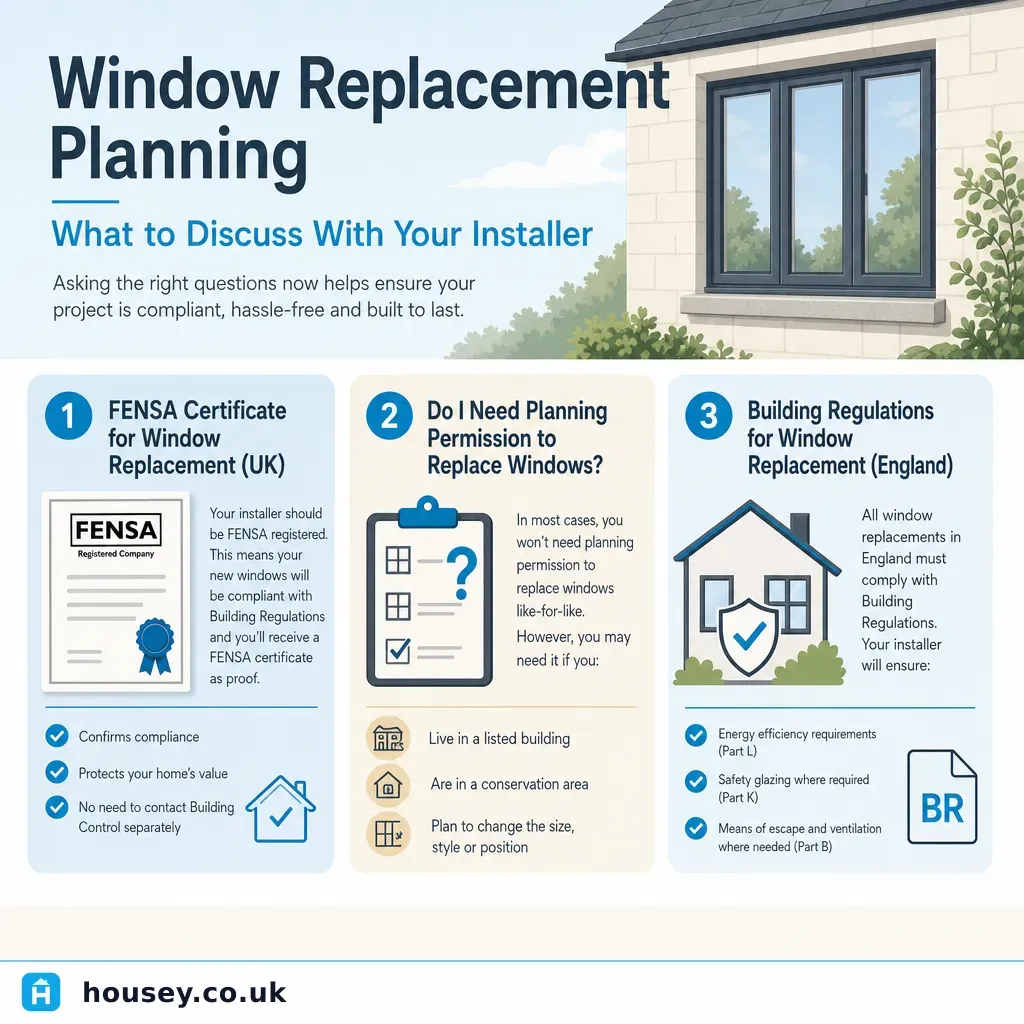
Window Replacement Planning: What to Discuss With Your Installer
Most window replacements in England fall under permitted development rights and do not require planning permission, but they must comply with Building Regulations Part L and Part K.
 Improvement & Build
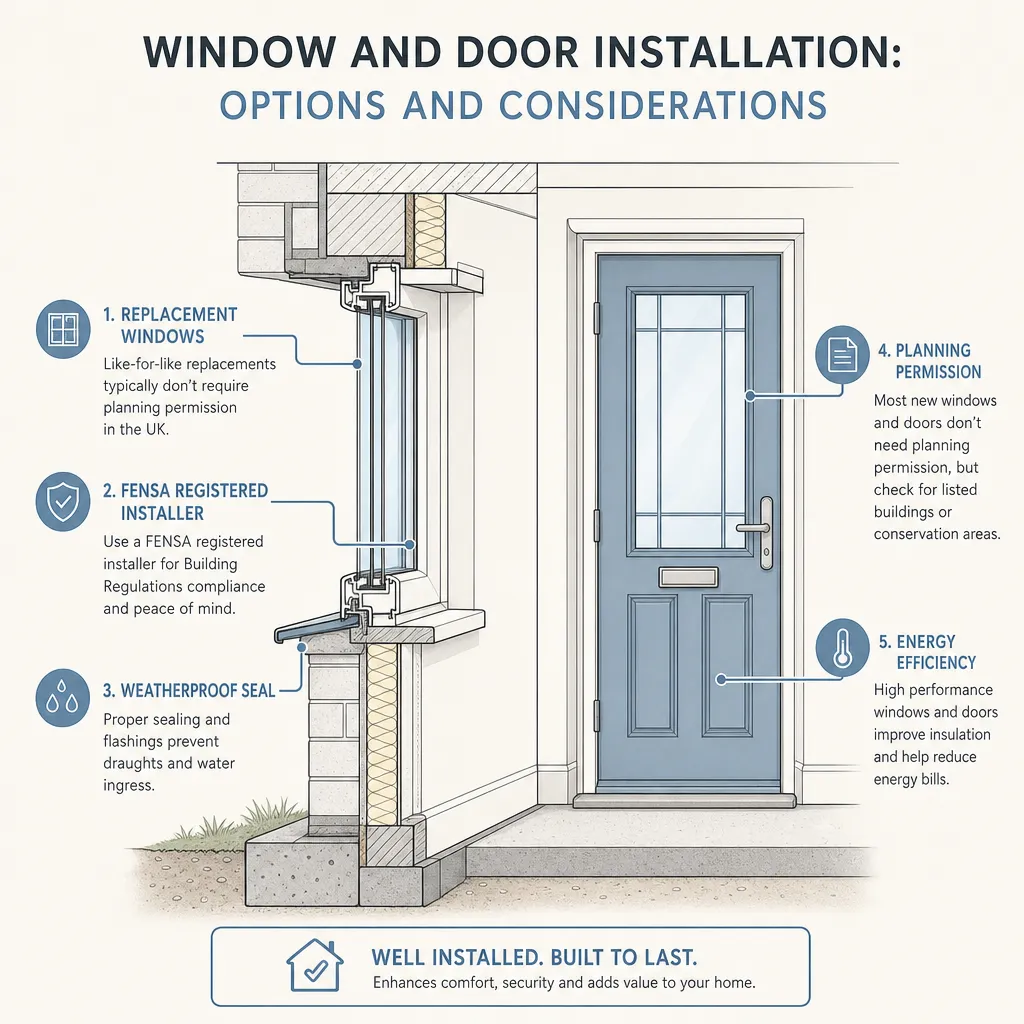
Window and Door Installation: Options and Considerations
Replacing windows and external doors in the UK requires compliance with Building Regulations Part L (thermal performance) and Part K (safety glazing).
 Improvement & Build
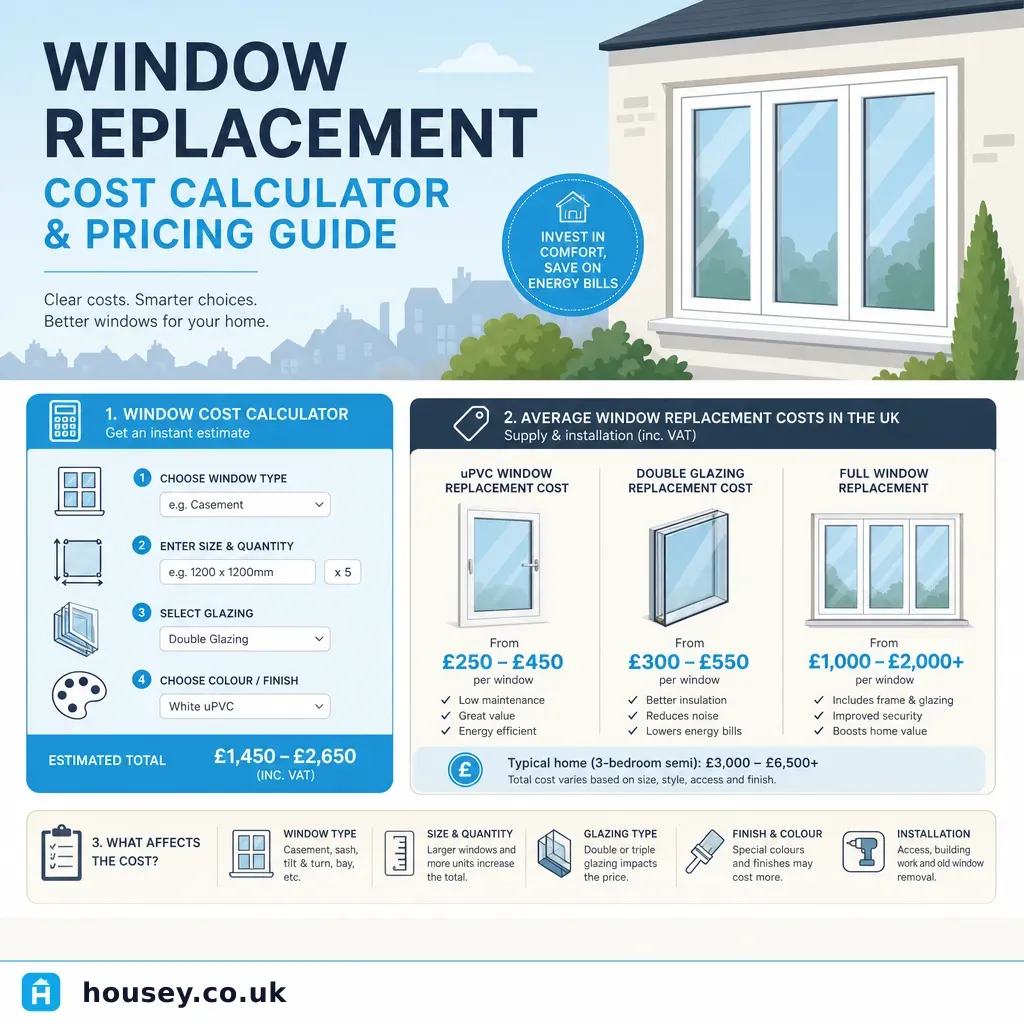
Window Replacement Cost Calculator and Pricing Guide
Replacing a standard uPVC double-glazed casement window in the UK typically costs £400–£800 supply and fit.
 Improvement & Build
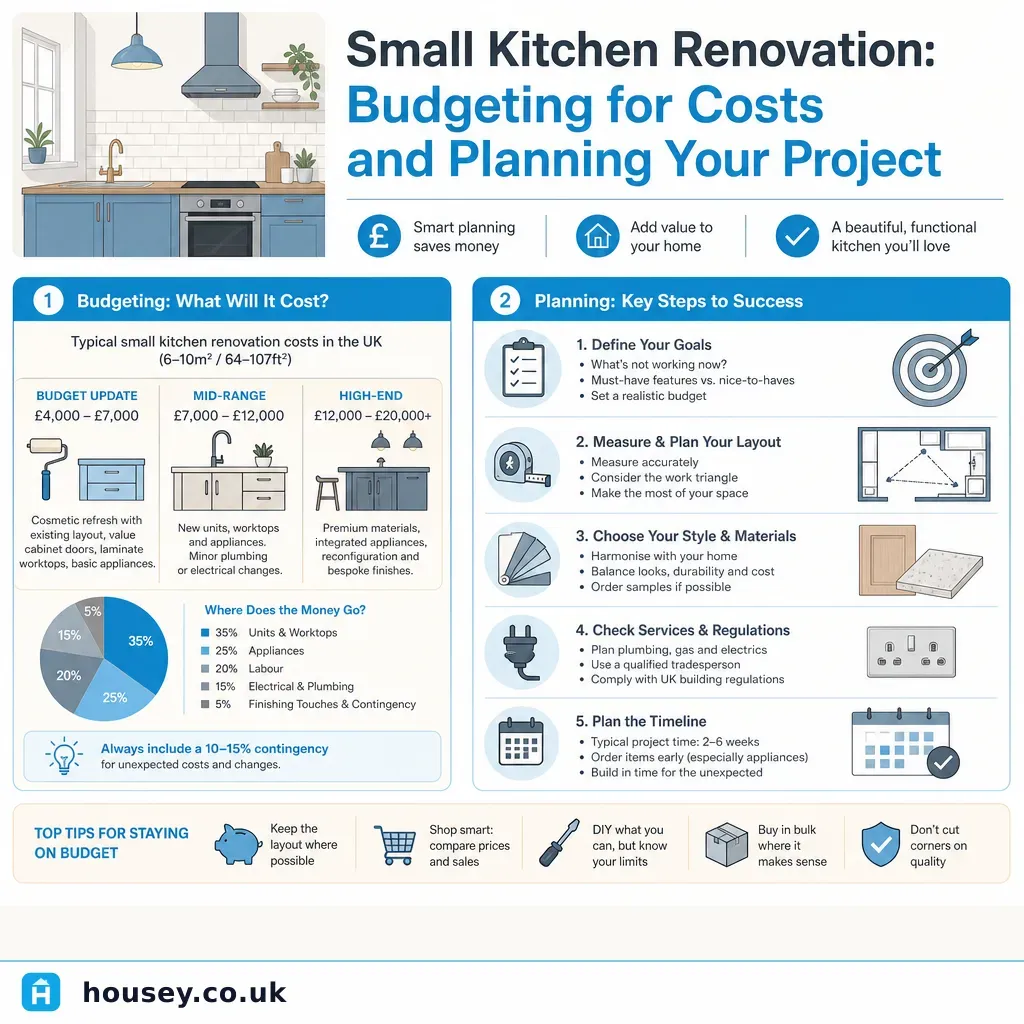
Small kitchen renovation: budgeting for costs and planning your project
A small kitchen renovation in the UK typically costs £5,000–£15,000 for a full refresh including new units, worktops, tiling, and appliances, though costs vary widely by specification, region, and whether structural changes or rewiring are involved.
 Improvement & Build
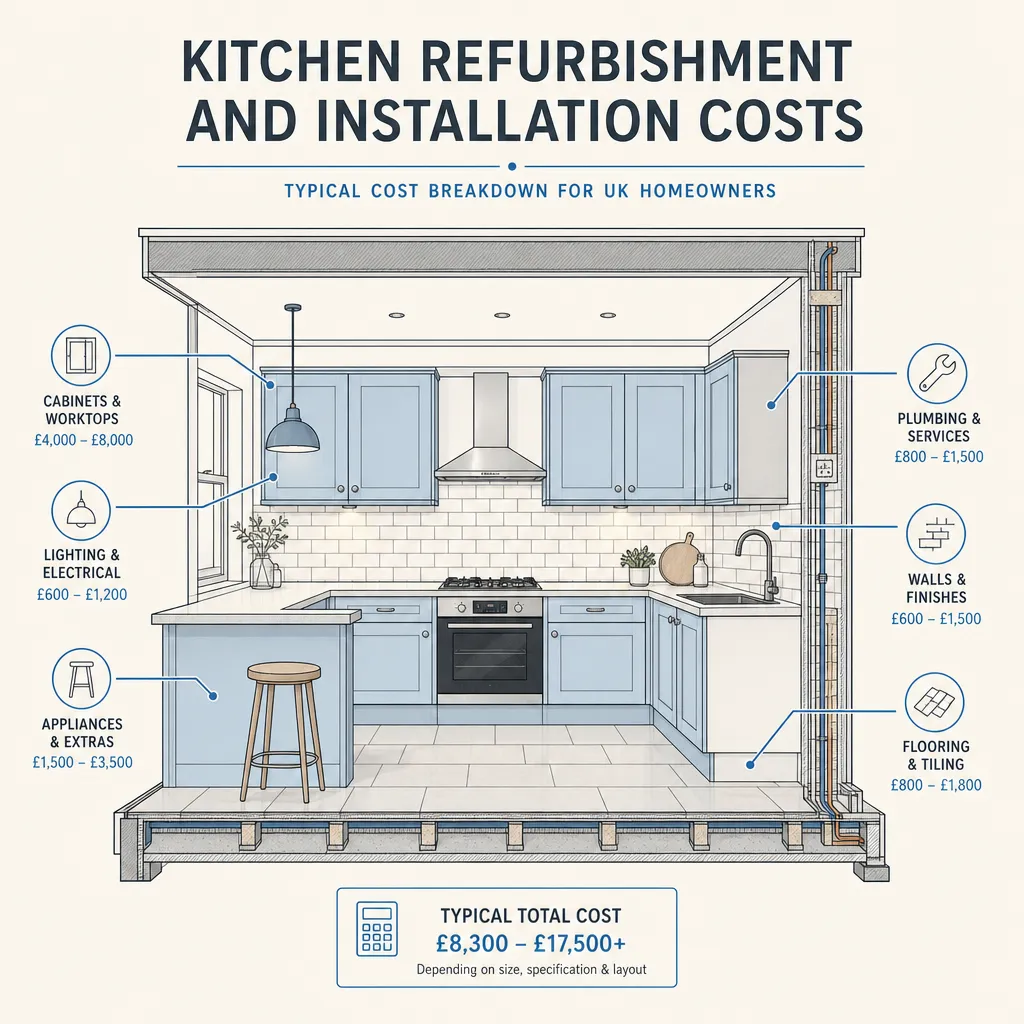
Kitchen Refurbishment and Installation Costs
A kitchen refurbishment in the UK typically costs between £3,000 and £40,000 or more, depending on whether you are replacing units only or carrying out a full design-and-build project.