Metal Roof Installation: Cost, Durability and Maintenance
By Housey · Last reviewed 1st of June 2026
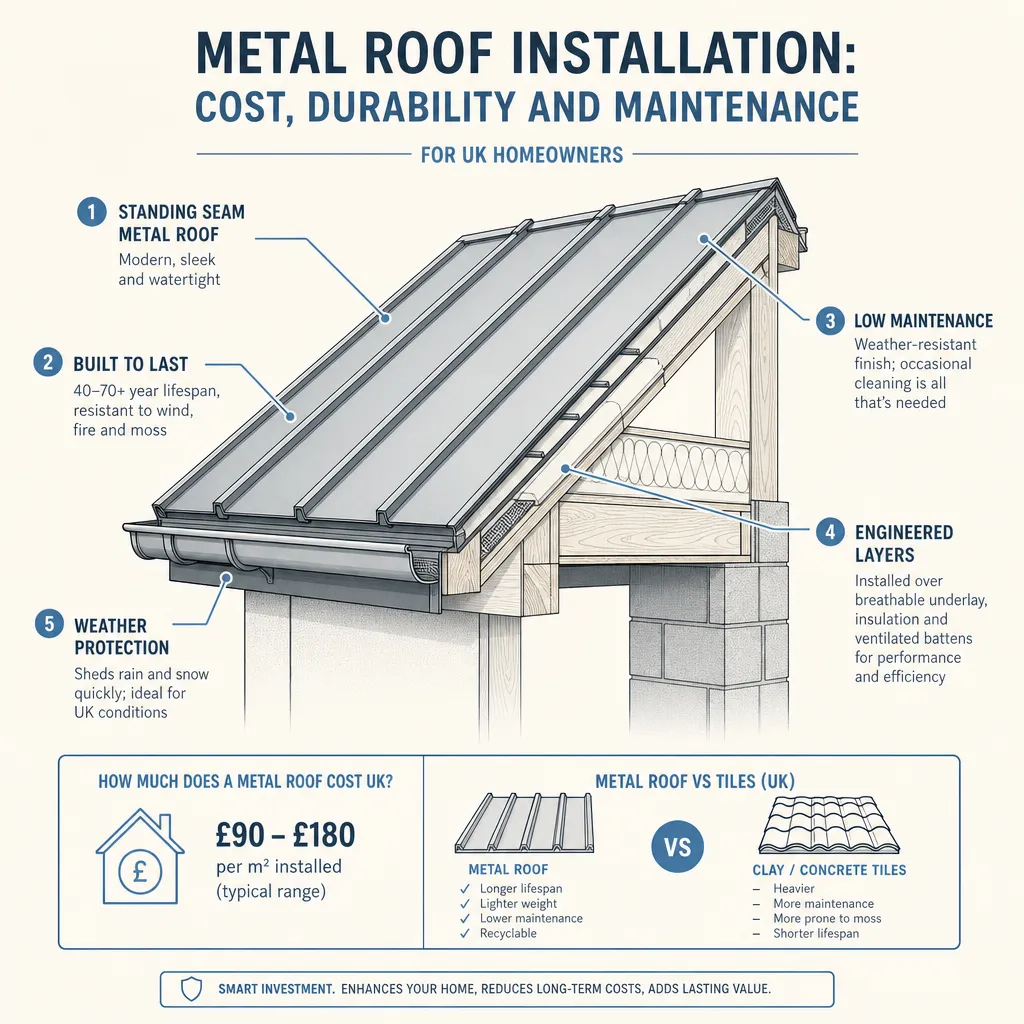
Metal Roof Installation: Cost, Durability and Maintenance
Metal roofing has moved from agricultural and commercial buildings into mainstream UK residential use over the past decade. Homeowners replacing flat roofs, finishing extensions, and re-roofing garages are now comparing standing seam steel, zinc, and aluminium profiles alongside traditional slate and clay tile — often drawn by the promise of a longer lifespan and lower ongoing maintenance costs.
Key points
- Metal roof installation in the UK typically costs £80–£250 per square metre installed, depending on material, profile, and roof complexity — indicative costs, last reviewed 2026-06-01.
- Steel roofing (Galvalume or polymer-coated) has a typical lifespan of 40–60 years; zinc and copper roofs are designed to last 80–100 years with correct detailing and maintenance.
- Most new or replacement roof coverings in the UK require building regulations compliance, including meeting current thermal performance standards under Approved Document L.
- Standing seam panels must be fixed with sliding clips, not through-fixed to the deck, to accommodate thermal expansion and contraction — a common installation error that causes noise and premature failure.
- Metal roofing must be isolated from direct contact with dissimilar metals, particularly copper and lead, to prevent galvanic corrosion at fixings and seam joints.
Types of metal roofing available in the UK
Comparison table: metal roofing types
Profile / material | Best for | Not ideal for | Typical lifespan | Approx. installed cost per m²* |
|---|---|---|---|---|
Standing seam steel (Galvalume or coated) | Extensions, low-pitch roofs, contemporary self-builds | Traditional street-facing elevations in conservation areas | 40–60 years | £100–£180 |
Standing seam zinc | High-specification residential, heritage-sensitive contexts | Tight budgets | 80–100 years | £150–£250 |
Standing seam aluminium | Coastal locations (corrosion resistance), lightweight structures | Very low pitches without specialist detailing | 40–60 years | £120–£200 |
Corrugated / box profile steel | Garages, outbuildings, agricultural-style extensions | Street-facing main roofs where appearance is regulated | 25–40 years | £80–£130 |
Interlocking metal tiles | Re-roofing where a traditional appearance is needed | Flat or very low pitches | 30–50 years | £90–£160 |
*Indicative UK costs, last reviewed 2026-06-01. Prices vary by region, roof complexity, access, scaffolding requirements, and current material costs. Always obtain at least three comparable quotes.
How much does metal roof installation cost in the UK?
A single national price figure is misleading because costs are driven by several variables:
- Roof area and complexity: a simple single-pitch outbuilding roof costs far less to manage than a complex hipped or mansard roof on a Victorian semi.
- Material choice: copper and zinc carry a significant premium over coated steel.
- Scaffolding: erecting and striking scaffold for a two-storey property typically adds £1,000–£3,000 to the project.
- Stripping the existing covering: removing slates, concrete tiles, or built-up felt adds labour and skip costs.
- Deck and insulation condition: if the roof deck or insulation needs upgrading to meet Building Regulations Approved Document L, this adds material and labour cost.
- Flashings and detailing: lead, zinc, or aluminium flashings at abutments, valleys, and parapets are often the most labour-intensive element of any re-roofing project.
As a rough indicative guide, a straightforward extension flat or low-pitch roof of 30–50 m² in standing seam steel might cost £4,000–£9,000 all-in, including scaffolding. A full house re-roof in zinc or aluminium for a larger property can range from £20,000 to £50,000 or more. These figures are indicative only — always get multiple quotes scoped to the same specification.
Indicative UK costs, last reviewed 2026-06-01.
How long does a metal roof last?
Lifespan depends on material, installation quality, and maintenance regime. The most common causes of premature failure are:
- Incorrect fixings: through-fixing standing seam panels prevents thermal movement and can cause cracking or fastener pull-out within a few years of installation.
- Galvanic corrosion: direct contact between dissimilar metals — for example, steel panels touching copper gutters — causes accelerated corrosion at the contact point.
- Insufficient drainage falls: water ponding on flat or low-pitch metal roofs voids most manufacturer warranties and accelerates corrosion at seams.
- Underside condensation: inadequate insulation specification or poor ventilation detailing can cause internal condensation that attacks fixings and the roof deck from below.
A roofing contractor working to the relevant manufacturer's technical specifications and current Building Regulations should address all four risks at design stage.
Do you need planning permission or building regulations?
Building regulations
Most new or replacement roof coverings require building regulations compliance. For residential properties, the relevant Approved Documents include:
- Part A (structure): adequacy of the roof structure and any new deck or support timbers.
- Part L (energy efficiency): replacement roofs must meet current U-value requirements, or maintain existing thermal performance in a genuine like-for-like repair.
- Part B (fire safety): metal roofing generally performs well for surface spread of flame.
- Part H (drainage): rainwater drainage from the new roof must be adequately designed.
A building notice submitted to your local authority before work starts is often sufficient for straightforward residential re-roofing. Confirm the appropriate route with your local building control office.
Planning permission
Metal roofing on a main house roof is usually covered by permitted development for most properties in England, but there are important exceptions:
- Listed buildings: any change to the roof covering requires listed building consent, regardless of whether planning permission would otherwise be needed.
- Conservation areas: visible changes to roof materials may require prior approval or a full planning application depending on the local planning authority.
- Article 4 Directions: some local authorities have removed permitted development rights for roofing changes entirely — check with your LPA before committing to a material.
Always confirm requirements with your local planning authority before starting work on a listed building or within any designated area.
What maintenance does a metal roof need?
One of the key attractions of metal roofing is its relatively low maintenance requirement compared to felt or natural slate. However, regular inspection is important to catch minor issues before they become costly repairs.
Annual maintenance checklist
Do not walk on a metal roof without explicit guidance from the installer — many profiles, particularly standing seam, are not designed to bear concentrated foot loads and can be dented or seam-damaged without proper walk boards.
What to ask before accepting a quote
- What metal system and manufacturer are you specifying, and what warranty does the manufacturer offer on the coating and the system?
- Does the quote cover supply and installation, or supply only?
- Is scaffolding erection and removal included in the price?
- Does the price include stripping and disposing of the existing roof covering?
- What does the quote assume about the condition of the roof deck — and what happens to the price if rot or structural defects are found once the covering is stripped?
- Which Building Regulations route are you using — building notice or full plans application?
- Are flashings, guttering, and downpipe connections included in scope?
- What accreditations do you hold? Relevant schemes include NFRC (National Federation of Roofing Contractors) membership and manufacturer-specific approved-installer programmes.
- Is VAT included in the quoted price?
When to get professional help
Metal roof installation requires working at height and specialist knowledge of thermal movement, substrate compatibility, and weathertight detailing. Professional installation is essential for any roofing project.
Engage a qualified roofing contractor if:
- You are replacing an existing roof covering of any material.
- The roof shows signs of structural sagging, rotten timbers, or internal water ingress.
- You are uncertain whether your planned work requires planning permission or building regulations approval.
- The property is listed or within a conservation area.
For structural concerns, a RICS surveyor or structural engineer should inspect the roof before a new covering is installed. If you suspect asbestos in old roof coverings or insulation boards (possible in properties built before 2000), arrange a survey by a UKAS-accredited asbestos surveyor before any stripping begins.
How Housey can help
Housey connects UK homeowners with vetted qualified local roofers who can advise on metal roof systems, carry out installation to specification, and provide written quotes for comparison. Use Housey's platform to receive competitive quotes from local roofing contractors — all in one place, with no obligation.
Frequently asked questions
How long does a metal roof last in the UK?
It depends on material and installation quality. Coated steel roofs typically last 40–60 years; aluminium is similar. Zinc and copper roofs, correctly installed and detailed, can last 80–100 years or more. The most important factors are proper installation, compatible flashings, adequate drainage falls, and annual maintenance to keep gutters, seams, and penetrations clear.
Is a metal roof noisy in rain?
A well-insulated metal roof installed on a solid substrate — plywood deck, insulation board, and membrane — is not noticeably noisier than other roofing types. Noise is mainly associated with thin, unsupported corrugated sheets used in agricultural buildings. Residential-grade systems with adequate insulation and a solid deck are generally quiet in normal UK rainfall.
Does a metal roof affect a property's mortgage or resale value?
Metal roofing is increasingly accepted by UK mortgage lenders and surveyors, particularly standing seam zinc and aluminium which are common in contemporary new-builds and self-builds. Some lenders may query non-standard materials on older properties. Check with your mortgage provider before committing to a material specification if this is a concern.
Can a metal roof be installed over existing tiles?
An overlay is occasionally feasible but most quality installers recommend stripping to the deck first. Overlaying retains old material, makes future inspection difficult, adds structural load, and may not comply with Building Regulations if the deck condition cannot be confirmed. Always seek professional advice before deciding on an overlay approach.
Sources and further reading
Useful next reads
 Improvement & Build
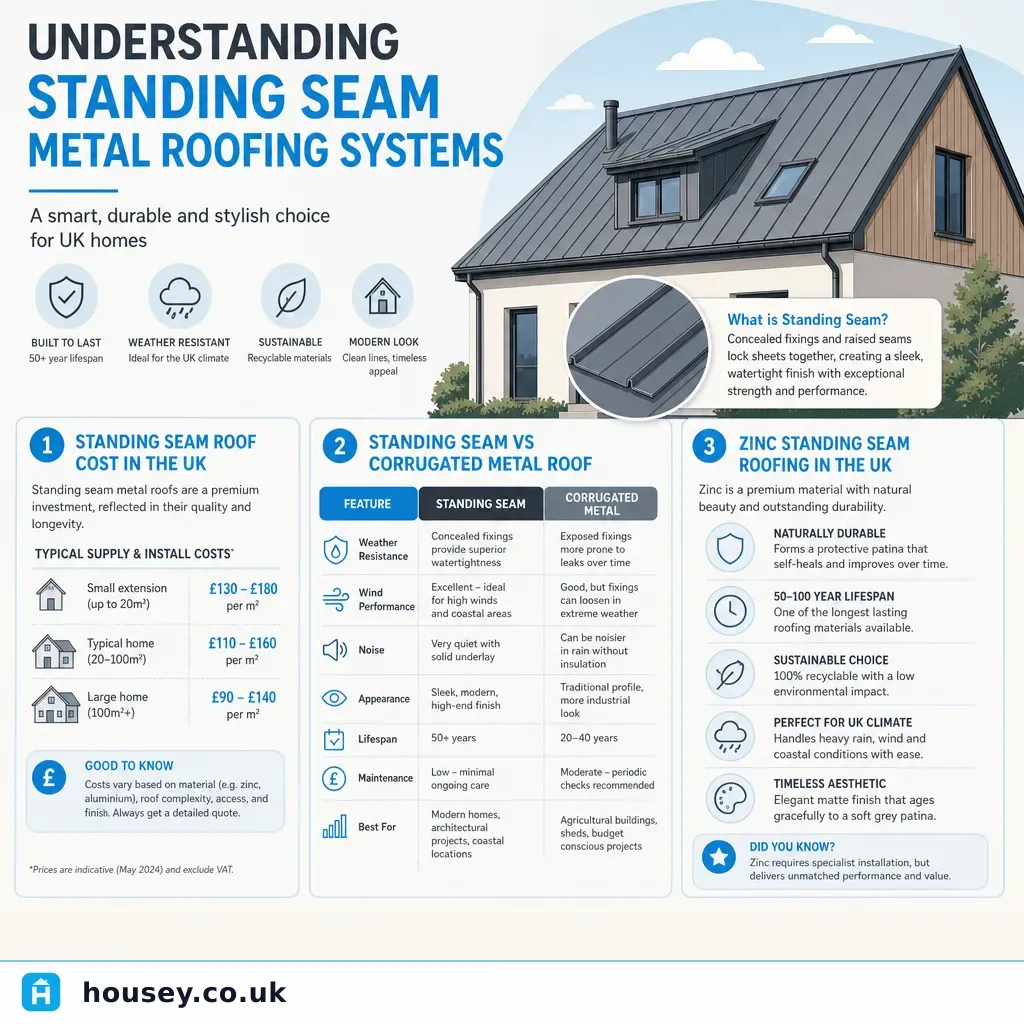
Understanding Standing Seam Metal Roofing Systems
A standing seam metal roof is built from long metal panels with raised, interlocked edges and all fixings concealed within the seams.
 Improvement & Build
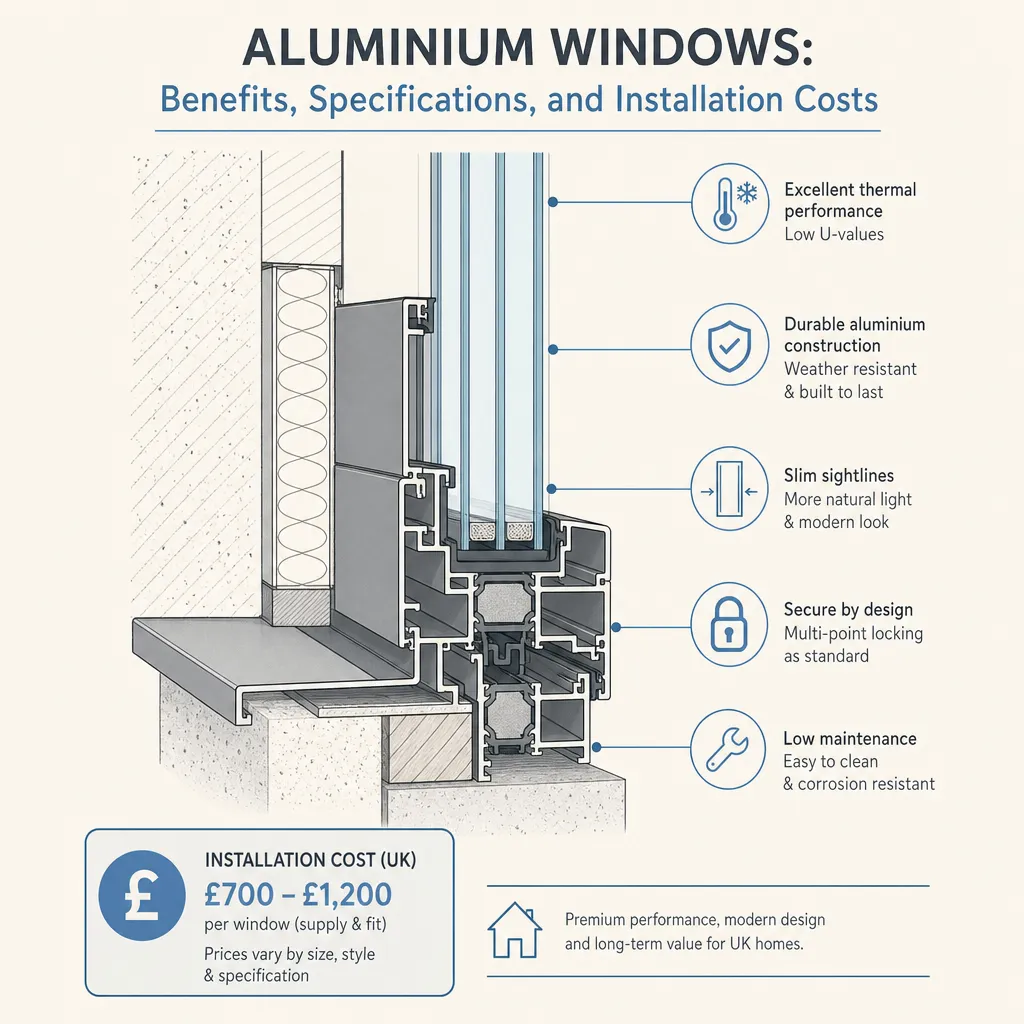
Aluminium Windows: Benefits, Specifications, and Installation Costs
Aluminium windows typically cost £600–£1,800 per window installed in the UK, depending on size and specification.
 Improvement & Build
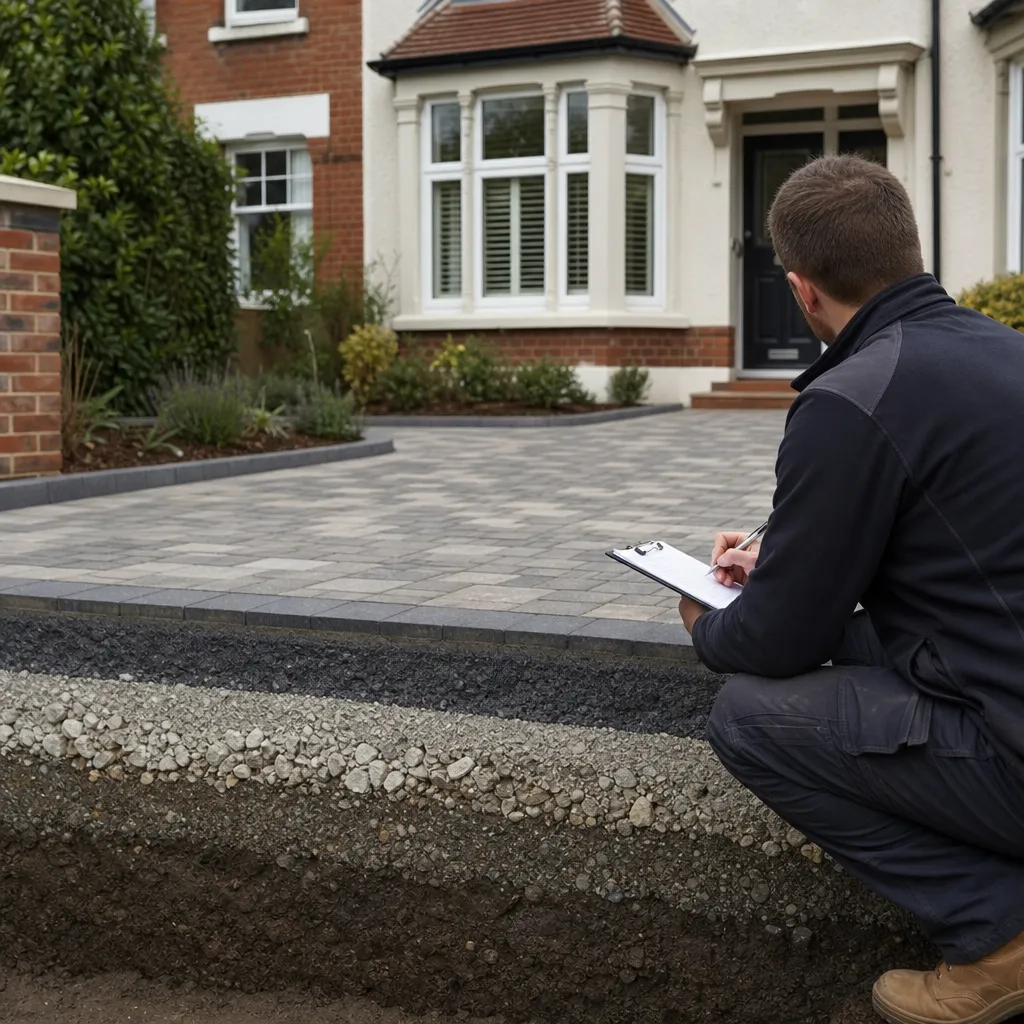
Driveway Thickness: Achieving the Right Specification for Residential Properties
The correct thickness for a residential driveway depends on the surface material and the traffic it will carry.
 Improvement & Build
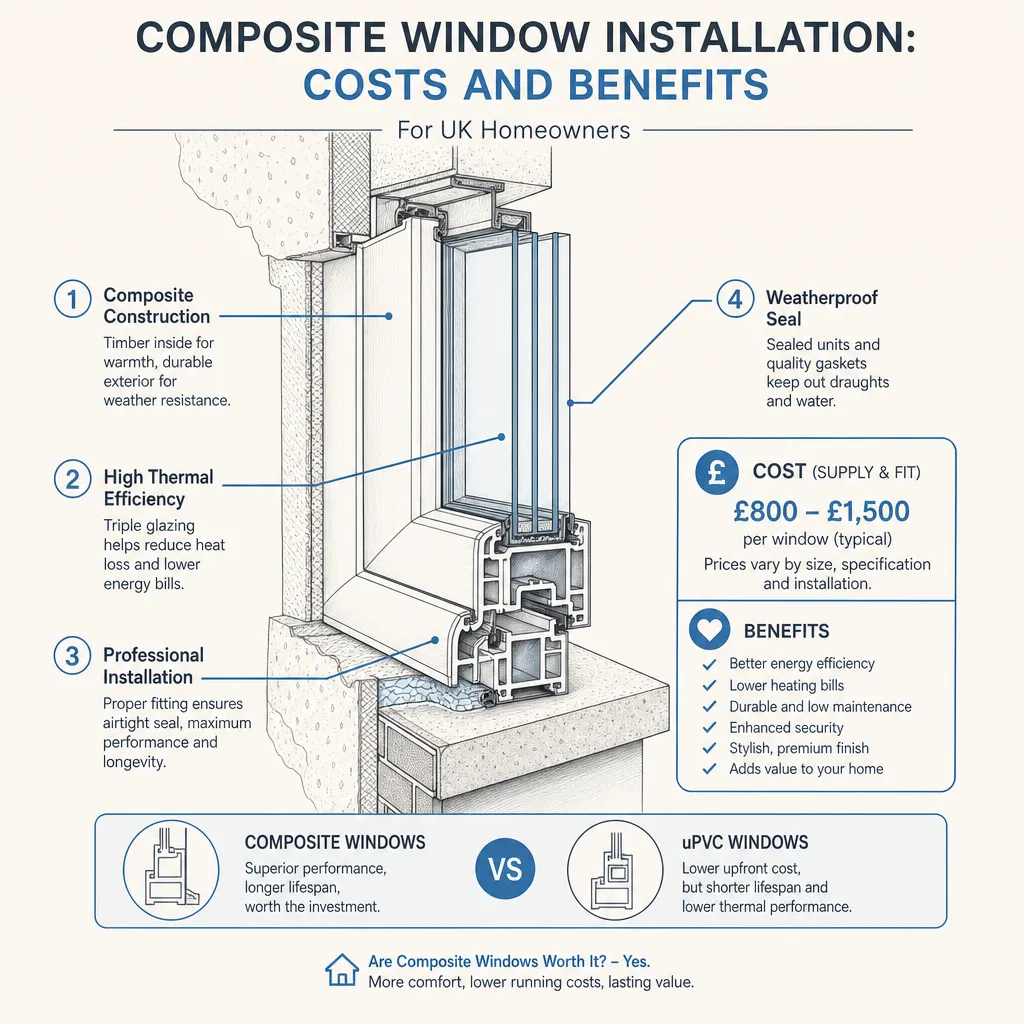
Composite Window Installation: Costs and Benefits
Composite windows combine two or more frame materials — typically a timber or aluminium core with a uPVC or aluminium outer casing — for better thermal performance and durability than standard uPVC.
 Improvement & Build
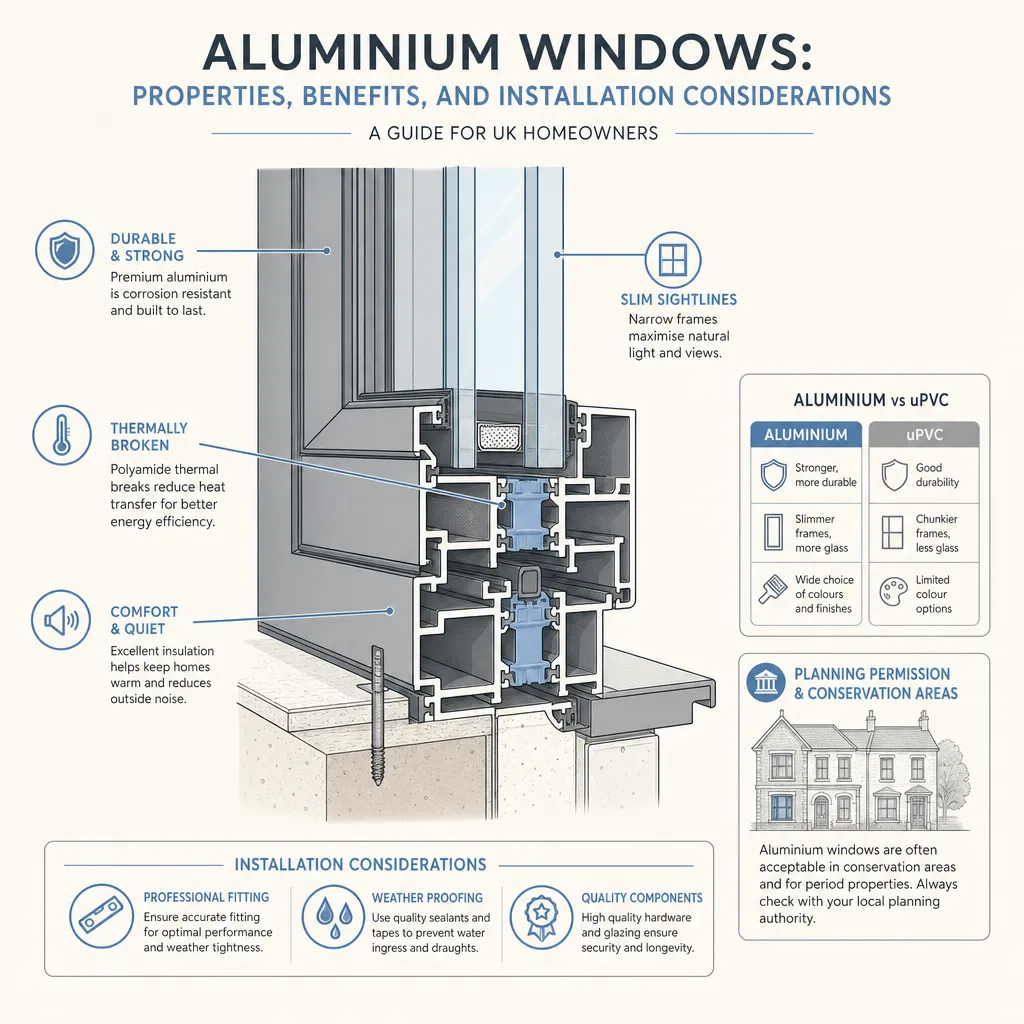
Aluminium Windows: Properties, Benefits, and Installation Considerations
Aluminium windows offer slim sightlines, long lifespan, and minimal maintenance.