Understanding Standing Seam Metal Roofing Systems
By Housey · Last reviewed 31st of May 2026
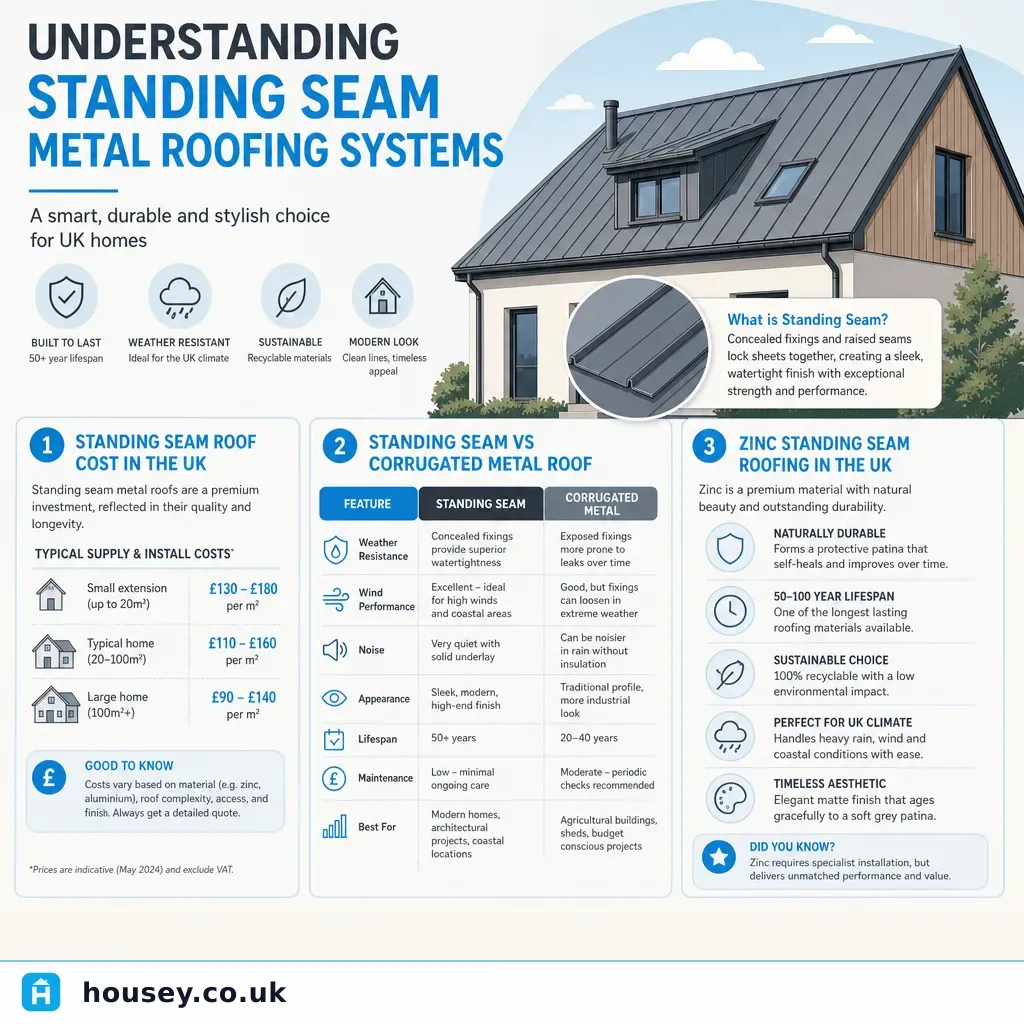
Understanding Standing Seam Metal Roofing Systems
Modern extensions, garden studios, and contemporary new builds have made standing seam metal roofing a familiar sight across UK towns and cities. It is increasingly specified for low-pitched or flat roofs where traditional tiles are unsuitable, and for projects where a clean, minimal aesthetic sits alongside a requirement for long-term performance. Understanding how the system works — and what it demands of the designer, installer, and planning process — helps you brief a contractor confidently and avoid common specification mistakes.
Key points
- Standing seam roofing uses raised, interlocked seams between long metal panels with all fixings concealed within the seams — no exposed screw heads that could corrode, work loose, or allow water ingress.
- Common UK metal choices are zinc (natural or pre-weathered), aluminium, Colorcoat-finished steel, and copper; typical lifespans range from 30–50 years for coated steel to over 100 years for copper.
- Many standing seam systems suit very low pitches — typically 1°–3° — compared with a minimum of 22.5° for standard concrete or clay interlocking tiles.
- Building Regulations Parts A (structure), C (weather resistance), and L (thermal performance) all apply; material alterations to a roof covering usually require building control notification.
- Planning permission for re-roofing is not always permitted development — conservation areas, listed buildings, and Article 4 Direction areas require prior consent, and changing from tiles to metal may constitute a material change of appearance.
How standing seam systems are constructed
A standing seam roof is built from long, narrow metal panels — typically 400–600 mm wide — running continuously from the ridge or parapet down to the eaves. Each panel has a raised profiled edge on both sides. When adjacent panels are installed, these edges are folded or mechanically seamed together to form the characteristic standing seam, which rises 25–65 mm above the panel face depending on the system.
All fixings (clips or cleats) are hidden within that seam — no fastener penetrates the weather face of the panel. This eliminates the drilled-hole failure points common in through-fixed profiled sheet roofing, and it allows the metal to expand and contract seasonally without tearing at fixings.
Panels can be pre-formed in standard lengths by the manufacturer, or produced on site using a portable roll-forming machine. Site-formed panels can run in continuous lengths of 25 m or more, enabling uninterrupted roof slopes — a key advantage for contemporary architectural projects where visual simplicity matters.
The substrate that the panels sit on is typically timber boarding or oriented strand board (OSB) for residential and light commercial work, supported on rafters or purlins. A vapour control layer and rigid insulation are incorporated within the build-up. The completed assembly must achieve the U-value targets set out in Building Regulations Part L — for renovated thermal elements in existing dwellings the threshold is typically 0.18 W/m²K, while new dwellings and extensions are generally required to achieve 0.15 W/m²K. Confirm requirements with your building control body before specifying insulation thickness.
Metal options and their characteristics
Metal | Typical UK lifespan | Minimum pitch | Appearance over time | Relative installed cost |
|---|---|---|---|---|
Zinc (natural) | 60–100 years | 1.5° | Develops blue-grey patina over 5–10 years | High |
Zinc (pre-weathered) | 60–100 years | 1.5° | Patinated appearance from installation | High |
Aluminium | 40–70 years | 1° | Retains colour or anodised finish | Medium–high |
Colorcoat steel | 30–50 years | 3° | Wide colour range, consistent matt finish | Medium |
Copper | 80–100+ years | 3° | Develops green verdigris patina over decades | Very high |
Indicative lifespan figures. Performance depends on exposure, panel gauge, and installation quality. Installed costs vary significantly by project complexity and region — always obtain itemised, competitive quotes. Last reviewed 2026-05-31.
Standing seam vs other roofing systems
System | Minimum pitch | Typical lifespan | Exposed fixings? | Best suited to |
|---|---|---|---|---|
Standing seam metal | 1°–3° | 40–100+ years | No | Low-pitch, contemporary residential and commercial |
Corrugated/trapezoidal metal sheet | 5°–10° | 20–40 years | Yes | Agricultural, industrial |
Concrete or clay interlocking tiles | 17.5°–22.5° | 40–60 years | No | Traditional pitched roofs |
GRP fibreglass flat roofing | ~1.4° (1:40 fall) | 25–30 years | No | Flat roofs, garages, bay windows |
EPDM rubber flat roofing | ~1.4° (1:40 fall) | 30–50 years | No | Flat roofs, budget-conscious applications |
Planning and building regulations
Planning permission: Re-roofing a house in a like-for-like material is generally permitted development for houses (not flats). Changing from tiles to metal may be considered a material change of appearance — check with your local planning authority before proceeding. In a conservation area or where an Article 4 Direction removes permitted development rights, express consent is required. Any works to a listed building require listed building consent, regardless of the scope of the works.
Building Regulations: Replacement or material alteration of a roof covering usually requires building regulations approval (either full plans or a building notice). For new extensions and new dwellings, full Building Regulations compliance is required across Parts A, C, and L. Ask your contractor whether they hold Competent Person registration relevant to the work — NFRC membership and manufacturer accreditations are key indicators of competence for standing seam installations.
What to ask before appointing a metal roofing contractor
Before accepting a quote, ask:
- What is included and excluded? (substrate, insulation, vapour control layer, flashings, guttering, rainwater goods, penetrations for rooflights or services)
- What metal and system are you quoting, and who is the manufacturer?
- What warranty does the manufacturer offer, and do you hold the required installer accreditation to activate it?
- What U-value does the specified build-up achieve, and how will you demonstrate Part L compliance to building control?
- Is planning permission required for this property, and have you confirmed this with the local planning authority?
- What trade body memberships or accreditations do you hold? (NFRC membership, manufacturer certification)
- What could cause the price or timeline to change? (substrate condition, material lead times, access requirements)
- Is VAT included in the quote?
When to get professional help
Standing seam metal roofing is not a DIY installation — it requires specialist roll-forming equipment, certified seaming tools for mechanical lock systems, and manufacturer training. Always use a qualified roofing contractor with demonstrable experience in the specific system specified. Seek additional professional input when:
- The project involves a listed building or conservation area — engage a planning consultant or heritage architect before proceeding.
- The structural deck or building fabric is in uncertain condition — ask a structural engineer to assess before loading it with a new roof covering.
- The roof incorporates rooflights, photovoltaic panels, or MVHR service penetrations — specialist co-ordination between trades is needed to preserve weathertightness.
- The project requires building regulations sign-off and the contractor is not registered with a Competent Person Scheme.
Contractors must comply with the Work at Height Regulations 2005. Adequate scaffolding and edge protection are legal requirements, not optional — never allow roofing work to proceed without them in place.
How Housey can help
Roofers on Housey include contractors experienced with metal roofing systems. Submit a job request to receive quotes from verified local professionals who can assess your roof specification, advise on planning requirements, and provide an installation backed by the manufacturer's warranty.
Frequently asked questions
Does standing seam roofing need planning permission in the UK?
Re-roofing a house is often permitted development, but changing from tiles to metal may be considered a material change of appearance. In conservation areas and on listed buildings, consent is always required before work begins. Rules vary by property type, location, and prior extension history — check with your local planning authority or a planning consultant before proceeding.
How long does a standing seam zinc roof last?
Zinc standing seam roofs typically last 60–100 years in UK conditions, depending on exposure, panel gauge, and workmanship. Pre-weathered zinc — such as products from VMZINC or Rheinzink — achieves the same long-term performance with a mature patinated appearance from day one. Confirm specifications and warranties with the manufacturer and your installer.
Is standing seam roofing noisy in rain?
A properly installed standing seam roof over an insulated, boarded deck is no noisier than a tiled roof — the insulation significantly attenuates impact sound. Noise is associated with exposed metal sheeting over open purlins, common in agricultural buildings, which is a fundamentally different build-up to the domestic specification.
Can standing seam roofing support solar panels?
Yes — proprietary clip-on mounting systems attach to the standing seam without drilling through the panel face, preserving waterproofing integrity and the manufacturer's warranty. Confirm compatibility between the panel manufacturer, the mounting system supplier, and the solar installer before the roof is commissioned.
Sources and further reading
- Building Regulations Approved Document L: Conservation of fuel and power — GOV.UK
- Building Regulations Approved Document A: Structure — GOV.UK
- Work at Height Regulations 2005 — legislation.gov.uk
- National Federation of Roofing Contractors (NFRC) — NFRC
- Planning Portal: Permitted development for householders — roofing — Planning Portal
Useful next reads
 Improvement & Build
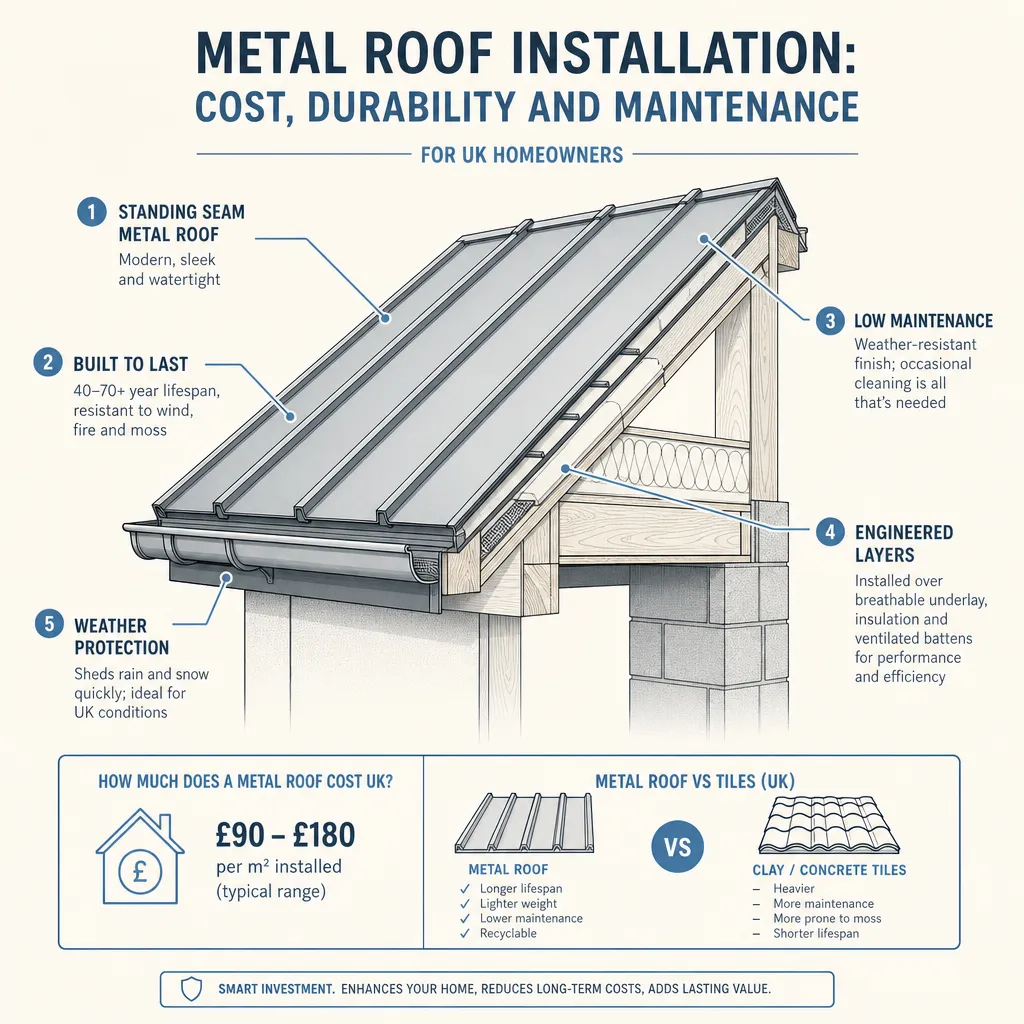
Metal Roof Installation: Cost, Durability and Maintenance
Metal roof installation in the UK typically costs £80–£250 per square metre installed, depending on material and complexity.
 Improvement & Build
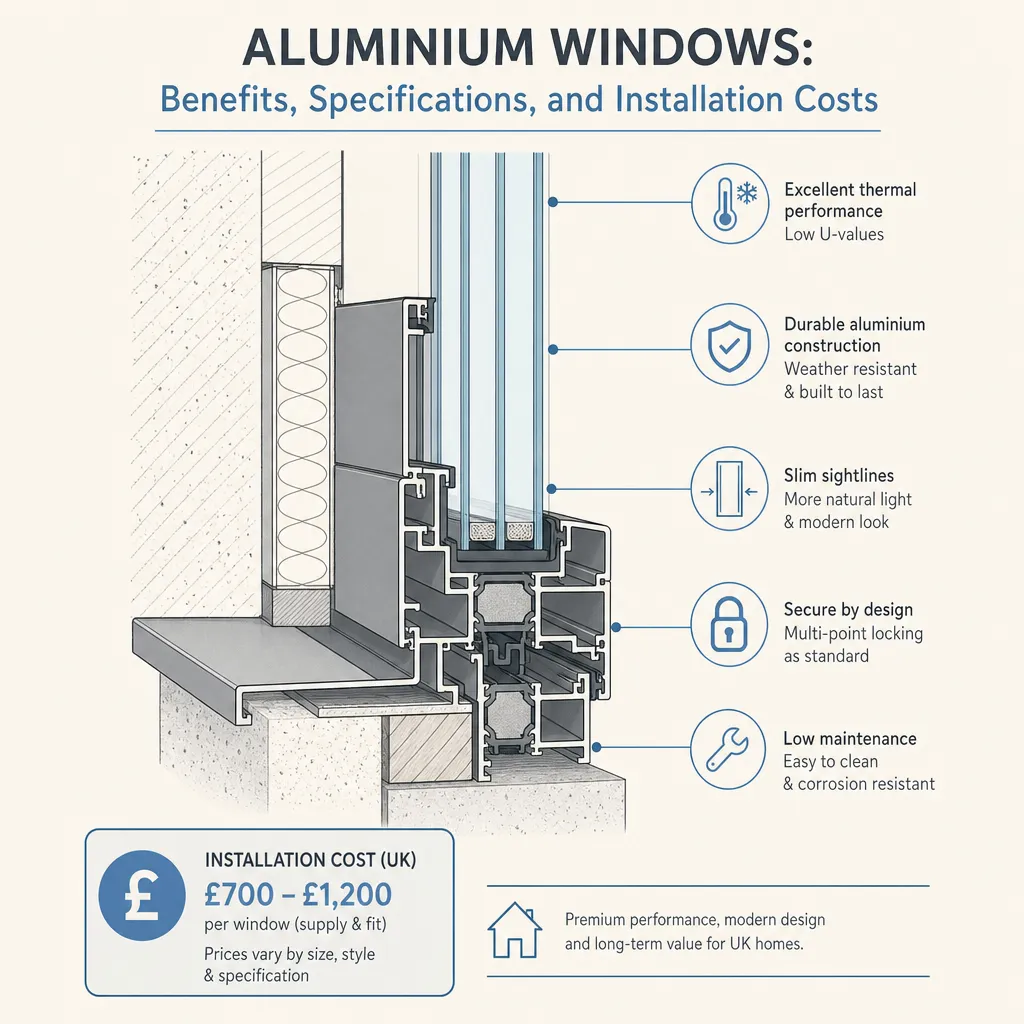
Aluminium Windows: Benefits, Specifications, and Installation Costs
Aluminium windows typically cost £600–£1,800 per window installed in the UK, depending on size and specification.
 Improvement & Build
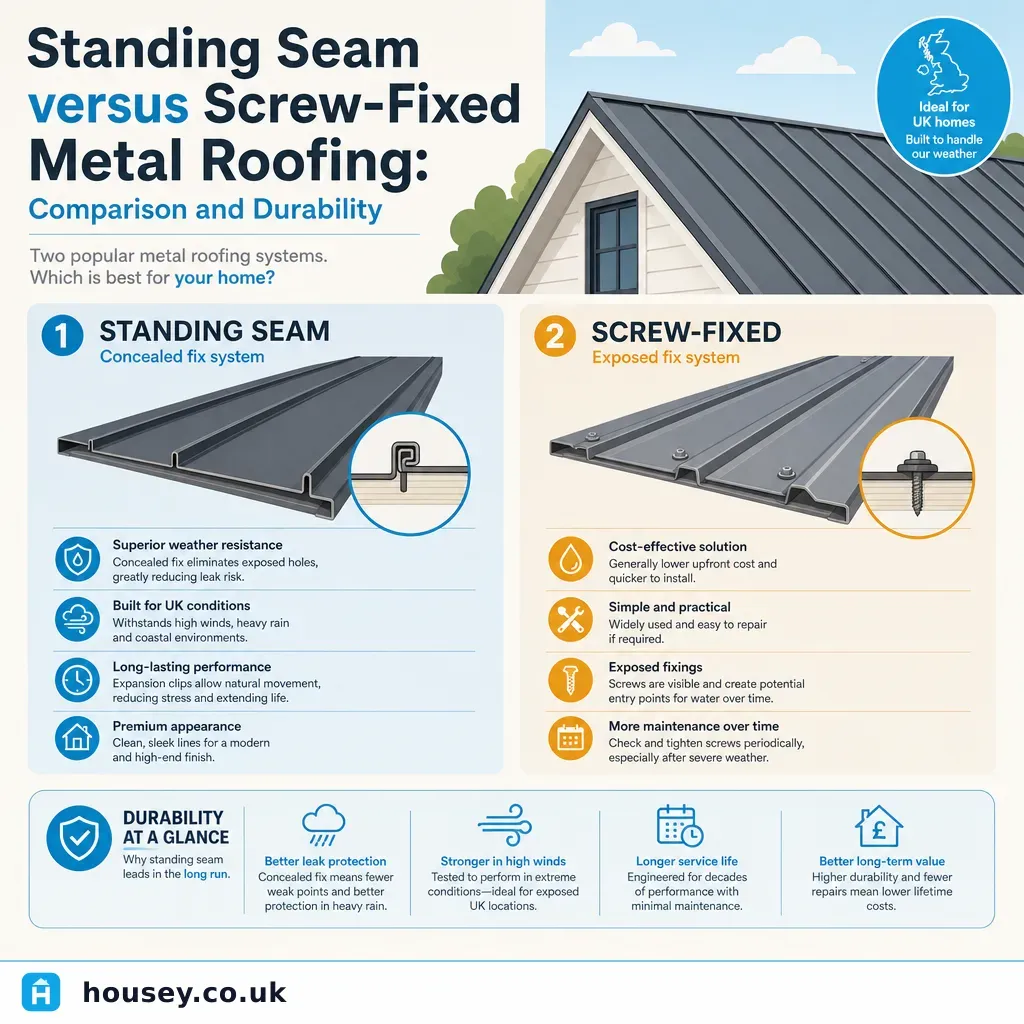
Standing Seam versus Screw-Fixed Metal Roofing: Comparison and Durability
Standing seam uses concealed clips to hold panels, keeping all fasteners out of the weatherline and giving a design life of 40–60 years or more.
 Improvement & Build
Driveway Thickness: Achieving the Right Specification for Residential Properties
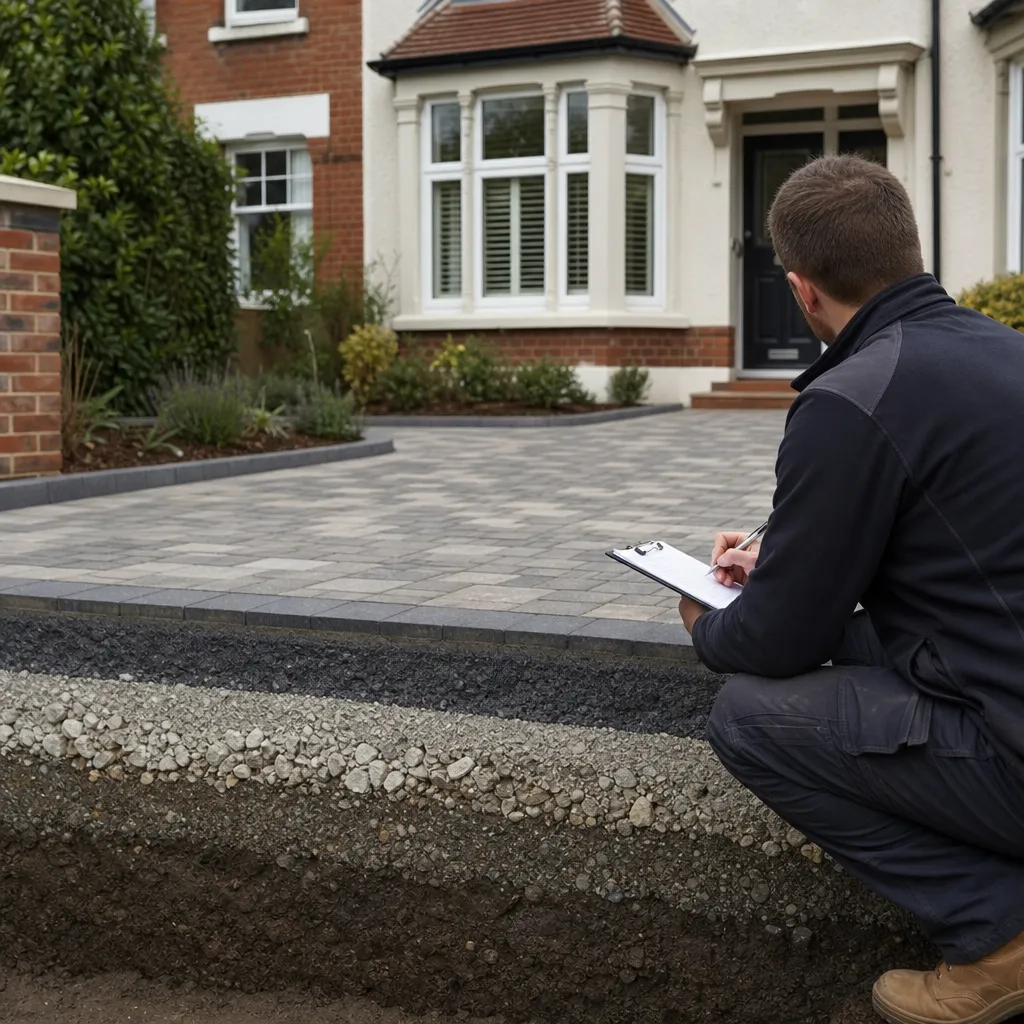
The correct thickness for a residential driveway depends on the surface material and the traffic it will carry.
 Improvement & Build
Composite Window Installation: Costs and Benefits
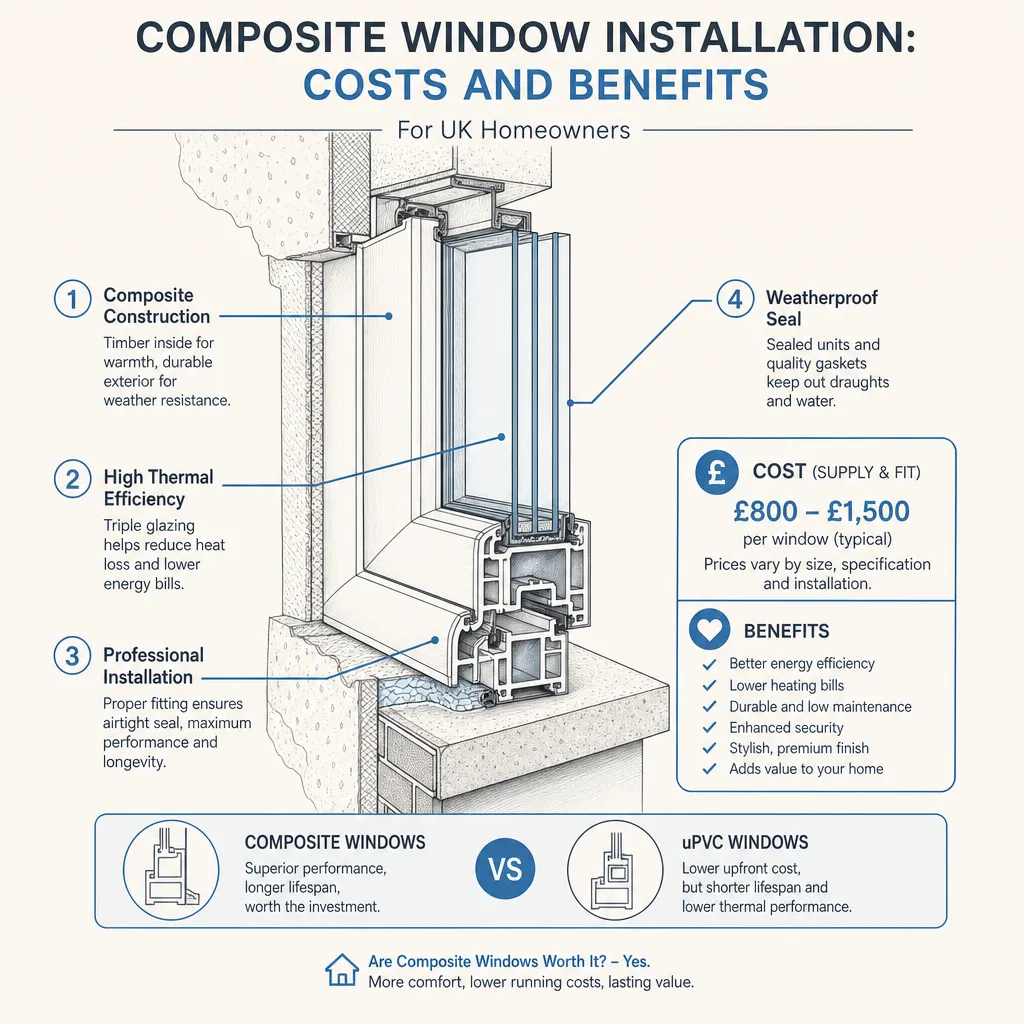
Composite windows combine two or more frame materials — typically a timber or aluminium core with a uPVC or aluminium outer casing — for better thermal performance and durability than standard uPVC.