Mortgage Advice After Rate Changes: Financial Planning for Homeowners
By Housey · Last reviewed 25th of May 2026

Mortgage Advice After Rate Changes: Financial Planning for Homeowners
When mortgage rates shift — driven by Bank of England base rate decisions, swap rate movements, or changing lender appetite — homeowners face genuine choices about what to do next. The right response depends on your current mortgage type, how close you are to the end of a deal, and your financial priorities over the coming two to five years. Acting at the right time, with the right advice, can save hundreds of pounds a month.
Key points
- The Bank of England base rate directly influences tracker mortgage rates and, indirectly, lenders' fixed-rate pricing through the swap rate market; changes typically flow through to new fixed deals within days.
- Standard variable rates (SVRs) are set entirely by the lender and do not automatically follow the base rate — they are usually the most expensive option once a fixed or tracker deal expires.
- Most lenders allow you to lock in a new mortgage deal up to six months before your current deal ends, without committing to it immediately.
- Early repayment charges (ERCs) — typically 1–5% of the outstanding balance — apply if you leave a fixed-rate deal before its term ends; always check your mortgage terms before switching.
- Whole-of-market mortgage brokers are regulated by the Financial Conduct Authority (FCA) and must recommend suitable products from across the market; a tied adviser is restricted to one lender's range.
How rate changes affect different mortgage types
Fixed-rate mortgages
A fixed-rate mortgage locks your monthly payment for a set term — typically two, three, or five years. During this period, base rate changes have no effect on your payments. The risk arises at remortgage: if rates have risen since your last fix, the new deal will likely cost more per month. If rates have fallen, current fixed deals may be cheaper than your existing rate.
Tracker mortgages
Tracker mortgages are priced at the Bank of England base rate plus a fixed margin. When the base rate rises, your payment rises proportionately; when it falls, your payment reduces. Trackers suit borrowers who expect rates to fall and can absorb short-term payment fluctuations without financial difficulty.
Standard variable rate
When a deal expires without action, borrowers roll onto the lender's SVR. SVRs are set at the lender's discretion and can change at any time — they are not directly tied to the base rate. SVRs are typically considerably higher than competitive deal rates. Remaining on an SVR for an extended period is usually expensive; reviewing your options when a deal expires is almost always worthwhile.
Which option suits your situation?
- Fix your rate if you need payment certainty, cannot comfortably absorb higher costs, or believe rates may rise further from their current level.
- Take a tracker if you believe rates are likely to fall in the near term, have financial headroom to absorb payment fluctuations, and your deal carries no early repayment charge.
- Consider an offset mortgage if you hold significant cash savings and want to reduce interest costs without committing to overpayments that reduce your liquidity.
- Consult a whole-of-market broker if your income is self-employed or irregular, you have had recent credit issues, or you want to compare across the widest range of lenders and products.
- Check your ERC first before making any decision to leave your current deal early — the penalty may outweigh any saving from switching to a lower rate.
Should you overpay your mortgage?
Overpaying reduces your outstanding balance faster and cuts the total interest paid over the life of the loan. Most lenders permit overpayments of up to 10% of the outstanding balance per year without triggering an ERC — check your mortgage terms before committing.
Factor | Overpay if… | Consider saving or investing if… |
|---|---|---|
Rate comparison | Mortgage rate exceeds net savings return after tax | Savings or investment returns exceed the mortgage rate |
ERC position | No ERC, or approaching deal end | Significant ERC would offset any interest saving |
Emergency fund | Adequate liquid savings already in place | Savings buffer is insufficient for unexpected costs |
Other debt | No higher-rate unsecured debt outstanding | High-rate credit card or personal loan exists |
Tax position | Basic-rate taxpayer with unused ISA allowance | Higher-rate taxpayer using pension or ISA allowances efficiently |
Financial decisions of this kind depend on your full personal and tax position. Consider speaking to a regulated financial adviser — verify any adviser's authorisation on the FCA Register.
When to start looking for a new mortgage deal
Most lenders allow you to secure a new rate up to six months before your current deal expires. Mortgage offers are typically valid for three to six months, protecting you from rate rises during the waiting period.
A practical approach:
- Check your current mortgage documentation: note the interest rate, remaining term, and exact deal end date.
- Identify your ERC — the amount and the date it falls to zero.
- Start comparing deals approximately six months before expiry.
- Instruct a whole-of-market broker or contact lenders directly.
- If rates fall after you secure a new deal but before the switch, ask whether you can reapply without penalty.
What a mortgage broker does
A whole-of-market mortgage broker searches across many lenders and products to identify suitable options for your circumstances. Under FCA rules, brokers must assess suitability and disclose how they are paid — either by fee or by lender commission (disclosed under the Mortgage Credit Directive). A tied or multi-tied adviser is restricted to one lender or a small panel and cannot offer a whole-of-market comparison.
Verify any broker or adviser is FCA-regulated before instructing. The FCA Register is the authoritative source. The MoneyHelper service, run by the Money and Pensions Service, also offers free, impartial mortgage guidance as a starting point.
When to get professional help
Speak to a qualified mortgage adviser or regulated financial adviser if:
- Your current deal is ending within six months and you have not yet compared options
- You are considering leaving a fixed-rate deal early and want to calculate the break-even point against the ERC
- Your income or employment status has changed since your last mortgage application
- You are planning significant home improvements and considering remortgaging to release equity
- You are experiencing mortgage payment difficulty — contact your lender early, as FCA mortgage conduct rules (MCOB) require lenders to offer forbearance options before taking possession action
How Housey can help
Housey is building a network of trusted property professionals across the UK. While mortgage brokering sits outside our current service scope, our guides and discovery tools can help you understand the surveys, conveyancing, and energy improvement decisions that often accompany a remortgage or property move.
Frequently asked questions
How does the Bank of England base rate affect my mortgage?
Tracker mortgages are directly priced at base rate plus a fixed margin, so monthly payments change whenever the base rate changes. Fixed-rate deals are unaffected during their term, but new fixed-rate pricing uses swap rates that typically anticipate base rate movements. Standard variable rates are set by each lender independently and may not track the base rate closely.
When should I start looking for a new mortgage deal?
Start comparing deals around four to six months before your current deal expires. Many lenders allow you to secure a rate in advance, valid for three to six months, so you are protected against rate rises while your existing deal runs its course. Acting early also gives you time to switch if a better deal emerges before completion.
What is a standard variable rate mortgage?
An SVR is the default rate a lender charges when a fixed, tracker, or discount deal ends without replacement. It is set at the lender's discretion and can change at any time. SVRs are typically considerably higher than the lender's competitive deal rates, making it expensive to remain on one for an extended period.
Should I overpay my mortgage or save the money?
If your mortgage interest rate exceeds your net savings return after tax, overpaying is generally the more efficient use of funds — subject to any early repayment charges. If savings or investment returns are higher, retaining cash in an ISA or pension may make better financial sense. A regulated financial adviser can model your specific circumstances accurately.
Can I switch mortgages early to avoid higher rates?
Yes, but early repayment charges typically apply — usually 1 to 5% of the outstanding balance — if you leave a fixed-rate deal before its end date. Calculate the total ERC against the estimated saving from switching at the new rate. If the base rate is expected to fall further, waiting until the deal expires naturally may also be worth considering.
Sources and further reading
- How the Bank of England sets interest rates — Bank of England
- Mortgage guidance and calculators — MoneyHelper (Money and Pensions Service)
- FCA Register: verify your adviser or broker — Financial Conduct Authority
- Mortgages: your rights and options — Citizens Advice
- Mortgage Credit Directive — Financial Conduct Authority
Useful next reads
 General property advice
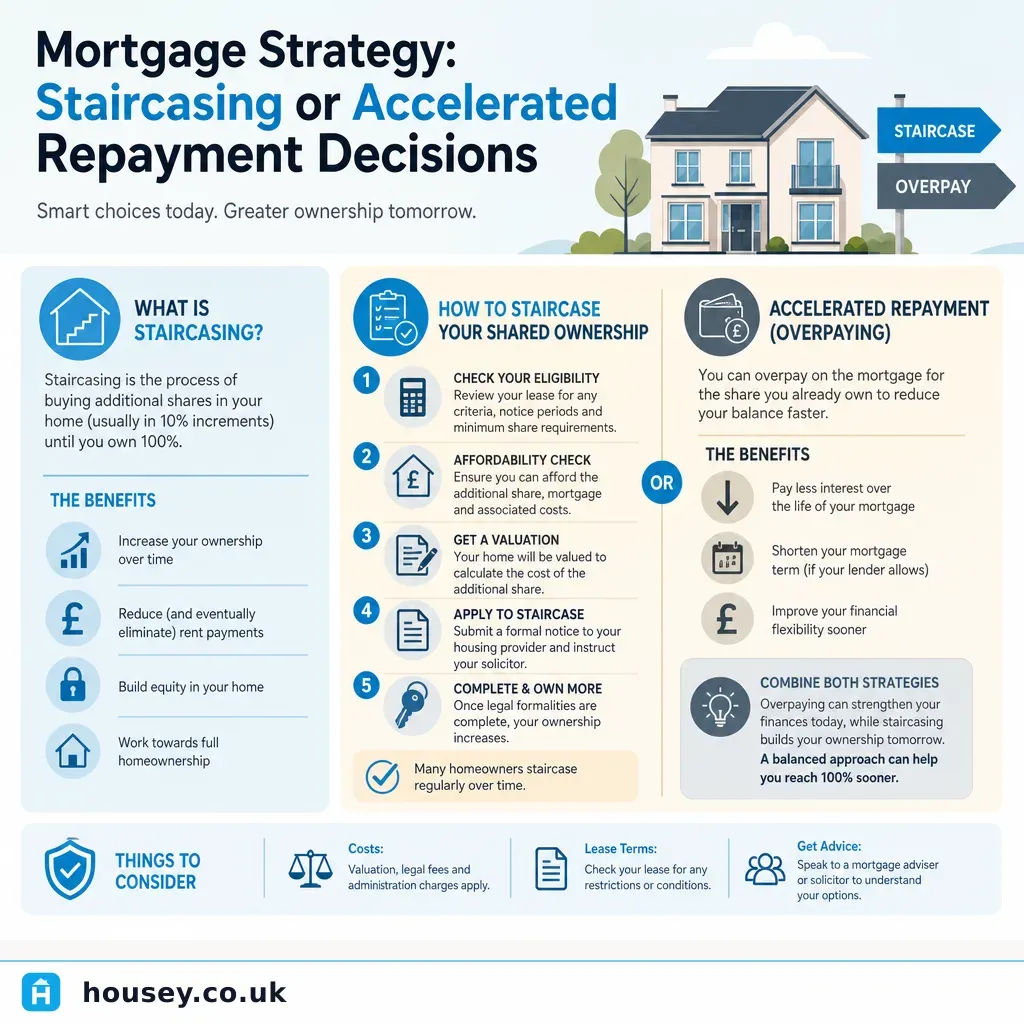
Mortgage Strategy: Staircasing or Accelerated Repayment Decisions
Staircasing means buying additional equity shares in your shared ownership home from the housing association, based on a current RICS valuation.
 General property advice
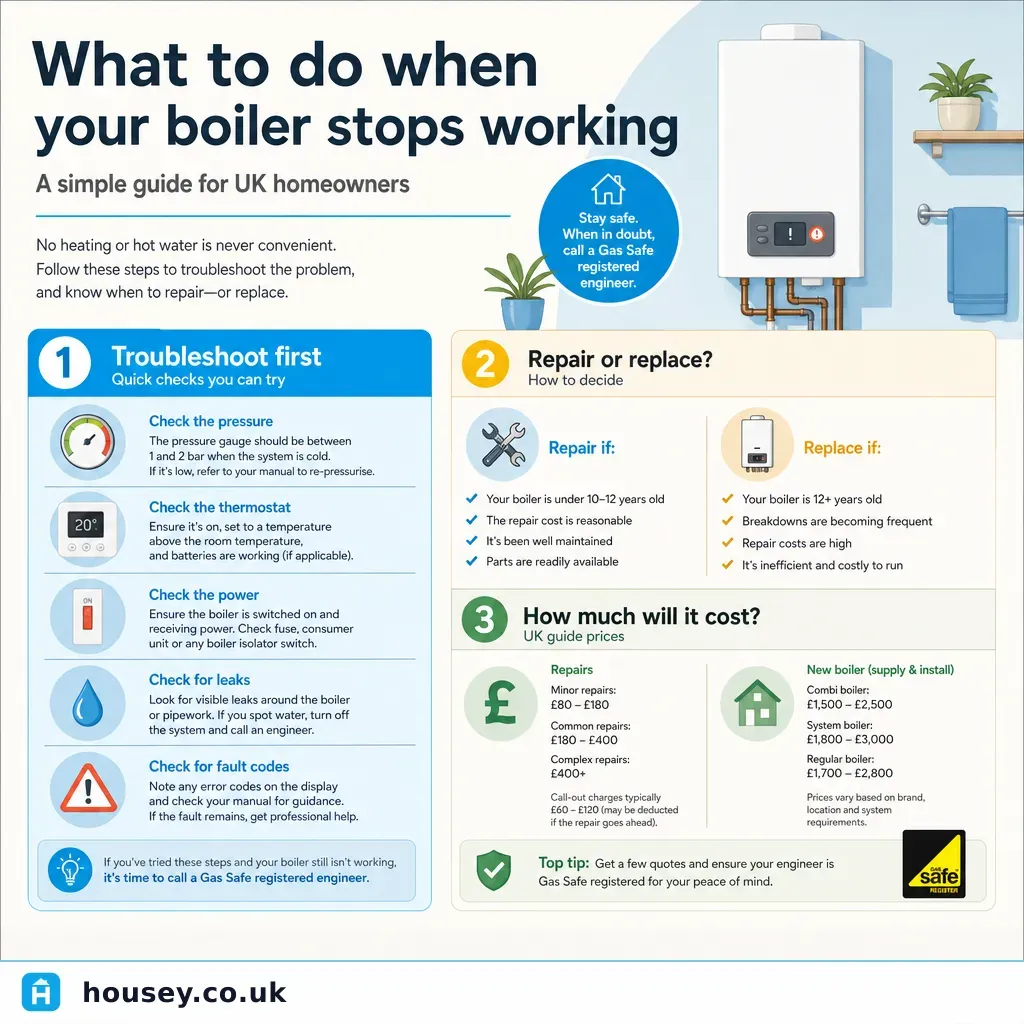
What to do when your boiler stops working
When your boiler stops working, check the pressure gauge (should read 1–1.
 General property advice
Property Market Trends: Activity Growth and Price Movements
UK property market activity is measured through completed sale registrations (HM Land Registry), lender mortgage data, and transaction volumes from HMRC.
 General property advice
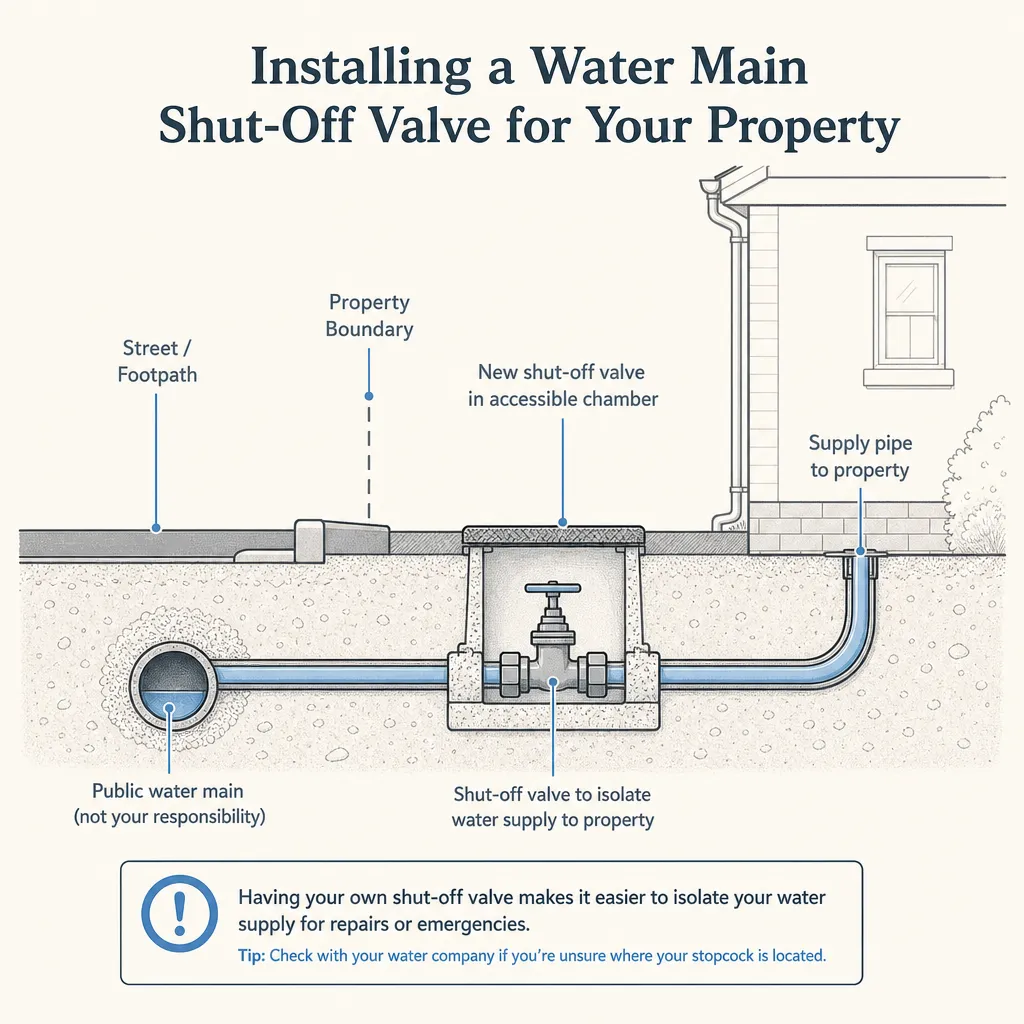
Installing a water main shut-off valve for your property
A water main shut-off valve — commonly called a stopcock — controls all water entering your home from the mains.
 General property advice
Monthly House Price Index: August Market Report and Analysis
The UK House Price Index is published monthly using completed Land Registry transaction data, meaning August figures typically reflect sales agreed months earlier.