Mould Remediation and Treatment Costs
By Housey · Last reviewed 7th of May 2026
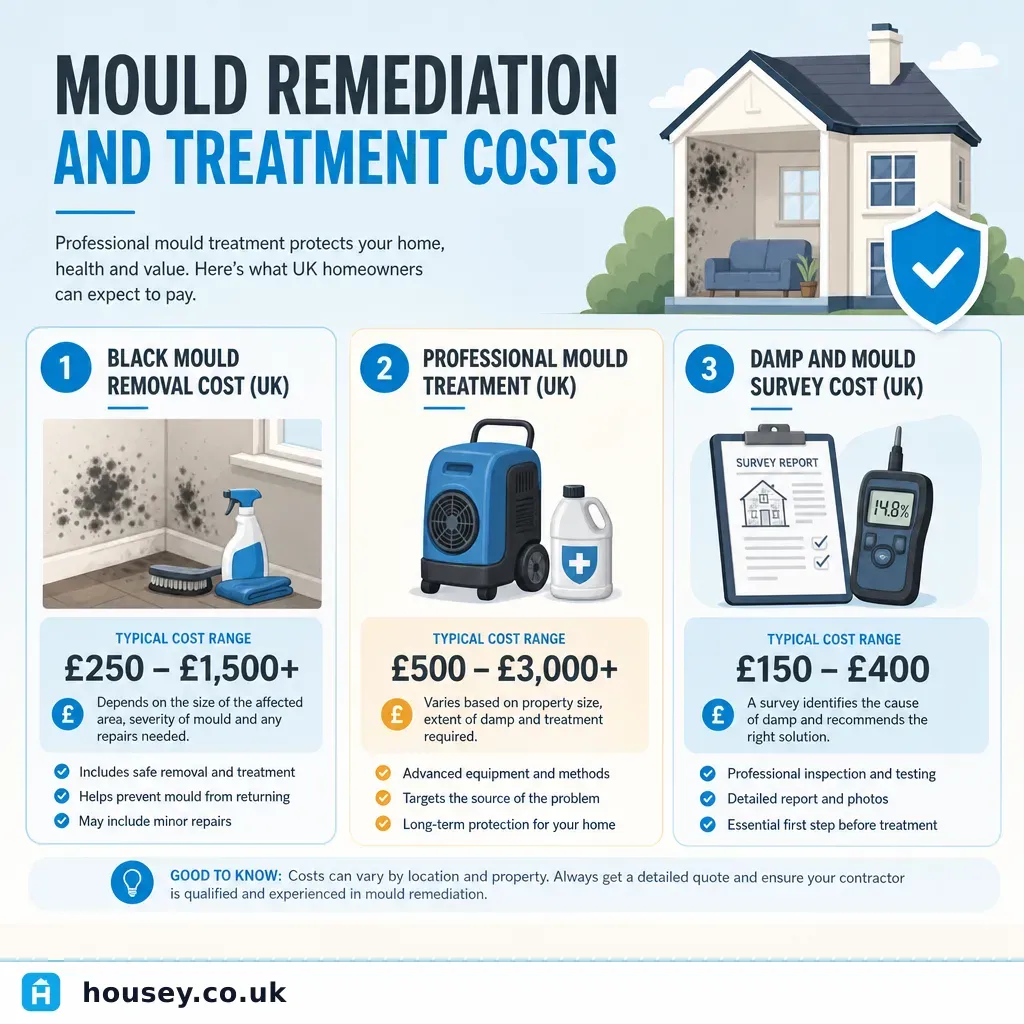
Mould Remediation and Treatment Costs
Mould in UK homes is a widespread problem, particularly in older housing stock with solid walls, inadequate ventilation, or persistent damp. It most commonly appears after periods of high occupancy, following draught-proofing or insulation works that reduce airflow without improving ventilation, or where heating has been inconsistent over a long period. Understanding what professional remediation involves — and what it costs — matters both for homeowners trying to protect their property and for landlords with legal obligations to act promptly.
Key points
- Professional mould remediation in the UK typically costs £150–£1,500+, depending on the extent of growth, the underlying cause, and the materials affected (Indicative UK costs, last reviewed 2026-05-07).
- Mould is almost always a symptom: treating surface growth without identifying the cause — condensation, penetrating damp, or rising damp — will result in recurrence within weeks or months.
- The Housing Health and Safety Rating System (HHSRS) classifies severe mould and damp as a Category 1 hazard; landlords have a legal duty under the Homes (Fitness for Human Habitation) Act 2018 to address it.
- A damp and timber survey by a qualified specialist is usually the correct first step before commissioning any remediation work.
- Mould in locations where asbestos-containing materials are suspected, or where structural timbers are affected, requires specialist assessment before any disturbance or treatment begins.
What does mould remediation cost in the UK?
Costs vary considerably depending on the scale of the problem, the mould type, and the underlying damp source. The table below provides indicative ranges.
Scope of work | Typical inclusions | Indicative cost |
|---|---|---|
Small localised treatment (e.g., bathroom ceiling, corner wall area) | Surface biocide application, area preparation, protective sheeting | £150–£400 |
Medium remediation (one or two rooms, widespread surface mould) | Inspection, biocide treatment, HEPA vacuuming, waste disposal, written report | £400–£900 |
Large-scale remediation (structural timbers affected, multiple rooms) | Full survey, containment, biocide treatment, timber replacement where needed, air quality testing | £900–£3,000+ |
Standalone damp and mould survey | Moisture mapping, cause identification, written recommendations | £200–£600 |
Indicative UK costs, last reviewed 2026-05-07. VAT may apply. Costs vary by region, property type, and contractor. Obtain at least two written quotes before proceeding.
Treatment costs are only part of the picture. Addressing the root cause — improving ventilation, installing a positive input ventilation (PIV) unit, repointing, repairing defective guttering, or treating a failed damp-proof course — adds further expense. Omitting this step means any remediation is a temporary fix.
What causes mould in UK homes?
Understanding the cause is essential before any treatment begins. The three main sources are:
Condensation is the most common cause in UK homes, particularly in flats, maisonettes, and solid-wall properties built before the 1920s. Warm, moist air from cooking, bathing, and drying laundry contacts cold surfaces and deposits moisture. Black mould (Cladosporium or Stachybotrys) typically appears on north-facing walls, around window frames, and in corners near the floor or ceiling.
Penetrating damp enters through failed pointing, cracked render, damaged guttering, or defective flashings. Mould from penetrating damp typically appears in patches on external walls and may be accompanied by a persistent tide-mark or musty smell that does not clear in summer months.
Rising damp is rarer than commonly assumed and is frequently misdiagnosed. It occurs where a damp-proof course (DPC) has failed or is absent, allowing ground moisture to wick upward through masonry. A qualified damp survey is the correct tool to distinguish genuine rising damp from condensation or penetrating damp — the treatments differ significantly in cost and approach.
What does professional mould remediation involve?
A reputable contractor working to recognised standards will typically:
- Inspect and document the extent of mould growth and identify any immediate risks, such as mould on structural timbers or proximity to suspected asbestos-containing materials.
- Contain the affected area using plastic sheeting and negative-pressure equipment for larger or more severe cases.
- Apply a biocide approved under the UK Biocidal Products Regulation to kill mould spores on contact.
- HEPA-vacuum treated surfaces to remove dead spores and debris safely.
- Dispose of contaminated materials — plasterboard, insulation, soft furnishings — that cannot be effectively treated in situ.
- Apply a mould-resistant sealant or specialist paint to treated surfaces as a secondary barrier.
- Provide a written report including moisture readings before and after treatment and recommendations for preventing recurrence.
Contractors should ideally hold Property Care Association (PCA) membership or a CSRT (Certificated Surveyor in Remedial Treatment) or CSSW (Certificated Surveyor in Structural Waterproofing) qualification. For larger assessments, British Occupational Hygiene Society (BOHS) P901 qualification is relevant.
Red flags — when mould indicates a more serious problem
Seek professional assessment promptly if any of the following apply:
- Mould covers more than 1 m² — at this scale, airborne spore concentrations may pose a health risk and containment equipment is usually required before any cleaning begins.
- Persistent damp smell even after visible mould has been surface-treated — the underlying moisture source has not been resolved.
- Rapid recurrence within weeks of treatment — a clear sign the source of moisture is active and has not been addressed.
- Discoloured, soft, or crumbling structural timbers — dry rot or wet rot may be present alongside or instead of surface mould, requiring specialist timber assessment and treatment.
- Occupants with respiratory conditions, asthma, or immune vulnerabilities — NHS guidance identifies damp and mould as a health risk, particularly for these groups; do not delay seeking professional assessment.
- Walls you suspect contain asbestos-containing materials — common in homes built or refurbished between 1950 and 1985; do not disturb these surfaces and arrange a separate asbestos survey before any mould treatment or investigation.
- Landlord–tenant context — where a tenant has reported the problem, the Homes (Fitness for Human Habitation) Act 2018 and the HHSRS framework impose a duty on the landlord to investigate and act; failure to do so can result in enforcement action.
Important limitations
This article provides general information about mould remediation costs and processes in the UK. It is not a substitute for a professional inspection of your specific property. Mould causes, severity, appropriate treatment methods, and associated costs vary significantly between properties, locations, and occupancy patterns. Where mould is associated with structural damp, asbestos-containing materials, or significant timber decay, a qualified specialist must carry out an assessment before any treatment or disturbance is attempted. Landlords should obtain qualified professional advice to understand their specific legal obligations under current housing legislation and the HHSRS framework, as these can vary depending on tenure type and property condition.
What to ask a qualified professional
Before instructing a mould remediation contractor or commissioning a damp survey, ask:
- What qualifications and accreditations do you hold? Look for PCA membership, CSRT, CSSW, or BOHS P901 qualification for mould assessment work.
- Will you identify the root cause of the mould, or will you only treat the visible surface symptoms?
- Does the quote include containment, HEPA vacuuming, and disposal of contaminated materials, or are these priced separately?
- What biocide products will you use, and are they approved under the UK Biocidal Products Regulation?
- Will you provide a written report with moisture readings taken before and after treatment?
- What do you recommend to prevent recurrence, and what would that additional work involve and cost?
- Is VAT included in the quoted price?
- What guarantee or warranty do you offer on the treatment, and what conditions apply?
When to get professional help
Do not attempt to treat extensive mould without containment equipment — disturbing large mould areas can spread spores to unaffected parts of the property and worsen the problem. Seek professional help if:
- Mould covers more than 1 m² or is growing on structural timbers, plasterboard, or insulation materials.
- You suspect the cause is penetrating damp, rising damp, or a failed damp-proof course rather than straightforward condensation.
- Anyone in the household is experiencing health symptoms that may be related to mould or damp exposure — seek medical advice and arrange a professional survey promptly.
- You are a tenant and your landlord has not responded adequately to a reported mould problem — Citizens Advice can advise on your rights under the Homes (Fitness for Human Habitation) Act 2018.
- The property is undergoing or has recently undergone retrofit insulation or draught-proofing works — poorly ventilated retrofitted properties are at higher risk of interstitial condensation and mould growth behind wall finishes.
How Housey can help
The right first step before committing to any remediation spend is a proper diagnosis of the damp source. Housey can connect you with qualified specialists for damp and timber surveys, ensuring that any treatment targets the actual cause — whether condensation, penetrating damp, or rising damp — rather than the visible surface symptoms alone. Request quotes to compare your options.
Frequently asked questions
Is black mould dangerous to health?
The NHS advises that living with damp and mould can affect your health, particularly causing or worsening respiratory conditions, allergies, and asthma. Vulnerable groups — children, older adults, and those with existing health conditions — are at greater risk. Significant infestations or mould associated with structural damp warrant professional assessment and containment rather than DIY surface cleaning.
Can I remove mould myself?
For small, localised patches (less than 1 m²) on hard, non-porous surfaces in well-ventilated areas, carefully controlled cleaning may be manageable. For anything larger, recurring, or affecting soft materials, structural timbers, or areas near suspected asbestos-containing materials, professional assessment is strongly recommended to avoid spreading spores and missing the underlying damp cause.
Does home insurance cover mould remediation?
Most standard UK home insurance policies exclude gradual damage, including long-term damp and mould. Cover may apply where mould results from a sudden, insured event such as a burst pipe, but this is policy-specific. Check your policy documents or contact your insurer before commissioning work, as insurers may require evidence of the cause before agreeing to pay.
How long does mould remediation take?
A small localised treatment can typically be completed in one day. Larger projects involving containment, structural timber treatment, and disposal of affected materials may take several days to a week. Where air quality testing is required, additional time may be needed before the space is declared clear for normal use.
What is a damp survey and do I need one before treatment?
A damp survey involves a qualified specialist measuring moisture levels throughout the affected area, identifying the type and source of damp, and providing a written report with recommendations. It is strongly advisable before any significant mould remediation — it ensures treatment addresses the actual cause and helps you obtain accurate, comparable quotes from contractors.
Sources and further reading
- Damp and mould in the home — NHS
- Housing Health and Safety Rating System: guidance for landlords — GOV.UK
- Property Care Association: find a member — Property Care Association
- Damp and mould in rented homes — Citizens Advice
- Homes (Fitness for Human Habitation) Act 2018 — legislation.gov.uk
Useful next reads
 Surveys & Inspections
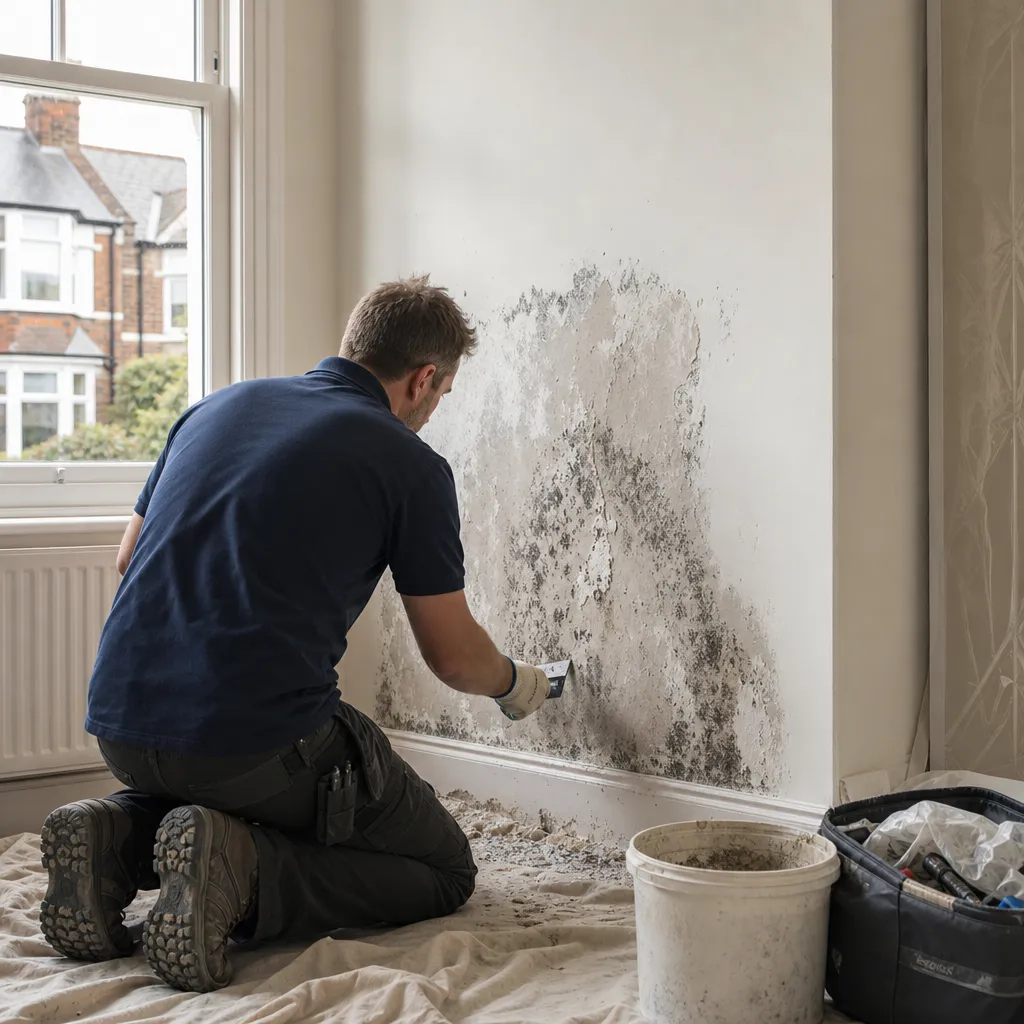
Treating Mould Contamination in Interior Walls
Mould on interior walls is caused by excess moisture — from condensation, penetrating damp, rising damp, or a plumbing leak.
 Surveys & Inspections
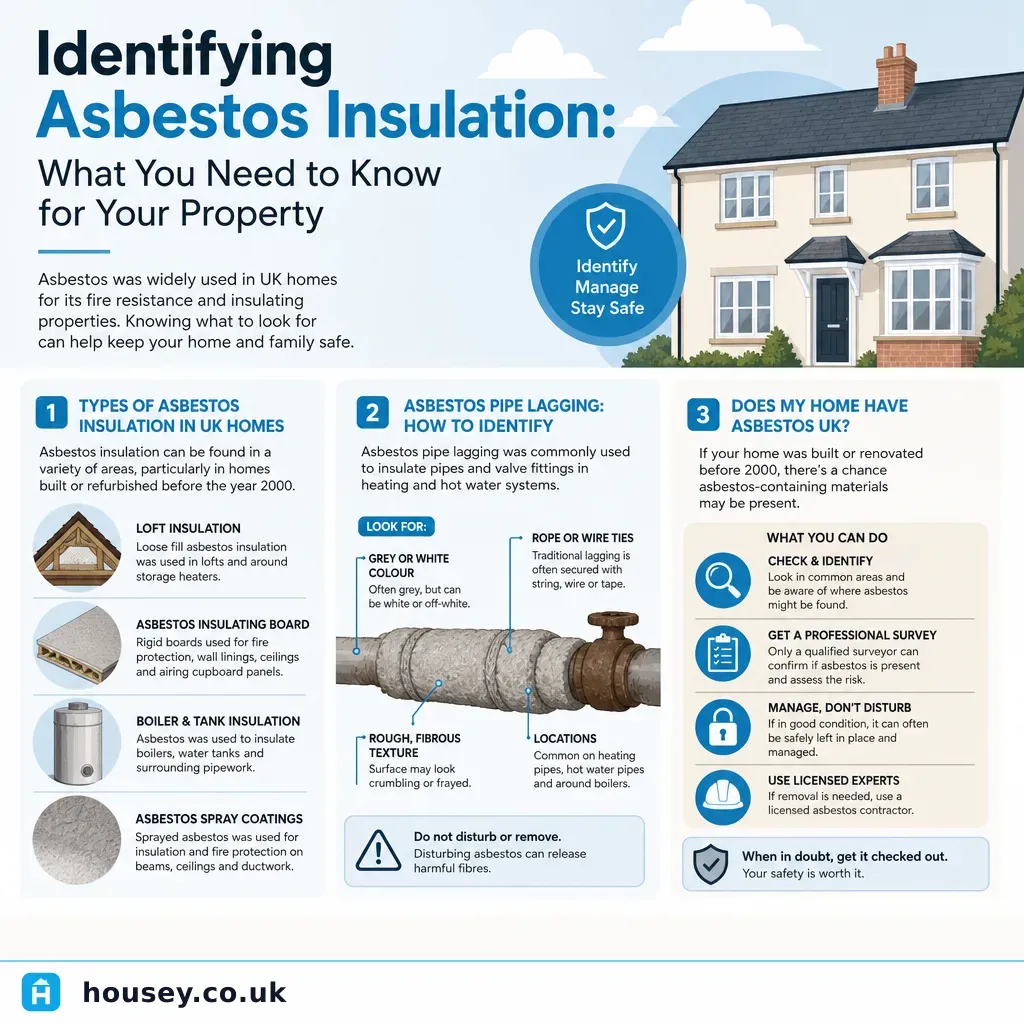
Identifying Asbestos Insulation: What You Need to Know for Your Property
Asbestos insulation was widely used in UK properties built before 2000, commonly found in pipe lagging, ceiling tiles, loose-fill loft insulation, and around boilers.
 Surveys & Inspections
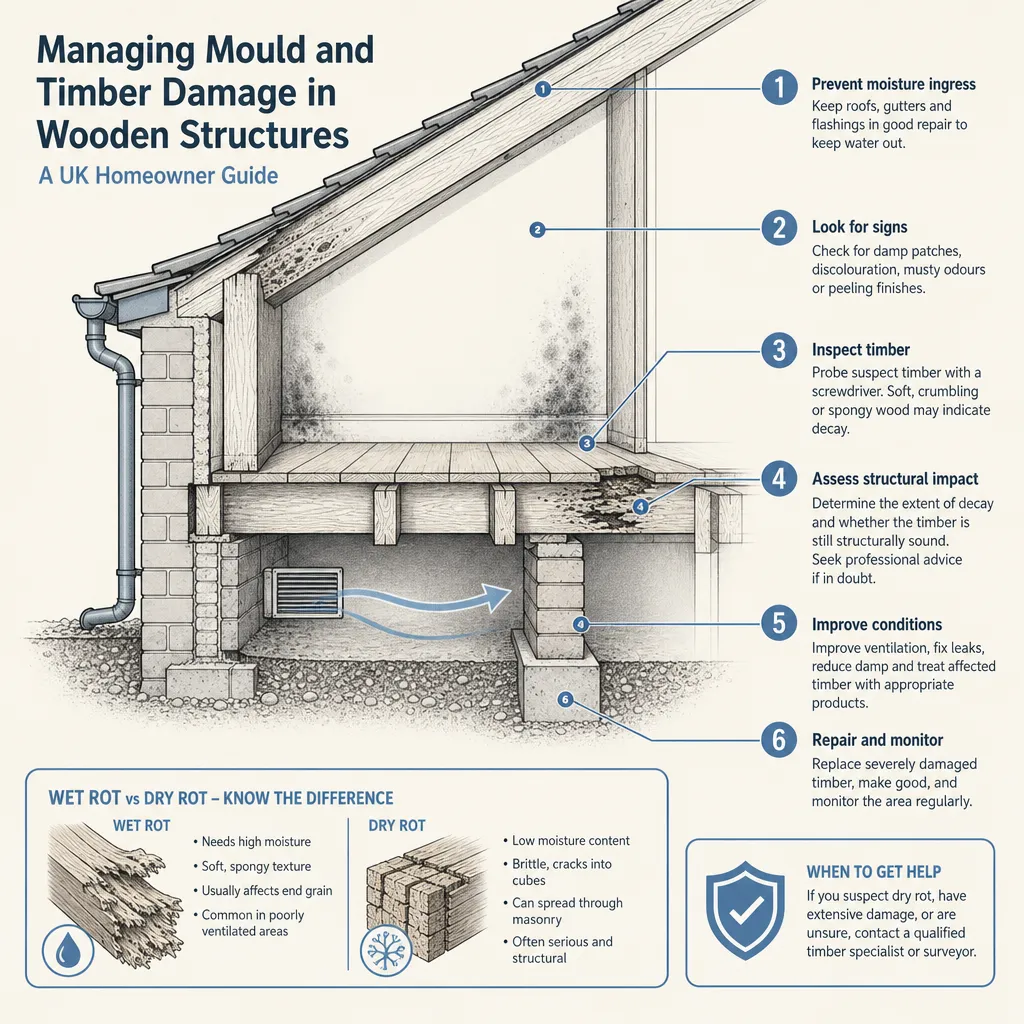
Managing Mould and Timber Damage in Wooden Structures
Mould and timber decay in wooden structures are usually symptoms of excess moisture rather than standalone problems.
 Surveys & Inspections
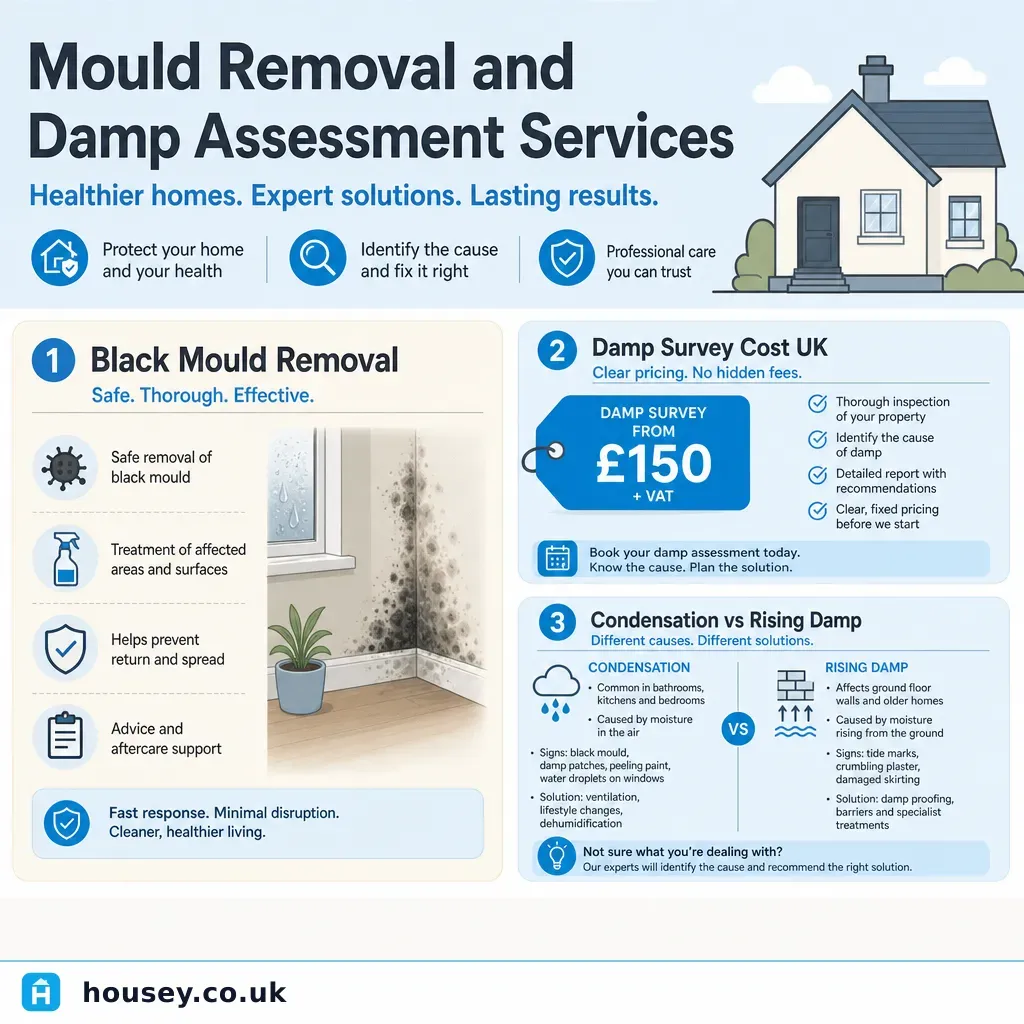
Mould Removal and Damp Assessment Services
Professional mould removal and damp assessment starts with identifying the moisture source—condensation, rising damp, or penetrating damp—before any treatment begins.
 Surveys & Inspections
Gas Safety Certificate: What Landlords and Homeowners Need
Landlords in England, Scotland, and Wales must arrange a gas safety check every 12 months by a Gas Safe registered engineer under the Gas Safety (Installation and Use) Regulations 1998.