Mountainside Residential Property Design and Construction
By Housey · Last reviewed 25th of May 2026
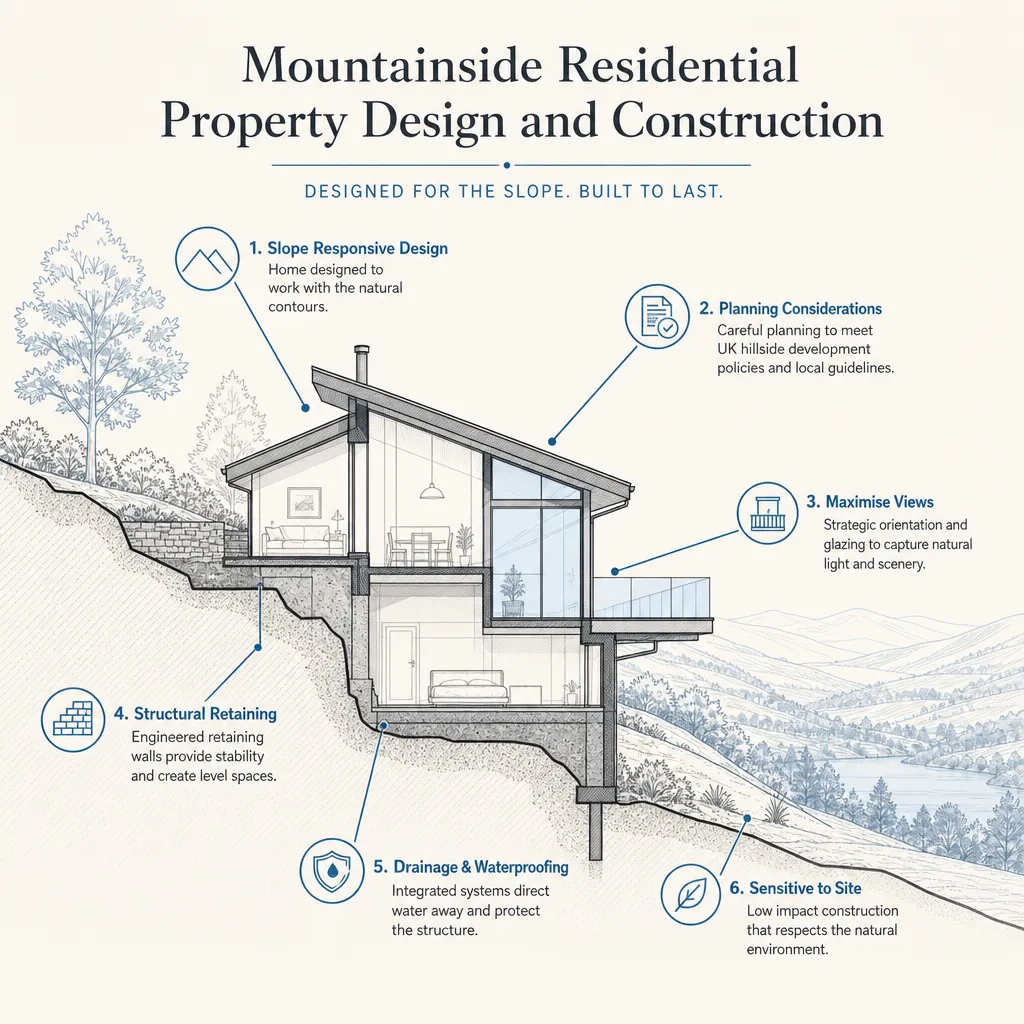
Mountainside Residential Property Design and Construction
Designing and building a home on a steep or mountainside site in the UK presents genuine opportunities — dramatic views, distinctive architecture, and close integration with landscape — alongside technical, regulatory, and financial challenges that go well beyond a standard suburban plot. Hillside and upland locations are often within designated landscapes, are geologically complex, and attract additional planning scrutiny from local authorities. Anyone considering building on, or significantly extending, a property on a steep slope should understand these requirements before committing to a site purchase or design investment.
Key points
- A geotechnical (ground) investigation is required before structural design can be finalised and is commonly a planning condition on sloped or mountainous sites in the UK.
- Permitted development rights are frequently suspended or restricted in National Parks, Areas of Outstanding Natural Beauty (AONBs), and other designated upland landscapes — full planning permission is often required even for modest extensions.
- Foundation design on slopes typically requires piled, stepped, or pad-and-beam options rather than conventional strip footings, significantly increasing base construction costs.
- The National Planning Policy Framework (NPPF) requires that development in areas of slope instability, flooding, or ground movement risk is supported by a site-specific risk assessment.
- Access roads and tracks to hillside plots must meet local highway authority standards for gradient, visibility, passing places, and emergency vehicle access.
Understanding the planning context for hillside sites
Many of the UK's mountainous and steeply sloped landscapes fall within designated areas: National Parks (including the Lake District, Snowdonia, the Peak District, and the Cairngorms), Areas of Outstanding Natural Beauty (AONBs), National Scenic Areas in Scotland, and Green Belt land. Each designation carries specific planning policies that shape what can be built and how.
In designated landscapes, local planning policies typically:
- Restrict new dwellings to sites with a demonstrable functional need (agricultural or forestry) unless the site falls within an established settlement boundary.
- Require that buildings are sympathetic in scale, materials, and form to the local vernacular and landscape character.
- Impose stricter controls on bulk, ridge height, and roofline to protect the landscape setting.
- Remove or restrict permitted development rights, meaning extensions, outbuildings, and alterations require full planning permission.
Even outside designated areas, steep and unstable slopes attract planning conditions relating to geotechnical risk, drainage, surface water management, and highway access. Pre-application advice from the local planning authority is usually worthwhile before committing to detailed design.
Geotechnical investigation: what it involves and why it matters
A geotechnical investigation characterises the underlying soils and rock, identifies potential hazards — landslide susceptibility, shrink-swell clay, made ground, groundwater levels, mine workings — and provides the data required for structural and drainage design.
For a hillside residential project, a ground investigation typically includes:
- Trial pits and boreholes to extract soil and rock samples at appropriate depths.
- In-situ testing (Standard Penetration Test, cone penetration test) to assess bearing capacity and stiffness.
- Laboratory testing of recovered samples.
- A slope stability assessment where gradients are significant or landslide susceptibility is indicated.
- A written ground investigation report with design recommendations for the structural engineer.
Planning authorities commonly require evidence of a geotechnical investigation either before submission or as a planning condition. Without this data, a structural engineer cannot safely design foundations, and a building control body cannot approve the structural scheme.
Foundation and structural options for sloped sites
Foundation or structural approach | Typical application | Key considerations |
|---|---|---|
Stepped strip foundations | Gentle to moderate slopes on competent ground | More excavation than flat sites; must step with the gradient; standard building control process |
Pad and beam foundations | Moderate slopes; buildings with a discrete column grid | Concentrated loads; ground capacity must be verified at pad locations; geotechnical input needed |
Piled foundations | Steep slopes, poor ground, landslide risk zones | Higher cost; requires specialist piling contractor; geotechnical data essential |
Retaining walls (concrete, masonry, or engineered) | Where cut-and-fill is needed to create a working level | Structural engineering required; drainage behind wall critical; may require building control approval |
Cut-and-fill earthworks platform | Lower slopes where earthworks can create level ground economically | Substantial earthworks; fill must be properly compacted and stability assessed |
Stilted or post-and-beam structure | Steep slopes; minimal ground disturbance; distinctive aesthetic | Architectural opportunity; cost varies widely; structural engineering essential |
Design principles for mountainside homes
Successful hillside architecture in the UK tends to follow principles that respond to site conditions rather than imposing a flat-site approach:
Follow the contours. Positioning the building to run along, rather than across, the slope reduces excavation, minimises visual impact, and can take advantage of the natural topography for split-level living.
Local materials and vernacular palette. In most designated UK landscapes, planning policies require or encourage the use of local stone, slate, or render in tones that complement the surrounding environment.
Drainage first. Upland and mountainside sites receive high rainfall. Surface water management — swales, soakaways, drainage to a suitable outfall — must be designed at the earliest stage, not as an afterthought. Building Regulations Approved Document H covers drainage requirements.
Structural integration. The building, retaining structures, floor levels, and roof form should be designed by the architect and structural engineer as a single integrated system, not resolved in sequence.
Infrastructure realism. Remote hillside sites may require a significant access track, extended utility connections, or a private sewage treatment system. These costs are frequently underestimated and should be quantified during a pre-purchase feasibility assessment.
Decision tree: which professionals do you need?
- Purchasing a sloped site: instruct a geotechnical engineer and an architect for a pre-purchase feasibility assessment before exchange of contracts.
- Site in a National Park, AONB, or other designated landscape: engage a planning consultant with specific experience in that designation before preparing any application.
- Gradient exceeds approximately 1:5 (20%): involve a structural engineer from the earliest design stage alongside the architect.
- Visible evidence of landslide, erosion, or ground movement on or near the site: instruct a geotechnical engineer for a slope stability assessment before proceeding further.
- No mains drainage or power at the site: consult utility providers and a drainage engineer early; do not assume connections are straightforward or inexpensive.
Important limitations
This article provides general information about planning, design, and construction considerations for hillside and mountainside residential properties in the UK. Rules, policies, and risks vary significantly by location, designation, local planning authority, geological conditions, and individual site characteristics. Nothing in this article constitutes structural, planning, legal, or geotechnical advice. A qualified professional must assess your specific site before any design work, planning application, or construction commences.
When this becomes urgent
- If you are in solicitors on a hillside site and have not yet commissioned a geotechnical investigation — arrange one before exchange of contracts if at all possible.
- If planning permission has been granted with a geotechnical investigation as a pre-commencement condition — this must be satisfied before construction begins and often before detailed structural design is completed.
- If ground movement, new cracking, or signs of slope instability appear on or adjacent to an existing hillside property — seek a structural engineer and geotechnical engineer promptly.
- If a retaining wall associated with the property is cracking, tilting, or showing signs of movement — this is a safety matter; seek structural engineering advice without delay.
What to ask a qualified professional
Before instructing an architect, structural engineer, or geotechnical engineer for a hillside project, consider asking:
- What experience do you have with hillside and mountainside residential projects in the UK, and can you provide examples?
- What scope of ground investigation do you recommend for this site, and at what stage of the programme should it be carried out?
- What slope stability or landslide susceptibility issues are associated with this type of terrain and location?
- If the site is in a designated landscape, are you familiar with this planning authority's specific policies and design expectations?
- What is your view on the planning prospects for this site before we invest in a full design?
- How will the foundation solution integrate with the structural design and landscape strategy?
- What drainage strategy do you recommend, and how will it be approved through building control?
When to get professional help
Hillside residential projects should involve a team of qualified professionals from the earliest stage. Key disciplines are:
- Architect with hillside or complex-site experience for design, planning, and project coordination.
- Structural engineer for foundation and building structure design.
- Geotechnical engineer for ground investigation, slope stability assessment, and foundation recommendations.
- Planning consultant for sites in designated landscapes or with complex planning histories.
- Drainage engineer for surface water and foul drainage design on remote or upland sites.
No aspect of site assessment, structural design, or planning for a steep-slope project is suitable for unaided homeowner management.
How Housey can help
Housey connects homeowners and self-builders with experienced professionals across the full project team. If you are planning a hillside residential project, compare architects experienced in site-specific design, structural engineers for complex ground conditions, and geotechnical and soil investigation specialists through Housey to assemble the right team from the outset.
Frequently asked questions
Do I need planning permission to build a house on a hillside in the UK?
A new dwelling almost always requires full planning permission regardless of the topography. On a hillside site in a designated landscape, you are likely to face stricter policy tests around landscape impact, scale, and materials, and should seek pre-application advice from the local planning authority before investing in a full design and application.
How much does a geotechnical investigation cost for a sloped residential site?
Indicative UK costs for a basic ground investigation for a residential site range from approximately £2,000 to £8,000, depending on the number of boreholes or trial pits, investigation depth, and laboratory testing programme (Indicative UK costs, last reviewed 2026-05-25). Complex hillside investigations with slope stability modelling will cost more. Obtain at least three quotes from firms registered with the Association of Geotechnical and Geoenvironmental Specialists (AGS).
Can permitted development rights apply to a hillside house in a National Park?
In most National Parks and AONBs in England, Article 4 Directions and specific local policies restrict or remove standard permitted development rights. Always check with the relevant National Park Authority or local planning authority before assuming any works are permitted development. Do not rely solely on online planning portals for a definitive answer on your specific property.
What is the biggest hidden cost of building on a steep slope?
Site infrastructure and earthworks are the most frequently underestimated costs on hillside projects. Access track construction, retaining walls, drainage systems, and potentially remote utility connections can collectively add tens of thousands of pounds to a project budget. A pre-purchase feasibility assessment by an architect and geotechnical engineer is the most effective way to quantify these costs before committing to a site.
Sources and further reading
- National Planning Policy Framework (NPPF) — Ministry of Housing, Communities and Local Government
- Approved Document A: Structure — GOV.UK
- Approved Document H: Drainage and waste disposal — GOV.UK
- Planning in National Parks and the Broads — GOV.UK
- Association of Geotechnical and Geoenvironmental Specialists (AGS) — AGS
Useful next reads
 Planning & Pre-Build
Space planning and architectural design: optimising your property layout
Space planning defines how rooms, circulation routes, and services are arranged within a property to make the best use of available area.
 Planning & Pre-Build
Designing vaulted ceilings for residential spaces
Creating a vaulted ceiling in an existing home involves restructuring the roof timbers that form the structural triangle, which always requires a structural engineer's calculations and Building Regulations approval under Approved Document A.
 Planning & Pre-Build
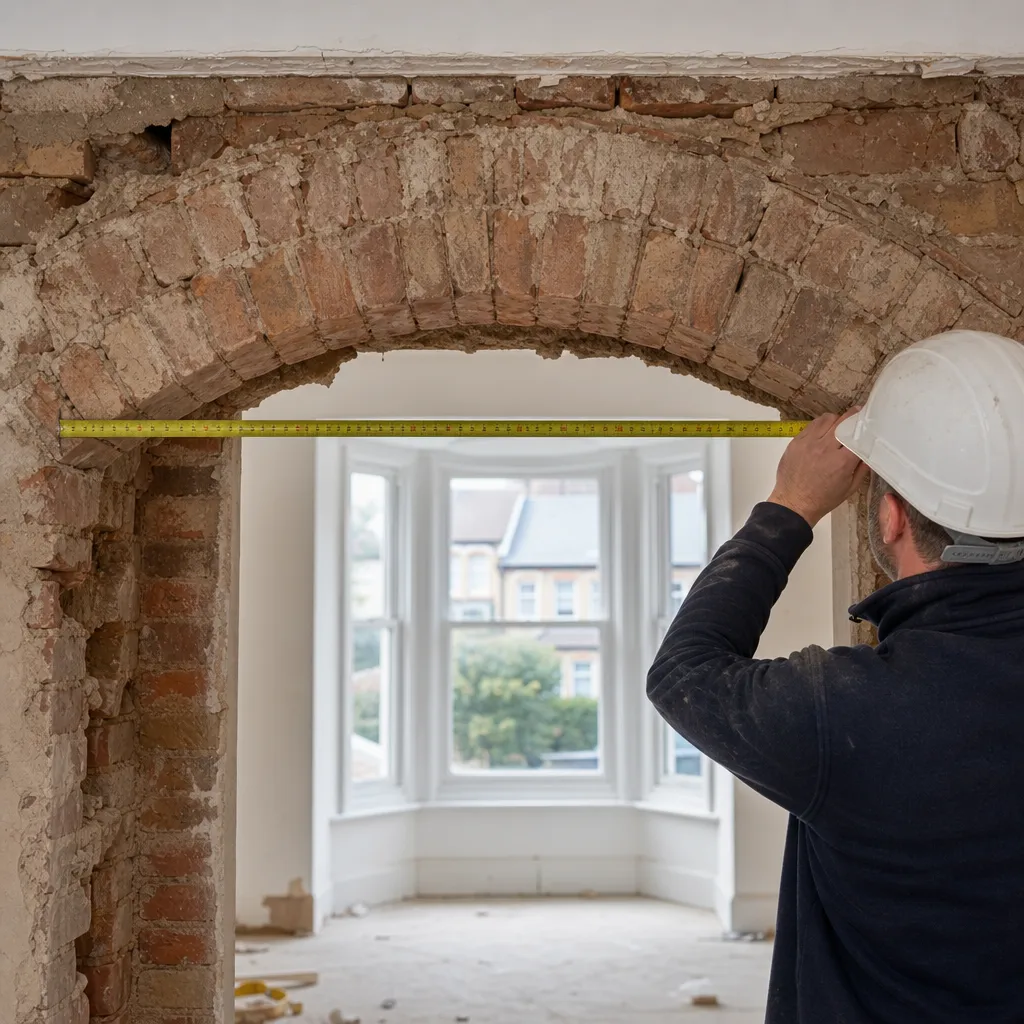
Structural Arching in Walls: Load Distribution and Design
Structural arching occurs when masonry redistributes compressive loads in a triangular or parabolic path around an opening, reducing the load on the lintel below.
 Planning & Pre-Build
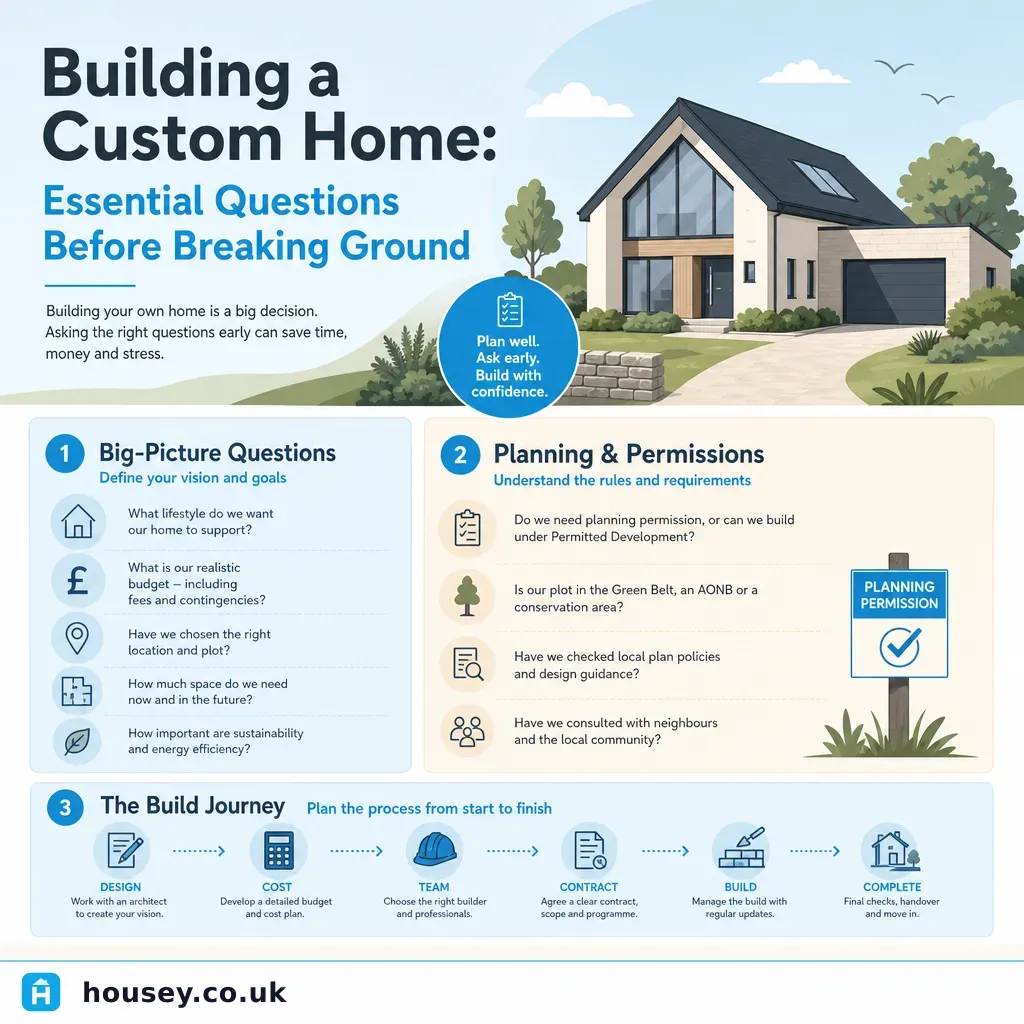
Building a Custom Home: Essential Questions Before Breaking Ground
Building a custom home in the UK requires planning permission, separate Building Regulations approval, and a professional team typically including an architect or architectural technologist, structural engineer, and building control body.
 Planning & Pre-Build
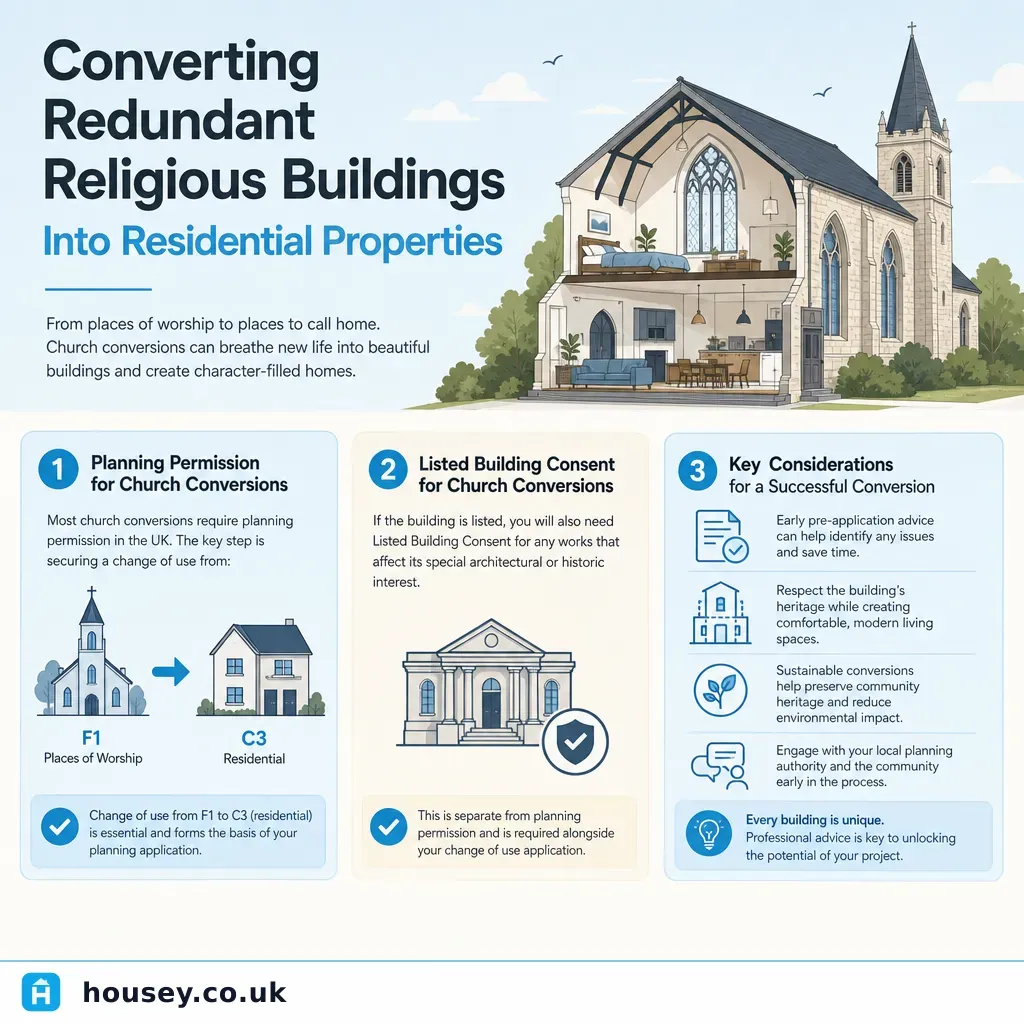
Converting Redundant Religious Buildings Into Residential Properties
Converting a redundant religious building to residential use in the UK requires planning permission for change of use from Use Class F.