Movement Joints in Single-Wythe Walls: Design and Installation
By Housey · Last reviewed 11th of May 2026
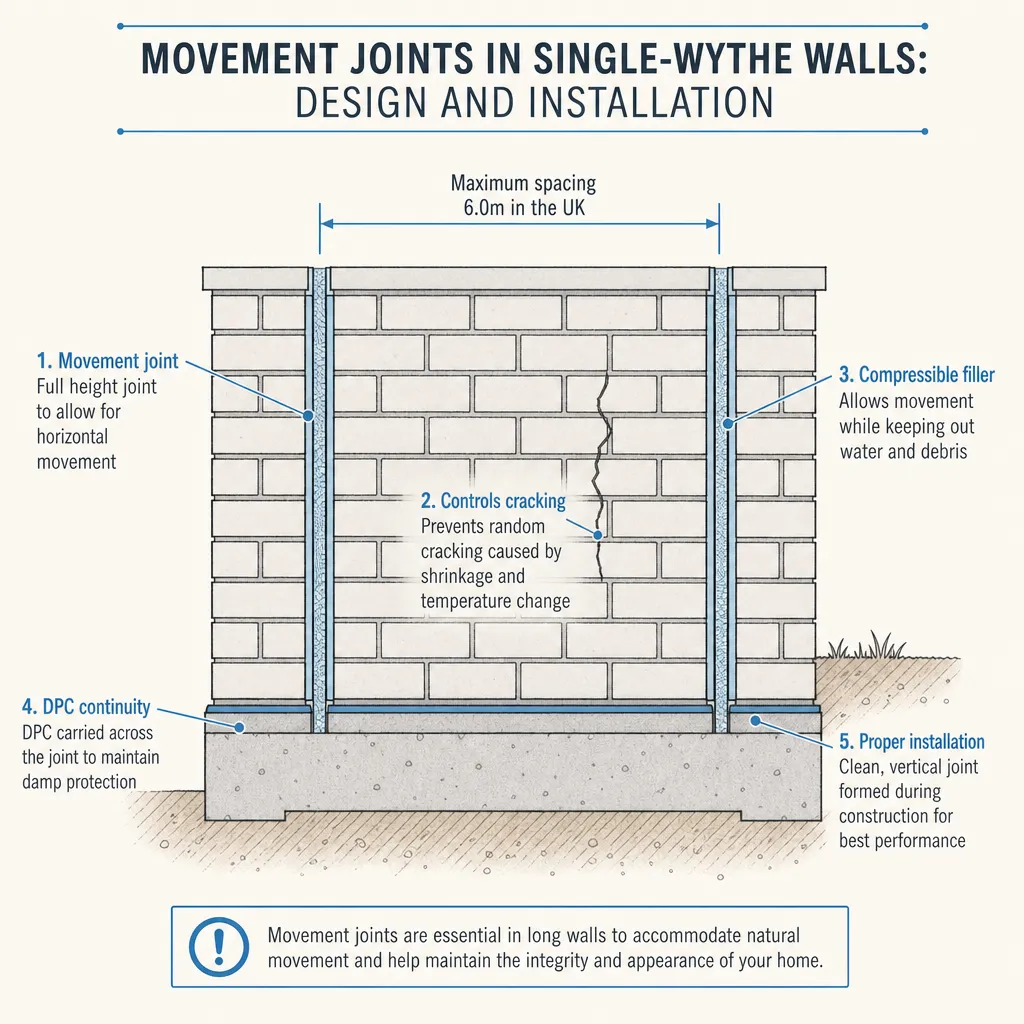
Movement Joints in Single-Wythe Walls: Design and Installation
Single-wythe walls — those built just one masonry unit thick — appear throughout UK construction in boundary walls, internal partitions, freestanding garden structures, and some modern infill panels. Because they lack the additional mass and restraint of a cavity wall, they are more susceptible to cracking caused by thermal expansion, moisture movement, and differential settlement. Movement joints are the primary design tool used to manage this risk, and their spacing, fill material, and detailing matter significantly to the long-term performance and safety of the wall.
Key points
- A single-wythe (single-leaf) wall is typically 100mm thick in blockwork or 102.5mm in clay brickwork, built with no cavity or inner leaf.
- BS EN 1996-2 (Eurocode 6) and its UK National Annex, supplemented by PD 6697, provide the principal design guidance for movement joint spacing in masonry, with maximum centres depending on masonry unit type.
- Clay bricks expand irreversibly after firing due to moisture absorption; calcium silicate and concrete masonry units shrink — joint design must accommodate the correct direction and magnitude of movement for each material.
- Movement joints in external masonry must be filled with a compressible, weather-resistant flexible sealant such as polyurethane, polysulfide, or silicone; mortar is never an acceptable fill material.
- Building Control sign-off for structural masonry typically requires movement joints to be specified on design drawings and confirmed as installed correctly on site.
What is a single-wythe wall and where is it used?
A wythe is a vertical section of masonry one unit wide. A single-wythe wall uses only one such section — there is no separate inner leaf or insulated cavity. Common applications in UK construction include:
- Boundary and garden walls: typically 102.5mm clay brick or 100mm dense concrete block.
- Internal partitions in residential and commercial buildings, often 100mm aircrete (AAC) or dense aggregate block.
- Retaining walls of modest height (these require specific structural engineering design in all cases).
- Infill panels within steel or concrete framed structures.
- Parapet walls at roof level — a particularly exposed and vulnerable location where movement damage is common.
Single-wythe construction is lighter and cheaper than cavity walls, but it demands careful design attention to movement, particularly in exposed external locations.
How different masonry materials move
Different masonry units move in fundamentally different ways, and joint design must reflect the specific material specified:
Masonry type | Primary movement | Direction | Key design implication |
|---|---|---|---|
Clay bricks | Irreversible moisture expansion after firing | Expansion | Joints must remain permanently open; never mortar-fill |
Calcium silicate bricks | Drying shrinkage after manufacture | Shrinkage | Joints prevent tensile cracking as wall contracts |
Dense concrete blocks | Carbonation and drying shrinkage | Shrinkage | Similar approach to calcium silicate |
Aircrete/AAC blocks | Higher drying shrinkage than dense concrete | Shrinkage | More frequent joints typically required |
Natural stone | Lower overall movement; variable | Mixed | Engineer to assess based on stone type and exposure |
All masonry also undergoes reversible thermal movement — expanding in summer and contracting in winter. For walls in exposed UK locations, the annual thermal range can be significant: a 10m clay brick wall may experience net thermal movement of approximately 4–5mm per year, in addition to any irreversible material-specific movement.
Movement joint spacing: Eurocode 6 guidance
BS EN 1996-2 and its UK National Annex, together with PD 6697 (Recommendations for the design of masonry structures to BS EN 1996), provide practical spacing guidance:
- Clay brick single-wythe walls: Movement joints at 10–15m centres in long straight runs; at re-entrant corners; at changes in wall height or thickness; and at junctions with other structural elements such as columns or concrete frames.
- Dense concrete block and calcium silicate masonry: Higher shrinkage movements mean closer joint spacing — often 6–9m in exposed external locations.
- Aircrete (AAC) blockwork: PD 6697 recommends joints at approximately 6m centres or closer in highly exposed conditions due to elevated shrinkage potential.
- Freestanding garden and boundary walls: Movement joints at 5–7m centres are commonly detailed, as freestanding walls have no structural backup if a panel cracks or becomes unstable.
- Parapet walls: Joints at closer centres than equivalent lower walls, reflecting higher thermal exposure; engineer to specify.
These are guidance figures, not fixed rules. A structural engineer or masonry designer should calculate specific spacing based on wall length, height, restraint conditions, exposure category, and masonry unit type.
Joint detailing and fill materials
A movement joint is only effective if the fill material allows the joint to open and close freely without water ingress. The key requirements are:
- Bond break at the joint: Masonry units must not span the joint — no headers, wall ties, or mortar should cross it. A compressible foam strip or debonding tape is placed before the face sealant is applied.
- Backing rod: Closed-cell polyethylene foam rod is placed as a backing material to control sealant depth — sealant depth should typically be approximately half the joint width.
- Face sealant: A weather-resistant, flexible sealant fills the exposed face of the joint. Polyurethane and polysulfide sealants accept paint and suit most external applications; silicone does not accept paint but is highly durable and suitable for areas where painting is not required.
- Joint width: A minimum of 10mm is generally advised for thermal movement; the engineer specifies width based on the calculated movement range and sealant product guidance.
- Vertical or horizontal orientation: Movement joints in long walls are typically vertical. Horizontal slip joints or bed joint reinforcement may be used at certain structural connections or at the base of parapet walls.
In high-exposure locations and at parapets, movement joints should be coordinated with weatherings, cappings, and flashings to ensure water is excluded from the joint area.
Important limitations
This article provides general information about the design principles for movement joints in single-wythe masonry. It is not a substitute for structural engineering assessment or professional specification. Movement joint spacing, width, sealant type, and detailing depend on the masonry unit, wall geometry, exposure, restraint conditions, and structural context of each individual project. A qualified structural engineer or masonry designer should specify and detail movement joints for any structural, external, or exposed wall.
What to ask a qualified professional
Before instructing a structural engineer or masonry designer, prepare these questions:
- What masonry unit type does the design assume, and how does this affect joint spacing and width?
- Will the drawings specify exact joint locations and widths, or is this left to the contractor's discretion on site?
- What sealant product is specified, and what is its expected service life and maintenance interval?
- How should movement joints be inspected after construction to confirm they are correctly installed and the bond break is in place?
- Are the joint locations compatible with window and door positions planned for this wall?
- For freestanding or parapet walls, what additional weathering or capping detail is required to exclude water at the joint?
- Will a specification be provided that can be incorporated into the Building Control submission?
Which professional do I need?
Situation | Professional required |
|---|---|
New structural single-wythe wall (load-bearing, retaining, or parapet) | Structural engineer |
Specifying joint detailing and preparing building control drawings | Structural engineer or experienced masonry designer |
Identifying causes of existing cracking in a masonry wall | RICS Level 3 surveyor or structural engineer |
Repointing or replacing failed sealant in an existing joint | Qualified masonry contractor (engineer not needed if joint locations are confirmed) |
New garden boundary wall below approximately 1m | Competent masonry contractor; engineer advisable for sloping ground or walls adjacent to a highway |
When this becomes urgent
Movement joints are a structural and weatherproofing detail — errors have consequences that may only become visible years later when cracks form, water ingress occurs, or a wall section becomes unstable. Seek professional help immediately if:
- You are designing a new external or structural wall above approximately 1m in height without engineering input.
- An existing wall has developed stepped cracking through the mortar joints, open vertical cracks, or cracks that are widening over time.
- A parapet or boundary wall is leaning, bowing, or showing signs of instability at any section.
- The wall is adjacent to a public right of way, highway, or shared boundary where failure could cause injury or a boundary dispute.
- Building Control has queried or rejected movement joint detailing on submitted drawings.
How Housey can help
Housey connects you with qualified structural engineering professionals who can specify and detail movement joints for single-wythe walls, and with specialists in building regulations drawings who can prepare correctly documented submissions for Building Control approval.
Frequently asked questions
What is the difference between a movement joint and an expansion joint?
The terms are often used interchangeably, but technically a movement joint accommodates both expansion and contraction, while an expansion joint specifically handles growth. In clay brickwork, irreversible post-firing expansion means joints must always remain open and never be filled with mortar. In concrete or calcium silicate masonry, shrinkage is the primary concern. Your structural engineer will specify the correct type and width for your wall.
How wide should a movement joint be in a brick wall?
A minimum of 10mm is generally used for thermal movement in standard clay brickwork; wider joints of 12–20mm may be required where calculated movement is larger or where the sealant manufacturer's minimum width guidance demands it. The structural engineer should specify width based on wall length, exposure, masonry unit type, and the performance characteristics of the specified sealant product.
Can I point up a movement joint with mortar?
No. Pointing a movement joint with mortar defeats its purpose entirely. Mortar has no flexibility and will crack as the wall moves, allowing water ingress while simultaneously preventing the movement the joint was designed to accommodate. Movement joints must be filled with compressible closed-cell foam as a backing rod and finished with a flexible polyurethane, polysulfide, or silicone sealant.
Do garden walls need movement joints?
Freestanding garden and boundary walls are particularly vulnerable to cracking from thermal movement and frost action, as they have no structural backup if a section fails. Movement joints in clay brick garden walls are typically recommended at 5–7m centres. Walls above approximately 1.8m in height, or on sloping or soft ground, should be assessed by a structural engineer before construction begins.
Sources and further reading
Useful next reads
 Planning & Pre-Build
Patio Installation and Building Regulation Certification: What Builders Need to Know
Most ground-level patios in England do not require building regulations approval.
 Planning & Pre-Build
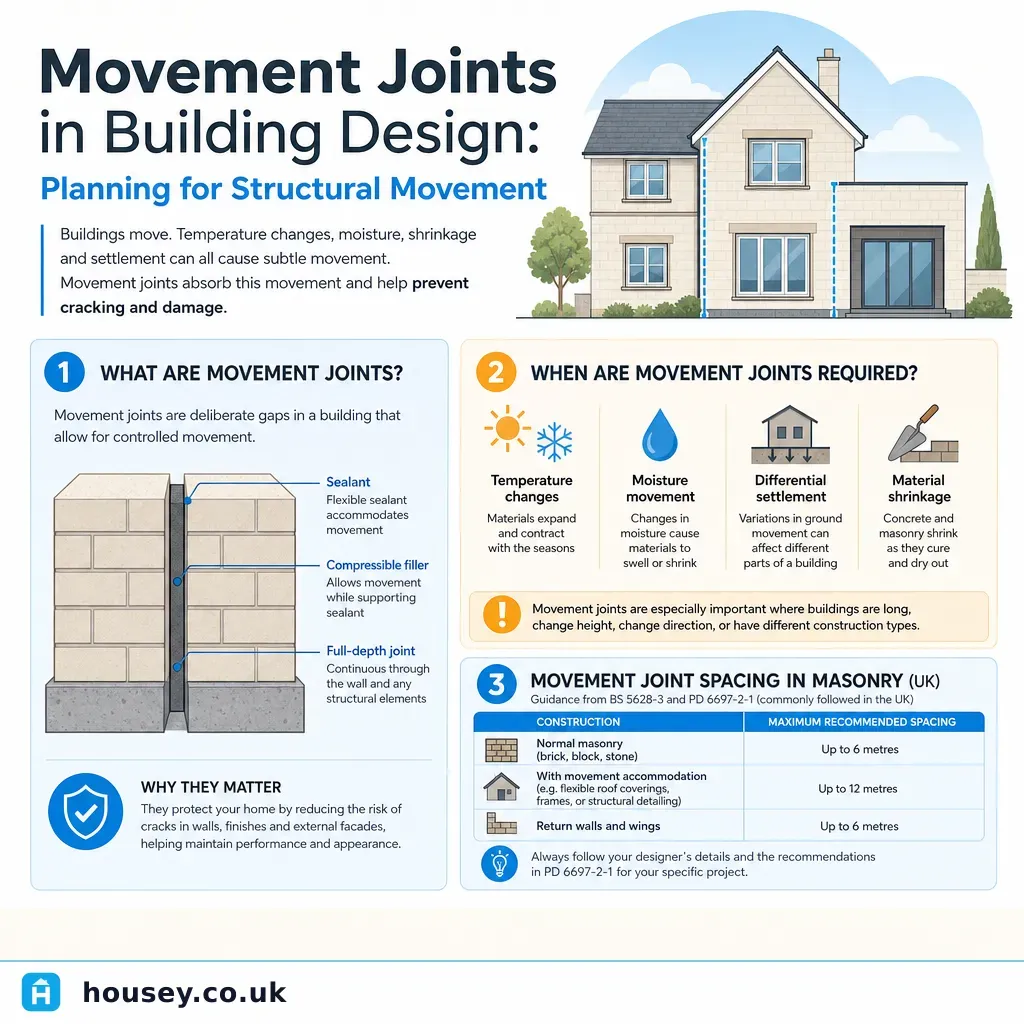
Movement Joints in Building Design: Planning for Structural Movement
Movement joints are designed gaps built into structures to accommodate controlled movement from thermal expansion, moisture changes, and differential settlement, preventing uncontrolled cracking.
 Planning & Pre-Build
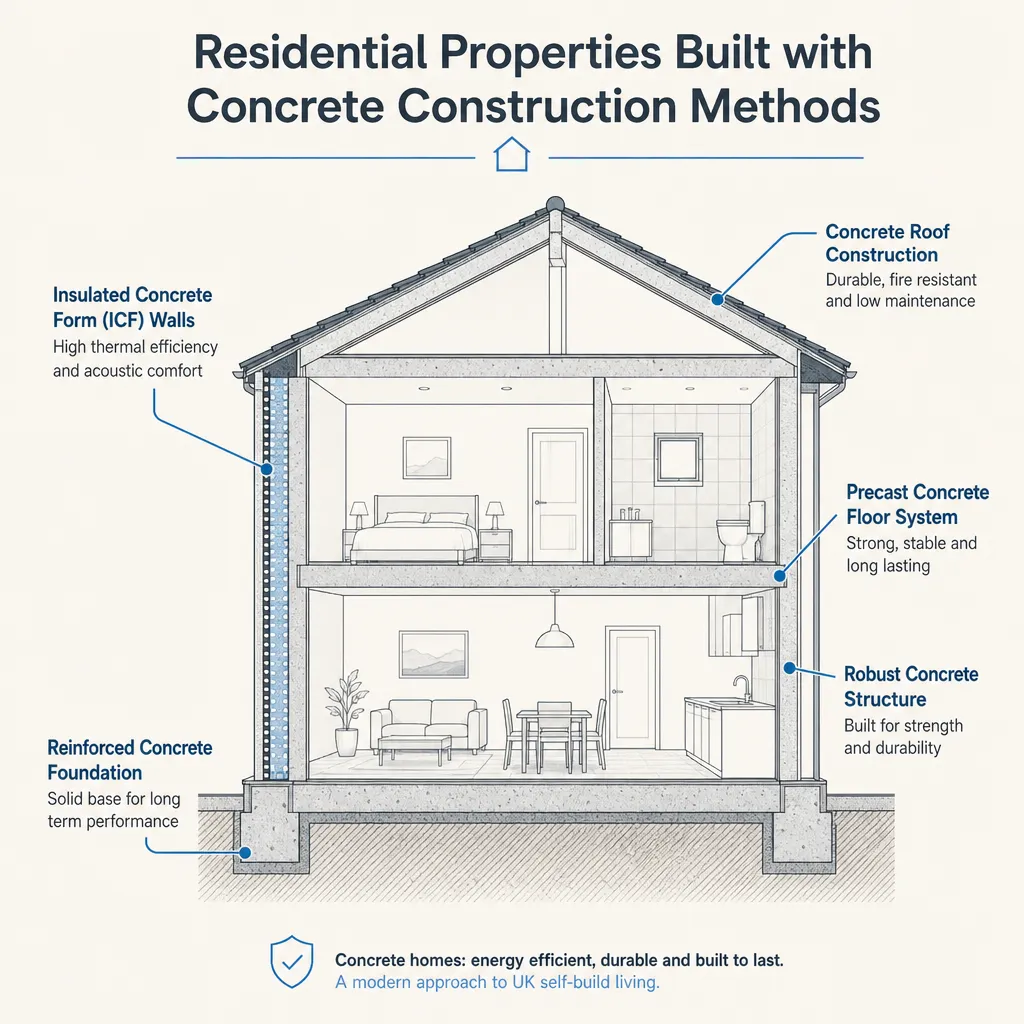
Residential Properties Built with Concrete Construction Methods
UK homes are built using several concrete methods: in-situ cast concrete, precast panel systems, insulating concrete formwork (ICF), and older non-traditional types such as Wimpey No-Fines and Laing Easiform.
 Planning & Pre-Build
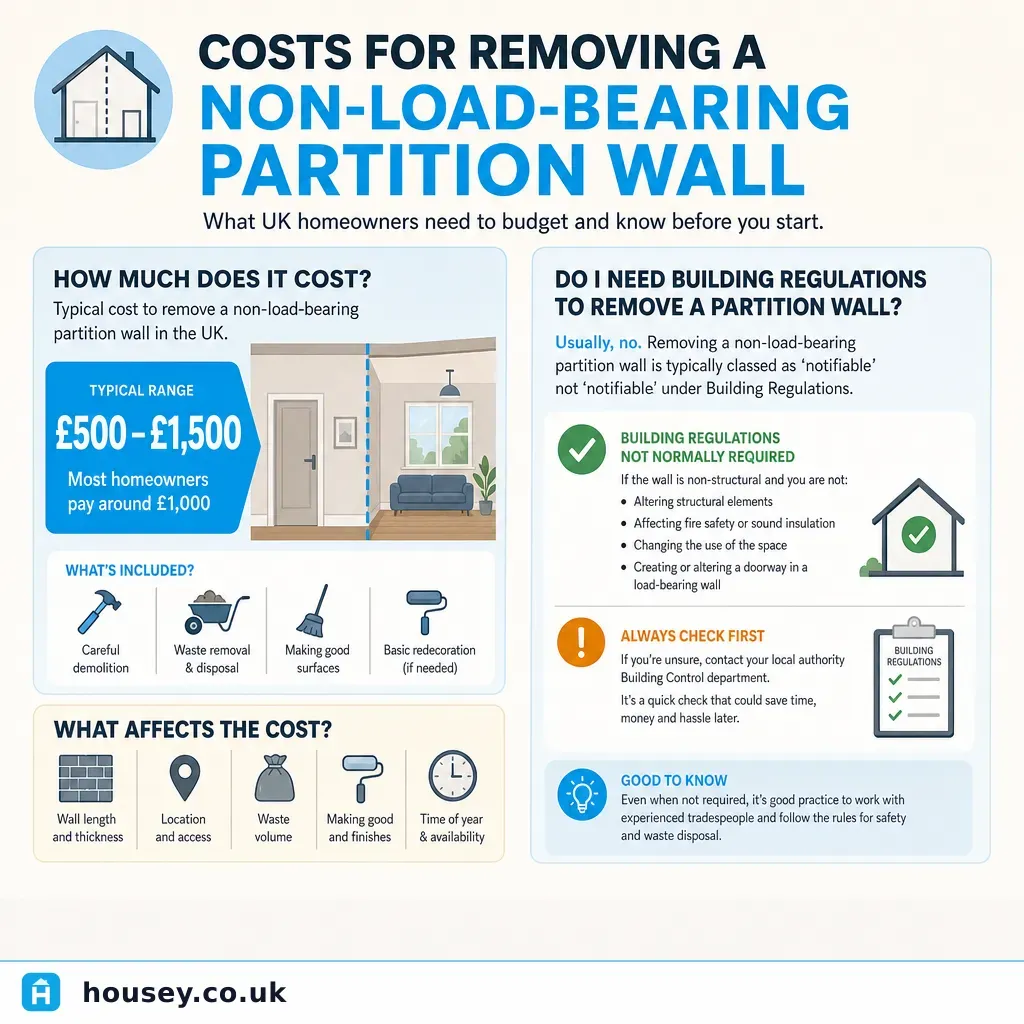
Costs for removing a non-load-bearing partition wall
Removing a non-load-bearing partition wall in a UK home typically costs £300–£1,500 in labour, plus £200–£600 or more for replastering and making good.
 Planning & Pre-Build
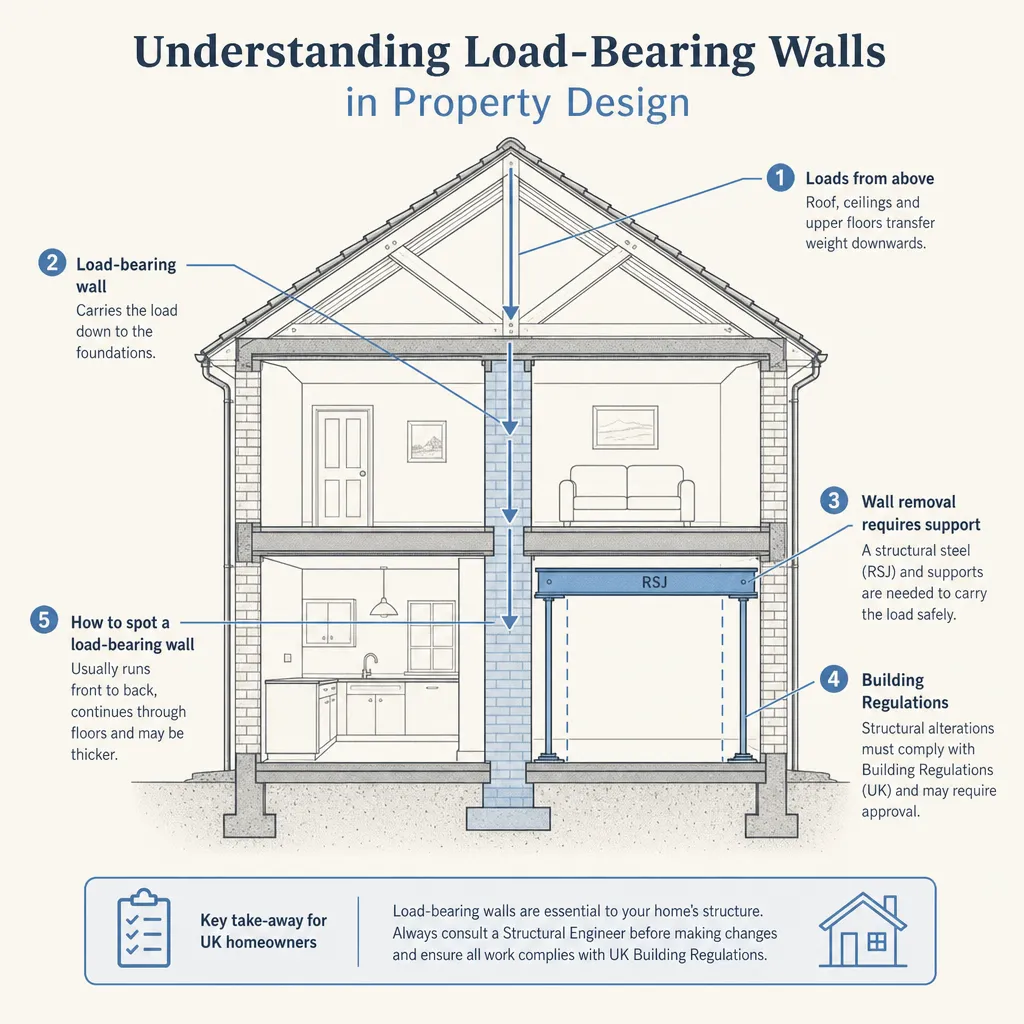
Understanding Load-Bearing Walls in Property Design
A load-bearing wall carries the weight of floors, roofs, or other walls above it down to the foundations.