Moving Day Logistics: A Guide to a Successful Home Relocation
By Housey · Last reviewed 30th of May 2026
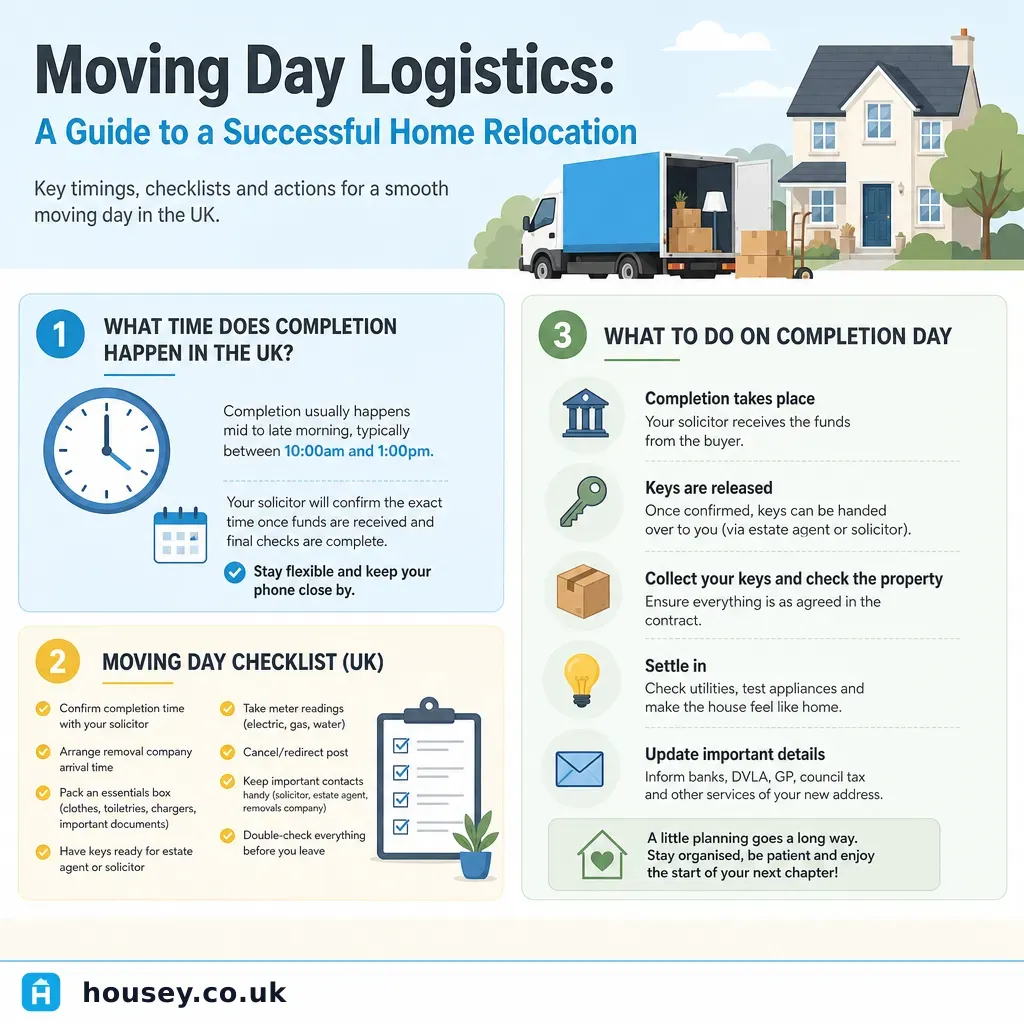
Moving Day Logistics: A Guide to a Successful Home Relocation
The final day of a property transaction is often the most pressured — funds must clear, solicitors must confirm completion, and a removal team may be waiting outside your old home before you have keys to the new one. Understanding how UK moving days typically unfold helps you plan realistically, avoid unnecessary costs, and hand over or take possession of a property without last-minute surprises.
Key points
- Solicitors must confirm legal completion before estate agents release keys — there is no fixed handover time, and delays are common.
- Meter readings at both properties should be taken and photographed on the day you vacate and the day you arrive.
- A parking suspension bay (usually £50–£150, applied for 2–4 weeks in advance from your local council) protects the removal van's access to both addresses.
- Buildings insurance at your new property should be in place from exchange of contracts, not from moving day.
- British Association of Removers (BAR) member firms carry Goods in Transit insurance as standard — confirm cover limits before the move.
What happens on the day of completion
Completion in England and Wales occurs when your solicitor receives the sale proceeds from your buyer's solicitor and notifies the estate agent. Until that confirmation arrives, no keys are released. In Scotland, the equivalent process is called settlement.
This means the day can begin with uncertainty: even if your removal van is packed and waiting, you cannot enter your new property until your solicitor calls the estate agent. In a chain, each link must complete in sequence — a delay anywhere slows everyone.
Most transactions complete between 11am and 2pm, though late-afternoon completions do happen. If you are buying and selling simultaneously, plan for potential waiting time at the kerbside or in a nearby café rather than assuming a morning handover.
Timing your move: what to expect
A realistic moving-day timeline for a chain transaction might look like this:
Time | What is happening |
|---|---|
8–9am | Removal team arrives at your old property; final items loaded |
10am–noon | Solicitor awaiting funds confirmation; you may be in limbo |
11am–2pm | Most completions are confirmed in this window |
On confirmation | Estate agent releases keys; you can enter your new property |
Afternoon | Unloading at new property; meter readings; utility notifications |
End of day | Return keys to estate agent; sign off the removal inventory |
Decision guide for moving day:
- Choose a mid-week completion if you have flexibility — Tuesdays to Thursdays typically cost less and have fewer scheduling pressures than Fridays.
- Allow for chain delays if you are not at the top of a chain — keep your removal team's mobile number to hand and plan for potential waiting time.
- Use a storage facility as a buffer if your chain is long — goods go into short-term storage if the day overruns, removing pressure on all parties.
- Confirm a target completion time with your solicitor at least one week ahead so they can flag any known risks early.
What to do before the removal van arrives
Complete these tasks before loading begins:
Old property — pre-loading tasks:
Documents and valuables to keep with you — not on the van:
Taking over your new home
When you arrive at your new property:
- Check the condition — walk through every room before unloading and photograph anything that looks different from your pre-exchange visit.
- Take meter readings immediately — photograph the gas, electricity, and water meters and note the date and time.
- Locate the stopcock, fuse board, and boiler — know how to isolate water and electricity in an emergency.
- Check what has been left — sellers should have removed all possessions unless agreed otherwise; if items remain without agreement, contact your solicitor.
- Change the locks — previous owners, tradespeople, and estate agents may hold key copies. Replacing external lock cylinders is inexpensive and immediate.
- Test smoke and carbon monoxide alarms — fit or replace batteries if needed.
Essential checks at your old property
Before handing over the keys:
Red flags to resolve before you leave:
- Fixtures or fittings listed in the contract are missing from the property
- The property has been left in significantly worse condition than at your pre-exchange visit (normal wear excepted)
- Keys, fobs, or remotes included in the sale are incomplete
- The seller has left possessions behind without agreement — photograph them and contact your solicitor immediately
Leave the property in a clean and tidy state where practicable. Return all agreed keys to the estate agent or as directed by your solicitor.
When to get professional help
Most moving day issues are logistical rather than legal, but contact your solicitor immediately if:
- Completion is delayed past 2pm with no confirmed timeline — you may have rights to a late completion penalty under the Standard Conditions of Sale.
- The property has significant missing fixtures, fittings, or agreed contents.
- There is unexpected damage to the property not present at the survey or pre-exchange visit.
- The removal company causes damage — report in writing immediately and refer to the BAR Alternative Dispute Resolution scheme if the firm is a member.
How Housey can help
Housey connects you with vetted house removals firms covering your area, as well as house clearance services for clearing items from your old or new property before or after the move. Compare quotes from local providers and read verified reviews before making any commitment.
Frequently asked questions
What happens if completion is delayed and the removal van has to wait?
Most removal companies charge an hourly waiting fee if they cannot unload at the agreed time. Confirm this rate in your contract before moving day. If the delay is caused by the seller's solicitor, you may be entitled to late completion interest under the Standard Conditions of Sale — ask your solicitor on the day.
Do I need to clean my old property before handing it over?
There is no universal legal requirement to leave the property professionally cleaned, but your sale contract may include a condition about leaving it in a reasonable state. Disputes are more common when properties are left in poor condition. Review your contract wording in advance and resolve any ambiguity with your solicitor before moving day.
What if my belongings are damaged during the move?
Report any damage in writing on the day — note it on the delivery inventory before signing. Follow up with a formal written claim to the removal firm. BAR member companies have access to an Alternative Dispute Resolution service. Check your contents insurance policy too, as some policies extend to removal transit.
Should I change the locks on moving day?
Yes. Changing external lock cylinders when you take possession is strongly recommended. You have no way of knowing how many key copies exist from previous owners, estate agents, or tradespeople. A locksmith can replace cylinders quickly and at modest cost, and many cylinder types can be swapped without specialist tools.
Sources and further reading
- Buying or selling your home — GOV.UK
- Consumer advice for moving home — British Association of Removers
- Moving home guidance — Citizens Advice
- Land registration guidance — HM Land Registry
Useful next reads
 Buying & Moving
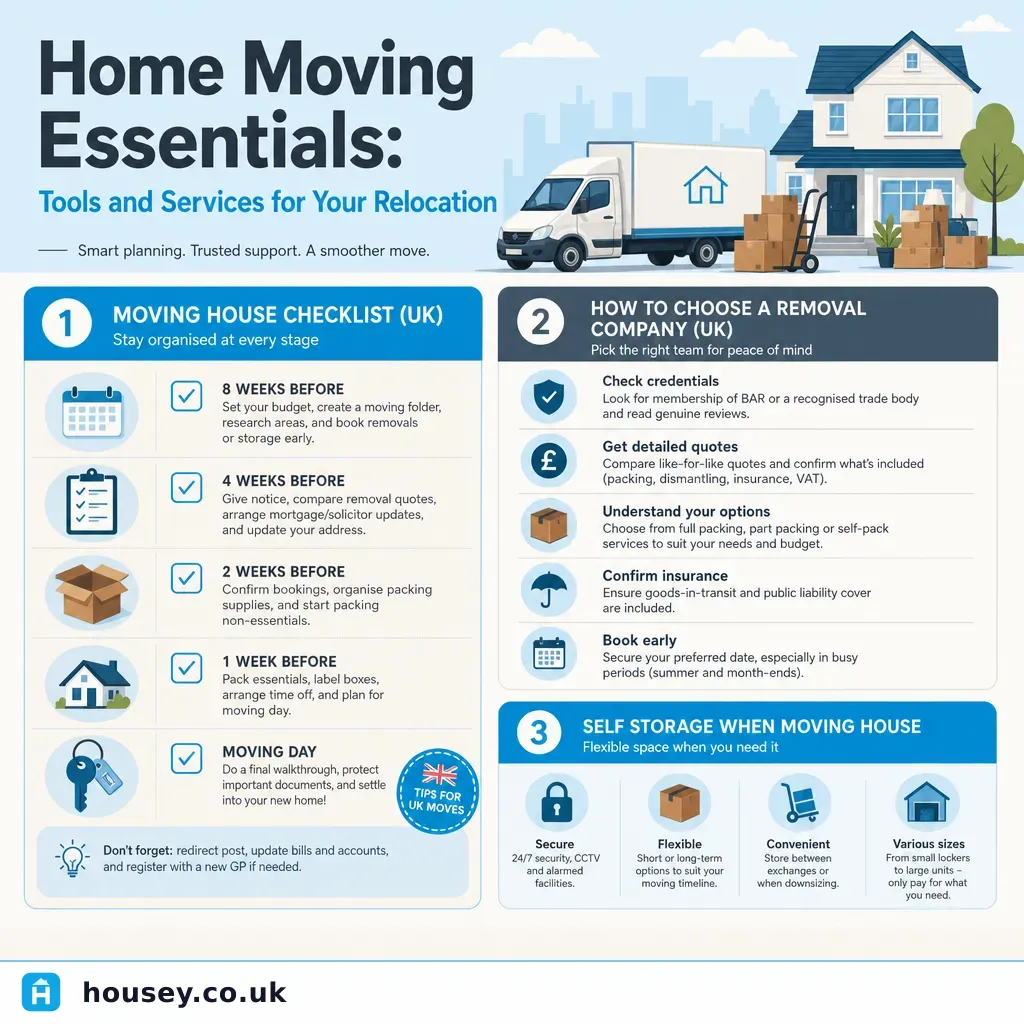
Home Moving Essentials: Tools and Services for Your Relocation
Moving house in the UK involves far more than hiring a removal van.
 Buying & Moving
How Removal Services Integrate Storage Solutions
Many UK removal companies offer integrated storage as part of their moving service, letting you store belongings in a secure facility — often a sealed container or warehouse unit — when completion dates do not align.
 Buying & Moving
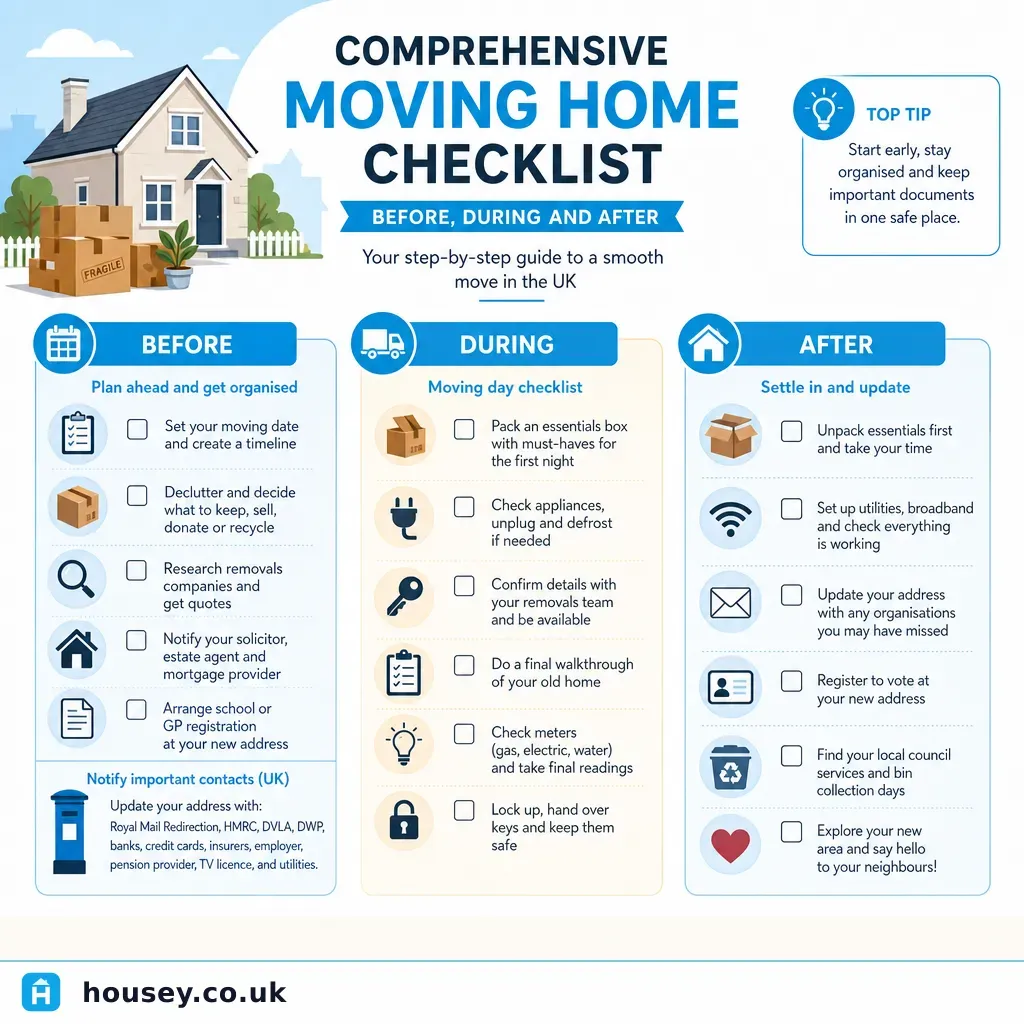
Comprehensive Moving Home Checklist: Before, During and After
Moving house in the UK involves tasks across roughly eight weeks: instructing a conveyancer and removal firm early, systematically notifying organisations of your new address, confirming buildings insurance from exchange, taking meter readings on completion day, and registering with the new council and utilities promptly.
 Buying & Moving
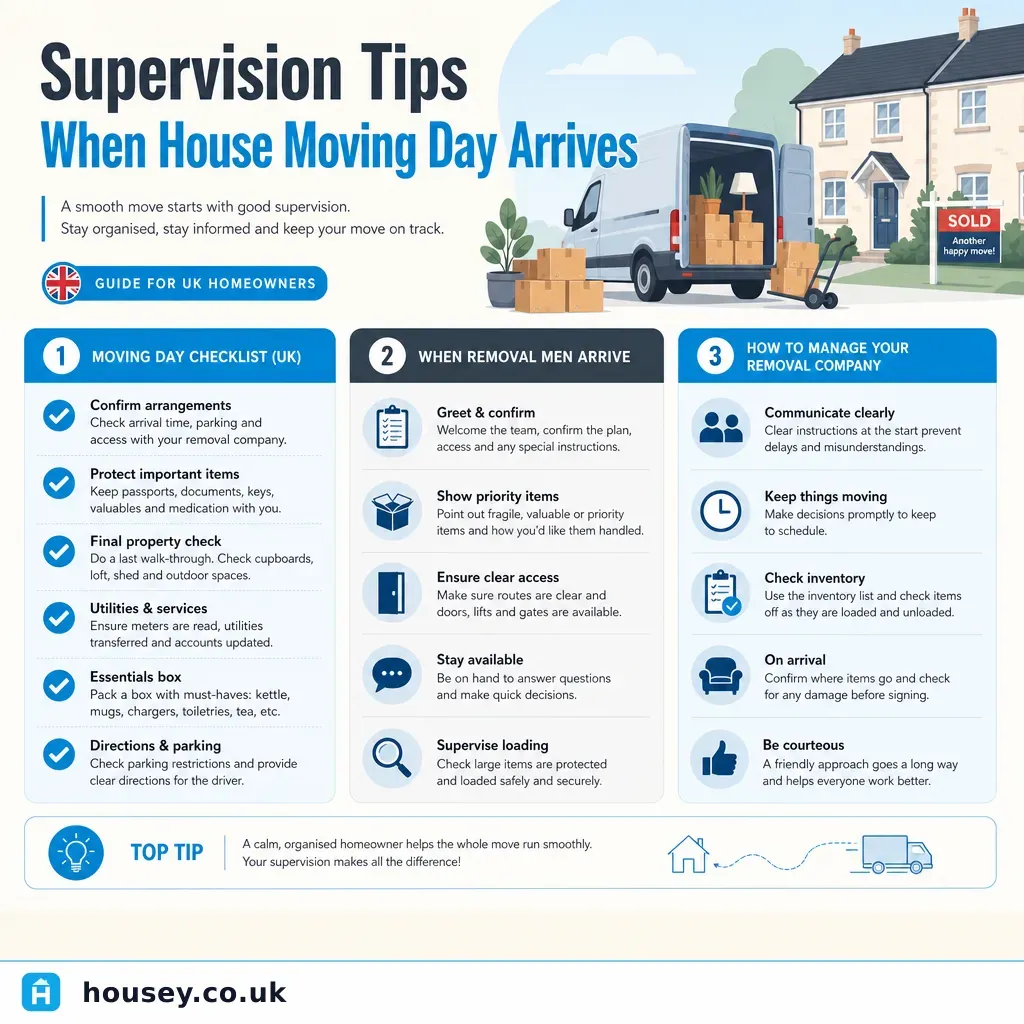
Supervision Tips When House Moving Day Arrives
On moving day, assign one person to supervise the removals crew throughout, walk through every room before the van leaves, and photograph any pre-existing damage to furniture and walls before loading begins.
 Buying & Moving
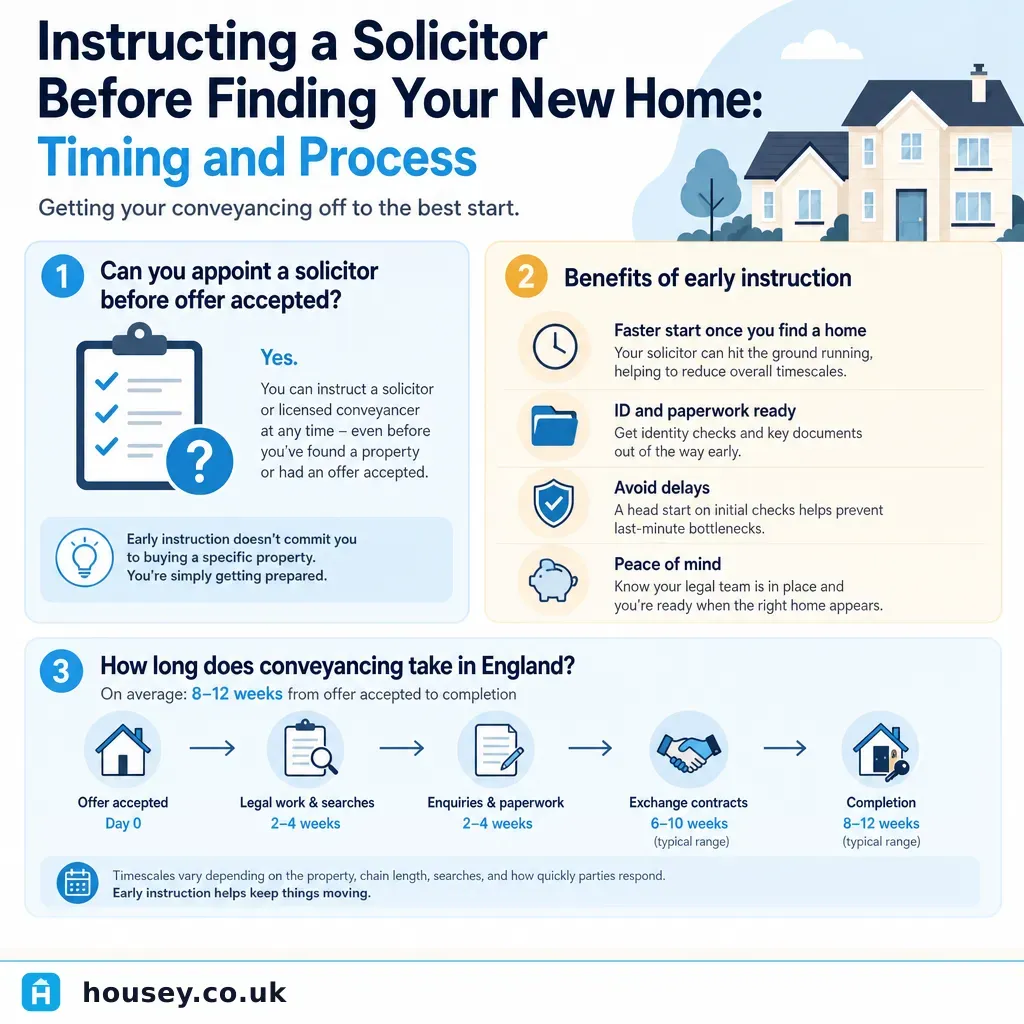
Instructing a Solicitor Before Finding Your New Home: Timing and Process
You can instruct a solicitor or licensed conveyancer before you find a property.