Moving Internal Walls: Planning Permission and Structural Engineering Requirements
By Housey · Last reviewed 4th of May 2026
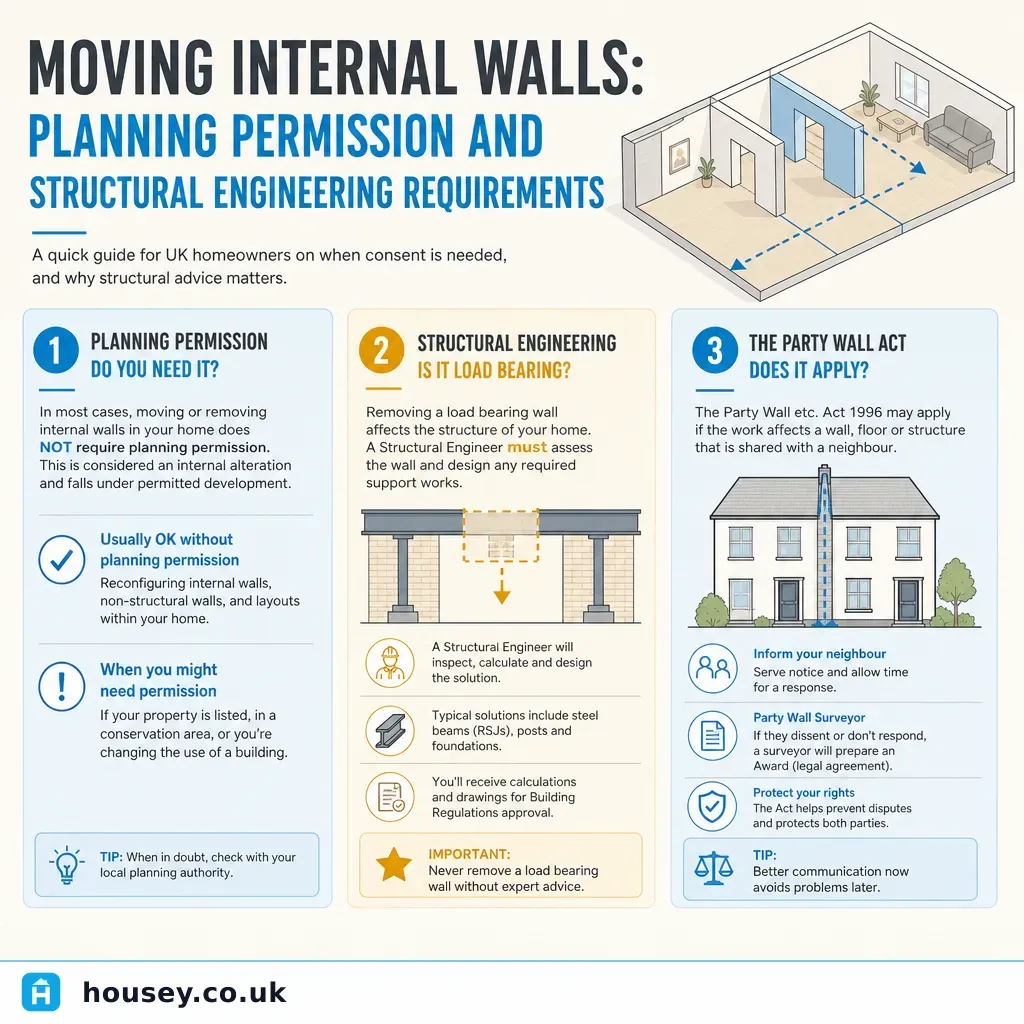
Moving Internal Walls: Planning Permission and Structural Engineering Requirements
Knocking through or repositioning an internal wall is one of the most transformative changes you can make to a UK home — opening up a kitchen-diner, creating an open-plan living space, or improving the flow between rooms. But whether your wall is load-bearing, what building regulations apply, and whether any consent is needed are questions that must be answered before any contractor lifts a sledgehammer. The consequences of getting this wrong range from a structural failure to an enforcement notice or a collapsed sale.
Key points
- Planning permission is rarely required for internal wall removal in England, but listed building consent under the Planning (Listed Buildings and Conservation Areas) Act 1990 is needed for most internal structural changes to a listed property.
- Building Regulations approval under Part A (Structure) is almost always required when removing or substantially altering a load-bearing wall.
- A structural engineer must assess whether the wall is load-bearing and, if so, design a replacement beam or lintel with padstones before demolition work begins.
- The Party Wall etc. Act 1996 may apply if works affect a shared wall or party structure in a semi-detached or terraced property, even for internal works.
- A building control completion certificate is important evidence of compliance and is routinely requested by solicitors and mortgage lenders during a property sale.
Does removing an internal wall need planning permission?
In most cases, removing an internal wall in your own home does not require planning permission. Internal alterations to a dwelling are generally treated as permitted development under Schedule 2 of the Town and Country Planning (General Permitted Development) (England) Order 2015.
However, planning permission or listed building consent may be required in the following circumstances:
- Listed buildings: Any internal alteration that affects the character of a listed building — including wall removal — requires listed building consent, regardless of whether the wall is load-bearing.
- Article 4 Directions: Some local planning authorities have removed permitted development rights in specific areas. Check with your local authority if you are in a designated area.
- Change of use: If internal works are associated with a change of use — such as converting a single dwelling into flats — full planning permission is needed.
- Leasehold properties: Your lease may require landlord or freeholder consent before structural works. Check your lease terms before instructing any contractor.
Do I need Building Regulations approval to remove an internal wall?
Almost always yes, if the wall is load-bearing or if the works affect fire compartmentation, means of escape, or structural stability.
Building Regulation | What it covers | When it applies to wall removal |
|---|---|---|
Part A (Structure) | Structural stability of the building | Any load-bearing wall removal or alteration |
Part B (Fire safety) | Fire compartmentation and means of escape | Works that alter fire separation between rooms or floors |
Part K (Protection from falling) | Staircase and balustrade requirements | If wall removal affects stair enclosures or balustrading |
Part M (Access) | Accessibility requirements | Primarily new build or extensions; less commonly relevant for internal alterations |
For lightweight, non-load-bearing partition walls that do not affect fire compartmentation, Building Regulations may not formally apply — but confirm this with your building control authority before starting.
Is my wall load-bearing? A decision guide
Only a qualified structural engineer can definitively confirm whether a wall is load-bearing. However, the following guide gives initial indicators.
- Does the wall run at right angles to the floor joists? More likely to be load-bearing — appoint a structural engineer to confirm.
- Is there a wall, post, or column directly above or below the wall on another floor? Likely load-bearing.
- Is the wall a lightweight stud partition running parallel to the joists? Less likely to be load-bearing — but still obtain formal confirmation.
- Is the property pre-1919 (Victorian, Edwardian)? Construction methods vary considerably; always get a structural assessment.
- Has the wall been altered before, or does it form part of a chimney breast? Existing alterations and chimney stacks introduce additional complexity — appoint an engineer.
- Still unsure? Appoint a structural engineer for a formal assessment before any demolition work begins. Do not rely on a contractor's judgement alone.
Floor joist directions can sometimes be checked by accessing the loft or lifting a short section of floorboards, but a proper structural assessment requires a qualified engineer to consider the full building.
The structural engineering process for wall removal
When a load-bearing wall is removed, the loads it carried must be redirected through a new structural element — typically a steel universal beam (UB) supported on padstones or columns at each end.
The typical process runs as follows:
- A structural engineer visits the property, assesses the wall, the existing structure, and the loads from above.
- The engineer produces calculations specifying the beam size, bearing design, padstone specification, and temporary propping requirements during construction.
- An architectural technologist or architect prepares building regulations drawings incorporating the structural design.
- Building control reviews and approves the drawings and calculations under the full plans route, or inspects during construction under the building notice route.
- The contractor installs temporary propping, removes the wall, installs the beam and padstones, makes good, and completes building control inspections.
- Building control issues a completion certificate on satisfactory completion.
Party wall considerations
If your home is semi-detached or terraced, the wall you plan to remove may be a party wall shared with a neighbour, or the works may affect an adjoining party structure.
The Party Wall etc. Act 1996 requires you to serve a notice on your adjoining owner(s) before carrying out certain works, including:
- Cutting into a party wall
- Inserting a steel beam that bears on or into a party wall
- Demolishing and rebuilding a party wall
Your neighbour has 14 days to respond. If they consent in writing, you may proceed. If they dissent or do not respond, a party wall surveyor must be appointed under the Act. Do not start notifiable works without following the Act's procedure — doing so can expose you to an injunction or legal liability.
Red flags — when to pause and seek professional advice
Stop and consult a structural engineer or building control officer before proceeding if:
- The wall runs through more than one storey or extends into the roof structure
- Cracks are visible in the wall, ceiling, or adjacent masonry before work starts
- The wall forms part of a chimney breast or fireplace opening
- The floor above the wall shows signs of deflection, springiness, or bounce
- The property was built before 1919 and the construction type is uncertain
- Your contractor suggests removing the wall without a structural assessment
- The scope of works has grown beyond the original plan during demolition
Important limitations
This article provides general information about the planning and building regulations framework for internal wall removal in England. Structural requirements, planning obligations, and party wall duties depend on the specific property, its tenure, its construction history, and the nature of the works. Regulations differ in Scotland (Building (Scotland) Act 2003), Wales, and Northern Ireland.
Nothing in this article constitutes structural, legal, or planning advice. Always appoint a qualified structural engineer to assess any potentially load-bearing wall before demolition work begins.
What to ask a qualified professional
Before appointing a structural engineer for internal wall removal, ask:
- Will you visit the property to assess the wall and the structure above before issuing calculations?
- What information do you need from me — existing drawings, the property age, floor construction type?
- Will your calculations be in a format that building control will accept?
- What beam size is likely, and will padstones be required?
- Should I be aware of any party wall implications based on the wall's position?
- How long will temporary propping need to remain in place during the works?
When to get professional help
Always appoint a structural engineer before removing any wall that may be load-bearing. Engage a building control-registered professional to prepare the drawings, check your lease if the property is leasehold, and serve party wall notices where the Act applies. Do not rely on a builder's verbal assessment as a substitute for an engineer's formal judgement.
How Housey can help
Housey can connect you with qualified professionals for every stage of an internal wall removal project. Find a structural engineer to assess and specify your beam, get building regulations drawings prepared by an architectural technologist, or speak to a building control consultant about the right approval route. If planning consent or listed building consent may be needed, a planning consultant can advise on your specific property.
Frequently asked questions
Do I need a structural engineer if a builder says the wall is not load-bearing?
A builder's opinion is not a substitute for a structural engineer's formal assessment. Builders may have strong practical knowledge, but a structural engineer holds the professional qualification and indemnity insurance to make a definitive judgement. Building control will normally require engineer's calculations for load-bearing wall removal — not a builder's assurance. Always appoint an engineer before any demolition work starts.
How long does Building Regulations approval take for wall removal?
Under the full plans route, building control has 5 weeks to approve your application, extendable to 2 months by agreement. Under the building notice route there is no pre-approval — the inspector visits during construction. The full plans route provides more certainty and is usually preferred for structural works. Always obtain a completion certificate at the end of the project.
Will removing a wall affect my buildings insurance?
Structural alterations can affect your buildings insurance. Notify your insurer before starting work and ensure your contractor holds adequate public liability insurance. Failure to notify your insurer could invalidate your policy. Obtain a building control completion certificate — insurers and future buyers may ask to see it. Check your mortgage lender's conditions if the property is mortgaged.
Is listed building consent different from planning permission?
Yes. Listed building consent is a separate consent from planning permission, required for most internal and external works to a listed building that would affect its character. It is a criminal offence to carry out such works without consent. Contact your local authority's conservation officer early in the process before appointing contractors or preparing drawings.
Sources and further reading
- Approved Document A: Structure — GOV.UK
- Party Wall etc. Act 1996 — legislation.gov.uk
- Planning (Listed Buildings and Conservation Areas) Act 1990 — legislation.gov.uk
- GOV.UK: Do you need planning permission? — GOV.UK
- RICS guidance on party walls — RICS
Useful next reads
 Planning & Pre-Build
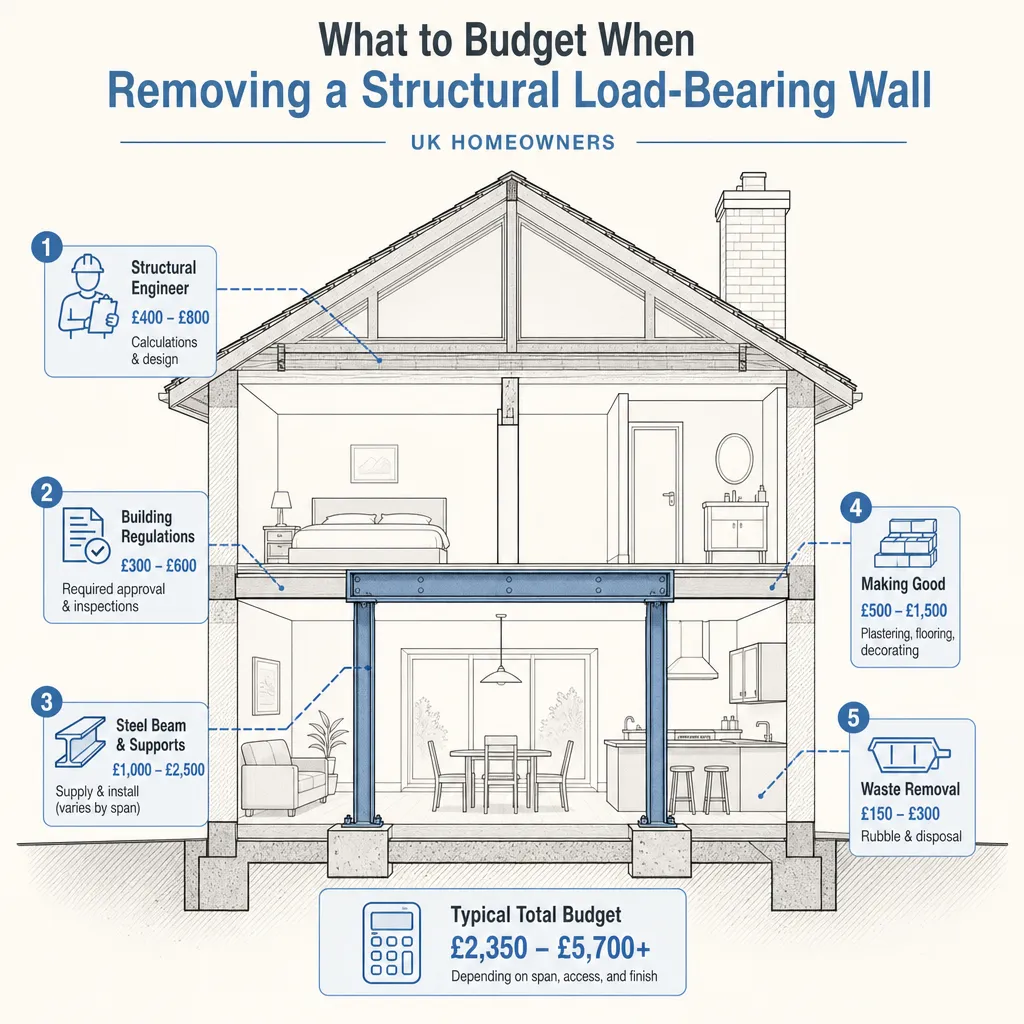
What to Budget When Removing a Structural Load-Bearing Wall
Removing a load-bearing wall in a typical UK home costs £2,500–£8,000 or more in total, covering a structural engineer's calculations, Building Regulations approval, the steel beam, builder's labour, and replastering.
 Planning & Pre-Build
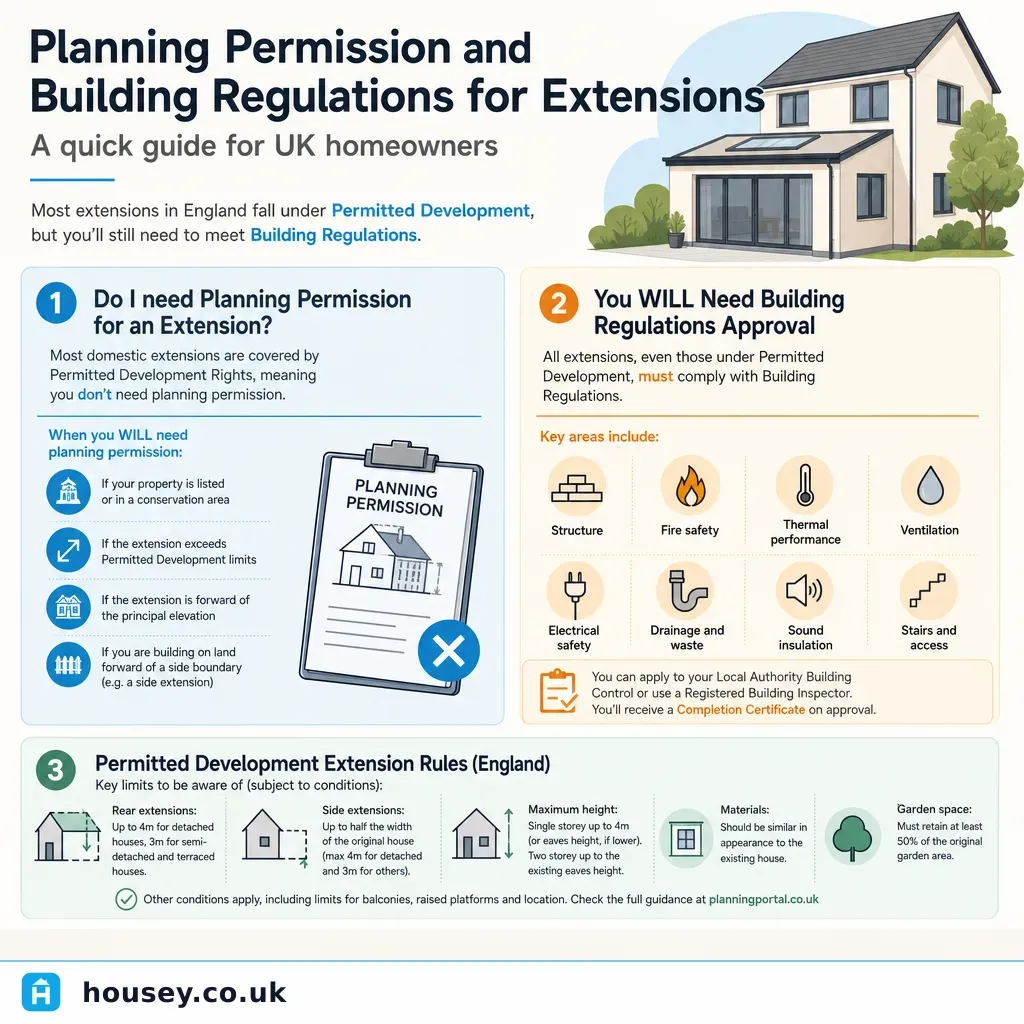
Planning Permission and Building Regulations for Extensions
UK home extensions usually require both planning permission and Building Regulations approval, though most smaller rear extensions qualify as Permitted Development under the GPDO 2015 and need no planning application.
 Planning & Pre-Build
Building a Summer House: Planning and Regulatory Requirements
Most garden summer houses in England fall under Class E permitted development and need no planning permission, provided they are single-storey, within height limits, and not used for sleeping.
 Planning & Pre-Build
Planning and Building Regulations for Church and Chapel Conversions
Converting a church or chapel to residential use requires planning permission for change of use from Class F1 to Class C3, and listed building consent if the building is listed.
 Planning & Pre-Build
Purchasing Land for Residential Property Development in the UK
Buying development land in the UK involves due diligence on planning status, ground conditions, legal title, and utilities access before exchange.