Mulching Guide for Gardens and Landscaping
By Housey · Last reviewed 10th of May 2026
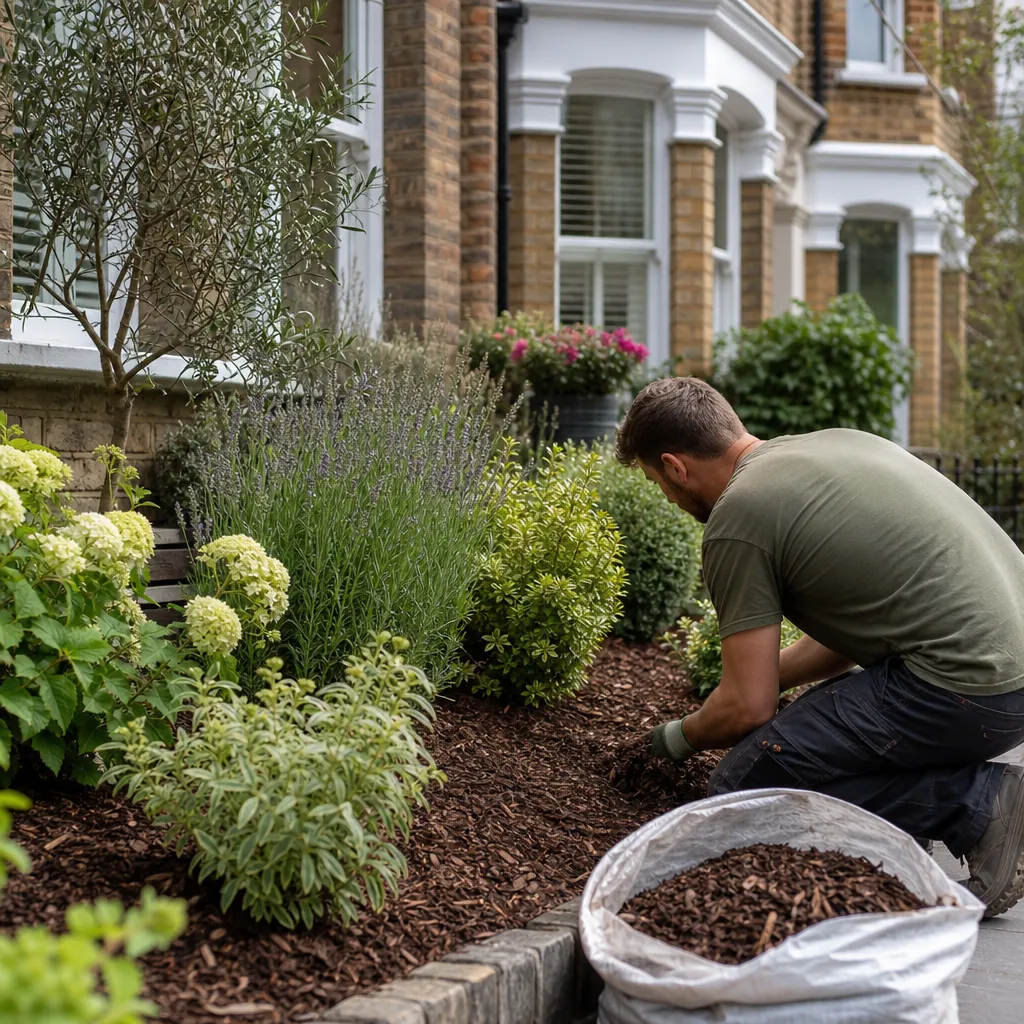
Mulching Guide for Gardens and Landscaping
Mulching is one of the highest-return tasks in garden maintenance. Applied correctly, a good mulch layer can reduce watering frequency, cut weeding time significantly, and improve soil structure over several seasons. It is also one of the more accessible tasks for homeowners on small to medium-sized plots. The challenge lies in choosing the right material for the situation, applying it at the correct depth, and avoiding the common mistakes that can trap moisture against stems, encourage pests, or actually worsen weed problems in some circumstances.
Key points
- The RHS recommends applying mulch to a depth of 5–7.5 cm for effective weed suppression and moisture retention.
- Always leave a 5–10 cm gap between mulch and plant stems or tree trunks to prevent collar rot and deter slugs and vine weevils from sheltering directly against the plant.
- Cocoa shell mulch is toxic to dogs and should not be used in gardens where pets have access.
- Weed suppression membranes laid beneath bark mulch can cause long-term problems: they impede rainfall penetration, trap soil gases, and become embedded in the soil as bark decomposes around them.
- Inorganic mulches such as gravel, slate, or crushed stone do not improve soil fertility and are best suited to Mediterranean-style or drought-tolerant plantings where low maintenance is the priority.
Mulch types compared
Mulch type | Best for | Not ideal for | Soil benefit | Approx. UK cost (2026) |
|---|---|---|---|---|
Composted bark | Borders, shrubs, trees | Vegetable growing beds | Moderate over time | £3–£6 per 60-litre bag |
Wood chip (forest thinnings) | Paths, large informal borders | Fine seedbeds | Good — feeds soil fungi | Free–£60 per m³ (bulk) |
Well-rotted garden compost | Vegetable plots, new planting | Dry exposed slopes | Excellent | Free (homemade) |
Farmyard manure (composted) | Hungry feeders, clay soils | Acid-loving plants | Excellent | £50–£90 per m³ (bulk) |
Straw | Vegetable beds, strawberries | Formal ornamental borders | Low | £5–£8 per bale |
Cocoa shell | Borders (pet-free gardens only) | Any garden with dog access | Low | £5–£8 per 3 kg |
Gravel or slate | Mediterranean beds, paths | Heavy feeders, fertility-dependent planting | None | £80–£150 per m³ (bulk) |
Leaf mould | Woodland planting, shaded borders | Large areas needing volume | Excellent | Free (homemade) |
Indicative UK costs, last reviewed 2026-05-10. Prices vary by region and supplier. Obtain current quotes from local suppliers for accurate figures.
Which mulch should you choose?
- Choose organic mulch (compost, bark, wood chip, farmyard manure) if you want to improve soil structure and fertility over time, are mulching vegetable plots or new planting areas, or have clay soil that benefits from organic matter as the mulch breaks down.
- Choose inorganic mulch (gravel, slate, crushed stone) if you're planting a drought-tolerant or Mediterranean-style garden, need a permanent low-maintenance surface, or are mulching a path or driveway edging where fertility is irrelevant.
- Avoid weed membrane beneath bark mulch if you plan to plant through the border in future, the area has tree roots, or long-term soil health is a priority — membrane prevents organic matter from integrating into the soil as the bark above it decomposes.
- Check pet safety before purchasing cocoa shell — it contains theobromine, which is toxic to dogs.
- Ask a professional if you need large quantities sourced, delivered, and spread efficiently as part of a wider planting or landscaping project.
How to apply mulch: homeowner checklist
Follow these steps for effective, damage-free mulching in any UK garden:
When to mulch in the UK
Spring (March–May) is the classic mulching window. Soil has warmed slightly after winter, annual weed seeds have not yet germinated in force, and moisture from winter rainfall is worth locking in. This timing suits vegetable plots and ornamental borders before the growing season gets fully underway.
Autumn (October–November) works well for mulching around trees, shrubs, and perennial borders after plants have died back. The mulch protects roots from frost and begins breaking down to enrich soil over winter. Avoid mulching before soil has had a chance to cool — a warm, moist mulch layer in early autumn can encourage crown rot on some plants.
Avoid mulching in midsummer unless you water the soil thoroughly first. Applying mulch to already-dry soil in July or August traps the drought in and can make dry conditions worse for plant roots beneath.
Mulching trees and shrubs
Trees and shrubs benefit particularly from mulching, which mimics the natural leaf-litter layer of a woodland floor. Key guidance for mulching around trees:
- Mulch within the drip line of the tree (the area directly beneath the canopy), not only close to the trunk.
- Aim for a ring 1–2 metres in diameter for a young tree; larger for established specimens where practical.
- Never pile mulch against the trunk — this is among the most common causes of bark rot and secondary pest damage in UK garden trees.
- Use wood chip or composted bark for trees rather than fine compost, which can compact and limit gas exchange at the soil surface.
- For newly planted trees and shrubs, mulching at planting time significantly improves establishment rates by reducing water stress in the first growing season.
When to get professional help
Mulching is usually a straightforward homeowner task, but professional involvement is worth considering when:
- You need large quantities (several cubic metres) sourced, delivered, and spread efficiently across a large garden.
- The project involves significant landscaping work alongside mulching — raised beds, planted trees, new borders — where combining tasks with a contractor is more practical.
- You need advice on the most appropriate mulch material for a specific planting scheme, soil type, or design style.
How Housey can help
For larger garden projects where you'd prefer professional support, Housey connects homeowners with vetted local landscapers who carry out soil improvement and mulching as part of planting and garden build projects. If you are planning a full border redesign, a garden designer can specify the most appropriate mulch type for your soil, planting style, and maintenance preferences before work begins.
Frequently asked questions
How often should I top up mulch?
Organic mulches decompose over time, which benefits soil health but means they need refreshing. Garden compost typically needs topping up annually; bark or wood chip every two to three years depending on depth and decomposition rate. Check depth each spring — if you're below 3–4 cm, it is time to add more material.
Can mulch cause slug problems?
Thick organic mulch can provide daytime shelter for slugs, a genuine concern in UK gardens where wet, mild conditions already support high slug pressure. Keeping mulch away from the base of susceptible plants, avoiding piling it against walls, and checking beneath it regularly for slug activity all help manage the risk. Nematode treatments and beer traps can be used alongside mulching.
Is wood chip mulch ever free in the UK?
Sometimes. Tree surgeons and some councils distribute chipped wood as part of green waste management — it is worth contacting local tree surgery companies directly. Free wood chip is typically coarser than purchased bark, but is excellent for paths and informal borders where a uniform appearance is less important.
Can I use mulch on a vegetable plot?
Yes, but choose the right type. Well-rotted compost, farmyard manure, or straw are most appropriate for vegetable beds, adding nutrients as they break down. Avoid bark chip or wood chip on the growing surface itself, as decomposition temporarily ties up soil nitrogen. Bark is fine for paths between vegetable beds.
Does mulch prevent all weeds?
Mulch significantly suppresses annual weeds by blocking light and preventing germination. It is less effective against established perennial weeds, which have sufficient root reserves to push through even a thick layer. Remove perennial weeds completely before mulching — bindweed, ground elder, and couch grass will re-emerge through the material regardless of depth.
Sources and further reading
- Mulching — Royal Horticultural Society
- Leaf mould — Royal Horticultural Society
- Plants and pets: toxic plants — Royal Horticultural Society
- Composting — Royal Horticultural Society
Useful next reads
 Improvement & Build
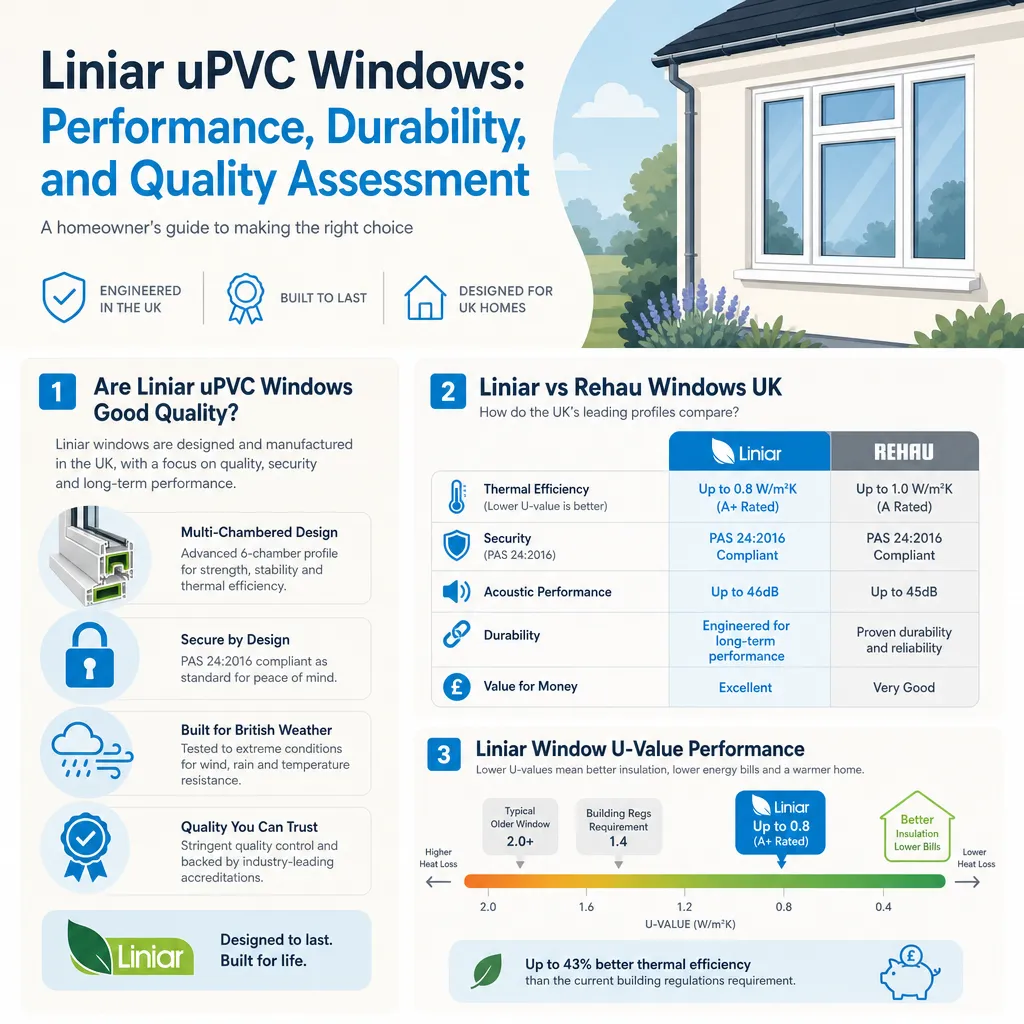
Liniar uPVC Windows: Performance, Durability, and Quality Assessment
Liniar uPVC window profiles are manufactured in the UK using multi-chambered, foamed frames.
 Improvement & Build
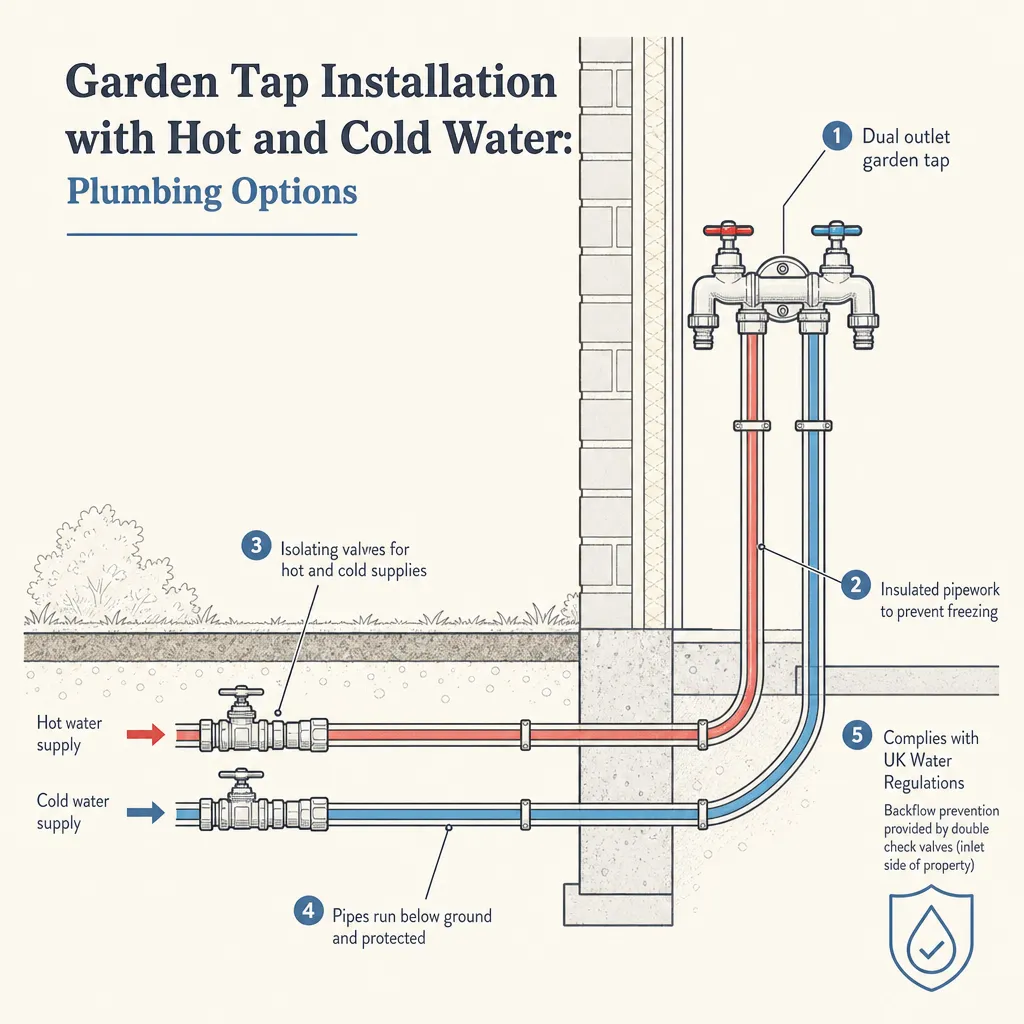
Garden Tap Installation with Hot and Cold Water: Plumbing Options
Adding a cold garden tap is a common DIY project, but routing hot water outdoors requires a plumber to connect to your domestic hot water system and comply with the Water Supply (Water Fittings) Regulations 1999.
 Improvement & Build
Sealing and Maintaining Historic Leaded Glass Windows: Preservation and Performance
Leaded glass windows are maintained using traditional linseed oil cement — not silicone or modern sealants, which prevent natural movement in the lead came.
 Improvement & Build
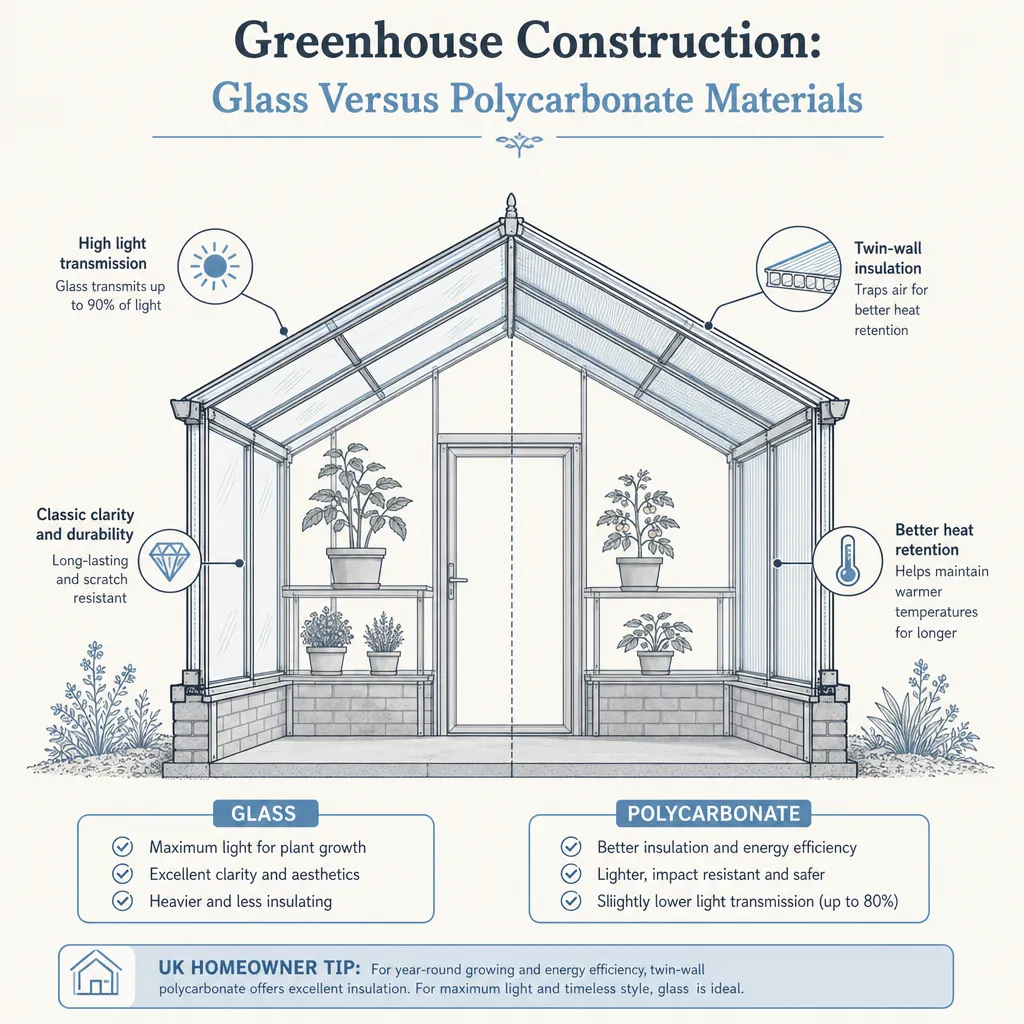
Greenhouse Construction: Glass Versus Polycarbonate Materials
Glass transmits around 90% of available light and lasts indefinitely if unbroken, but insulates poorly and shatters into sharp fragments.
 Improvement & Build
Retaining Wall Installation: Cost, Design and Maintenance
A retaining wall holds back soil on a sloped or banked site.